
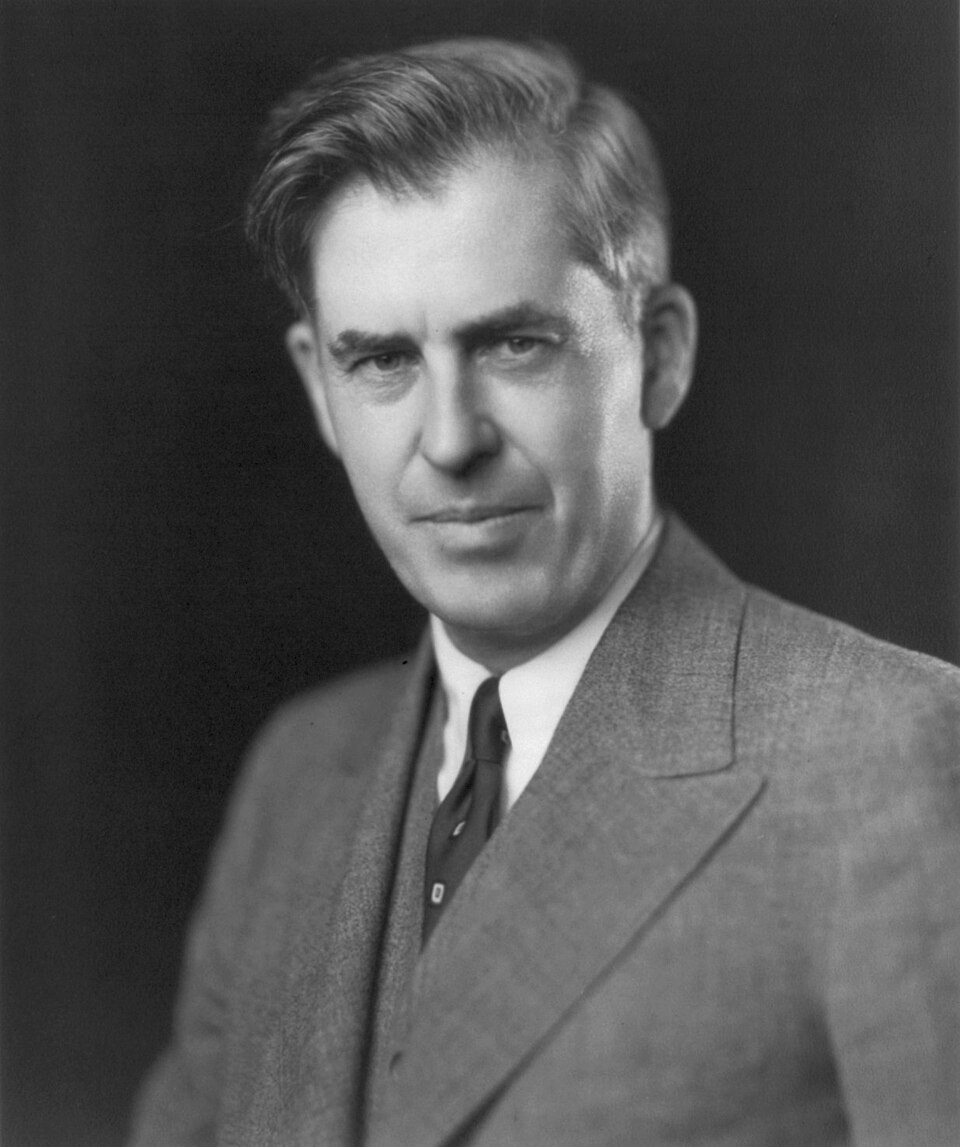
# Henry A. Wallace


How Henry Wallace's warning applies to civics education in Iowa

Edward A. Wasserman is a 53-year resident of Iowa and a professor of Psychological and Brain Sciences at The University of Iowa. The views expressed in his piece are his own and do not in any way reflect those of his employer.

Controversy surrounds the Center for Intellectual Freedom at the University of Iowa. A key justification for the center is to expand civics education beyond the high school curriculum. Given that rationale and the various ongoing threats to established American values, the words of Henry A. Wallace merit serious consideration.

Born on October 7, 1888, in Orient, Iowa, Henry Wallace served as the 33rd Vice President of the United States under President Franklin D. Roosevelt from 1941 to 1945. A year before the U.S. and its Allies defeated the Axis powers in World War II, the New York Times asked Wallace to define and assess the dangers of fascism in America. His commentary from April 9, 1944, still rings true.

Continue Reading...

How Democrats can use Bidenomics to win in rural America again

Scott Syroka is a former Johnston city council member.

Democrats have a major opportunity to increase their appeal in rural America, thanks to the policy framework crafted by President Biden, which he laid out in his June 28 address on Bidenomics in Chicago, Illinois.

While Democrats have successfully embraced Bidenomics to pass legislation like the American Rescue Plan, Bipartisan Infrastructure Law, CHIPS Act, Inflation Reduction Act, and beyond, they haven’t done enough to champion Bidenomics through a rural-specific lens.

By using this framework to present a vision for an inclusive rural economy, rather than the trickle-down status quo of exploitation, Democrats can draw a clear contrast with their Republican opponents.

If they choose to seize this opportunity, Democrats can begin to stop the electoral bloodbath in rural areas, shrink the margins, and maybe even start to win again.

The forgotten history of America’s family farm movement and its fight for parity shows us how.

Continue Reading...