# News


China’s leverage over soybean farmers is a national security vulnerability

Noah Gratias is a Navy Intelligence Officer and Iowa State University alum. The views expressed are his own and do not reflect the official policy or position of the U.S. Navy or the U.S. Government. He can be reached at noahgratias@gmail.com.

The past few months have demonstrated once again that many soybean producers cannot survive without access to firms owned and operated by the Chinese Communist Party (CCP). U.S. leaders should treat this vulnerability as a national security challenge, not a minor trade war glitch. There is danger in treating every economic dispute as a security issue, but this situation demands urgent attention. In practical terms, Beijing can bludgeon the Midwest any time Washington crosses the CCP.

Beijing understands this leverage and has built policy around it. “Grain security” is a CCP priority, and Chinese leaders have made it clear they are working to slash U.S. food imports. Investments in South America, combined with state-managed soybean reserves, have further enhanced Beijing’s advantage.

Continue Reading...

Six questions about the governor's staff blocking me from a budget briefing

For most of the time Kim Reynolds has served as governor, her staff have tried to limit my access to information and news conferences available to other statehouse reporters. This week, the governor’s press secretary blocked me from attending a briefing a few hours before Reynolds delivered her Condition of the State address.

The video of my encounter with Mason Mauro on January 13 was shared widely and generated hundreds of comments across my social media feeds. Many readers, followers, and well-wishers (plus a few trolls) have asked about the incident—far too many for me to answer individually.

I’m addressing the most frequently asked questions below.

Continue Reading...

How to follow Laura Belin's coverage of the Iowa legislature and 2026 elections

I’ve been writing about the Iowa legislature, campaigns, and elections at Bleeding Heartland since 2007, and I’ve rarely looked forward to a new year in politics as much as this one.

With open-seat races for governor, U.S. Senate, and two U.S. House seats in Iowa, plus many incumbents facing challengers from within their own party, this year’s primaries will be the most fascinating I’ve covered—especially on the Republican side. The general election will feature competitive races for many state and federal offices.

The dynamics of the tenth legislative session under a GOP trifecta could be quite different, now that Governor Kim Reynolds is a lame duck, and senior roles in both the Iowa House and Senate have changed since last spring.

I will continue to publish deep dives and exclusive reporting about state government, legislative, Congressional, and campaign happenings at Bleeding Heartland, sharing links to all of those posts on Facebook, Bluesky, X (formerly Twitter), Mastodon, and the free Evening Heartland email newsletter.

But over the past five years, my political reporting has expanded far beyond this website. If you’re only following my work here, you’re not getting the whole picture.

Continue Reading...

Who's who in the Iowa Senate for 2026

The Iowa Senate reconvened on January 12 with a different look: a new majority leader (Mike Klimesh) and a changed balance of power: 33 Republicans and seventeen Democrats, down from a 34-16 GOP majority for most of the 2025 session.

Seven senators (four Republicans, three Democrats) were elected to the chamber for the first time in 2024, and three more won their seats in special elections during 2025.

Fourteen senators are women (eight Democrats and six Republicans)—that’s one more woman than last year, since Democrat Catelin Drey won the race to succeed the late Rocky De Witt in Senate district 1, and Renee Hardman won the race to succeed the late Claire Celsi in Senate district 16. The high point for women’s representation in the Iowa Senate was in 2023 and 2024, when the chamber had 35 men and fifteen women.

Hardman is the first Black woman to serve in the Iowa Senate and only the third African American ever elected to the chamber. Democrat Izaah Knox is also Black. The other 48 senators are white. No Latino has ever served in the chamber, and Iowa’s only Asian-American senator was Swati Dandekar, who resigned in 2011.

In 2023, Democrat Janice Weiner became the first Jewish person to serve in the Iowa Senate since Ralph Rosenberg left the legislature after 1994. She became the first Jewish person to lead an Iowa legislative caucus when her peers elected her minority leader in November 2024.

Democrat Liz Bennett is the only out LGBTQ member of the Iowa Senate.

I enclose below details on the majority and minority leadership teams, along with all chairs, vice chairs, and members of Iowa Senate committees. Where relevant, I’ve mentioned changes since last year’s legislative session. Although there hasn’t been as much turnover as the Iowa House saw during the interim, Klimesh did make quite a few changes in the committees compared to last year. He took all committee assignments away from one Republican (Doug Campbell) and took certain positions away from Kevin Alons, Mark Lofgren, Sandy Salmon, and Dave Sires.

Some non-political trivia: the 50 Iowa senators include four men named Mike (three Republicans and a Democrat), two Toms (a Democrat and a Republican), a Dave and a David (both Republicans), and two men each named Jeff, Mark, and Dan (all Republicans).

Continue Reading...

Who's who in the Iowa House for 2026

Normally, big changes in the Iowa legislature happen the year after a general election. But there has been much more turnover than usual in the Iowa House since last spring. With two Republicans running for Congress and another resigning from the legislature to take a Trump administration job, a chain reaction leaves ten House committees with a different leader for the 2026 session.

The overall balance of power remains the same: 67 Republicans and 33 Democrats in the chamber. Each party has some new faces in the leadership team, however. All of those details are listed below, along with committee assignments and background on all committee chairs and ranking members. As needed, I’ve noted changes since last year’s session.

Nineteen House members (fourteen Republicans and five Democrats) are serving their first term in the legislature—three more than in 2025, due to special elections that happened last March, April, and December.

The number of women serving in the chamber crept up from 27 at the beginning of 2025 to 29 as of January 2026, since Democrat Angel Ramirez succeeded Sami Scheetz in House district 78 and Republican Wendy Larson was elected to replace Mike Sexton in House district 7. The ratio of 71 men and 29 women is the same as during the 2024 session.

Six African Americans (Democrats Jerome Amos, Jr., Ruth Ann Gaines, Rob Johnson, Mary Madison, and Ross Wilburn, and Republican Eddie Andrews) serve in the legislature’s lower chamber. Gaines chairs the Iowa Legislative Black Caucus.

Republican Mark Cisneros became the first Latino elected to the Iowa legislature in 2020, and Democrat Adam Zabner became the second Latino to serve in the chamber in 2023, and Ramirez the chamber’s first Latina member in 2025.

Republican Henry Stone became the second Asian American ever to serve in the House after the 2020 election. Democrat Megan Srinivas was first elected in 2022. The other representatives are white.

Three House members identify as part of the LGBTQ community: Democrats Elinor Levin and Aime Wichtendahl, and Republican Austin Harris. As for religious diversity, Levin and Zabner are Jewish. Srinivas is Hindu. The chamber has had no Muslim members since Ako Abdul-Samad retired in 2024.

Some non-political trivia: the 100 Iowa House members include two with the surname Meyer (a Democrat and a Republican), two Johnsons (a Democrat and a Republican), and a Thompson and a Thomson (both Republicans).

As for popular first names, there are four men named David (one goes by Dave), three named Thomas or Tom, three Roberts (two Bobs and a Bobby), a Jon and a John, a Josh and a Joshua, a Mike and a Michael, and two men each named Jeff, Dan, Brian, Steven, Chad, Austin, and Mark. There is also an Elizabeth and a Beth, and two women each named Jennifer, Heather, Megan, and Shannon. As recently as 2020, four women named Mary served in the Iowa House, but now there is only one.

Continue Reading...
Nunn, Miller-Meeks both crossed the aisle—but one kept it quiet

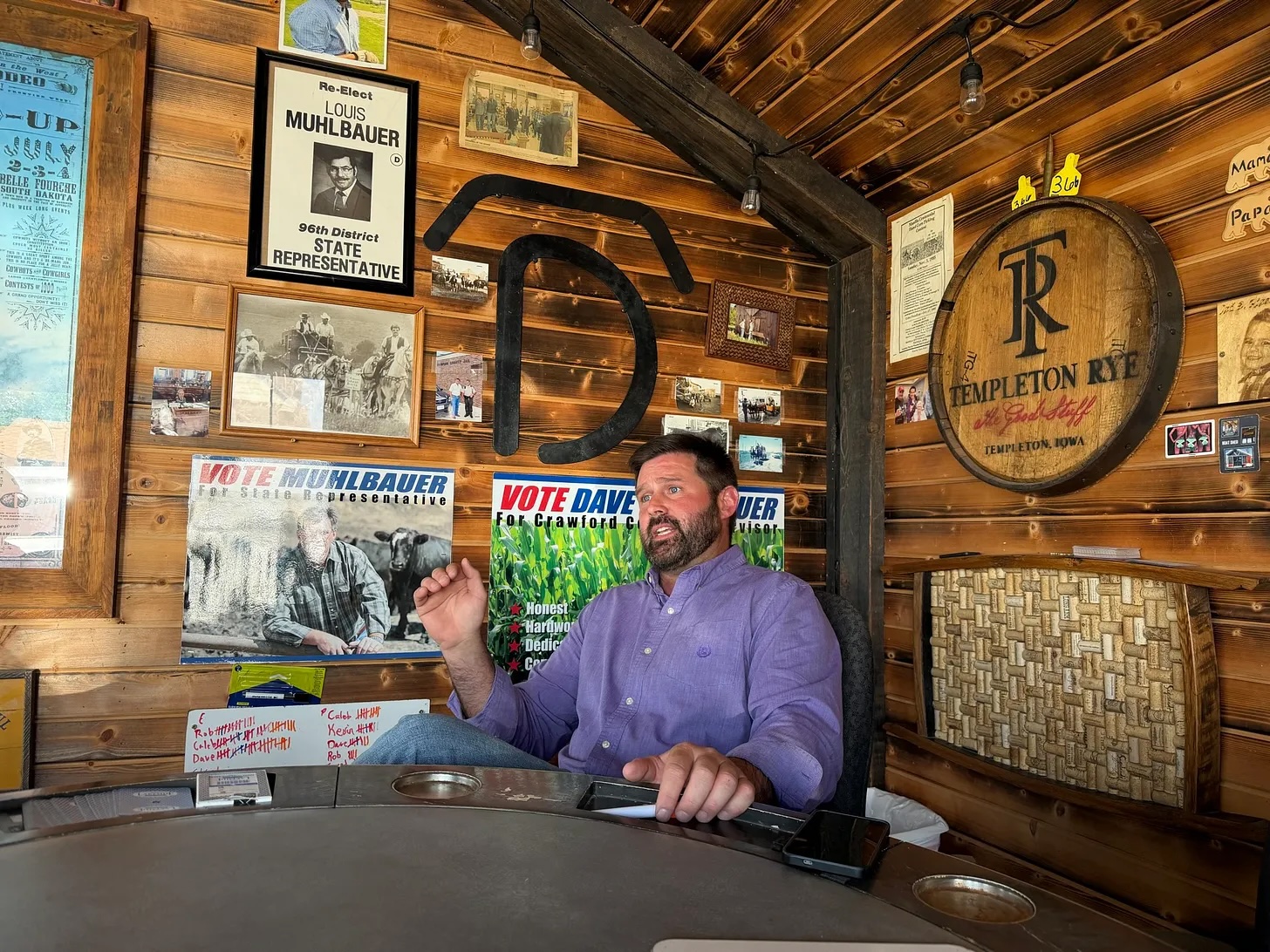
Iowa’s all-Republican Congressional delegation votes in unison on almost every resolution or bill. But last week, U.S. Representatives Zach Nunn (IA-03) and Mariannette Miller-Meeks (IA-01) each parted ways with most of their GOP colleagues on high-profile measures.

Nunn and Miller-Meeks are among the country’s most vulnerable U.S. House incumbents. They have largely supported President Donald Trump’s agenda and remained loyal to House GOP leaders. But in recent weeks, they have taken different paths on an issue likely to be at the center of their 2026 re-election campaigns.

And while Nunn publicly explained why he supported a Democratic bill on health insurance subsidies, Miller-Meeks drew no attention to her votes to override Trump’s vetoes of two uncontroversial bills.

Nunn’s political strategy is easier to understand than Miller-Meeks’. But it may be just as risky.

Continue Reading...

"A strong message": Four takeaways from Renee Hardman's big win

West Des Moines City Council member Renee Hardman won big in the December 30 special election to represent Iowa Senate district 16. Unofficial results show the Democrat defeated Republican Lucas Loftin by 7,341 votes to 2,930 (71.4 percent to 28.5 percent), a margin of about 43 points in a district Kamala Harris carried by about 17 points in 2024.

Hardman will make history as the first Black woman to serve in the Iowa Senate. Her win also means Democrats will hold seventeen of the 50 Iowa Senate seats during the 2026 legislative session, depriving Republicans of the two-thirds supermajority needed to confirm Governor Kim Reynolds’ nominees without any Democratic support.

In an emotional speech to supporters after results were in, Hardman acknowledged the late State Senator Claire Celsi, a personal friend who had managed her first city council race in 2017. “Claire led with courage, she loved this community fiercely. […] We will continue the work she cared about so deeply. We will honor her legacy, and we won’t give up the fight for a better Iowa.” The victory party was at Tavern II, a West Des Moines restaurant where Celsi regularly held her own campaign events.

The outcome was not a surprise, given the partisan lean of Senate district 16 and a massive ground game that gave Democrats a substantial lead in early votes banked.

Still, we can learn a few lessons from the lopsided special election result.

Continue Reading...
Iowa Senate district 16 preview: Renee Hardman vs. Lucas Loftin

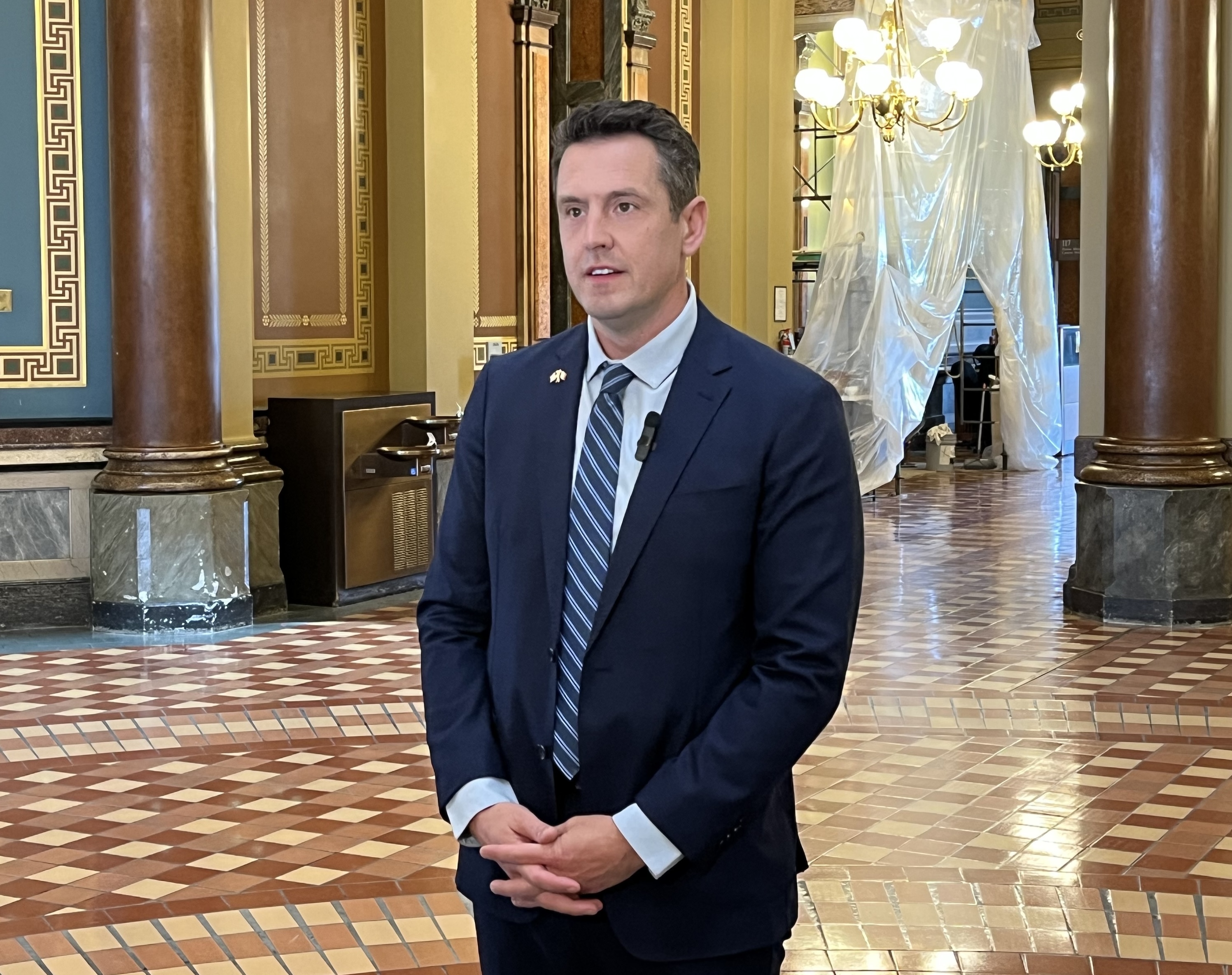
Voters in Iowa Senate district 16 will elect a successor to State Senator Claire Celsi on December 30. The stakes are high: this election will determine whether Republicans regain their 34-16 supermajority in the chamber for the 2026 legislative session. With a two-thirds majority, Republicans could confirm Governor Kim Reynolds’ nominees with no Democratic support.

If West Des Moines City Council member Renee Hardman keeps this seat in the blue column, the Republican majority in the chamber will return to 33-17, meaning Democrats could block some of the governor’s worst appointees. Either way, the winner will serve out the remainder of Celsi’s term.

Hardman is favored over Republican Lucas Loftin in this suburban area. But as we’ve seen this year in Iowa, anything can happen in a low-turnout special election. And it’s hard to think of a date primed for lower turnout than the Tuesday between Christmas and New Year’s Day.

Continue Reading...

Fox News' Gutfeld mocks Iowa House candidate in mean-spirited segment

Douglas Burns is a fourth-generation Iowa journalist. He is the co-founder of the Western Iowa Journalism Foundation and a member of the Iowa Writers’ Collaborative, where this article first appeared on The Iowa Mercury newsletter. His family operated the Carroll Times Herald for 93 years in Carroll, Iowa where Burns resides.

Fox News host Greg Gutfeld and his orbiting panelists relentlessly mocked the weight of a rural middle- and high school band teacher and Democratic candidate for the Iowa legislature in a viral three-minute national broadcast last week.

The barbs aimed at Dunlap City Council member Benjamin Schauer were incessant and cruel, and the piece has generated comments in a range of online forums, including The Daily Caller.

Continue Reading...

For once, Brenna Bird is "concerned" about something Donald Trump did

Since Donald Trump returned to the White House, I’ve sometimes wondered: is there anything this president could do that Iowa Attorney General Brenna Bird would find objectionable?

We got the answer this week, when Bird and counterparts from seven other Republican-controlled states quietly expressed “concerns” about one of Trump’s actions.

You’ll never guess why.

Continue Reading...
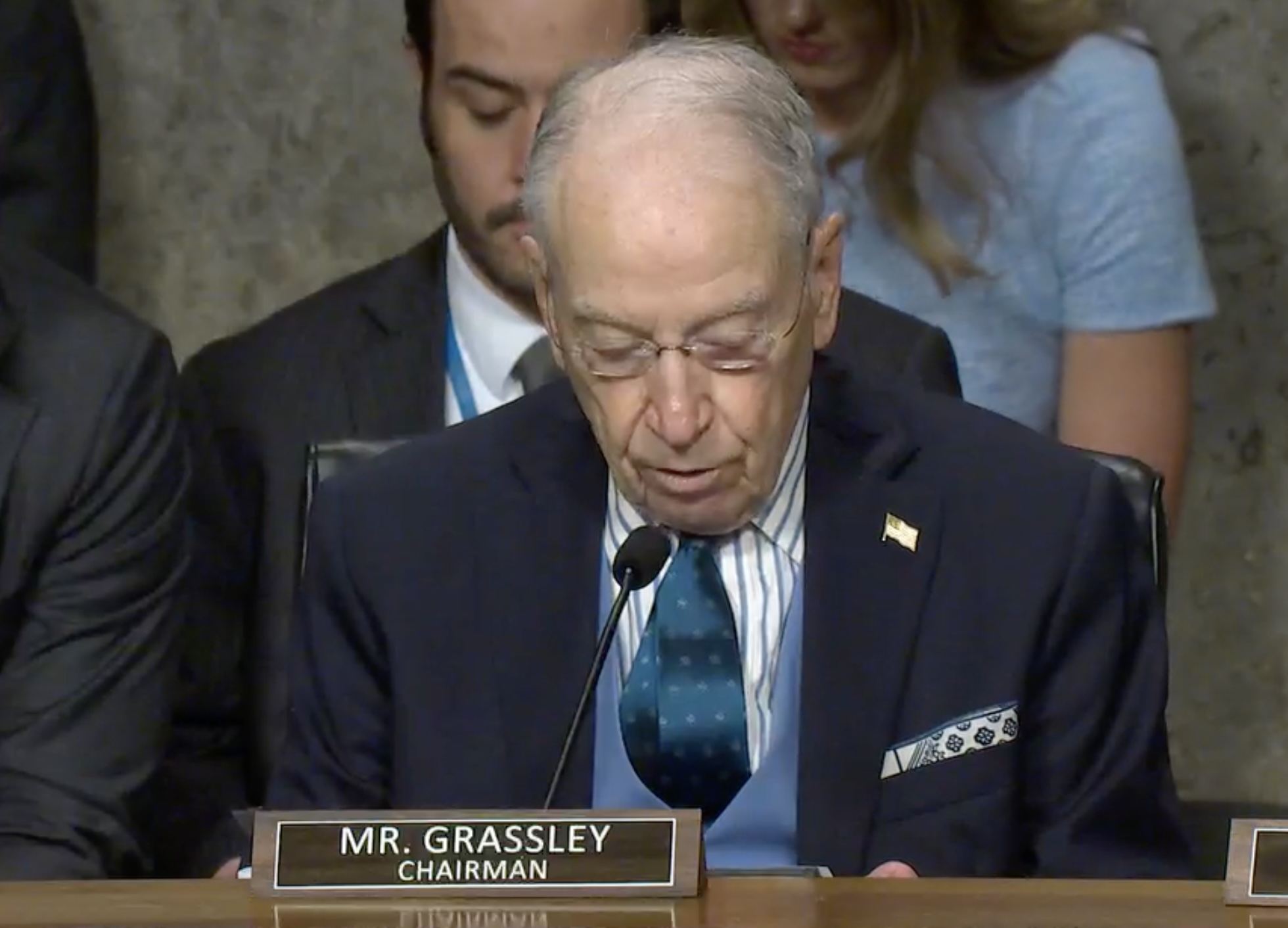
Do rural Iowans even care about themselves?

Jason Benell lives in Des Moines with his wife and two children. He is a combat veteran, former city council candidate, and president of Iowa Atheists and Freethinkers. This essay first appeared on his Substack newsletter, The Odd Man Out.

A little over a year ago I wrote a piece called “America Needs Farmers, Just Not Their Politics.” It is probably one of my most read pieces, which somewhat broke containment before I even had a space of my own on Substack. I felt like it was a worthwhile endeavor to check back in, since I wrote that piece before the 2024 election.

We’ve had a year to see how the active rural voting parts of our state, alongside the big agricultural entities like the Iowa Farm Bureau and Iowa Soybean Association, would handle the increased turmoil in a Trump administration.

Continue Reading...
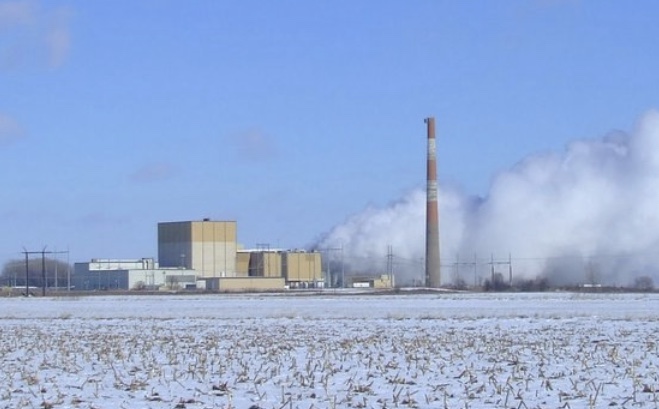
Flying the state budget on one engine

Jon Muller is a semi-retired policy analyst and entrepreneur who previously was a tax analyst and revenue forecaster for Iowa’s Revenue Estimating Conference.

Iowa Republicans appear to be budgeting on pure hope. And that’s probably the only tool they have. That hope appears to be misplaced.

State government is piecing together a budget, but it’s like flying a plane with one engine gone. This piece is an effort to estimate how far they can fly the plane before it crashes.

The three-member Revenue Estimating Conference (REC) left the estimates largely unchanged at its December 11 meeting, with an additional $23 million for the current fiscal year and an extra $105 million for the budget they’ll appropriate next session.

Normally, that would be pretty good news. The state government historically worked on the premise that future expected appropriations could be funded with future expected revenues. Even when the income tax cutting regime got its foothold in the mid-1990s, both the legislative and executive branches used five-year forecasts of revenues and expenditures to make sure the long-term forecast was at least theoretically reasonable. There’s nothing inherently wrong with using reserves to fund tax cuts in the short run, if it’s reasonable to believe future revenue increases are sufficient to fund them.

I sincerely doubt the state government uses this approach anymore. Because they have committed fiscal malpractice the likes of which I have never seen in Iowa.

Continue Reading...

Five takeaways from the Iowa House district 7 special election

Wendy Larson will be the newest Republican in the Iowa House, after winning the December 9 special election in House district 7 by a margin of 2,817 votes to 1,201 for Democratic candidate Rachel Burns (70.0 percent to 29.9 percent). Larson’s victory brings the GOP majority in the chamber back to 67-33. Her predecessor, State Representative Mike Sexton, stepped down in September to take a senior position with the U.S. Department of Agriculture.

The special election outcome was almost a foregone conclusion in one of the state’s reddest legislative districts. House district 7, covering Sac, Pocahontas, and Calhoun counties, plus some rural areas of Webster County, contains more registered Republicans than Democrats and no-party voters combined. Donald Trump received nearly 75 percent of the vote here in 2024, well above the 55.7 percent he received statewide in Iowa.

Still, I was closely watching the race to see what the results might tell us about voter enthusiasm and changing preferences going into the 2026 midterms.

It’s hard to draw any broad conclusions from this election, but I have a few takeaways.

Continue Reading...

Two Iowa National Guard members killed in Syria

Robin Opsahl covers the state legislature and politics for Iowa Capital Dispatch, where this article first appeared.

Iowa Governor Kim Reynolds on December 15 ordered all flags in Iowa lowered in honor of the two Iowa National Guard members killed in Syria.

The two service members were killed on December 13 in Palmyra, Syria, by a lone gunman suspected to be affiliated with ISIS. The two individuals were identified in a news release Monday as Sgt. William Nathaniel Howard of Marshalltown and Sgt. Edgar Brian Torres-Tovar of Grimes. Both were members of the 1st Squadron, 113th Cavalry Regiment.

Continue Reading...

Miller-Meeks no longer registered to vote in IA-01

Sarah Watson had the scoop for the Quad-City Times: U.S. Representative Mariannette Miller-Meeks no longer officially lives in Scott County, or anywhere in Iowa’s first Congressional district. In July 2025, she changed her voter registration back to the Ottumwa home she shares with her husband.

Aspiring candidates and campaign strategists could learn a lot from how Miller-Meeks has handled questions surrounding her residency over the past four years. It’s hard to believe an experienced politician could botch this issue so badly.

Continue Reading...
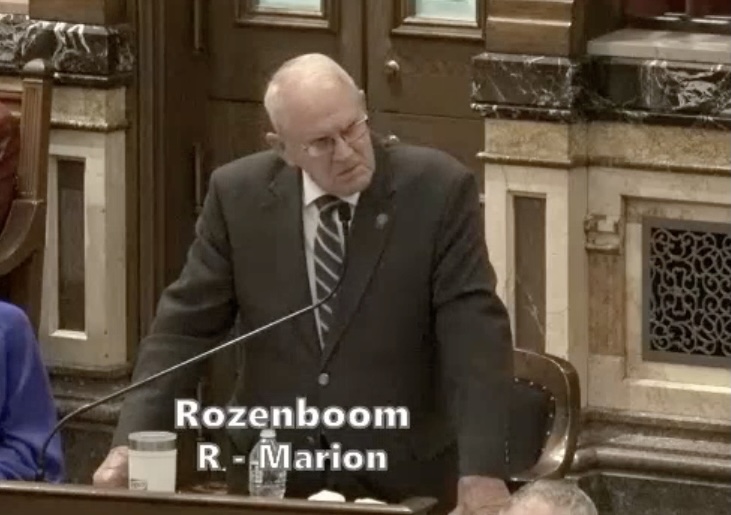
Miller-Meeks touts praise from Trump in taxpayer-funded ads

“Good job you did! Great job,” President Donald Trump says to U.S. Representative Mariannette Miller-Meeks in a 30-second commercial that has reached thousands of Iowans on the radio or social media platforms over the past month.

The three-term Republican did not place the ads through her campaign committee, which had accumulated more than $2.6 million cash on hand as of September 30.

Instead, Miller-Meeks—considered one of the country’s most vulnerable House Republicans—has used taxpayer funds to share Trump’s praise with Iowans.

Bleeding Heartland’s review of data from Facebook’s ad library and Federal Communications Commission files suggest that Miller-Meeks’ Congressional office has spent at least $10,000 to run this spot. (Several other taxpayer-funded radio ads have also been in rotation this fall.)

If the 2024 campaign is any indication, Miller-Meeks may spend much more from her Congressional office budget in the coming months, as she seeks to shore up her appeal with conservatives before another competitive primary election in Iowa’s first district.

Continue Reading...
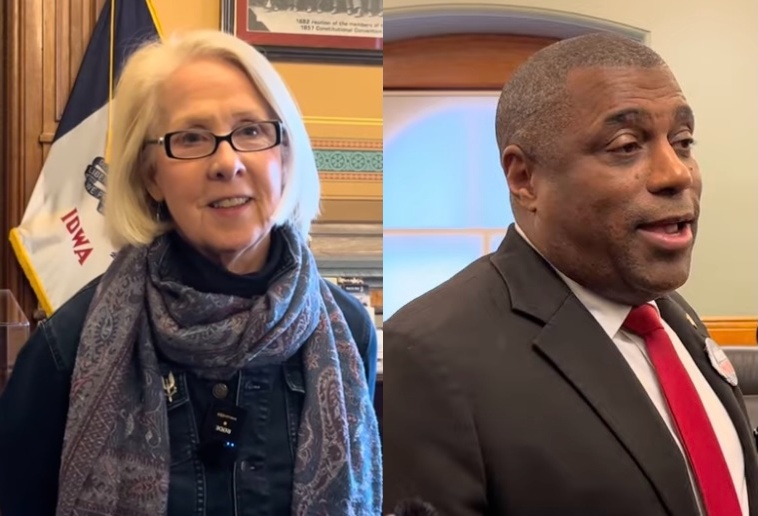
Iowa helping Trump administration build national citizen registry

Ed Tibbetts, a longtime reporter and editor in the Quad-Cities, is the publisher of the Along the Mississippi newsletter, where this article first appeared. Find more of his work at edtibbetts.substack.com.

Attorney General Brenna Bird buried the news. I can understand why.

No self-respecting right-winger would want to be seen backing a centralized citizen registry in Washington, DC.

For as long as I can remember, conservatives were in the vanguard of opposing such big government excesses. Yet, here is Iowa’s attorney general—along with Secretary of State Paul Pate—actually helping to build what some critics are likening to a super database for Big Brother.

Continue Reading...
Iowaska Church seeks federal exemption to Controlled Substances Act

Carl Olsen is the founder of Iowans for Medical Marijuana.

The Iowaska Church of Healing is seeking a federal exemption for the religious use of ayahuasca, a hallucinogen in Schedule 1 of the Controlled Substances Act. Several other churches have received exemptions for ayahuasca, so it seems like the process should be straightforward, and that’s what the church argued in the U.S. Court of Appeals on November 14, 2025, after a six-year delay in processing their application.

The Drug Enforcement Administration (DEA) created a Guidance Document for the Religious Freedom Restoration Act (RFRA) in 2009 which is at the heart of this case argued before the United States Court of Appeals for the District of Columbia Circuit on November 14, 2025. In re: Iowaska Church of Healing, No. 25-1140. The Guidance Document explains how to apply for a religious exception to the Controlled Substances Act (CSA) of 1970 using the regulatory authority in the CSA.

Prior to the decision in Gonzales v. O Centro Espírita Beneficente União do Vegetal, 546 U.S. 418 (2006), the DEA had claimed it lacked the regulatory authority in the CSA to make religious exceptions. The Guidance Document does not include an apology for that error, but it does finally settle the issue of whether the DEA has the authority to make religious exceptions. It does, and it always did.

Continue Reading...

2,000 central Iowa UnityPoint nurses to vote on unionization

Douglas Burns is a fourth-generation Iowa journalist. He is the co-founder of the Western Iowa Journalism Foundation and a member of the Iowa Writers’ Collaborative, where this article first appeared on The Iowa Mercury newsletter. His family operated the Carroll Times Herald for 93 years in Carroll, Iowa where Burns resides.

About 2,000 nurses in four Des Moines area UnityPoint Health campuses will vote early this month on whether to unionize their ranks for what leaders of the movement say will bring more bargaining power for salaries, benefits and working conditions through a proposed affiliation with the Teamsters Union.

Nurses are expected to vote December 7 to 9 on unionization at four UnityPoint locations: Iowa Methodist Medical Center, Blank Children’s Hospital, Methodist West Hospital, and Iowa Lutheran Hospital.

An affirmative vote would be a groundbreaking one in Iowa health care—and the union movement—as the Teamsters would represent nurses in non-profit hospitals, with the potential for organizing other health-care workers across a span of UnityPoint facilities in Iowa—and other medical centers in which health-care workers could be inspired by the Des Moines vote.

Continue Reading...

Conservative group attempted image makeover for Brenna Bird

A little-known conservative group based in Virginia spent heavily in October to run a 30-second positive ad about Attorney General Brenna Bird on television and streaming services across Iowa.

The Fund for Economic Independence later claimed their commercial “sharply” improved Bird’s image with “targeted persuadable voters,” moving her from a 7-point deficit to a tie in a ballot test against Democratic challenger Nate Willems.

While it’s impossible to confirm whether that commercial measurably helped Bird with swing voters, one thing is clear: more than a year before the 2026 midterm election, the attorney general’s polling numbers were bad enough to inspire a well-funded outside rescue mission.

Continue Reading...
Reporter Trump called "Piggy" has an Iowa connection

Even for President Donald Trump, who lobs public insults on a daily basis, this one stood out. During a November 14 gaggle with journalists on Air Force One, Trump tried to silence a reporter asking about the Epstein files: “Quiet. Quiet, Piggy.”

The target of his childish name-calling was Bloomberg News correspondent Catherine Lucey, and she has an Iowa connection.

Continue Reading...
The Gazette's new task: maintain local confidence, journalism

Lyle Muller is a board member of the Midwest Center for Investigative Reporting and Iowa High School Press Association, a trustee of the Iowa Freedom of Information Council, former executive director/editor of the Iowa Center for Public Journalism that became part of the Midwest Center, former editor of The Cedar Rapids Gazette, and a recipient of the Iowa Newspaper Association’s Distinguished Service Award. In retirement, he is the professional adviser for Grinnell College’s Scarlet & Black newspaper. This article first appeared on his Substack newsletter.

It only took a few hours after my November 18 column about supporting local journalists to be published for Folience, the “100% employee-owned portfolio of companies with reputations for excellence,” to announce it had sold The Gazette newspaper in Cedar Rapids.

Also going to the buyer, Adams Multimedia of Minneapolis, are eleven community newspapers Folience owned through The Gazette.

“There’s a lot of processing,” Gazette Editor Zack Kucharski said Tuesday evening about his busy day talking through the sale and concerns with staffers, including those at some of the local papers. “It’s been a difficult day.”

I worked at The Gazette for 25 years as a bureau chief, reporter, and editor, so news of the sale stings. Of course, we should be used to the stings now. Another Iowa newspaper owner gone during the changing landscape for newspapers but also any news organization.

Continue Reading...
Funding bill includes $16 million for earmarked Iowa projects

The bill President Donald Trump signed on November 12 to end the longest federal government shutdown includes $16 million for designated projects in Iowa, according to Bleeding Heartland’s analysis of a Senate Appropriations Committee report. U.S. Senators Joni Ernst and Chuck Grassley were among 60 senators who approved the funding bill on November 10. All four U.S. House Republicans from Iowa—Mariannette Miller-Meeks (IA-01), Ashley Hinson (IA-02), Zach Nunn (IA-03), and Randy Feenstra (IA-04)—were among the 22 representatives who voted for the bill two days later.

The bill funds most federal government operations through January 30, 2026. A few agencies and programs, including the U.S. Department of Agriculture, are funded through the end of the federal fiscal year on September 30, 2026.

Miller-Meeks, Hinson, and Nunn had all requested “community project funding” through various USDA programs. The final bill included eleven of those earmarked projects: five in Hinson’s district, and three each sought by Miller-Meeks and Nunn.

The 36 counties in IA-04 will receive none of the earmarked funding, because for the fifth straight year, Feenstra declined to submit any requests for community projects. Ernst and Grassley have not participated in the earmarks process in recent years either. Abstaining from the process does not save any taxpayer dollars; it only ensures that the federal funds allocated for Congressionally-directed spending flow to other members’ districts.

These are the first earmarks Iowa will receive from a government funding bill since 2024. Miller-Meeks, Hinson, and Nunn submitted a combined $115 million in community project requests for fiscal year 2025, but the appropriations bill Congress approved in March of this year—with Iowa’s whole delegation voting in favor—included no money for any earmarked projects.

Miller-Meeks, Hinson, and Nunn each submitted fifteen community project funding requests (the maximum allowed for each U.S. House member) for the current fiscal year. Most of them were repeated from last year. The fate of the other projects—which include improvements to roads, flood mitigation, higher education, and airports—won’t be known until Congress approves and Trump signs final appropriations bills for fiscal year 2026.

Continue Reading...
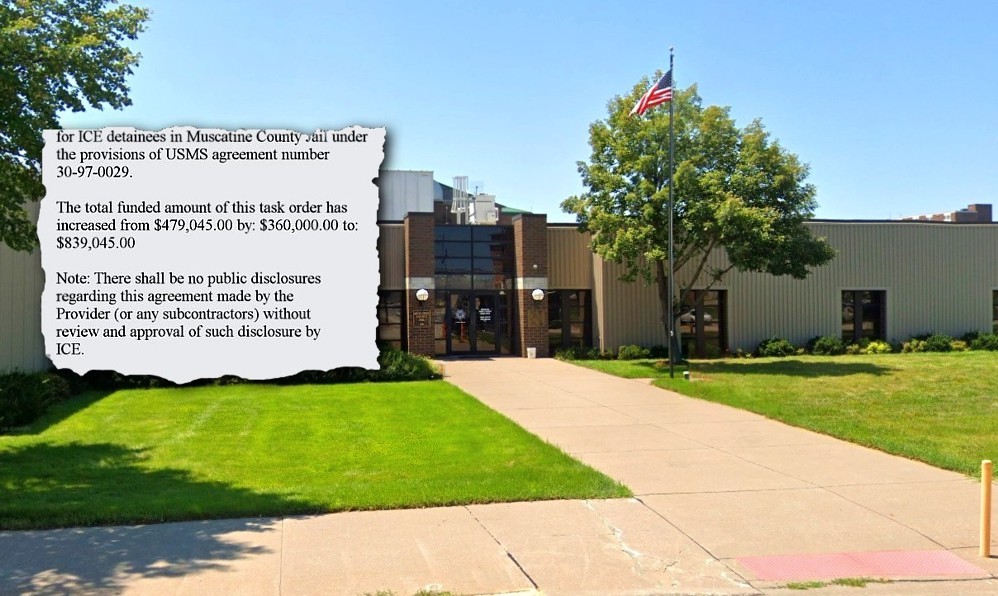
A look at Iowa's 2025 school bond referendums

Jeff Morrison is a member of the Iowa Writers’ Collaborative and the publisher of the Between Two Rivers newsletter, where this article first appeared. Find more of his work at betweentworivers.substack.com and iowahighwayends.net.

Forty-three Iowa school districts held bond referendums on November 4. According to unofficial results from the Iowa Secretary of State’s Office, eighteen passed, fifteen had a majority in favor but not the required 60 percent supermajority, and ten failed to reach 50 percent. The middle category has five districts of all sizes—Cedar Rapids, Easton Valley, Hinton, Independence, and Sergeant Bluff-Luton—receiving more than 58 percent but less than 60 percent support.

The 43 districts voted on a combined $1,435,950,000 in general obligation bonds. (That includes Atlantic’s $22.5 million bond for school construction, which passed, but not its $18.5 million sales tax revenue bond for a multipurpose facility, which failed.)

Continue Reading...
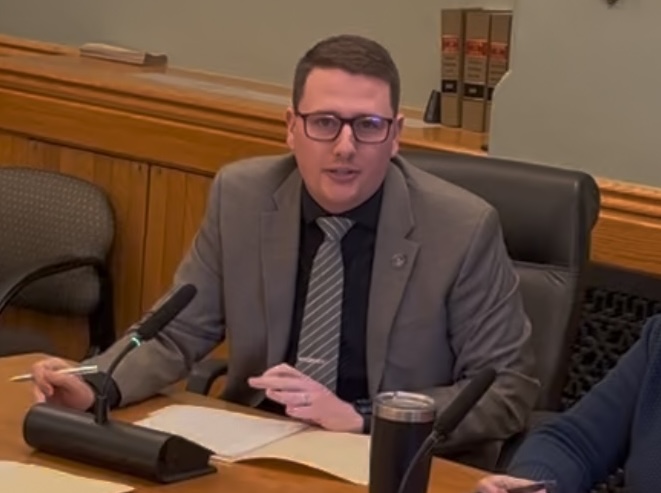
How Jill Shudak beat the odds in Council Bluffs mayoral race

“I think it really speaks to the changing of the times,” Jill Shudak told me on November 6, two days after she became the first woman elected mayor of southwest Iowa’s largest city. Council Bluffs is “moving forward, and they’re ready for a forward thinker.”

Amid many Democratic victories from coast to coast in the November 2025 election, Shudak’s accomplishment stayed mostly below the radar. But she beat the odds in two ways. As a first-term city council member, she defeated a well-known, long-serving incumbent. Council Bluffs voters had elected Matt Walsh mayor three times; he had previously served on the city council since 1996.

It’s also notable that a Democrat won a mayoral race in a city that has trended red. (While local elections are nonpartisan in Iowa, area Democrats and labor activists were supporting Shudak, and Walsh is a Republican.) Bleeding Heartland’s analysis of results from the 2024 general election show voters across the 22 Council Bluffs precincts preferred Donald Trump for president by a margin of 53.6 percent to 44.7 percent for Kamala Harris, and preferred Republican Randy Feenstra to Democratic challenger Ryan Melton in the Congressional race by 55.3 percent to 44.1 percent.

Unofficial results from the 2025 election show Shudak received 3,641 votes (43.9 percent) to 3,524 votes (42.5 percent) for Walsh. City council member Chris Peterson likely received most of the 1,130 write-in votes (13.6 percent) in the mayoral race.

Shudak made time to talk about her campaign despite a “whirlwind” of activity since the election, including conversations with the city’s department heads and a round table discussion about property taxes with Governor Kim Reynolds. Here’s the full video from our interview.

Continue Reading...

Eight classic Claire Celsi moments in the Iowa Senate

I can’t remember when I met Claire Celsi. It was years before she decided to run for the state legislature. Our paths crossed often at Democratic events, and we knew many of the same people in progressive circles. I valued her take on the latest news and her thoughts about blogging, since she had kept an online journal during the 2000s.

Claire was generous with her time as a volunteer for many Democratic candidates, starting with Tom Harkin’s first U.S. Senate race in 1984. She was one of the early organizers of the West Des Moines Democrats, back when that suburb leaned strongly to Republicans. She managed Mike Huston’s Congressional campaign in 2000 and worked hard in 2017 to help Renee Hardman defeat an incumbent to win a West Des Moines city council seat. (Hardman is now the Democratic nominee to succeed Claire in Iowa Senate district 16.)

Josh Hughes described how Claire was the first “grown up” to take him seriously as a Democratic activist. She enjoyed spending time with people of all ages. Josh took this picture near the Surf Ballroom in August 2018, when he and Olivia Habinck were leaders of the College and Young Democrats of Iowa, and Claire and I carpooled with them to the Iowa Democratic Wing Ding.

Continue Reading...

"We Can Do Better" shows path for conservation movement

Charles Bruner, Ralph Rosenberg, and David Osterberg jointly wrote this piece. All of the authors served with Paul Johnson in the Iowa legislature and remain active in Iowa politics and policy. They serve on the board of the Johnson Center for Land Stewardship Policy, which worked with Curt Meine in the development of We Can Do Better.

A land comprised of wilderness islands at one extreme and urban islands at the other, with vast food and fiber factories in between, does not constitute a geography of hope. But private land need not be devoted to a single-purpose enterprise. With a broader understanding of land and our place within the landscape, our Nation’s farms, ranches, and private forest land can and do serve the multiple functions that we and all other life do depend upon.

That quote is from Paul Johnson’s introduction to the USDA National Resources Soil Conservation Services’ 1996 America’s Private Land: A Geography of Hope, which is even more relevant today than when he wrote it and shepherded that publication. 

Paul Johnson (1941-2021) was a pivotal figure in American conservation, dedicating his life to bridging the gap between agriculture and environmental stewardship. A new book of Paul’s writings has just been released.

Continue Reading...

The joy of resistance: A gallery of No Kings signs from Iowa

Some 25,000 to 30,000 Iowans were among the millions of Americans who protested President Donald Trump’s abuses of power on October 18. Despite the grave threats that brought people to the rallies, the prevailing mood was upbeat at the two “No Kings” events I attended. That’s consistent with news reports and anecdotal accounts of a “festival atmosphere” in cities and towns across the country.

I took most of the photos enclosed below in Indianola, where more than 300 people lined a busy street in the late morning, or at the early afternoon rally outside the state capitol in Des Moines. Hand-made signs vastly outnumbered professionally printed signs, capturing the protesters’ passion, creativity, and humor.

Continue Reading...

Improved water quality in Iowa: Now or never?

Pam Mackey Taylor is the Director of the Iowa Chapter of the Sierra Club.

Every three years, the Iowa Department of Natural Resources (DNR) conducts a Triennial Review of its water quality standards. Part of the review is a determination of what changes need to be made to Iowa’s existing water quality standards.

The agenda for the Triennial Review was simple. The DNR intends to focus on the following topic areas related to water quality standards:

  • Tribal reserved rights
  • Antidegradation
  • Human health criteria
  • Chapter 61/Surface Water Classification document cleanup
  • Use attainability analysis
  • PFAS (per- and polyfluoroalkyl substances, sometimes called “forever chemicals”)
  • Lake nutrients

After digging into these topics during the review meeting, what jumped out was the lack of investment the State of Iowa and the DNR have made in water quality and improved water quality standards over the last two decades. 

Continue Reading...

Panel predicts 9% drop in Iowa state tax revenue in current fiscal year

Robin Opsahl covers the state legislature and politics for Iowa Capital Dispatch, where this article first appeared.

The Iowa Revenue Estimating Conference on October 16 lowered its estimates for the state’s tax revenue in fiscal year 2026 by $375 million compared to predictions from March of this year.

The panel, chaired by Iowa Department of Management Director Kraig Paulsen, approved changes to the revenue estimates in light of recent economic shifts and tax policy changes like the federal “One Big Beautiful Bill Act,” the budget reconciliation measure President Donald Trump signed in July. The nonpartisan Legislative Services Agency reported the state’s revenue in fiscal year 2025 was $198 million below the panel’s March forecast because of the impact of federal tax law changes.

Paulsen said the new REC estimates account for both the reduced state revenue due to federal tax policies, the impacts of the state’s 2024 acceleration of previously approved income tax cuts, as well as economic factors like rising unemployment rates and China’s move to import soybeans from South American countries instead of U.S. producers.

Continue Reading...

Is Randy Feenstra planning to float tax credit for homeschoolers?

A new Iowa poll is testing messages about a $4,000 tax credit to help families cover “approved education expenses,” and suggests that approach may save taxpayer money currently spent on children enrolled in public schools.

It’s not clear who commissioned the text survey, which has been in the field in recent days. The questionnaire points to Randy Feenstra’s campaign for governor, which is technically still in the “exploratory” phase, or some entity planning to support Feenstra for governor. Many of the questions use preferred Republican frames (“education freedom,” parental choice, “limiting government overreach”). The poll asks how important it is for Iowa’s next governor to “work to improve K-12 education,” and tests only one potential match-up: Randy Feenstra vs. Rob Sand. (Last month, Bleeding Heartland covered a different poll testing messages about Feenstra and Sand.)

Homeschoolers are an important Republican constituency, especially among social conservatives. Families who send their kids to private schools—almost all of which are Christian or Catholic—would also welcome an education tax credit, in addition to the taxpayer assistance they already receive through Iowa’s school voucher program (“education savings accounts”).

Feenstra has good reason to search for ways to shore up his support with the “education freedom” crowd. His underwhelming victory over a little-known 2024 primary challenger highlighted troubles on his right flank. He is unpopular among property rights activists who oppose the use of eminent domain to build Summit Carbon Solutions’ proposed CO2 pipeline. He has skipped forums involving other Republican candidates for governor, including an Iowa Faith and Freedom Coalition event in July. Feenstra’s exploratory committee has the resources to pay for opinion research.

A recent poll of “likely Republican voters,” conducted by American Viewpoint, found Feenstra “in a commanding position,” with 41 percent support in the governor’s race and no other GOP candidate above 5 percent. A cautionary note: American Viewpoint’s polls for Feenstra’s U.S. House campaign found the incumbent with a roughly 50-point lead over challenger Kevin Virgil before the 2024 GOP primary. Feenstra ended up winning the nomination in Iowa’s fourth Congressional district by a margin of 60.1 percent to 39.4 percent.

Continue Reading...

Polls test impact of superintendent's arrest on Iowa Senate race

A pair of recent polls have tried to gauge how the arrest of then Des Moines Superintendent Ian Roberts could affect Iowa’s U.S. Senate race.

One text survey, which was in the field this past week, seeks to determine how much respondents have heard about the incident, who “bears the most responsibility” for the situation, and whether the Roberts controversy gives respondents concerns about Des Moines School Board President Jackie Norris, who is one of the Democrats running for Senate. A different version of the survey tests another negative message about Norris’ past political work and support for “radical DEI policies” on the school board.

Staff for Norris did not respond to inquiries about the survey, but the question wording (enclosed in full below) strongly suggests the Norris campaign commissioned it. Notably, the poll tests U.S. Representative Ashley Hinson (the Republican front-runner) against Norris twice, and Hinson against State Representative Josh Turek once, but does not ask respondents about their preference between Hinson and either State Senator Zach Wahls or Iraq War veteran Nathan Sage. It also tests messages about Norris, but not about any other Democratic candidate.

The National Republican Senatorial Committee, the main campaign arm of U.S. Senate Republicans, commissioned a separate poll of 579 “Democratic primary voters via text-to-web surveys” on September 29 and 30, a few days after Roberts’ arrest. The NRSC has not released full results from that poll, the questionnaire, or the screen used to identify “Democratic primary voters.” Jennie Taer published a few findings in an article on the conservative website The Daily Wire.

Continue Reading...

Laehn launches Senate bid with two-count "indictment" of Congress

“The system is broken,” declared Libertarian Thomas Laehn as he kicked off his U.S. Senate campaign on October 11.

The Greene County attorney, who became the first Libertarian elected to a partisan office in Iowa in 2018, styled his case against two-party governance as a two-count “indictment” of the 535 members of Congress.

One of his central arguments could appeal to many disaffected Republicans.

Continue Reading...

Ag Secretary Rollins turns USDA into partisan tool for Republicans

Matt Russell is a farmer, political writer, and progressive ag and rural leader. He has published work in the New York Times, TIME, AgInsider, Civil Eats, and many state or local publications. He co-owns Coyote Run Farm with his husband Patrick Standley in rural Lacona, Iowa. A version of this essay first appeared on his Substack newsletter, Growing New Leaders: Perspectives from Coyote Run Farm.

The media is covering the federal government shutdown as a battle between Democrats and Republicans. I disagree that this is a fair assessment. The battle is about more than partisan politics. For President Donald Trump, the MAGA movement, and Republicans, this is a battle about redefining the federal government, the Constitution, our democracy, and our nation as it has developed over 250 years.

I don’t think the federal government has ever been used for this kind of obviously partisan communication, other than what Trump has previously said and done. As a reminder, the president is not covered by the Hatch Act, the law that prevents federal employees from engaging in partisan politics while performing their duties as well as other aspects of their lives.

Without doing further research, I don’t want to claim something like this has never happened, but unless someone can show evidence that it has, I’m willing to suggest it likely hasn’t.

Continue Reading...

Poll testing how Ian Roberts arrest could affect DMPS bond vote

A text poll in the field this week is probing whether the recent arrest of Superintendent Ian Roberts is a “convincing” argument against a bond issue that is a priority for the Des Moines Public Schools.

Voters in the Des Moines school district will decide on November 4 whether to approve a $265 million, 20-year general obligation bond to finance the Reimagining Education, Reinvigorating Schools initiative. The referendum needs at least a 60 percent “yes” vote to pass; the district hopes to expand or remodel all of the Des Moines high schools and nearly a dozen middle or elementary schools.

The survey tests two messages against the bond referendum and two supporting it, with a ballot test before and after respondents read the arguments. I enclose below the full questionnaire, drawn from screenshots shared by those who took the “Des Moines Schools Survey.”

Representatives of Yes for Des Moines Schools, a political committee formed this summer to support the bond issue, did not respond to Facebook or email messages seeking to confirm whether the group commissioned the poll. But the results could provide valuable information to that organization, which had raised $105,000 by mid-July, according to a campaign finance disclosure.

Continue Reading...

Beth Macy, author of 'Dopesick' and 'Paper Girl,' coming to Des Moines

Douglas Burns is a fourth-generation Iowa journalist. He is the co-founder of the Western Iowa Journalism Foundation and a member of the Iowa Writers’ Collaborative, where this article first appeared on The Iowa Mercury newsletter. His family operated the Carroll Times Herald for 93 years in Carroll, Iowa where Burns resides.

Through what political scientists might call a deep canvass into her own culturally polarized family in rural, de-industrialized Ohio author Beth Macy gives us a riveting, devastating and call-to-action mirror into our nation with her extraordinary new book, Paper Girl: A Memoir Of Home And Family In a Fractured America.

The powerhouse work of non-fiction connects three threads—Macy’s memoir of life in rural Ohio, both as a kid and returning adult, exhaustive and exhilarating reporting on a changing America, and a fierce case for the role of local news in preserving or stitching back democracy.

You can get a first-hand preview of Paper Girl in Des Moines, Iowa this weekend with the author of the just-released book.

Continue Reading...

Many Iowans can't get COVID boosters. Kim Reynolds isn't helping

For years, Governor Kim Reynolds resisted COVID-19 vaccine mandates, saying she believed “in Iowans’ right to make health care decisions based on what’s best for themselves and their families.”

But as this year’s cold and flu season begins, many Iowans who want to protect themselves and their families from COVID-19 are unable to get a booster shot, because the U.S. Food and Drug Administration restricted access to updated vaccines.

Public health authorities in about two dozen states have issued guidance or standing orders designed to help adults choose to vaccinate themselves or their children against COVID-19. The Reynolds administration has not acted.

Staff for the governor’s office and Iowa Department of Health and Human Services did not respond to several requests for comment over the past ten days.

Continue Reading...

Ian Roberts resigns as Des Moines superintendent, lawyer says

Robin Opsahl covers the state legislature and politics for Iowa Capital Dispatch, where this article first appeared.

Des Moines Public Schools superintendent Ian Roberts has resigned from his position effective immediately, lawyers representing him said on September 30.

Continue Reading...

Board puts DSM superintendent on leave, decries "misinformation"

UPDATE: On September 29, the Des Moines School Board learned that the Iowa Board of Education Examiners had revoked Roberts’ administrator license, and received from federal authorities a copy of the final order of removal and other documentation indicating that Roberts was not authorized to work in the U.S. The board held another special meeting at which members voted to put Roberts on unpaid leave. They also gave his attorney until noon on September 30 to provide documents supporting his claim to citizenship. Otherwise the school district will start the process of terminating his contract. Original post follows.

Members of the Des Moines School Board voted unanimously on September 27 to place Superintendent Dr. Ian Roberts on paid administrative leave, one day after U.S. Immigration and Customs Enforcement (ICE) detained him. ICE has said Roberts is unlawfully present in the U.S. and lacks work authorization.

In support of the motion she offered at the special meeting, school board member Kim Martorano said, “While there is still much that we don’t know, what we do know is that Dr. Roberts is currently unavailable to perform his duties as superintendent.” She said Iowa Code Chapter 279 and “standard district practice” called for putting Roberts on paid administrative leave “pending further information. The board may revisit this at any time that we have obtained additional concrete information relevant to Dr. Roberts’ status.”

Continue Reading...
Page 1 Page 2 Page 3 Page 153