
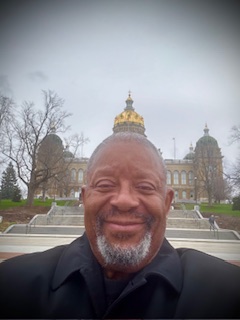
Wayne Ford is the executive director of Wayne Ford Equity Impact Institute and co-Director of the Brown and Black Forums of America. He is a former member of the Iowa legislature and the founder and former executive director of Urban Dreams.
INTRODUCTION: A STATE IN TRANSITION
For nearly half a century, Iowans have approached our future with optimism, hard work, and a deep commitment to community. But as we enter the next 25 years—from 2026 through 2050—the forces shaping Iowa are fundamentally different from anything in our past. These forces are structural, interconnected, and accelerating. They affect every sector of our society: our schools, our health care systems, our farmland, our water, our workforce, our economy, and the very makeup of our communities.
For decades, states like Iowa have relied on annual budgeting to shape priorities. But a one-year budget cannot capture pressures that unfold over decades. Nor can it measure the true economic cost of challenges such as rural hospital closures, workforce shortages, mental health crises, water contamination, demographic decline, artificial intelligence, or the shifting global market for agriculture.
To prepare for the next generation, Iowa must adopt a broader lens—one that helps leaders understand where the state is headed, not only where the budget is today.
This report introduces a long-range view of Iowa’s future by identifying the twelve major statewide pressures that will shape the next quarter-century. Together, these forces create a combined annual statewide economic pressure of $47 billion to $61 billion.
That number is not a budget request.
It is not a spending plan.
It is a measurement of the cost of inaction.
Understanding that number allows Iowa to see our future more clearly. It helps policymakers build multi-year plans. It gives businesses and communities better information about where the state is headed. And it allows every Iowan to judge whether we are preparing today for the challenges of tomorrow.
This article does not offer solutions—those will come later.
Rather, this article offers clarity—the foundation upon which all solutions must be built.
UNDERSTANDING THE ANNUAL PRESSURE NUMBER
Most Iowans have never seen these types of financial numbers tied directly to statewide challenges. To be clear: the $47 billion to $61 billion figure does not represent Iowa’s state budget. (This year, Iowa is projected to spend about $9.4 billion from the general fund.)
Instead, the pressure number represents the total economic exposure these twelve challenges create every year across the entire state.
It includes impacts to:
• families
• local businesses
• school districts
• hospitals
• agriculture
• infrastructure
• emergency services
• regional economies
• long-term workforce and productivity
These pressures accumulate year after year, often outside the budget, until they become visible through crisis: a hospital closure, a contaminated river, a teacher shortage, a workforce gap, a bridge collapse, or a population decline.
National research supports this approach. The National Association of State Budget Officers has noted that traditional annual budgets “do not capture long-term structural pressures.”
The Congressional Budget Office has warned that aging, health care costs, and workforce decline exert pressures far larger than government budgets can measure.
And as the U.S. Government Accountability Office has observed that annual state budgets are not designed to capture structural pressures that accumulate over decades; long-term fiscal simulations are “essential for policymakers” in understanding the sustainability of future state and local finances.
The U.S. Environmental Protection Agency, U.S. Department of Agriculture, American Hospital Association, Federal Highway Administration, Brookings Institution, and McKinsey Global Institute have all published reports confirming that environmental, demographic, technological, and infrastructural challenges are multi-decade forces requiring new forecasting tools.
Iowa cannot prepare for 2050 with tools designed for 1980.
For that reason, the Wayne Ford Equity Impact Institute has begun developing a longer-range planning lens—a framework that translates statewide pressures into information leaders can use across multiple years.
The detailed mechanics of that framework will be developed in consultation with Iowa’s policymakers, business leaders, and community partners.
But the message is simple: Iowa must understand tomorrow’s pressures today.
THE FOUR-YEAR POLITICAL WINDOW vs. LONG-TERM CHALLENGES
Every governor, legislature, county board, and city council operates within a four-year cycle. Most statewide challenges do not fit neatly into those windows. But by estimating Iowa’s pressures across six political terms—2026 through 2050—we create a clearer picture of what future generations will inherit.
• Annual pressure: $47–$61 billion
• Four-year statewide pressure: $188–$240 billion
• Six political cycles (2026–2050): $1.13–$1.44 trillion in statewide economic exposure
Again, this is not a spending plan. It is an early warning system—a way to show where Iowa is headed and why long-term planning is essential.

TWELVE STATEWIDE CHALLENGES FROM 2026 TO 2050
Each challenge includes its annual statewide economic pressure—not the state budget cost, but the cost to Iowa’s entire economy if the issue remains unaddressed.
I. Demographic Transformation & Aging Population
Annual Pressure: $8.5 billion–$10 billion
Iowa’s over-65 population will increase sharply through 2050, outpacing growth in the working-age population. This creates long-term pressures across health care, long-term care, workforce availability, and rural services.
II. Education System Strain & Workforce Readiness
Annual Pressure: $3.8 billion–$4.8 billion
Declining rural enrollment, school district consolidation, and skill mismatches will increase long-term workforce and economic pressures.
III. Public Safety & Rural–Urban Divide
Annual Pressure: $1.6 billion–$2.4 billion
Crime concentration, rural policing shortages, and increased urban service demands carry multi-system costs.
IV. Homelessness & Housing Instability
Annual Pressure: $1.1 billion–$1.6 billion
Emergency care, policing, shelters, and loss of workforce participation add major statewide burdens.
V. Mental Health & Behavioral Health Crisis
Annual Pressure: $2.2 billion–$3 billion
Untreated mental illness affects hospitals, law enforcement, schools, and families.
VI. Immigration, Labor Shortages & Multicultural Integration
Annual Pressure: $0.9 billion–$1.4 billion
Iowa’s long-term economic stability depends on new workers; integration challenges create transitional pressures.
VII. Water Quality, Nitrate Contamination & Environmental Health
Annual Pressure: $4.5 billion–$6 billion
Nitrate removal, watershed management, and public health impacts create rising long-term economic pressures.
VIII. Transportation Infrastructure (Roads and Bridges)
Annual Pressure: $7 billion–$9 billion
Iowa ranks among the highest in structurally deficient bridges nationwide.
IX. Broadband, Technology and AI Divide
Annual Pressure: $1.4 billion–$2.2 billion
Connectivity gaps harm rural economies, education, and health care access.
X. Health care Infrastructure & Rural Hospital Stability
Annual Pressure: $6.5 billion–$8 billion
Rural hospital closures create statewide ripple effects in emergency care and workforce loss.
XI. Declining Rural Tax Base
Annual Pressure: $3.2 billion–$4.4 billion
More than half of Iowa counties are losing population, reducing revenue and increasing long-term fiscal stress.
XII. Global Economic Competitiveness & Automation
Annual Pressure: $7 billion–$9 billion
Automation and AI will reshape Iowa’s agricultural and manufacturing workforce.
LOOKING FORWARD: 2026 TO 2050
This report does not attempt to solve the twelve challenges. That is the next step.
But this report does say—clearly and publicly—that Iowa is entering a new era. We can no longer rely on one-year budgets to navigate multi-decade pressures. We must rethink how we forecast our future, how we measure progress, and how we prepare our children and grandchildren for the Iowa they will inherit.
A broader long-range framework is needed. The Wayne Ford Equity Impact Institute is developing the groundwork for such a framework, which will be discussed in partnership with Iowa policymakers, counties, cities, universities, business leaders, and community stakeholders.
But the first step is understanding the truth: Iowa’s future will be shaped not only by what we spend, but by what we fail to prepare for.
CONCLUSION: A NEW ERA OF RESPONSIBILITY
Iowa is at a crossroads.
We are still the state that leads the nation in civic engagement.
We are still the state where candidates meet people face-to-face.
We are still the state where the voices of 99 counties matter.
But to remain that Iowa—to remain competitive, healthy, safe, and prosperous—we must see further than we have ever seen before.
The twelve challenges outlined here represent the structural pressures that will define Iowa through 2050. They represent the cost of inaction, the stakes of delay, and the urgency of planning not for one year, but for the next generation.
And yet there is hope.
Iowa has always risen to the moment.
We have done it before.
We will do it again.
But only if we begin now.

2 Comments
yes our problems
run much deep (and wider) then corruption in the GOP and it would be great to hear candidates address these matters in serious ways rather then what we generally get served. I don’t think Iowa can really address any of these matters at scale without federal assistance but given the current federal regime we should do what we can to ease the burdens and stop adding new ones.
The worldwide phenomena of urbanization has been ramping up for decades now and no one has been able to reverse it, so it would be great if we could start to plan for ways to help the people who can’t make it in rural areas, but also can’t afford to get out, to relocate.
dirkiniowacity Thu 11 Dec 8:18 PM
The "pressure" below might be covered under "watershed management."
One way or another, however, if Iowa leaders believe that Iowa can farm in the future the way Iowa farms now if the Iowa landscape continues to lose an average of five tons of topsoil per year per rowcropped acre, Iowa leaders are deluded. And that is not considering the impacts of farm chemical use that goes far, far beyond nitrogen. The use of fungicide alone is rising fast.
PrairieFan Thu 11 Dec 8:31 PM