Wayne Ford

Posts 10 Comments 0

Impact before implementation: What Iowa's habitual offender debate revealed

Wayne Ford is the executive director of Wayne Ford Equity Impact Institute and co-Director of the Brown and Black Forums of America. He is a former member of the Iowa legislature (1997 through 2010) and the founder and former executive director of Urban Dreams.

More than a debate about one bill

Something important happened as Iowa lawmakers considered House File 2542, habitual offender legislation commonly referred to as a “three strikes” proposal.

Early versions of the legislation would have required 20-year sentences for a large number of repeat offenders. The final framework approved in the closing days of the session was significantly scaled back; legal analysts and attorneys noted that it would apply to fewer non-violent offenders and would preserve prosecutorial discretion.

That change did not happen in a vacuum.

During the legislative process, lawmakers publicly raised concerns regarding prison capacity, long-term correctional costs, racial disparities, and broader system impact. Requests were made for minority impact analysis, while fiscal and correctional projections became part of the public discussion. Whether individuals supported or opposed the legislation, the debate itself reflected something larger: policymakers were being asked to evaluate impact before implementation.

Continue Reading...

On legislating after more than 36 hours awake

Wayne Ford is the executive director of Wayne Ford Equity Impact Institute and co-Director of the Brown and Black Forums of America. He is a former member of the Iowa legislature (1997 through 2010) and the founder and former executive director of Urban Dreams.

A marathon session—and a moment to reflect

The Iowa legislature’s 2026 session concluded on May 3 after more than 36 hours of debate, negotiation, and decision-making in its final stretch. Lawmakers pushed through a marathon finish before adjourning for the year.

It is a familiar scene in legislatures across America: long nights, complex bills, and final votes made under pressure.

Many legislators acknowledged they were exhausted. Journalists noted some sleeping in the chamber or other signs of fatigue.

And yet, within those final hours, lawmakers were making some of their most important decisions of the year, affecting property rights, taxes, and community stability.

This is not a criticism of the individuals involved. It is a reflection on the system itself.

Because when we step back and look at it plainly, a simple question emerges: Would we accept this in any other field?

A question of standards

Would you allow a surgeon to operate on you after being awake for more than 36 hours?

Would you trust a pilot to make life-and-death decisions under those same conditions?

In most professions, the answer is clear. We would not accept it. The stakes are too high.

Yet in public policy making, we do.

At the very moment when decisions become most critical—when bills must be finalized, compromises reached, and votes taken—the process often demands that lawmakers operate under extreme fatigue.

Research on sleep deprivation has shown that extended wakefulness reduces attention, slows reaction time, and impairs judgment. After roughly 24 hours without sleep, cognitive performance can resemble impairment levels associated with alcohol intoxication.

Again, my point is not to criticize legislators. It is to recognize that the system places them in conditions where decision-making becomes more difficult.

The real issue: not effort, but impact

The end of the latest legislative session in Iowa also revealed something else. Even with all that effort and time, some issues remained unresolved, like restrictions on eminent domain for pipelines.

At the same time, property tax reform generated was debated in both chambers, with lawmakers grappling with long-term consequences for cities, counties, and taxpayers.

These are not simple issues. They involve complex trade-offs:

  • Financial sustainability
  • Property rights
  • Economic development
  • Community impact

When those decisions are made under fatigue, with large amounts of information but limited clarity, the challenge becomes even greater.

The problem is not a lack of effort or a lack of information.

The problem is a lack of clear, structured impact.

Iowa’s lesson: When impact is visible, decisions improve

Iowa took a step in 2008 that would later prove to be nationally significant. By requiring a racial impact analysis for certain criminal justice legislation, the state ensured that lawmakers had a clearer understanding of who would be affected before making decisions.

This was not about politics. It was about clarity.

We saw a real-time example this past weekend. House Republicans’ bill on enhanced criminal sentencing, which became House File 2542, initially called for significantly longer mandatory minimums, and included a wide range of offenses in the formula. structures. As lawmakers examined the potential fiscal impact—costs to the prison system, population effects, and long-term consequences—the conversation evolved. Senate and House Republicans negotiated over changes.

What began as a proposal with sentences approaching twenty years shifted toward a framework closer to seven years, with acknowledgment that alternatives could also be considered.
That shift happened because people had more information—clearer information about impact.

Organizations such as the Pew Charitable Trusts and the Urban Institute have documented similar outcomes nationwide when legislators considered impact statements.

Property taxes: Decisions that shape communities

The debate over property taxes illustrates the broader challenge. The issue is often framed simply—whether taxes should go up or down. But the real question is more complex.

What happens to cities and counties if revenue is reduced?
 How are essential services maintained?
 What happens to infrastructure, public safety, and long-term stability?

These are impact questions.

The Congressional Budget Office provides fiscal analysis to help answer such questions about pending federal legislation. But cost alone does not capture the full picture.

Still searching for clarity on eminent domain

Iowa lawmakers adjourned without any Senate floor vote on eminent domain during the 2026 session. That is telling.

Without clear impact analysis, these debates can become difficult to resolve. Positions harden. Perspectives differ. And decisions become harder to reach.

But with clearer understanding—who is affected, what the alternatives are, and what the long-term consequences will be—the path forward becomes more visible.

Impact does not eliminate disagreement. It improves the quality of the discussion.

A lesson from TIF: When policy evolves without impact review

We have seen similar challenges in economic development through the use of Tax Increment Financing (TIF). Originally designed to support disadvantaged communities (often called “slum and blighted areas,” TIF has expanded in Iowa, to be used for greenfield development in areas with stronger and growing tax bases.

In lower-income communities, the challenge often remains that the tax base is not sufficient to fully leverage the tool. In higher-growth areas, that same tool can generate significant resources.

The issue is not whether TIF is right or wrong.

The issue is whether we fully understood how its use would evolve over time. (Editor’s note from Laura Belin: The last-minute property tax agreement included some new limits on TIF, and local policy makers are currently evaluating the consequences.)

From confusion to clarity

Too often, public policy debates resemble the classic “Who’s on First?” routine by Abbott and Costello—everyone is talking, but confusion reigns.

Impact analysis provides a way forward. It helps answer the fundamental questions: who is affected, what it will cost, and what will happen next.

Across the country, there is growing recognition that policy making must move beyond information to impact. The National Conference of State Legislatures has documented increased use of tools designed to help lawmakers understand policy consequences before implementation.

But these efforts remain uneven.

Better conditions lead to better decisions

The lesson from the Iowa legislature’s 2026 session is clear. When impact is not fully understood, decisions become more difficult.

When impact is visible, decisions improve.

Even after long hours—more than 36 hours without a break—the quality of decisions can improve if the quality of information improves.

Because this is not about how long we stay awake.

It is about how well we understand the impact of the decisions we make.

And that is the lesson for the next 250 years of American lawmaking.

Continue Reading...

Runoff and responsibility: What Iowa's water crisis is really about

Wayne Ford is the executive director of Wayne Ford Equity Impact Institute and co-Director of the Brown and Black Forums of America. He is a former member of the Iowa legislature (1997 through 2010) and the founder and former executive director of Urban Dreams.

There are moments when an issue that has existed for years suddenly becomes visible to everyone at once.

Not because it is new—but because it can no longer be ignored.

Conversations begin to happen in public, decisions begin to affect daily life, and attention turns quickly toward what appears to be the immediate cause.

But what we are seeing is often not where the problem begins.

Continue Reading...

Who decides what students must think? Iowa's universities and public trust

Wayne Ford is the executive director of Wayne Ford Equity Impact Institute and co-Director of the Brown and Black Forums of America. He is a former member of the Iowa legislature (1997 through 2010) and the founder and former executive director of Urban Dreams.

I. Iowa’s educational DNA: Civic purpose before ideology

Iowa’s public university system was not built to advance a single ideology, party, or doctrine. It was built to serve the public good. From its early commitment to the Union during the Civil War—when Iowa sent one of the highest per-capita numbers of soldiers to fight for the North—to its later embrace of land-grant education, Iowa has historically understood education as a civic responsibility rather than a political instrument. That tradition placed learning, inquiry, and social mobility at the center of public life.

Iowa’s universities have contributed nationally in ways that transcend partisan categories. Iowa State University became a center of early computing innovation that helped lay groundwork for the modern digital economy. The ACT college entrance exam—long a national standard—was founded in Iowa as a neutral tool to measure academic readiness, not political alignment. The Iowa Writers’ Workshop at the University of Iowa gained international recognition by elevating creative excellence across backgrounds and viewpoints, shaping generations of writers without imposing ideological litmus tests.

These achievements were grounded in intellectual openness, not enforced consensus.

Continue Reading...

Understanding the structural pressures that will shape Iowa from 2026 to 2050

Wayne Ford is the executive director of Wayne Ford Equity Impact Institute and co-Director of the Brown and Black Forums of America. He is a former member of the Iowa legislature and the founder and former executive director of Urban Dreams.

INTRODUCTION: A STATE IN TRANSITION

For nearly half a century, Iowans have approached our future with optimism, hard work, and a deep commitment to community. But as we enter the next 25 years—from 2026 through 2050—the forces shaping Iowa are fundamentally different from anything in our past. These forces are structural, interconnected, and accelerating. They affect every sector of our society: our schools, our health care systems, our farmland, our water, our workforce, our economy, and the very makeup of our communities.

For decades, states like Iowa have relied on annual budgeting to shape priorities. But a one-year budget cannot capture pressures that unfold over decades. Nor can it measure the true economic cost of challenges such as rural hospital closures, workforce shortages, mental health crises, water contamination, demographic decline, artificial intelligence, or the shifting global market for agriculture.

To prepare for the next generation, Iowa must adopt a broader lens—one that helps leaders understand where the state is headed, not only where the budget is today.

Continue Reading...

Before Musk: The first trillionaire of Timbuktu

Wayne Ford is the executive director of Wayne Ford Equity Impact Institute and co-Director of the Brown and Black Forums of America. He is a former member of the Iowa legislature and the founder and former executive director of Urban Dreams.

The news cycle today is filled with headlines declaring that Elon Musk may become the world’s first trillionaire. His wealth, tied to Tesla, SpaceX, and other ventures, rises and falls daily with the stock market. This possibility captures attention, raises eyebrows, and sparks debate about inequality in the modern age.

But history reminds us to pause. Long before the stock exchange existed, long before Wall Street tracked fortunes, there was a king in West Africa whose wealth was so extraordinary that no number could capture it. His name was Mansa Musa, and his crown jewel was the legendary city of Timbuktu.

Continue Reading...

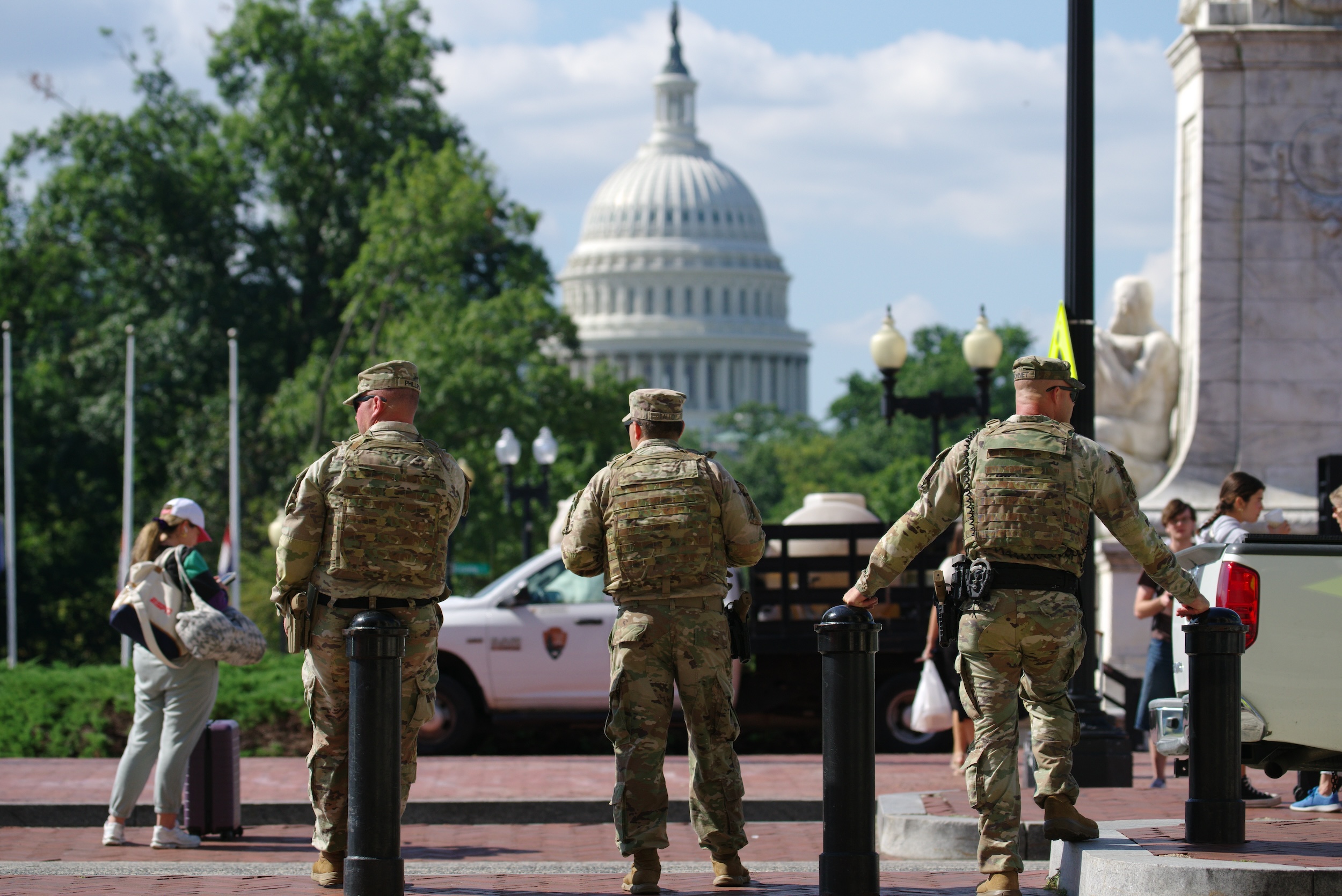
Guard deployment raises old question: Who really governs Washington?

Wayne Ford is the executive director of Wayne Ford Equity Impact Institute and co-Director of the Brown and Black Forums of America. He is a former member of the Iowa legislature and the founder and former executive director of Urban Dreams.

Washington, D.C. has always been more than just another city. It is the nation’s capital, a symbol of democracy, and a unique jurisdiction caught between local self-governance and federal control. Today, it has also become the latest flashpoint in America’s ongoing debate about crime, politics, and presidential power.

Mayor Muriel Bowser recently acknowledged that the federal surge of law enforcement—including the deployment of the National Guard ordered by President Donald Trump—has coincided with a sharp drop in crime. Carjackings fell by 87 percent. Overall violent crime was cut nearly in half. And, in a milestone for the city, Washington went twelve consecutive days without a single homicide.

The numbers are dramatic. Headlines on cable news have trumpeted them as proof that federal power works. Bowser herself admitted that the crackdown “brought results,” even though she expressed concerns about the heavy presence of federal officers in local neighborhoods.

But here is the crucial point: these statistics represent only a few weeks of data. They are not proof of a long-term trend. Just as crime patterns fluctuate with seasons, neighborhoods, and economic cycles, a short-term dip can reflect immediate deterrence without changing the deeper conditions that drive violence. That distinction matters if we are to think seriously about Washington, D.C. and its future.

Continue Reading...

The life and legacy of Wayne Ford and his recommitment

Wayne Ford represented part of Des Moines in the Iowa House and is the founder of the nonprofit organization Urban Dreams.

Opening scene

During Urban Dreams’ 40th Anniversary Celebration on July 30, 2025, the organization unveiled a commemorative plaque in my honor in the Urban Dreams Community Courtyard on 6th Avenue — the same neighborhood where my journey in Des Moines truly began. This event brought together former and current staff, clients who have benefited from Urban Dreams’ programs, directors past and present, community leaders, elected officials, and other friends from across Iowa.

It was more than just a celebration of my past work; it was a public reaffirmation of my recommitment to Des Moines, the state of Iowa, and the causes that have defined my life.

Continue Reading...

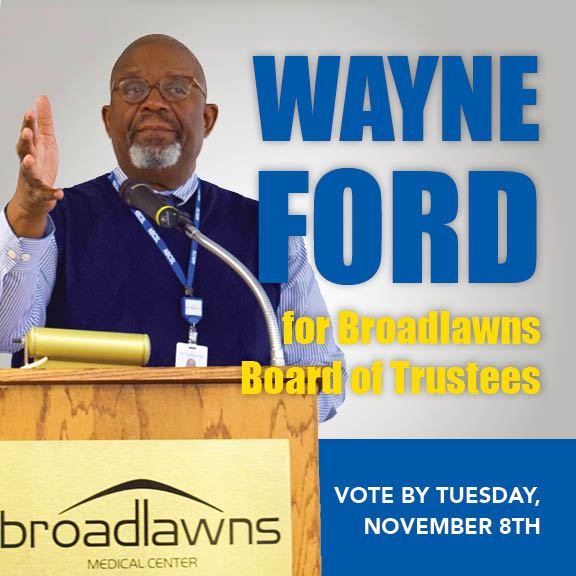
Why I am running for the Broadlawns Board of Trustees

Wayne Ford represented part of Des Moines in the Iowa House and is the founder of the nonprofit organization Urban Dreams.

I am running for one of the open board seats on the Broadlawns Medical Center Board of Trustees. I have been involved with Broadlawns and the neighboring community for the past 50 years and am uniquely qualified to address the challenges that our community is currently facing: an influx of refugees, a rise in violence, limited access to proper healthcare, and lingering concerns from the pandemic. 

These factors compel me to pursue a position on the Broadlawns board so that I can be part of the solution and address these challenges.

Continue Reading...

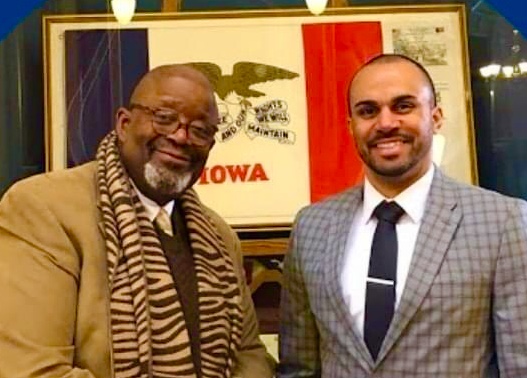
Why I'm supporting Izaah Knox in Iowa Senate district 17

Wayne Ford represented part of Des Moines in the Iowa House and is the founder of the nonprofit organization Urban Dreams.

I founded and built Urban Dreams on the premise that our community should be safe and inclusive. I have always believed in the American dream; that if given the same opportunity, all Americans should have a chance to fulfill their dreams.

In the early 2000s, Izaah Knox saw me on a television news station talking about a recent shooting in our community. He came down to the office wanting to talk with me and looking for a job.

Continue Reading...