
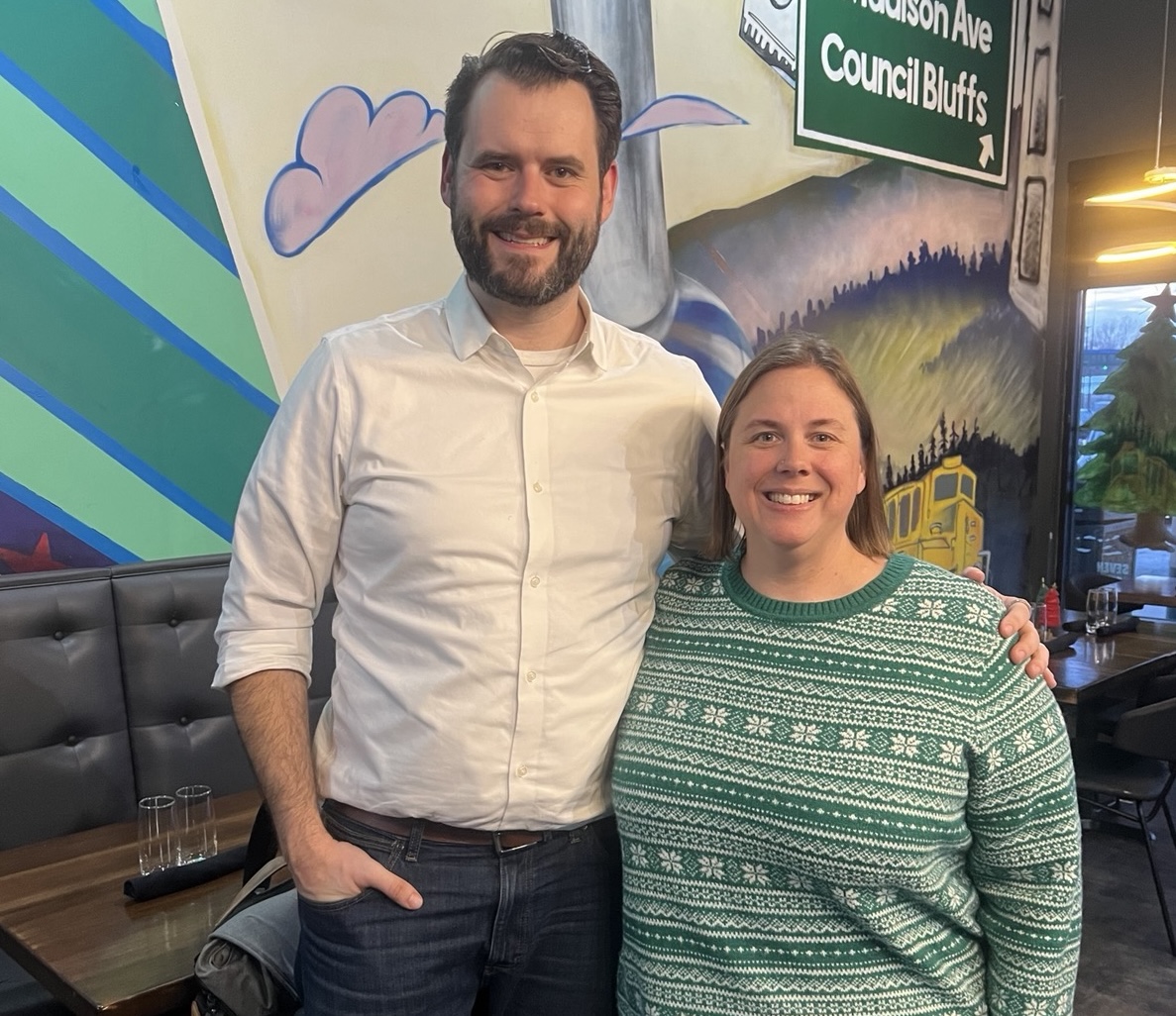
Jill Shudak is mayor of Council Bluffs.
Every election cycle, the same thing happens. Washington insiders look at Iowa from 1,100 miles away, pick the candidate who looks best on paper to them, and tell the rest of us who can and can’t win. And every cycle, Iowans are reminded that the people who’ve spent the least time in this state somehow believe they understand it best.
It’s happening again in the 2026 Democratic primary for U.S. Senate. Josh Turek, the pick of the Democratic Senatorial Campaign Committee and Minority Leader Chuck Schumer, has built his entire campaign on a single argument: that he’s the most electable Democrat to take on Ashley Hinson. It’s a clean pitch. It’s also wrong.
The actual data tells a different story.
A recent poll by Echelon Insights, a Republican firm, found Zach Wahls leading Hinson by two points in a head-to-head general election matchup. Turek led Hinson by one.
And this isn’t an outlier. The ModSquad — the group of moderate Democratic senators actively supporting Turek — commissioned their own poll hoping to prove their guy was the stronger general election candidate. Their poll found Wahls trailing Hinson by three points and Turek trailing by four. Turek’s own allies, using their own pollster, could not produce a survey showing him as the more electable Democrat.
When the poll your own side commissions to make your case ends up making the opposite case, it’s time to retire the argument.
So why does D.C. keep insisting otherwise? Because Washington has a habit of being wrong about Iowa, and a stubborn refusal to learn from it. The DSCC and Chuck Schumer have a long, well-documented track record of backing the wrong horse in Democratic primaries across the country. They pick candidates who check boxes in a Washington conference room and then act surprised when Iowa voters don’t follow the script.
And guess what? We’re the ones paying the price. Republicans control the Senate, and the Democratic Party only has a narrow path back to the majority because national Democrats have written off working class voters. The 6-3 conservative majority on the U.S. Supreme Court – and their subsequent decisions – is a direct result of Chuck Schumer and the Washington Democrats’ failure to win elections in states like Iowa.
There is no reason — none — for Iowa Democrats to outsource their judgment to the same people who have been wrong about this state over and over again.
Which brings us to the heart of this race.
The average independent voter in Iowa hates both parties. That’s not a talking point; it’s the reality on the ground. And plenty of Democrats aren’t thrilled with the national Democratic Party either. Uncomfortable as that may be to say out loud, pretending otherwise is how you lose a Senate race before it starts.
If a Democrat is going to win this seat, the nominee has to be someone willing to stand up to the Democratic establishment, not someone handpicked by it. Someone who can look an independent voter or a frustrated Democrat in the eye and say, truthfully, that they don’t answer to Chuck Schumer or a Washington committee. Someone whose independence is real, not rehearsed.
Zach Wahls is the only Democrat in this primary doing that. He filed signatures from all 99 counties, including a meaningful share from non-Democrats. He’s built a coalition of more than 20 local unions and bipartisan elected officials — the kind of coalition you build by actually showing up, not by waiting for a D.C. committee to bless you. He’s leading in the polling that matters, against both his primary opponent and the general election opponent.
The choice in this primary isn’t complicated. Iowa Democrats can follow the same Washington playbook that has failed this state cycle after cycle. Or they can nominate the candidate the data — and Iowa itself — keeps pointing to.
Iowans over insiders. That’s how this seat gets won.
Editor’s note: Bleeding Heartland welcomes guest commentaries by any Democratic candidate running for office in 2026, or by their supporters. Please read these guidelines and contact Laura Belin if you are interested in writing.
8 Comments
No title
After the debate, my wife and I talked a lot about this. And then this morning, with my coffee pals at HyVee. I suspect no answer is wrong but every question is. I bristle at the thought that Schumer and Hinson are trying to game this. So I’m sticking with Zach.
John Whiston Thu 7 May 8:40 PM
Labeling is what Republicans do
Zach and his supporters can describe their candidate and characterize his campaign any way they want, but the notion that Josh Turek is “hand-picked” by anyone is patently ridiculous. I sat next to Josh in the Iowa House for two years. We chatted at length about our futures and our thoughts on the shortcomings of Democratic leaders (during our extensive downtime, thanks to the majority party’s ineffective leadership and organization). Josh had a heart for the common good of Iowa long before anyone in “DC” knew his name. If anyone who offers Josh their support — all I can say is: He has earned it by being himself, not by checking someone else’s boxes.
openureyes Thu 7 May 11:00 PM
Can any useful insight be gleaned from the Republican side?
Has the Iowa Republican Party been sending out any signals, obvious or subtle, about which Democratic candidate THEY hope will win the Democratic primary? I’ll bet there are a number of us Iowa Democratic voters who would be interested in that kind of information.
PrairieFan Fri 8 May 2:54 AM
No title
It is widely believed that Iowa Republicans would rather face Wahls than Turek.
Hinson has been elevating Wahls in her rhetoric since last September and has barely acknowledged that Turek exists.
For more on this: https://www.notus.org/2026-election/zach-wahls-iowa-senate-primary-republicans
Laura Belin Fri 8 May 8:02 AM
Vote!
I could easily vote for Wahls or Turek. They are both good guys and fine Democrats.
I believe Turek’s career better positions him to attract the independent votes (and even some fed-up Republicans) it will take to win the general election.
I will be voting for Josh.
An extraordinary “vote for change” turnout will be critical in November.
Use the primary to ensure your family and friends are registered, have a plan to vote . . . and vote for Democrats up and down the ballot.
Let’s GO!
Bill Bumgarner Fri 8 May 9:07 AM
No title
So your argument is based on polls, one commissioned by Republicans, that find a 1-percent margin between the two? Got it.
SteveGravelle Fri 8 May 9:41 AM
This is a really tough decision.
Of the people I respect or who I think know what they are talking about, there seem to be a roughly equal number who support Turek and who support Wahls. I wish there were some way to make the choice more clear. On the other hand, although I am leaning toward Wahls, it means I can feel comfortable voting for whoever wins the primary.
Wally Taylor Fri 8 May 9:46 AM
I find the link provided by Laura to be persuasive...
…so unless I learn something new, I’ll vote for Turek.
PrairieFan Fri 8 May 1:48 PM