
Linda Schreiber writes commentary on selected political or legislative issues.
Big promises, but no appropriations
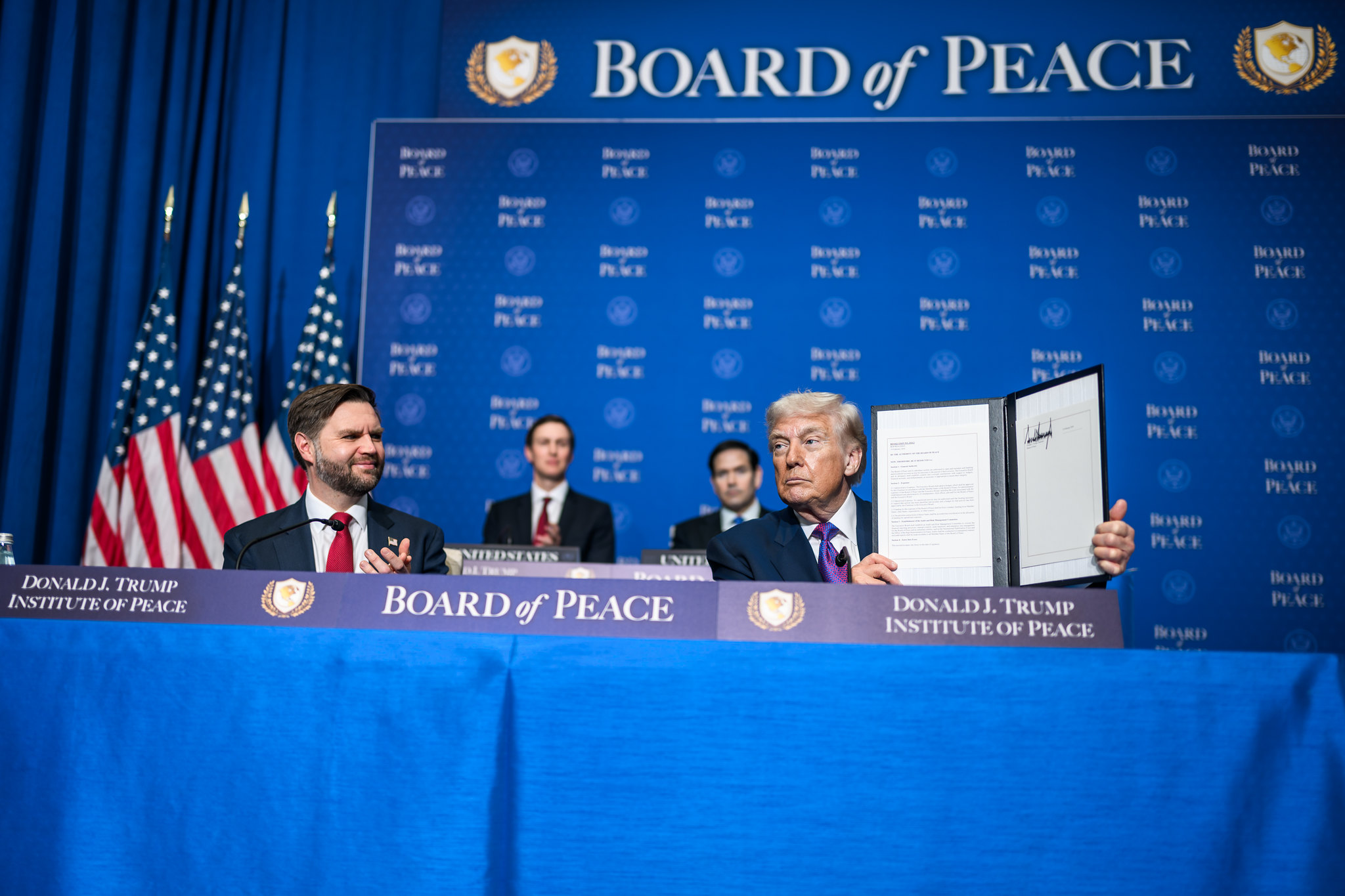
At the inaugural meeting of the Board of Peace, President Donald Trump announced that nine member countries had pledged $7 billion toward rebuilding Gaza — and that the United States would contribute $10 billion.
There is one glaring problem: Congress has not appropriated a single dollar for this commitment.
Under the U.S. Constitution, the power of the purse belongs to Congress. No matter how boldly announced, a $10 billion commitment does not exist without legislative approval. Yet the president presented the pledge as if the funds were already secured.
That is not diplomacy. That is theater.
The numbers don’t add up
Experts estimate rebuilding Gaza will cost roughly $70 billion — ten times the amount reportedly pledged so far. Even the $7 billion the president cited appears to represent preliminary commitments, not cash in hand, and details about timing, conditions, and oversight remain scarce.
We have seen this pattern before: impressive headline figures followed by murky details.
Meanwhile, at the height of the war, Trump floated the idea that Gaza could become a luxury resort destination with grand hotels. For a region devastated by war, displacement, and humanitarian crisis, such rhetoric sounds less like reconstruction policy and more like a development prospectus.
A chairman for life
The structure of the Board raises even more troubling questions.
Under its charter, President Trump is not simply chairing the Board of Peace during his term in office—he holds a lifetime seat and continuing leadership authority. That means long after voters have weighed in on his presidency, he would retain influence over an international body directing billions in reconstruction funds.
Lifetime control. International scope. No congressional authorization. This is not how American governance is supposed to function.
Who is accountable?
The Board’s ambitions reportedly extend beyond Gaza. The president has suggested it could oversee broader global peace efforts and even ensure that the United Nations “runs properly.”
Where are the guardrails?
- How will Hamas be disarmed?
- What guarantees exist regarding Israel’s security?
- Who audits the funds?
- What prevents political favoritism or pay-to-play influence?
And perhaps most fundamentally: Who authorized this?
Congress has not appropriated funds. The Senate has not ratified a treaty. Yet sweeping financial and diplomatic commitments are being made in America’s name.
Peace or branding?
Americans are entitled to ask whether this initiative is truly about peace — or whether it resembles something else entirely: a centralized development enterprise built around one man’s grand promises, and global branding.
The United States can and should play a constructive role in stabilizing conflict zones. But that role must be rooted in constitutional process, fiscal transparency, and democratic accountability. Russia launched a full-scale invasion of Ukraine on February 24, 2022, initiating the largest ground war in Europe since World War II. Russian forces attacked from multiple directions; the war is ongoing, with significant casualties and widespread, long-term conflict. Meanwhile, the U.S. has been silent on its path to peace.
Before billions are pledged overseas, Americans deserve answers:
- Where would the $10 billion come from?
- When will Congress vote on the proposal?
- What oversight exists?
- Why does the president retain lifetime control?
The U.S.-Israeli military campaign against Iran began on February 28, which signifies the Board of Peace is merely symbolic. While bombing continues, the U.S. will focus its resources in the Middle East.
Peace requires legitimacy. And legitimacy requires accountability. Without it, the Board of Peace risks looking less like a diplomatic breakthrough — and more like another Trump development venture operating on the global stage.
Official White House “family photo” by Daniel Torok at a Board of Peace meeting at the Donald J. Trump Institute of Peace in Washington, D.C., on February 19, 2026.
