
Linda Schreiber writes commentary on selected legislative issues.
While Iowa’s public universities support one in every ten jobs and generate billions of dollars in economic impact statewide, Republicans are pushing for yet another layer of oversight on the Regent institutions.
House File 2243, introduced by Iowa House Higher Education Committee chair Taylor Collins and eligible for floor debate, would require the Iowa Board of Regents to report to the state legislature and governor on how the board “could establish a performance-based funding model” for the three state universities. That funding model “must include” the following factors: graduation rates, degrees awarded in high-demand fields, postgraduate employment and income, and the number of graduates who stay in Iowa after graduation.
Those metrics already tell a compelling story: the state’s public universities are essential to meeting Iowa’s workforce needs, retaining talent, and strengthening communities across the state.
According to the Iowa Board of Regents, Graduates of the University of Iowa (UI), Iowa State University (ISU), and the University of Northern Iowa (UNI) fuel Iowa’s economy, filling high-demand roles in health care, education, and STEM fields.
Yet legislators frequently criticize the Regent universities while placing increasing constraints on their operations. What Iowans need are clear, accessible facts about the value and success of their public universities—and what those institutions need in return is stable, realistic financial support, not micromanagement, to continue delivering results for Iowa.
Economic impact
The economic impact is substantial. A Regents-commissioned study shows that Iowa’s public universities generated a $14.9 billion economic impact in fiscal year 2021–22 and supported one out of every ten jobs statewide. That impact is felt county by county, underscoring how deeply these institutions are woven into Iowa’s local and regional economies.
Return on investment
Beyond job creation, the regent universities deliver a strong return on investment for their primary stakeholders—students, taxpayers, and society as a whole. The study evaluates both direct economic impact and long-term investment outcomes, demonstrating that public support for higher education pays dividends in higher earnings, increased tax revenues, and a stronger, more resilient Iowa economy.
Graduate retention by institution
The percentage of graduates who remain in Iowa varies by institution and is strongly influenced by the in-state composition of each student body:
- University of Northern Iowa: Highest in-state retention, with 76 percent employed in Iowa one year after graduation and 68 percent still working in-state after ten years.
- Iowa State University: Approximately 51 percent of graduates remain in Iowa ten years post-degree.
- University of Iowa: About 50 percent of graduates stay in Iowa one year after graduation, declining to 38 percent after ten years.
Sector and regional employment impact
Regent University graduates play distinct and complementary roles across Iowa’s economy:
- Education (all 99 counties): UNI is Iowa’s leading producer of teachers, with graduates employed in more than 200 community school districts statewide.
- Health care (statewide): UI graduates deliver medical, nursing, and dental care in every Iowa county, reinforced by the university’s clinical and extension missions.
- Agriculture and Outreach: Iowa State graduates support rural communities through extension services reaching tens of thousands of Iowa farmers and agribusinesses.
Economic contribution of regent alums
Graduates of Iowa’s three regent universities are concentrated in the state’s highest-need and highest-impact sectors, including education, health care, construction, and STEM-related fields. In fiscal year 2021–22:
- Alums contributed $7.2 billion in added income to Iowa’s economy.
- Ten years after graduation, UI and ISU alums earn an average of $81,000 annually, while UNI graduates earn $65,000 or more, reflecting strong returns for individuals and the state.
- Graduates increasingly locate in urban population and employment hubs such as Iowa City, Ames, Cedar Falls, and Des Moines, working across both public and private sectors.
Major Iowa employers of Regent graduates
Iowa’s public university graduates work for a wide range of major employers, including:
- Health care: University of Iowa Health Care, UnityPoint Health
- Manufacturing & Engineering: John Deere, Collins Aerospace, HNI Corporation
- Financial Services & Insurance: Principal Financial Group, State Farm, RSM US LLP, PwC
- Education & Government: K–12 schools, state and local government
- Other Major Employers: Integrated DNA Technologies, Hy-Vee, Casey’s General Store
Retention by county of origin
Graduate employment patterns often reflect students’ original residency:
- UNI: Graduates from 90 Iowa counties in the most recent cohort, with approximately 86 percent accepting their first job in-state.
- UI: Graduates originate from 67 Iowa counties, with many returning to their home regions to practice in professional and clinical fields.
Counties with the highest concentration of Regent graduates
Graduates of Iowa’s regent universities tend to cluster in counties that align with each institution’s workforce strengths:
- Polk County (Des Moines metro): The largest hub for graduates from all three universities, reflecting the concentration of finance, insurance, and state government employers.
- Johnson County (Iowa City): Home to the highest concentration of University of Iowa graduates, anchored by UI Health Care, Iowa’s largest employer.
- Story County (Ames): A major center for Iowa State graduates, particularly in research-driven fields tied to the university.
- Black Hawk County (Cedar Falls–Waterloo): Dominated by University of Northern Iowa graduates, with strong ties to education and regional industry.
- Linn County (Cedar Rapids): A key destination for engineering and business graduates employed by major corporate employers.
Iowans do not need House File 2243, nor do they want legislators determining resident enrollment targets at our public universities. What Iowans do need is legislative action to protect water quality, safeguard the environment, and address the real challenges facing our state’s communities.
Iowa’s Regent universities do not indoctrinate students, as some lawmakers suggest. They teach students how to think critically, evaluate evidence, and express their views responsibly. Coursework often requires students to demonstrate these skills and defend their reasoning. What is not tolerated is shallow thinking that demeans individuals or undermines the constitutional rights of others.
Public universities power Iowa’s economy, strengthen every community, and prepare the workforce our state depends on. Legislators who invest in them aren’t just funding education—they’re securing Iowa’s future.
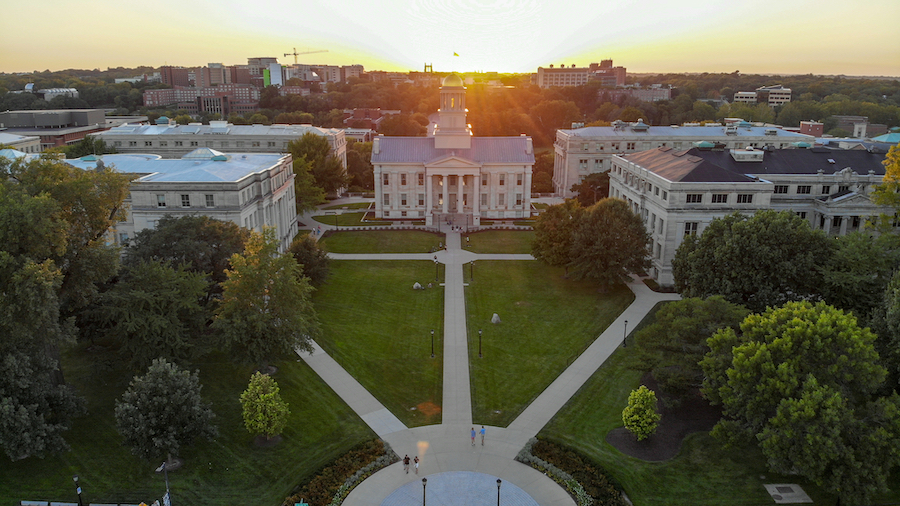
Top photo of the old state capitol building, part of the University of Iowa, is by Eduardo Medrano, available via Shutterstock.
3 Comments
Linda Schreiber, thank you.
“What Iowans do need is legislative action to protect water quality, safeguard the environment, and address the real challenges facing our state’s communities.”
PrairieFan Fri 13 Feb 1:44 AM
so this is the trap we are all caught up in
that the cognitive-biases of Repugs make them largely immune to this kind of fact based argument, and the cognitive-biases of Dems keep them from seeing/accepting that Repugs aren’t moved by this kind of rhetoric (that politics isn’t largely a matter of winning debates) and round and round we go down the bowl.
These folks are going to kill college towns like Iowa City and they will be happy about it even as the brain-drain ramps up. Who needs expert medical providers, teachers, etc when you can just go the MAGA/MAHA influencer way, more guys in vests….
dirkiniowacity Fri 13 Feb 10:53 AM
might white of them
really just racing to turn us into another Missouri (without KC).
https://www.thegazette.com/state-government/bill-advances-to-bar-iowa-universities-from-hiring-h-1b-workers-from-foreign-adversaries/
dirkiniowacity Fri 13 Feb 7:29 PM