
Editor’s note from Laura Belin: This post has been updated with additional information and clarifications.
Linda Schreiber writes commentary on selected legislative issues.
For more than four decades, Iowa’s Bottle Bill stood as a national model: simple, effective, and popular. It reduced litter, boosted recycling, and put responsibility where it belonged—on producers and consumers. The 2022 update weakened those goals while reducing public accountability.
In 2019, Iowa State University professor Dr. Dermot Hayes recommended adjusting the five-cent deposit enacted in 1979 for inflation, roughly 17 cents at the time. A survey showed 88 percent of Iowans supported the Bottle Bill. Advocates, including the League of Women Voters and the Sierra Club, urged lawmakers to strengthen the program, improve redemption access, and preserve public benefits.
Iowa lawmakers chose a different path.
Senate File 2378, which Governor Kim Reynolds signed in June 2022 and took effect on January 1, 2023, kept the deposit at five cents and allowed beverage distributors to retain unclaimed deposits. The law included no requirement to track those funds or determine how much money was diverted.
It also allowed many retail stores to opt out of redeeming containers if they operate on-site food preparation, shifting responsibility to increasingly scarce redemption centers. Although distributors must offer mobile redemption systems based on county population, convenience for consumers has declined—just as advocates warned.
The consequences are measurable.
To assess outcomes, the Iowa Department of Natural Resources relies on the Container Recycling Institute’s May 2024 report, which measures Iowa’s container recovery rate, not a redemption rate. Recovery includes all recycled containers, regardless of whether the deposit system played a role.
According to that report, Iowa’s overall recovery rate is 49 percent. Glass containers fare best at 76 percent, while PET plastic trails at 56 percent and aluminum at 42 percents. Plastic bottles and aluminum cans—among the most common roadside litter—are precisely the materials the deposit system was designed to capture.
Senate File 2378 created a Bottle Bill Fund to receive civil penalties, but enforcement has been minimal. The DNR reports compliance is pursued through communication, with fines assessed only after other efforts fail. To date, no fines have been issued and no penalties deposited.
The law also directed the Legislative Fiscal Committee to review Chapter 455C enforcement ahead of the 2026 session, acknowledging the need for oversight. Yet the statute did not require tracking of unclaimed deposits or establish enforcement benchmarks. With no accounting of diverted funds and no penalties assessed, the committee has limited information on which to evaluate the law’s fiscal or environmental performance.
Supporters point to changes allowing redemption centers to collect three cents per container and easing requirements to open new centers. Even so, the number of centers has fallen, from nearly 300 in 2019 to 136 today, according to the DNR.
Meanwhile, the Iowa Beverage Association maintains the system is working. In 2025, it launched Empties.org, claiming nearly 300 redemption locations statewide. That figure does not align with DNR data and highlights the lack of transparency.*
At a time of budget pressure and persistent litter problems, allowing unclaimed deposits to flow to private entities was shortsighted. Those funds should support recycling infrastructure, litter abatement, water quality improvements, and environmental grants—priorities long championed by advocates and Iowans alike.
Advocates repeatedly urged lawmakers to raise the deposit. A higher deposit would have strengthened redemption incentives, reduced litter, and restored the Bottle Bill’s effectiveness. Instead, lawmakers weakened one of Iowa’s most successful environmental policies while labeling it “modernization.”
The 2026 legislative review is a critical opportunity. It must address what the law failed to require: transparency, enforceable standards, and accountability for unclaimed deposits. Adjusting the deposit to reflect economic reality is not radical—it is necessary.
The question before lawmakers is no longer whether the Bottle Bill works. It once did. The question is whether they are willing to fix what they chose to weaken—and ensure the law again serves the people of Iowa, not just the industries it regulates.
*Editor’s note from Laura Belin: Jon Murphy, executive director of the Iowa Beverage Association, provided this explanation to Bleeding Heartland following publication of this commentary.
I wanted to provide you with this information about why there are differences between the DNR’s approved redemption center list and Empties.org, which has been developed by the Iowa Beverage Association (IBA) to help Iowans find their closest redemption location.
When the IBA built the list, we started with what was on the DNR’s list and then asked beverage distributors from across the state to provide their pick-up routes – places where they continue to go pick up cans and pay the deposit that was paid to the consumer by that particular entity. We then added those places that were still acting within Iowa’s bottle deposit system, including retailers and other entities that provide bottle and can redemption service to Iowans.
Our list also identifies nonprofit locations where consumers can drop off their beverage containers, and the nonprofit receives the redemption refund. We believe this approach provides the most comprehensive list of active redeeming opportunities to Iowans.
Finally, we encourage Iowans to go to Empties.org and see where their closest redemption opportunity is located. We’d also encourage them to let us know if an entity on our list is no longer in existence or if one is not included. This group of businesses changes frequently, so we want to make sure our list is as accurate as possible. Our goal is to get as many Iowans into the redemption process as possible.
Update by Linda Schreiber:
Bottle bill advocates hoping for a meaningful review of the updated law were disappointed with the Legislative Review Committee’s January 12 meeting. The committee approved minutes from a September 2019 meeting—a six-year-long delay. Those minutes cited 100 redemption centers statewide. DNR officials said they fielded about 400 questions or complaints and approved 136 redemption centers since the governor signed the bill in 2022. A Department of Justice report indicated the Office of the Attorney General brought no enforcement actions for 2023–2025.
Advocates requested that committee members review DNR enforcement, fines, where the law has been applied, and the dollar value of unclaimed deposits that distributors received for the 2023–2025 period. Todd Coffelt, DNR legislative liaison, said Chapter 455C did not require the agency to track unredeemed containers or their value, so no information was offered.
Democratic State Senator Tony Bisignano questioned redemption exemptions for retail stores, including Dollar stores, asking whether food operations or food preparation were the basis for an exemption and why enforcement appears absent. He asked DNR how many reminders are sent before enforcement begins.
Democratic State Representative Dave Jacoby asked about scheduling a formal review at the year’s end. The Republican committee chairs, State Representative Gary Mohr and State Senator Tim Kraayenbrink, reported they had not received questions from constituents, and other matters were more pressing. No action was taken.
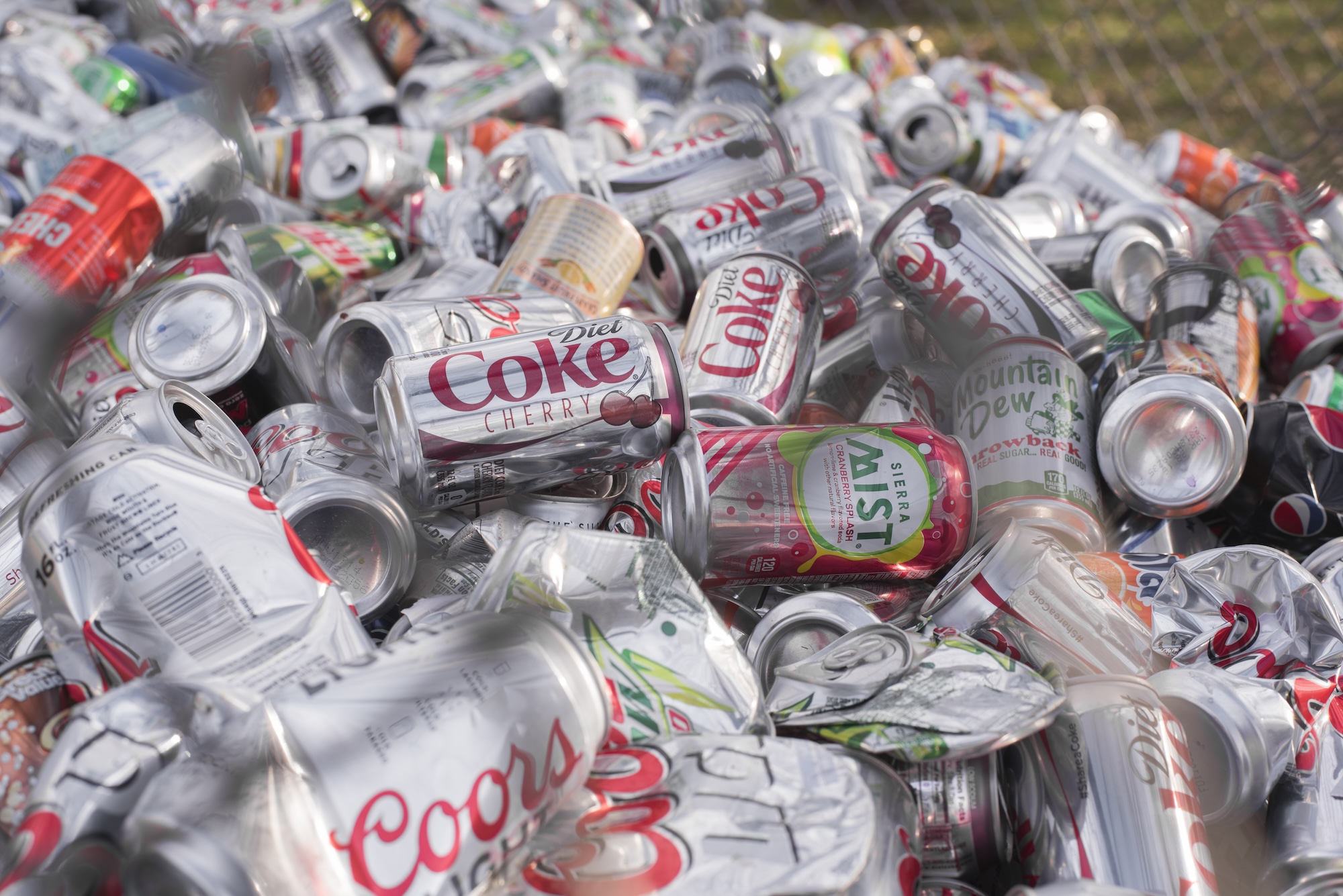
Top image is by Ben Harding, available via Shutterstock.
6 Comments
Thank you Linda
The Sierra Club tried all summer and fall to get the legislative fiscal committee to hold the meeting they were supposed to hold prior to the 2026 session to assess the success or lack thereof of the 2022 legislative changes. But the chair of the committee would not even talk to us.
However, the committee has now scheduled a meeting for 4:00 p.m. on January 12 at the Capitol. They will take public comment. So if you care about this issue, that is the place to be.
Wally Taylor Wed 7 Jan 11:37 AM
Thank you, Linda and Wally, for your good work.
“But the chair of the committee would not even talk to us.” Apart from the awful policies of Iowa Republican legislators, there is the arrogance.
PrairieFan Wed 7 Jan 12:50 PM
in such matters does the Iowa GOP
serve the general public or private/corporate interests?
dirkiniowacity Wed 7 Jan 3:22 PM
Let’s look at the real culprit
The exclusion of still water bottles, which make up a huge portion of litter, turns the deposit law into a tax on carbonated beverages rather than a means of cleaning up roadsides.
Iowan since 2020 Thu 8 Jan 11:42 AM
I agree with Iowan since 2020
The Sierra Club and others have long advocated for expanding the types of containers included in the deposit law.
Wally Taylor Thu 8 Jan 3:58 PM
Legislative Review Committee meeting on Monday, Jan. 12, at 4 p.m.
Rep. Dave Jacoby has notified me that the Legislative Review Committee will meet Monday, Jan. 12, at 4 p.m. The agenda is here: https://www.legis.iowa.gov/committees/meetings/agenda?meetingID=41084
The meeting will be live-streamed. https://www.legis.iowa.gov/committees/meetings/meetingsListComm?groupID=704&ga=91 click on the camera to join the meeting: https://ialegis.webex.com/ialegis/j.php?MTID=m252c3d59d9ecc812e992b78deae0e240
Linda Schreiber Fri 9 Jan 10:24 AM