Washington has been wrong about Iowa before. They're wrong again

Jill Shudak is mayor of Council Bluffs.

Every election cycle, the same thing happens. Washington insiders look at Iowa from 1,100 miles away, pick the candidate who looks best on paper to them, and tell the rest of us who can and can’t win. And every cycle, Iowans are reminded that the people who’ve spent the least time in this state somehow believe they understand it best.

It’s happening again in the 2026 Democratic primary for U.S. Senate. Josh Turek, the pick of the Democratic Senatorial Campaign Committee and Minority Leader Chuck Schumer, has built his entire campaign on a single argument: that he’s the most electable Democrat to take on Ashley Hinson. It’s a clean pitch. It’s also wrong.

The actual data tells a different story.

Continue Reading...

On legislating after more than 36 hours awake

Wayne Ford is the executive director of Wayne Ford Equity Impact Institute and co-Director of the Brown and Black Forums of America. He is a former member of the Iowa legislature (1997 through 2010) and the founder and former executive director of Urban Dreams.

A marathon session—and a moment to reflect

The Iowa legislature’s 2026 session concluded on May 3 after more than 36 hours of debate, negotiation, and decision-making in its final stretch. Lawmakers pushed through a marathon finish before adjourning for the year.

It is a familiar scene in legislatures across America: long nights, complex bills, and final votes made under pressure.

Many legislators acknowledged they were exhausted. Journalists noted some sleeping in the chamber or other signs of fatigue.

And yet, within those final hours, lawmakers were making some of their most important decisions of the year, affecting property rights, taxes, and community stability.

This is not a criticism of the individuals involved. It is a reflection on the system itself.

Because when we step back and look at it plainly, a simple question emerges: Would we accept this in any other field?

A question of standards

Would you allow a surgeon to operate on you after being awake for more than 36 hours?

Would you trust a pilot to make life-and-death decisions under those same conditions?

In most professions, the answer is clear. We would not accept it. The stakes are too high.

Yet in public policy making, we do.

At the very moment when decisions become most critical—when bills must be finalized, compromises reached, and votes taken—the process often demands that lawmakers operate under extreme fatigue.

Research on sleep deprivation has shown that extended wakefulness reduces attention, slows reaction time, and impairs judgment. After roughly 24 hours without sleep, cognitive performance can resemble impairment levels associated with alcohol intoxication.

Again, my point is not to criticize legislators. It is to recognize that the system places them in conditions where decision-making becomes more difficult.

The real issue: not effort, but impact

The end of the latest legislative session in Iowa also revealed something else. Even with all that effort and time, some issues remained unresolved, like restrictions on eminent domain for pipelines.

At the same time, property tax reform generated was debated in both chambers, with lawmakers grappling with long-term consequences for cities, counties, and taxpayers.

These are not simple issues. They involve complex trade-offs:

  • Financial sustainability
  • Property rights
  • Economic development
  • Community impact

When those decisions are made under fatigue, with large amounts of information but limited clarity, the challenge becomes even greater.

The problem is not a lack of effort or a lack of information.

The problem is a lack of clear, structured impact.

Iowa’s lesson: When impact is visible, decisions improve

Iowa took a step in 2008 that would later prove to be nationally significant. By requiring a racial impact analysis for certain criminal justice legislation, the state ensured that lawmakers had a clearer understanding of who would be affected before making decisions.

This was not about politics. It was about clarity.

We saw a real-time example this past weekend. House Republicans’ bill on enhanced criminal sentencing, which became House File 2542, initially called for significantly longer mandatory minimums, and included a wide range of offenses in the formula. structures. As lawmakers examined the potential fiscal impact—costs to the prison system, population effects, and long-term consequences—the conversation evolved. Senate and House Republicans negotiated over changes.

What began as a proposal with sentences approaching twenty years shifted toward a framework closer to seven years, with acknowledgment that alternatives could also be considered.
That shift happened because people had more information—clearer information about impact.

Organizations such as the Pew Charitable Trusts and the Urban Institute have documented similar outcomes nationwide when legislators considered impact statements.

Property taxes: Decisions that shape communities

The debate over property taxes illustrates the broader challenge. The issue is often framed simply—whether taxes should go up or down. But the real question is more complex.

What happens to cities and counties if revenue is reduced?
 How are essential services maintained?
 What happens to infrastructure, public safety, and long-term stability?

These are impact questions.

The Congressional Budget Office provides fiscal analysis to help answer such questions about pending federal legislation. But cost alone does not capture the full picture.

Still searching for clarity on eminent domain

Iowa lawmakers adjourned without any Senate floor vote on eminent domain during the 2026 session. That is telling.

Without clear impact analysis, these debates can become difficult to resolve. Positions harden. Perspectives differ. And decisions become harder to reach.

But with clearer understanding—who is affected, what the alternatives are, and what the long-term consequences will be—the path forward becomes more visible.

Impact does not eliminate disagreement. It improves the quality of the discussion.

A lesson from TIF: When policy evolves without impact review

We have seen similar challenges in economic development through the use of Tax Increment Financing (TIF). Originally designed to support disadvantaged communities (often called “slum and blighted areas,” TIF has expanded in Iowa, to be used for greenfield development in areas with stronger and growing tax bases.

In lower-income communities, the challenge often remains that the tax base is not sufficient to fully leverage the tool. In higher-growth areas, that same tool can generate significant resources.

The issue is not whether TIF is right or wrong.

The issue is whether we fully understood how its use would evolve over time. (Editor’s note from Laura Belin: The last-minute property tax agreement included some new limits on TIF, and local policy makers are currently evaluating the consequences.)

From confusion to clarity

Too often, public policy debates resemble the classic “Who’s on First?” routine by Abbott and Costello—everyone is talking, but confusion reigns.

Impact analysis provides a way forward. It helps answer the fundamental questions: who is affected, what it will cost, and what will happen next.

Across the country, there is growing recognition that policy making must move beyond information to impact. The National Conference of State Legislatures has documented increased use of tools designed to help lawmakers understand policy consequences before implementation.

But these efforts remain uneven.

Better conditions lead to better decisions

The lesson from the Iowa legislature’s 2026 session is clear. When impact is not fully understood, decisions become more difficult.

When impact is visible, decisions improve.

Even after long hours—more than 36 hours without a break—the quality of decisions can improve if the quality of information improves.

Because this is not about how long we stay awake.

It is about how well we understand the impact of the decisions we make.

And that is the lesson for the next 250 years of American lawmaking.

Continue Reading...

Kim Reynolds and GOP lawmakers have won the culture war

Gerald Ott of Ankeny was a high school English teacher and for 30 years a school improvement consultant for the Iowa State Education Association.

Iowa Governor Kim Reynolds has won the culture war.

In so-doing, Reynolds has dug the state into a deep, deep hole largely by rallying voters to reject allegedly naughty books and keeping them (us) embroiled in one-after-another pieces of nonsense legislation.

And by gifting a minority of parents, her allies, with the unquestioned right to enroll their kids, at taxpayer’s expense, in any church-affiliated school, academy, or charter of their choice. And, in the face of all these new budget-busting costs, cutting taxes and swaying otherwise public minded voters to doubt the effectiveness of their kids’ local schools. It’s plain sinful.

Continue Reading...

Iowa wildflower Wednesday: White trout lily

Diane Porter of Fairfield first published this post in April on My Gaia, an email newsletter “about getting to know nature” and “giving her a helping hand in our own backyards.” Diane also maintains the Birdwatching Dot Com website and bird blog.

Sunshine lit up the forest floor. Overhead, tall walnut and oak trees had no leaves yet. A white trout lily (Erythronium albidum) stood alone, just above the sparse new grass. Its petals arched in arabesques, as if lifting the flower above the earth.

Some accident of placement or ancestry, of light and moisture, had singled out this one to bloom today. Nearby, the other trout lilies were still asleep on pink stems, their buds drooping.

Continue Reading...

Josh Turek is Democrats' best chance to win back Iowa's U.S. Senate seat

Mary Riche is a lifelong feminist, past president of Planned Parenthood in Iowa, founding officer of the 501(c)(3) Iowa Coalition for Reproductive Freedom, speaker about women leaders not included in our history books or education curriculum, and an advocate for reproductive freedom and abortion rights. You can reach her via email at maryriche@gmail.com.

Josh Turek isn’t just a strong candidate—he is the Democrat who can win back Iowa’s U.S. Senate seat. Josh brings the disciplined work ethic, grit, and proven ability to win at a time when Iowans need results for their problems, not political talking points.

I enthusiastically support Josh Turek because he has shown he’s a winner in a tough district, and can connect with voters across political lines. He was re-elected by a five-point margin in the “reddest” seat held by a Democrat in all of Iowa—at the same time President Donald Trump carried the state by double digits. 

Josh has built his record by listening to Iowans first—and working across differences to get results that matter locally. His likely Republican opponent, U.S. Representative Ashley Hinson, offers a clear contrast. In Washington, she is a partisan politician who votes with her party’s leadership for the president’s national agenda.

Continue Reading...

Chuck Grassley’s revealing, unscripted moment

Iowa’s longest-serving member of Congress forgot that every mic is potentially a hot mic.

What Senator Chuck Grassley blurted out during a Judiciary Committee hearing this week highlighted an unwritten rule for Republicans: they must humor President Donald Trump’s lies and delusions.

Continue Reading...

Dr. Franken-Steen creates a monster

Dave Leshtz is the editor of The Prairie Progressive.

I’ve written about and gotten to know several members of Iowa’s Satanic Temple. 

They are young and intelligent. They come mostly from small towns in Iowa, where their families still live. They have a sense of humor and like to dress in black. They consider the poet John Milton’s Paradise Lost their foundational text – their Bible, so to speak.

Most of all, they are sincere in their belief that government shouldn’t favor one religion over another, that public services or benefits to religious groups should not be denied because officials disagree with their beliefs.

I don’t personally know any members of the Assemblies of God, a Pentecostal denomination for which Iowa gubernatorial candidate Adam Steen is a credentialed minister. It is an Evangelical church which reported in 2022 a worldwide membership of 69 million. The Satanic Temple claims approximately 700,000 members, according to Wikipedia. Its numbers in the state of Iowa are, well, considerably less.

Continue Reading...
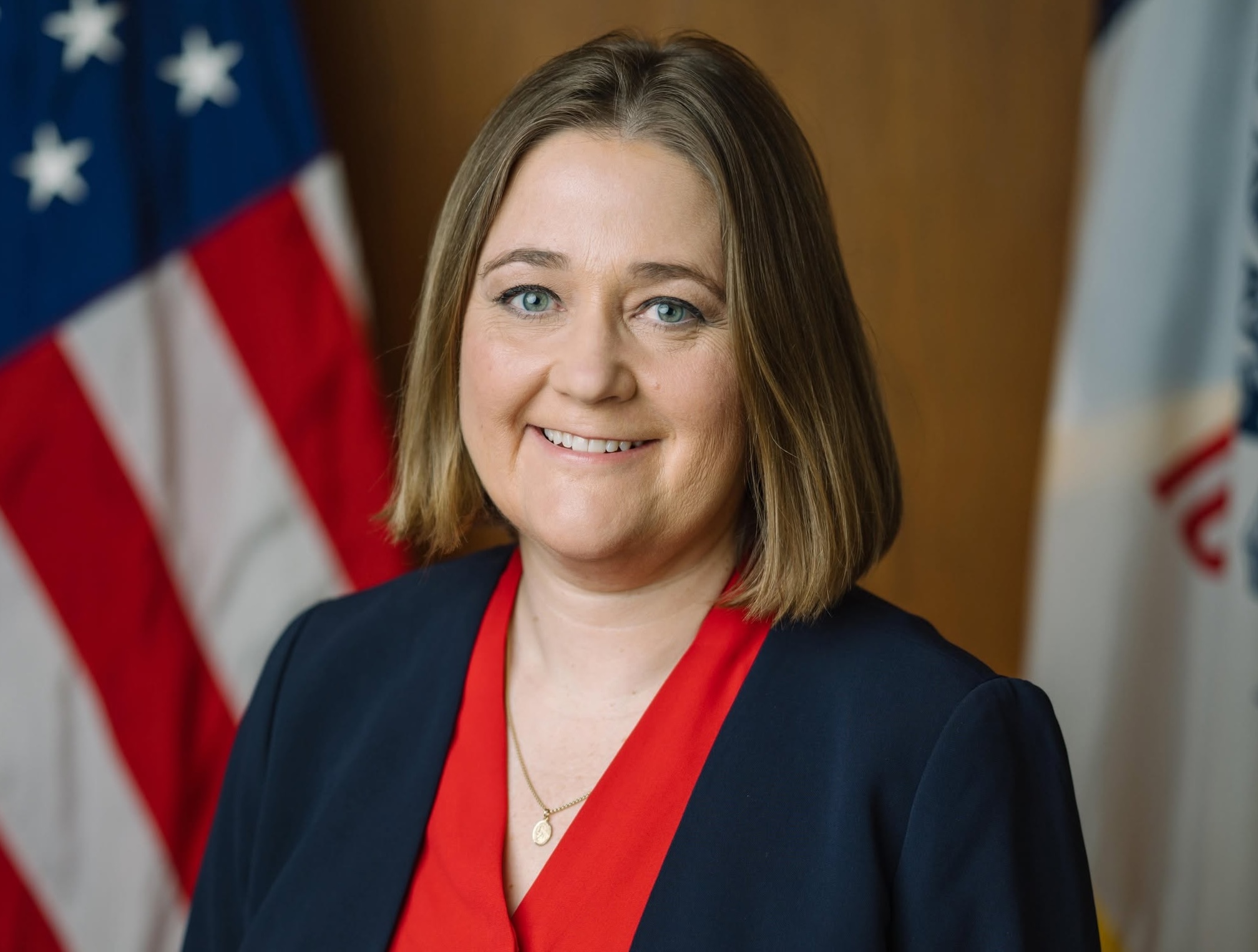
Ad absurdly suggests Miller-Meeks led charge for “less expensive health care”

Ed Tibbetts, a longtime reporter and editor in the Quad-Cities, is the publisher of the Along the Mississippi newsletter, where this post first appeared. Find more of his work at edtibbetts.substack.com.

Lately, you haven’t been able to turn on the TV without hearing how great Representative Mariannette Miller-Meeks is.

The American Action Network, a special interest group with ties to the U.S. House Republican leadership, has been blanketing area TV stations and online outlets with ads that claim Miller-Meeks, the member of Congress for Iowa’s first district, “led the charge for high-quality, less expensive health care, especially for rural Iowans.” Then they say that we should “thank her for delivering for all of us.”

Less expensive health care?

In what world?

Continue Reading...
Pork producers, governor get the Iowa cancer reports wrong

Adam Shriver is Director of Wellness and Nutrition at the Harkin Institute for Public Policy and Citizen Engagement. This essay was first published on his Substack newsletter, Canary in a Cornfield.

Iowa’s high cancer rates are understandably generating a lot of headlines. And for better or worse, a lot of groups are working overtime to offer their own “interpretations” of some of the various reports on the cancer crisis that have come out. Since there are many opportunities to misunderstand these reports, I thought it might be valuable to clarify a few things in response to some of the claims I’ve been seeing.

One of the most egregious “misunderstandings” (I’m putting this in quotes because I think it’s an extremely charitable way of describing it) was the National Pork Producers Council’s response to a recent Yale University study.

Continue Reading...
Careful planning avoids unintended consequences

Bruce Lear lives in Sioux City and has been connected to Iowa’s public schools for 38 years. He taught for eleven years and represented educators as an Iowa State Education Association regional director for 27 years until retiring. He can be reached at BruceLear2419@gmail.com 

Dad was a master carpenter. He didn’t graduate from vocational school, wasn’t an apprentice, and he didn’t have a framed certificate announcing his skill. He learned by doing.

For him, “Measure twice and cut once” wasn’t an old platitude. It’s what he lived by, and it made him a master of his trade. He believed consequential planning avoids unintended consequences, and jobs that look simple often aren’t.

Now it appears the U.S. is being led by people who don’t even measure once.

Continue Reading...
A cancer agenda for the Des Moines City Council

Josh Mandelbaum represents Ward 3 on the Des Moines City Council.

Iowa has the 2nd highest cancer rate of any state in the country, and our cancer rates are increasing. Iowa’s cancer rates have been going up while the United States on the whole is experiencing declining cancer rates. This makes Iowa an outlier.

The question is what makes Iowa an outlier, and what can we do about it?

The Iowa Environmental Council (IEC) and the Harkin Institute attempt to answer that question with their new report “Environmental Risk Factors and Iowa’s Cancer Crisis.” The report looked at peer-reviewed research and found that environmental exposures to nitrate, pesticides, radon and PFAs are all associated with increased cancer risks. The executive summary noted that:

Continue Reading...

Violence is the antithesis of free speech

Rick Morain is the former publisher and owner of the Jefferson Herald, for which he writes a regular column.

I had a commentary on foreign policy on my mind for this week. I still do. But it can wait. The attempted attack at the White House Correspondents Dinner in Washington last Saturday can’t.

It’s sadly ironic that the terrifying disruption of the dinner, just as it was getting underway, took place at an event designed to honor the First Amendment. Violence is the antithesis of free speech. It seeks to erase and replace open dialogue and the exchange of ideas, silencing them instead.

But it’s not really a surprise in the U.S. these days. Our country harbors a growing number of individuals who see violence as the answer to their hopes, concerns, and challenges. If that involves diverting or eradicating other people’s freedoms and rights, so be it.

Continue Reading...

Iowa lawmakers wag their legal fingers

Randy Evans is executive director of the Iowa Freedom of Information Council, a nonpartisan, nonprofit organization that promotes openness and transparency in Iowa’s state and local governments. He can be reached at DMRevans2810@gmail.com. This essay first appeared on his Substack newsletter, Stray Thoughts

Come July, Iowa employers may want to add an ominous warning on their job application forms: tell a lie and you could go to jail.

That’s right — no more puffing the resume with false degrees from the University of Okoboji or Faber College. 

And do not claim to have chauffeur’s license when you lack the permit needed to drive a truck.

Continue Reading...

These two water monitoring programs are not the same

Adam Shriver is Director of Wellness and Nutrition at the Harkin Institute for Public Policy and Citizen Engagement. This essay was first published on his Substack newsletter, Canary in a Cornfield.

Iowa has a serious problem with nitrates in our drinking water that we’ve known about for decades, and these problems are only getting worse. Numerous studies—extremely high-quality studies—and detailed accounts of underlying biology all present a strong case that nitrates levels in drinking water lower than the current 10 mg/L NO3-N standard are linked to different types of cancer. We discussed that research in my interview with the Chair of a Denmark Ministry of the Environment Report, and the recent Cancer and Environmental Risk Factors in Iowa report covered those studies in detail.

For that reason, it’s extremely important for Iowans to have the best possible data measuring the amount of nitrate in our drinking water throughout the year.

Despite the urgency of the problem, the Iowa legislature cut off funding to the the University of Iowa’s IIHR Hydroscience and Engineering Water Quality Information System in 2024. The Walton Family Foundation agreed to step in and fund the network for two years, but they were very clear that this was only a temporary measure. In short, they were giving Iowa a couple years to get ourselves together.

What that means now: if the legislature does not restore funding in the state budget for fiscal year 2027, many of the sensors in the IIHR network may need to be removed or discontinued, putting Iowans at risk.

Continue Reading...

Iowa's nuclear tax giveaway: We've seen this movie before and know how it ends

Ralph Rosenberg is a retired attorney, state legislator, and non-profit executive. He has followed Iowa environmental, energy, and agricultural policy for decades. He worked in Washington, D.C. for Public Citizen, while opposing the international export of nuclear fuels and materials. 

On April 15, the Iowa House handed NextEra Energy a sales tax exemption worth tens of millions of dollars to restart the Duane Arnold Energy Center near Palo. House File 2757 passed by 94 votes to 1, with Democratic State Representative Beth Wessel-Kroeschell the only dissenter.

Supporters are calling the proposal visionary. I’ve heard that word before. In fact, I’ve been reading about its use from the 1950s and heard it directly since the 1970s.

I’ve learned that powerful interests dress up a corporate subsidy in the language of clean energy and national security. Iowans should ask their legislators to take a very pronounced pause on what they’re doing.

As a longtime skeptic about nuclear power’s promises, I can tell this bill is bad policy dressed up in shiny clothes.

Continue Reading...

Conversion therapy isn't a "cure." It’s torture

Gordie Felger is a volunteer member of two LGBTQ+ organizations (CR Pride and Free Mom Hugs) and a One Iowa volunteer activist. He is a friend of many LGBTQ+ folks and an ally to the community. He also writes about the state of Iowa politics at “WFT Iowa?”, where this post first appeared.

Republican State Senator Sandy Salmon introduced Senate File 2037 during the 2024 legislative session. The bill prohibits “counties and cities from regulating certain behavioral health and human services.” These services include so-called “conversion therapy.” If enacted in the future, the law would prohibit local governments from banning conversion therapy. 

Conversion therapy tries to “convert” LGBTQ+ individuals. Supporters believe counseling can “correct” a person’s “confused” sexual orientation and/or gender identity. Critics call the widely discredited practice quack therapy that seeks to “pray the gay away.”

But what does conversion therapy entail? And why is it discredited?

Continue Reading...

Zach Nunn is in trouble—and JD Vance can't help him

I literally shook my head as I read Alex Isenstadt’s scoop for Axios this week: Vice President JD Vance plans to come to Iowa on April 30 to campaign with U.S. Representative Zach Nunn. Isenstadt wrote that the vice president’s appearances (one with Nunn and another at a Turning Point USA rally in Ames) “will be aimed at helping Republicans in this fall’s elections.”

More likely, a joint event with Vance will hurt Nunn’s chances in one of the country’s top-targeted U.S. House districts.

No one could accuse me of being too optimistic about Democratic prospects in Iowa’s statewide elections. But if there’s one race I’m bullish on, it’s the third Congressional district. National forecasters currently rate this district as a toss-up (Cook Political Report and Sabato’s Crystal Ball) or lean Republican (Inside Elections).

I see this race tilting in favor of the presumptive Democratic nominee, Sarah Trone Garriott. Let’s walk through the reasons.

Continue Reading...

State auditor loses battle over access to City of Davenport tapes

Clark Kauffman is deputy editor at Iowa Capital Dispatch, where this article first appeared.

The Iowa Supreme Court has blocked State Auditor Rob Sand’s efforts to access City of Davenport communications about $1.9 million in taxpayer-funded settlements.

The state auditor has been waging a legal battle to access the recordings of closed-door Davenport City Council meetings where aldermen appear to have discussed settlement payouts with the city’s attorney present.

Sand’s office is investigating those payments, but the city has refused to turn over the meeting tapes, arguing the discussions are protected by attorney-client privilege.

Continue Reading...

Our time of trouble: a health care and insurance story

Bruce Lear lives in Sioux City and has been connected to Iowa’s public schools for 38 years. He taught for eleven years and represented educators as an Iowa State Education Association regional director for 27 years until retiring. He can be reached at BruceLear2419@gmail.com 

A few years ago, we visited Northern Ireland. During our trip, we repeatedly heard the Biblical phrase “The time of trouble,” describing the Protestants/Catholic war. This descriptor needed little elaboration, because those who said it lived it.

While our last couple snowbird months in Florida this year don’t compare to 30 years of brutal violence, they did introduce us to the seventh circle of Hell: health care and insurance coverage in the U.S.

It was “Our time of trouble.”

Continue Reading...

An economy that sidelines labor can't sustain the middle class or democracy

Charles Bruner is a former Democratic Iowa legislator (1978-1990), was the founding director of Iowa Child and Family Policy Center (1990-2015, now Common Good Iowa), and is national director of the InCK Marks Initiative’s Child Health Equity Leadership Group.

For more than two centuries, economists have understood the economy through three essential elements: land, labor, and capital. From Adam Smith to David Ricardo, this framework helped explain how wealth is created—and how it is shared.

But something fundamental has changed.

Today, land is no longer just a passive input. It is strained—by climate change, resource depletion, and environmental degradation, concerns long emphasized by ecological economists such as Herman Daly.

Daron Acemoglu and Simon Johnson demonstrate that technological change is increasingly shaped in ways that replace rather than augment workers. Capital—through automation, artificial intelligence, and digital platforms—has become powerful enough to produce growth while using less and less labor.

Continue Reading...
Page 1 Page 2 Page 3 Page 1,307