Jo Hain lives on a farm in Cerro Gordo county and likes to explore and photograph nature.
Last year, I went to a local county conservation park and saw a bush by a popular fishing spot. I checked my plant app, which identified it as Ninebark (Physocarpus opulifolius). I was determined to see what it looked like in bloom.
This spring, I remembered. I went in late May and was not disappointed. It was everywhere! Especially the south and west parts of the park. Inside the park and along the outside of the park.
Bear in mind, this park used to be a gravel pit. The terrain is pretty inhospitable to a lot of vegetation. Very rocky. But, Ninebark said, “Pffft, challenge accepted!”

After reading up on it, this particular shrub can grow just about anywhere. Rocky to sandy to loamy soil, dry to moist, it can thrive. The outside of the park, along the ditch, has much better soil conditions than inside the park.

Ninebark is a shrub that can grow from 3 to 9 feet, depending on soil conditions and maturity. The younger plants have arching canes of flowers.

It’s pretty, reminds me of a garden arch (except smaller). Since it’s so rocky at this park, most of the shrubs are more of the 3 foot height. There are some near the entrance that were over 6 foot.

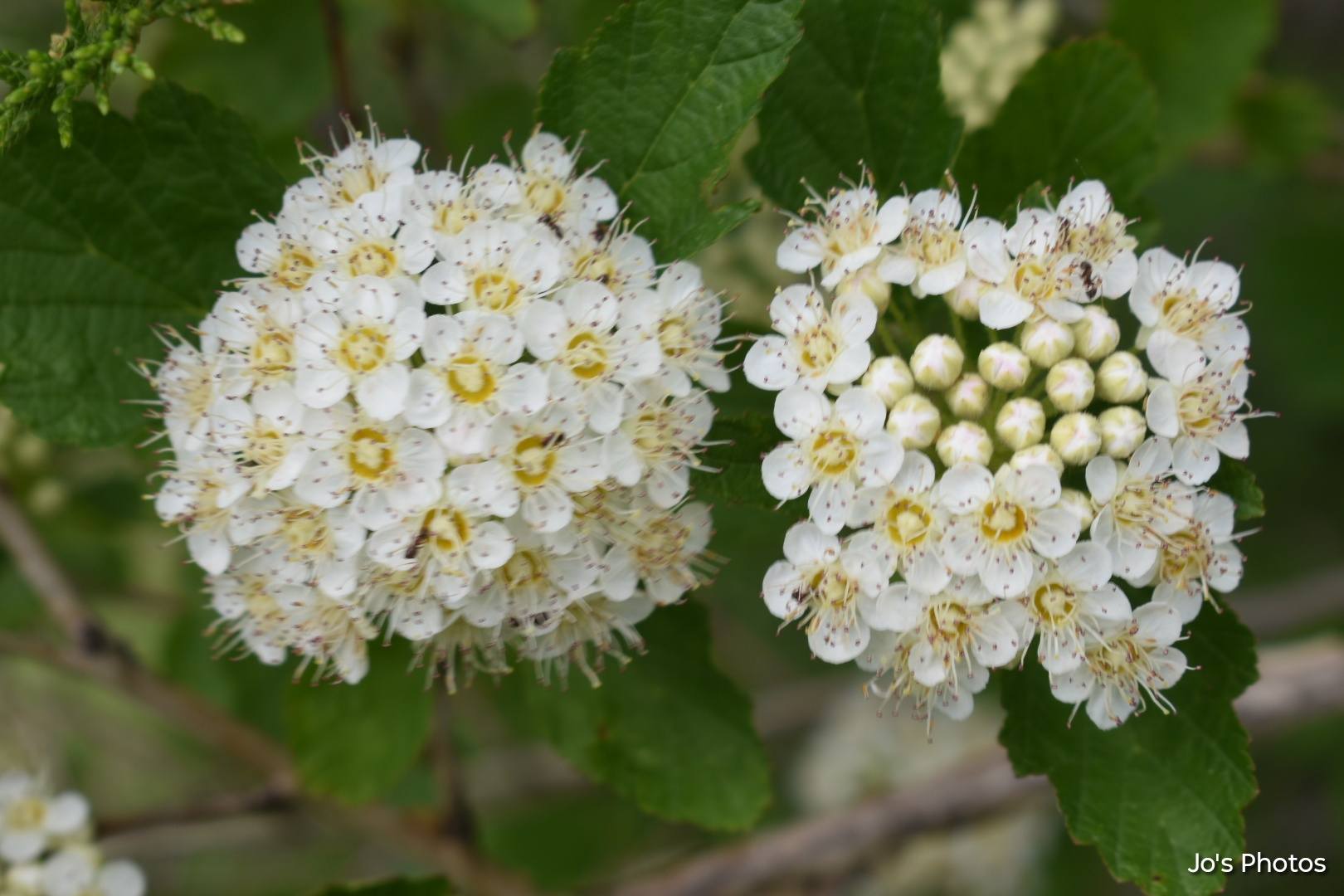
The flowers are in clusters, with the younger ones having around fifteen flowers in a cluster. The white flowers have black on the ends of the stamens. Striking and unusual.


Ninebark plants with buds:


The term Physocarpus is Greek for “bladder fruit” because the fruit is inflated. Ninebark refers to the bark that peels off in layers.


Younger plants have an orange color to the bark. It does produce new shoots from the old ones and can reseed itself.

Ninebark blooms in late spring/ early summer for about three weeks, after which the fruit appears. They have cultivated some to have vivid colors, like gold.
I smelled the flowers, but they didn’t have much of a scent.

These darker flowers are a bit past their prime. Fruit is starting to form.


I checked the map, and ninebark is in every county in Iowa. In my county, Cerro Gordo, it is native, not rare.
Pollinators do like the nectar of the flowers. A few insects prefer to dine on bark of Ninebark and shrubs like it.


Deer can eat the leaves, but I didn’t see any evidence of that. (I think they prefer the cornfield across the street.)

1 Comment
Interesting post!
I’ve seen some beautiful native plant diversity on former gravel pits, and also on extremely sandy soils. This post and these photos are great reminders that areas not suitable for corn and soybeans can be gloriously suitable for native plants.
And especially at this time of year, seeing photos of beautiful blooming native shrubs, rather than blooming Asian bush honeysuckle, is more than welcome. Thank you, Jo Hain.
PrairieFan Fri 5 Jun 10:05 PM