
# Christian Hermanson


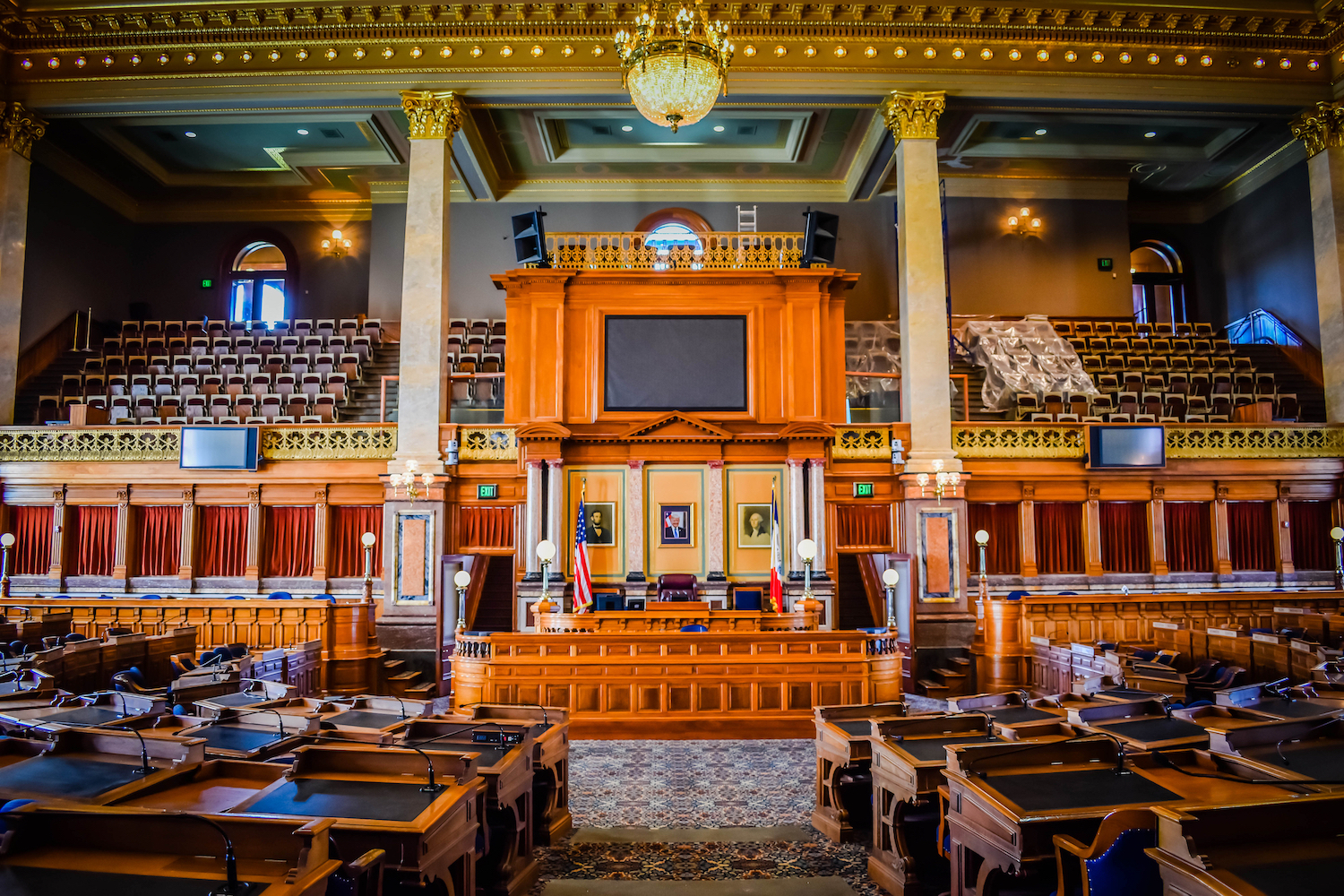
Who's who in the Iowa House for 2026

Normally, big changes in the Iowa legislature happen the year after a general election. But there has been much more turnover than usual in the Iowa House since last spring. With two Republicans running for Congress and another resigning from the legislature to take a Trump administration job, a chain reaction leaves ten House committees with a different leader for the 2026 session.

The overall balance of power remains the same: 67 Republicans and 33 Democrats in the chamber. Each party has some new faces in the leadership team, however. All of those details are listed below, along with committee assignments and background on all committee chairs and ranking members. As needed, I’ve noted changes since last year’s session.

Nineteen House members (fourteen Republicans and five Democrats) are serving their first term in the legislature—three more than in 2025, due to special elections that happened last March, April, and December.

The number of women serving in the chamber crept up from 27 at the beginning of 2025 to 29 as of January 2026, since Democrat Angel Ramirez succeeded Sami Scheetz in House district 78 and Republican Wendy Larson was elected to replace Mike Sexton in House district 7. The ratio of 71 men and 29 women is the same as during the 2024 session.

Six African Americans (Democrats Jerome Amos, Jr., Ruth Ann Gaines, Rob Johnson, Mary Madison, and Ross Wilburn, and Republican Eddie Andrews) serve in the legislature’s lower chamber. Gaines chairs the Iowa Legislative Black Caucus.

Republican Mark Cisneros became the first Latino elected to the Iowa legislature in 2020, and Democrat Adam Zabner became the second Latino to serve in the chamber in 2023, and Ramirez the chamber’s first Latina member in 2025.

Republican Henry Stone became the second Asian American ever to serve in the House after the 2020 election. Democrat Megan Srinivas was first elected in 2022. The other representatives are white.

Three House members identify as part of the LGBTQ community: Democrats Elinor Levin and Aime Wichtendahl, and Republican Austin Harris. As for religious diversity, Levin and Zabner are Jewish. Srinivas is Hindu. The chamber has had no Muslim members since Ako Abdul-Samad retired in 2024.

Some non-political trivia: the 100 Iowa House members include two with the surname Meyer (a Democrat and a Republican), two Johnsons (a Democrat and a Republican), and a Thompson and a Thomson (both Republicans).

As for popular first names, there are four men named David (one goes by Dave), three named Thomas or Tom, three Roberts (two Bobs and a Bobby), a Jon and a John, a Josh and a Joshua, a Mike and a Michael, and two men each named Jeff, Dan, Brian, Steven, Chad, Austin, and Mark. There are also two Elizabeths (one goes by Beth) and two women each named Jennifer, Heather, Megan, and Shannon. As recently as 2020, four women named Mary served in the Iowa House, but now there is only one.

Continue Reading...


Data dive on the 2024 Iowa State House races

Twelfth in a series interpreting the results of Iowa’s 2024 state and federal elections.

Phil Montag is a Des Moines area activist, serves on the Iowa Unity Coalition Board of Directors, and is one of the founders of Veishea Analytics.

Every election cycle produces a wealth of public data, from polling station statistics to voter turnout figures, campaign fundraising and spending data, absentee ballot requests, and audited results. This data exists not just for politicians and media outlets, but for the public as well. It provides transparency, accountability, and evidence-based debunking of misinformation that is prevalent today. With this analysis of the 2024 Iowa State House races, we are hoping to present the data in a new way that will be easy for everyday voters to understand.

In the Iowa State House races that concluded a few weeks ago, the Republican Party of Iowa was able to campaign with a serious cash advantage, although Democrats had much more success at promoting absentee ballot requests and turning out early votes.

The combined fundraising totals for Republican candidates running for the Iowa House was a little more than $12 million. For Democrats it was $6.7 million. Those totals represent what was donated to campaigns directly as well as in-kind contributions that other organizations spent on their behalf. The fundraising graphs enclosed below represent only what was raised in 2023 and 2024. Incumbent candidates whose campaigns started 2023 with cash on hand may have spent more.

Continue Reading...

Lessons of 2024: Iowa's not an outlier

First in a series interpreting the results of Iowa’s 2024 state and federal elections.

Two years ago, Iowa appeared to be on a different trajectory than much of the country. As Democrats won many of the midterm election races, including in our Midwestern neighboring states, Iowa experienced yet another “red wave.” Six of the last eight general elections in Iowa have been GOP landslides.

On November 5, Donald Trump improved on his 2020 performance almost across the board: in blue states like New York and New Jersey, swing states like Pennsylvania and Georgia, and red states like Texas and Iowa. He gained in rural counties, suburban counties, and urban centers, in states where both presidential candidates campaigned intensely, and in states where there was no “ground game” or barrage of political advertising. He gained among almost every demographic group except for college-educated women. He may become the first Republican presidential candidate to win the popular vote since George W. Bush in 2004, and only the second GOP nominee to win the popular vote since 1988.

The Trump resurgence isn’t unique to Iowa, or even the U.S.—grievance politics has been winning elections all over the world lately.

But that’s no comfort to Democrats here, who probably won’t win back any Congressional districts and suffered more losses among their already small contingents in the Iowa House and Senate.

Continue Reading...

Sixteen Iowa House races to watch in 2024

This post has been updated with the unofficial results from each race. Original post follows.

Democrats go into the November 5 election with the smallest Iowa House contingent they’ve had in five decades. But even though control of the chamber is not in question, this year’s state House races matter.

Despite having a 64 to 36 advantage for the past two years, Republicans struggled to find 51 votes for some of their controversial legislation, such as Governor Kim Reynolds’ plan to overhaul the Area Education Agencies. So chipping away at the GOP majority could help limit further damage to public education or civil rights.

Conversely, a net loss of Democratic-held seats would allow the majority to govern with even fewer constraints.

This post highlights nine Iowa House seats most at risk of flipping, plus seven districts that could be competitive, or where the results could shed light on broader political trends in Iowa. I will update later with unofficial results from all of these races.

Continue Reading...