
Rick Morain is the former publisher and owner of the Jefferson Herald, for which he writes a regular column. This essay first appeared on Substack.
Donald Trump is the most consequential president of the United States in more than 75 years. He now controls, partially controls, or heavily influences most of the major sectors of American life. He continually seeks to grow that power.
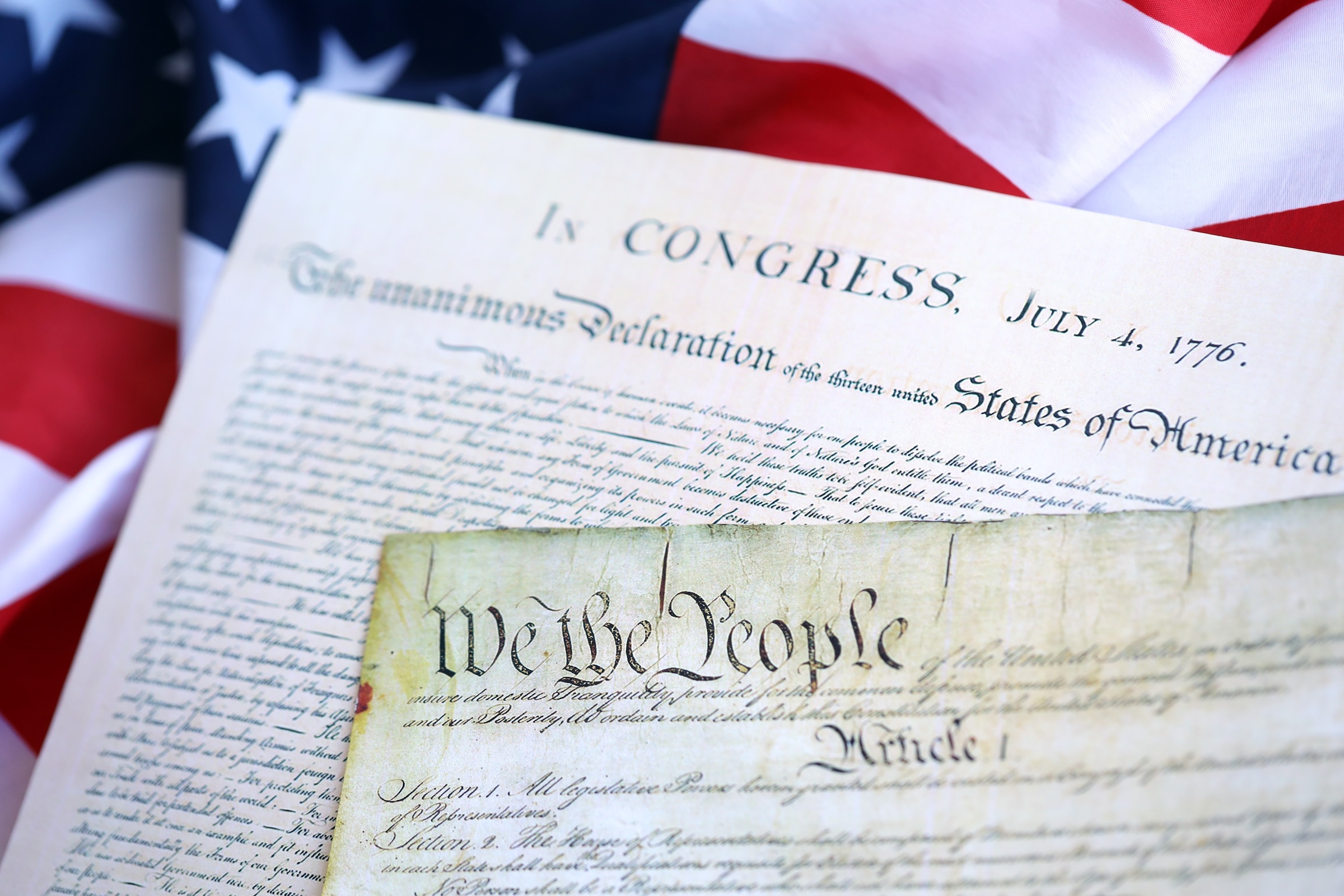
The country is now celebrating 250 years of existence, which began with its Declaration of Independence on July 4, 1776. But the first attempt of the new nation to form a lasting government—the Articles of Confederation—failed to launch.
The architecture that undergirds the laws of this land dates from June 21, 1788, when New Hampshire became the ninth state to ratify the American Constitution, birthed by the Founders in Philadelphia the previous year. Article VII of the document required approval from nine of the original thirteen states in order for it to take effect.
Since then we have had 47 Presidents, some passive, some very active. The Founders intentionally crafted the Constitution as a compromise among the states, in order to eventually gain their unanimous approval. (Rhode Island became the final state to ratify on May 29, 1790, three years and four days after the initial gathering of the delegates in Philadelphia. By then the Constitution had already been the law of the land for nearly two years.)
Even among the active presidents, Donald Trump stands out. The only other chief executive to rival him in that regard in modern American history would be Franklin Delano Roosevelt, who served from 1933 to 1945 through most of the Depression and World War II.
Like Trump, FDR enjoyed a compliant Congress for many of his presidential years. And at least in the early years of his stint, Roosevelt was enormously popular with American voters, whose support helped to further most of his New Deal economic initiatives.
Roosevelt’s immediate predecessors were Republicans Warren G. Harding, Calvin Coolidge, and Herbert Hoover—all of whom tried to avoid injecting government into American economic life. Compared to Roosevelt and Trump, they were passivists.
There are huge differences between Trump and Roosevelt. Trump enjoys something that Roosevelt craved: a Supreme Court that endorses most of his initiatives. That wasn’t the case for FDR. But like Trump, when faced with a barrier he didn’t like, Roosevelt tried to change the rules.
In the late 1930s the conservative Supreme Court invalidated much of FDR’s New Deal legislation on which millions of Americans had come to rely, in urban and rural regions alike. Roosevelt seized on the idea of persuading Congress to change the selection procedures and structure of the Court, a move that would have allowed him to alter the Court’s makeup to one more favorable to New Deal ideas.
The attempt revealed the limitations of Roosevelt’s power. Congress balked, and when FDR tried to persuade voters to oust conservative Democrats in the 1938 election, they instead stuck mostly with the incumbents. FDR’s “court-packing” scheme failed.
Unlike Roosevelt, Trump has yet to lose a pitched battle with Congress. To date in his second term, most Congressional Republicans have decided the party faithful back home still support the President when he calls for it. There’s plenty of evidence for that analysis, in the list of moderate or independent-thinking Republican members of Congress who have lost primary elections to Trump-backed candidates.
So long as Republicans control Congress, then, that situation is likely to continue, and Trump enjoys a 6-3 supportive majority on the Supreme Court as well, which has declared that he’s empowered to do about anything he wishes so long as it’s an “official act.” With the help of a number of very rich business and professional people, he has increased his control of the levers of power in the nation.
- Major media corporations, like CBS, the Washington Post, and Sinclair Broadcasting, are now owned by Trump supporters, or those too timid to face his wrath in court. To say nothing of the Fox organization, created specifically to monetize conservative viewership.
- The Republican-controlled Senate ensured that Democratic court nominees did not receive a hearing.
- Trump-appointed members of the Cabinet twist established practices of their departments, sometimes almost out of recognition, to bring about changes favorable to Trump and his close advisers. Some of the changes have the effect of enriching the Trump family and corporation, despite traditional barriers to such enrichment.
- Seasoned lifetime public servants are summarily fired from their jobs, replaced by people who have no experience in the line of work to which they are appointed.
- Big tax cuts benefit the very rich while government help in health care, education, the environment, and other needs of everyday life is reduced or threatened.
- The Trump Administration speeds radical new actions at such a pace that lawsuits against them can’t keep up while they work their way through the courts.
The Constitution, for all its blessings, is elastic enough to allow such things to happen, at least until the judicial system finally gets around to deciding those rare instances where a president’s action is halted. That elasticity is both a blessing and a curse for the nation.
At bottom the ultimate power of the American people, the one on which they have relied ever since ratification of the Constitution, is the power of the ballot. People can change their leaders. They can initiate movements that change the course of their government. They can even change their Constitution, as they have more than two dozen times over the years.
Voters determine the destiny of the United States and the boundaries of presidential power. How, and whether, they choose to use that authority is up to them. It’s an awesome authority, one for which we owe gratitude to those who created it at our genesis and who have enlarged it in the decades since.
1 Comment
Read This
This is an incredible non partisan analysis of Trump’s policies. I think the analysis is as good or better than anything I have ever read about Trump. Maybe it takes someone living in a rural area to understand what Trump is doing. Thank you for this. Please share widely.
boji Fri 3 Jul 12:33 AM