
Randy Evans is executive director of the Iowa Freedom of Information Council, a nonpartisan, nonprofit organization that promotes openness and transparency in Iowa’s state and local governments. He can be reached at DMRevans2810@gmail.com. This essay first appeared on his Substack newsletter, Stray Thoughts.
When a city plans something big, it should not check driver’s licenses at the door.
That is what happened earlier this month in Woodward. The City Council cancelled its regular meeting on October 12 and instead held what it called a “community conversation” in the Woodward-Granger High School auditorium.
The notice required attendees to show a photo ID with a Woodward address or a piece of mail with their name and Woodward address before they could enter.
Security officers and police were there to oversee the screening of IDs. I was there as president of the Iowa Freedom of Information Council and was turned away. So was a rural Dallas County resident interested in data centers. A KCCI reporter saw at least two others who were refused entry.
Inside, Mayor Todd Folkerts and three Microsoft officials announced that the company had closed on the purchase of about 600 acres in the Woodward Eco Business Park, on the city’s south side, for a data center campus.
About 200 residents listened for 90 minutes. Folkerts said the council would need to approve a development agreement and a site plan before the project could proceed.
Fewer than a majority of the five council members attended, so the gathering likely falls outside Iowa’s open meetings law. Legal or not, the residency screening was a mistake. It treated a regional decision as a private family matter.
Consider what a data center brings. Microsoft’s representatives told the crowd a closed-loop cooling system would spare the city’s water supply and buying electricity from a wholesaler would protect residential rates.
Those are promises about water and electricity, and neither resource stops at a city limit. New power lines would cross farm fields. Construction trucks would use county roads. Storm water runs downhill without regard to annexation maps or city boundaries.
A farm family just outside town will live with the data center’s lights, noise and traffic as surely as any resident of Main Street. That farm family pays property taxes, too — just not to the City of Woodward.
Iowa law already recognizes that a city’s choices reach past its borders. Section 354.9 of the Iowa Code allows a city to review subdivision plats as far as two miles beyond its city limits, giving the city a voice over how its rural neighbors’ land is developed.
On October 12, Woodward denied those same neighbors a seat in the auditorium.
The venue underscored that point. Woodward-Granger High School belongs to the Woodward-Granger Community School District, which has its central offices in Granger and reaches into Dallas, Boone and Polk counties.
Taxpayers in Granger and the surrounding countryside helped pay for that auditorium. The city used the school district’s building and then told people without a Woodward address to stay outside.
Iowa’s local governments cooperate all the time. Chapter 28E of the Iowa Code allows cities, counties and other public bodies to share services and work together for mutual advantage. The legislature has directed the courts to interpret that law liberally.
Twelve central Iowa cities, utilities and water districts, including the Xenia Rural Water District, formed Central Iowa Water Works under a 28E agreement to plan the region’s drinking water together.
Metro Waste Authority grew out of a 28E agreement among Des Moines-area governments dating to 1969. Polk County and its cities fund emergency management jointly through another 28E agreement.
None of these partnerships asks a neighbor for proof of address before letting the person listen to a discussion of matters of mutual concern.
A residents-only rule divides communities. It turns the city limit into a wall, as if the people on the far side have no stake in what happens on the near side.
This also invites the same treatment in return. If Granger, Madrid, or Dallas County someday puts a landfill on Woodward’s doorstep, Woodward residents will want to attend meetings where such a development is discussed.
They should get in. Everyone else should, too.
The rule used for the October 12 meeting was also unneighborly.
Picture a farmer who plans a hog confinement on his fence line and invites only his own household to hear the details. The people downwind would not call that a community conversation. They would call it a snub.
I told KCCI the requirement that only Woodward residents could attend the information session “erodes the trust and confidence” in Woodward city government. And the damage spreads beyond Woodward.
Woodward still has time to fix this. The development agreement and site plan still need council approval. The council will have to take these up at regular, properly noticed meetings that are open to anyone who wants to attend.
Woodward officials should invite the Dallas County Board of Supervisors, the Woodward-Granger school board and nearby townships to hear the plan. It should publish what Microsoft has said about water, power and traffic.
Woodward’s neighbors will live with this data center. They deserve to hear about it, ask about it, and argue about it in the same room as everyone else.
A project this large deserves the widest audience — not the narrowest.
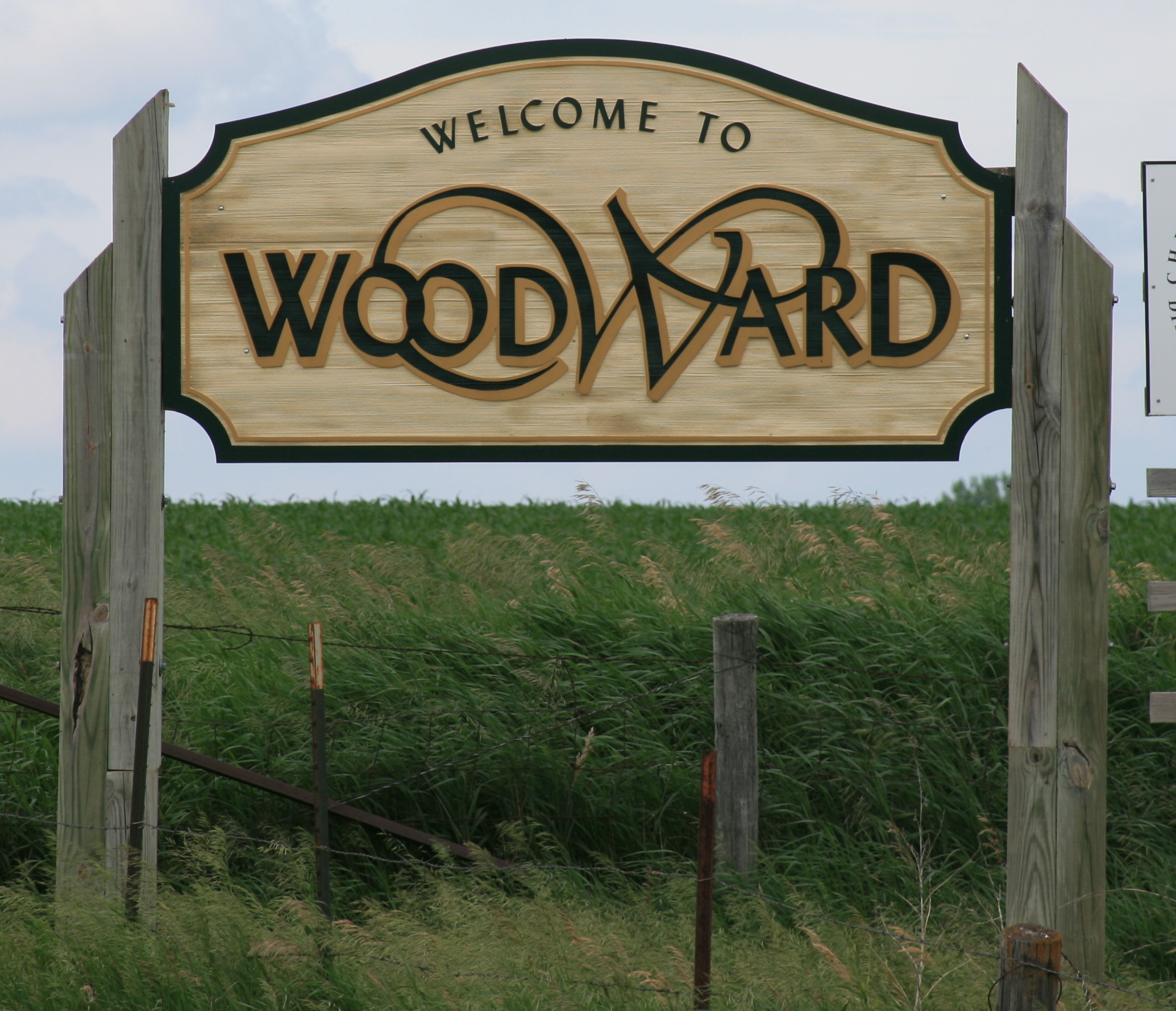
Top photo of welcome sign for Woodward, Iowa is by Richc80, available via Wikimedia Commons.

1 Comment
Interested readers might also want to know...
…about the recent data center “open house” held within the City of Boone. That gathering was restricted to people living within Boone city limits. The decision to restrict the meeting was reportedly made by the Boone County Economic Development Board and representatives of the proposed data center.
News reports said that multiple people who lived close to the city boundaries, including one person who lived a mile away, were denied access. That’s especially interesting because a map seems to indicate that the data center being considered would be built very close to the City of Boone boundary.
Are these restricted-attendance data center meetings being held in other parts of Iowa?
PrairieFan Mon 26 Oct 9:24 AM