
Bruce Lear lives in Sioux City and has been connected to Iowa’s public schools for 38 years. He taught for eleven years and represented educators as an Iowa State Education Association regional director for 27 years until retiring. He can be reached at BruceLear2419@gmail.com
When I think about Amendment 1 on Iowa’s general election ballot, I’m reminded of the classic children’s book, Alexander and the Terrible, Horrible, No Good, Very Bad Day. Alexander wakes up with gum stuck in his hair, he doesn’t get a toy in his cereal, doesn’t get the window seat in the carpool, gets scolded by his teacher, and there’s no dessert at lunch.
There isn’t a happy ending, because the central theme of the book is that bad days happen to everyone, and it’s just a normal part of life.
But when there’s a terrible, horrible, no good, very bad idea on the ballot, it doesn’t have to become part of our lives.
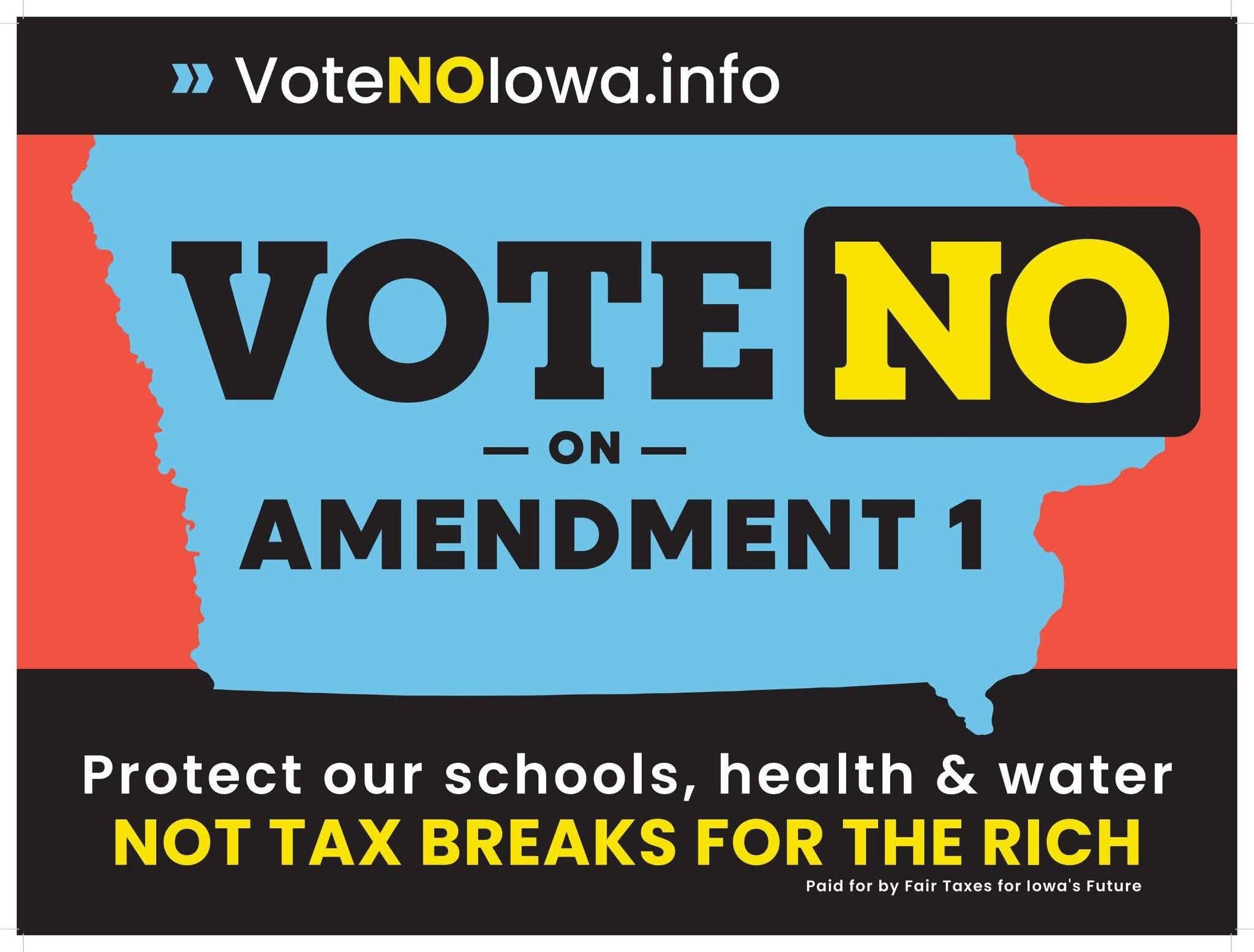
Amendment 1 is truly a terrible, horrible, no good, very bad idea, and the worst part is it sounds so reasonable. It sounds like a way to rein in government spending, and it sounds like giving power to the people.
But like your mom warned, “If it sounds too good to be true, it is.”
It’s an extremely dangerous idea.
It allows the minority to rule, it doesn’t provide a way to deal with the unexpected, and it’s a gift to the ultra-rich. The proposed amendment would require a two-thirds majority in the Iowa House and Senate to approve future personal and corporate income tax increases. (Other taxes or fees could be raised through a simple majority vote.)
No one owns a crystal ball that predicts the future. We can’t know if the future holds a catastrophic weather event, a major financial collapse, or another deep farm crisis. We expect our leaders to quickly react and to lead through these events.
If Amendment 1 passes, there will be no flexibility, and the lawmakers we vote for have their hands tied. The majority will no longer rule, because under this amendment, seventeen of the 50 Iowa Senate members and 34 of the 100 Iowa House members could block a tax increase, preventing a timely reaction to catastrophic events.
The minority would have more power than the majority, and the governor elected statewide by the majority of voters would be powerless. If the amendment became part of Iowa’s constitution, the minority could block action supported by a bipartisan majority—even if the people of Iowa desperately needed help. That’s not what our founders envisioned. That’s not how our republic works.
Most people who yell about wanting “small government” are really craving efficient government. That means maintaining essential services like police and fire protection, quality public schools, safe roads and bridges, clean water quality, and available health care. To maintain these services, Iowa needs sustainable and predictable revenue. That could be lost under Amendment 1.
Republican lawmakers pushed for Amendment 1 after aggressive income taxes cuts. Since those cuts, and the private school voucher plan was passed, state revenue has taken a nosedive by 17 percent. Iowa’s budget is now $1 billion in deficit, and revenue surpluses are estimated to evaporate in less than three years. Iowa is headed for a fiscal cliff, and Amendment 1 will make the fall deadly.
If there is a fiscal crisis, one of the few alternatives for lawmakers would be to raise the sales tax. (That would require only a simple majority vote.) The sales tax is the most regressive tax, favoring the rich. Working families would be hit harder than the wealthy, because they spend a higher percentage of their earnings on goods and services. Even if lawmakers raise sales tax, that wouldn’t bring in enough revenue for essential programs to survive. Our schools, police and fire protection, roads, bridges, health care, and water would be at greater risk than they are now.
Before voting on this terrible, horrible, no good, very bad idea, take a minute and think about protecting your future, your children’s future, and the future of the state you love. Then vote no on Amendment 1.