
greg wickenkamp is a lifelong Iowan.
The segregationists are back. Many never left.
The term segregationist usually brings to mind the 1960s crowds of rabid white people yelling at Black children as they attended formerly all-white schools. However, scholars of race are increasingly using the term to depict supporters of far-right, segregationist policies today.
Normally, it is hard to see the historical significance of any current event. But other times the weight of history comes rushing into the present moment.
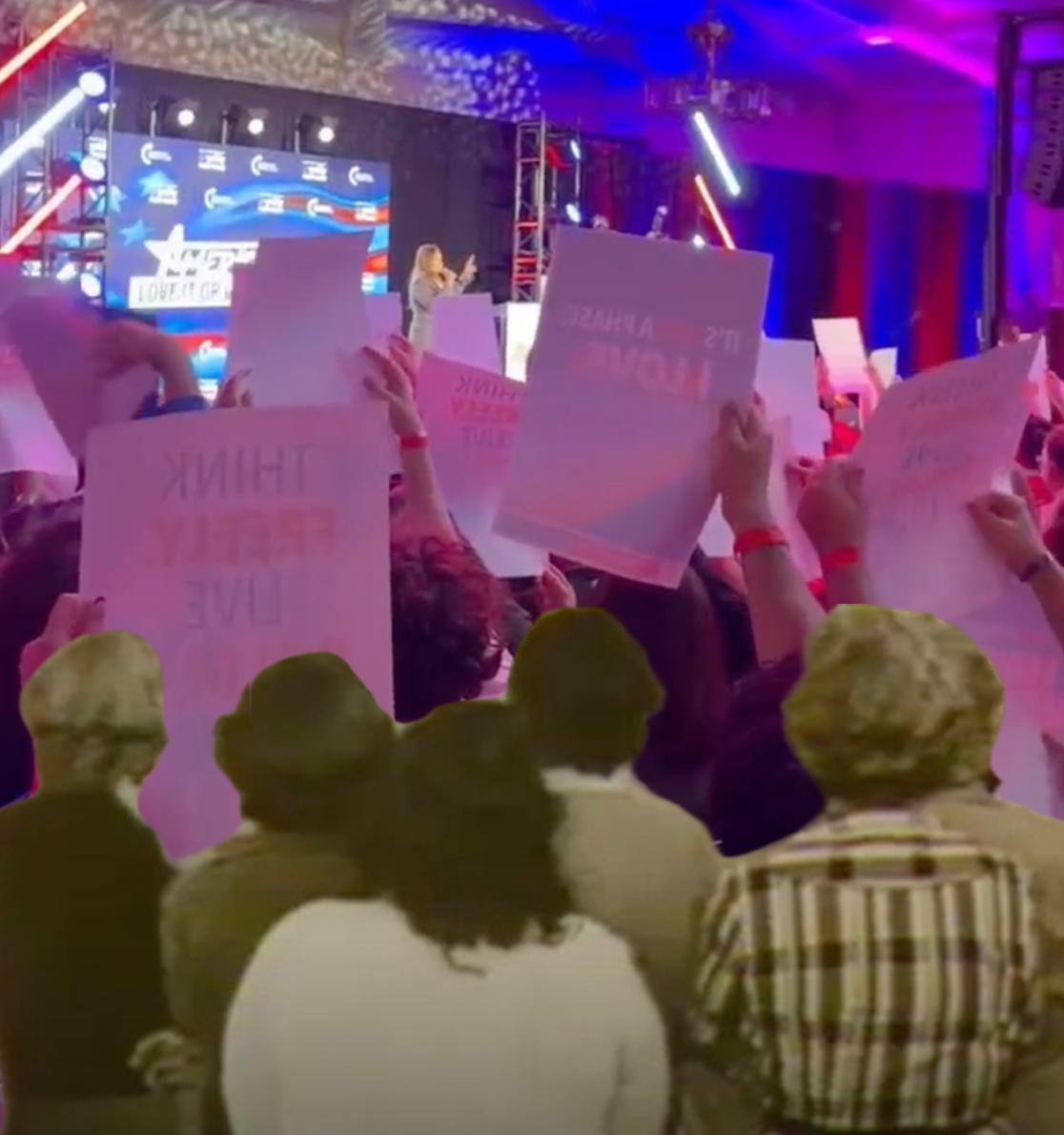
Such was the case during the first week of October when two speakers, diametrically opposed, spoke at the University of Iowa. Ruby Bridges, who as a six-year old girl helped desegregate schools in New Orleans, spoke on October 5 to a diverse crowd of 1,800 people who filled Hancher Auditorium. Three days after she spoke, Turning Point USA (TPUSA) brought in Ben Shapiro, Donald Trump, Jr., and a cadre of other ultra-rightwingers. They feverishly spoke to a nearly all-white crowd at the Iowa Memorial Union.
Between the two events, there were contrasts and continuities that make history’s through-lines apparent.
Bridges remembered observing the anger and hatred on the faces of white people protesting her school integration efforts in 1960. The parents of her white classmates removed their children from the classroom rather than have them attend school with a Black classmate. Similar white students elsewhere denied their racism, claiming they were patriotic Christians merely standing for law and order.
Today’s self-proclaimed patriots mostly deny the supremacy behind their policies. At the TPUSA rally though, their cheers were loudest for the dog-whistles, Othering, and neo-segregationist views expressed by the ultra-conservative speakers. As one reporter noted,
I felt sick. With every new sentence, there was something new, something so blatantly misogynist, racist, and extremist, followed by the loudest cheers I’ve ever heard. But what disturbed me most wasn’t any single line. It was how little the crowd hesitated.
During Bridges’ childhood, intimidation and vigilante violence was one means of enforcing segregation. In Iowa City, shortly after the TPUSA event ended, an unknown vigilante tore up the yard and sign of a neighbor on Iowa City’s Northside. Their yard sign, reading, “We are on Native Land,” was intolerable for some aggrieved patriot.
The segregationists of the 1960s were different, of course, than today’s far-right. The cheers for the TPUSA speaker’s slurs were different from the slurs aimed at Ruby Bridges. The chapter is new, but the book reads the same.
It is sometimes easy to imagine the 1960s chapter as one filled with good people working for civil rights and bad people working against equality. And maybe it feels easier today to see those supporting the far-right as totally deplorable too. But that’s too simple.
Those who made up the angry mobs in the 1960s and who make up the angry mobs today both go home to their families and care for them. Kindness to one’s family though doesn’t undo the horrific damage this rhetoric does to others. That behavior is intolerable.
Because of rhetoric and policies like those supported at the TPUSA event, some children in Iowa City are now without their mother. Fatou Traore, a resident of Iowa City for 20 years and a medical care worker, was abducted and deported to a country she has no connection to. The youngest of her four children is just three years old. The far-right’s vocal support of supremacy and hatred threatens the lives of those who they see as lesser, and it also threatens their own humanity. A person has to sink very low to cheer wildly for policies that send mothers to concentration camps.
It wasn’t just angry white people acting individually that enforced Jim Crow era segregation – it was policies built on systems of white supremacy and racial capitalism. In the U.S., these systems segregated schools, housing, and employment practices. They advantaged whites at the expense of nonwhite people. When activists and civil rights leaders demanded equality during the Civil Rights Movement, segregationists blamed Communists, Black militants, and dissidents.
A right-wing Des Moines newspaper in 1972 quoted one extreme conservative whose language would be laughable if it didn’t sound so much like the language of MAGA today: “this country was built on blood, sweat, and tears, but today it’s being replaced by sex, dope, and queers.” Political ads today blame immigrants, refugees, and trans children for society’s ills. It’s easier to blame people who don’t look or act like you than to accept responsibility for systems unfairly benefiting some at the expense of others.
For their part, the speakers at the TPUSA event blamed overweight college students, rape victims, immigrants they equated with criminals, and innocent Latin American fishermen for a host of ills the current administration is causing. High gas prices? Don’t blame the unprovoked war against Iran, blame migrants. Unrest on college campuses? Don’t blame inflammatory speakers, the gutting of the humanities, or those committing sexual violence, blame rape victims and college men not going to the gym enough. A bloated national budget? Don’t blame corruption, grift, or the largest war budget in the history of humanity, blame international aid programs helping children in Nicaragua and Peru.
Today’s right wing doesn’t need to use the same racial slurs used against Ruby Bridges to make their hatred and willful ignorance plain. (Based on what the TPUSA speakers shared, slurs against the disabled and those who aren’t cisgendered are apparently still en vogue.)
The systems of hatred that scared and confused the six year old Bridges also determined which foreign countries were given aid and which were bombed. This was true in Vietnam in the 1960s, and it’s true today. The illegal war against Iran, the genocidal attacks against Palestinians, and the extralegal murder of hundreds of Latin American fishermen could not happen without the nationalistic and supremacist thinking espoused by TPUSA’s speakers. Trump Jr. bemoaned U.S. aid to predominantly Black and Brown countries. The administration’s gutting of USAID has already killed more than 700,000 people and, should the cuts continue, medical experts estimate another 14 million will die because of the United States’ inaction.
In a new twist on an old hatred, Trump Jr. lumped together trans people with Brown foreigners – justifying the government’s deadly cuts by expanding the definition of who they are, and how they’re out to get us. As hundreds of thousands are actively killed, Trump Jr. warned, without evidence, that they could come attack our American children.
When Bridges walked the steps to the elementary school in New Orleans, she remembered being assisted by U.S. Marshals. President Dwight Eisenhower himself ordered their involvement to protect her against the throngs of angry white adults. Can we imagine any Republican official today acting to defend children who today are similarly struggling for equality?
In stark contrast, the current president has attempted to pay angry mobs for their insurrection attempt on January 6, 2021. The segregationist in the Oval Office said there were “very fine people on both sides” after a white supremacist mob killed Heather Heyer and injured 35 others in Charlottesville during the Unite the Right rally in 2017. Unity is fine and good, but what we unite around can be a matter of life and death.
Bridges’ community disdained America’s segregationist practices, and were brave enough to protest and offer her family support. They were acting out the words penned by James Baldwin, who wrote, “I love America more than any other country in the world and, exactly for this reason, I insist on the right to criticize her perpetually.” The tear-filled eyes of many in the crowd at Ruby Bridges’ appearance testified to their support of her community’s actions many years ago. Their actions made our country a better place.
But the TPUSA event aimed to silence anyone brave enough to offer criticism or act for social change. Their stop in Iowa City was part of a broader tour they’re calling “America: love it or leave it.”
As has long happened in the United States, the right to free speech was used to allow hate speech at the TPUSA event, while silencing opponents. When one angry attendee accused the president of pedophelia, police escorted him out. When another attendee raised concern over the US’s support for Israel’s genocidal efforts, and challenged Ben Shapiro to a boxing match, Shapiro told him to “shut the fuck up.”
Historical comparison has its limits. A pastor at the TPUSA event compared Charlie Kirk to Rev. Dr. Martin Luther King, Jr. King was killed for his eloquent and incisive moral clarity. He stood against not just segregation but also white supremacy, capitalism, and militarism. On the other hand, Kirk actively advanced white supremacy, misogyny, and Islamophobia. Comparing Kirk to King is as ahistorical as comparing Adolf Hitler to Charlie Chaplin using the logic that they were both public figures who had mustaches.
Some historical comparisons are spurious, but other times there’s direct through-lines. When asked, Bridges said she had not met Dr. King, but had met Coretta Scott King, John Lewis, and a host of other civil rights leaders, including those who secured the Voting Rights Act – arguably the greatest legal triumph of the Civil Rights Movement. Today, the Voting Rights Act is a dead letter, undone by a Supreme Court stacked with conservatives.
Though the 1960s were two generations ago, we are similarly living through a historical moment. Just like then, how we act now will determine the future. As her time on stage neared its end, Bridges said she wouldn’t accomplish the work she set out to do. She hoped her children and grandchildren could continue that work. Bridges’ work is not only against segregation or even racial prejudice, but is against what she sees as “evil.” Bridges said more than race, this means addressing power and the fact that some groups want control over others.
Today’s conservatives, to the degree they’re represented by the TPUSA speakers, are invested not only in supremacy regarding race, but also with respect to gender, ability, nationality, and sexuality. Bridges mentioned that in order to create a world where racism, and presumably other supremacies, are vanquished, we must all work together.
Bridges returned often in her talk to her childhood innocence. She did not understand at the time the historical weight on her shoulders. Today, we are grown. We should understand that what we do or fail to do will affect the future for generations to come. It might be a comforting myth to tell ourselves that the Civil Rights Movement ended segregation in our society. But Ruby Bridges’ work is unfinished. How will we carry it forward?