
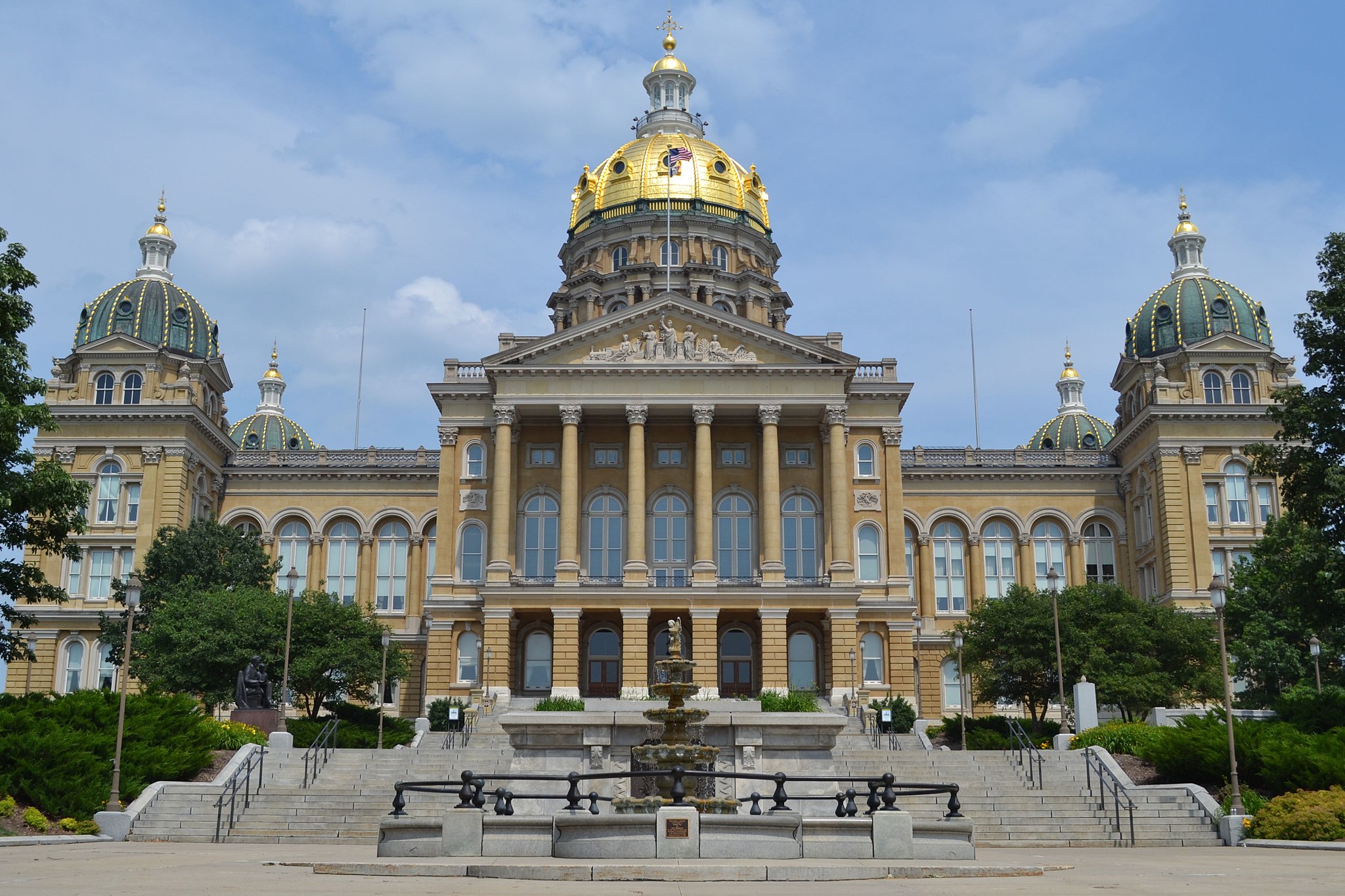
Rick Morain is the former publisher and owner of the Jefferson Herald, for which he writes a regular column. This essay first appeared on Substack.
The state of Iowa has a budget problem, and it could surface with teeth in a few years. Thoughtful action now could postpone it, buying enough time to eventually defang it.
The long and short of the situation (emphasis on “short”) is that the state’s revenues remain below its expenditures. The Iowa legislature’s practice now is to fill that gap with money from the state’s reserve funds, particularly the Taxpayer Relief Fund, which by a few years ago had grown to several billion dollars.
This past fiscal year, which ended in July, state revenues totaled about $8.1 billion, and general fund spending reached around $9.4 billion. The state’s reserve funds subsidized the budget with about $1.4 billion. The Taxpayer Relief Fund ended July 31, 2026, with about $3.1 billion left.
That’s a lot of money. But the state’s Revenue Estimating Conference, a three-member panel whose predictions the legislature must use to determine the annual state budget, foresees the Taxpayer Relief Fund contributing several hundred million dollars again to the current fiscal year’s budget, leaving the fund balance on July 31, 2027, around $2.6 billion. That’s only a little more than half where that fund stood just two years earlier.
If that trend continues, the reserve funds will run out in the next two or three years. The state would then have to decide how to balance its budget without pots of reserves to fill the gap.
The actual dollar amounts of revenues and expenditures may vary in the next few years from the state’s projections, maybe by several hundred million dollars. But the trend is not likely to change.
The state’s options are limited: either raise revenues, or cut spending, or both.
Iowa Department of Management Director Kraig Paulsen, who chairs the Revenue Estimating Conference, said after the panel’s meeting last month that he expects the state’s revenues to grow fast enough, starting this year, to catch up with the anticipated drops in the reserve funds, so that the state’s revenues and expenditures could be balanced without help from the reserves.
That has been the Republican Party’s prediction, both from Governor Kim Reynolds and state legislative leaders, ever since they collaborated on the cuts to state personal and corporate income tax rates that began several years ago. And actual revenue totals have indeed grown recently. But not by enough to overcome the imbalance in the budgets.
In 2018, Iowa’s Republican trifecta started down the path toward the state’s present lower income tax rate of 3.8 percent for every taxpaying individual, regardless of income level. Coupled with a 10 percent cut to income tax rates back in 1998, those reductions dropped the state’s tax rates significantly. Previously the top Iowa individual income tax rate had been 8.98 percent.
The state’s corporate income tax rates also dropped (see below).
The income tax rate reductions account for most of the state’s revenue declines in the past few years. Together with the threats to farm income from high input costs and tariff-induced crop sales constrictions, higher interest rates that make home purchases and general credit purchases more difficult, and stubborn inflation that results in higher food and fuel costs, Iowans’ incomes (and therefore income tax payments) threaten to inflict more damage to the state’s budget.
What can be done? A few things:
For one, while there still may be ways to cut fraud, waste, and abuse in government spending at the state level, by now only a few of those probably remain. Most of what’s left is muscle, not fat. State spending on education, health, and the environment is limited compared to the tax reductions of the past few years. Big spending cuts should not be on the table.
For another, the legislature could halt any more reductions in personal income tax rates. In recent years the governor and several legislators have declared their intent to eventually eliminate Iowa’s state income tax, as several other states have done. That looks unwise to many economic analysts based on the state’s economic trajectory.
For still another suggestion, the state could erase its current plan for continued possible reductions to corporate income tax rates. The current corporate rate is 5.5 percent on annual corporate taxable incomes up to $100,000, and 7.1 percent for incomes above that level. But in 2022 the state adopted a plan that provides that if annual net corporate state income tax receipts exceed $700 million in the preceding year, a mechanism kicks in to further reduce the corporate rate. That plan could be repealed as a budget-health improvement measure.
Going further, the voters of the state this fall approved Amendment One, which now forbids any income tax increase unless two-thirds of each legislative house votes to do so. The legislature could adopt an act to bring all further tax reductions to a halt, at least until the budget is in balance through equal revenues and expenditures.
A big boost to the budget, of course, would be for the state to adopt an income cap on Education Savings Accounts (the program that provides a current amount of $8,148 for each private school student). Commonly known as school vouchers, the Education Savings Accounts tap the state budget for close to $330 million this year. They are available to all families regardless of income. As a result, a number of well-to-do families that were already sending their youngsters to private schools can now do so at no charge.
And finally, a suggestion likely to find strong opposition in many quarters: the state could raise the sales tax by a penny. In 2010 Iowa voters approved a constitutional amendment that provides that the first three-eighths of a cent of any sales tax increase will go to improve water quality, improve soil, help wildlife, and conserve outdoor recreation resources in Iowa.
A one-cent sales tax increase would increase state revenues by roughly $550 million. Three-eighths of that would equate to about $200 million, an advantageous boost to research and action on water quality, among other needs, that Iowa voters called for sixteen years ago. Concern about the possible connection between polluted water and cancer is widespread. The balance of the additional penny tax—about $350 million—could go into the state’s general fund to help redress the budget shortfalls.
The legislature has dragged its feet for a long time on money to meet the environmental desires of the 2010 voters. Now would be a good time, with a new Democratic governor and many new legislators, to finally do so, and to bolster the state budget at the same time.
Big suggestions all, but the need and the opportunity for the state call for action.