
Clark Kauffman is deputy editor at Iowa Capital Dispatch, where this article first appeared.
A federal judge has taken the government to task over its attempts to detain and deport a truck driver who was arrested in a joint immigration enforcement effort conducted by ICE and the Iowa State Patrol.
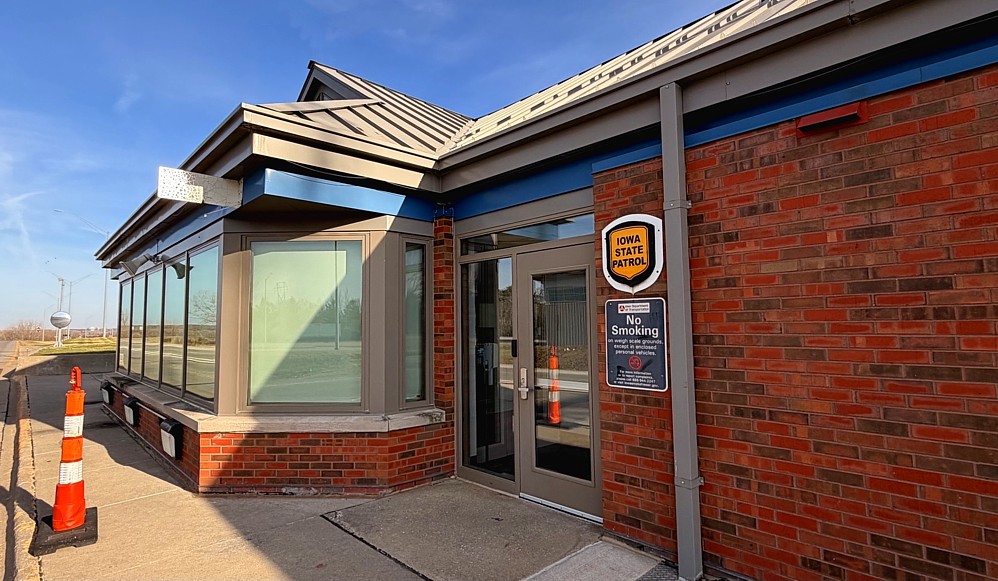
The case involves Suraj Vasal, who four years ago came to the United States from India seeking asylum and was then released on his own recognizance. On February 11, 2026, Vasal was driving a commercial semitruck on Interstate 80 in Iowa when he failed to stop at a weigh station. Iowa State Patrol Trooper Nathaniel Rippey ticketed Vasal, after which Immigration and Customs Enforcement officers took custody of Vasal and transferred him to the Polk County Jail.
Court records indicate the Iowa State Patrol and ICE are waging an immigration enforcement effort called “Operation ICE Wall,” in part by stopping commercial truck drivers at interstate weigh stations in Iowa.
Vasal’s attorney, Alexander Smith, has taken ICE, the Department of Homeland Security and Polk County Jail Administrator Cory Williams to court over the matter. The U.S. Attorney’s Office says it had a valid warrant to detain Vasal based on the criminal act of failing to stop at the weigh station.
Initially, Vasal was denied a bond hearing, with the Omaha immigration court relying on the Trump administration’s position that people who have lived in the United States for months or years are subject to the same sort of “mandatory detention” faced by people who are apprehended at the border.
On February 24, 2026, U.S. District Judge Stephen H. Locher gave the immigration court seven days in which to provide Vasal with a hearing where he could make his case for release on bond while his deportation case is pending.
On February 27, ICE agents approached Vasal in his jail cell at 10 a.m. and told him that he was to appear, via Zoom, for a hearing of some kind in 30 minutes. Vasal participated in the hearing, which turned out to be the court-ordered bond hearing he was initially denied.
At the hearing, Vasal asked for more time so he could arrange for legal representation. The court denied the request and proceeded with the hearing, at which ICE officials argued that Vasal’s failure to stop at the weigh station suggested he was both a flight risk and a danger to the community. The immigration judge concluded he was a flight risk and denied him bond.
Smith went back to district court, arguing that ICE and the immigration court had engaged in “malicious compliance” with Locher’s February 24 order.
“The (government’s) ‘bond hearing’ was a sham imposed on Mr. Vasal with no notice and no reasonable opportunity to retain an attorney or prepare for his bond hearing,” Smith argued in court filings.
The U.S. Department of Justice, representing ICE and the U.S. Department of Homeland Security, argued the hearing had to proceed at the designated time or the immigration judge, who had a crowded docket of cases, risked violating Locher’s order to hold the hearing within seven days.
Judge: Government’s actions border on bad faith
In a sharply worded March 24 ruling, Locher rejected the DOJ’s argument and ruled Vasal’s rights were violated by the actions of both Homeland Security and the immigration judge.
The government’s actions, Locher said, “test the border of bad faith.” In essence, he stated, the government’s “position is that it is acceptable to force a pro se party to participate in a hearing where his liberty is on the line with, at most, 30 minutes’ notice. The timing made it impossible for Petitioner to marshal evidence in his defense, such as evidence of work authorization, information from his employer, testimony or letters of support from friends and family members, and evidence of his living situation. This is a denial of the basic due process rights.”
The immigration judge, Locher ruled, “also appears to have violated Petitioner’s statutory right to counsel by refusing to continue the hearing. […] To make matters worse, it appears that the Immigration Judge — with [the government’s] full support — is trying to blame this Court for what happened.”
Locher labeled as “frivolous” the government’s claim that the immigration judge had to proceed with the hearing or risk missing the seven-day deadline.
“There is no reason why this particular Immigration Judge had to handle the bond hearing,” Locher wrote. “If her schedule was too crowded to allow it to occur within the seven-day period while still preserving Petitioner’s rights to counsel and due process, she should have transferred the case to a different Immigration Judge.”
Locher added that “it bears mentioning, in any event, that any shortage in resources is Respondents’ own fault for undertaking aggressive immigration enforcement efforts without sufficient preparation or infrastructure to ensure the protection of due process rights.”
He added that “the only thing the Immigration Judge should not have done is plow forward with the hearing on February 27, 2026, in violation of Petitioner’s rights. And yet this is what happened.”
Locher also questioned the immigration judge’s decision to deny Vasal bond at the conclusion of the hearing, noting that Vasal “has a job, pays his taxes, has a pending asylum case, and has no criminal history other than a traffic violation. It is difficult to see how the immigration judge could have concluded in these circumstances that he is a flight risk.”
Locher ordered that another bond hearing be held within seven days, and that the case be heard by a different judge than the one who handled the matter on February 27, and that Vasal be given at least 48 hours’ notice of the hearing.
The day after that decision, however, the Eighth Circuit Court of Appeals ruled that not all ICE detainees who have been in the United States for months or years are automatically entitled to a bond hearing.
Locher withdrew his order for a new bond hearing, but then gave Smith, Vasal’s attorney, an opportunity to argue why a bond hearing was warranted in this specific case.
In response, Smith filed a motion on April 1 seeking his client’s immediate release.
“Human beings are entitled to some due process before they are caged,” Smith told the court. “People who have only committed a traffic violation do not deserve months of confinement. The court should order the immediate release of Suraj Vasal or, at the very least, continue to enforce its judgment that he must receive a new bond hearing.”
Locher has yet to rule on the matter.
1 Comment
this is what our elected officials are supporting
lying to judges, lying to the public, on behalf a thuggish ethnic cleansing plan, would you know that from the local coverage of the issue and or interviews with them?
dirkiniowacity Sun 5 Apr 4:49 PM