
Al Charlson is a North Central Iowa farm kid, lifelong Iowan, and retired bank trust officer.
I sympathize with Iowa Republican legislative leaders as they wrestle with the realities of trying to reform property taxes. House Appropriations Committee Chair Gary Mohr’s comments from December 2025 tell the story: “What we learned last year is it’s a whack-a-mole game, which we didn’t all know – meaning if you do this with property taxes, it has an effect over here we didn’t think about.”
Guess what – the moles are still popping up! This is nothing new – the property tax system is complicated to begin with, and our history of trying to “reform” it has added layer upon layer of complexity.
The lesson we should take from history is that tax reform should be done very carefully, with ample time for all affected Iowans to learn about the proposed changes and enter into the conversation. The classic Iowa property tax reform was the shift from taxing farmland based on its market value to its economic productivity about 50 years ago. Assessors began incorporating soil productivity into the farmland taxable valuation formula in the late 1960s.
In 1977 the legislature made soil productivity (using the Corn Suitability Rating index) and net earning capacity the sole factor in Iowa farmland assessed valuation for tax purposes. Our farmland tax assessment system (from which I do benefit as a farmland owner) is now accepted as a reasonable accommodation to Iowa’s core industry, although it obviously has a huge impact on the finances of rural counties and school districts.
We’ve had a tougher history with commercial property tax reform (certainly a justifiable goal). The 10 percent reduction in taxable valuation of commercial and industrial property enacted in 2013 was accompanied by a “backfill” from state income and sales tax revenue to offset the impact on local governments. The Republican-controlled legislature voted to eliminate the “backfill” in 2021. The overall result of that reform is probably that no one is happy.
As all Iowans (not just our legislators) consider property tax reform, we need to keep some fundamentals in mind. First, we all pay our taxes from our income, regardless of whether the tax due is computed based on our income, the cost of goods and services we purchase, or the value of our property. We need to look at state and local taxes as a combined package. Our income, sales, and property tax systems are inter-connected.
The most obvious inter-connection is in funding our public schools, and we’re struggling with that. The mix of income, sales and property taxes we use does impact how the cost of state and local government services is shared. Income taxes are most closely related to income, and ability to pay. Sales taxes are the least. That $21 in sales tax on a $300 car repair bill will definitely make the next trip to the grocery store tougher for a single parent supporting her family on a moderate wage. A lot of us don’t even think about it.
Property taxes are somewhere in between – generally people with higher incomes tend to live in higher value homes. I note that the current Senate property tax bill, Senate File 2472, proposes offsetting reduced property taxes with higher sales and gas taxes and vehicle registration fees. The Senate approved that bill with bipartisan support this week.
Second, local governments face very different budget challenges and it will be difficult to find a balance in the property tax system which will work across the board. The system which fits the needs of rapidly expanding Des Moines suburbs and their school districts may worsen the budget struggles of rural communities with stable or shrinking population, and school districts with declining enrollments. All Iowa communities and school districts need to be able to evaluate the impact of proposed property tax reform on their local situations.
The various comparisons I have seen of Governor Kim Reynolds’ property tax proposal to those of the House and Senate tell the same story. Jennifer Shea, in her March 25 Bond Buyer article “Iowa Mulls Competing Proposals For Property Tax Reform,” shows the combination of proposals as a multi-pronged legislative effort with competing priorities. She raises the concern that the proposals would pose financial flexibility challenges for local governments.
Of course, the Bond Buyer is looking at the prospects for Iowa property tax reform from the viewpoint of investors whose primary concern is the credit-worthiness of local governments needing to raise money in the bond markets. That’s another mole I hope our legislators are keeping an eye on!
My sympathetic suggestion to our Republican legislative leaders is to do the essential work of carefully knitting their various property tax reform ideas into a single cohesive package and lay it out to the citizens of Iowa. Give us, as well as our elected city councils, school boards, and county boards of supervisors, a reasonable amount of time and a fair opportunity to analyze your plan from our personal and local perspectives. We may be able to offer you some helpful evaluations.
At least we wouldn’t be able to say you snuck up on us. We can talk this summer and fall. Right now the calendar is saying it’s time to wrap up this legislative session and go home and plant corn!
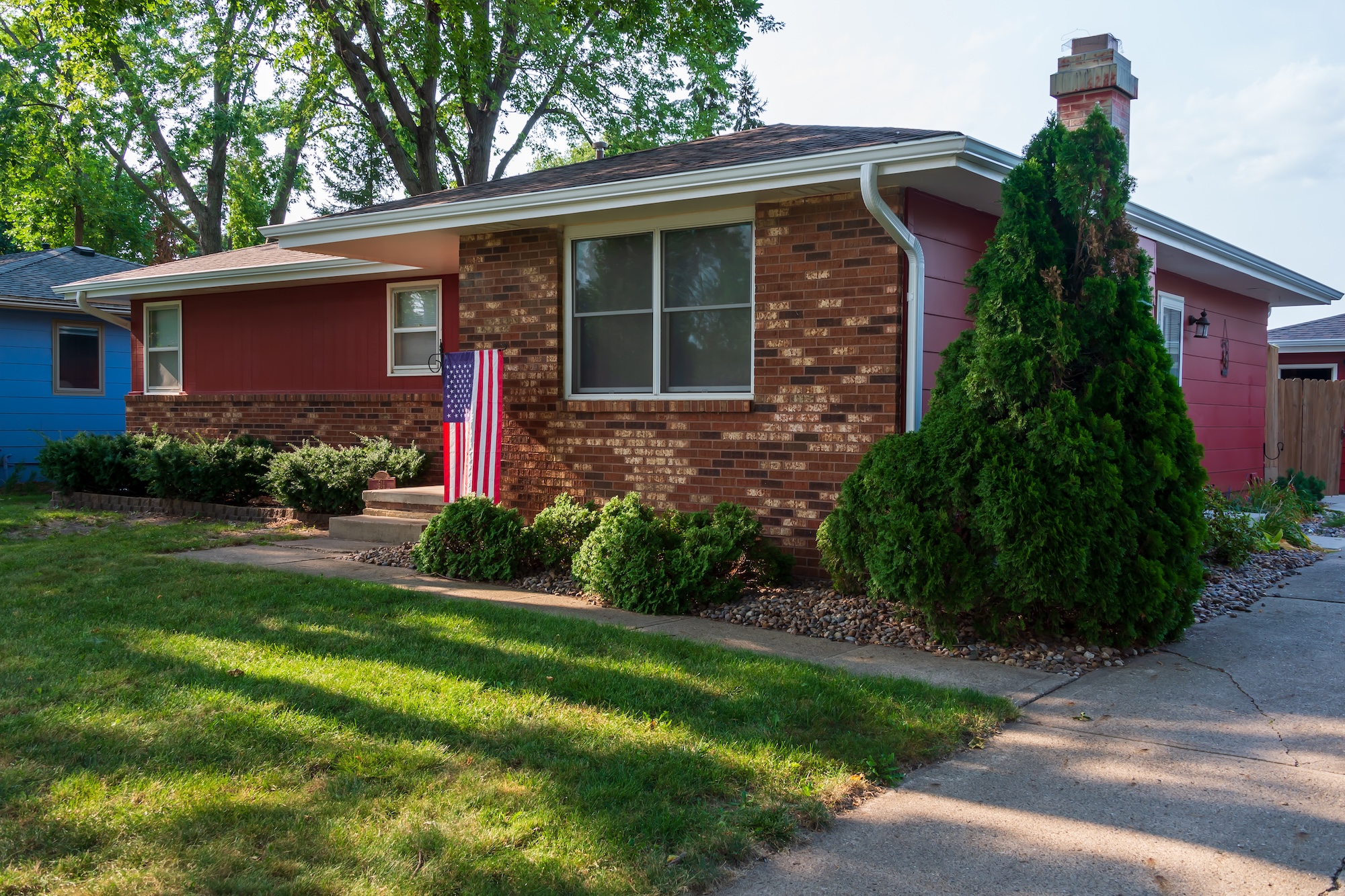
Top photo of a house in Ankeny is by Stone’ s Throwe Photo, available via Shutterstock.