# Wayne Ford


On legislating after more than 36 hours awake

Wayne Ford is the executive director of Wayne Ford Equity Impact Institute and co-Director of the Brown and Black Forums of America. He is a former member of the Iowa legislature (1997 through 2010) and the founder and former executive director of Urban Dreams.

A marathon session—and a moment to reflect

The Iowa legislature’s 2026 session concluded on May 3 after more than 36 hours of debate, negotiation, and decision-making in its final stretch. Lawmakers pushed through a marathon finish before adjourning for the year.

It is a familiar scene in legislatures across America: long nights, complex bills, and final votes made under pressure.

Many legislators acknowledged they were exhausted. Journalists noted some sleeping in the chamber or other signs of fatigue.

And yet, within those final hours, lawmakers were making some of their most important decisions of the year, affecting property rights, taxes, and community stability.

This is not a criticism of the individuals involved. It is a reflection on the system itself.

Because when we step back and look at it plainly, a simple question emerges: Would we accept this in any other field?

A question of standards

Would you allow a surgeon to operate on you after being awake for more than 36 hours?

Would you trust a pilot to make life-and-death decisions under those same conditions?

In most professions, the answer is clear. We would not accept it. The stakes are too high.

Yet in public policy making, we do.

At the very moment when decisions become most critical—when bills must be finalized, compromises reached, and votes taken—the process often demands that lawmakers operate under extreme fatigue.

Research on sleep deprivation has shown that extended wakefulness reduces attention, slows reaction time, and impairs judgment. After roughly 24 hours without sleep, cognitive performance can resemble impairment levels associated with alcohol intoxication.

Again, my point is not to criticize legislators. It is to recognize that the system places them in conditions where decision-making becomes more difficult.

The real issue: not effort, but impact

The end of the latest legislative session in Iowa also revealed something else. Even with all that effort and time, some issues remained unresolved, like restrictions on eminent domain for pipelines.

At the same time, property tax reform generated was debated in both chambers, with lawmakers grappling with long-term consequences for cities, counties, and taxpayers.

These are not simple issues. They involve complex trade-offs:

  • Financial sustainability
  • Property rights
  • Economic development
  • Community impact

When those decisions are made under fatigue, with large amounts of information but limited clarity, the challenge becomes even greater.

The problem is not a lack of effort or a lack of information.

The problem is a lack of clear, structured impact.

Iowa’s lesson: When impact is visible, decisions improve

Iowa took a step in 2008 that would later prove to be nationally significant. By requiring a racial impact analysis for certain criminal justice legislation, the state ensured that lawmakers had a clearer understanding of who would be affected before making decisions.

This was not about politics. It was about clarity.

We saw a real-time example this past weekend. House Republicans’ bill on enhanced criminal sentencing, which became House File 2542, initially called for significantly longer mandatory minimums, and included a wide range of offenses in the formula. structures. As lawmakers examined the potential fiscal impact—costs to the prison system, population effects, and long-term consequences—the conversation evolved. Senate and House Republicans negotiated over changes.

What began as a proposal with sentences approaching twenty years shifted toward a framework closer to seven years, with acknowledgment that alternatives could also be considered.
That shift happened because people had more information—clearer information about impact.

Organizations such as the Pew Charitable Trusts and the Urban Institute have documented similar outcomes nationwide when legislators considered impact statements.

Property taxes: Decisions that shape communities

The debate over property taxes illustrates the broader challenge. The issue is often framed simply—whether taxes should go up or down. But the real question is more complex.

What happens to cities and counties if revenue is reduced?
 How are essential services maintained?
 What happens to infrastructure, public safety, and long-term stability?

These are impact questions.

The Congressional Budget Office provides fiscal analysis to help answer such questions about pending federal legislation. But cost alone does not capture the full picture.

Still searching for clarity on eminent domain

Iowa lawmakers adjourned without any Senate floor vote on eminent domain during the 2026 session. That is telling.

Without clear impact analysis, these debates can become difficult to resolve. Positions harden. Perspectives differ. And decisions become harder to reach.

But with clearer understanding—who is affected, what the alternatives are, and what the long-term consequences will be—the path forward becomes more visible.

Impact does not eliminate disagreement. It improves the quality of the discussion.

A lesson from TIF: When policy evolves without impact review

We have seen similar challenges in economic development through the use of Tax Increment Financing (TIF). Originally designed to support disadvantaged communities (often called “slum and blighted areas,” TIF has expanded in Iowa, to be used for greenfield development in areas with stronger and growing tax bases.

In lower-income communities, the challenge often remains that the tax base is not sufficient to fully leverage the tool. In higher-growth areas, that same tool can generate significant resources.

The issue is not whether TIF is right or wrong.

The issue is whether we fully understood how its use would evolve over time. (Editor’s note from Laura Belin: The last-minute property tax agreement included some new limits on TIF, and local policy makers are currently evaluating the consequences.)

From confusion to clarity

Too often, public policy debates resemble the classic “Who’s on First?” routine by Abbott and Costello—everyone is talking, but confusion reigns.

Impact analysis provides a way forward. It helps answer the fundamental questions: who is affected, what it will cost, and what will happen next.

Across the country, there is growing recognition that policy making must move beyond information to impact. The National Conference of State Legislatures has documented increased use of tools designed to help lawmakers understand policy consequences before implementation.

But these efforts remain uneven.

Better conditions lead to better decisions

The lesson from the Iowa legislature’s 2026 session is clear. When impact is not fully understood, decisions become more difficult.

When impact is visible, decisions improve.

Even after long hours—more than 36 hours without a break—the quality of decisions can improve if the quality of information improves.

Because this is not about how long we stay awake.

It is about how well we understand the impact of the decisions we make.

And that is the lesson for the next 250 years of American lawmaking.

Continue Reading...
Runoff and responsibility: What Iowa's water crisis is really about

Wayne Ford is the executive director of Wayne Ford Equity Impact Institute and co-Director of the Brown and Black Forums of America. He is a former member of the Iowa legislature (1997 through 2010) and the founder and former executive director of Urban Dreams.

There are moments when an issue that has existed for years suddenly becomes visible to everyone at once.

Not because it is new—but because it can no longer be ignored.

Conversations begin to happen in public, decisions begin to affect daily life, and attention turns quickly toward what appears to be the immediate cause.

But what we are seeing is often not where the problem begins.

Continue Reading...

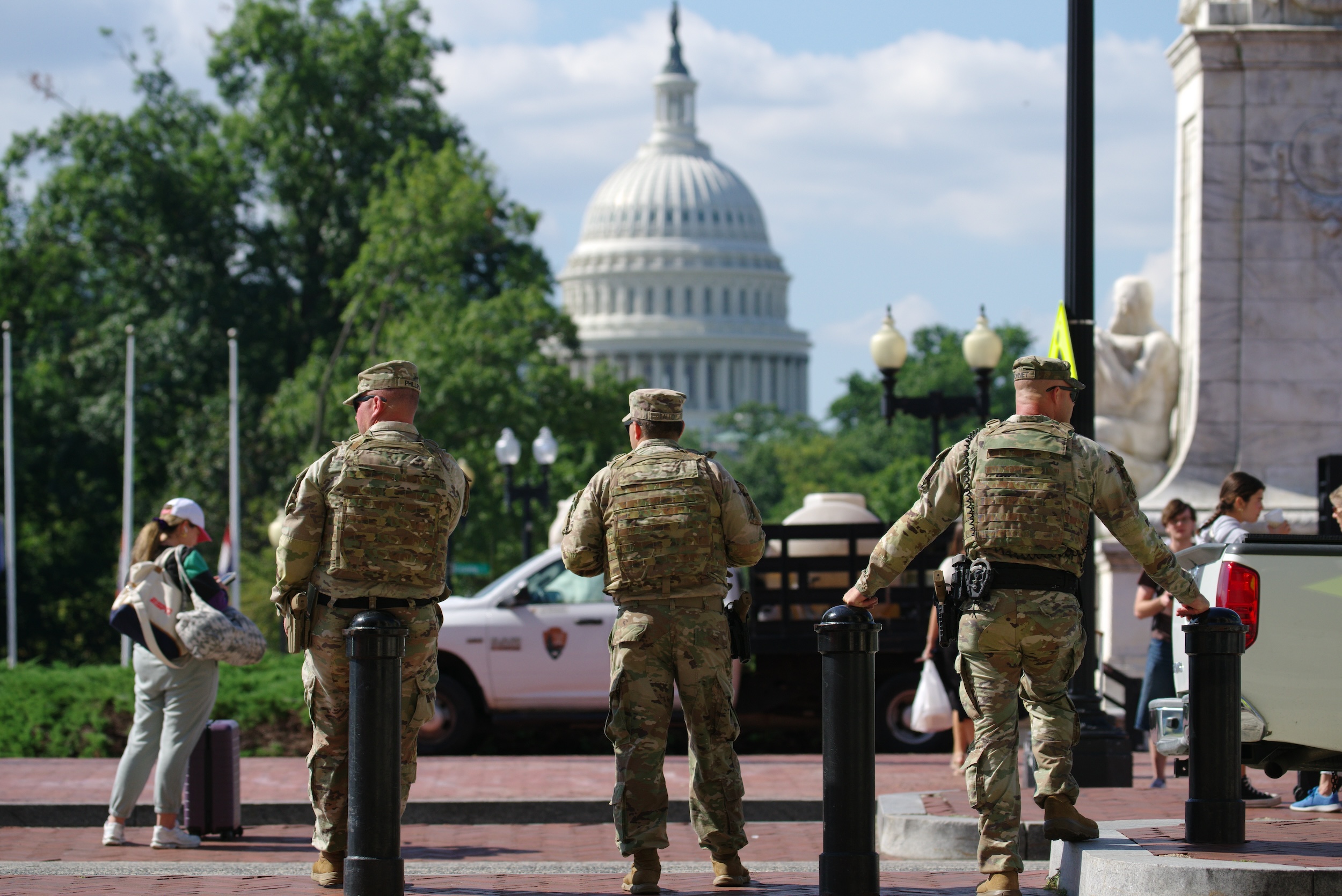
Guard deployment raises old question: Who really governs Washington?

Wayne Ford is the executive director of Wayne Ford Equity Impact Institute and co-Director of the Brown and Black Forums of America. He is a former member of the Iowa legislature and the founder and former executive director of Urban Dreams.

Washington, D.C. has always been more than just another city. It is the nation’s capital, a symbol of democracy, and a unique jurisdiction caught between local self-governance and federal control. Today, it has also become the latest flashpoint in America’s ongoing debate about crime, politics, and presidential power.

Mayor Muriel Bowser recently acknowledged that the federal surge of law enforcement—including the deployment of the National Guard ordered by President Donald Trump—has coincided with a sharp drop in crime. Carjackings fell by 87 percent. Overall violent crime was cut nearly in half. And, in a milestone for the city, Washington went twelve consecutive days without a single homicide.

The numbers are dramatic. Headlines on cable news have trumpeted them as proof that federal power works. Bowser herself admitted that the crackdown “brought results,” even though she expressed concerns about the heavy presence of federal officers in local neighborhoods.

But here is the crucial point: these statistics represent only a few weeks of data. They are not proof of a long-term trend. Just as crime patterns fluctuate with seasons, neighborhoods, and economic cycles, a short-term dip can reflect immediate deterrence without changing the deeper conditions that drive violence. That distinction matters if we are to think seriously about Washington, D.C. and its future.

Continue Reading...

The life and legacy of Wayne Ford and his recommitment

Wayne Ford represented part of Des Moines in the Iowa House and is the founder of the nonprofit organization Urban Dreams.

Opening scene

During Urban Dreams’ 40th Anniversary Celebration on July 30, 2025, the organization unveiled a commemorative plaque in my honor in the Urban Dreams Community Courtyard on 6th Avenue — the same neighborhood where my journey in Des Moines truly began. This event brought together former and current staff, clients who have benefited from Urban Dreams’ programs, directors past and present, community leaders, elected officials, and other friends from across Iowa.

It was more than just a celebration of my past work; it was a public reaffirmation of my recommitment to Des Moines, the state of Iowa, and the causes that have defined my life.

Continue Reading...

Why I am running for the Broadlawns Board of Trustees

Wayne Ford represented part of Des Moines in the Iowa House and is the founder of the nonprofit organization Urban Dreams.

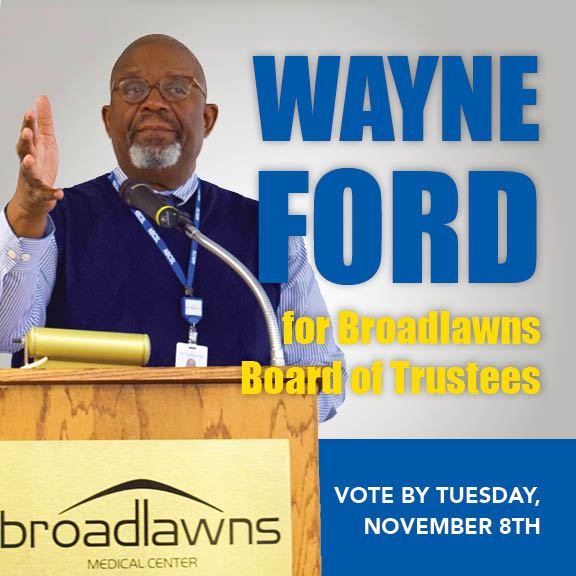
I am running for one of the open board seats on the Broadlawns Medical Center Board of Trustees. I have been involved with Broadlawns and the neighboring community for the past 50 years and am uniquely qualified to address the challenges that our community is currently facing: an influx of refugees, a rise in violence, limited access to proper healthcare, and lingering concerns from the pandemic. 

These factors compel me to pursue a position on the Broadlawns board so that I can be part of the solution and address these challenges.

Continue Reading...

Why I'm supporting Izaah Knox in Iowa Senate district 17

Wayne Ford represented part of Des Moines in the Iowa House and is the founder of the nonprofit organization Urban Dreams.

I founded and built Urban Dreams on the premise that our community should be safe and inclusive. I have always believed in the American dream; that if given the same opportunity, all Americans should have a chance to fulfill their dreams.

In the early 2000s, Izaah Knox saw me on a television news station talking about a recent shooting in our community. He came down to the office wanting to talk with me and looking for a job.

Continue Reading...

Minority impact statements in Iowa: History and continuing efforts

Marty Ryan of Des Moines lobbied the Iowa legislature for 27 years and now blogs weekly. -promoted by Laura Belin

The Iowa quarter, printed in the latter part of 2004, is based upon a Grant Wood painting depicting a group of students and their teacher planting a tree outside of a county school. The statement on the coin says, “Foundation In Education.” For many decades, Iowa was noted for its first-in-the-nation education status. Likewise, Iowa has been a consistent leader in civil rights.

In fact, Iowa established some standards of equality long before the federal government or other states.

But racial disparities continue to affect Iowans in many areas of life. A reform the Democratic-controlled legislature enacted more than a decade ago has only slightly mitigated the problem.

Continue Reading...

Jonathan Narcisse, Remembered

State Representative Ako Abdul-Samad’s tribute to his friend Jonathan Narcisse. -promoted by desmoinesdem

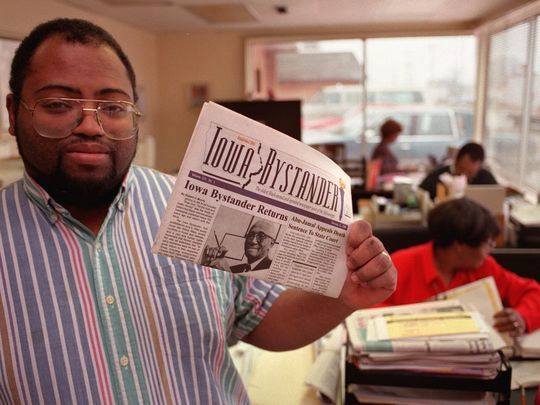
Jonathan Narcisse, advocate, media presence, and publisher of several newspapers, including “The Bystander,” Iowa’s most enduring publication geared towards an African American audience, died last Saturday, February 17. He was 54–young, but not unusual for a black man in America.

He was also my former campaign manager, business associate, peer, and friend. So I write this with sadness in my heart for the loss Iowa experiences as a result of his death, and with joy in my soul that he is no longer in pain.

Continue Reading...

IA-Gov: Boulton, Hubbell lead in early legislative endorsements

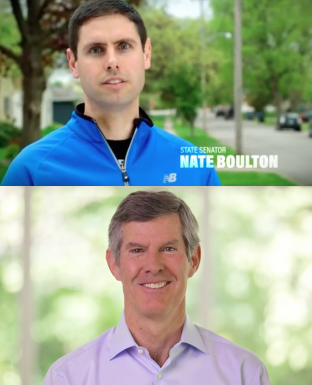
State Senator Nate Boulton and Fred Hubbell have locked up more support among state lawmakers than the five other Democrats running for governor combined.

Whether legislative endorsements will matter in the 2018 gubernatorial race is an open question. The overwhelming majority of state lawmakers backed Mike Blouin before the 2006 gubernatorial primary, which Chet Culver won. Last year, former Lieutenant Governor Patty Judge won the nomination for U.S. Senate, even though about 60 current and 30 former Democratic lawmakers had endorsed State Senator Rob Hogg.

Nevertheless, prominent supporters can provide a clue to activists or journalists about which primary contenders are well-positioned. Where things stand:

Continue Reading...

Iowa candidate filings deadline thread

The filing deadline for statewide and state legislative offices closed at the end of business today. John Deeth has been covering the highlights at his blog. Click here to download a pdf file from the Secretary of State’s office for the full candidate list.

As I mentioned earlier, Governor Chet Culver has no primary challenger. All three remaining Republican gubernatorial candidates qualified for the ballot (Terry Branstad, Rod Roberts, Bob Vander Plaats).

There will be a three-way Democratic primary for U.S. Senate between Roxanne Conlin, Tom Fiegen and Bob Krause.

Republicans have a full slate of candidates for statewide offices. Sadly, Democrats failed to find anyone to take on Auditor David Vaudt.

Four Republicans filed against Bruce Braley in Iowa’s first Congressional district, and four Republicans filed against Dave Loebsack in the second district. All seven declared GOP candidates qualified for the ballot in Iowa’s third district. I would not be surprised if a district convention ends up selecting Leonard Boswell’s opponent.

Bill Maske is the only Democrat running against Tom Latham in Iowa’s fourth Congressional district. As expected, we will have a competitive primary in the fifth between Mike Denklau and Matt Campbell.

Most surprising statehouse district left uncontested: House district 16 in northeast Iowa. I had heard rumors that Republicans had no candidate against freshman State Representative John Beard, but I’m still shocked they left him unchallenged. That was a battleground race in 2008. Does anyone know whether a GOP district convention will be able to name a candidate for this race later?

Democrats didn’t leave any obviously competitive statehouse districts open. I’m a little disappointed we don’t have a candidate in House district 73, from which Republican Jodi Tymeson is retiring. It is a fairly strong GOP district, but I thought a candidate pounding the pavement there might help State Senator Staci Appel in her re-election campaign against Kent Sorenson (Senate district 37).

We found a candidate in House district 51 (Carroll County), which Rod Roberts is vacating to run for governor. Democrat Larry Lesle of Manning will face the winner of a three-way GOP primary.

Yesterday two-term incumbent Elesha Gayman surprised many people by announcing her retirement from House district 84 in Davenport. Gayman indicated that no one had been lined up to replace her, but today Shari Carnahan filed for that seat as a Democrat. She will face Gayman’s 2008 opponent, Ross Paustian.

Ruth Ann Gaines ended up being the only Democrat to file in Wayne Ford’s district 65 (Des Moines).

Six Democratic Iowa House incumbents have primary challengers. The people running against Dave Jacoby (district 30, Iowa City/Coralville) and Geri Huser (district 42, east side of Des Moines) appear to be backed by organized labor. A socially conservative pastor, Clair Rudison, is running against Ako Abdul-Samad in district 66 (Des Moines). Anesa Kajtazovic stepped up to the plate in House district 21 (Waterloo). Freshman Kerry Burt really should have retired from that seat. I don’t know what the deal is with Kenneth Oglesby, who is challenging Chuck Isenhart in district 27 (Dubuque). Likewise, I have no idea why Mike Petersen is running against Mary Gaskill in district 93 (Ottumwa). Please post a comment or e-mail me (desmoinesdem AT yahoo.com) if you know the backstory.

Most surprising retirement: Republican Doug Struyk in district 99. The GOP candidate for secretary of state in 2006, Mary Ann Hanusa, is running for the Council Bluffs-based seat instead. She will face Democrat Kurt Hubler, who nearly defeated Struyk in 2008. Struyk was first elected as a Democrat but switched parties several years ago. His departure will leave only one turncoat in the Iowa House. We failed to field a candidate against Dawn Pettengill (district 39), who switched to the GOP in 2007.

More posts are coming soon on some of the battleground statehouse races. Meanwhile, post any relevant comments in this thread.

UPDATE: Forgot to mention that we will see seven or eight rematches in Iowa House races. Republicans are running Josh Thurston and Stephen Burgmeier and 2009 special election winners Kirsten Running-Marquardt (district 33) and Curt Hanson (district 90). Also, in district 23 first-term Democrat Gene Ficken will face the Republican he beat in 2008, Dan Rasmussen. Republican Jane Jech is taking another shot at incumbent Mark Smith in district 43. The district 89 race may be a rematch as well if Jarad Klein wins the GOP primary to face first-term Democrat Larry Marek. In House district 60, first-term Republican Peter Cownie faces 2008 Democratic candidate Alan Koslow. Not only will Koslow be at a severe financial disadvantage, his endorsement of Jonathan Narcisse for governor won’t win him friends among the Democratic base. Democrat Pat VanZante is taking another shot at Jim Van Engelenhoven in district 71 (assuming Van Engelenhoven doesn’ lose to his GOP primary challenger). Republican Dave Heaton will face his 2008 opponent, Ron Fedler, in district 91.

SECOND UPDATE: Republicans are crowing that they are fielding candidates in 88 of the 100 Iowa House districts, while Democrats are fielding candidates in only 75 districts. I would like to challenge Republicans everywhere, but it’s only natural that Iowa Democrats are going to focus more on defense this year. We already have the majority, and it could be a tough cycle for incumbents at all levels.

Wayne Ford announces retirement; House district 65 open

State Representative Wayne Ford announced today that he will not seek an eighth term in the Iowa House. He plans to “to devote more time to expand statewide, nationally, and internationally” the non-profit organization Urban Dreams, which he founded 25 years ago. After the jump I posted Ford’s press release, which recounts some of his accomplishments. His work on a 2007 law requiring blood screenings for lead poisoning has benefited thousands of Iowa families and will spare many children from the many harmful effects of lead exposure, which may even emerge decades later.

During this year’s legislative session Ford introduced a bill to restore the use of Tax-Increment Financing to its original intent: redeveloping urban, blighted areas. Unfortunately, it didn’t go anywhere, but it was a great idea that would also have saved the state money.

Yesterday Ed Fallon alleged that Iowa Democratic Party officials were trying to keep Ford’s retirement secret in order to avoid a competitive primary in House district 65. Candidates have until Friday to file nominating papers with the Secretary of State’s office. The Democratic primary will in effect determine Ford’s successor because of the district’s strong partisan lean.

UPDATE: Former Iowa teacher of the year Ruth Ann Gaines becomes the first declared candidate to succeed Ford.

LATE UPDATE: IowaPolitics.com covered Ford’s farewell speech to the House. Worth a read.

Continue Reading...

We may need a new candidate in Iowa House district 65

Ed and Lynn Fallon’s I’M for Iowa organization sent out an e-mail blast today containing the following tidbit:

Monday, 1:00 – 4:00 pm, we talk about politics, and expose what appears to be a sneaky effort in the 65th House District in Des Moines to keep Wayne Ford’s retirement a secret so party insiders can hand-pick a successor. We also talk about the Des Moines Register’s love affair with Senator Grassley, Jonathan Narcisse’s love affair with himself, and Iowa Senate Republicans’ burning love for coal.

Tom Beaumont’s latest piece on Chuck Grassley for the Des Moines Register was egregious. He depicted Grassley as an old-fashioned bipartisan hero instead of the disingenuous double-dealer he has become. But that’s a topic for another post. I’m more interested in Fallon’s take on Iowa House district 65, which covers a heavily Democratic area of Des Moines (map here).

Jason Hancock listened to today’s radio show and wrote up the story for Iowa Independent. Fallon alleges that seven-term incumbent State Representative Wayne Ford has decided to retire, but is keeping his intentions secret so that there won’t be a competitive Democratic primary in the district. Republicans have no chance of winning House district 65, but in a Democratic primary with multiple candidates, someone other than the party insiders’ choice might win.

Hancock contacted the Iowa Democratic Party for a reaction and got this comment from communications director Ali Glisson:

“Whatever a member of the legislature decides to do, it is a personal decision that I will not speculate about,” she said. “But, I can assure you that the Iowa Democratic Party is not something out of Bond movie. No ‘cover up’ is going on.  We remain confident that the Iowa House will remain under Democratic control.”

In high school debate we would have called that a “non-response.” Did Fallon say the IDP was like something out of a Bond movie, or that they were “covering up” wrongdoing? No, he’s saying they don’t want to roll the dice on a competitive primary and would rather hand-pick someone to succeed Ford. And Fallon’s allegation regarding House district 65 has nothing to do with whether the Democratic Party will retain an Iowa House majority. This is about who will determine Ford’s successor, if he retires: voters or insiders. If Ford wants another term, he should say so. If not, he should give other Democrats time to start a campaign.

Whether or not Ford plans to retire this year, it wouldn’t be a bad idea to for a progressive Democrat to collect 50 signatures (plus a few extra) in time to file nominating papers by this Friday. Community organizer Tyler Reedy won about 36 percent of the vote in his primary challenge against Ford in 2008. He worked hard in that campaign and deserves another shot if he is willing to run again.

Share any other suggestions or opinions in this thread.

UPDATE: Ford could have put this matter to rest by answering Dave Price’s question about whether he plans to run again. Four days before the filing deadline, he refused to say. If he isn’t running, he owes it to his Democratic constituents to give other potential candidates an opportunity to file for an open seat.

Continue Reading...