
Gordie Felger is a volunteer member of two LGBTQ+ organizations (CR Pride and Free Mom Hugs) and a One Iowa volunteer activist. He is a friend of many LGBTQ+ folks and an ally to the community. He also writes about the state of Iowa politics at “WFT Iowa?”, where this post first appeared.
Republican State Senator Sandy Salmon introduced Senate File 2037 during the 2024 legislative session. The bill prohibits “counties and cities from regulating certain behavioral health and human services.” These services include so-called “conversion therapy.” If enacted in the future, the law would prohibit local governments from banning conversion therapy.
Conversion therapy tries to “convert” LGBTQ+ individuals. Supporters believe counseling can “correct” a person’s “confused” sexual orientation and/or gender identity. Critics call the widely discredited practice quack therapy that seeks to “pray the gay away.”
But what does conversion therapy entail? And why is it discredited?
What is conversion therapy?
More recent names for conversion therapy include “reparative therapy” and “sexual reorientation therapy.” Practitioners continue to rebrand it over time in response to ongoing criticism. But changing the name doesn’t change what it is.
The goal is to change a person’s sexual orientation and/or gender identity to straight and cisgender. Supporters believe these are the only “valid” identities.
Conversion therapy may include one or more of these tactics:
- coercive talk therapy (i.e., emotional manipulation)
- hypnosis
- re-education
- aversion therapy (pairing same-sex attraction stimuli with electric shocks, nausea-inducing substances, etc.)
The practice is often faith-based and may include prayer, guilt, shaming, threats of eternal damnation, and even exorcism. Practitioners are often unlicensed. This makes regulating and monitoring their practices difficult.
Long-term effects
The American Psychiatric Association declassified homosexuality as a mental disorder in 1973. This marked a historic thought shift. But segments of our society still haven’t accepted LGBTQ+ people. If they had, conversion therapy might have vanished long ago. The ongoing belief that LGBTQ+ identities are “wrong” or “sinful” allows the practice to continue.
LGBTQ+ people often carry negative feelings about their identities because of social, family, or religious influences. Subjecting a person to these practices only reinforces their belief that they must be “fixed.” Then, add to this the feeling of failure when the therapy “didn’t work.”
This abusive process may result in any number of mental health issues, including self-hatred, depression, anxiety, and suicidal thoughts. Mental health issues may, in turn, lead to harmful behaviors, like self-harm, substance abuse, and running away from home. These behaviors can affect self-esteem, quality of life, personal relationships, educational achievement, and income potential. And if the therapy was religion-based, survivors may develop a lifelong distrust of religious institutions.
If a survivor doesn’t lose faith in counseling altogether, they may seek legitimate, affirming mental healthcare to cope with their emotional issues. Such counseling may span years of a person’s life.
Why conversion therapy is largely discredited
The American Psychiatric Association joined 28 psychological and medical professional associations in denouncing the use of conversion therapy, for two main reasons.
First, as shown in the previous section, the practice is psychologically harmful.
Second, it doesn’t work. Severe techniques may diminish same-sex attraction in some people. But this doesn’t guarantee an increased opposite-sex attraction or sustained heterosexual relationships. Some survivors may report being “cured” due to family or social pressures or out of a desire to live a “normal” life. This more likely reflects a change in behavior than a true change in sexual orientation or gender identity.
We can’t change sexual orientation or gender identity by wishing for it. They are natural aspects of our being, just like height, eye color, and right- or left-handedness. And the psychological harm this approach causes far outweighs any perceived “benefits.” This is in no way a measure of success.
An article posted on GoodTherapy.org states:
“Therapy is designed to help people grow and heal from difficult life experiences, not to ‘convert’ or ‘repair’ the part of a person that is deemed to be flawed by others.”
Psychology Today describes conversion therapy as torture and a human rights violation. No one should be forced into it. Those considering it should weigh the consequences. Look for positive, supportive, affirming ways to address your concerns instead.
Editor’s note from Laura Belin: Voting along party lines in March 2026, Iowa House Republicans approved House File 2557, which would change Iowa Code so that “child abuse” and “child endangerment” would not apply to parental actions based on the “intent to raise, guide or instruct a child in a manner consistent with the child’s sex.” Experts and survivors warned during subcommittee hearings that the law would greenlight conversion therapy practices that might otherwise be deemed abusive.
Republicans on the Iowa Senate Judiciary Committee voted to advance the bill. It is eligible for Senate floor debate, but at this writing, leaders have not called it up.
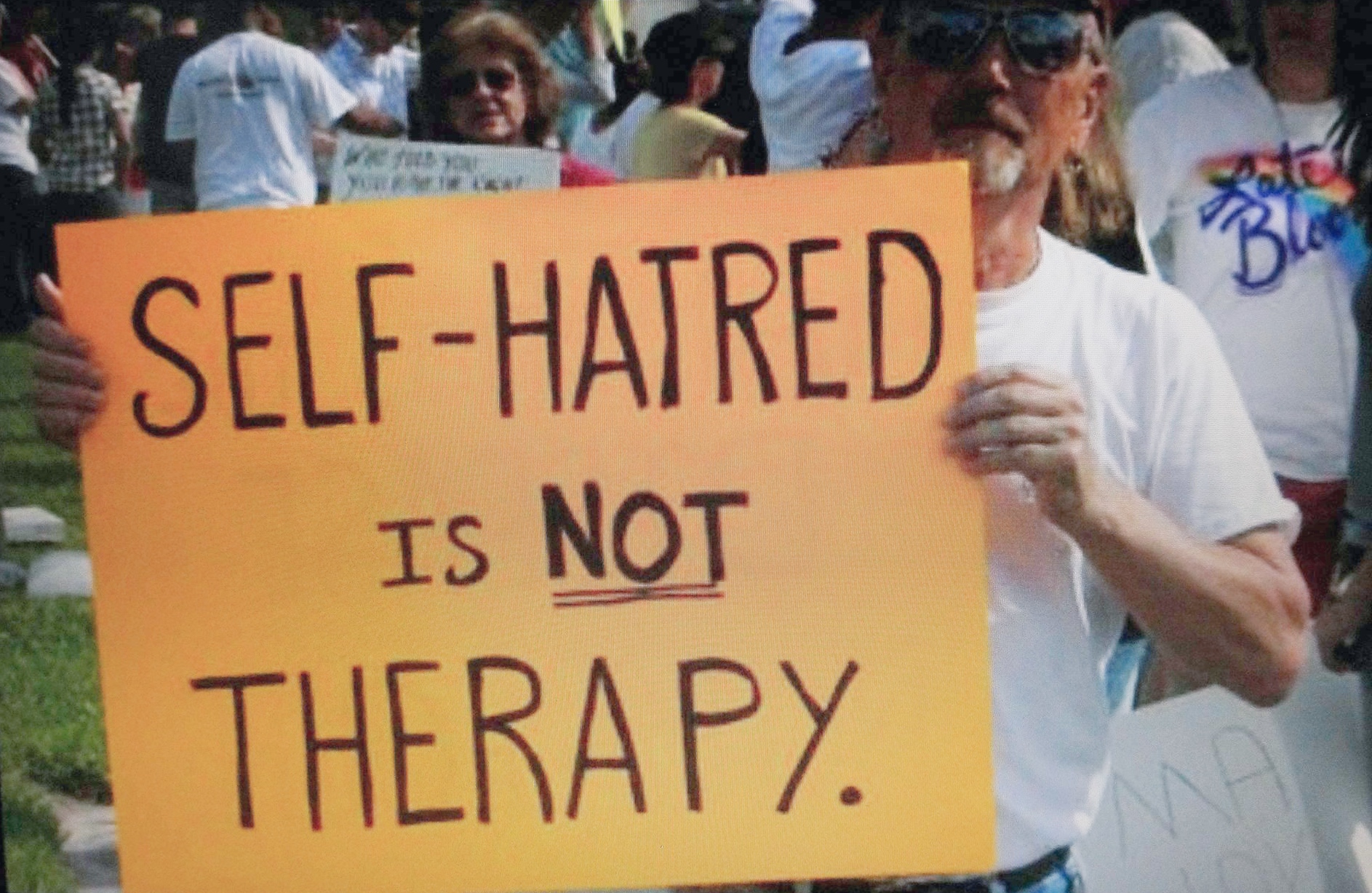
Top photo of man holding “Self-hatred is not therapy” sign is by Ortlinde, available via Wikimedia Commons.

2 Comments
Thanks, Gordie Felger
I appreciated the opportunity to read this.
PrairieFan Sat 2 May 12:37 PM
Thank you, PrairieFan
Thanks for reading!
Gordie Felger Tue 5 May 11:20 AM