
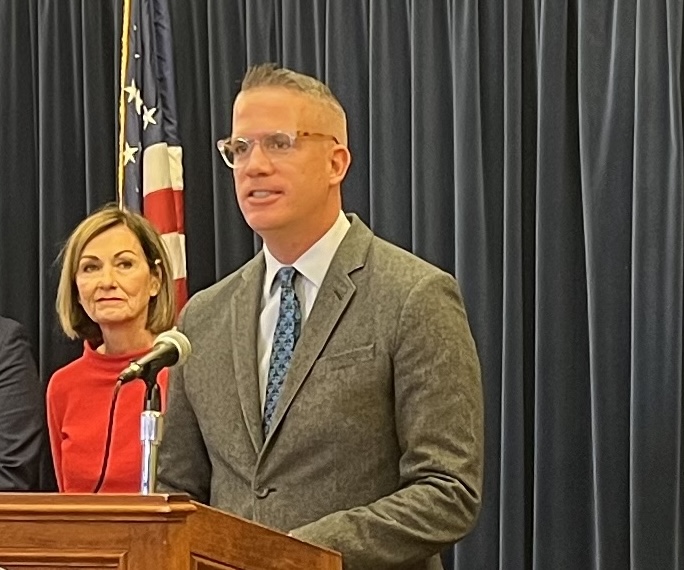
Chuck Isenhart is an investigative reporter, photographer, and recovering Iowa state legislator offering research, analysis, education, and public affairs advocacy at his Substack newsletter Iowa Public Policy Dude, where this essay first appeared.
The century started out with such promise. On July 1, 1999 (technically fiscal year 2000), Iowa Governor Tom Vilsack inaugurated the College of Public Health. The first new academic unit at the University of Iowa in 50 year recognized the growing impact of research being conducted there.
In years that followed Iowa passed the Smokefree Air Act and the Public Health Modernization Act. Major steps forward in infectious disease testing and surveillance were enabled when the State Hygienic Laboratory opened a state-of-the-art facility at the University of Iowa. Stakeholders were engaged to create the Healthy Iowans 2010 plan, setting state benchmarks to increase life expectancy, combat obesity and reduce deaths from chronic conditions like heart disease and cancer.
Today, public health in Iowa is frayed. Tattered threads are held together by a dedicated corps of health professionals who refuse to let the public down.
On her way out the door, Governor Kim Reynolds has put in motion a process that will sideline local public health agencies and eventually privatize public health in Iowa.
The Department of Health and Human Services (HHS) calls it “public health system alignment.” It kicked off (publicly) with an “update” at town hall meetings in April. The upshot: County health boards will lose access to most state and federal funding, which they need to ensure the delivery of services to their citizens.
Instead, money for “public health core services” will flow through regional “lead entities” contracted with the state. Lead entities will be responsible for distributing public dollars directly to service providers in their areas.
Counties now teaming with local providers will be stripped of their roles. In Dubuque County, for example, the health department contracts with UnityPoint Health’s Visiting Nurse Association to deliver services. That association will now have to compete for a contract with the lead entity.
What services are we talking about?
I asked the department for detailed information about four programs: Local Public Health Services, Immunizations, Childhood Lead, and the Healthy Eating and Active Living program. The first three, and a portion of the fourth, are proposed for distribution through lead entities starting July 2027. Other funding may be affected in 2028.
In fiscal year 2026, Iowa HHS distributed $7.7 million to county health departments for local public health services such as disease prevention, home care, health promotion and public health interventions, including emergency preparedness planning, population health data analysis and environmental health surveillance.
Polk County received $876,552. Adams County got $22,227. Everyone else got something in between. Fifteen counties were granted more than $100,000. Dubuque received $211,326. That money will now flow through regional lead entities.
Also this fiscal year, HHS distributed $1.2 million to county health departments for immunization services. Dubuque received $18,895. That money now is expected to flow through regional lead entities.
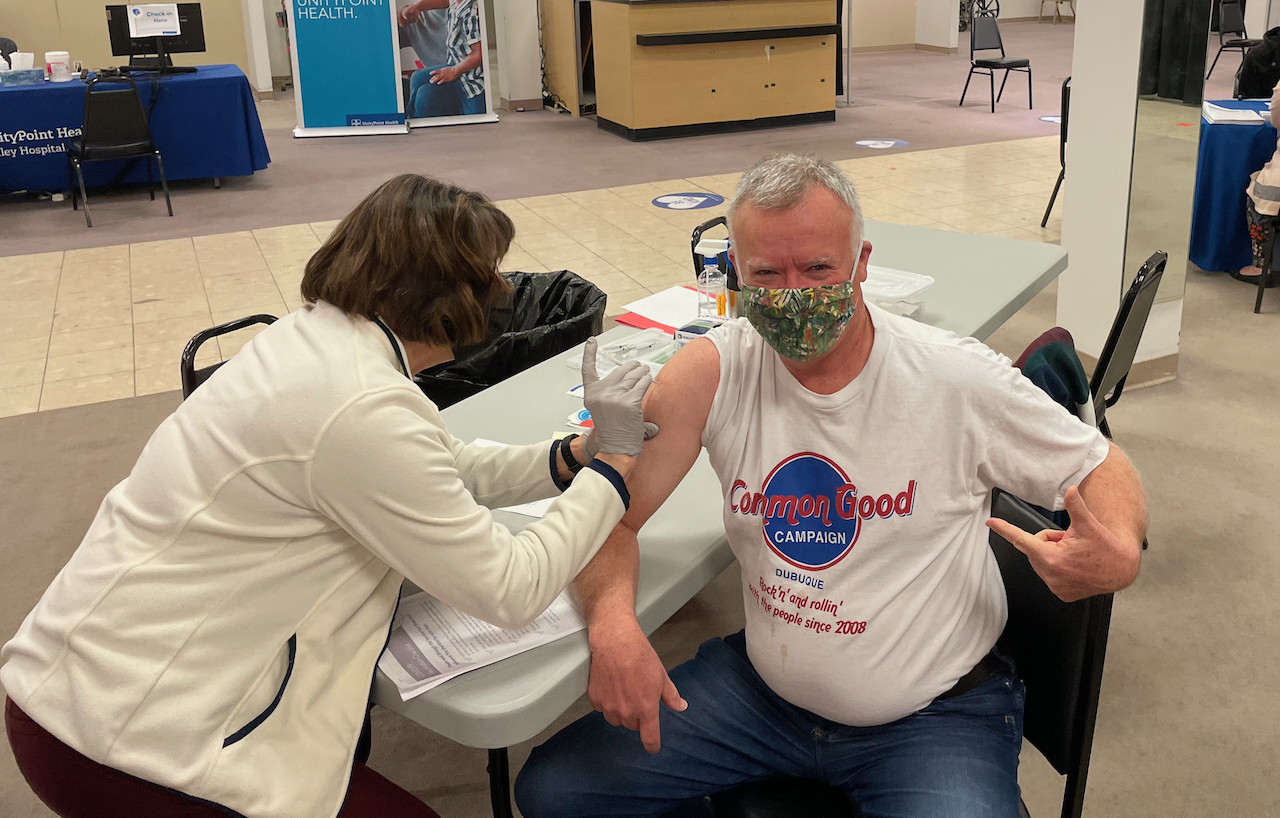
The author getting one of his COVID-19 vaccinations
In fiscal year 2026, 48 counties received $268,688 in grants for child lead poisoning prevention and response. Total funding for the program exceeded $1 million. The state served 51 counties directly. Dubuque received $10,000. That money now is expected to flow through regional lead entities.
Also this year, HHS distributed $1.1 million to 38 counties for Healthy Eating/Active Living programs. These include SNAP-Ed (if continued by USDA), Pick a Better Snack, 5-2-1-0 and Older Adult Physical Activity. Among the recipients were nine county health boards and 10 county Extension Councils. A portion of that money is now expected to flow through regional lead entities.
In fiscal year 2027 (which started on July 1), the Dubuque County Health Department also planned to receive:
- $37,150 for breast and cervical cancer screening;
- $36,108 for public health emergency preparedness;
- $50,505 for private well testing and grants;
- $50,000 for public health response.
Only the money earmarked for private wells is guaranteed to stay with the county. HHS distributes those grants on behalf of the Iowa Department of Natural Resources, allocated by law from the Groundwater Protection Fund.
A DOGE recommendation in action
A complicating factor for HHS: State law and the department’s own administrative rules appear to require that state grant funding — particularly for local public health services — go directly to local boards of health as the “contractors.” The rules codify the formula by which the money is distributed. County boards of health “may directly provide or subcontract all or part of the delivery of essential public health services.” Allowing “lead entities” to go around the local boards may require legislative changes to Iowa Code.
Under the proposed “alignment,” the seven regional lead entities may not be public agencies. If larger counties do apply to play the role, they would be self-dealing on their own contracts and sitting in judgment of other counties applying for funds. Counties that directly deliver services with public employees will compete for contracts with private employers.
According to HHS, the RFP for lead entities will be released in August. The deadline to respond will be in October. Decisions will be announced in December.
Why is county public health getting the bum’s rush, if not because Kim Reynolds is still peeved because some local officials dared to think Iowa needed a stronger response to the COVID-19 pandemic?
The governor’s final Department of Government Efficiency (DOGE) task force report, issued in September 2025, recommended “legislative and administrative actions” to:
Direct the relevant state agencies to develop a comprehensive plan for transitioning county-administered state services to a regional service delivery model.
– Each Iowa department currently relying on counties in areas such as public health, human services, revenue collection, emergency management or natural resources should identify functions that could be managed on a multicountyregional basis.
The Iowa legislature took no such action during the 2026 session. A complicated bill to reform local boards of health and encourage counties to band together in districts went nowhere. Net effect of the bill: Deny cities the ability to pass their own public health ordinances. A gutted version passed the Senate but died in the House.
Instead, the department is piggy-backing on legislation the governor signed creating “health and human services districts” out of the “behavioral health districts” created when the state took over the county-based mental health system. The consequence: The department could use state and federal monies it controls to leverage counties out of public health business.
Problems with “aligning” public health
Supposedly, one of the main goals of a unified behavioral health system under state control – other than to reduce property taxes — is to align mental health care services and funds with addiction/substance use care services and funds. For years I focused in the state legislature on barriers to the effective treatment of such “co-occurring disorders,” with few timely answers forthcoming.
The replacement of thirteen county-based mental health regions with seven behavioral health districts is a step in the right direction. The effort to streamline access to services and coordinate funding took effect barely a year ago. Why are we mucking up that transition by shoehorning public health into the deal?
Local boards of health are governing bodies with their a statutory existence and duties. The state agency has its own public health responsibilities under Iowa Code and administrative rules.

The Iowa Public Health Association celebrated its 100-year anniversary in 2025. IPHA is an association of health care professionals and allies. I learned during the pandemic that local public health boards don’t have an effective formal vehicle to officially advocate on their own behalf. As a matter of public policy, they are sitting ducks.
Overlooked in the “alignment” process is the fact that many public health functions remain outside the purview of HHS. The Department of Natural Resources and Department of Inspections, Appeals, and Licensing administer environmental health programs, including air quality, private septic systems, drinking water, and food safety. According to a leading public health practitioner, creating a coherent statewide public health system, as opposed to a departmental re-alignment, would involve defragmenting all public health functions across multiple state agencies.
An HHS department spokesperson stated that “Iowa HHS is not proposing to remove or eliminate any responsibilities assigned to local boards of health in Iowa Code.” But the handwriting is on the wall. Counties will have to come up with their own dough to perform their required duties and meet citizen needs if they don’t conform with the state’s demands as communicated through the “district lead entity.”
The other scenario: Rob Sand is elected governor, and he forms a Public Innovations and Efficiencies (PIE) task force to figure out a better way.
“Difficult discussions and decisions facing public health”
To its credit, HHS is hosting an online FAQs page to address questions about realignment as they arise. Some of my inquiries have shown up there. One question and the frank response sums up the predicament:
Q: The current funding (for) local public health agencies is insufficient to do the necessary work. How will the core services be funded with an additional layer of district administration?
A: These are the difficult discussions and decisions facing public health. We need to be clear about whether we are going to prioritize a defined set of services and do them well, or continue trying to address every need without sufficient investment. Without additional funding, public health cannot fully meet all of the demands affecting the health and well-being of the public.
Since the Branstad/Reynolds regime has been in place, no HHS director has defied instructions to recommend more than a “status quo” budget for public health. We all know that “status quo” does not mean doing more with less; it means doing less with the same.
At the top, I referred to dedicated public health professionals who are using bubble gum and shoestrings to keep the engine running. I served on the Appropriations Subcommittee for Health and Human Services for two years in the Iowa House of Representatives. When the Department testified on their budget, members were lucky to get time for more than one or two questions.
To her credit, then-Director Kelly Garcia volunteered regular formal meetings with House and Senate committee members and staff. She didn’t need to do that. She did not hide the fact that some decisions were outside her control.
Garcia came on board as HHS director in November 2019. She was confirmed by the Iowa Senate in February 2020. Less than a month later, Iowa shut down for the pandemic public health disaster emergency. In June 2020, Gerd Clabaugh “retired” as director of public health. Kelly was named interim director.
In 2023, Kim Reynolds signed her mammoth 1,500-page state government reorganization and centralization-of-power bill. The Department of Public Health was sucked into the black hole of the Department of Health and Human Services. The state Board of Health was abolished. During the pandemic, they defied Her Highness and dared to recommend a statewide mask mandate. Public health now has no page of its own on the HHS website.
Navigating the pandemic, constant reorganization, the federal investigation over the now-closed Glenwood Resource Center for Iowans with developmental disabilities: Stress-filled times for any agency director.

Iowa Department of Human Services Director Kelly Garcia, visiting Hills and Dales in Dubuque in 2021.
When Director Garcia visited Dubuque to meet with local providers, I observed a caring and compassionate public servant. She tried hard to be true to her calling and, at the same time, loyal to her boss. I admired her for that. I told her once. She seemed surprised and genuinely touched by the comment. Maybe she didn’t hear it enough.
The people who worked for Director Garcia and still toil in the Department are passionate professionals dedicated to caring for people and doing right by them. I have no doubt that “above all, do no harm” is foremost in their minds. The same can be said about the virtuosos at Iowa’s local public health agencies. HHS has not claimed that public health dollars are being used ineffectively. No evidence of waste or abuse is beiong offered. So what drives the massive changes?
Why Garcia resigned unexpectedly in 2025 is anyone’s guess. Was the tightrope too unsteady to walk anymore? Perhaps picking public health apart was a step too far, too fast. Nevertheless, the baton has been grasped by the current, Senate-rejected leader of the department, Larry Johnson. (Technically, he is the “principal deputy director,” since Reynolds appointed Kraig Paulsen as a figurehead director.)
The tightrope. If not the plank, the tightrope is what people are made to walk when we stop investing in public health. No safety net can catch all who fall.
UPDATE: Following re-publication of this Substack post on Bleeding Heartland, I received the following comment from Danielle Sample, director of communications at Iowa HHS. I said I would append it to my Substack post and relay the statement here:
Iowa has identified the need for more collaboration among local public health providers for many years. Examples already exist, including the public health emergency preparedness service areas created in 2017 and collaborative service areas for child, adolescent, and maternal health put in place in 2019. The Public Health System alignment builds on these efforts to strengthen coordination across the state. Iowa HHS has hosted 11 town halls total this year, visiting all seven HHS districts in April with an additional three town halls recently in July and August seeking input and sharing information along the way. Iowa HHS started discussing this idea publicly with local public health leaders 3 years ago.
3 Comments
Another Trump acolyte..
Again, a move to take services away from those most in need. Kim Reynolds follows our dictator/president. She simply does not care.
GMcGdem Mon 17 Aug 11:10 AM
Iowa is fortunate that Chuck Isenhart continues to contribute to our state.
As for the current occupant of Terrace Hill, thank you so much, Governor Reynolds, for a disintegrating public health system, declining public education system, horrible water quality, hollowed-out rural areas, college graduates who are fleeing Iowa, etc. etc. You aren’t responsible for the entire decline of Iowa, of course, but you certainly did more than your share.
PrairieFan Mon 17 Aug 2:32 PM
Comment from Iowa HHS
Following re-publication of this Substack post on Bleeding Heartland, I received the following comment from Danielle Sample, director of communications at Iowa HHS. I said I would append it to my Substack post and relay the statement here:
“Iowa has identified the need for more collaboration among local public health providers for many years. Examples already exist, including the public health emergency preparedness service areas created in 2017 and collaborative service areas for child, adolescent, and maternal health put in place in 2019. The Public Health System alignment builds on these efforts to strengthen coordination across the state. Iowa HHS has hosted 11 town halls total this year, visiting all seven HHS districts in April with an additional three town halls recently in July and August seeking input and sharing information along the way. Iowa HHS started discussing this idea publicly with local public health leaders 3 years ago. “
openureyes Fri 21 Aug 11:53 AM