
Normally I would publish this post on the last Wednesday of the calendar year. But thanks to Governor Kim Reynolds, I was tied up on New Year’s Eve writing about the December 30 election results in Iowa Senate district 16.
I enclose below a photo from each of Bleeding Heartland’s 26 posts about wildflowers last year. This series has become a favorite for many readers since 2012.
As in 2022, 2023, and 2024, guest authors and photographers carried much of the load. In alphabetical order: Emily Bredthauer, Katie Byerly, Lora Conrad, James Enright, Jeff Ewoldt, Jo Hain, Beth Lynch, Bruce Morrison, Diane Porter, Leland Searles, Kenny Slocum, Patrick Swanson, and Melissa Wubben. Special thanks to James, Jo, and Melissa, who contributed to Bleeding Heartland for the first time (but I hope not the last!) in 2025.
This series will return sometime during April or May of 2026. Please reach out to me if you have photographs to share, especially of native plants I haven’t featured yet, or any plant that hasn’t been featured in the past eight years. The full archive of more than 300 posts featuring more than 250 species is available here. I have also compiled links to several dozen posts that covered many plants found in one area, rather than focusing on a single kind of wildflower.
For those looking for wildflower pictures year round, or seeking help with plant ID, check out the Facebook groups Flora of Iowa or Iowa wildflower enthusiasts. If you’d like a book to take with you on nature outings, Lora Conrad reviewed some of the best wildflower guides last year. A book featuring plants native to our part of the country is probably more reliable than the plant ID app on your phone.
May 21: Highlights from a peri-urban Loess Hills walkabout
For the fourth time, Patrick Swanson took part in a multi-day “LoHi Trek” in the Loess Hills. This one happened in April 2025 and included “an urban hike through the neighborhoods and urban core of Council Bluffs.” Many spring flowers were already blooming, like these hoary puccoon.

June 5: Wild geranium
Diane Porter allowed me to republish five pieces she wrote this year for My Gaia, an email newsletter “about getting to know nature” and “giving her a helping hand in our own backyards.” I recommend subscribing; you’ll learn a lot about birds as well as wildflowers.
Diane gets phenomenal detail from her close-up views, like this image showing “the ten custard-yellow anthers, accented by fine red lines” on one wild geranium blossom.

June 11: False indigo
“It’s a legume, it’s a bush, it’s an insect pollinator and bird habitat, and in the Midwest it’s a native wildflower,” wrote Katie Byerly to kick off the first of five posts she contributed last year. She captured the contrasting colors of these flowers beautifully.

June 18: Large-flowered Beardtongue and its fake anther
Diane Porter sometimes photographs flowers and flower parts using a microscope, which is how she took this incredible picture of the golden hairs on the “staminode” (stamen with the fake anther) on a Large-flowered Beardtongue flower.

June 25: Early summer in Clay County
Many Bleeding Heartland guest authors showcase the variety of native plants in a certain area, instead of focusing on one species. We’re fortunate Jeff Ewoldt brought his camera with him on a mountain bike outing during a visit to his hometown of Spencer.
This piece featured three images of a plant I’ve never seen “in real life”: wild asparagus. Jeff found a large colony growing near “Pete’s Pond, once an unsightly landfill that fortunately was transformed into a lovely park some years ago.”

July 2: A red, white, and blue wildflower celebration
The day before President Donald Trump visited Des Moines for a rally to kick off a year-long celebration of 250 years since the Declaration of Independence was signed, I republished a post from July 2024 featuring red, white, and blue wildflowers throughout the seasons.
I photographed these blackberry plants blooming near the woodland edge at Mike Delaney’s restored Dallas County prairie in May 2023.

July 9: Mountain Death Camas
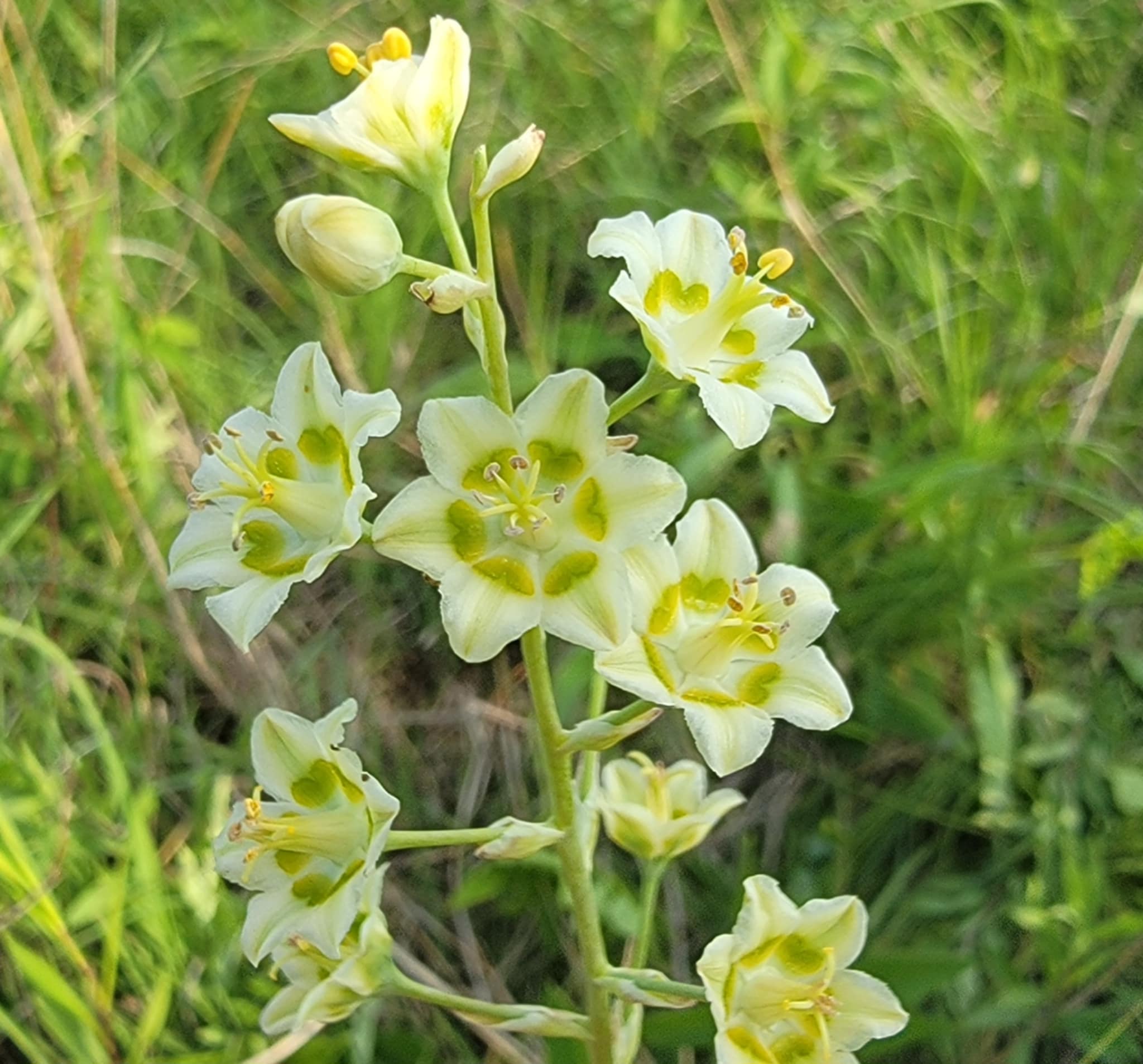
Katie Byerly makes some amazing discoveries on her outings. She found a few of these flowers at Wilkinson Pioneer Park in Rock Falls, Iowa. I was stunned to learn that not only are all parts of death camas poisonous to humans and animals, “its nectar and pollen are fatal to insects.”
July 16: Eastern prickly pear cactus
I’ve seen prickly pear on trips to Arizona, but I don’t recall finding these plants in bloom in Iowa. Emily Bredthauer hit the jackpot at Eddyville Sand Prairie in late June. She explains,
Eddyville Sand Prairie is one of a small number of sand prairie remnants in Iowa. It was formed from sand deposits left by glaciers in the Des Moines River floodplain. Wind carved the sand into dunes.
This rare ecosystem of open, dry grasslands and sandy soil provides a home for unique plant and animal life, including race runner lizards, cacti, and the endangered ornate box turtle: an indicator species of the sand prairie environment.
So pretty.

July 23: Hairy Four O’Clock
I didn’t know there was a different kind of Four O’Clock native to Iowa. Bruce Morrison wrote that these plants were new to him as well just a few years ago.
Bruce covered the more common Wild Four O’Clock for Bleeding Heartland in 2023, and I’m grateful he applied his professional photography skills to Hairy Four O’Clock. I share his assessment: “drop dead gorgeous up close!”

July 31: American lotus
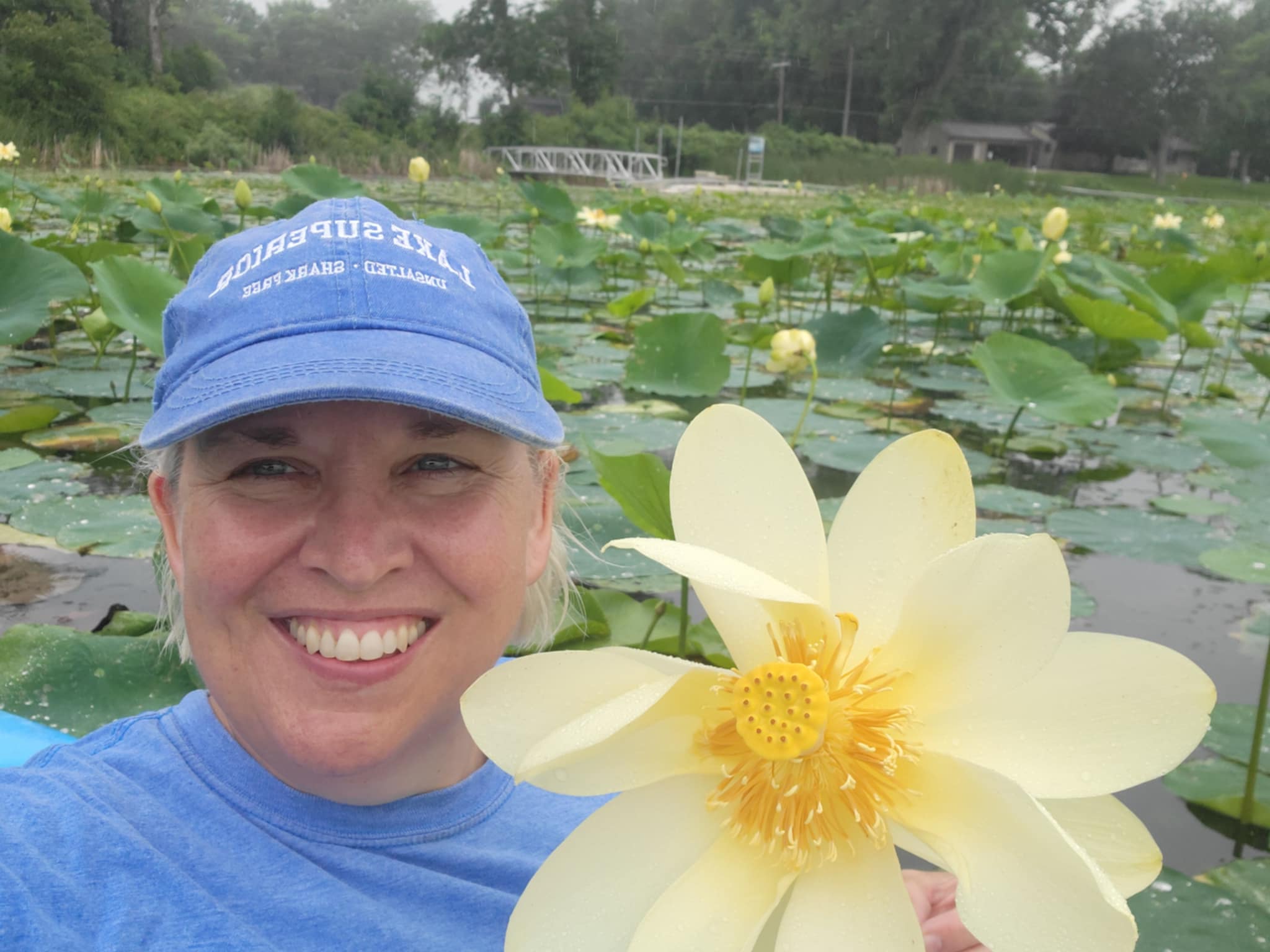
Katie Byerly went out in a kayak to find colonies of this “big, bold, beautiful aquatic wildflower.” It can be hard to get a sense of the scale, but check out this blossom in comparison with Katie’s head.
August 6: American dragonhead
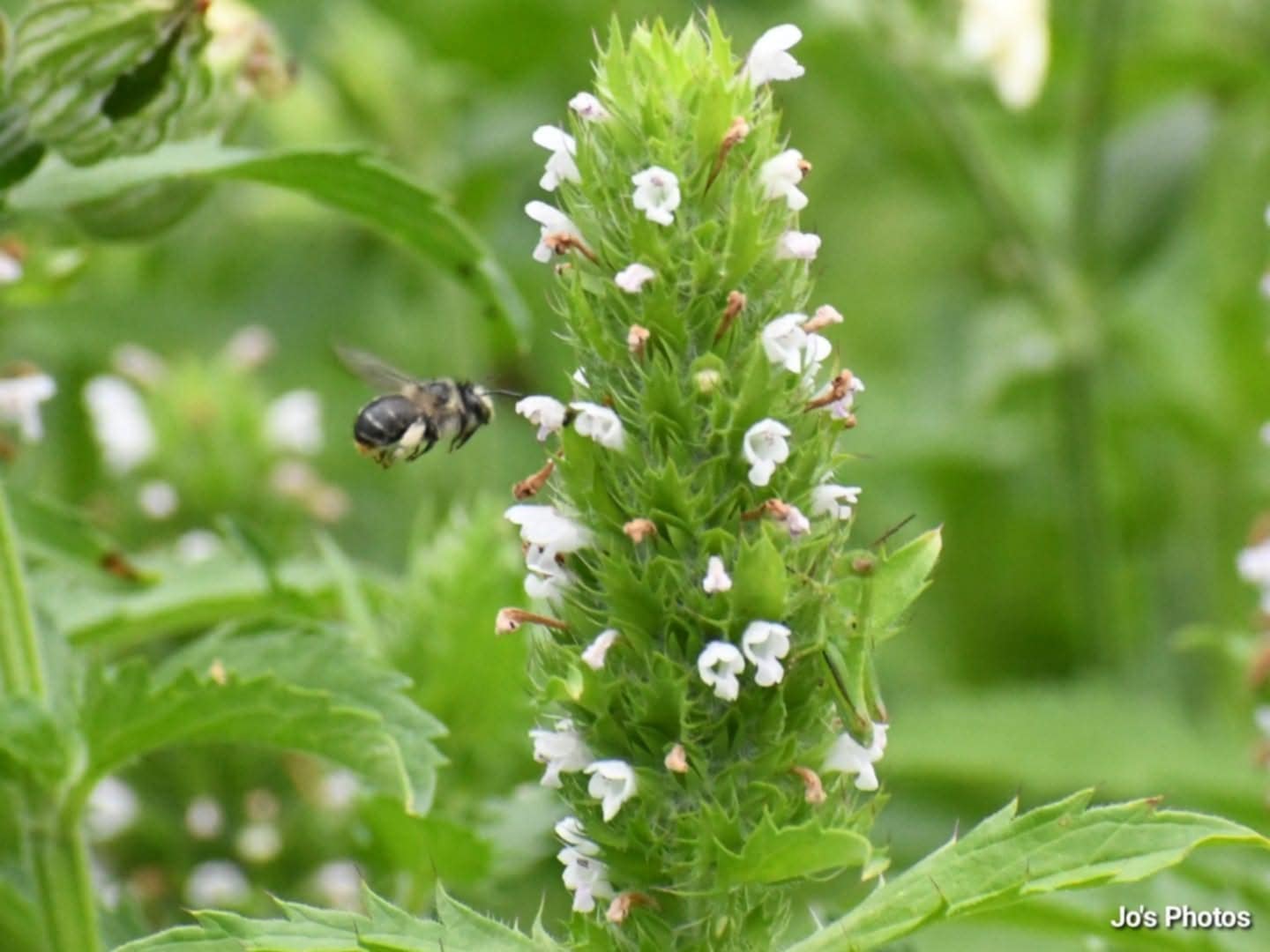
Like Katie, Jo Hain lives in Cerro Gordo County. She found unfamiliar plants growing on her property, and members of the Iowa wildflower enthusiasts Facebook group confirmed the ID: American dragonhead. They look more delicate than dragon-like to me. Jo captured a pollinator heading toward the flowers in this image:
August 13: Integrating native plants and sustainable agriculture in rural Iowa
Melissa Wubben’s debut post for this website documented her efforts to grow native plants on a Warren County farm. She featured many different plants, not only in bloom but also after the flowers are gone. Here’s fruit on highbush cranberry during the winter.

August 20: Resilience in a roadside
This essay by Leland Searles first appeared on his Substack newsletter, Home on Earth. He stopped on a gravel road in Jasper County last August after noticing some goldenrod stems “with a swarm of insects on the blossoms.”
“Despite gravel dust, a bean field, and other reasons why the situation shouldn’t exist,” he documented many kinds of insects on the goldenrod or on nearby red clover. This photo features a Clouded Sulphur Butterfly.

August 27: Poison Ivy
You may think you know what poison ivy looks like. But I would guess you wouldn’t recognize all of the forms in this well-researched piece by Lora Conrad. She set out to help readers “learn how to identify this plant, what its effects are, and which of those many sayings are accurate.” She delivered.
This image shows cream-colored berries on a poison ivy vine.

September 3: On the road in search of northwest Iowa’s prairie cemeteries
I’m fortunate to have guest contributors from all corners of Iowa. James Enright regularly seeks out prairie habitats during his lunch breaks, and his job takes him around the northwest part of the state.
This photo shows Flowering spurge (left) with New Jersey Tea (center) at Fairview Pioneer Cemetery in Ida County, near Washta.

September 10: Mullein Foxglove
From the northwest to the northeast: Kenny Slocum is the naturalist and natural resource manager for the Clayton County Conservation Board. This piece featured a “tall, showy plant bearing yellow flowers” that Kenny misidentified for years. It was not “Large-flowered false foxglove.” Rather: “In common parlance, this plant actually goes by the name ‘mullein foxglove,’ despite being neither a mullein nor a foxglove.”
One distinguishing feature is the “woolly mouth,” or thick hairs blocking the flower’s opening.

September 17: Rough blazing star and its visitors
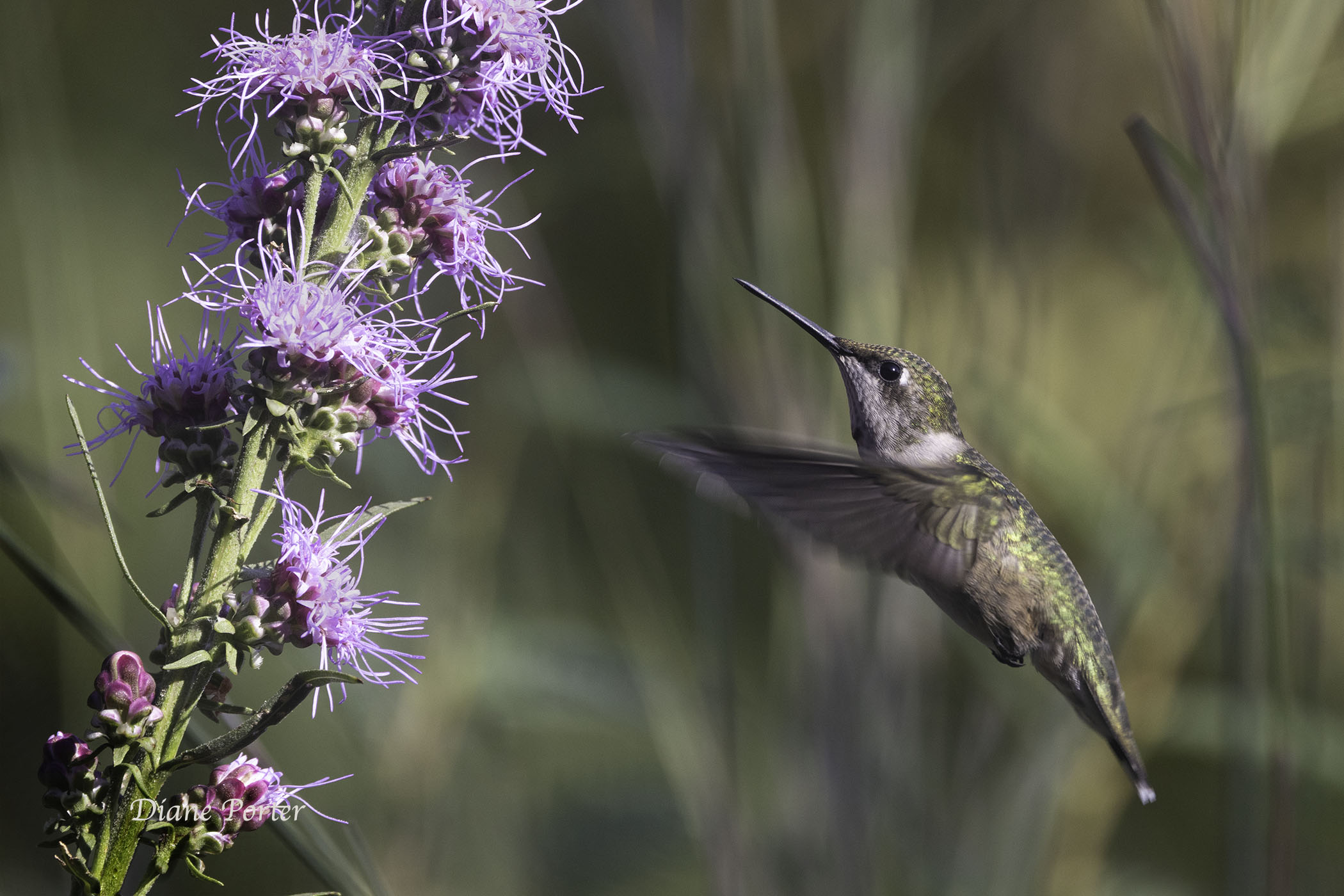
This essay by Diane Porter did have one microscopic image, and I recommend clicking through to find it. For this compilation, I selected one of Diane’s action shots of a Ruby-throated hummingbird visiting a rough blazing star plant.

September 24: Winged loosestrife
These flowers are among my summer favorites. But they have been largely displaced from the area where I used to find them regularly. So I was thrilled to see Diane Porter turn her camera on this species. “Winged Loosestrife’s flowers are so small you could hold a bouquet in your fingertips,” she writes.

October 1: Spatterdock (Yellow pond-lily)
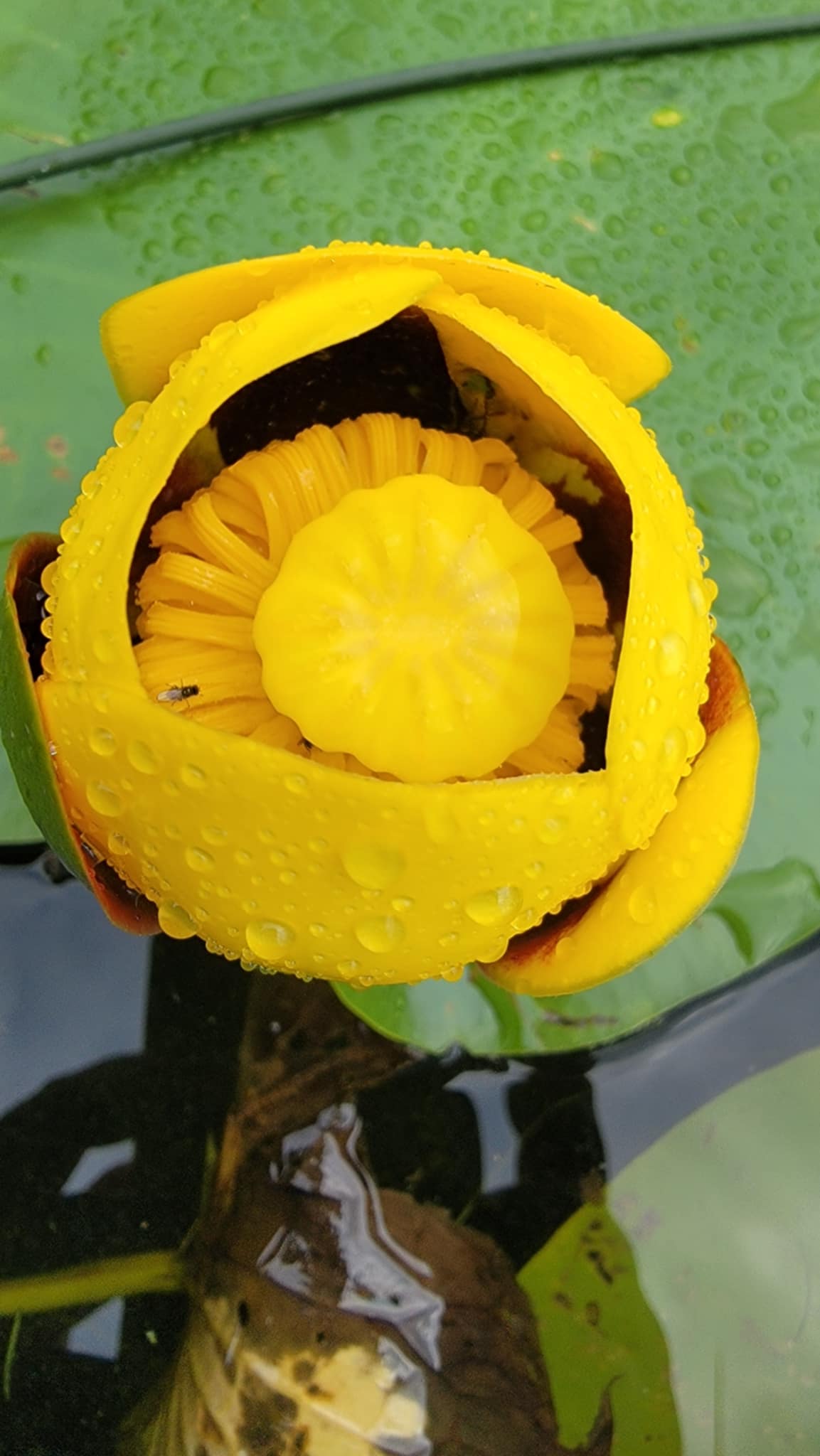
Katie Byerly first noticed these plants while casting for walleyes in Clear Lake. She ventured out by boat to photograph spatterdock at all stages of development. In this close-up of a flower, “The opened petal-like sepals create the beautiful golden globe that shields the lily’s flower. Inside we find a center disk surrounded by yellow scale-like petals. The numerous stamens and stigmas are hidden within the thick, showy sepals.”
October 8: Autumn on a small northwest Iowa prairie remnant
Every photograph in this post by Bruce Morrison was beautiful. So hard to choose! Here’s a Monarch butterfly on an iconic tallgrass prairie plant: Big bluestem.

October 15: Indian tobacco
I had wanted to feature this plant (also known by the less inviting name of “puke weed”) for some time. Emily Bredthauer found several colonies in the late summer and fall. I wouldn’t have recognized it, and neither did she at first. “I shared my photos in a beloved resource of native plant knowledge: the Iowa wildflower enthusiasts Facebook group. The group’s very knowledgeable admin Lora Conrad came to the rescue, confirming the plant identification.”

October 22: Blue sage, the bumblebee key
Diane Porter went above and beyond for this one. First, she explained how blue sage delivers pollen: “While the bee probes the flower, the two pollen sacs suddenly descend. The pollen sacs are concave, curved to fit the bumblebee’s head. They stamp the pollen onto the bee.”
She even used a blade of grass to create a video through her microscope, showing a blue sage blossom triggered to lower its pollen sacs. My young adult children were as fascinated as I was.
October 29: Witch hazel
As Halloween approached, I decided to republish a piece Beth Lynch originally contributed to Bleeding Heartland in 2017. I have not seen witch hazel in the wild, because it’s not typically found in central Iowa. Steve Peterson took this photo in October 2017 in Canoe Township, Winneshiek County. Those “yellow stringy things” are petals of witch hazel flowers.

November 5: Smooth blue aster
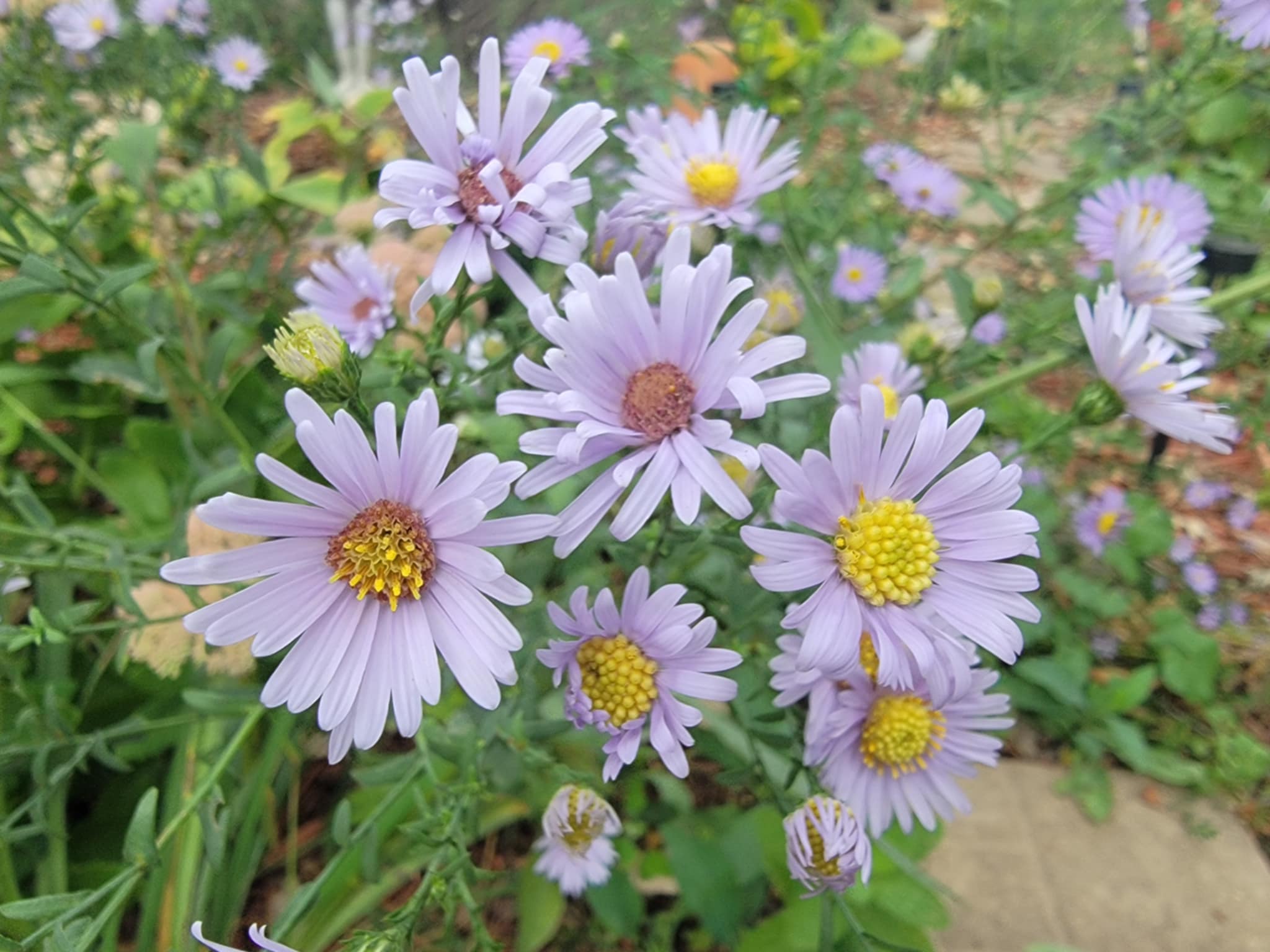
I find many asters difficult to distinguish from one another. Katie Byerly had good news for me and other readers, though: “one aster is easy to identify! Similar to Stiff goldenrod, Smooth Blue Aster has an easy tell: look for the smooth, clasping, light green-blue leaves.”
Several of her photos centered those leaves. I chose one that spotlighted a cluster of flowers.
November 19: A prairie lover’s guide to the Glacial Trail Scenic Byway
James Enright outdid himself, setting a new record for most photos in an Iowa wildflower Wednesday post.
The 36-mile Glacial Trail Scenic Byway loops through the Little Sioux River valley, covering parts of O’Brien, Buena Vista, Clay, and Cherokee counties. Along the way, it reveals prairie bluffs, oak savanna, timber, deep ravines, and fertile farmland. I first visited with my wife several years ago and was immediately struck by the landscape. I didn’t return until May of 2025, when a new job required travel throughout northwest Iowa. Since then, I’ve driven at least one stretch of the byway more than 50 times this summer.
Many of James’ pictures are more “showy” than this one, which I picked because I had never seen green comet milkweed before. He found it at Austin Hill Prairie.

November 26: November stragglers
I usually put the wildflower series to bed when Thanksgiving arrives. This piece featured a collection of photos by Jeff Ewoldt. Thanks to the unseasonably warm autumn weather, he found many plants still blooming in central Iowa in early November. Here’s a group of Black-eyed Susans near the state capitol building in Des Moines.

1 Comment
This is an outstanding selection of photos.
And I’m not just saying that because it began with hoary puccoons. Hooray, Wildflower Wednesdays will be here again in 2026! Thank you.
PrairieFan Wed 7 Jan 8:55 PM