
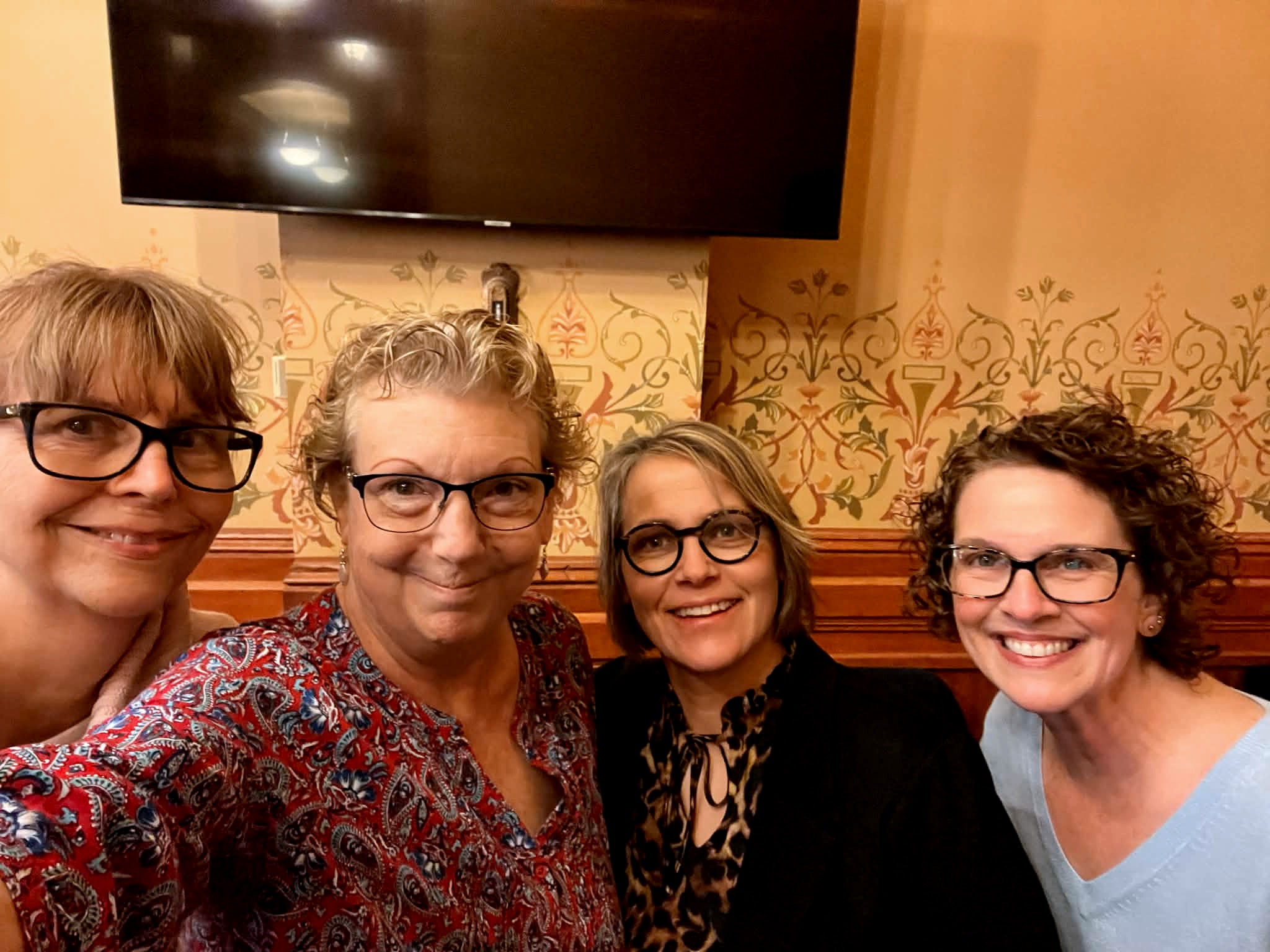
Kali White VanBaale is an Iowa-based novelist, creative writing professor, and mental health care advocate. Find more of her work at kwhitevanbaale.substack.com (where this essay first appeared) and www.kaliwhite.com.
It’s legislative season again, and last month I was back at the state capitol in Des Moines to offer testimony at a House subcommittee meeting on proposed mental health care legislation advocates have been requesting for over a decade: increasing the number of inpatient psychiatric beds at each state mental health institute.
The Iowa House approved similar legislation a few years ago before the bill stalled in the Senate. Advocates are hopeful about the renewed interest in and support for it in the 2026 session.
So what is subcommittee testimony, anyway?
This is where our lawmakers hold public meetings with other House members who sit on that particular subcommittee. Lobbyists and other interested citizens can attend, listen, and speak in support of or against the introduced piece of legislation.
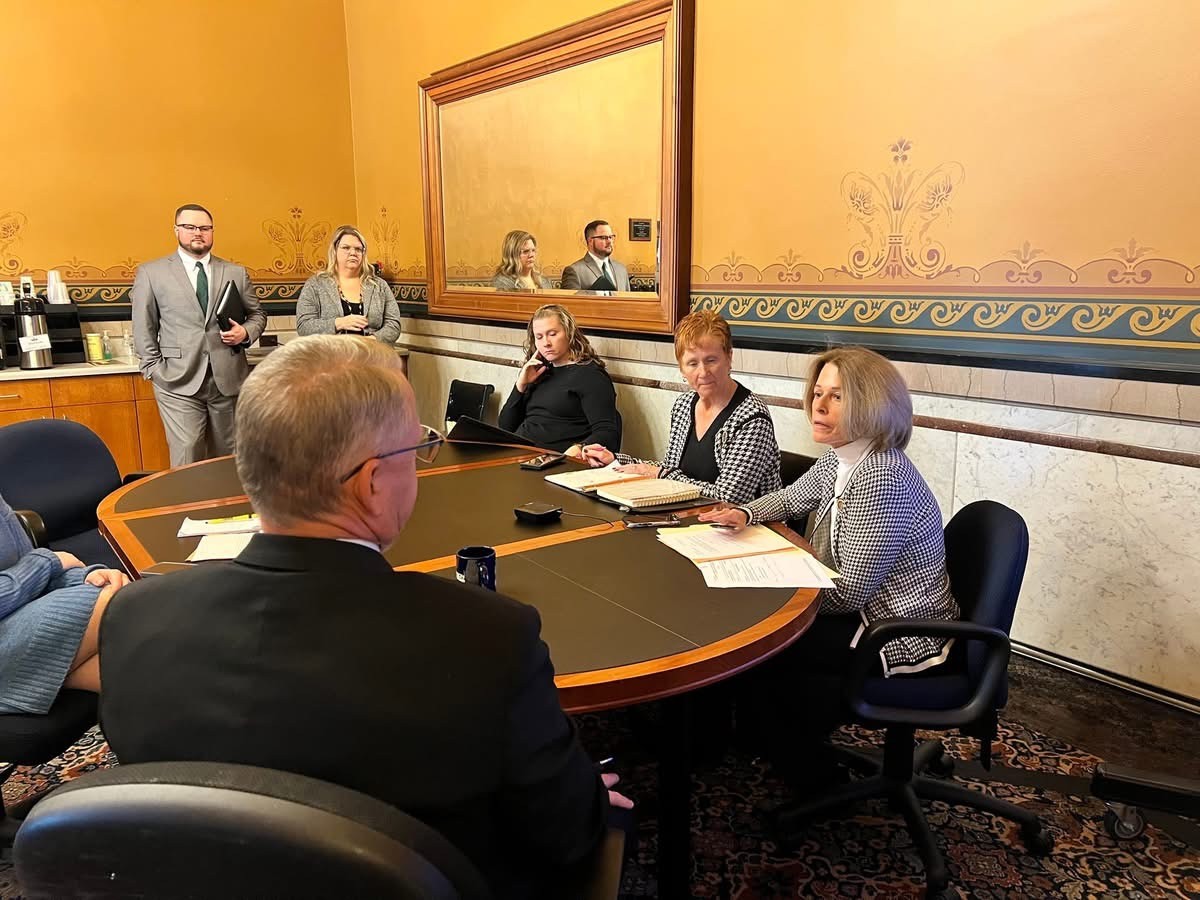
State Representatives Ann Meyer (right), Timi Brown-Powers (second from right), and Craig Johnson (back turned); photo courtesy of Leslie Carpenter
I’ve testified at a handful of these meetings, and learned to prepare a thoughtful statement ahead of time.
This is the testimony I read (in part) on why I was there on January 27 to voice my support for increasing the number of psychiatric beds around our state:
My name is Kali White VanBaale and I’m a writer and professor living in Bondurant, and a lifelong Iowan. I’ve been writing about and advocating for improved mental healthcare in our state for nearly ten years now, since the tragic loss of my longtime neighbors—an entire family—after a young man suffering from an acute psychotic episode was sent home from the ER because there were no psych beds available at the time in the entire state.
House File 2094 is not an abstract policy concern for me. It is personal, urgent, and rooted in years of watching people I love fall through a system that doesn’t have enough room for them.
In the near decade since the tragedy in my neighborhood, I now have family members living with serious mental illness. I’ve sat in emergency rooms with them for hours waiting for a bed that never materialized. I’ve listened to doctors and social workers apologize, not because they didn’t care, but because there was simply, once again, no available beds. I have watched this loved one be discharged too early, stabilized just enough to leave, only to spiral again days or weeks later. Each time, the cycle resets: crisis, ER, waiting, release, relapse, back to living on the streets. This is not care. It’s ineffective crisis management.
When inpatient beds are scarce, people in acute psychiatric crisis end up in places that aren’t designed to meet their needs: emergency rooms, county jails, or back on the streets. Families become default caregivers without training, resources, or backup. Law enforcement becomes a frontline mental health response, even though officers repeatedly say this is not the role they want or were trained for. The result is trauma layered on top of illness—for patients, families, and communities alike.
Iowa often frames itself as a place that values community and responsibility to one another. Yet we can’t claim those values while leaving people with severe mental illness without access to the most basic level of care during their worst moments. Increasing inpatient psychiatric beds is about giving them a chance to regain footing, dignity, and safety before their lives unravel further.
I ask you to listen not just to data, but to the lived experiences of Iowans like me—people who love someone with mental illness and are desperate for a system that shows up when it matters most. Please invest in more meaningful and impactful inpatient psychiatric care. Lives of our fellow Iowans depend on it.
Subcommittee testimonies are interesting because they can range from professional lobbyists representing a specific group who log their “for/against/undecided” on behalf of that organization with a very brief statement.
Then, there are average citizens who have personal reasons to care deeply about a particular issue, and who speak from lived experiences.

Citizens speaking up for change, from left: Cathy Bullock, Leslie Carpenter, Amy Nelson-Bassett, and Kali White VanBaale
Yes, major organizations and stakeholders have an important voice, but so do private citizens and voters with personal stories.
This subcommittee meeting had several speakers who also spoke volumes about lived experiences from a different angle: members of county sheriff departments.

Sheriffs from around Iowa giving testimony, photo courtesy Leslie Carpenter
Their testimony felt especially important because it was a different kind of lived experience from the law enforcement side. Three of the four law enforcement officers spoke about how they’re not trained mental health counselors, but how so much of their jobs have become this. How departments have been forced to dedicate fulltime officers to handling just mental health calls. How they feel helpless when there’s no appropriate mental health facility to take a clearly sick person, and so the person ends up in jail, and the revolving door just keeps spinning.
After testimony concluded and the file unanimously passed this subcommittee, I had a chance to speak to those deputies, and every single one of them remembered the tragic case of my neighbors as senseless and preventable.
Keep telling your story, they told me.
Every time I step into the capital building, whether to give subcommittee testimony or to lobby lawmakers on an upcoming vote, I’m reminded that lived experiences matter. Our stories matter. Every voices matters.
We do have the power to enact change.
Editor’s note from Laura Belin: The full Iowa House Health and Human Services Committee unanimously approved House File 2094 on January 29. The bill, now renumbered House File 2292, is now eligible for floor debate and is on the House debate calendar.
1 Comment
thanks to Kali and all
for putting a face on these issues, and to the law enforcement folks who’ve come to realize
” How they feel helpless when there’s no appropriate mental health facility to take a clearly sick person, and so the person ends up in jail, and the revolving door just keeps spinning.” and are willing to say so publicly.
From unvaccinated babies to folks in elder-care and everyone in-between this state keeps coming up woefully short and I hope Dems follow the lead of reps like
@levinforiowa.bsky.social
“My Republican colleagues would rather have us legalize child abuse, take away medical decisions, and stomp out local control than clean up Iowa’s water or fund our schools.
On Monday, I will help friends testify about their child abuse experience, then put on a smile and head off to tour IowaPBS.”
dirkiniowacity Fri 6 Feb 2:47 PM