
Bruce Lear lives in Sioux City and has been connected to Iowa’s public schools for 38 years. He taught for eleven years and represented educators as an Iowa State Education Association regional director for 27 years until retiring. He can be reached at BruceLear2419@gmail.com
Imagine that a city in Iowa has an 18-hole private country club. Across town, there’s an 18-hole public course and little 9-hole par-3.
Of the seven city council members, five are devoted members of the country club. One day while having cocktails on the country club terrace while griping about dues, the five hatched a plan. They called it “Citizens’ Choice.” They’d give everyone who applied a coupon for $8,000 toward country club membership.
Next week at the council meeting, “Citizens’ Choice” is on the agenda. They argue all citizens should have a chance to choose the private club regardless of ability to pay.
Behind closed doors, they assured the country club board, it could still approve only the “right people,” and under “Citizens’ Choice” still could raise dues as much as they wanted. It’s still exclusive but now would have taxpayer financing.
The non-country club council members objected, saying choosing to be a member was a private decision and should be paid for with private funding. But the five argued that every citizen should have a choice. The public course really didn’t meet the needs of all people.
The public shouted, it was a welfare for the rich. So, the five city council members had another secret meeting. They needed the duffers and occasional golfers who played on the par 3 course to get on board, so they decided to rebuild the 9-hole course into a “specialty golf experience” open to the public through lottery.
They were long on using “specialty” in every conversation but short on defining what “special” really meant. But they had beautiful drawings. Everyone would have a fair chance to enter the lottery. The course would be run by a private unelected board with flexibility about following state laws. Best of all, the golfers chosen would play for free.
The public raged against the expense and the lack of oversight, but there were five country club council votes, and it sailed through. The city had three publicly funded golf courses with no ceiling on cost.
Sound absurd?
That’s what’s happening to Iowa schools.
Since Governor Kim Reynolds rammed through her private school voucher plan during the 2023 legislative session, Iowa has had two separate but unequal publicly funded school systems.
During this year’s session, Reynolds pushed the charter school system to expand, publicly funded but governed by a private unelected board under a private charter. Charter schools can’t charge tuition but have maximum “flexibility” around state laws and often offer “specialty programming.” Under House File 2754, which the governor signed in May, charter schools will receive $9,386 per student, instead of the $8,186 (the state supplemental aid per public school student) they would have received under the previous law.
Also under the new law, charter school students will be eligible for public school extracurricular activities, as well as driver’s education. Charter schools will qualify for state funding tied to teacher salaries, leadership programs, and early intervention services. Public schools will receive no extra funding for allowing charter school students to participate in extracurriculars or driver’s education. On the contrary: public schools will lose the teacher salary supplement funding for each student who enrolls in a charter school.
Currently, 1,172 Iowa students are enrolled in ten charter schools, with another eight charter schools authorized to open. The number of students will explode, and so will the cost.
There’s nothing wrong with public charter schools. They fill an educational niche, but they shouldn’t be allocated more money than traditional public schools.
As Paul Harvey would say, here’s the rest of the story. After five years of “Citizens’ Choice,” the public course is dying a slow death. The fairways are rough and the greens browned. The Specialty Course closed without notice, the country club raised dues by 10 percent each year, and the coupon didn’t keep up with the dues, so there’s no citizen choice at all.
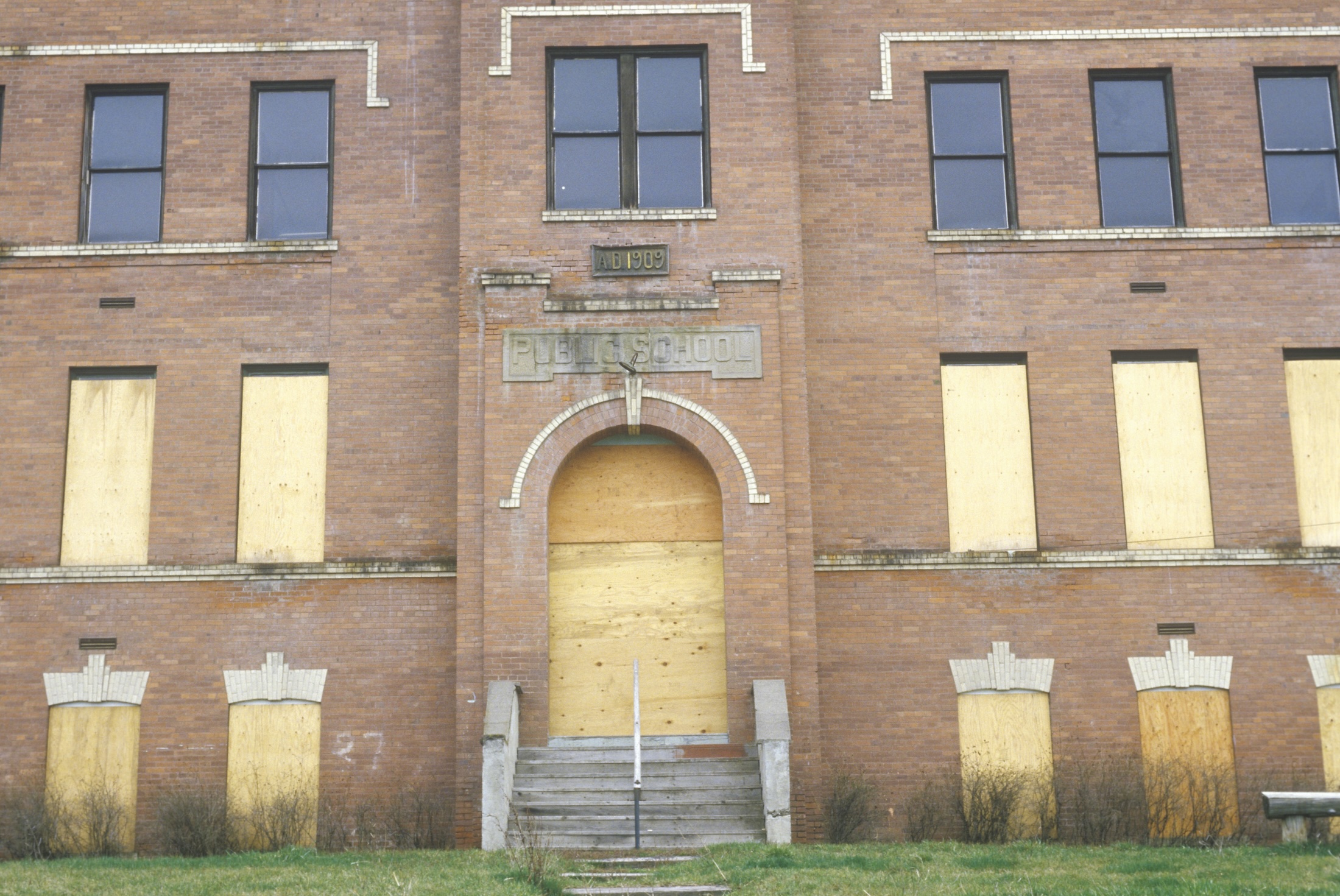
Top image of an abandoned public school is by Joseph Sohm, available via Shutterstock.
4 Comments
Interesting metaphor...
…but I had to read forward and then go back and read again to try to figure out which country club was the subject of the second paragraph. The opening metaphor of this post was more difficult for me to follow than previous Bruce Lear metaphors. The second non-metaphor part of the post was all too clear.
PrairieFan Fri 5 Jun 1:38 PM
The elusive country club
I don’t often find common ground with Mr. Lear but certainly agree with his point that charter schools should not get a higher per student funding than public schools. School choice and vouchers will undoubtedly continue under a Governor Sand administration, but not at the pace of the Reynolds years. Competition favors the consumer, or in this case the student and parents looking for other options than their local public-school turn to charter and private schools. I don’t believe the state or in this case Iowa taxpayers should 100% subsidize private school tuition via vouchers as parents should have some skin in the game. Have a means test along with a hard dollar or percentage cap on the vouchers. And yes, I have belonged to both public and private golf courses over the years. But never a par 3 course!
ModerateDem Fri 5 Jun 2:52 PM
Competition is not
Similar to privatization, there’s no absolute that competition improves performance or outcomes.
Is Iowa’s Medicaid program better today than it was prior to privatization, now managed by several competing insurance companies?
Are prisons run by private entities – such as ICE detention centers – better than prisons run by government?
Also, how will we ever know if Iowa’s private schools are better than public schools?
The Republican architects of the Iowa voucher program don’t require the same level of transparency for private schools as public schools.
Private schools can also turn away students they’d prefer not to enroll. That includes special need students or children with behavior issues.
I do agree with ModerateDem that if a school voucher program must exist in Iowa, it should be means tested based on family income and assets.
Bill Bumgarner Fri 5 Jun 3:48 PM
Competition is not
Similar to privatization, there’s no absolute that competition improves performance or outcomes.
Is Iowa’s Medicaid program better today than it was prior to privatization, now managed by several competing insurance companies?
Are prisons run by private entities – such as ICE detention centers – better than prisons run by government?
Also, how will we ever know if Iowa’s private schools are better than public schools?
The Republican architects of the Iowa voucher program don’t require the same level of transparency for private schools as public schools.
Private schools can also turn away students they’d prefer not to enroll. That includes special need students or children with behavior issues.
I do agree with ModerateDem that if a school voucher program must exist in Iowa, it should be means tested based on family income and assets.
Bill Bumgarner Fri 5 Jun 3:48 PM