Katie Byerly of Cerro Gordo County is also known as Iowa Prairie Girl on YouTube.
I like it when plants are named after the supposed useful functions they provided to our forefathers. After scanning the Iowa wildflower Wednesday index, I found that our writers have covered several of these named plants. We have snakeroot and boneset, fleabane and catchfly, compass and cup plants to list a few. Then there’s bedstraw – Laura Belin covered the “cleavers” bedstraw (Galium aparine) back in 2020.
Here I will review a different plant in the bedstraw/madder family: Northern Bedstraw (Galium boreale). And yes, just like the name suggests, these plants were used for mattress stuffing.
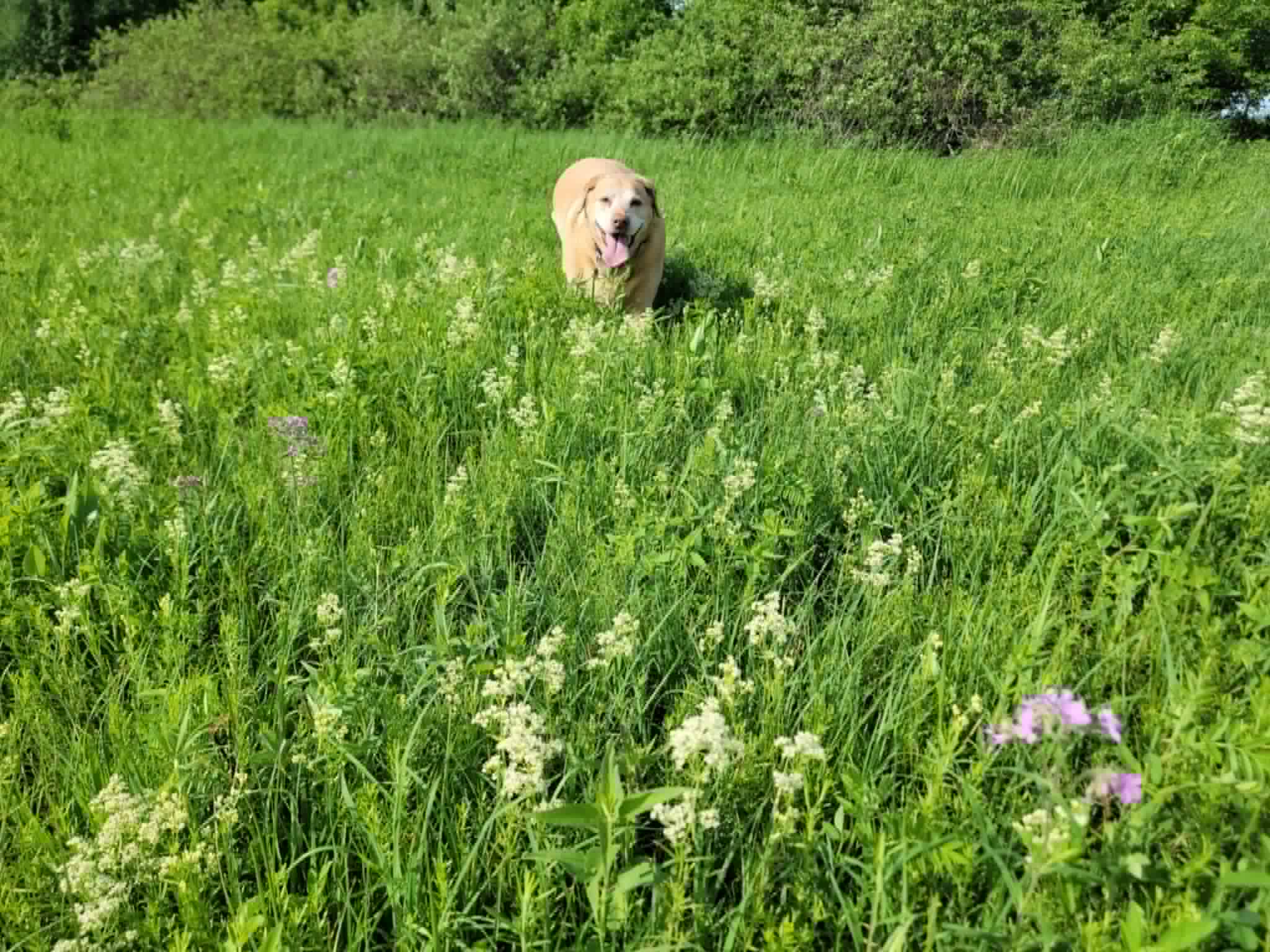
Northern bedstraw with Prairie phlox:

Northern bedstraw’s name also suggests its location. Northern (and boreale) meaning that it is widespread across the cooler northern regions of North America. As it turns out, Northern bedstraw is found mainly in the northern counties of Iowa, as shown on this map from the University of Iowa.

I find Northern bedstraw in the open, sunny, prairie of Wilkinson Pioneer park in Cerro Gordo county, Iowa. This plant thrives in medium to moist soil. In addition to prairies and open woodlands, The University of Michigan Herbarium website lists wet habitats such as fens and banks of rivers and lakes as places to find Northern bedstraw.

Like other bedstraws, Northern bedstraw spreads easily. However, unlike other bedstraws, this plant isn’t sticky and therefore doesn’t create messy clumps. Northern bedstraw provides a nice native ground cover. Even though it can reach a height of 1-3 feet, in the Wilkinson prairie the Northern bedstraw is a shorter plant in the tall grass prairie.

Northern bedstraw blooms in Iowa from June through August. It is a very prolific bloomer, with numerous tiny bleach white flowers in clusters at the top of the plants.


The individual mini flowers (⅛ to ¼ inch) are not easy to photograph! These next two photos show the 4 white pointy tipped petals of each flower.

Each little flower has four creamy colored stamens.

Minnesota Wildflowers tells us that Northern bedstraw is “most easily identified by the whorls of 4 long, narrow leaves and its smooth stem.”

The narrow, smooth edged leaves can grow to be 2 inches long. The leaves attach directly and evenly around the square stem in groups of four.

Another characteristic of the leaves are their three distinct parallel veins.

Unlike the other sprawling bedstraws, Northern bedstraw has an erect, smooth stem that can stand upright.

Other varieties of bedstraw have backward-pointing hooked bristles on their leaves, stems, and seeds that make them sticky and clingy. They attach to each other, animals and clothing. Northern bedstraw lacks these hooked hairs—and thank goodness. Otherwise walking through the Wilkinson prairie would no longer be enjoyable.


Tiny two-parted nutlets develop as seed pods. Northern bedstraw can spread by seed or by its underground rhizomes. Like other plants in the madder family, the red roots of bedstraw were used to make red dye.

So apparently it was the clingy type of bedstraw with its tiny hooks that created mattresses that didn’t shift and lose their shape. However, in her article “Great Northern Bedstraw: A Beloved and Underrated Wild Plant,” the author of the Alchemessence website raves about the fresh honey like and fresh hay fragrance of Northern Bedstraw, saying it was “often used as bedding because of its sweet scent.”
1 Comment
How artistic of Prairie Dog to display a big pink tongue that perfectly matches the phlox:-)
This informative post (with great photos) is also another example of why it would be nice if so many Iowa prairie plantings weren’t so much alike. Every region of Iowa has a unique set of prairie plant species that are native to that region. If more of our prairie plantings reflected just what is native to each planting site, our prairie heritage would be better reflected and protected, and the plantings would be more interesting.
PrairieFan Thu 2 Jul 5:25 PM