
Iowa's party of “personal responsibility” has a dependency problem

Nick Covington is an Iowa parent who taught high school social studies for ten years.

As I round the corner on 40, it’s been humbling and heartbreaking to reflect on how much of my life experience has been defined by global historic change: a child of the 1990s growing up at the peak of American exceptionalism, bookended by the worst attack on the United States since Pearl Harbor, graduating college during the worst recession since the Great Depression, and having my own young children attend school during the worst viral outbreak since the flu epidemic a century ago.

However, regardless of which epochal change I’ve lived through, there has been at least one constant: lectures from the party of “personal responsibility.” 

Continue Reading...

Muscatine County’s agreement to jail ICE detainees remains secret

Clark Kauffman is deputy editor at Iowa Capital Dispatch, where this article first appeared.

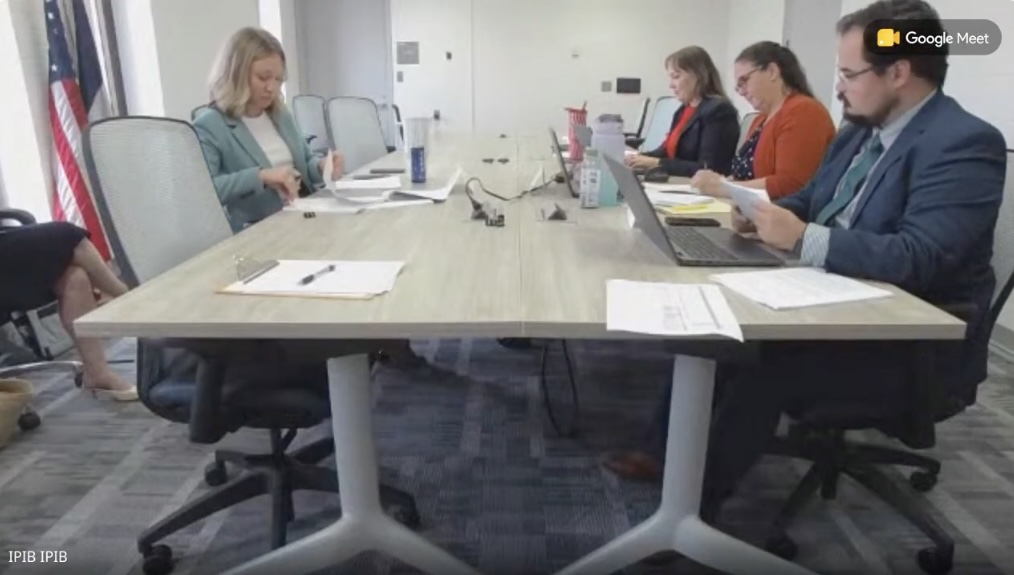
Muscatine County, which has a contract to hold immigration detainees for the federal government, is refusing to publicly disclose its copy of that contract.

In recent months, Muscatine County’s jail administrator has been named in five lawsuits related to the county’s agreement to jail some of the immigrants who are picked up in Iowa by the U.S. Department of Homeland Security’s Immigration and Customs Enforcement, or ICE.

Like other Iowa counties, Muscatine County has a contract with ICE to house those individuals in return for payments from the federal government. That contract, and the county’s detention of the immigrants, have been the subject of five civil lawsuits and an alleged ethics complaint concerning former Muscatine County Attorney James Barry, who resigned last year.

Continue Reading...

When child protection becomes an empty promise

Rob Sand is Iowa’s state auditor.

As a father, my top priority is protecting my kids. When a child is placed in foster care, their safety and well-being become the state’s responsibility. Tragically, the state of Iowa failed to protect Sabrina Ray, killed by her adoptive parents in 2017, and her siblings from abuse and torture.

Because of that failure, the state paid $10 million in 2023 to settle lawsuits brought by Sabrina’s two surviving sisters. I voted on those settlements because, as auditor, I am a statutory member of the board that makes these decisions. I supported those settlements not just to help those children and their families, but because I believed it would lead to real, meaningful reform to Iowa’s foster care and adoption system.

A key part of that settlement – and a key reason I supported it – was the creation of a child welfare task force. Its mission: to examine what went wrong, make recommendations on how to improve the system, and most importantly, prevent future tragedies. Its members included professionals directly involved in Sabrina’s case — a police officer, a paramedic, a prosecutor — as well as the families who adopted Sabrina’s sisters.

But that’s not what happened.

Continue Reading...
Atlantic school board teaches a lesson in accountability

Randy Evans is executive director of the Iowa Freedom of Information Council, a nonpartisan, nonprofit organization that promotes openness and transparency in Iowa’s state and local governments. He can be reached at DMRevans2810@gmail.com. This essay first appeared on his Substack newsletter, Stray Thoughts

It’s funny how a government body can learn and teach an important civics lesson in the time it takes a student to go from kindergarten through 12th grade.

In 2012, the Atlantic Community School District won a lawsuit to keep information secret about disciplinary measures taken against two employees who conducted a strip-search of five girls to try to find $100 another student reported missing.

Iowa Supreme Court Chief Justice Mark Cady wrote a dissent in the case, noting that “transparency in government surely will be thwarted” by those who can “quell public discourse and end controversies over employee misconduct with no public scrutiny by simply announcing discipline has been imposed.”

Continue Reading...

Iowa Republicans suddenly want to limit governor's powers

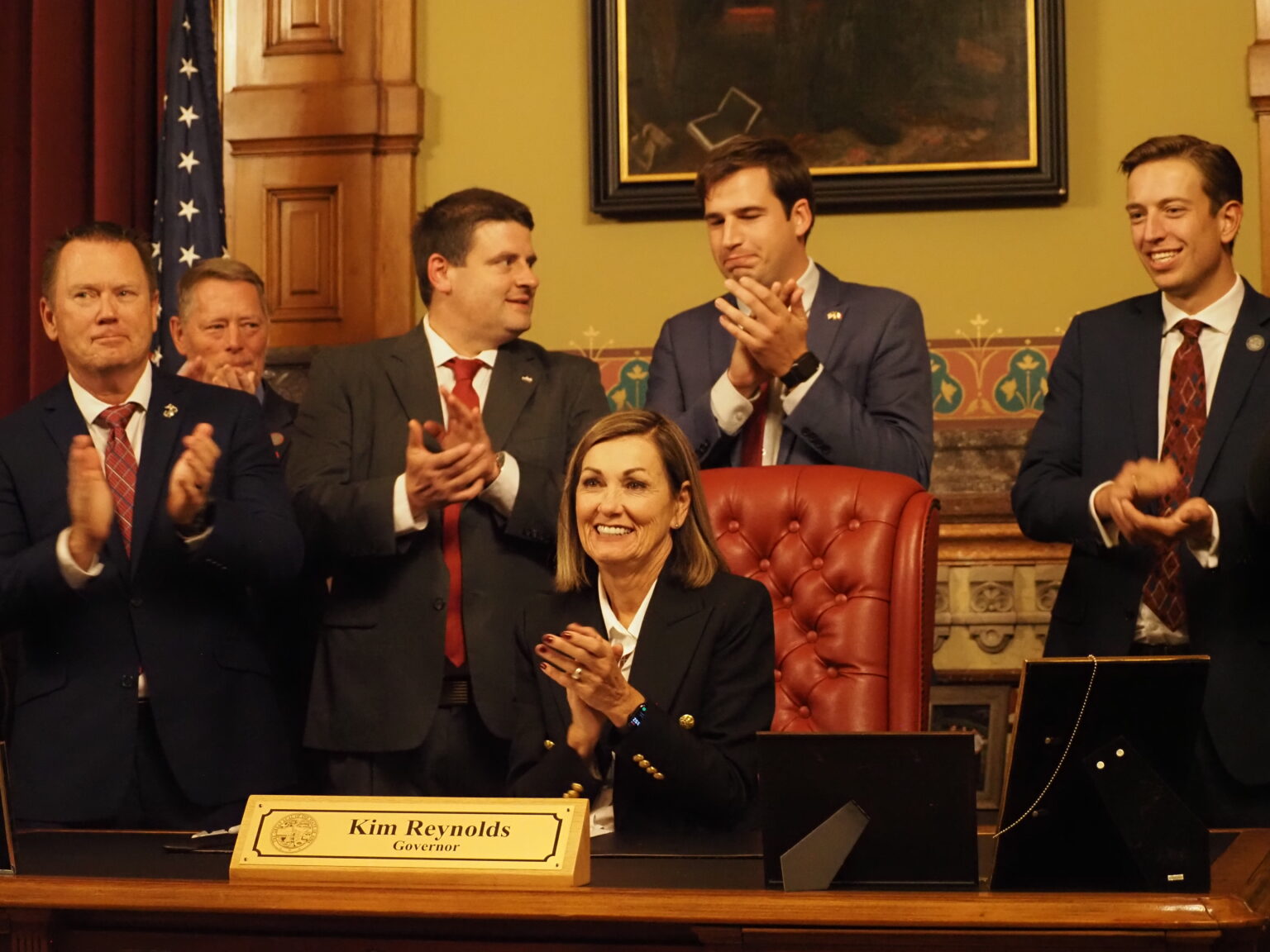
For the past nine years, Iowa’s Republican-controlled legislature has given Governor Kim Reynolds a free hand. GOP lawmakers allowed Reynolds to spend billions of federal dollars provided through the CARES Act and American Rescue Plan with no legislative input.

They approved most of the governor’s signature proposals, expanded her power to hire and fire officials, and allowed her to set agency directors’ salaries with no constraints.

Neither chamber’s Government Oversight Committee has investigated any alleged malfeasance or mismanagement in the Reynolds administration, such as the governor’s questionable spending of pandemic relief funds on her staff’s salaries, or the tens of millions of dollars wasted on a no-bid contract for Workday.

Now, in the tenth year of Iowa’s GOP trifecta, the ruling party has suddenly decided the legislature should be a check on the executive. Several bills that are eligible for floor debate could prevent Reynolds’ successor from making big changes in state government.

Insulting all of our collective intelligence, Republican lawmakers claim these bills aren’t fueled by concern that State Auditor Rob Sand may win the governor’s race in November.

Here’s a rundown of pending bills that could hamstring the next Democratic governor.

Continue Reading...

The Olympics make us proud to be American. So should our government.

State Representative Josh Turek is a four-time Paralympian and two-time gold medalist for Team USA, a former professional wheelchair basketball player and a candidate for U.S. Senate. 

As the Olympics come to a close and the Paralympics begin in early March, I’m sure a lot of us are thinking about what it means to cheer for Team USA. 

Representing the United States at four Paralympic games was the highlight of my wheelchair basketball career, and one of the greatest honors of my life. Watching them raise the American flag with USA across my chest, a gold medal around my neck, and the stars and stripes over my shoulders, I was proud to be an American. 

This Olympics, I know many Americans are troubled by the direction of our country.

Continue Reading...

Which bills survived or died in Iowa legislature's first "funnel" of 2026

Robin Opsahl, Brooklyn Draisey, and Cami Koons collaborated on this article, which was first published by Iowa Capital Dispatch. Clark Kauffman and Kathie Obradovich also contributed to this story

Iowa lawmakers took on hundreds of bills in the first six weeks of the 2026 legislative session, though several measures named as top priorities heading into the year, like eminent domain and property taxes, have yet to find consensus.

February 19 was the last day lawmakers met to consider legislation before the first “funnel” deadline of the year. While there are many exceptions, most bills that don’t involve spending, taxes or government oversight must pass through a committee in either the House or Senate in order to stay eligible for consideration.

Continue Reading...

Too much corn

Wally Taylor is the Legal Chair of the Sierra Club Iowa chapter.

A recent study issued by Decision Innovation Solutions, a pro-Big Ag consulting firm in Des Moines, claims that Iowa’s farm economy is in dire straits because Iowa farmers are growing too much corn. Too much corn, according to the report, is creating a “demand gap.” In other words, corn growers are harvesting more corn that can be sold.

The report’s solution to this situation is year-round sale of E-15 (gasoline with 15 percent ethanol content), corn-based marine fuel, and corn-based aviation fuel. It should come as no surprise that the Iowa Corn Growers Association and the Iowa Renewable Fuels Association commissioned this study.

Continue Reading...

Iowa school anti-vaccination bill puts politics before protection

Bruce Lear lives in Sioux City and has been connected to Iowa’s public schools for 38 years. He taught for eleven years and represented educators as an Iowa State Education Association regional director for 27 years until retiring. He can be reached at BruceLear2419@gmail.com 

Protecting children is a shared value of most adults. A newborn can’t leave the hospital unless they’re buckled into an approved car seat. We childproof our houses. We gasp the first time they swing too high and move closer to catch them if they fly out. When they’re tweens and teens, we stay up sweating until they’re home. We insist on seat belts, driver’s training, and helmets for bicycle riding.

At school, there are tornado, fire, and lockdown drills. There are lists of people approved to pick up students at the end of the day. Schools warn parents not to send a sick child to school.

We’re protective and cautious.

That’s why a bill now pending in the Iowa House is so troubling.

Continue Reading...

Jesse Jackson on the ground: An Iowa caucus memoir

Dave Leshtz is the editor of The Prairie Progressive.

“Tell them you’re a realist with high ideals.”

That’s what Jesse Jackson said to me in 1987 when I asked him how to respond to my Iowa friends and acquaintances who, somewhat mockingly, called me an idealist for supporting him for president. Only unrealistic, naïve, hopelessly optimistic idealists—so the thinking went—would work for Jackson in an overwhelmingly white state like Iowa.

The sad news of Reverend Jackson’s death brought back memories of his presidential campaign of 1987-88, the most exhilarating, inspiring, and illuminating of all the campaigns I’ve worked on. 

Continue Reading...

The great American presidents (and the failures)

Bill Bumgarner is a retired former health care executive from northwest Iowa who worked
in hospital management for 41 years, mostly in the state of Iowa.

Periodically historians and scholars assess and rank the performance of U.S. presidents. It’s an exercise with no sure answer – a matter of opinion informed by study, observation and perspective, also influenced by a measure of one’s political worldview.  

While interesting on their face, presidential greatness studies can also serve to remind us of the leadership values that brought out the best in America – and warn us that presidential judgement can be terribly misguided, even corrupt. 

Projects evaluating presidential achievement have occurred for decades. The Schlesinger surveys are well known to presidential historians. The first was conducted in 1948 by Arthur Schlesinger Sr., a Harvard University historian, with a follow-up project in 1962. Others came after, to include a survey by his son in 1996. Like his father, Arthur Schlesinger Jr. was a historian at Harvard.

Continue Reading...

Exclusive: Randy Feenstra promoting himself with taxpayer-funded ads

As U.S. Representative Randy Feenstra sought to drive supporters of his campaign for governor to attend the off-year Republican caucuses on February 2, he had a big assist from American taxpayers.

Feenstra spent nearly $33,000 from his Congressional office budget on radio advertising that aired from January 12 to February 6, my review of Federal Communications Commission documents shows. He will spend at least $31,000 more on taxpayer-funded radio ads scheduled to run from February 16 to mid-March.

The U.S. House database of franked communications shows Feenstra also spent official funds on four direct mail pieces in January—three of them timed to reach households during the two weeks before the caucuses. Currently available documents do not show how much was spent on those mailings, but past budget reports suggest the cost ran well into five figures.

Feenstra’s campaign for governor had more than $3.2 million in the bank at the end of 2025—more than enough to execute a robust paid advertising plan without using any of his Congressional office budget.

Continue Reading...

Iowa Republicans turn their back on nursing home residents

John and Terri Hale own The Hale Group, an Ankeny-based firm advocating for older Iowans and Iowans with disabilities.

It was disturbing, frustrating and sickening. But it was not surprising. And it’s happened six years in a row. 

Behind closed doors, secretively and quietly, Iowa Senate Republicans once again killed a bill that would improve, and possibly save, the lives of nursing home residents.  

The bill would protect the right of loved ones of nursing home residents to install video cameras in their rooms. The camera would allow families near and far to check in on their moms, dads, grandparents or others to make sure they are well, safe, and receiving good care. 

Continue Reading...

The Olympics are running out of winter

Chris Gloninger is a meteorologist and climate communicator with 18 years of broadcast experience, AMS dual certifications, and a master’s in Emergency Management, specializing in making complex climate topics accessible. He first published this essay on his Substack newsletter, Weathering Climate Change.

The Winter Olympics have always sold us a very specific idea of winter.

Snow that falls on cue. Cold that is sharp but reliable. Mountains that hold their shape and seasons that behave the way we expect them to. For decades, the Games have depended on that stability. Not just for aesthetics, but for safety, fairness, and the simple ability to hold winter sports at all.

That assumption is quietly breaking.

Continue Reading...

Public universities are vital for Iowa's economy, workforce

Linda Schreiber writes commentary on selected legislative issues.

While Iowa’s public universities support one in every ten jobs and generate billions of dollars in economic impact statewide, Republicans are pushing for yet another layer of oversight on the Regent institutions.

House File 2243, introduced by Iowa House Higher Education Committee chair Taylor Collins and eligible for floor debate, would require the Iowa Board of Regents to report to the state legislature and governor on how the board “could establish a performance-based funding model” for the three state universities. That funding model “must include” the following factors: graduation rates, degrees awarded in high-demand fields, postgraduate employment and income, and the number of graduates who stay in Iowa after graduation.

Those metrics already tell a compelling story: the state’s public universities are essential to meeting Iowa’s workforce needs, retaining talent, and strengthening communities across the state.

According to the Iowa Board of Regents, Graduates of the University of Iowa (UI), Iowa State University (ISU), and the University of Northern Iowa (UNI) fuel Iowa’s economy, filling high-demand roles in health care, education, and STEM fields.

Yet legislators frequently criticize the Regent universities while placing increasing constraints on their operations. What Iowans need are clear, accessible facts about the value and success of their public universities—and what those institutions need in return is stable, realistic financial support, not micromanagement, to continue delivering results for Iowa.

Continue Reading...

Foes of DEI can't have it both ways

Rick Morain is the former publisher and owner of the Jefferson Herald, for which he writes a regular column. This essay first appeared on Substack.

Politicians who seek to ban diversity, equity, and inclusion (DEI) practices at public institutions, and even try to extend the ban to the private sector, argue that DEI potentially discriminates against individuals who are not of a race, religion, ethnicity, gender orientation, or other group that DEI seeks to protect.

Individuals from the dominant groups in the nation or a state, they reason, deserve to be treated fairly, as individuals, in competition for college admission, employment, housing, and other sectors. No one should be favored because he or she belongs to a group that is supposedly discriminated against in our society and culture.

Continue Reading...

Iowa House advances bill making it harder to list impaired waters

Cami Koons covers agriculture and the environment for Iowa Capital Dispatch, where this article first appeared.

A bill that advanced in an Iowa House subcommittee and committee on February 10 would prohibit a water segment from being designated as impaired unless the Iowa Department of Natural Resources identified the percentage of fecal bacteria coming from each animal species that contributed to its impairment.

Every two years, the DNR must submit a list to the U.S. Environmental Protection Agency of water segments in the state that are “impaired” or don’t meet water quality standards. 

Once listed, DNR and the EPA work to develop an improvement plan that puts limitations on the amount of pollutants that identified polluters can discharge into the surface water segments. 

Continue Reading...

On immigration and the excesses of ICE

Rodney Drenkow is an attorney, a local business owner, and a former member of the Waverly City Council. This column first appeared in the Waverly Democrat.

This is the most difficult piece that I have ever written. Emotions are inflamed. Positions have been set in concrete. There does not seem to be room for any middle ground. The last thing that I want to do is add to the chaos. But I am also very concerned.

It seems that we have fallen far from what makes America great. There are many, many examples: from treating our allies with disdain, the insane way that trade partnerships for our corn and soybeans that have been built up over decades are so cavalierly discarded, the use of federal agencies as vehicles to control, intimidate, and exact retribution against American citizens, the disturbing treatment of those who exercise their Constitutional right to protest. 

Being a bully does not make us respected. Think Biff Tannen in the “Back to the Future” movies. Rather than “Make America Great Again” we are witnessing the tearing down of the very things that make us great. 

I truthfully don’t understand why some people are so afraid of immigrants. Immigrants are, by and large, hard working people, doing the jobs that Americans often don’t want. 

Continue Reading...

Good judges hear the voices of America

Randy Evans is executive director of the Iowa Freedom of Information Council, a nonpartisan, nonprofit organization that promotes openness and transparency in Iowa’s state and local governments. He can be reached at DMRevans2810@gmail.com. This essay first appeared on his Substack newsletter, Stray Thoughts

January ended with a notable week for federal courts because of the voices of its judges.

Judges in Minnesota and Texas spoke with clarity in these troubled times. In between them, a longtime Iowa federal judge’s voice fell silent after a quarter century of delivering justice, along with lessons in compassion, fairness and our shared history.

Robert W. Pratt was 78 when he died. The Emmetsburg native was a U.S. district judge in the Southern District of Iowa from 1997 to 2023.

Pratt began his legal career working for Iowa Legal Aid, a nonprofit law firm that champions society’s underdogs and gives a voice to those who rarely are heard in our society.

Continue Reading...

Was Ian Roberts "the best of the worst"?

Dan Hunter is an award-winning playwright, songwriter, teacher and founding partner of Hunter Higgs, LLC, an advocacy and communications firm. A Des Moines native, he has written several books and performed a solo show of topical humor in song in Iowa for seventeen years. He has a weekly Substack column called Learning and Teaching Creativity, a weekly examination of ordinary people who exhibit unexpected creativity. This essay was first published by the Arrowsmith Press.

People outside of Iowa believe that Des Moines is a desert of homogeneity. But the Des Moines Public Schools is a district of 30,000 students speaking 100 different languages from 90 separate countries. About 21 percent of the district’s students are Black and almost 33 percent are Hispanic.

During the 2022-23 school year, the school board conducted a closed, nationwide search for a new superintendent. They sought a leader who could increase reading and math skills, particularly among Black boys.

Ian Roberts was introduced as the new superintendent of Des Moines Public Schools on May 16, 2023. He was an animating spirit for growth and inspiration in Des Moines. Roberts wore bright pastel suits, flowered shirts, and track shoes. He took off running.

Continue Reading...
Page 1 Page 2 Page 3 Page 1,301