
Randy Richardson is a former educator and retired associate executive director of the Iowa State Education Association.
Governor Kim Reynolds signed a new charter school bill into law on May 12, praising it as “yet another step to put students first.” House File 2754 provides additional funding to charter schools at the expense of public schools. While the governor heaped praise on charters, little work has been done to determine just how well they function and whether these charter schools perform better than public schools.
To be clear, charter schools are a form of a public school. They must accept all students, just like regular public schools. However, as a charter, they also get certain freedom to experiment with different education models that regular public schools don’t.
Ten charter schools are currently operating in Iowa, with another eight approved to open in the next two years, according to the governor. In our state, charter schools operate under two models. A school board can approve a charter; these are typically small and operate as an extension of the public school. Hamburg, Storm Lake, and West Central have this kind of charter school.
The remaining seven charter schools in Iowa operate under a founding group that is independent of a school district. Of these seven charters, two were started locally and the rest are operated by groups formed outside of the state.
Little has been written about these schools since they opened, so it’s difficult to know how they have functioned since they opened. Given the recent press coverage around the new charter school law, I decided to dig a little deeper to see how well the schools are doing. I spent hours going through the minutes of their governing boards (when they were available) and examining what little financial information they had shared.
As I mentioned earlier, five of the schools are operated by groups from outside of our state.
Oakmont Education operates the Great Oaks High School and Career Center in Des Moines. Oakmont operates a chain of charter schools that are mostly in Ohio with one additional school in Michigan and two in Iowa. John Stack launched Oakmont Education in 2018 to focus on quality education, career credentials, and student outcomes for under-resourced youth. He previously managed schools for Cambridge Education and designed Oakmont to help students gain industry credentials and careers. The school enrolls students between the ages of 16 and 21.
Concept Schools operates the Horizon Science Academies in Davenport and Des Moines. Concept Schools is based in Schaumburg, IL. Several reports, including one on the CBS News program 60 Minutes, have linked Concept Charter Schools to a Turkish cleric, Fethuallah Gulen, currently secluded in the Pocono Mountains in Pennsylvania. Concept Schools denies any link to Fethuallah Gulen. However, a report filed by Margaret Brennan at CBS News, Gulen’s followers run publicly funded science and math-focus charter schools in the United States. According to CBS News, they’ve opened 136 charter schools in 28 states, operating on more than $2.1 billion taxpayer dollars since 2010. That includes Horizon Science Academies. The company is planning to open a third Iowa school in Cedar Rapids.
Opportunity Education Network operates schools in Cedar Rapids and Des Moines. Opportunity Education was started by Joe Ricketts, the billionaire founder and former CEO of Ameritrade, founded in 2005. Ricketts and his family own 95 percent of the Chicago Cubs baseball team and donated more than $1 million in 2016 to help Donald Trump’s campaign. The nonprofit focuses on improving education quality and access, particularly through “Quest Forward Learning,” a curriculum aimed at developing skills in students from various backgrounds. Opportunity Education also operates a school in Omaha and Santa Rosa, CA.
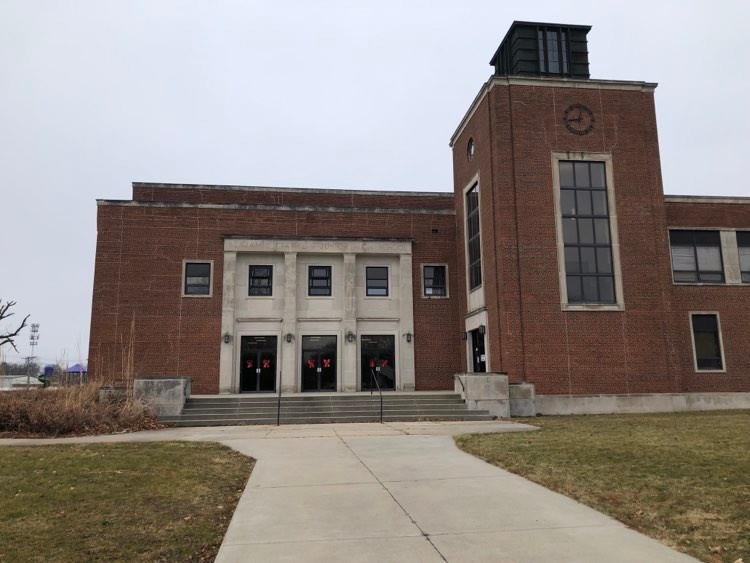
My research found that there are certain commonalities among many of these schools. One of the first things that jumps out is that it takes a lot of money to start a new charter school. All seven charters struggle financially, although the governor’s signature on the new bill will help alleviate the problem. The Horizon Science Academy in Des Moines has been renting the old Franklin Junior High School. It recently decided to purchase the property for a reported $2.7 million.
The expenses haven’t stopped there, however, as governing board minutes indicate that the facility will need a new roof and HVAC system. Horizon’s school in Davenport is expected to operate at a net loss for the year of approximately $800,000. The Great Oaks High School in Des Moines pays more than $23,000 per month in rent since they don’t own the building where the school is located. Financial information on the school’s web site indicated an expected operating loss of $185,000 for 2024-25, but the board believes they will operate in the black for the current year.
It’s also obvious that it helps to have someone with deep pockets supporting your school. When the Horizon Science Academy in Des Moines wanted to buy their building, they didn’t need to pass a bond issue like a regular public school. Instead, they simply turned to the company that operates the school, Concept Schools, for an interest free loan of $2,710,000. Concept Schools has also loaned money to their Davenport campus. The March financial statement shows they received a $300,000 loan from Concept Schools bringing the total loans from Concept for the year to $1,100,000. No loan terms were discussed in the governing board minutes.
When Joe Ricketts decided to open the Des Moines Prep charter school in Des Moines, he found a large warehouse in the city’s East Village (not a cheap location for real estate). He purchased the former Two Rivers Marketing building for $5.4 million in December 2024. The building was originally a 50,000-square-foot warehouse structure with offices and 130 parking spots. To make the building suitable for students he paid for renovations that were reported to total $50 million according to KCCI (February, 2025). Opportunity Education recently announced they are planning a double-court gymnasium, expanded cafeteria space and the conversion of a gravel lot across the street into a soccer field and community park, all paid for by the company.
One of the major differences between charter schools and regular public schools is how they are governed. Regular public schools hold elections for school boards, and the boards hire a superintendent to run the school. Charter schools operate with an unelected governing board that is appointed by the group operating the school. The governing boards may have as few as three members or as many as eight.
It’s hard to determine how active the board members are in the operation of the school. Under state law, charter school boards can even have one member who is not from Iowa. The two Opportunity Education schools in Iowa both have Manuel Matkke listed as the board president. Mattke appears to reside in Omaha. The boards appear to have little input into who acts as the superintendent.
The two Horizon Science Academy schools both list Dr. Chris Murphy as superintendent and Halil Dulgeroglu as treasurer ,although it appears that the latter lives in the Chicago area. There is little consistency in how often the boards meet and transparency is inconsistent.
The Choice Charter Virtual school does best. All board agendas and minutes are posted, and financial information is readily available and professionally done. That may be because the founder of the school, Dr. Cynthia Knight, is a longtime educator in the state.
On the other hand, the Opportunity Education schools have posted a limited number of agendas (it appears that the board has only met twice in 2026). Board minutes are not posted regularly, with the last board minutes on their web site coming from December 2025.
It’s also not clear how money is being spent. Not all schools share financial information on their web site and not all of those who do provide the kind of depth that is required of public schools. Only one school reports paying any kind of management fee to the group operating the school. Great Oaks High School reported that they were expecting to pay $427,129 in management fees (an 18 percent increase over the previous year) for 2025-26. That’s public money being sent out of state. I find it difficult to believe that no other school is reporting management fees since the companies running charter schools must be getting something for their investment.
I was unable to find any information related to the pay and benefits provided to school administrators and staff. Public schools make that data readily available. If charter schools are indeed public then the teachers and support staff should be able to be represented by their respective unions and enjoy the same (although limited) bargaining rights as other staff in public schools.
Both Great Oaks and the Empowering Excellence Charter School in Cedar Rapids pay a significant sum to purchase licenses for Edmentum software. The software is commonly used in public schools for credit recovery programs. The Empowering Excellence charter also reported $48,000 in missing receipts have been identified as well as fraudulent Amazon charges ties to identify theft.
With all the financial support available to charter schools we should expect to see amazing results. Unfortunately, it appears that charter schools are running into some of the same issues regular public schools are facing. Virtually all schools report issues with chronic absenteeism. Great Oaks in Des Moines reported to the Iowa Department of Education that 87.61 percent of its students were chronically absent (compared to the state average of 15.81 percent).
Student performance on state assessments is also a problem. Students attending the Choice Charter Virtual School, the Empowering Excellence Charter School in Cedar Rapids, and the Great Oaks Charter Schools all scored well below state averages in Math and English/Language Arts tests. Only the Horizon Science Academy in Des Moines came close to achieving the state average with 67.74 percent of the students being proficient in math (compared to the state average of 70.93 percent) and 41.94 percent of the students being proficient in English/Language Arts (compared to the state average of 73.56 percent). No scores were reported for the Opportunity Education charter schools.
More than 1,000 children currently attend a charter school in Iowa. Our state is relatively late to the charter school movement, but it appears Iowa Republicans are eager to expand this option, as eight new charters have been approved to open over the next two years. If Iowa is committed to expending public dollars to support these efforts, then it’s important to allow the state auditor to regularly investigate how our tax dollars are being spent and for the Department of Education to regularly evaluate these schools to see whether the expenditures actually increase student performance.
Top image: Photo by Laura Belin of the old Franklin Junior High School building in Des Moines. The Horizon Science Academy Des Moines is located in the building.
2 Comments
Thank you
for the information, Randy. I will use it when my representative tries to justify his enthusiastic support for charter and private schools.
bodacious Sat 30 May 8:38 AM
School Choice, Accountability, and Outcomes
Good article. I like the idea of adding charter schools and additional school choice for those who live in the wrong school district. Accountability for both charter and existing public schools is important. Those who fear competition better get their test scores up to keep the almighty public tax dollars flowing. Charter schools should disclose salary data and be more transparent. I would expect better performance at charter and private schools than public who have to take everyone.
I see former DMPS sup Ian Roberts just earned a two year prison sentence.
ModerateDem Sat 30 May 9:14 AM