
# Dave Sires


Who's who in the Iowa Senate for 2026

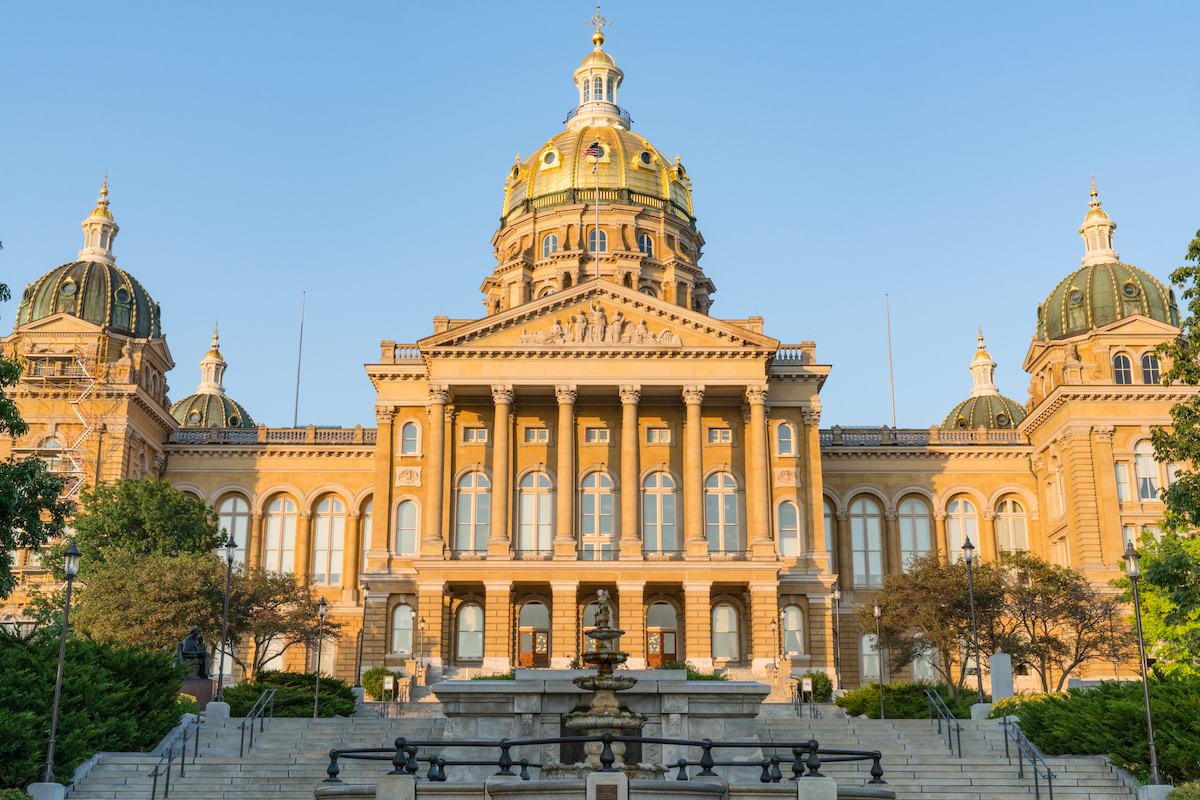
The Iowa Senate reconvened on January 12 with a different look: a new majority leader (Mike Klimesh) and a changed balance of power: 33 Republicans and seventeen Democrats, down from a 34-16 GOP majority for most of the 2025 session.

Seven senators (four Republicans, three Democrats) were elected to the chamber for the first time in 2024, and three more won their seats in special elections during 2025.

Fourteen senators are women (eight Democrats and six Republicans)—that’s one more woman than last year, since Democrat Catelin Drey won the race to succeed the late Rocky De Witt in Senate district 1, and Renee Hardman won the race to succeed the late Claire Celsi in Senate district 16. The high point for women’s representation in the Iowa Senate was in 2023 and 2024, when the chamber had 35 men and fifteen women.

Hardman is the first Black woman to serve in the Iowa Senate and only the third African American ever elected to the chamber. Democrat Izaah Knox is also Black. The other 48 senators are white. No Latino has ever served in the chamber, and Iowa’s only Asian-American senator was Swati Dandekar, who resigned in 2011.

In 2023, Democrat Janice Weiner became the first Jewish person to serve in the Iowa Senate since Ralph Rosenberg left the legislature after 1994. She became the first Jewish person to lead an Iowa legislative caucus when her peers elected her minority leader in November 2024.

Democrat Liz Bennett is the only out LGBTQ member of the Iowa Senate.

I enclose below details on the majority and minority leadership teams, along with all chairs, vice chairs, and members of Iowa Senate committees. Where relevant, I’ve mentioned changes since last year’s legislative session. Although there hasn’t been as much turnover as the Iowa House saw during the interim, Klimesh did make quite a few changes in the committees compared to last year. He took all committee assignments away from one Republican (Doug Campbell) and took certain positions away from Kevin Alons, Mark Lofgren, Sandy Salmon, and Dave Sires.

Some non-political trivia: the 50 Iowa senators include four men named Mike (three Republicans and a Democrat), two Toms (a Democrat and a Republican), a Dave and a David (both Republicans), and two men each named Jeff, Mark, and Dan (all Republicans).

Continue Reading...

The pesticide immunity bill is dead—we hope

UPDATE: The Iowa House and Senate adjourned for the year on May 15. The pesticide immunity bill did not advance in the House, nor was it attached to any late-moving legislation. Original post follows.

Diane Rosenberg is executive director of Jefferson County Farmers & Neighbors, where this commentary appeared on May 13 as an updated version of an article first published on March 25.

Even though 89 percent of Iowans oppose the pesticide immunity bill, also known as the “Cancer Gag Act,” the Iowa Senate voted to move it forward for the second year in a row sending it to the Iowa House where it remains stalled. Senate File 394 would protect pesticide companies from personal injury lawsuits if a product has an EPA-approved warning label. Companies would still be protected if the label is inaccurate, doesn’t fully disclose all risks, or harms are identified in the future.

The chemical giant Bayer is lobbying heavily for this bill, and the corporation has a lot to gain if the bill passes. In 2018, Bayer purchased Monsanto, the manufacturer of Roundup that misled regulators and the public about glyphosate’s associated cancer risks. Since then, Bayer/Monsanto has faced approximately 165,000 glyphosate lawsuits, paying out massive verdicts totaling over $13 billion so far. 54,000 active cases remain with more expected every year.

Continue Reading...

How redistricting helped Republicans expand Iowa Senate majority

Seventh in a series interpreting the results of Iowa’s 2024 state and federal elections.

Republicans will hold 35 of the 50 Iowa Senate seats when the legislature reconvenes in 2025, a net gain of one from the 34-16 GOP majority of the past two years. The results were finalized on November 22 and November 25 following recounts in two close races.

According to the legislature’s official website, the fifteen-member Democratic caucus will be the smallest contingent for the party in the Iowa Senate since the early 1960s. Maintaining a two-thirds majority means Republicans will be able to confirm Governor Kim Reynolds’ nominees without any Democratic support.

Redistricting played a role in all three districts where party control changed. The demise of ticket-splitting was also apparent, as three incumbents lost in areas where their constituents preferred the other party’s presidential nominee.

Continue Reading...

Lessons of 2024: Iowa's not an outlier

First in a series interpreting the results of Iowa’s 2024 state and federal elections.

Two years ago, Iowa appeared to be on a different trajectory than much of the country. As Democrats won many of the midterm election races, including in our Midwestern neighboring states, Iowa experienced yet another “red wave.” Six of the last eight general elections in Iowa have been GOP landslides.

On November 5, Donald Trump improved on his 2020 performance almost across the board: in blue states like New York and New Jersey, swing states like Pennsylvania and Georgia, and red states like Texas and Iowa. He gained in rural counties, suburban counties, and urban centers, in states where both presidential candidates campaigned intensely, and in states where there was no “ground game” or barrage of political advertising. He gained among almost every demographic group except for college-educated women. He may become the first Republican presidential candidate to win the popular vote since George W. Bush in 2004, and only the second GOP nominee to win the popular vote since 1988.

The Trump resurgence isn’t unique to Iowa, or even the U.S.—grievance politics has been winning elections all over the world lately.

But that’s no comfort to Democrats here, who probably won’t win back any Congressional districts and suffered more losses among their already small contingents in the Iowa House and Senate.

Continue Reading...

Eleven Iowa Senate races to watch in 2024

This post has been updated with unofficial results from the November 5 election, as well as the final pre-election campaign finance disclosures and absentee ballot totals as of November 2. Original post follows.

Republicans currently hold 34 Iowa Senate seats—the largest GOP contingent in that chamber since 1973. Democrats are not realistically contending to regain the Senate majority in November. So why pay any attention to these legislative races?

Although the most competitive state Senate races won’t determine control of the chamber, they could reveal a lot about each party’s strengths with certain kinds of voters. A good night for Republicans would indicate that the Trump-era realignment has moved further into Iowa’s former blue regions. A good night for Democrats could pull the GOP below the two-thirds threshold, which has allowed Senate Republicans to confirm all of Governor Kim Reynolds’ nominees without any support from the minority party.

This post highlights four state Senate districts at most risk of flipping, and another seven districts where even without a big investment by Democrats or Republicans, the results could shed light on broader political trends in Iowa. A forthcoming article will cover state House races to watch in 2024.

Continue Reading...

Meet the seven Iowa Democrats in national group's spotlight

Republicans currently enjoy large majorities of 64-36 in the Iowa House and 34-16 in the Iowa Senate. But seven Democrats got a boost last week from the Democratic Legislative Campaign Committee (DLCC), which works to elect Democrats to state legislatures around the country.

Iowa House Minority Leader Jennifer Konfrst joined the DLCC’s board of directors in January—a signal that the group is not giving up on Iowa, despite the losses over the past decade. Although Democrats are not in a position to regain control of the House or Senate this year, making up ground in every cycle matters—especially in the House, where GOP leaders struggled to find 51 votes for some of this year’s controversial bills.

The DLCC’s seven “spotlight” candidates in Iowa include a mix of incumbents and challengers. They are running in different types of communities, from suburbs trending blue to onetime Democratic strongholds that turned red during the Trump era. They share a commitment “to combat Republican extremism” in the legislature. Attention from a national group should help them raise money and recruit volunteers looking to make a difference in a competitive election.

Key facts about the featured candidates and their districts are enclosed below. Bleeding Heartland will profile these races in more depth as the campaigns develop. All voter registration totals come from the Iowa Secretary of State’s website. Voting history for 2020 comes from the maps Josh Hughes created in Dave’s Redistricting App for Iowa’s current state House and Senate districts.

Continue Reading...