# Education


Iowa school anti-vaccination bill puts politics before protection

Bruce Lear lives in Sioux City and has been connected to Iowa’s public schools for 38 years. He taught for eleven years and represented educators as an Iowa State Education Association regional director for 27 years until retiring. He can be reached at BruceLear2419@gmail.com 

Protecting children is a shared value of most adults. A newborn can’t leave the hospital unless they’re buckled into an approved car seat. We childproof our houses. We gasp the first time they swing too high and move closer to catch them if they fly out. When they’re tweens and teens, we stay up sweating until they’re home. We insist on seat belts, driver’s training, and helmets for bicycle riding.

At school, there are tornado, fire, and lockdown drills. There are lists of people approved to pick up students at the end of the day. Schools warn parents not to send a sick child to school.

We’re protective and cautious.

That’s why a bill now pending in the Iowa House is so troubling.

Continue Reading...

Public universities are vital for Iowa's economy, workforce

Linda Schreiber writes commentary on selected legislative issues.

While Iowa’s public universities support one in every ten jobs and generate billions of dollars in economic impact statewide, Republicans are pushing for yet another layer of oversight on the Regent institutions.

House File 2243, introduced by Iowa House Higher Education Committee chair Taylor Collins and eligible for floor debate, would require the Iowa Board of Regents to report to the state legislature and governor on how the board “could establish a performance-based funding model” for the three state universities. That funding model “must include” the following factors: graduation rates, degrees awarded in high-demand fields, postgraduate employment and income, and the number of graduates who stay in Iowa after graduation.

Those metrics already tell a compelling story: the state’s public universities are essential to meeting Iowa’s workforce needs, retaining talent, and strengthening communities across the state.

According to the Iowa Board of Regents, Graduates of the University of Iowa (UI), Iowa State University (ISU), and the University of Northern Iowa (UNI) fuel Iowa’s economy, filling high-demand roles in health care, education, and STEM fields.

Yet legislators frequently criticize the Regent universities while placing increasing constraints on their operations. What Iowans need are clear, accessible facts about the value and success of their public universities—and what those institutions need in return is stable, realistic financial support, not micromanagement, to continue delivering results for Iowa.

Continue Reading...

Foes of DEI can't have it both ways

Rick Morain is the former publisher and owner of the Jefferson Herald, for which he writes a regular column. This essay first appeared on Substack.

Politicians who seek to ban diversity, equity, and inclusion (DEI) practices at public institutions, and even try to extend the ban to the private sector, argue that DEI potentially discriminates against individuals who are not of a race, religion, ethnicity, gender orientation, or other group that DEI seeks to protect.

Individuals from the dominant groups in the nation or a state, they reason, deserve to be treated fairly, as individuals, in competition for college admission, employment, housing, and other sectors. No one should be favored because he or she belongs to a group that is supposedly discriminated against in our society and culture.

Continue Reading...

GOP candidates revealed why Iowa's public schools are at risk

Bruce Lear lives in Sioux City and has been connected to Iowa’s public schools for 38 years. He taught for eleven years and represented educators as an Iowa State Education Association regional director for 27 years until retiring. He can be reached at BruceLear2419@gmail.com 

Some mysteries are difficult to solve. For example, in this classic story problem: “Train A leaves from Chicago for Toledo at 70 miles an hour. Simultaneously Train B leaves Toledo for Chicago at 60 miles per hour. The distance between the cities is 260 miles when do they meet?”

Sure, there’s a mathematical formula to figure it out, but as a distracted 7th grader I never conquered it.  There were just too many other important questions needing answers. Why is the Chicago train faster? Is there a headwind between Toledo and Chicago or are trains just built slower in Ohio? Who are the people traveling? Why do we want those trains to meet? Are they on the same track? If so, isn’t that the real story and the real problem?

After reading about the recent Iowa Republican gubernatorial primary debate, there’s no mystery about why Iowa’s public schools are at risk. Four of the five contenders are sticking to an old formula that’s put Iowa public schools in jeopardy and caused teachers and future teachers to look for an exit.

Continue Reading...

Listening before legislating to make Iowa number 1 in education again

State Representatives Heather Matson, Tracy Ehlert, Eric Gjerde, Monica Kurth, Elinor A. Levin, and Mary Madison co-authored this column.

Two months. Twelve stops. All four corners of Iowa on a statewide education listening tour. 

That’s how we, as members of the House Education Committee, spent the fall as we focused our attention on how to make Iowa number 1 in education again. 

We set out to Mason City, Waterloo, Ankeny, Ottumwa, Indianola, Creston, Council Bluffs, Storm Lake, Emmetsburg, Bettendorf, Mount Vernon, and Dubuque. At each stop we heard from current and retired teachers, paraeducators, principals, superintendents, school board members, community college and higher education professors and leaders, AEA educators, school librarians, nurses, counselors, and mental health professionals, parents, and community advocates. 

We flipped the script of traditional town halls—this wasn’t about us talking—it was about listening before legislating. What did we hear? A lot! Here are some of the highlights. 

Continue Reading...

Will property tax cuts pay Iowans dividends?

Linda Schreiber writes commentary on selected legislative issues.

Bob Dylan’s 1964 lyric, “The times they are a-changin’,” captured a moment of upheaval. The same could be said today—especially when it comes to how Iowa funds its communities.

A decade ago, when lawmakers reduced state funding for schools and local governments, cities and counties could adjust their budgets and, if needed, raise property taxes to maintain services residents wanted. Today, that flexibility is disappearing. And therein lies the paradox.

Throughout the first year of the 91st Iowa General Assembly, lawmakers debated cutting property taxes. With Republicans holding a trifecta, this is the year those cuts may pass. Two GOP proposals emphasize a strict 2 percent cap on local property tax revenue growth, promoted as relief for taxpayers. If state-level cuts reduce local revenue, will the result be fewer services Iowans rely on?

Continue Reading...

Change can come to Iowa's public schools

Bruce Lear lives in Sioux City and has been connected to Iowa’s public schools for 38 years. He taught for eleven years and represented educators as an Iowa State Education Association regional director for 27 years until retiring. He can be reached at BruceLear2419@gmail.com 

Governor Kim Reynolds laid out her last legislative agenda in her Condition of the State address on January 13. It took a while for me to remember that much avoidance in a speech. I remember now.

After the teachers in a building were fed up with lack of leadership, and aggravation reached critical mass, there were often explosions. I always knew the “Enough is enough” stage had been reached when the phone calls began from teachers I’d never met. They were the silent majority, but now they were ready to shout.

Continue Reading...

Troubled times

Steve Dunn is a retired journalist who has self-published two books, about former State Senator Pat Deluhery’s political career and the history of professional baseball in Des Moines. This essay first appeared on his Substack newsletter, Blasts and Bunts.

To say we’re living in troubled times is an understatement. Since 2026 began, the U.S. has captured the leader of Venezuela and his wife, bombed Syria and threatened to take over Greenland by force if necessary. Not only that, but we’ve also witnessed the shooting of a Minnesota woman by an ICE agent.

After a church service on January 11, I told the associate pastor the toxic climate in the U.S. today is ten times worse than mood of the country in the 1960s, when I came of age. Oh sure, the 1960s included the highly unpopular Vietnam War, race riots, civil rights protests, and assassinations of President John F. Kennedy, Martin Luther King Jr. and Robert Kennedy.

But today an “us versus them” mentality has a stranglehold on America. It’s almost as if we’re two different countries with two different mindsets. We haven’t had this much division since the Civil War and the fight over preserving the union and abolishing slavery. Unfortunately, the divide is fueled by many talking heads on talk radio, social media, and television.

Continue Reading...

On property taxes, we probably could do better

Al Charlson is a North Central Iowa farm kid, lifelong Iowan, and retired bank trust officer. This commentary was first published in the Waverly Democrat.

With reluctance and apprehension I am beginning 2026 by venturing back into the property tax jungle. In my September column, which focused on farmland taxes, I indicated I would return to address the property tax concerns of my in-town friends and neighbors.

In-town residential property taxes are more complicated for a couple of reasons. Of course, city residents pay city taxes—city finances could easily be the topic for an entire column. I had the opportunity to be a guest Waverly City Council member in January 2025, which included attending annual budget hearings. My overall impression was that our city operating departments are seriously committed to providing the services they deliver as efficiently as possible.

The other complicating factor is that houses are taxed on their estimated market value. That gets interesting. In 2024 the assessed value of our home was increased 15.3 percent. The Assessor only bumped up the value of the house by 6 percent, but increased the value of our lot by 56 percent.

Continue Reading...

Six questions about the governor's staff blocking me from a budget briefing

For most of the time Kim Reynolds has served as governor, her staff have tried to limit my access to information and news conferences available to other statehouse reporters. This week, the governor’s press secretary blocked me from attending a briefing a few hours before Reynolds delivered her Condition of the State address.

The video of my encounter with Mason Mauro on January 13 was shared widely and generated hundreds of comments across my social media feeds. Many readers, followers, and well-wishers (plus a few trolls) have asked about the incident—far too many for me to answer individually.

I’m addressing the most frequently asked questions below.

Continue Reading...

Predictions for Under the Golden Dome

Bruce Lear lives in Sioux City and has been connected to Iowa’s public schools for 38 years. He taught for eleven years and represented educators as an Iowa State Education Association regional director for 27 years until retiring. He can be reached at BruceLear2419@gmail.com 

The digital clock silently clicks 3:01 a.m. Her eyes flash open. She’s a teacher and she knows 3:01 isn’t awake time especially when 27 pairs of third grade eyes will be staring at her in a few hours. Her mind reviews every lesson rewriting in her mind. Then she begins to worry about her career choice. Will it get easier? How do I balance family with school?

She hopes her school can hire more teachers, reduce paperwork, meetings, and maybe agree to a raise above insurance increase. But money is tight. She needs more time to prepare so her teaching bag isn’t filled to the brim at home. She prays she’ll be allowed to be creative because that’s the joy of teaching. She’s exhausted by interference. 

Her last thought before drifting off to a dreamy sun-soaked beach is a hope Iowa legislators will stop punching down on her profession.

Continue Reading...

Wendy Wintersteen fell short of what ISU needed

David Elbert is a former business editor and columnist for the Des Moines Register. He now writes about local history for DSM Magzine. A version of the following column appeared first in the Des Moines Register.

Wendy Wintersteen is retiring after eight years as the first female president of Iowa State University.

As a native of Ames and a graduate of Iowa State, I should be proud. But I’m not. In retrospect, I probably I expected too much from her.

Before Wintersteen took over the top job at ISU, she was dean of ISU’s highly regarded College of Agriculture. She was, I might add, the first Iowa State president with an agricultural background since 1926 when Raymond Pearson left to become president of the University of Maryland. 

Continue Reading...

Who decides what students must think? Iowa's universities and public trust

Wayne Ford is the executive director of Wayne Ford Equity Impact Institute and co-Director of the Brown and Black Forums of America. He is a former member of the Iowa legislature (1997 through 2010) and the founder and former executive director of Urban Dreams.

I. Iowa’s educational DNA: Civic purpose before ideology

Iowa’s public university system was not built to advance a single ideology, party, or doctrine. It was built to serve the public good. From its early commitment to the Union during the Civil War—when Iowa sent one of the highest per-capita numbers of soldiers to fight for the North—to its later embrace of land-grant education, Iowa has historically understood education as a civic responsibility rather than a political instrument. That tradition placed learning, inquiry, and social mobility at the center of public life.

Iowa’s universities have contributed nationally in ways that transcend partisan categories. Iowa State University became a center of early computing innovation that helped lay groundwork for the modern digital economy. The ACT college entrance exam—long a national standard—was founded in Iowa as a neutral tool to measure academic readiness, not political alignment. The Iowa Writers’ Workshop at the University of Iowa gained international recognition by elevating creative excellence across backgrounds and viewpoints, shaping generations of writers without imposing ideological litmus tests.

These achievements were grounded in intellectual openness, not enforced consensus.

Continue Reading...

Iowa Senate district 16 preview: Renee Hardman vs. Lucas Loftin

Voters in Iowa Senate district 16 will elect a successor to State Senator Claire Celsi on December 30. The stakes are high: this election will determine whether Republicans regain their 34-16 supermajority in the chamber for the 2026 legislative session. With a two-thirds majority, Republicans could confirm Governor Kim Reynolds’ nominees with no Democratic support.

If West Des Moines City Council member Renee Hardman keeps this seat in the blue column, the Republican majority in the chamber will return to 33-17, meaning Democrats could block some of the governor’s worst appointees. Either way, the winner will serve out the remainder of Celsi’s term.

Hardman is favored over Republican Lucas Loftin in this suburban area. But as we’ve seen this year in Iowa, anything can happen in a low-turnout special election. And it’s hard to think of a date primed for lower turnout than the Tuesday between Christmas and New Year’s Day.

Continue Reading...

Fox News' Gutfeld mocks Iowa House candidate in mean-spirited segment

Douglas Burns is a fourth-generation Iowa journalist. He is the co-founder of the Western Iowa Journalism Foundation and a member of the Iowa Writers’ Collaborative, where this article first appeared on The Iowa Mercury newsletter. His family operated the Carroll Times Herald for 93 years in Carroll, Iowa where Burns resides.

Fox News host Greg Gutfeld and his orbiting panelists relentlessly mocked the weight of a rural middle- and high school band teacher and Democratic candidate for the Iowa legislature in a viral three-minute national broadcast last week.

The barbs aimed at Dunlap City Council member Benjamin Schauer were incessant and cruel, and the piece has generated comments in a range of online forums, including The Daily Caller.

Continue Reading...

On soup, freedom, and heritage in the heartland

greg wickenkamp is a lifelong Iowan.

Republican legislators recently created the University of Iowa’s Center for Intellectual Freedom to advance an agenda around a particular conception of American Heritage. The “freedom” it advances has a specific meaning.

Freedom can, of course, mean different things. Freedom for people to earn a decent living, for example, is different from the freedom to exploit workers or the freedom to stand in line at a soup kitchen. The freedom for a trans child to simply exist unencumbered is different from the “freedom” of teachers and peers to deadname and bully that child. The former results in a more healthy and vibrant society. The latter can result, as Iowans tragically demonstrated, in death.

Continue Reading...

Do rural Iowans even care about themselves?

Jason Benell lives in Des Moines with his wife and two children. He is a combat veteran, former city council candidate, and president of Iowa Atheists and Freethinkers. This essay first appeared on his Substack newsletter, The Odd Man Out.

A little over a year ago I wrote a piece called “America Needs Farmers, Just Not Their Politics.” It is probably one of my most read pieces, which somewhat broke containment before I even had a space of my own on Substack. I felt like it was a worthwhile endeavor to check back in, since I wrote that piece before the 2024 election.

We’ve had a year to see how the active rural voting parts of our state, alongside the big agricultural entities like the Iowa Farm Bureau and Iowa Soybean Association, would handle the increased turmoil in a Trump administration.

Continue Reading...

Intellectual freedom means exploring all ideas

Bruce Lear lives in Sioux City and has been connected to Iowa’s public schools for 38 years. He taught for eleven years and represented educators as an Iowa State Education Association regional director for 27 years until retiring. He can be reached at BruceLear2419@gmail.com 

The dictionary definition of intellectual freedom is, “The fundamental right to seek, receive, and impart information and ideas from all viewpoints without restriction, censorship and fear.” That’s the goal of almost all liberal arts public universities in the country.

But politicians on the right have long contended universities are drowning innocent students in liberal think tanks. During the last legislative session, the majority party played lifeguard to save those students.

They created a new Center for Intellectual Freedom housed at the University of Iowa, but managed directly by the Board of Regents and active in all three public universities. It’s no coincidence it’s housed in Iowa City, long considered the epicenter of liberalism in Iowa.

Continue Reading...

Flying the state budget on one engine

Jon Muller is a semi-retired policy analyst and entrepreneur who previously was a tax analyst and revenue forecaster for Iowa’s Revenue Estimating Conference.

Iowa Republicans appear to be budgeting on pure hope. And that’s probably the only tool they have. That hope appears to be misplaced.

State government is piecing together a budget, but it’s like flying a plane with one engine gone. This piece is an effort to estimate how far they can fly the plane before it crashes.

The three-member Revenue Estimating Conference (REC) left the estimates largely unchanged at its December 11 meeting, with an additional $23 million for the current fiscal year and an extra $105 million for the budget they’ll appropriate next session.

Normally, that would be pretty good news. The state government historically worked on the premise that future expected appropriations could be funded with future expected revenues. Even when the income tax cutting regime got its foothold in the mid-1990s, both the legislative and executive branches used five-year forecasts of revenues and expenditures to make sure the long-term forecast was at least theoretically reasonable. There’s nothing inherently wrong with using reserves to fund tax cuts in the short run, if it’s reasonable to believe future revenue increases are sufficient to fund them.

I sincerely doubt the state government uses this approach anymore. Because they have committed fiscal malpractice the likes of which I have never seen in Iowa.

Continue Reading...

Public school teachers' plates are overflowing

Bruce Lear lives in Sioux City and has been connected to Iowa’s public schools for 38 years. He taught for eleven years and represented educators as an Iowa State Education Association regional director for 27 years until retiring. He can be reached at BruceLear2419@gmail.com 

We’ve probably all seen Mr. Overflowing Plate in the buffet line. He can’t make a choice, so he chooses everything. As he returns to his table, he leaves a trail of onion rings, and pizza slices in his wake. His plate is too small, and his appetite too big. 

Now, imagine that overflowing plate is filled with items he didn’t choose, and even dislikes—while those in the buffet line hurl insults and second-guess the forced choices tumbling from his plate.

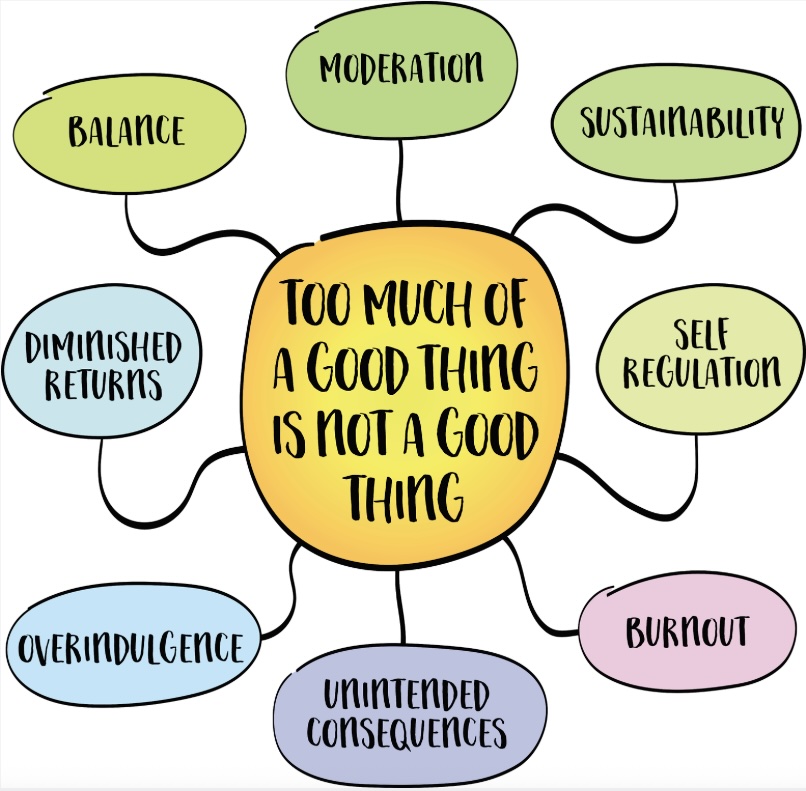
The plates of public school teachers are overflowing. It’s causing serious heartburn, leading to burnout.

Continue Reading...

School district owes explanation for this goodbye gift

Randy Evans is executive director of the Iowa Freedom of Information Council, a nonpartisan, nonprofit organization that promotes openness and transparency in Iowa’s state and local governments. He can be reached at DMRevans2810@gmail.com. This essay first appeared on his Substack newsletter, Stray Thoughts

While the text of the Iowa Constitution lacks the prominence of that adopted by our nation’s Founders, people from Ackley to Zwingle and points in between should track down a copy and give it a read. 

Buried away in the document Iowa voters adopted in 1857, they will find Article III, Section 31, or what has come to be known as the public purpose requirement. That section says, in essence, that state and local governments are barred from spending public money unless there is a public purpose for those expenditures.

My public-school education tells me that section prohibits the use of taxpayer money to continue to pay someone for work after their performance ends unless the government entity provides justification of the public purpose served by those payments.

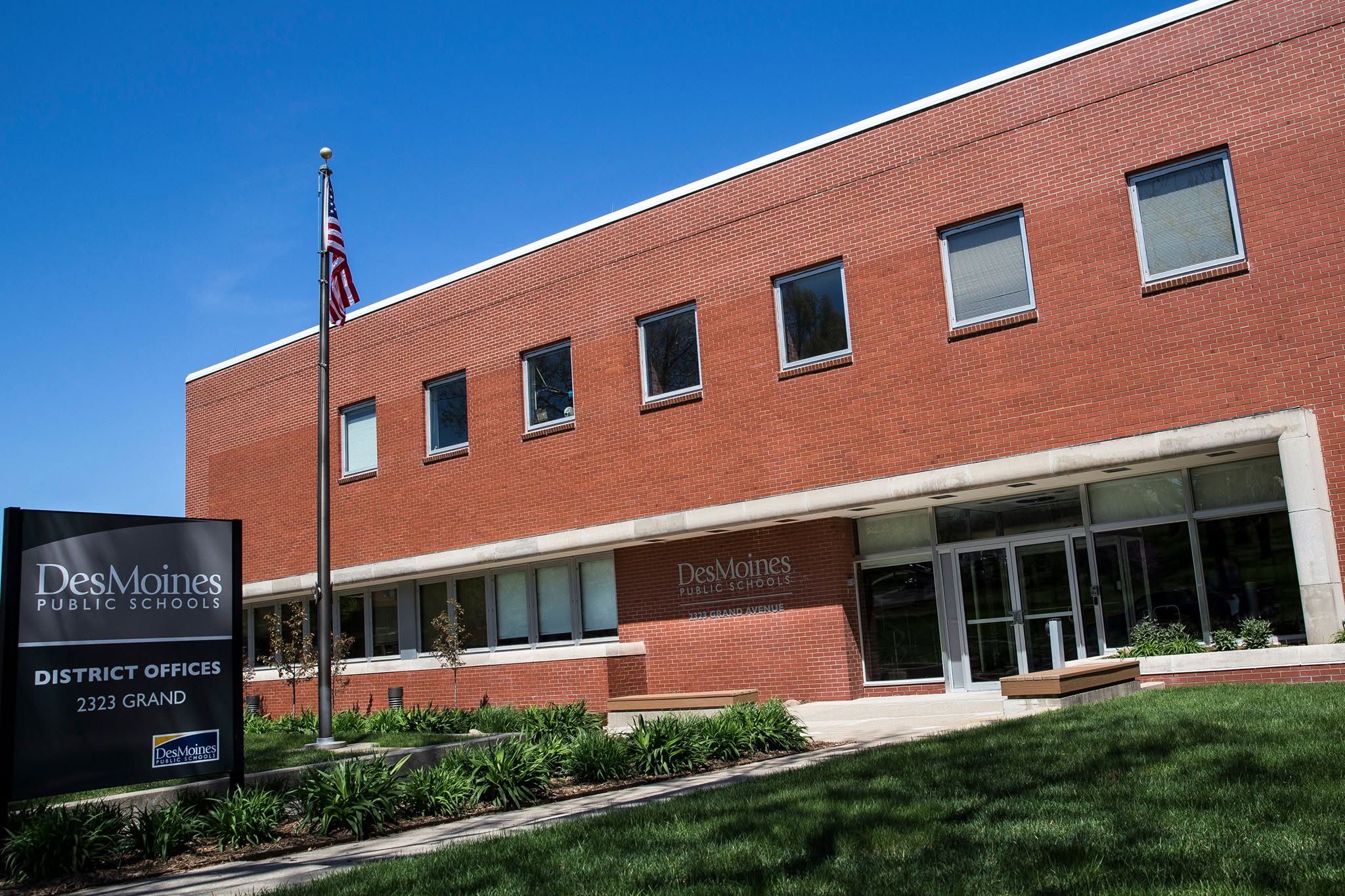
Where I come from, going-away gifts do not serve a public purpose. And this brings me to the Des Moines Public Schools and recent news headlines.

Continue Reading...

The winter legislative dance party is coming

Bruce Lear lives in Sioux City and has been connected to Iowa’s public schools for 38 years. He taught for eleven years and represented educators as an Iowa State Education Association regional director for 27 years until retiring. He can be reached at BruceLear2419@gmail.com 

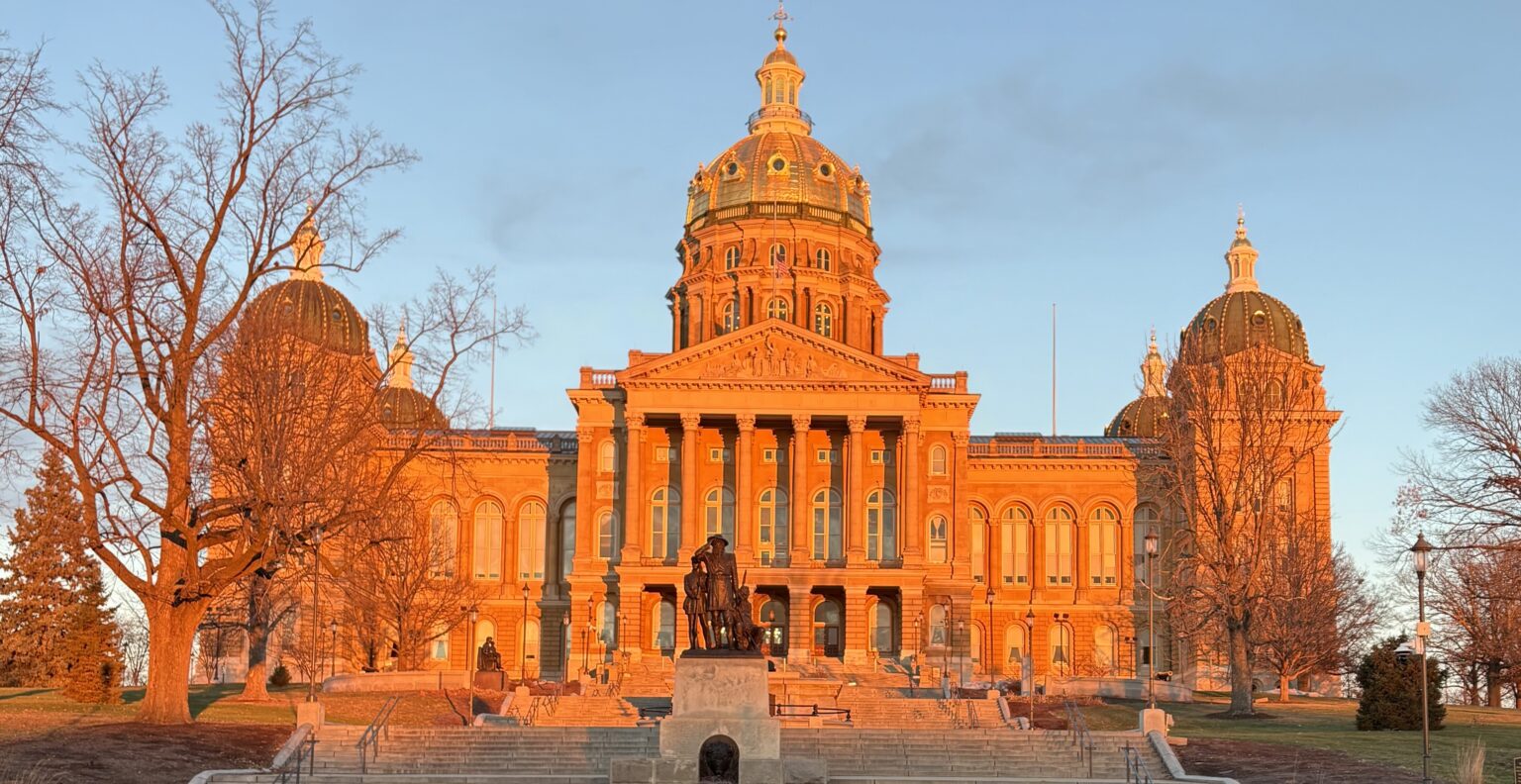
Game of Thrones fans remember the ominous warning, “Winter is coming.” It was about White Walkers and the army of the undead invading. Winter is coming in Iowa too. There aren’t White Walkers and the undead lurking behind Iowa snow drifts, but the annual legislative Winter Dance Party under the Golden Dome will begin soon.

It might not provoke White Walker terror, but Iowa educators feel a chill down their spines thinking about the Iowa legislature convening on January 12. What’s the next attack? How will we cope? Will they increase state funding for schools above the inflation rate?

Continue Reading...

A look at Iowa's 2025 school bond referendums

Jeff Morrison is a member of the Iowa Writers’ Collaborative and the publisher of the Between Two Rivers newsletter, where this article first appeared. Find more of his work at betweentworivers.substack.com and iowahighwayends.net.

Forty-three Iowa school districts held bond referendums on November 4. According to unofficial results from the Iowa Secretary of State’s Office, eighteen passed, fifteen had a majority in favor but not the required 60 percent supermajority, and ten failed to reach 50 percent. The middle category has five districts of all sizes—Cedar Rapids, Easton Valley, Hinton, Independence, and Sergeant Bluff-Luton—receiving more than 58 percent but less than 60 percent support.

The 43 districts voted on a combined $1,435,950,000 in general obligation bonds. (That includes Atlantic’s $22.5 million bond for school construction, which passed, but not its $18.5 million sales tax revenue bond for a multipurpose facility, which failed.)

Continue Reading...
How to avoid school board dysfunction

Bruce Lear lives in Sioux City and has been connected to Iowa’s public schools for 38 years. He taught for eleven years and represented educators as an Iowa State Education Association regional director for 27 years until retiring. He can be reached at BruceLear2419@gmail.com 

It’s 9:45 p.m. and we’re on item 3 of the agenda, with 12 more to go. Three board members are in a verbal brawl with two parents that would make the World Wrestling Federation blush. So far, it’s more like a colonoscopy without sedation than a school board meeting.

A person willing to serve in the hardest unpaid job is a hero. He/she stepped up when others stepped back. 

Iowans elected lots of new school board members last week. I’ve worked with many boards over my 38 years in education, so I’ve experienced the good, the bad, and the ugly. Here are a few suggestions for avoiding the ugly.

Continue Reading...

How Jill Shudak beat the odds in Council Bluffs mayoral race

“I think it really speaks to the changing of the times,” Jill Shudak told me on November 6, two days after she became the first woman elected mayor of southwest Iowa’s largest city. Council Bluffs is “moving forward, and they’re ready for a forward thinker.”

Amid many Democratic victories from coast to coast in the November 2025 election, Shudak’s accomplishment stayed mostly below the radar. But she beat the odds in two ways. As a first-term city council member, she defeated a well-known, long-serving incumbent. Council Bluffs voters had elected Matt Walsh mayor three times; he had previously served on the city council since 1996.

It’s also notable that a Democrat won a mayoral race in a city that has trended red. (While local elections are nonpartisan in Iowa, area Democrats and labor activists were supporting Shudak, and Walsh is a Republican.) Bleeding Heartland’s analysis of results from the 2024 general election show voters across the 22 Council Bluffs precincts preferred Donald Trump for president by a margin of 53.6 percent to 44.7 percent for Kamala Harris, and preferred Republican Randy Feenstra to Democratic challenger Ryan Melton in the Congressional race by 55.3 percent to 44.1 percent.

Unofficial results from the 2025 election show Shudak received 3,641 votes (43.9 percent) to 3,524 votes (42.5 percent) for Walsh. City council member Chris Peterson likely received most of the 1,130 write-in votes (13.6 percent) in the mayoral race.

Shudak made time to talk about her campaign despite a “whirlwind” of activity since the election, including conversations with the city’s department heads and a round table discussion about property taxes with Governor Kim Reynolds. Here’s the full video from our interview.

Continue Reading...
Without facts or explanations, the rumor mills grind on

Randy Evans is executive director of the Iowa Freedom of Information Council, a nonpartisan, nonprofit organization that promotes openness and transparency in Iowa’s state and local governments. He can be reached at DMRevans2810@gmail.com. This essay first appeared on his Substack newsletter, Stray Thoughts

As Iowans headed to the polls this week to elect local school board members, they faced an issue beyond the usual ones of taxes, student achievement, teacher pay, curriculum and enrollment.

This year, school board and administrators’ performance and trustworthiness were front and center in some school districts. And on that, for voters, it is what they do not know that might hurt them.

Continue Reading...

I was torn on the Des Moines school bond. Why I voted yes

Jessica Vanden Berg has worked in government, politics and advocacy for more than 25 years on all levels. She is from Pella, and lives in Des Moines with her 8-year-old daughter.

I have to admit, I was torn on how to vote on the school bond issue.

We left the Des Moines Public Schools and went to Horizon Science Academy (a new public charter school) because in our first grade year we had nothing short of a really bad experience for so many reasons. (Kindergarten was amazing, thus the shock.) I saw leadership problems, lack of knowledge/skills gap on neurodivergent issues, no real help for kids who were falling behind, lack of resources, failure to include family and community to change outcomes, and a huge problem with real communication and solution-oriented ideas.

I tried to address mid-level management, school board members, and even the superintendent. I got nothing. And I’m a parent with time, connections, and resources! That’s a big deal. The system is impossible to navigate. I paid someone to help me do it.

I realize this isn’t every family’s experience, but it is ours. We had to make difficult choices.

I had a hard time seeing how this $265 million bond issue would address those things, and an even harder time seeing where the leadership failed to address these issues time and time again. The bond issue does not address them. However, I understand the school district still could.

I will admit many are backed in a corner due to major multi-year funding issues, but I could not for the life of me understand why the district didn’t embrace more community involvement and parent support to help.

But I did vote yes, and here’s why.

Continue Reading...
GOP ideology threatens U.S. leadership in science, technology

Rick Morain is the former publisher and owner of the Jefferson Herald, for which he writes a regular column. This essay first appeared on Substack.

When ideology takes top priority, America’s world leadership is in jeopardy.

The Trump administration’s threats to academic freedom at leading U.S. universities could slow the pace of scientific research and commercial development of research findings. For instance, federal devotion to right-wing “purity” could undermine our race to stay ahead of China—which should disturb Americans of every political stripe.

President Donald Trump has threatened to cut grant funding (and in some cases followed through on those threats) in his effort to wipe out diversity, equality, and inclusion (DEI) practices, as well as supposed “woke” ideology (whatever that is), at a number of leading institutions of higher education.

One example, out of many dozens: the administration has frozen $175 million in grant money at the University of Pennsylvania—Trump’s alma mater—because the university allowed a transgender female on its women’s swimming team three years ago.

Continue Reading...

Eight classic Claire Celsi moments in the Iowa Senate

I can’t remember when I met Claire Celsi. It was years before she decided to run for the state legislature. Our paths crossed often at Democratic events, and we knew many of the same people in progressive circles. I valued her take on the latest news and her thoughts about blogging, since she had kept an online journal during the 2000s.

Claire was generous with her time as a volunteer for many Democratic candidates, starting with Tom Harkin’s first U.S. Senate race in 1984. She was one of the early organizers of the West Des Moines Democrats, back when that suburb leaned strongly to Republicans. She managed Mike Huston’s Congressional campaign in 2000 and worked hard in 2017 to help Renee Hardman defeat an incumbent to win a West Des Moines city council seat. (Hardman is now the Democratic nominee to succeed Claire in Iowa Senate district 16.)

Josh Hughes described how Claire was the first “grown up” to take him seriously as a Democratic activist. She enjoyed spending time with people of all ages. Josh took this picture near the Surf Ballroom in August 2018, when he and Olivia Habinck were leaders of the College and Young Democrats of Iowa, and Claire and I carpooled with them to the Iowa Democratic Wing Ding.

Continue Reading...
Lawsuits highlight differing applications of teachers' rights

Randy Evans is executive director of the Iowa Freedom of Information Council, a nonpartisan, nonprofit organization that promotes openness and transparency in Iowa’s state and local governments. He can be reached at DMRevans2810@gmail.com. This essay first appeared on his Substack newsletter, Stray Thoughts

The nation’s founders got right to the point when they laid out how to treat the First Amendment freedoms of religion, speech, the press and the rights of people to assemble and to petition the government. They used only 45 words, without asterisks.

Their simple words should lead to simple conclusions. Yet, recent Iowa cases illustrate why people in general, and educators specifically, are perplexed about what is protected and what is not.

Some legal background:

Continue Reading...

I'm worried now, but I won't be worried long

Gerald Ott of Ankeny was a high school English teacher and for 30 years a school improvement consultant for the Iowa State Education Association.

When I look at the picture of the Des Moines Public Schools board of directors, I think of the Kingston Trio’s song “It Takes a Worried Man.” In the midst of a crisis, we’re all worried. it’s the last line of the refrain that buoys me: but I won’t be worried long.

It takes a worried man to sing a worried song, oh yes
It takes a worried man to sing a worried song
I’m worried now, but I won’t be worried long

One last word about Dr. Roberts

I recommend Jason Benell’s recent Bleeding Heartland essay, previously published on his Substack newsletter, The Odd Man Out. He gives us a different, eye-opening perspective on the case of the Des Moines Public Schools’ former superintendent, Ian Roberts.

The columnist Chris Espersen shared her perspective in the Cedar Rapids Gazette on October 12. Espersen is a Des Moines parent, a close observer of Roberts, and has had many opportunities to see his student-whispering magic up close. Espersen saw the same potential that then-Des Moines School Board president Teree Caldwell-Johnson must have seen when she recommended that Roberts be hired.

Continue Reading...
Is Randy Feenstra planning to float tax credit for homeschoolers?

A new Iowa poll is testing messages about a $4,000 tax credit to help families cover “approved education expenses,” and suggests that approach may save taxpayer money currently spent on children enrolled in public schools.

It’s not clear who commissioned the text survey, which has been in the field in recent days. The questionnaire points to Randy Feenstra’s campaign for governor, which is technically still in the “exploratory” phase, or some entity planning to support Feenstra for governor. Many of the questions use preferred Republican frames (“education freedom,” parental choice, “limiting government overreach”). The poll asks how important it is for Iowa’s next governor to “work to improve K-12 education,” and tests only one potential match-up: Randy Feenstra vs. Rob Sand. (Last month, Bleeding Heartland covered a different poll testing messages about Feenstra and Sand.)

Homeschoolers are an important Republican constituency, especially among social conservatives. Families who send their kids to private schools—almost all of which are Christian or Catholic—would also welcome an education tax credit, in addition to the taxpayer assistance they already receive through Iowa’s school voucher program (“education savings accounts”).

Feenstra has good reason to search for ways to shore up his support with the “education freedom” crowd. His underwhelming victory over a little-known 2024 primary challenger highlighted troubles on his right flank. He is unpopular among property rights activists who oppose the use of eminent domain to build Summit Carbon Solutions’ proposed CO2 pipeline. He has skipped forums involving other Republican candidates for governor, including an Iowa Faith and Freedom Coalition event in July. Feenstra’s exploratory committee has the resources to pay for opinion research.

A recent poll of “likely Republican voters,” conducted by American Viewpoint, found Feenstra “in a commanding position,” with 41 percent support in the governor’s race and no other GOP candidate above 5 percent. A cautionary note: American Viewpoint’s polls for Feenstra’s U.S. House campaign found the incumbent with a roughly 50-point lead over challenger Kevin Virgil before the 2024 GOP primary. Feenstra ended up winning the nomination in Iowa’s fourth Congressional district by a margin of 60.1 percent to 39.4 percent.

Continue Reading...

Toddlers know, so why can't school officials learn?

Randy Evans is executive director of the Iowa Freedom of Information Council, a nonpartisan, nonprofit organization that promotes openness and transparency in Iowa’s state and local governments. He can be reached at DMRevans2810@gmail.com. This essay first appeared on his Substack newsletter, Stray Thoughts

The lesson of the hot stove emerged again last week.

That is the lesson toddlers learn early and smart ones retain for a lifetime. Touch something hot and you know not to touch it again.

Educator Ian Roberts delivered a new rendition of the lesson over the past fortnight. Time will tell whether government officials take to heart the learning moment offered by the Roberts train wreck.

Continue Reading...

Johnston's unified front for public education: Davidson, Schippers, Smith

This post was a group effort by Johnston Public Schools Supporters, a bipartisan political action committee.

The future of the Johnston Community School District (JCSD) is not merely decided in classrooms or on playing fields; it is shaped in the ballot box. On November 4, 2025, Johnston voters face a critical choice, one that determines whether our tax dollars will continue to build world-class public education or be diverted to systems with zero accountability. The decision is clear: we must elect the unified, experienced, and dedicated team of Justin Smith, Kaycee Schippers, and Rexford Davidson to the Johnston School Board.

This slate of candidates—a veteran educator, an engaged parent and paralegal, and a JCSD alumnus—represents the very best of our community. They will bring a formidable mix of classroom experience, legal knowledge, fiscal prudence, common sense leadership and deep, personal commitment to the Johnston School Board. More importantly, they are united on the singular, defining issue of this election: the unwavering protection and robust enhancement of our public schools as the foundational cornerstone of the Johnston community.

Continue Reading...

ICE robbed more from our community than a public servant

Jason Benell lives in Des Moines with his wife and two children. He is a combat veteran, former city council candidate, and president of Iowa Atheists and Freethinkers. This essay first appeared on his Substack newsletter, The Odd Man Out.

If you care about due process, and if you care about the rule of law, and if you care about justice, then everything surrounding the arrest of Dr. Ian Roberts, former superintendent of Des Moines Public Schools (DMPS), should infuriate you.

This whole event has been awful for everyone involved, from students who looked up to him, parents who trusted him, and administrators who appointed him. But something is being missed in this discussion: the presence of U.S. Immigration and Customs Enforcement (ICE). The agency should be abolished—but if it’s going to be around, it absolutely shouldn’t ever operate this way. Its actions make us less safe, not safer.

Instead of only focusing on Roberts’ purported misdeeds, we should be asking the larger question about what is being taken from our communities. Guess what? It’s more than a trusted school administrator.

Continue Reading...

What I learned from Claire Celsi

Josh Hughes served on the Interstate 35 Community School District Board of Directors from 2015 to 2019. He lives in Des Moines with his husband and four cats.

The first time I met Claire Celsi was in October 2015. Somehow I learned about an event supporting Hillary Clinton’s campaign with former Secretary of State Madeline Albright at a home in southern West Des Moines. Claire was there as well, and I recall her sharing that she was planning to announce her campaign for House District 42 against GOP incumbent Peter Cownie.

Cownie had raised substantial money in his prior campaigns and had been able to secure reelection by double digits despite representing a swingy district. I distinctly remember Claire saying, almost in implicit recognition of that fact, “I’m gonna out work him.”

Continue Reading...
Trouble in River City, 2025 edition

Channing Dutton is a lawyer in Urbandale. His duty is climate action for all children.

Meredith Willson gave us a timeless Iowa tale in “The Music Man”: a fast-talking charmer named Professor Harold Hill sweeps into River City, peddling a dream of shiny instruments, crisp uniforms, and the vision of a boys’ band that will keep young people out of trouble.

Not everyone was swayed by his pitch. Do you remember the bumbling school board members assigned to track down his credentials? Every time they got close, Hill got the barber shop quartet to start singing instead of digging up the truth.  

Continue Reading...

Board puts DSM superintendent on leave, decries "misinformation"

UPDATE: On September 29, the Des Moines School Board learned that the Iowa Board of Education Examiners had revoked Roberts’ administrator license, and received from federal authorities a copy of the final order of removal and other documentation indicating that Roberts was not authorized to work in the U.S. The board held another special meeting at which members voted to put Roberts on unpaid leave. They also gave his attorney until noon on September 30 to provide documents supporting his claim to citizenship. Otherwise the school district will start the process of terminating his contract. Original post follows.

Members of the Des Moines School Board voted unanimously on September 27 to place Superintendent Dr. Ian Roberts on paid administrative leave, one day after U.S. Immigration and Customs Enforcement (ICE) detained him. ICE has said Roberts is unlawfully present in the U.S. and lacks work authorization.

In support of the motion she offered at the special meeting, school board member Kim Martorano said, “While there is still much that we don’t know, what we do know is that Dr. Roberts is currently unavailable to perform his duties as superintendent.” She said Iowa Code Chapter 279 and “standard district practice” called for putting Roberts on paid administrative leave “pending further information. The board may revisit this at any time that we have obtained additional concrete information relevant to Dr. Roberts’ status.”

Continue Reading...
ICE detains Des Moines Superintendent Dr. Ian Roberts

UPDATE: On September 27, the Des Moines School Board put the superintendent on administrative leave and released more details on the hiring and vetting process. Original post follows.

U.S. Immigration and Customs Enforcement (ICE) on September 26 detained Dr. Ian Roberts, the superintendent of Iowa’s largest public school district. The Des Moines Public Schools confirmed Roberts’ detention, saying in a statement from school board President Jackie Norris, “We have no confirmed information as to why Dr. Roberts is being detained or the next potential steps.”

Roberts has served as superintendent of Iowa’s largest school district (with more than 30,000 students) since July 2023. He has presided over efforts to improve student performance and attendance, reduce out-of-school suspensions that can lead to higher drop-out rates, and address food insecurity.

Roberts’ official bio states that he “was born to immigrant parents from Guyana, and spent most of his formative years in Brooklyn” (New York City). As a middle distance runner specializing in the 800 meters, he won several titles at the collegiate level in the U.S. and competed in the 2000 Olympic Games in Sydney, representing Guyana.

Associate Superintendent Matt Smith has stepped in as interim superintendent, according to a statement from the Des Moines Public Schools (enclosed in full below). I will update this post as more details become available.

Continue Reading...
How Iowa's public school funding affects property taxes on farmland

Al Charlson is a North Central Iowa farm kid, lifelong Iowan, and retired bank trust officer. This column was first published in the Waverly Newspapers.

We recently received the 2025-26 real estate tax statement for our farmland in my “home county.” The 11 percent increase must have felt like a punch to a lot of our neighbors back home at this time of corn and soybean prices below the cost of production. It hits particularly hard for younger farmers struggling to provide for their families, make farm payments, and maintain their machinery.

As a note to my non-farm friends and neighbors, the assessment of Iowa farmland for real estate taxes is entirely different than it is for our homes. Home assessments are based on recent sale prices of comparable homes. Since 1977 Iowa farmland has been assessed based on soil productivity (estimated value of crops produced minus production costs).

That makes a big difference. Based on the Bremer County Assessor’s valuation, our Waverly home is worth about 1.4 times the estimated fair market value of our “home county” farmland. The non-city portion of 2025-26 taxes on our Waverly home are about 4.4 times the taxes on our farmland. In my opinion this accommodation for agriculture, the base of Iowa’s economy, is reasonable and justified.

Continue Reading...
Page 1 Page 2 Page 3 Page 115