
Ed Tibbetts, a longtime reporter and editor in the Quad-Cities, is the publisher of the Along the Mississippi newsletter, where this article first appeared. Find more of his work at edtibbetts.substack.com.
If only Iowa’s school librarians possessed the wisdom of a trio of judges on the U.S. Court of Appeals for the Eighth Circuit.
The judges overturned a preliminary injunction against Iowa’s three-year-old book ban law on April and abruptly dispensed with the idea it was vague and difficult to apply.
Such contentions, the judges said, were “unavailing.” Which seems strange. Especially since one of the defendants in the case before them actually admitted there was confusion.
“Talking with educators, there’s a lot of confusion,” Iowa State Board of Education President John Robbins said in 2023.
Of course there was confusion. Lawmakers and the governor weren’t even accurate about the law they passed. They said they only prohibited books with “sexually explicit” content, even though the law didn’t say that. The law banned books with visual depictions or any “description,” explicit or otherwise, of a sex act. But legislators didn’t explain what they meant by a “description.”
The Merriam-Webster dictionary says that a description is a “discourse intended to give a mental image of something experienced.” Republicans failed to give any guidance how to apply this definition. They just assumed Iowa’s librarians were in on their groupthink.
They were not.
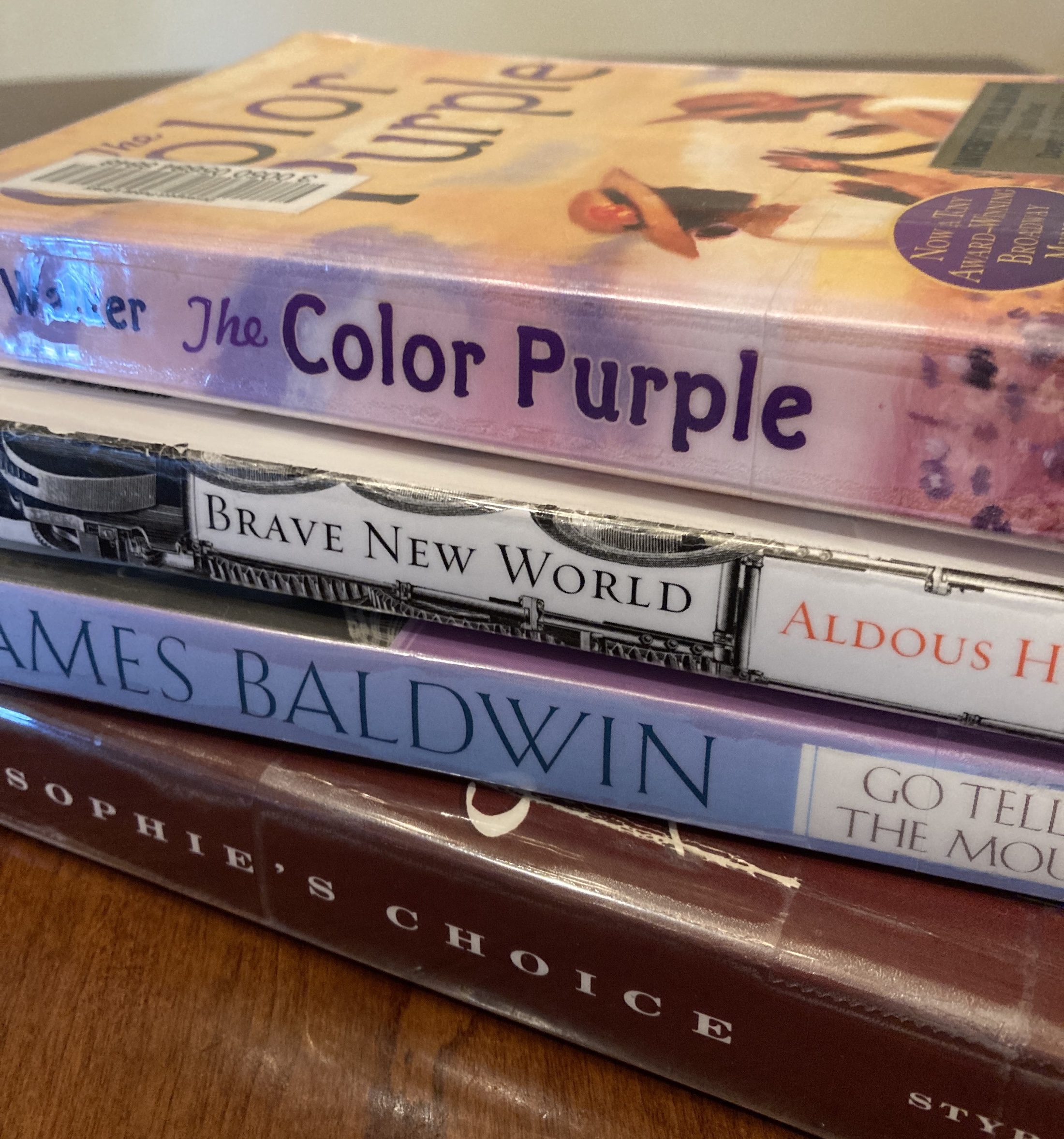
As a result, schools removed 3,400 books from library shelves. Some of those books only alluded to a sex act. Others weren’t clear what act they were implying. Others were more direct. As it turns out, some books with only subtle references were removed, even as others with passages that clearly evoked explicit mental images of sexual activity remained on the shelves.
Apparently, all this was “unavailing” to the trio of judges. Iowa’s school librarians, they suggest, shouldn’t have been confused at all.
Of course, the librarians’ judgment may have been clouded by the fear that their livelihoods were at risk if they got it wrong. The law included punishment for violations, and it’s not like Republican leaders in Iowa have been very forgiving of educators lately. Criticism about the late Charlie Kirk has led to some harsh discipline for a number of teachers. This, in turn, has prompted lawsuits, claiming violations of free speech.
It’s hard to tell what will happen next with Iowa’s book ban law. The case now goes back to the district court, which already has ruled twice against it.
It appears the law’s vagueness is no longer a central part of the legal case. Instead, the courts have been wrestling with what standard to apply in deciding whether the law is constitutional.
In overturning the injunction, the appellate court stated its preferred standard, and in doing so, said school libraries bear the “imprimatur” of the school and are part of its curriculum.
I find the court’s argument unavailing. Here’s why:
When I explored the shelves of my school’s library in the 1970s, I never once thought that all the books I found there were sanctioned—or bore the imprimatur—of the district. Quite the contrary. Kurt Vonnegut’s controversial book, Slaughterhouse Five, was subversive to the prevailing view. It wasn’t the only one.
Today, I don’t believe that many lawmakers in the legislature would consider the Koran to bear the imprimatur of Iowa’s 300-plus school districts. Yet it is freely available to students in some school libraries in this state. I suspect there are other books, too, that neither lawmakers nor local school boards would probably associate themselves with—much less endorse or make a part of the curriculum.
This isn’t surprising. Libraries are places where a wide range of ideas are on offer—not just the ones the state promotes or requires in order to get a diploma. It’s a place where an assortment of authors and voices speak, not just those in synch with school leaders and staff.
For now, the lawyers will continue to argue over the legal merits of the book ban law. But for Iowans who don’t hang on the pleadings and decisions of the various courts, a more fundamental principle is at issue. One that lays squarely at our feet.
There is a movement afoot in this country to control what kids, even those on the cusp of adulthood, can read. It doesn’t have anything to do with literary merit. Or even decency. It is about a group of conservative parents who are trying to force their will on others. On school districts and, ultimately, on other families.
This has been going on for several years. Mostly, it’s the right that has been instigating these battles. But sometimes the left does it, too. Either way, trying to impose a “pall of orthodoxy,” as a court once put it, is fundamentally opposed to the American experiment.
In Iowa, having failed to force their views on individual school districts, conservative activists ran to sympathetic legislators and the governor for help. But instead of just targeting books and materials clearly inappropriate for younger children—as they could easily have done—Republicans overreached. They now seek to enforce an overly broad law that forces on all Iowans the views of some of the state’s most conservative activists.
In the process, this has led to thousands of books, some classic works of literature, being swept up and placed off-limits. (In some districts, this now includes Slaughterhouse Five.)
The kids of conservatives won’t be able to get access to these books, but neither will other kids.
Why?
Because some parents have more clout than others.
This may be the way things work at the Iowa legislature, but it’s not how we should operate school libraries.
Editor’s note from Laura Belin: Here is the full text of the Eighth Circuit panel’s ruling in the Penguin Random House et al lawsuit. Judge Ralph Erickson, appointed by President Donald Trump in 2017, wrote the opinion, joined by Judge Jonathan Kobes (appointed by Trump in 2018) and Judge Lavenski Smith (appointed by President George W. Bush in 2002).
In a separate case brought by Iowa Safe Schools, which you can read here, the same judges lifted the injunction on the school book ban and the “don’t say gay or trans” teaching restrictions from grades K-6.