Jeff Ewoldt grew up in northwest Iowa, currently practices law in Des Moines, and has always had a keen interest in nature and conservation.
“Autumn is a second spring when every leaf is a flower.”
-Albert Camus
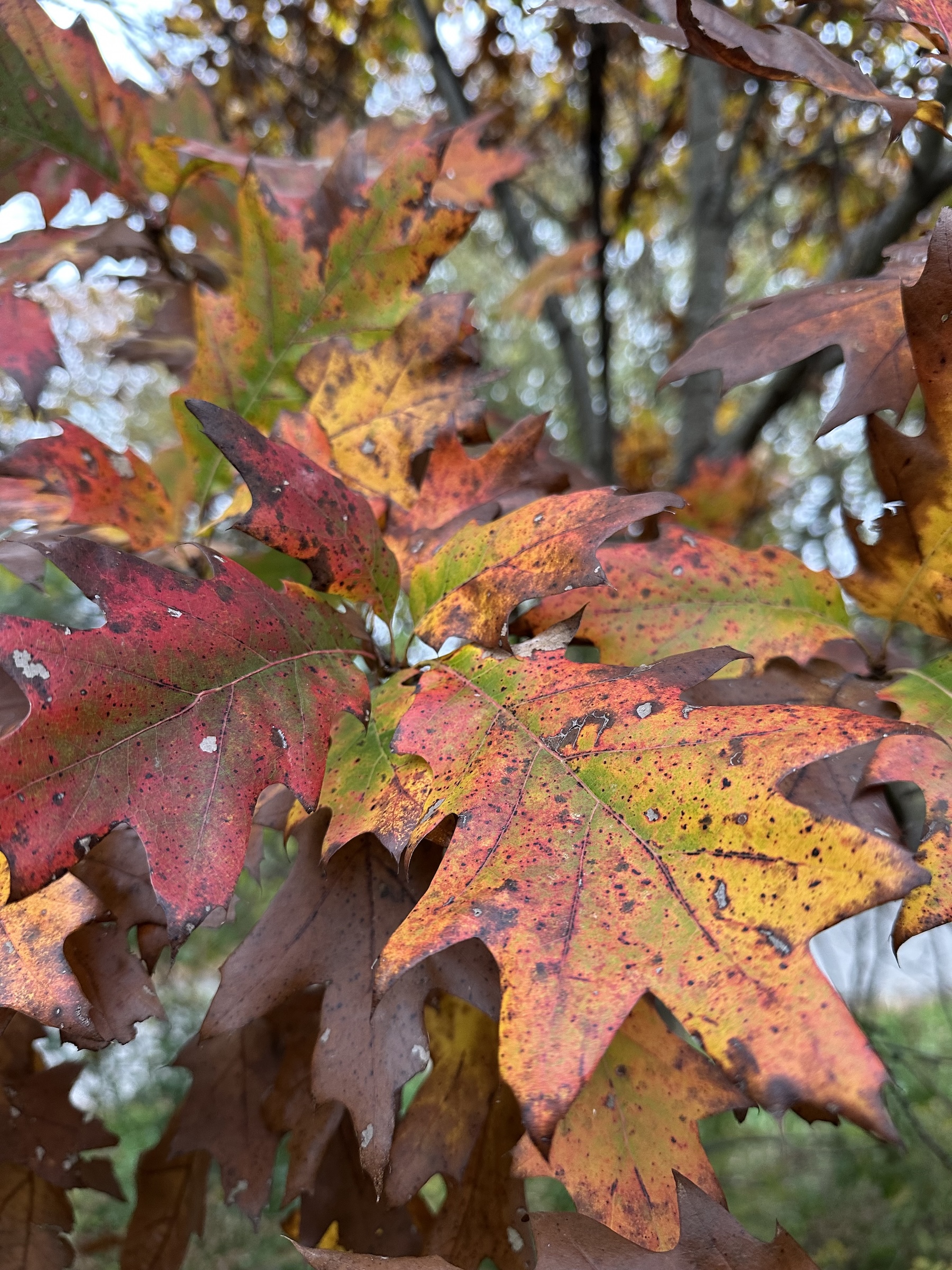
When I recently came across this quote by everyone’s favorite French anarcho-syndacalist philosopher, I thought it was particularly fitting this year. While we have seen the typical changing hues of deciduous trees, many wildflower enthusiasts statewide have also recently reported finding numerous plants in bloom that we normally see only in the Spring.
I’ll leave it to the folks more scientifically trained than I to offer their explanation for this “second Spring.” In the meantime, here are some of the late-season wildflowers I’ve photographed during my wanderings through various state, county, and city parks the past couple of weeks.
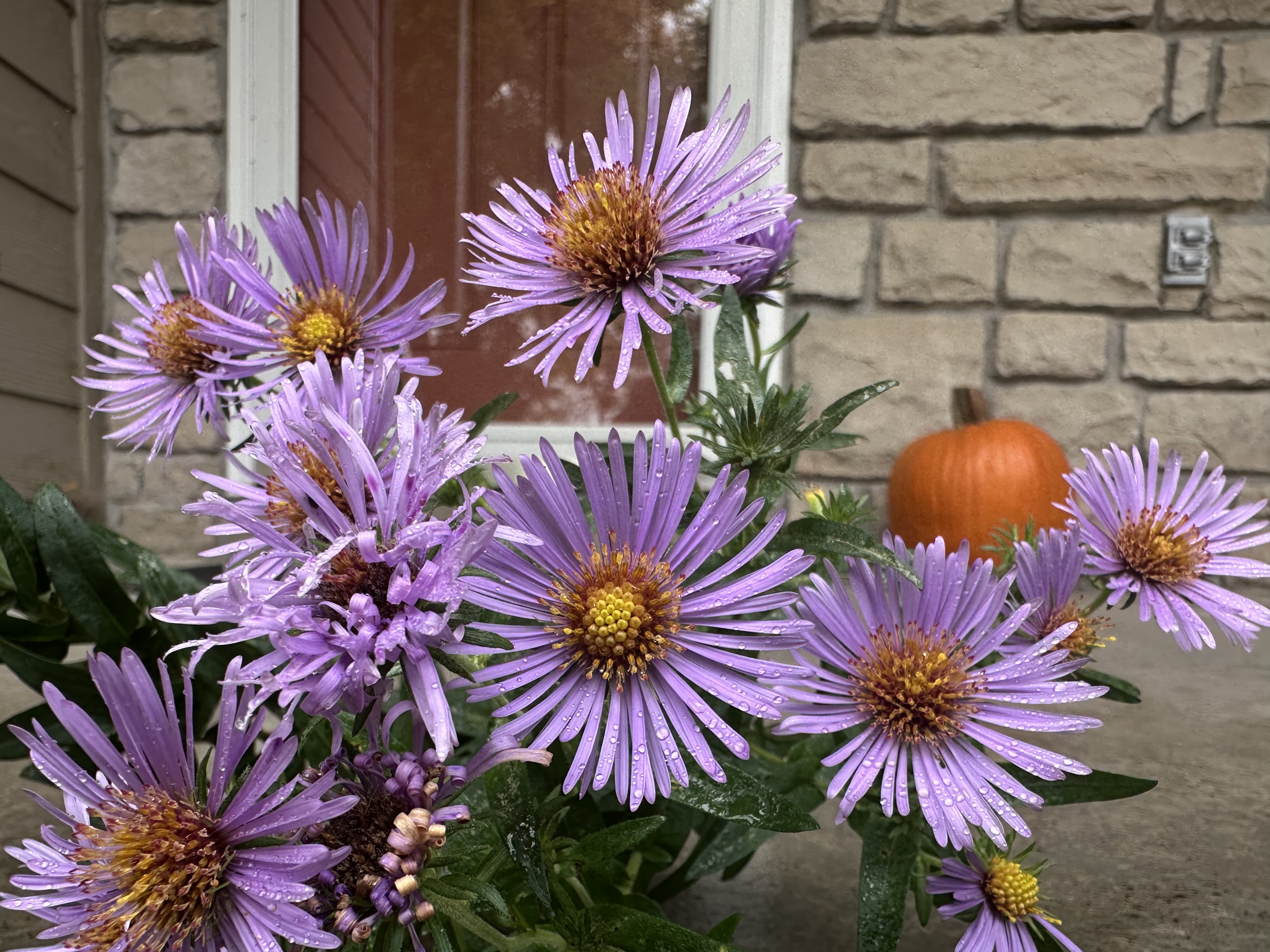
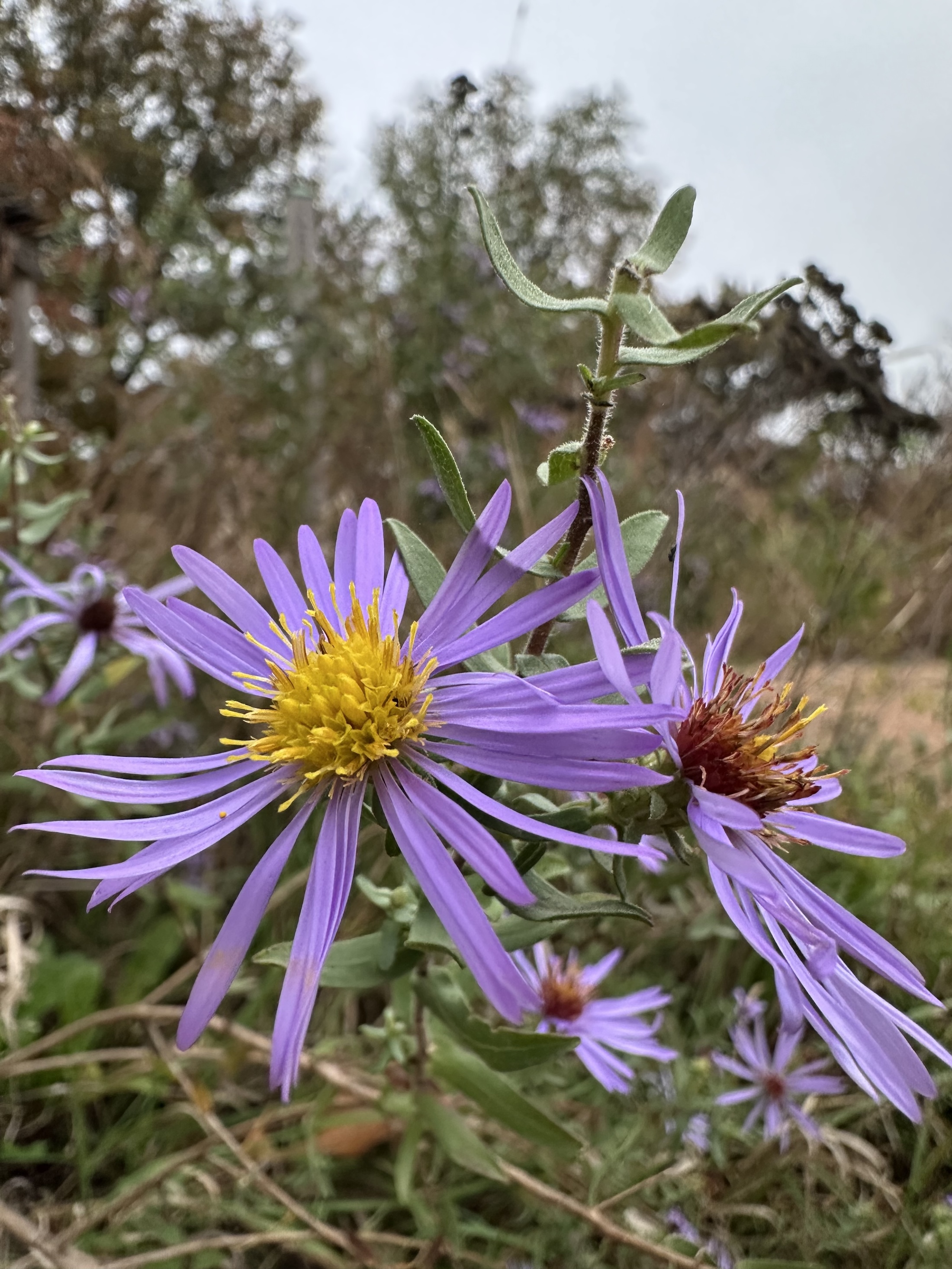
My first stop was my own yard, where New England asters have gradually migrated the over the years from a patch at the end of the driveway to my front step. I took these pictures on October 11, 15, and 25.


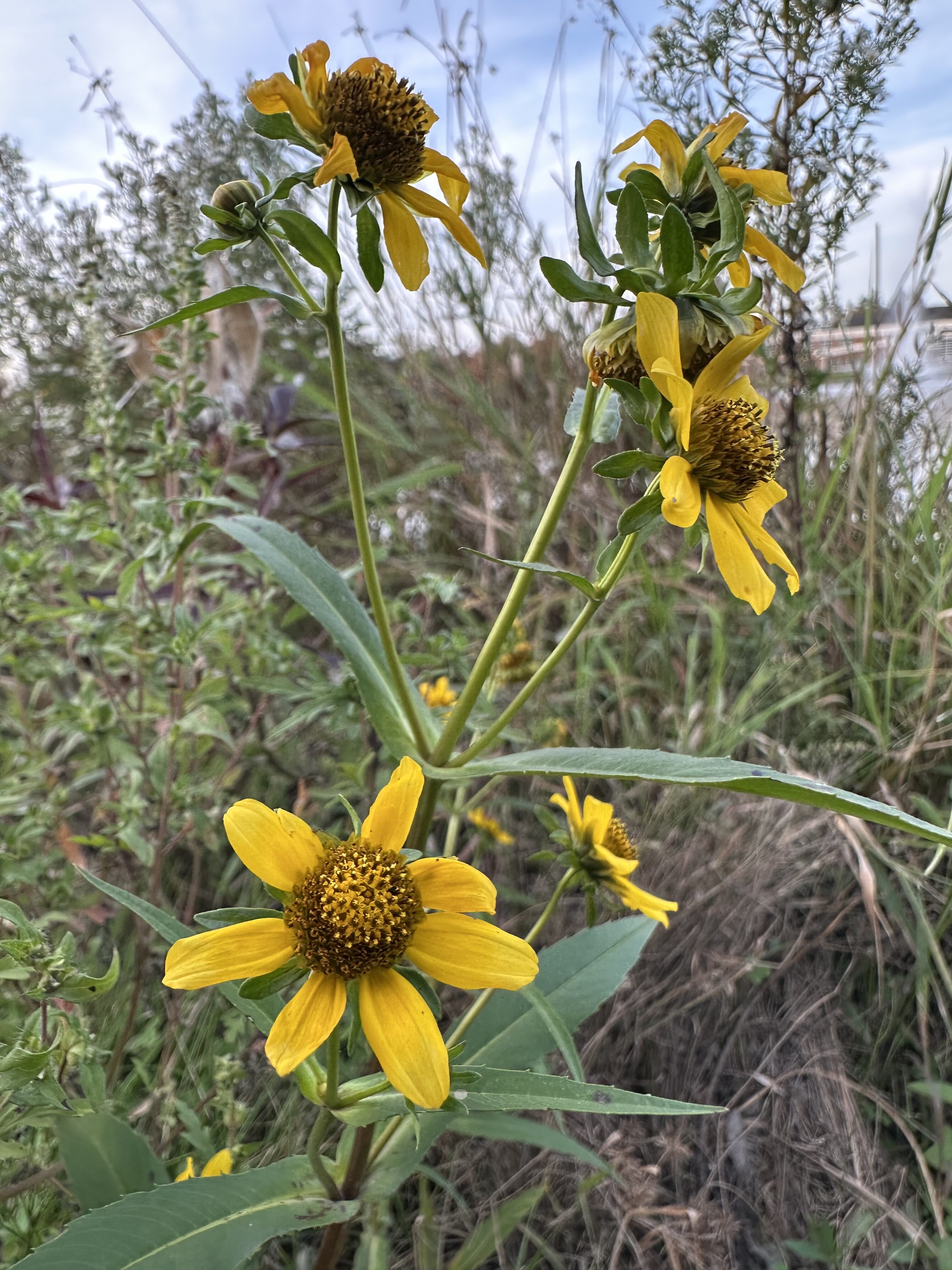
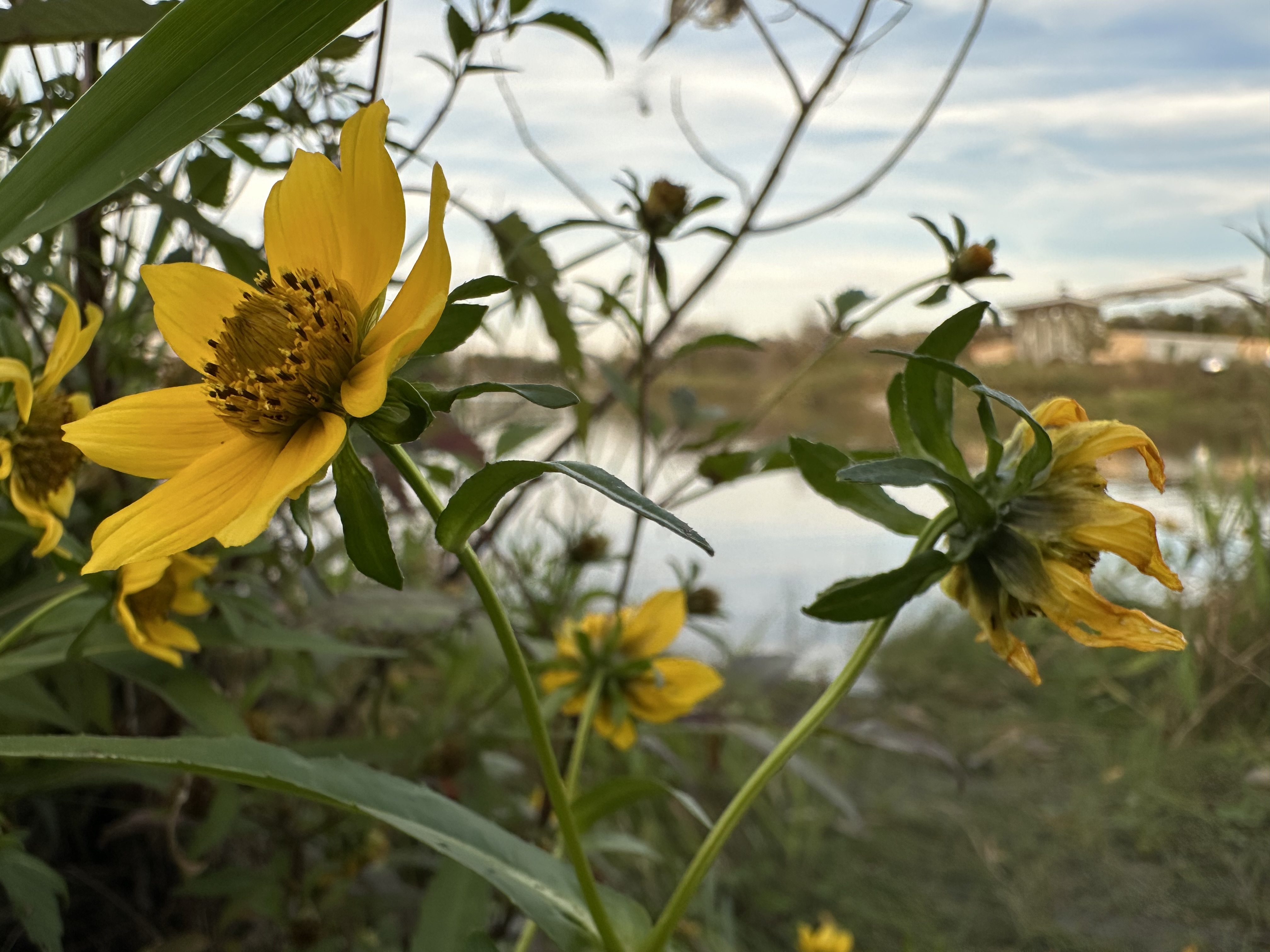
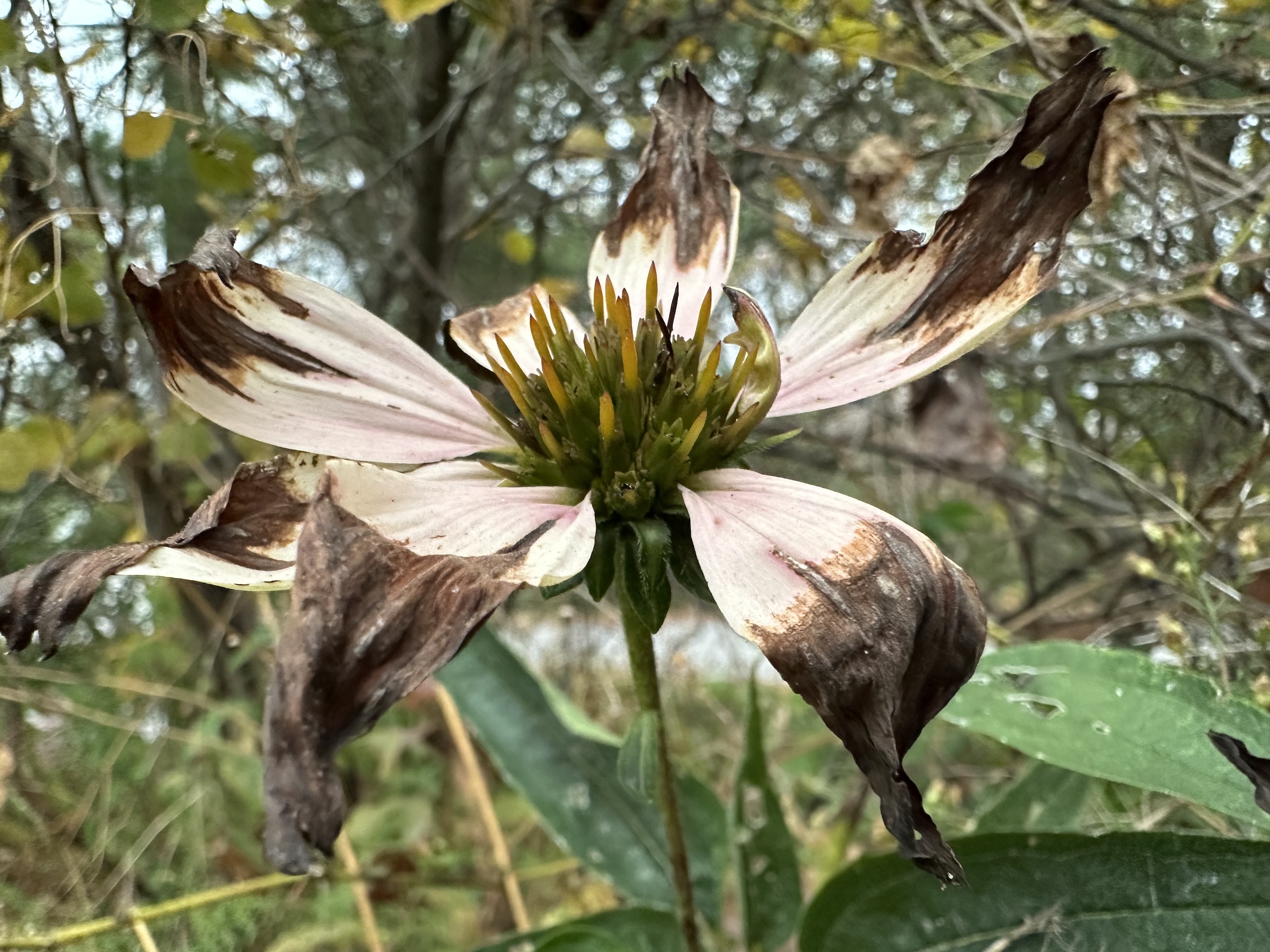
While exploring Des Moines suburbs on October 11, I was intrigued by the abundant and varied species still in full bloom along the pond next to the West Des Moines Public Library. I observed nodding beggarticks, multiple varieties of goldenrod, numerous sunflowers, and white asters.
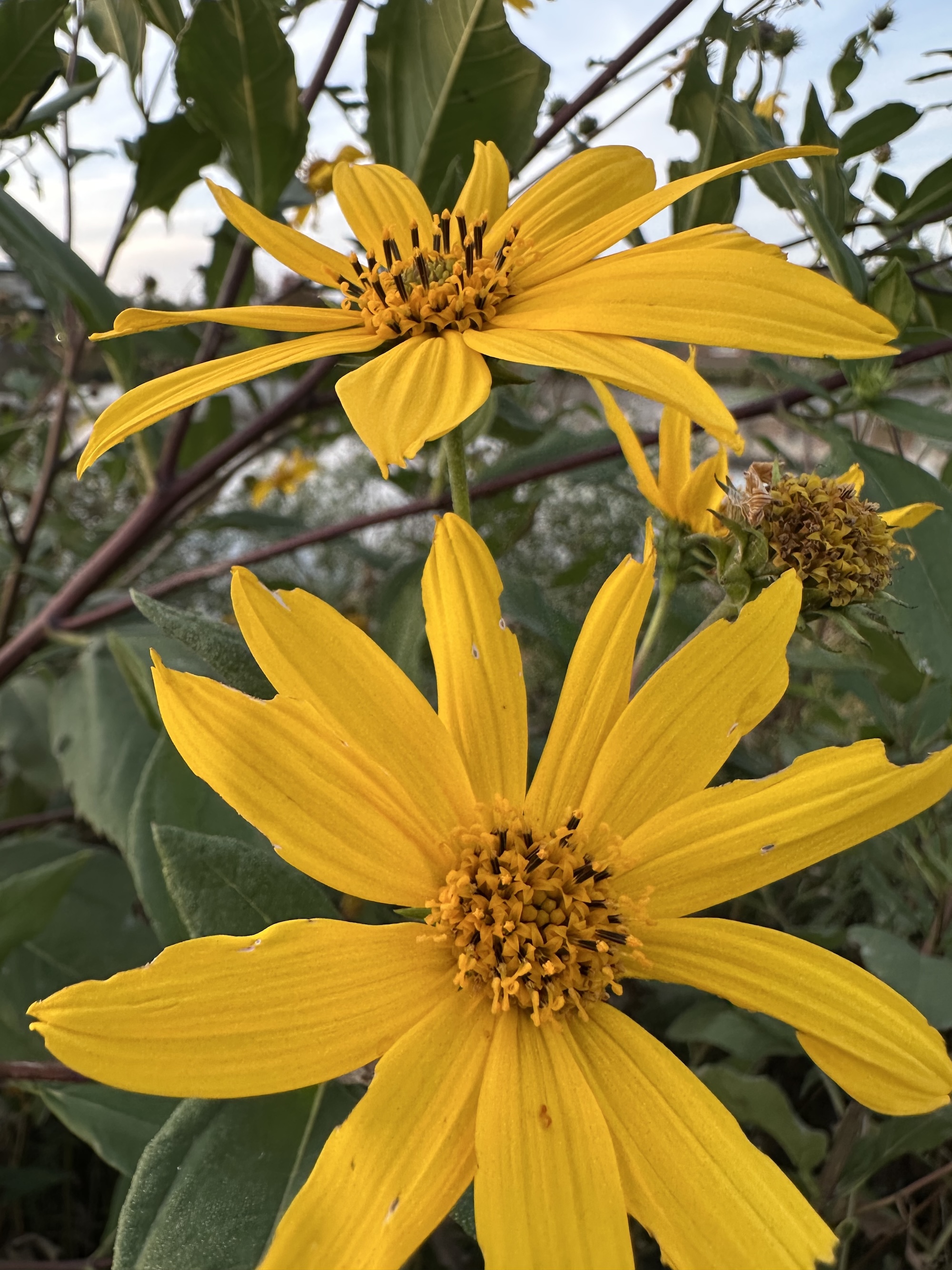
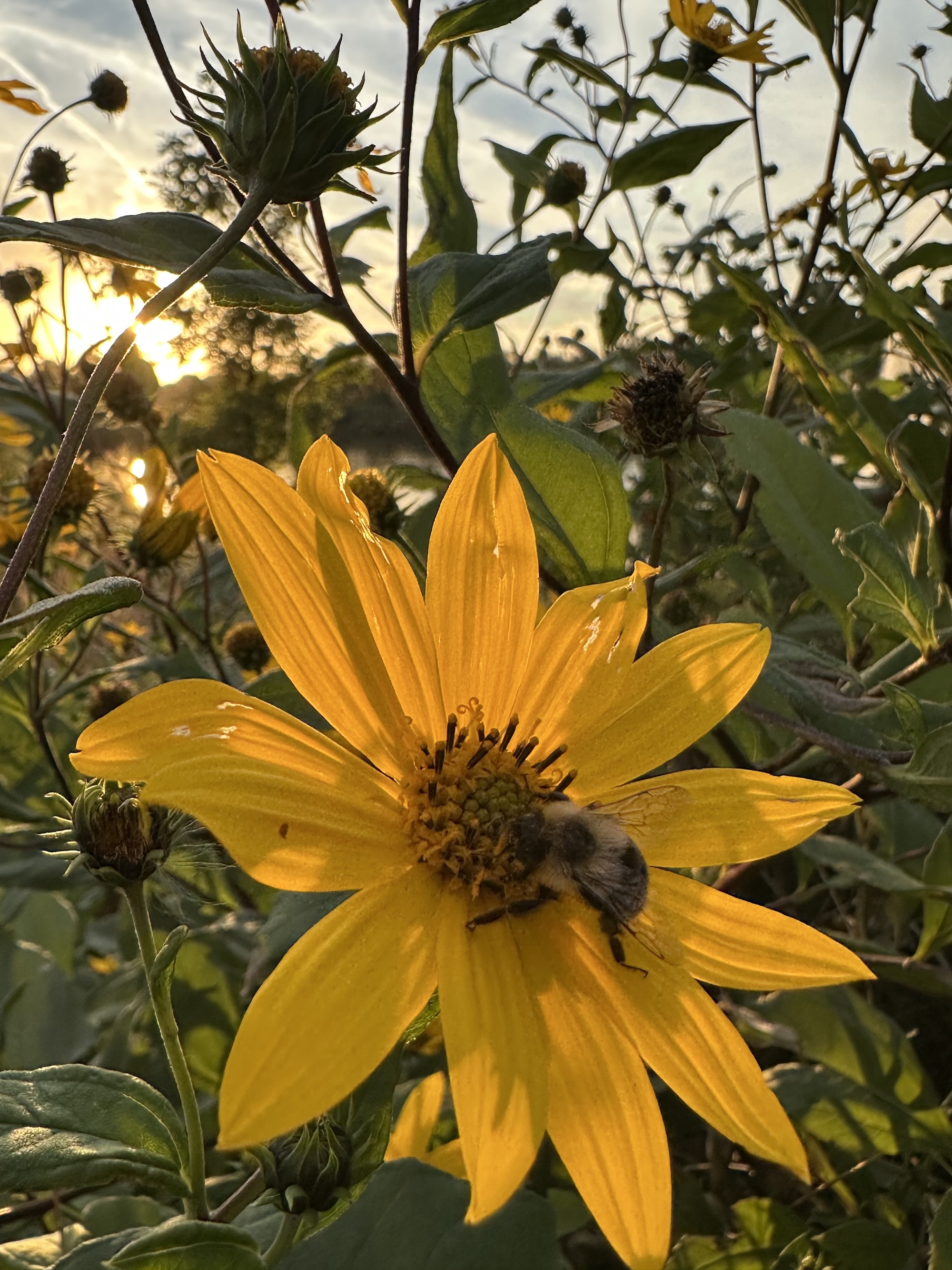
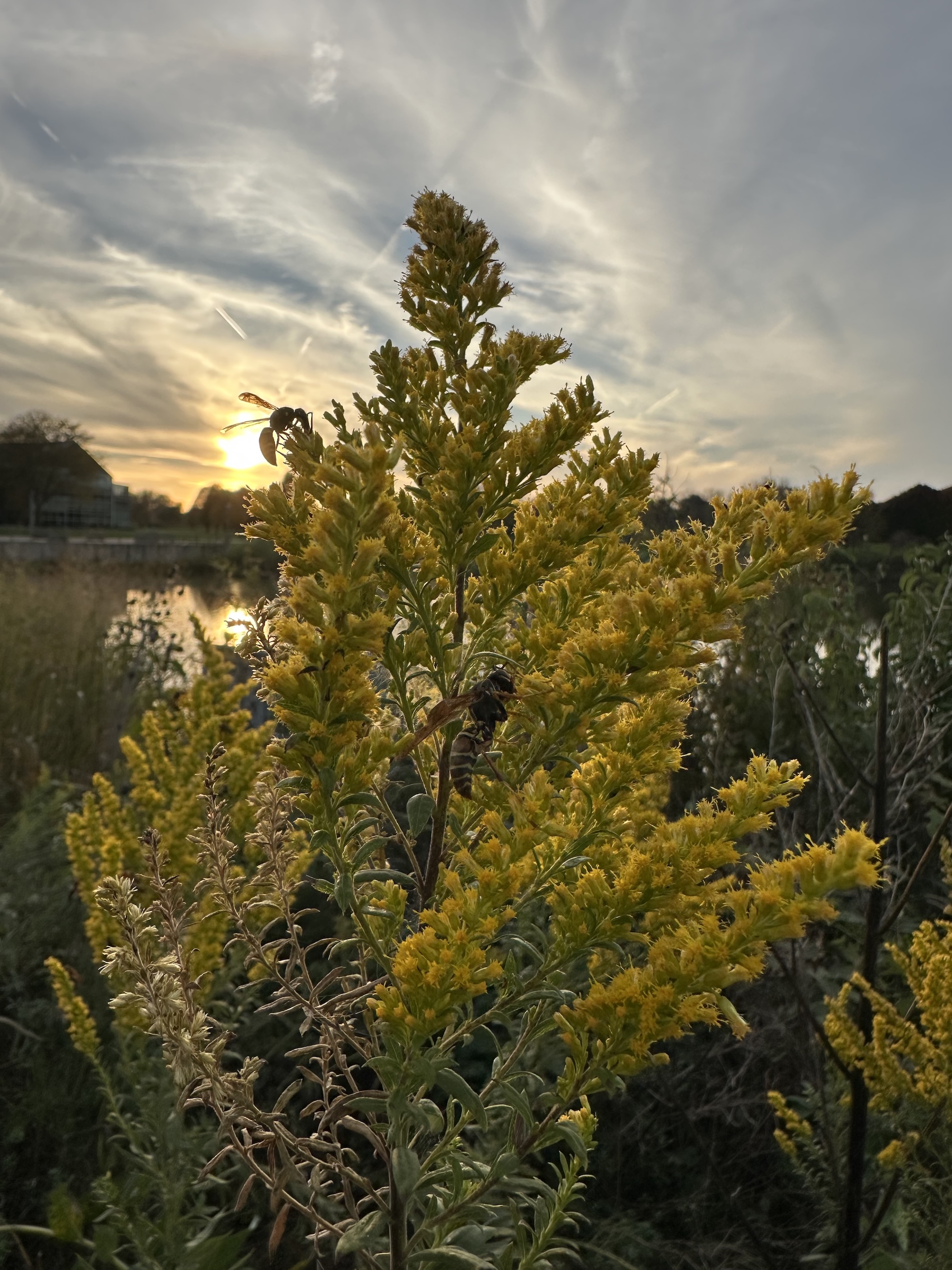
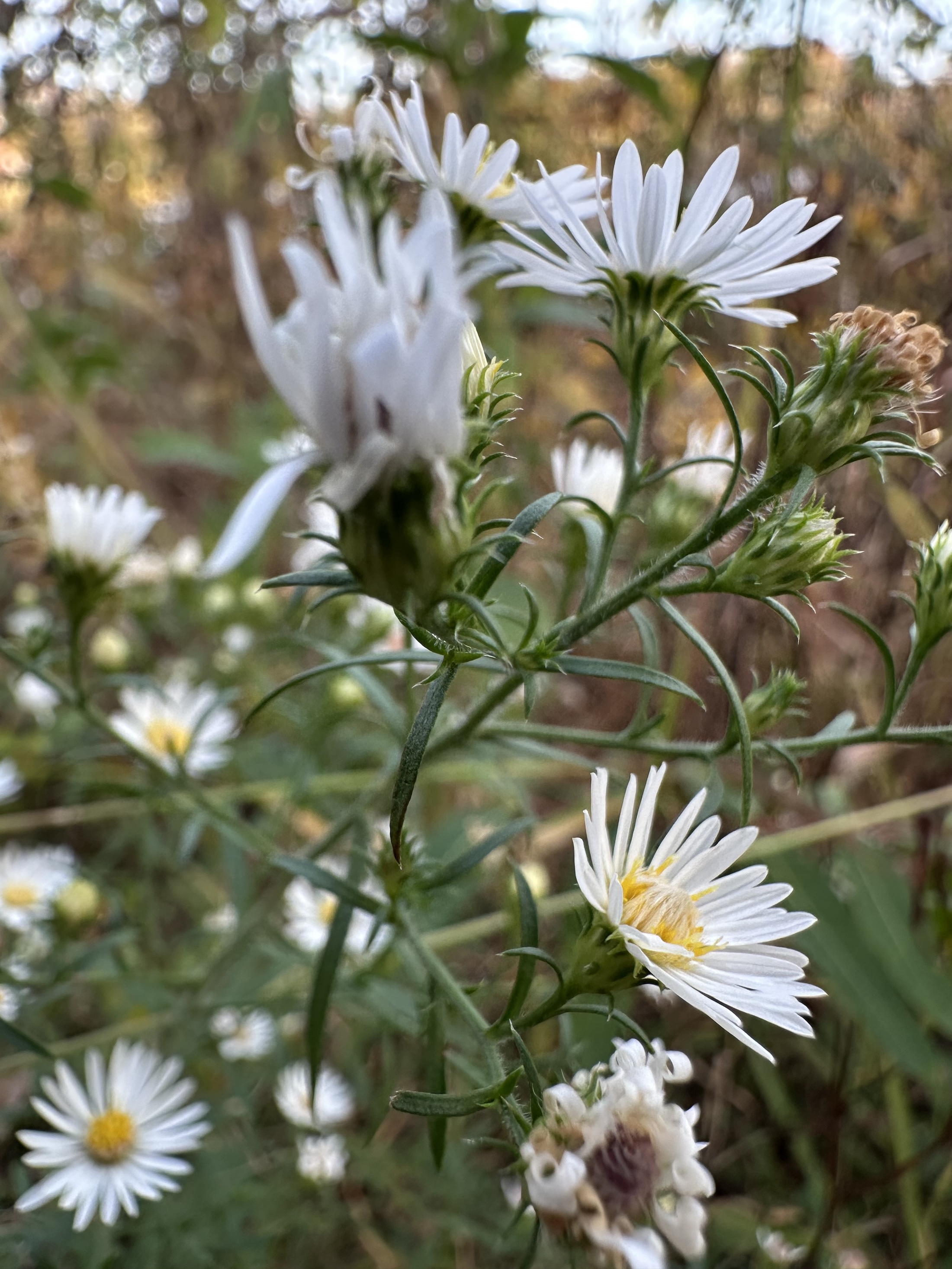
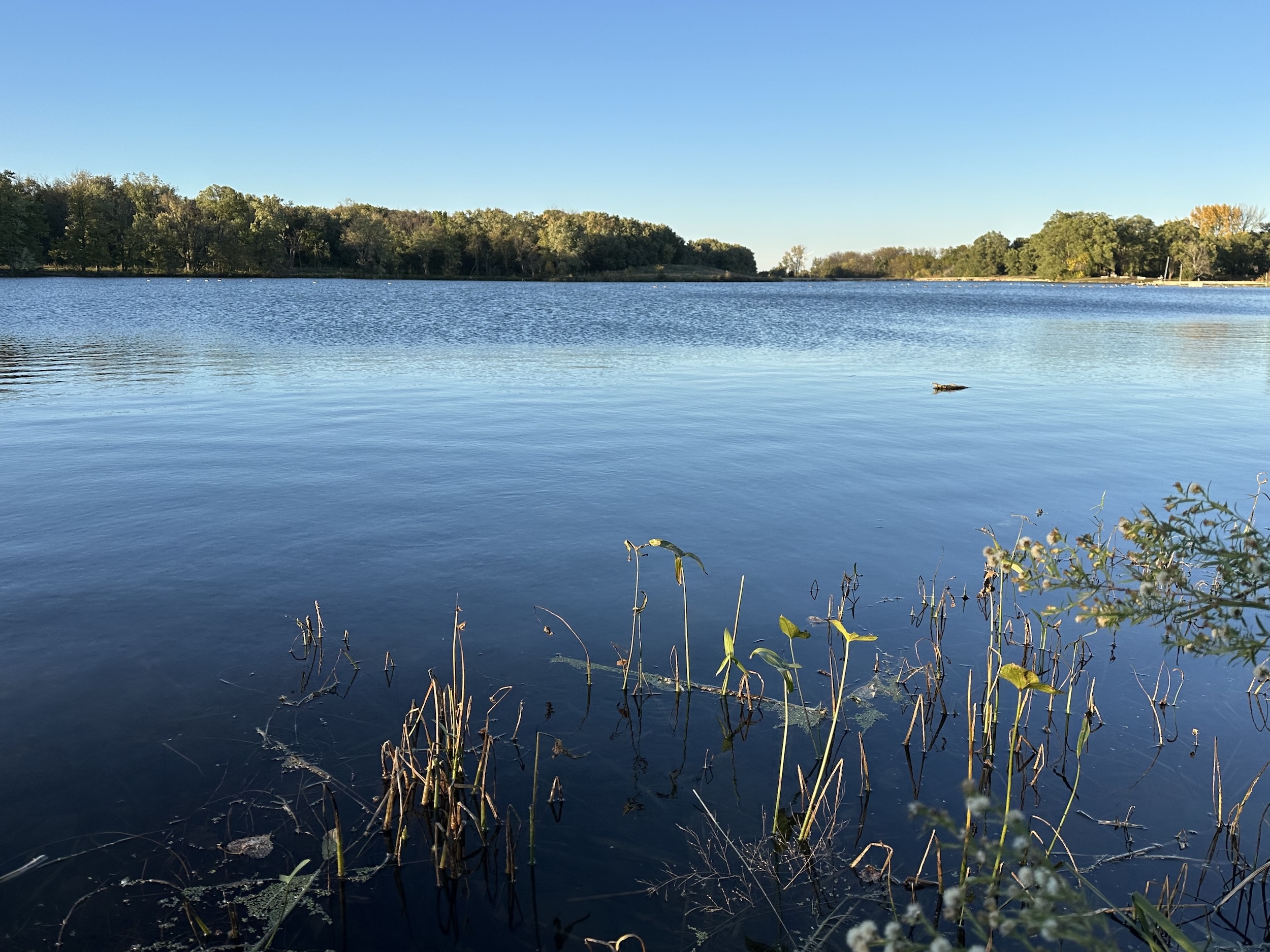
The following weekend, I made a brief stop at Mill Creek State Park while driving through Paullina in O’Brien County. While most of the flowers had long since departed for the season, there were remnants of white asters and common milkweed along the lakeshore.
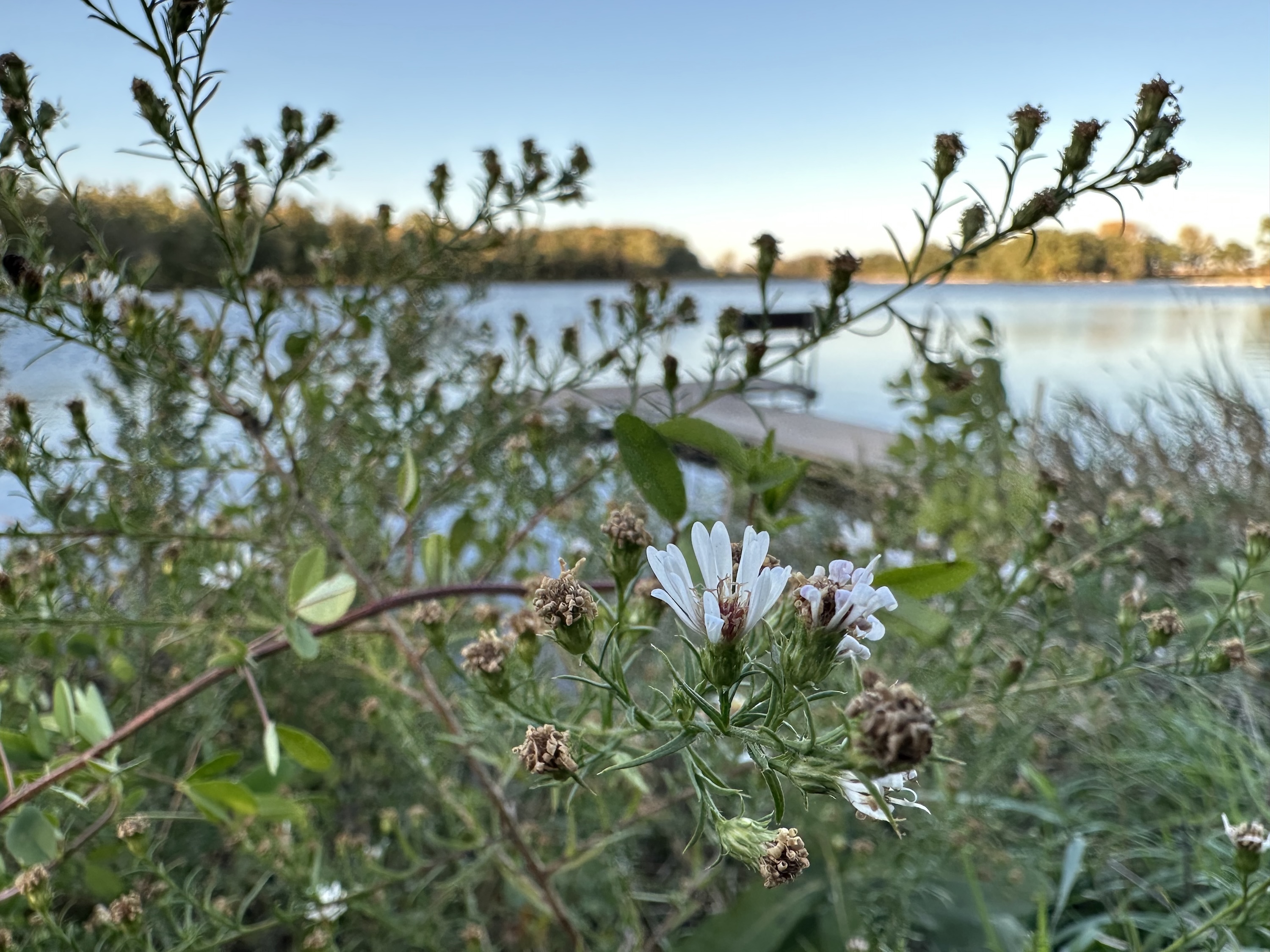
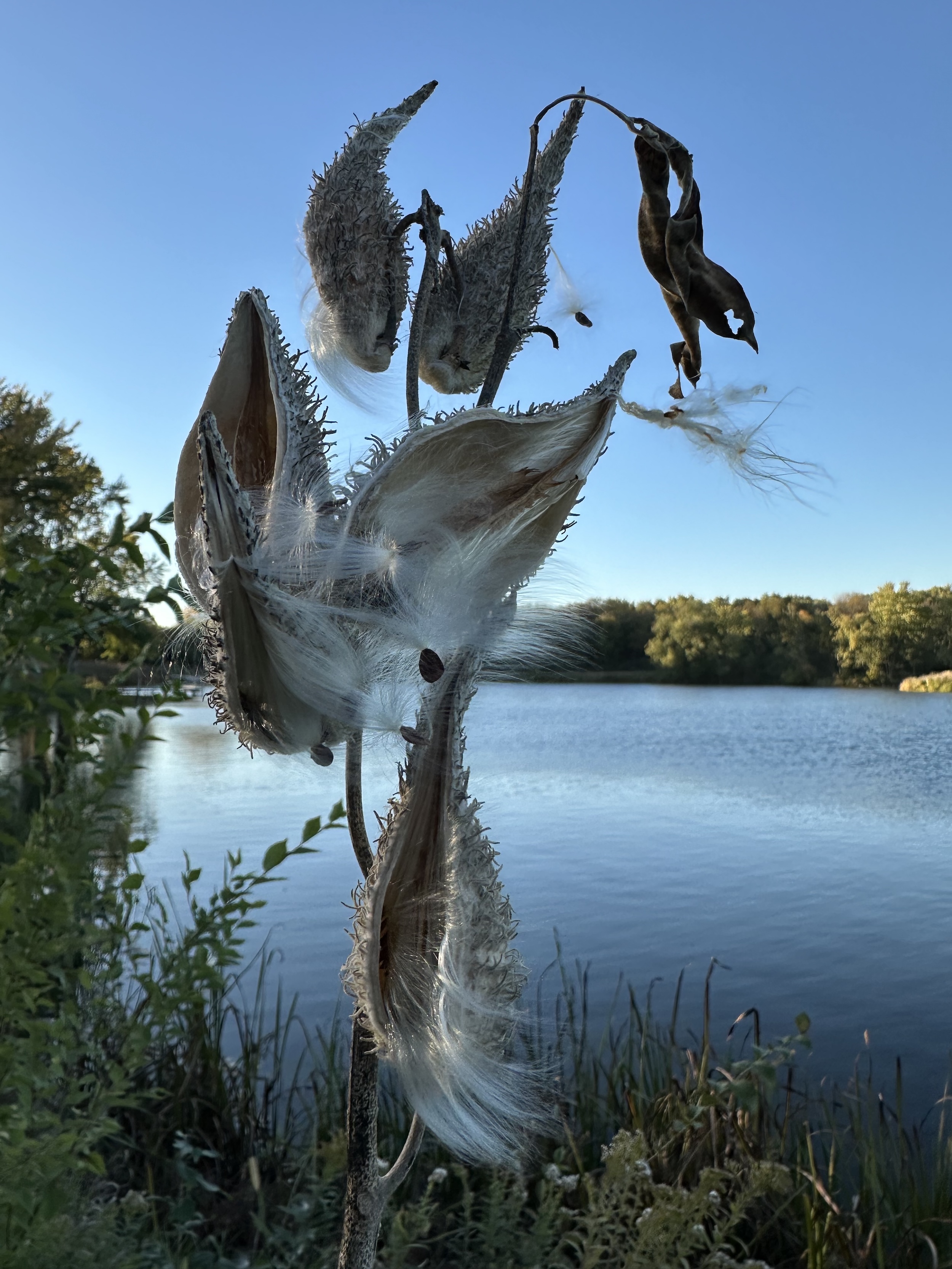
In another photo I took of the lake, Lora Conrad of the Iowa wildflower enthusiasts Facebook group spotted native Peltandra virginica, or Arrow arum, growing in the water.
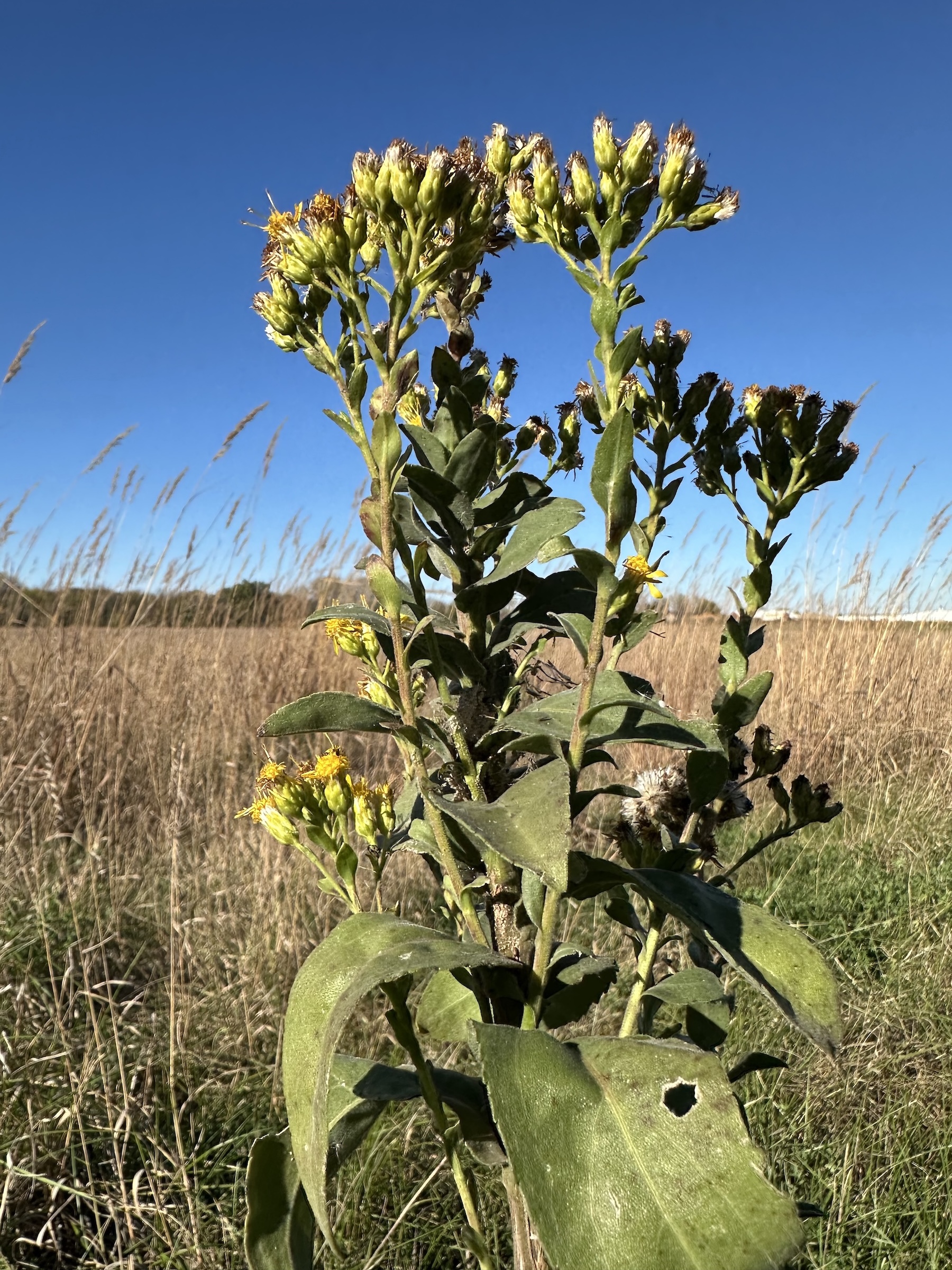
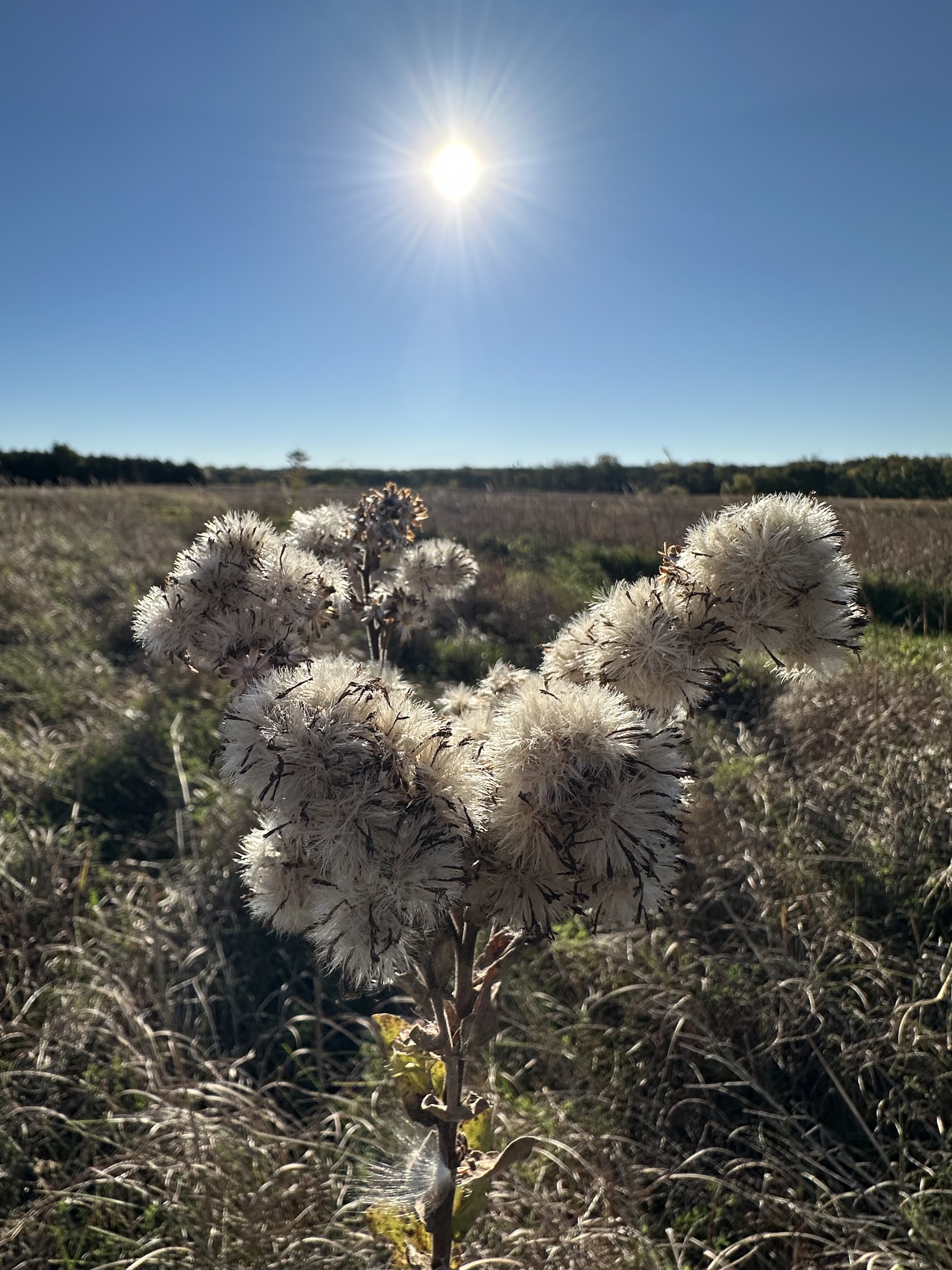
Later that same weekend I took a stroll through one of my favorite wild(ish) parks, Oneota, near Spencer, my hometown. A few stiff-leaved goldenrod plants had some fading blooms while most had recently gone to seed.
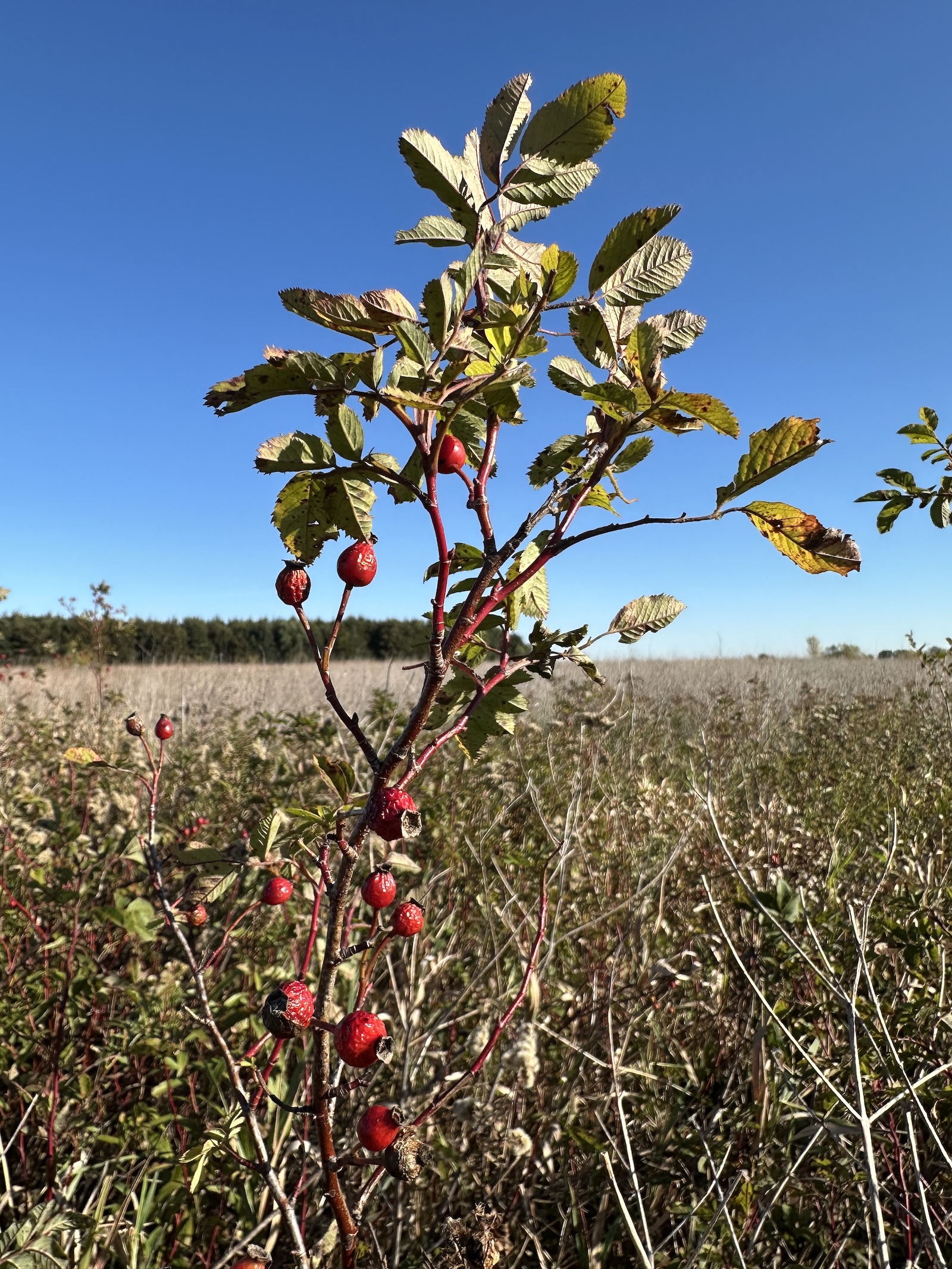
Many specimens of our state flower, the wild rose, were covered with rose hips – the end result of the flowers I’d observed there in early summer.
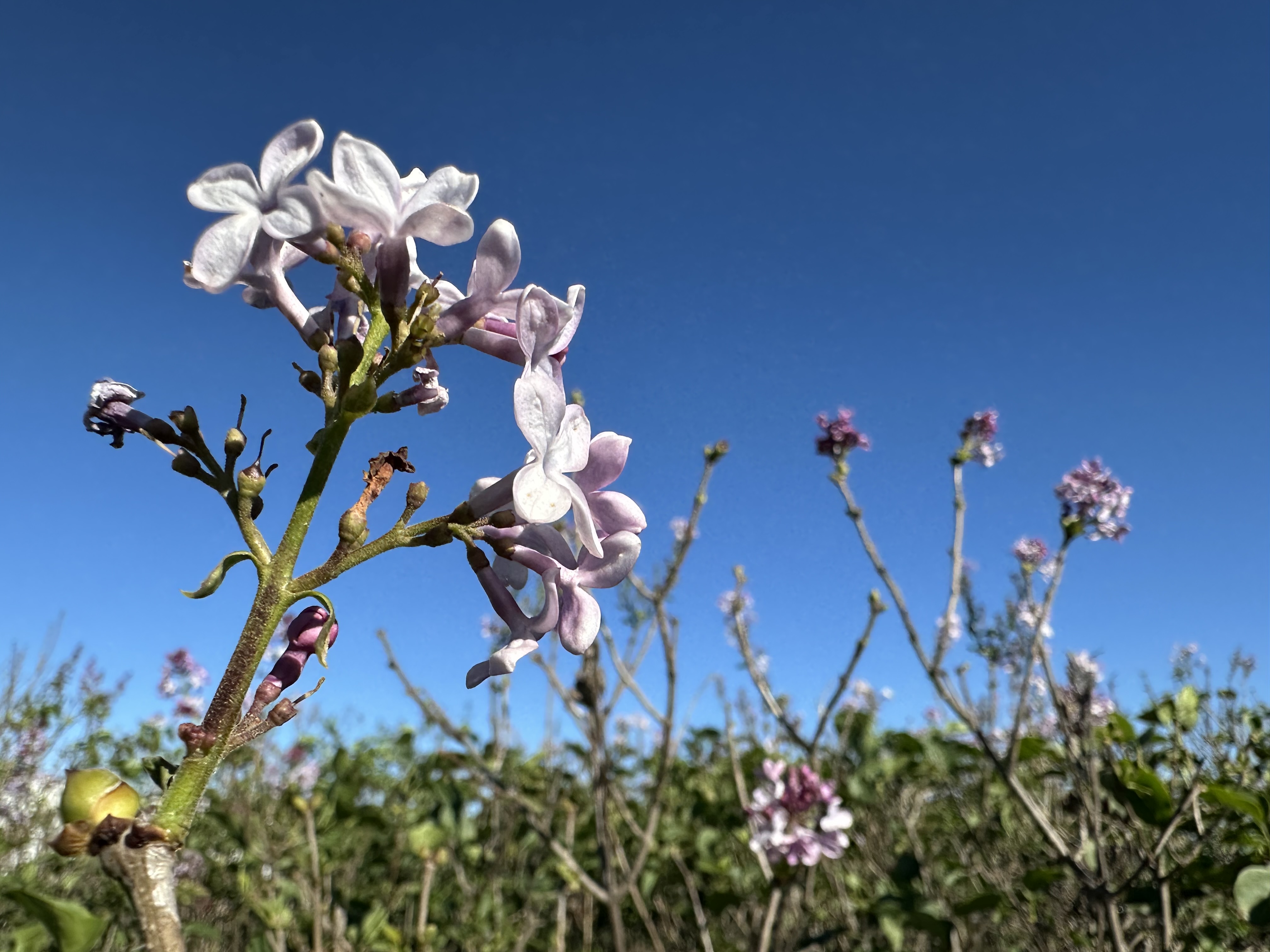
On my way out of the park, I was surprised to find lilac bushes lining the driveway and bearing quite a few blossoms – the first time I’d ever seen lilacs flowering that late in the year, in that part of the state.
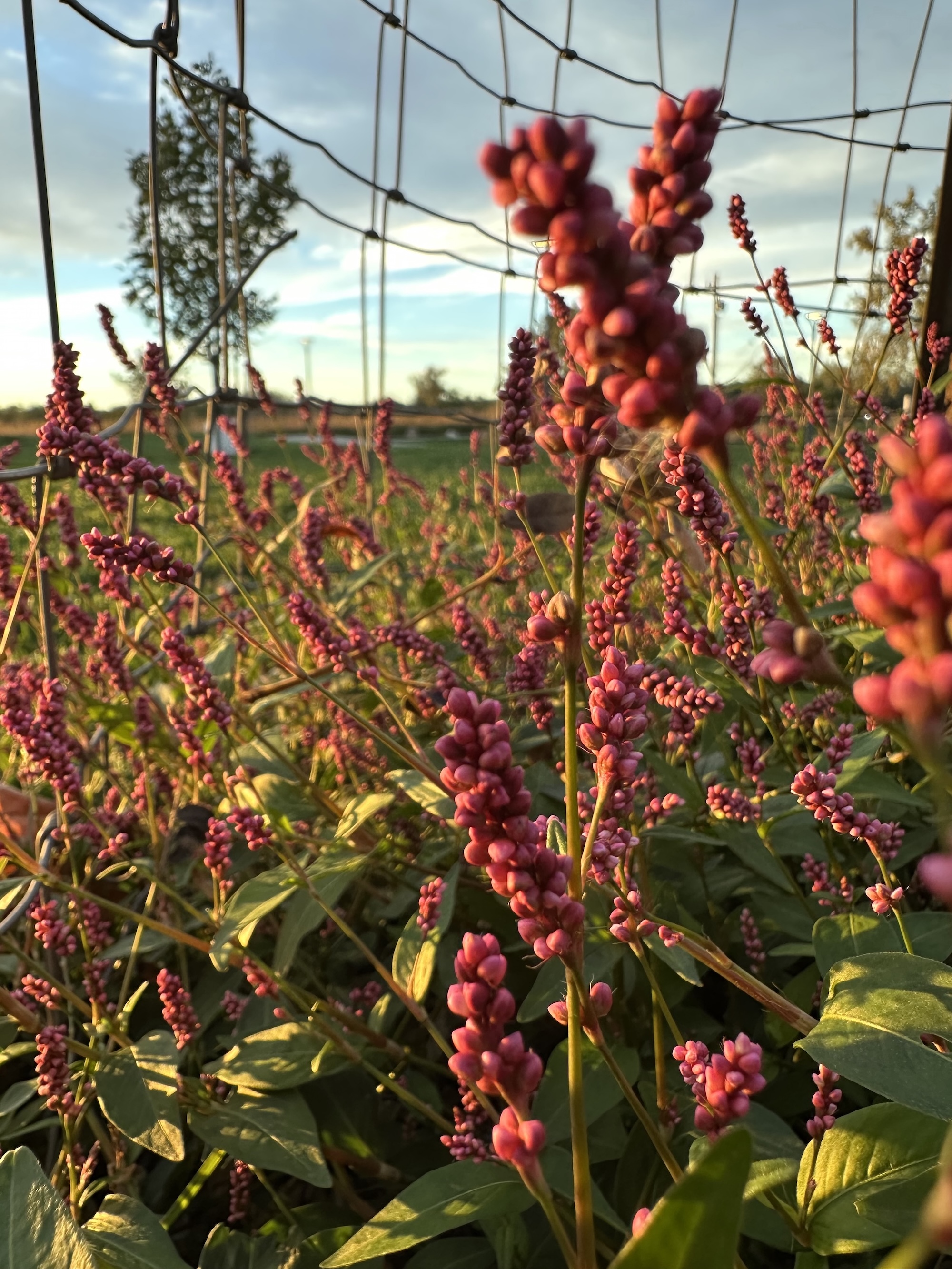
While visiting Waterworks Park in Des Moines on October 19, I noticed the vibrant pinkish-red stalks on a healthy group of smartweeds growing inside fencing protecting a young tree. I could not recall another time when I’d seen those plants in bloom that late in the year.
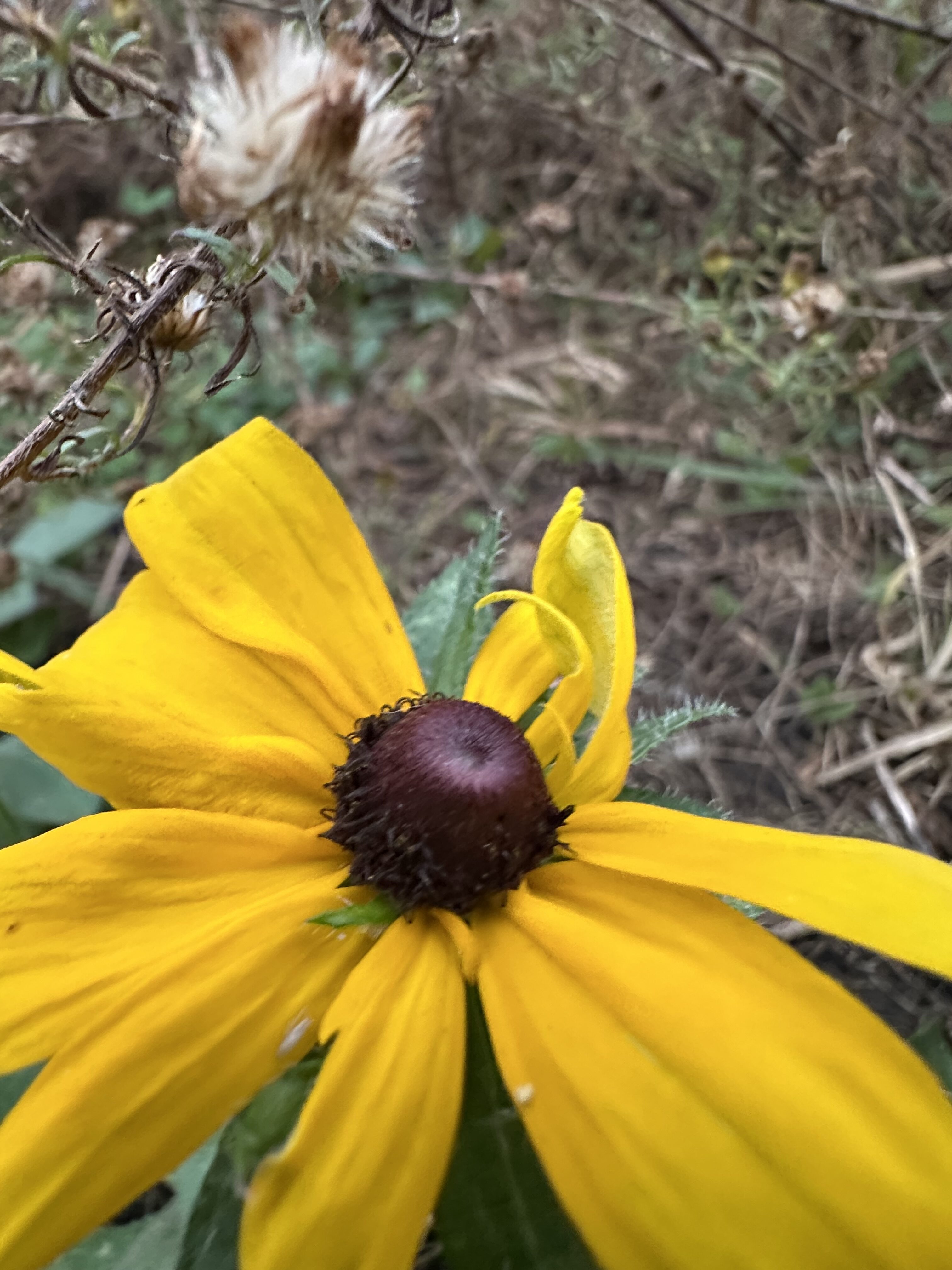
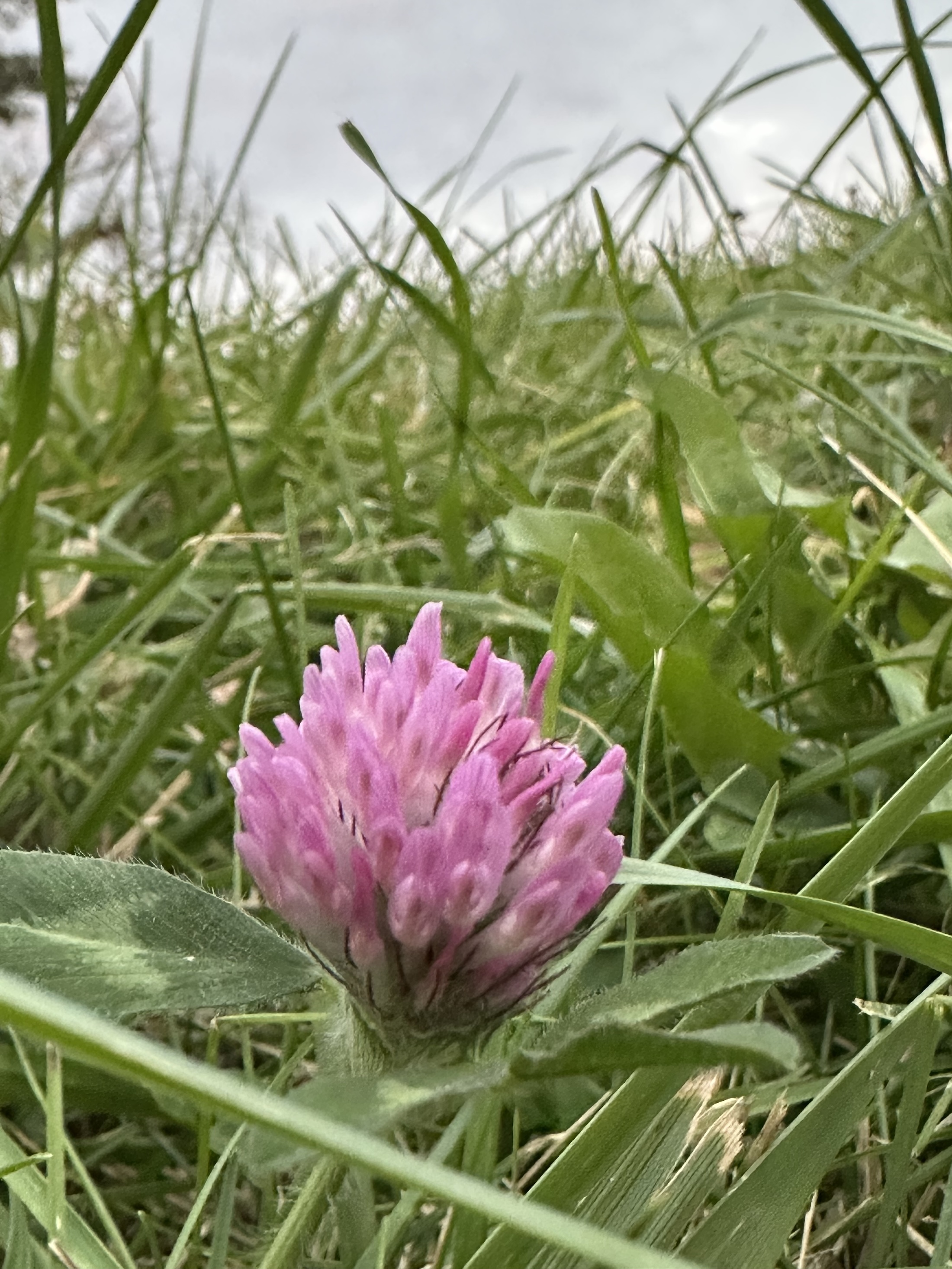
A few days later at Waterworks, I spotted some yellow coneflowers, or black-eyed Susans, still in full bloom, along with red clover.
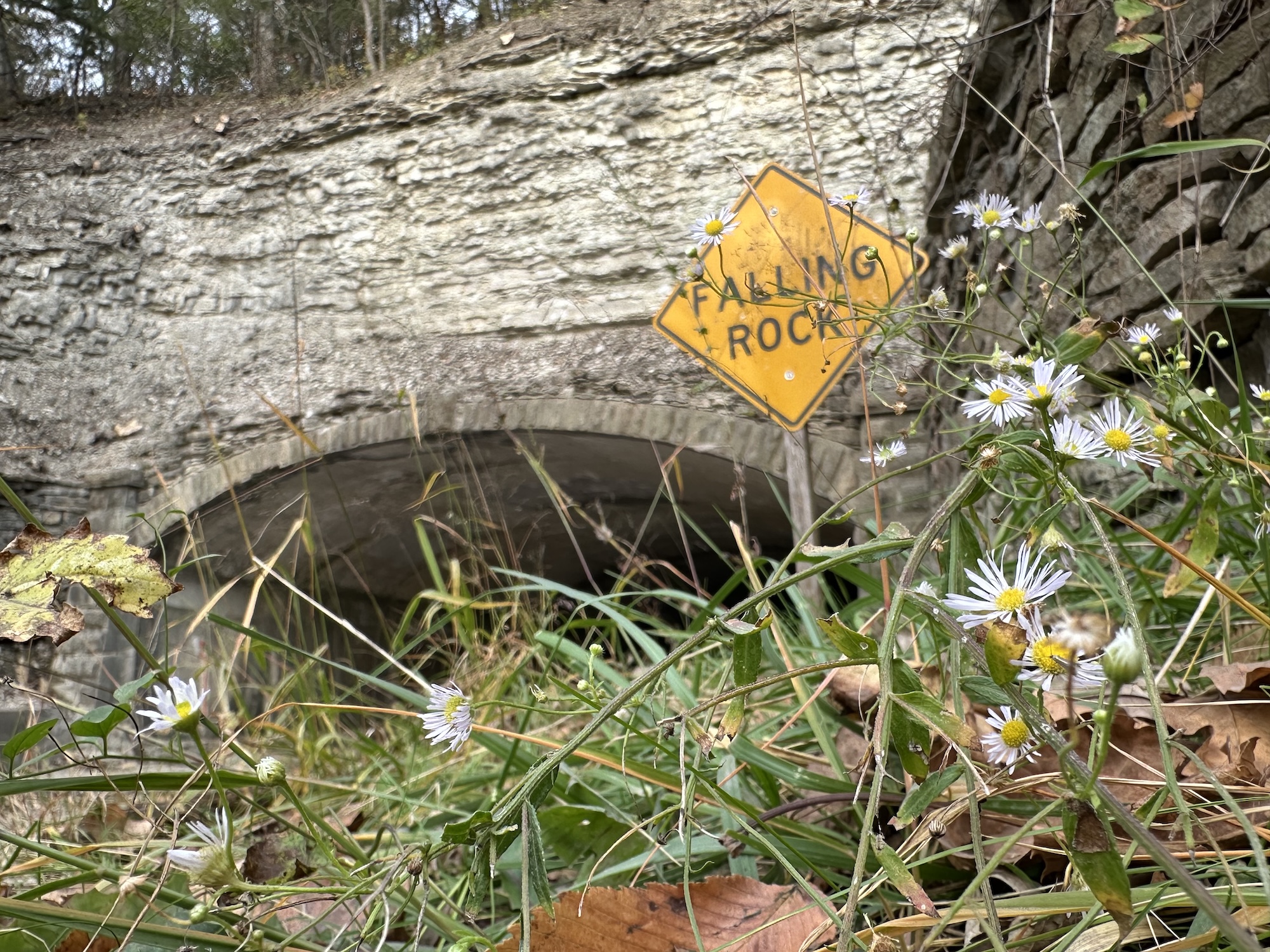
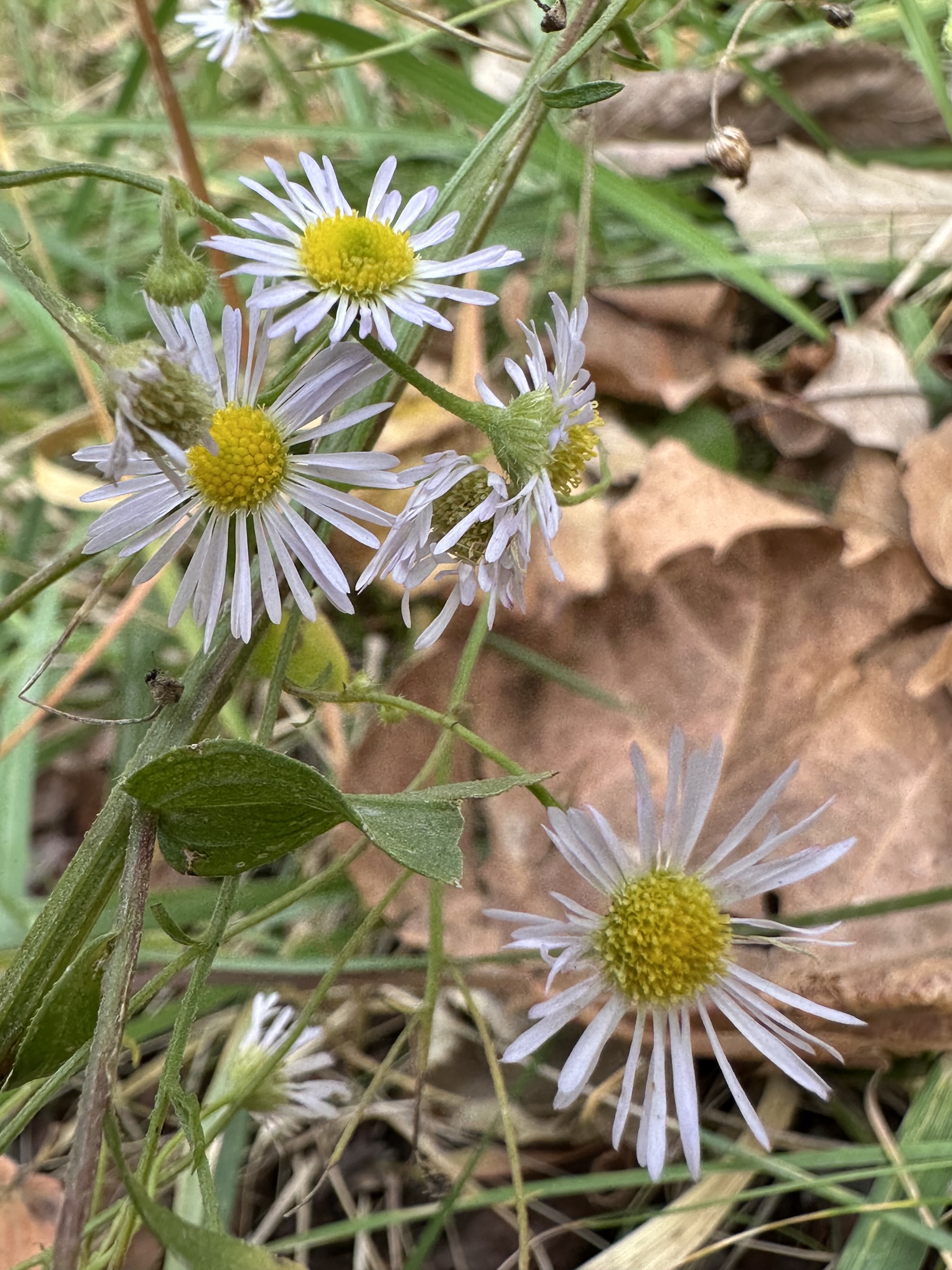
On October 25, I headed to one of my favorite places to view Fall foliage, Pammel State Park near Winterset in Madison County. There wasn’t much to see, flower-wise, but I managed to spot some asters near the picturesque tunnel under the “backbone” ridge, one of the park’s most prominent features.
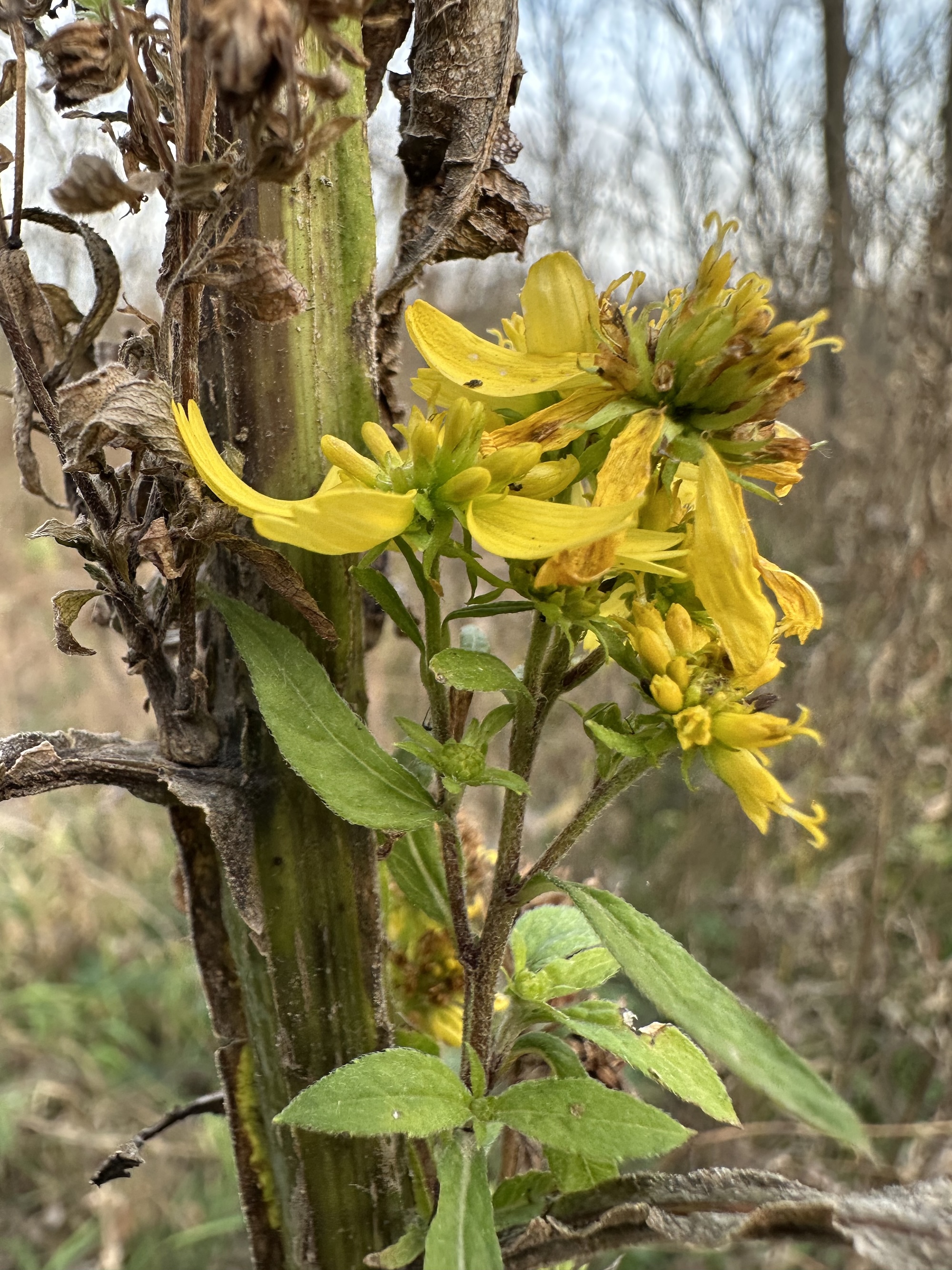
Elsewhere in Pammel there were a few goldenrod plants with blooms still hanging on.
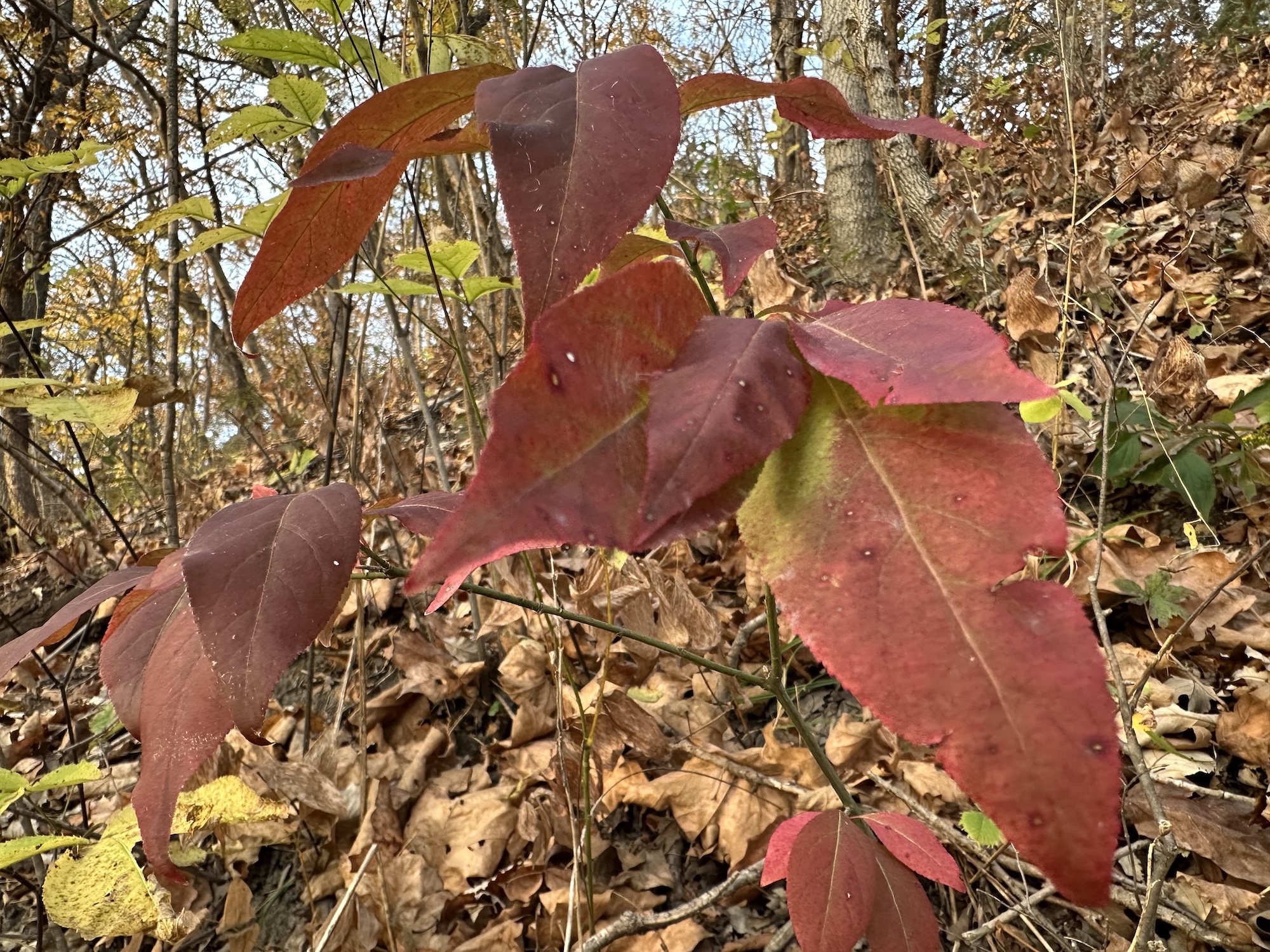
Poison ivy was prominent and easy to spot with its blood-red leaves up on the backbone.
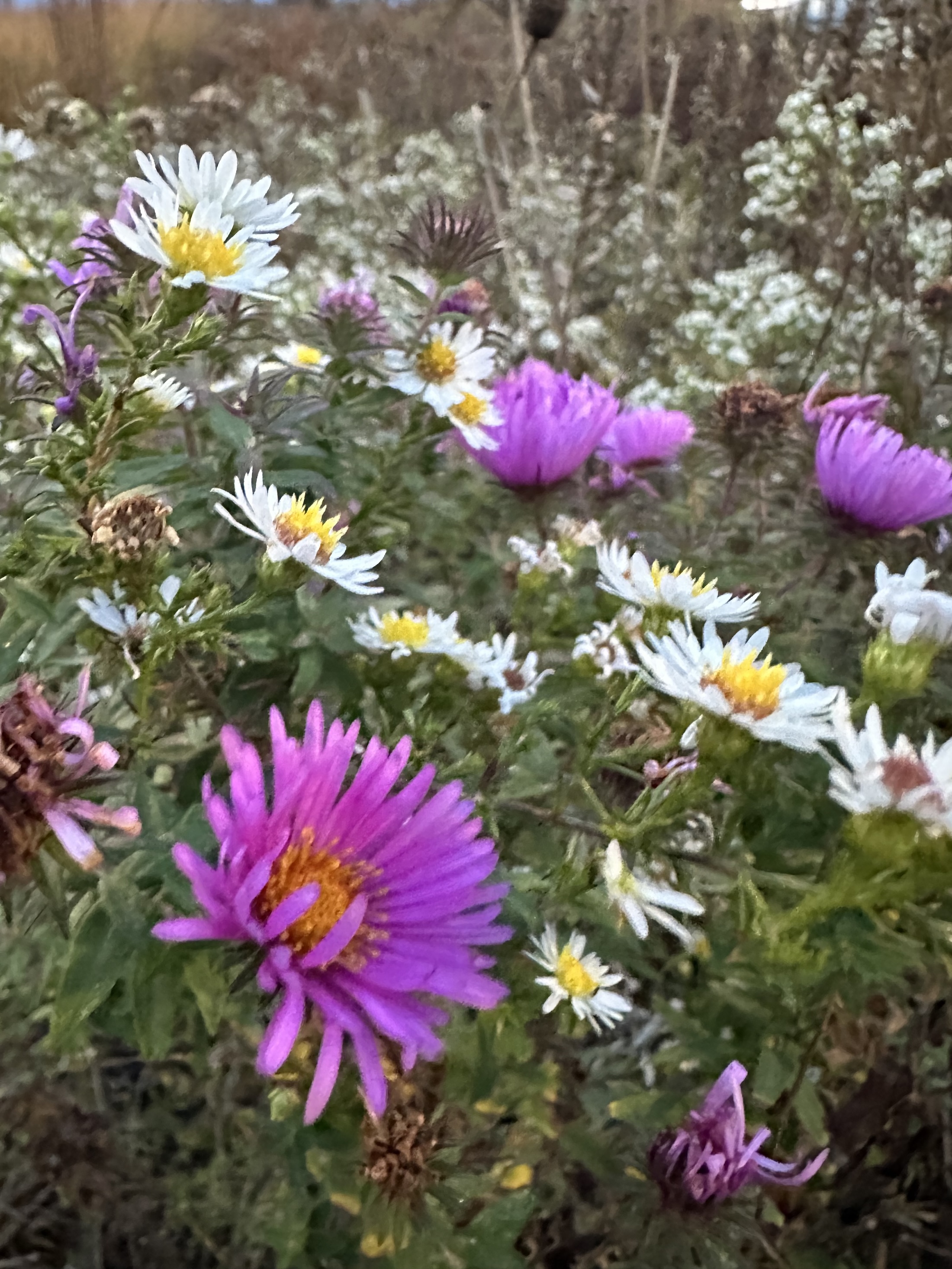
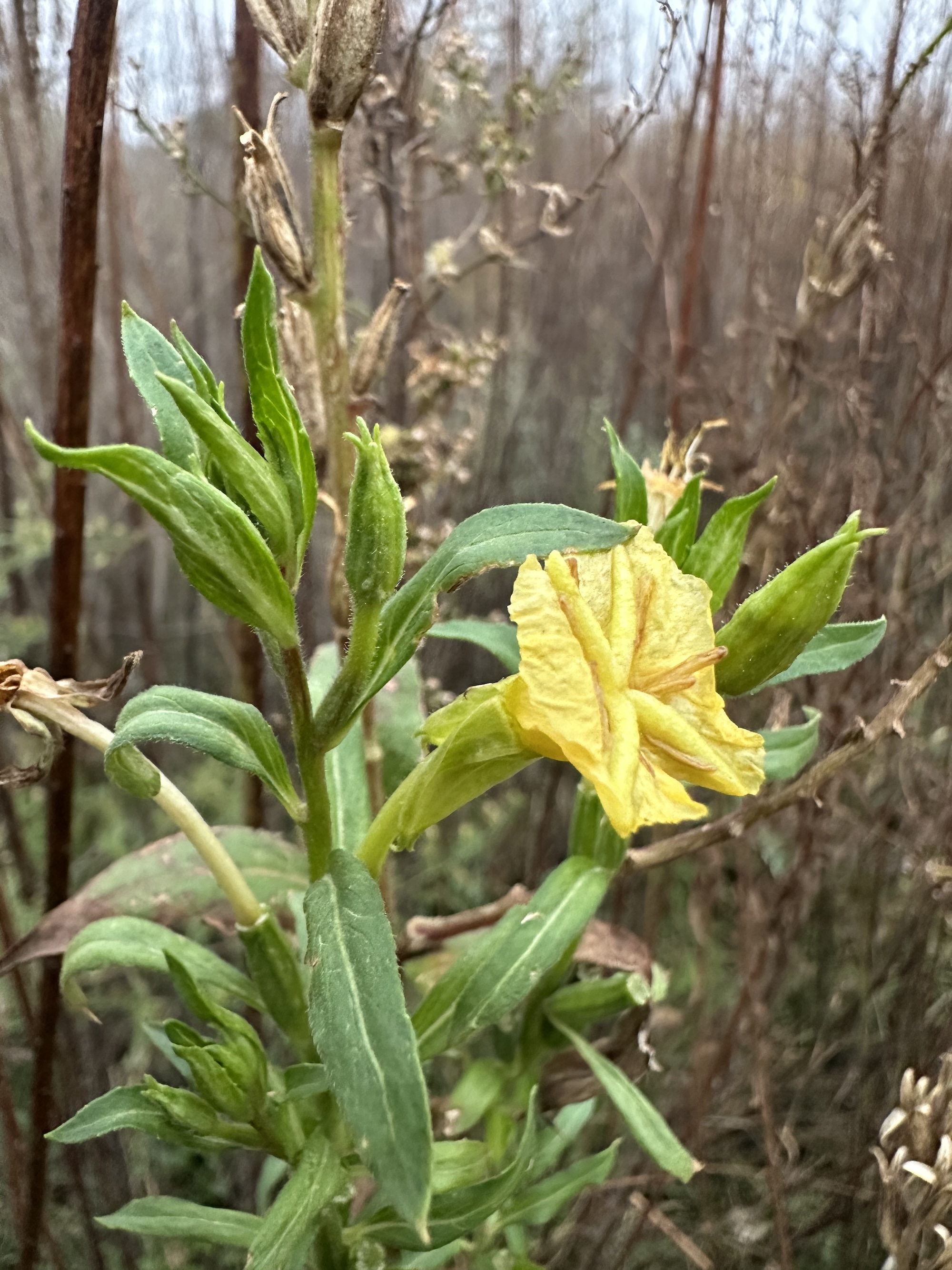
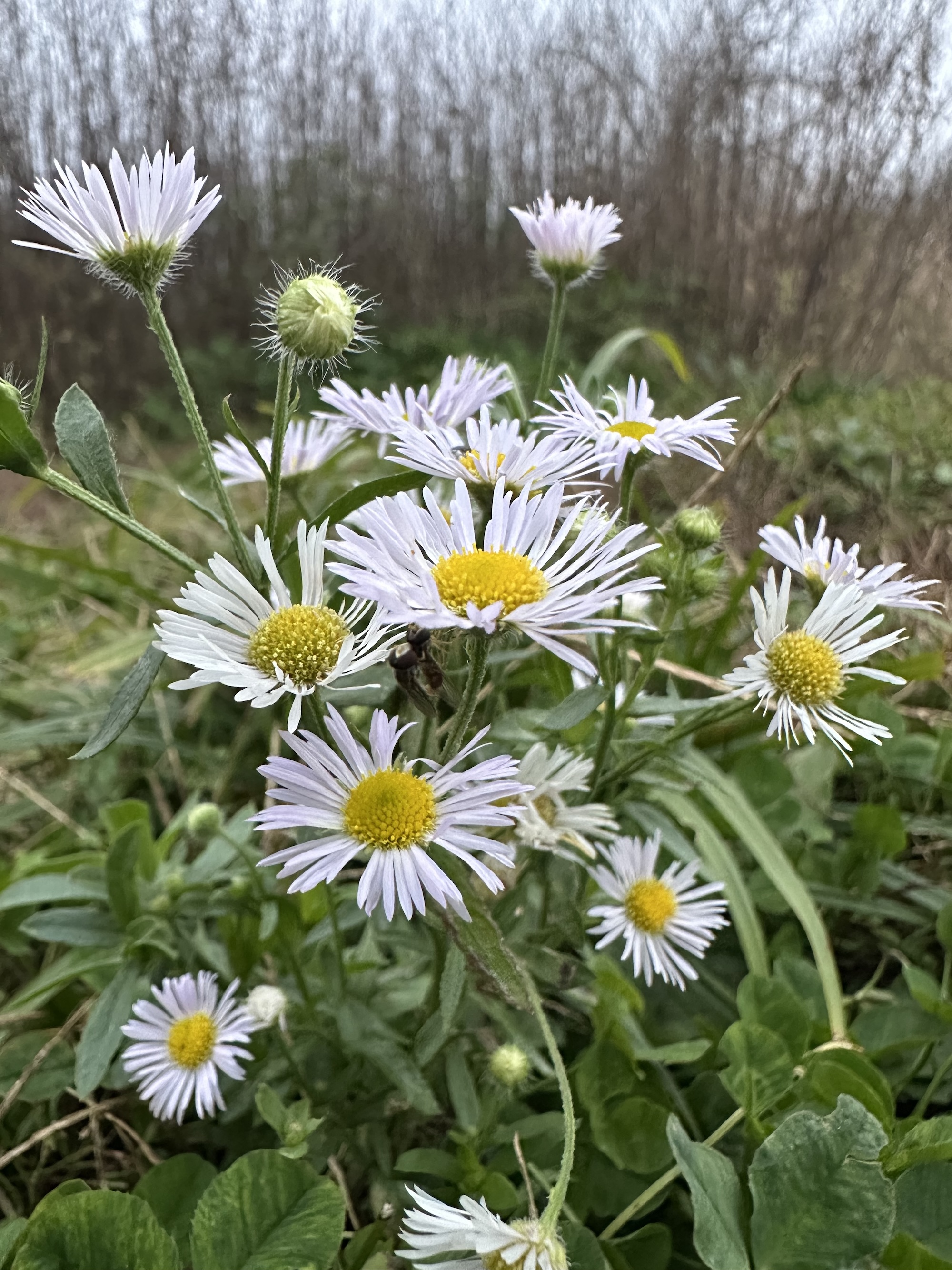
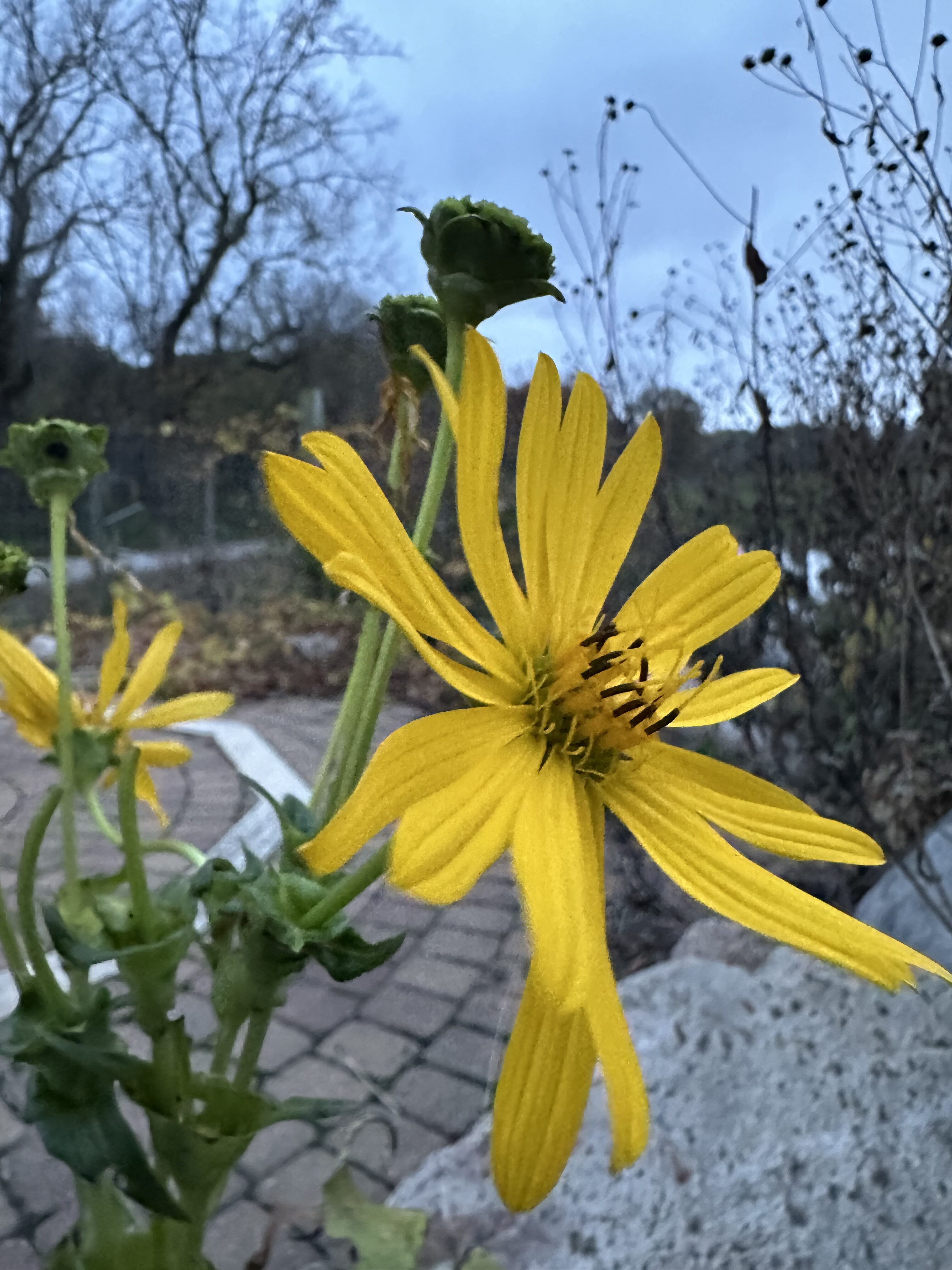
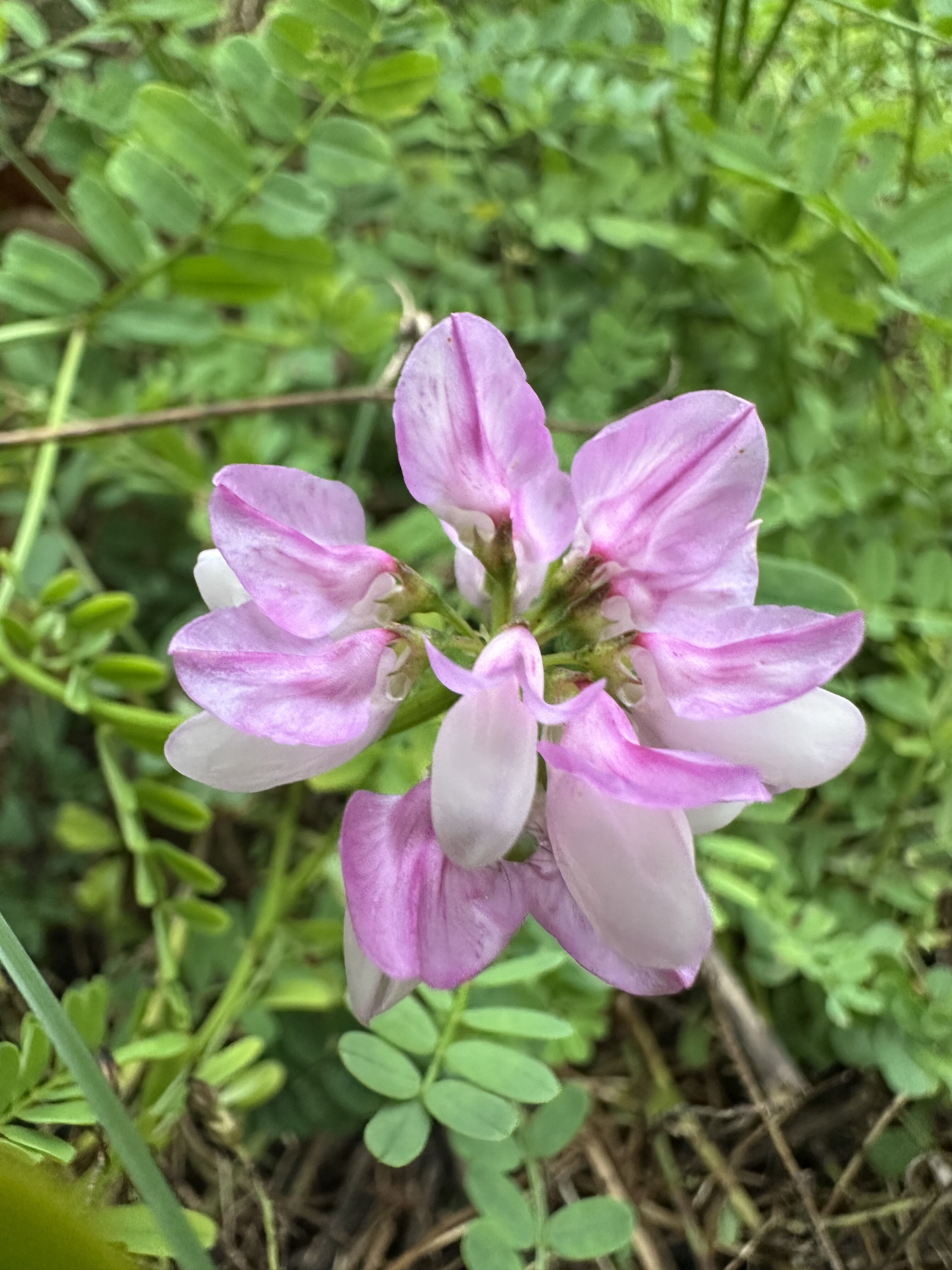
Finally, on November 1, I spent the afternoon hiking around Polk County’s Jester Park to see what colors were out there. Again, there were abundant asters of various hues, some well-faded pale purple coneflowers, evening primrose, daisy fleabane, a still-robust cup plant near the pasture where elk and bison roam, and plenty of crown vetch plants with their perfectly symmetrical flowers alongside the creek.
What are some of the unexpected wildflowers you’ve seen this Fall? I welcome your comments and any photos you have to share.