|
Bleeding Heartland
It's what plants crave.
|
demographics
Mon Mar 18, 2013 at 16:40:00 PM CDT
|
|
The Republican National Committee released a so-called "autopsy" on the 2012 election results today. You can read the full report on the "Growth and Opportunity Project" here. I've posted a few excerpts, links and thoughts after the jump.
Any comments about the GOP's rebuilding and rebranding effort are welcome in this thread.
|
|
There's More...
:: (2
Comments, 1763 words in story)
|
|
Mon Mar 18, 2013 at 11:30:00 AM CDT
|
|
Anyone who follows the Iowa legislature has frequent occasion to wonder how someone that ignorant got elected to the Iowa House or Senate. But every once in a while, a spectacularly clueless act grabs our attention. Last week a little-known first-term state representative made himself a contender for the title of Iowa's most clueless lawmaker.
UPDATE: Not so fast--see today's news, added at the end of this post.
|
|
There's More...

:: (9
Comments, 1301 words in story)
|
|
Sun Mar 17, 2013 at 10:05:00 AM CDT
|
|
Happy St. Patrick's Day to Bleeding Heartland readers who celebrate the occasion. This is an open thread; all topics are welcome. For a laugh, enjoy The Onion's recent write-up of Iowa fashion week: "The big themes this season are 'roomy,' 'loose,' and 'comfortable.'"
After the jump I've posted a few links about health and happiness, including details from Gallup's 2012 report on well-being in the United States. Iowa ranked ninth on the "Gallup-Healthways Well-Being Index" but was not one of the "elite five states" that have shown consistently high levels of resident well-being over five years.
|
|
There's More...
:: (2
Comments, 814 words in story)
|
|
Sat Feb 09, 2013 at 20:55:54 PM CST
|
|
What's on your mind this weekend, Bleeding Heartland readers? A few links related to Iowa demographics are after the jump, along with highlights from this week's "Iowa Press" program, featuring Republican Party of Iowa Chair A.J. Spiker and Iowa Democratic Party Chair Tyler Olson.
This is an open thread.
|
|
There's More...
:: (2
Comments, 1671 words in story)
|
|
|
|
Thu Nov 15, 2012 at 20:06:51 PM CST
|
|
He should have quit while he was behind, but Mitt Romney stepped in it again this week during a conference call with major Republican donors.
|
|
There's More...
:: (4
Comments, 812 words in story)
|
|
Fri Feb 11, 2011 at 07:57:44 AM CST
|
The U.S. Census Bureau released a ton of new Iowa demographic information yesterday.
Data for Iowa show that the five most populous incorporated places and their 2010 Census counts are Des Moines, 203,433; Cedar Rapids, 126,326; Davenport, 99,685; Sioux City, 82,684; and Waterloo, 68,406. Des Moines grew by 2.4 percent since the 2000 Census. Cedar Rapids grew by 4.6 percent, Davenport grew by 1.3 percent, Sioux City decreased by 2.7 percent and Waterloo decreased by 0.5 percent.
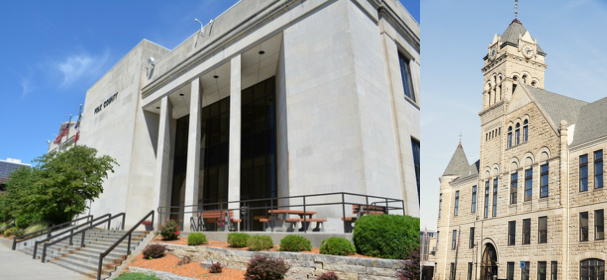
The largest county is Polk with a population of 430,640. Its population grew by 15.0 percent since 2000. The other counties in the top five include Linn, with a population of 211,226 (increase of 10.2 percent); Scott, 165,224 (increase of 4.1 percent); Black Hawk, 131,090 (increase of 2.4 percent); and Johnson, 130,882 (increase of 17.9 percent).
Click here to find the Iowa numbers and charts. I haven't had as much time as I'd like to look through the data, but I'm posting a few starting points for discussion here.
Rick Smith's piece on growth in the Cedar Rapids-Iowa City corridor is worth a read. I'm not surprised Linn County grew substantially during the decade, especially in the suburbs, but the population growth in Cedar Rapids itself is impressive. I didn't expect to see that after the 2008 floods destroyed whole neighborhoods in the city.
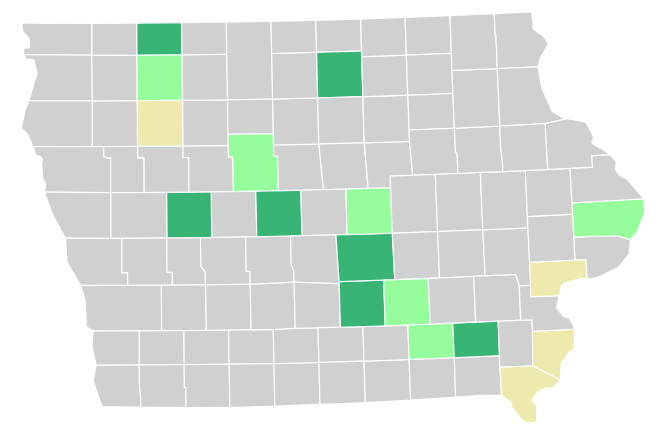
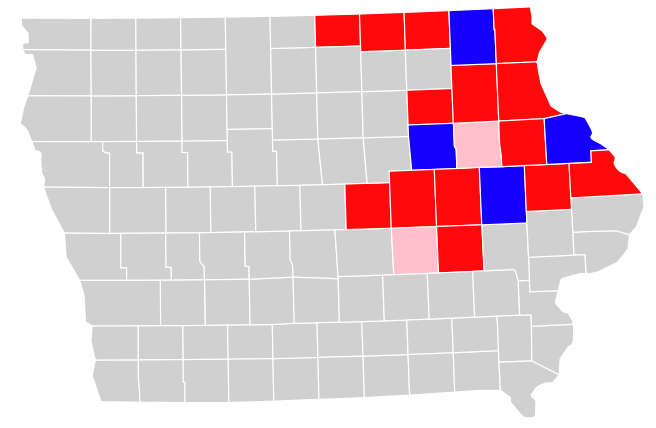
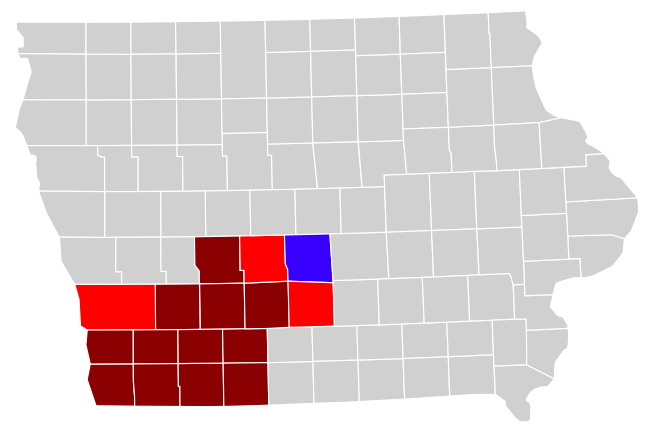
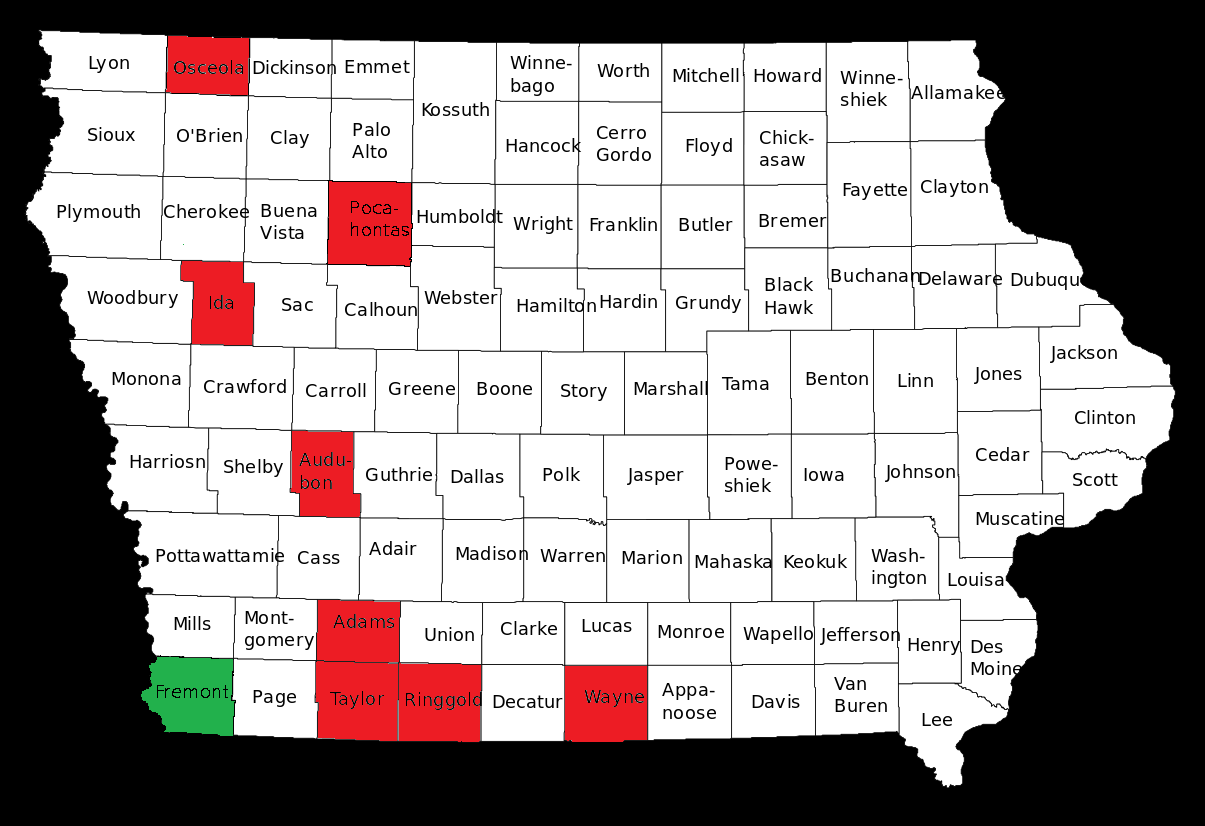
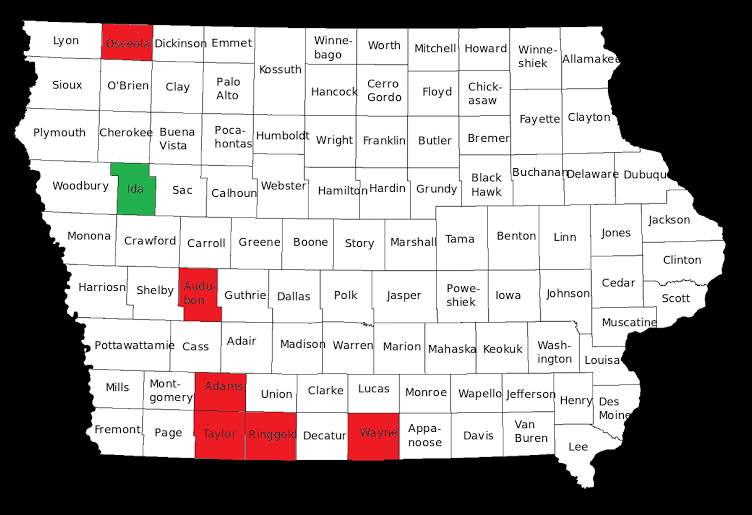
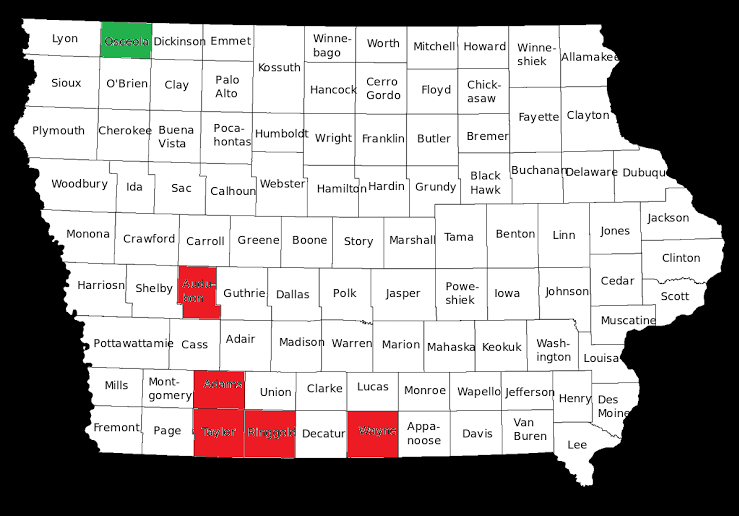
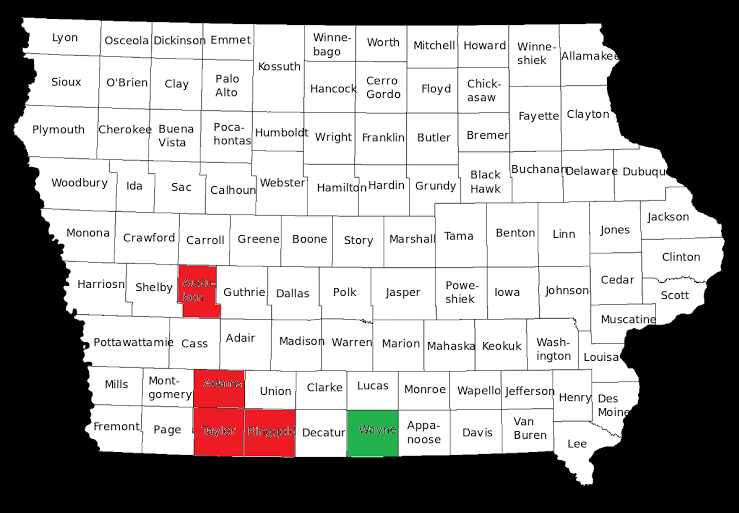
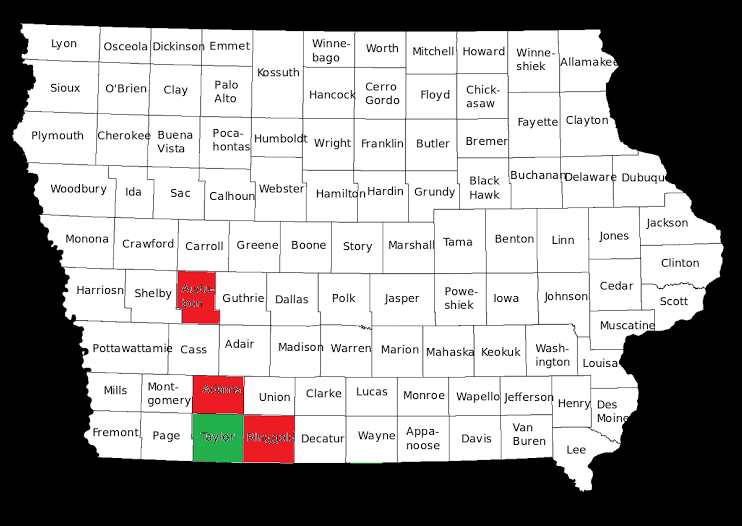
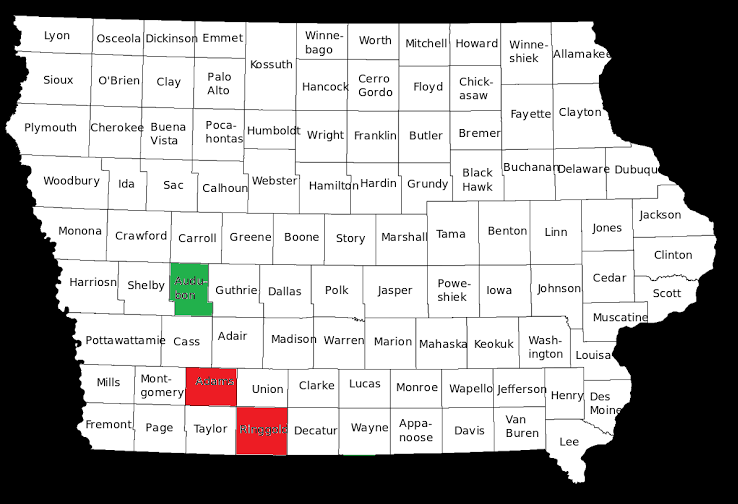
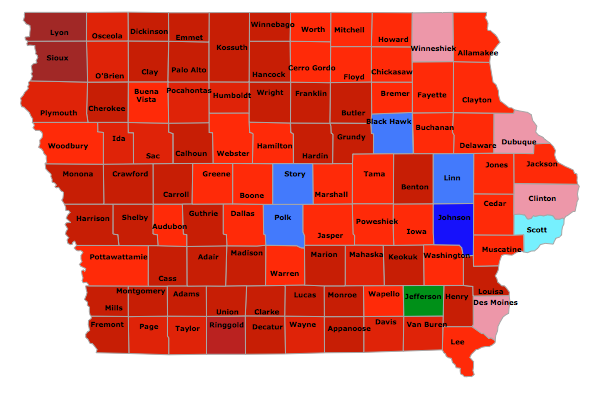
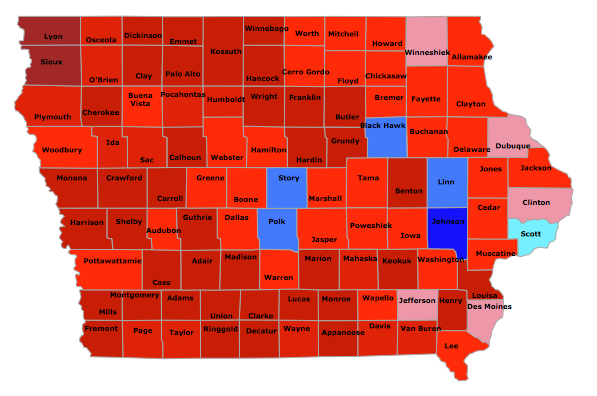
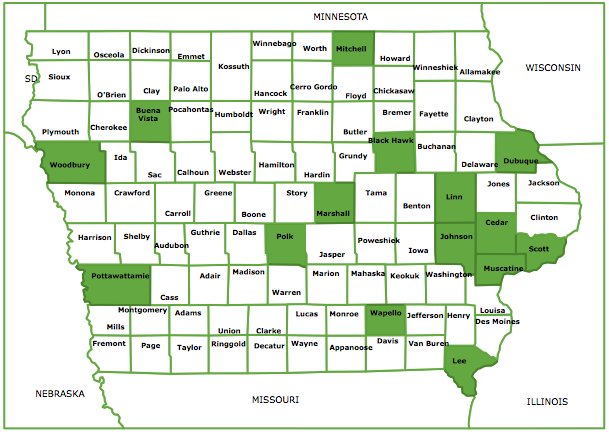
After the jump I've posted official 2010 population numbers for all 99 Iowa counties, along with a map putting the counties in different population categories and a map grouping counties by population gain or loss (percentage). Ten Iowa counties have populations larger than 65,000 people. Another 14 counties have populations between 25,000 and 64,999; 29 counties have populations between 15,000 and 24,999; and 46 counties have populations between 4,029 (Adams) and 14,999. Dallas led the 33 Iowa counties that gained population between 2000 and 2010.
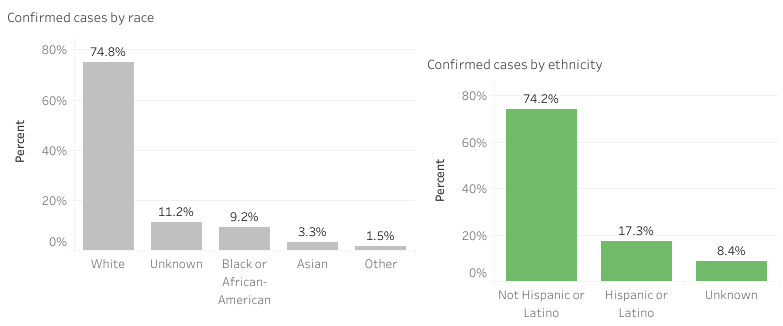
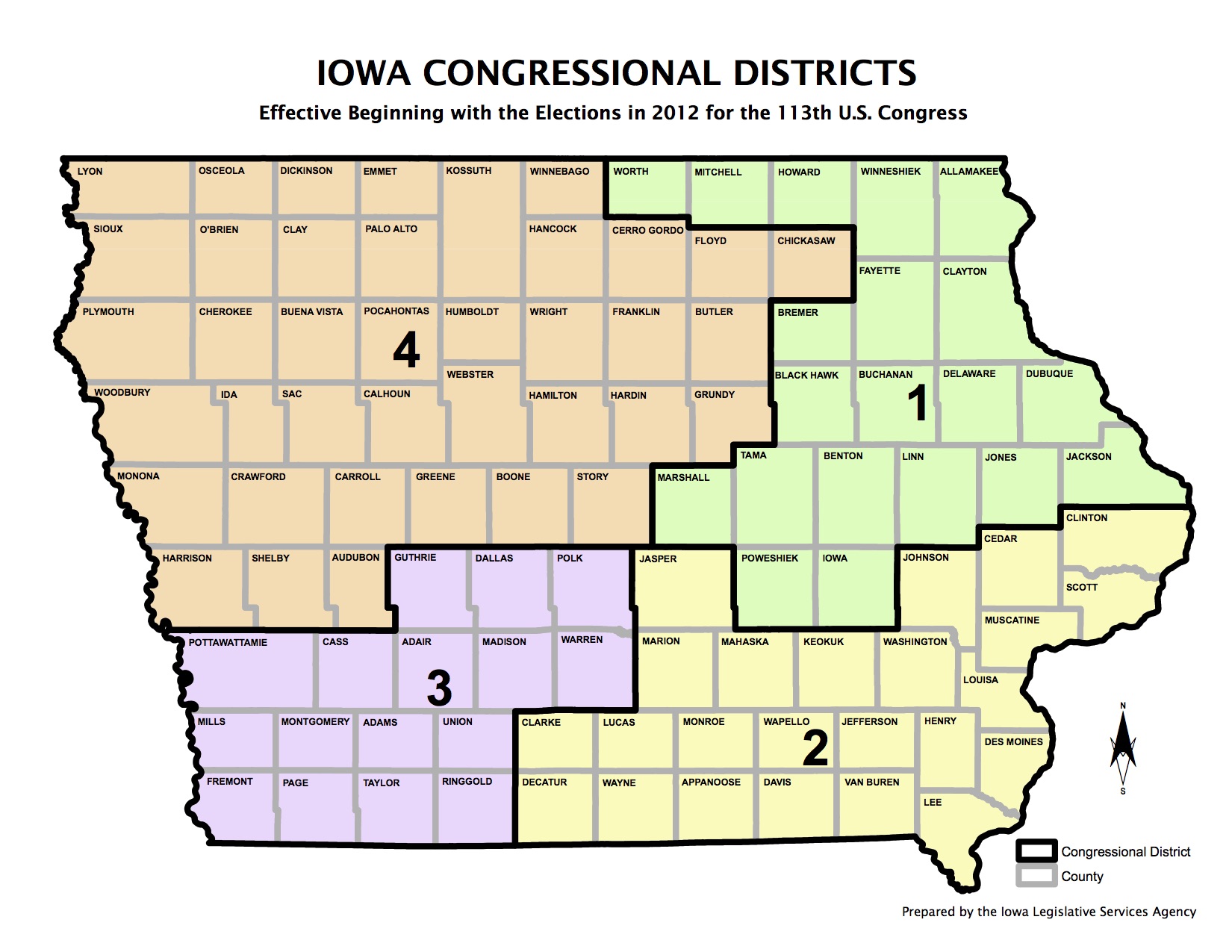
Although I wasn't able to reproduce this chart showing the racial and ethnic breakdown of the Iowa population by Congressional district, I did include those numbers at the end of this post. I was surprised to see that even though Polk County has the largest Latino/Hispanic population in Iowa, there are more Latino/Hispanic residents in IA-05 than in IA-03, with IA-02 and IA-04 not far behind. Meanwhile, IA-01 has the smallest Latino/Hispanic population but the largest African-American population. The largest Asian population is in IA-03 with IA-02 not far behind. View the chart here or scroll down for more details.
Share any thoughts about the census data or details that caught your eye in this thread. For example, the Newton Independent posted 2000 and 2010 numbers for Jasper County and area cities.
UPDATE: The Des Moines Register has lots of census coverage here. Statewide, Iowa's population grew by 4.1 percent from 2000 to 2010. The Latino population was up by 83.8 percent, the Asian population was up by 44.9 percent, and the African-American population was up by 44.1 percent.
|
|
There's More...
:: (8
Comments, 653 words in story)
|
|
Tue Jul 06, 2010 at 10:58:23 AM CDT
|
William Petroski published a good article in yesterday's Des Moines Register about Latino population growth in Iowa. I recommend clicking through to read the whole thing, but here's an excerpt:
The U.S. Census Bureau estimates Iowa's Latino population totaled 134,402 for the 12 months ending July 1, 2009. That was up 5 percent, or an increase of 6,488 people, compared to a year earlier.
Over the past two decades, Iowa's Latino population has quadrupled. [...]
Besides immigration from other countries and migration from other states, two key factors are driving growth: Most Latinos moving to Iowa are young people, and they have high fertility rates, said Sandra Burke, a demographer at Iowa State University's Community Vitality Center. At least half or more of the growth of Iowa's Latino population is from births, she said.
The median age of Iowa Latinos is 22.9 years, while the median age for all Iowans is 38, according to the State Data Center of Iowa. Meanwhile, the average family size for Iowa Latinos is 3.5, while the average family size among all Iowans is 2.9.
A wonderful place to raise a family
Many Latinos are joining family members already here, said Sandra Sanchez of Des Moines, chairwoman of the Iowa Commission of Latino Affairs.
"Iowa is really a wonderful place to raise a family," often better than in large cities such as Los Angeles or Chicago, said Sanchez, who is also director of the Immigrant Voice Program of the American Friends Service Committee.
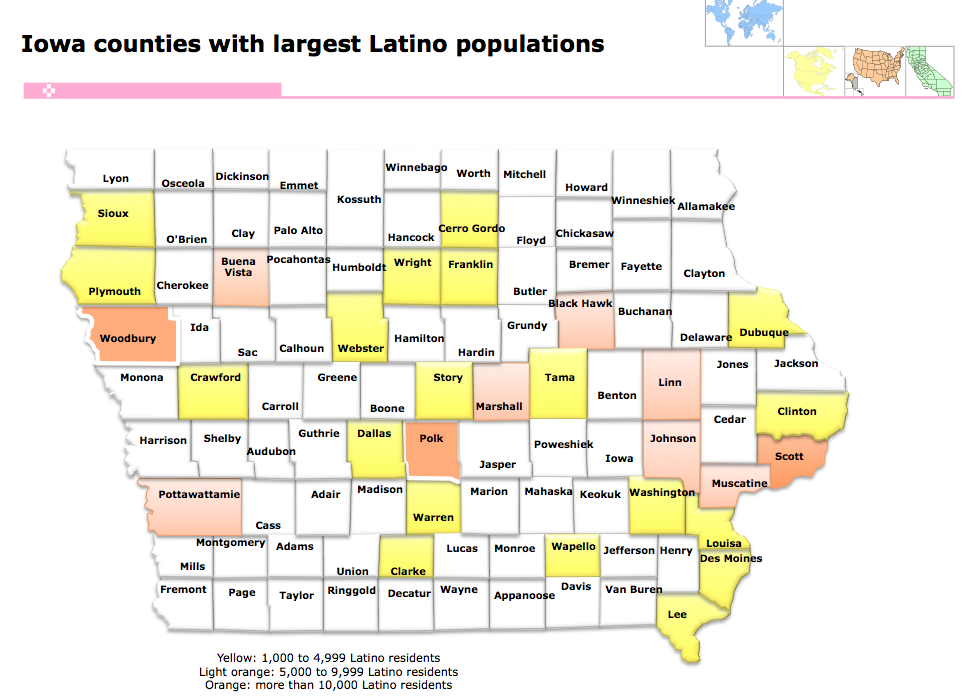
Latinos now make up about 4.5 percent of Iowa's population. This map at the Des Moines Register's site shows the raw population numbers and percentages for all 99 counties. Nearly a quarter of Iowa's Latino population lives in Polk County, containing Des Moines and most of its suburbs.
In absolute numbers, the ten Iowa counties with the largest Latino populations are Polk, Woodbury, Scott, Muscatine, Marshall, Linn, Johnson, Buena Vista, Pottawatamie and Dallas.
The Iowa counties with the largest percentage of Latino residents are Crawford and Buena Vista (tied at 22 percent), Louisa (17 percent), Marshall (16 percent), Muscatine (15 percent), Franklin (14 percent), Woodbury (12 percent), Wright (10 percent), and Allamakee (9 percent). In addition, Latinos comprise at least 5 percent of the population in eleven other counties. See the Register's map for county numbers from the latest census estimates.
|
|
Discuss
:: (0
Comments)
|
|
Mon Jan 07, 2008 at 13:05:01 PM CST
|
|
There has been a flurry of blog posts and news stories talking about the entrance polling and the results of the caucuses. The basics we know include things like record turnout and a surge in the number of youth showing up to the Democratic caucuses, as well as 'no party' folks changing their registration to Democrat.
I don't have the capacity nor the will power to significantly examine all of the results county by county, candidate by candidate. But I can direct you towards some very interesting information.
First of all, if you'd like some detailed results and would like to see some maps, feel free to check out CaucusResults.com which has the detailed information about the results courtesy of the Iowa Democratic Party. If you provided some information to the party prior to caucus night by visiting IowaCaucusResults.com then you should've received an email notification with a password so you could log in. If you didn't and would like to be able to see the information, feel free to email me and I can get you logged in.
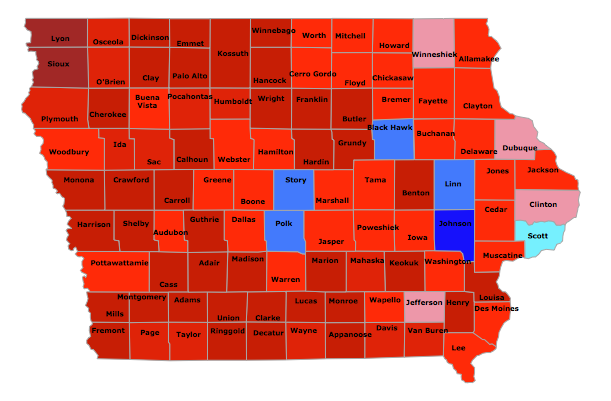
Secondly, one of the big things that we've seen talked about is the amount of youth turnout for the caucuses. Whether you call youth 17-24 year olds or 17-29 year olds it seems pretty clear that folks my age showed up and participated. Iowa Student Public Interest Research Group (PIRG) put out a release talking about the numbers (which can be found here) and it clearly shows how the youth support was another cushion of support for Barack Obama. The Register examined the same thing here, while also noting the evangelical Christian support that helped Huckabee. The Register also provides a county map that shows which candidate won which county, including counties that are "ties" (at least according to percentage totals). The breakdown follows like this:
- Barack Obama: 41 counties
- John Edwards: 29 counties
- Hillary Clinton: 25 counties
- Ties: 4 counties
Looking specifically at the four counties where there were ties, they were ties because the number of delegates for first place were evenly divided. Three were tied for Clinton and Edwards; one was split for Clinton and Obama.
Finally, and I think this is one of most fascinating posts and discussion about the caucus results, go over to the Daily Yonder and read their post about how Democratic and Republican candidates did in rural Iowa. Edwards' strategy focused heavily on rural Iowa, and while it paid off for him a bit, it wasn't the deciding fact simply because of the turnout Barack Obama was able to bring about in both urban and rural Iowa. Fascinating piece of information alert:
"Both Edwards and Clinton won more votes in rural Iowa than in urban Iowa."
I'll leave that little bit of information to you guys to figure out what it means in the grand scheme of things in this presidential race. Any other interesting demographics or information you think we should talk about?
|
|
Discuss
:: (1
Comments)
|
|
|
|
|
|