
Herb Strentz was dean of the Drake School of Journalism from 1975 to 1988 and professor there until retirement in 2004. He was executive secretary of the Iowa Freedom of Information Council from its founding in 1976 to 2000.
Talk about being a slow learner! It took me 75 to 80 years or more to recognize that our national anthem’s ending was not a proclamation, declaration, or a boast about the United States being “the land of the free and the home of the brave.”
But there it was in the text for the national anthem on our TV screen. The line about being free and brave ended with a question mark, not an exclamation point or even a modest period: “…the land of the free and the home of the brave?”
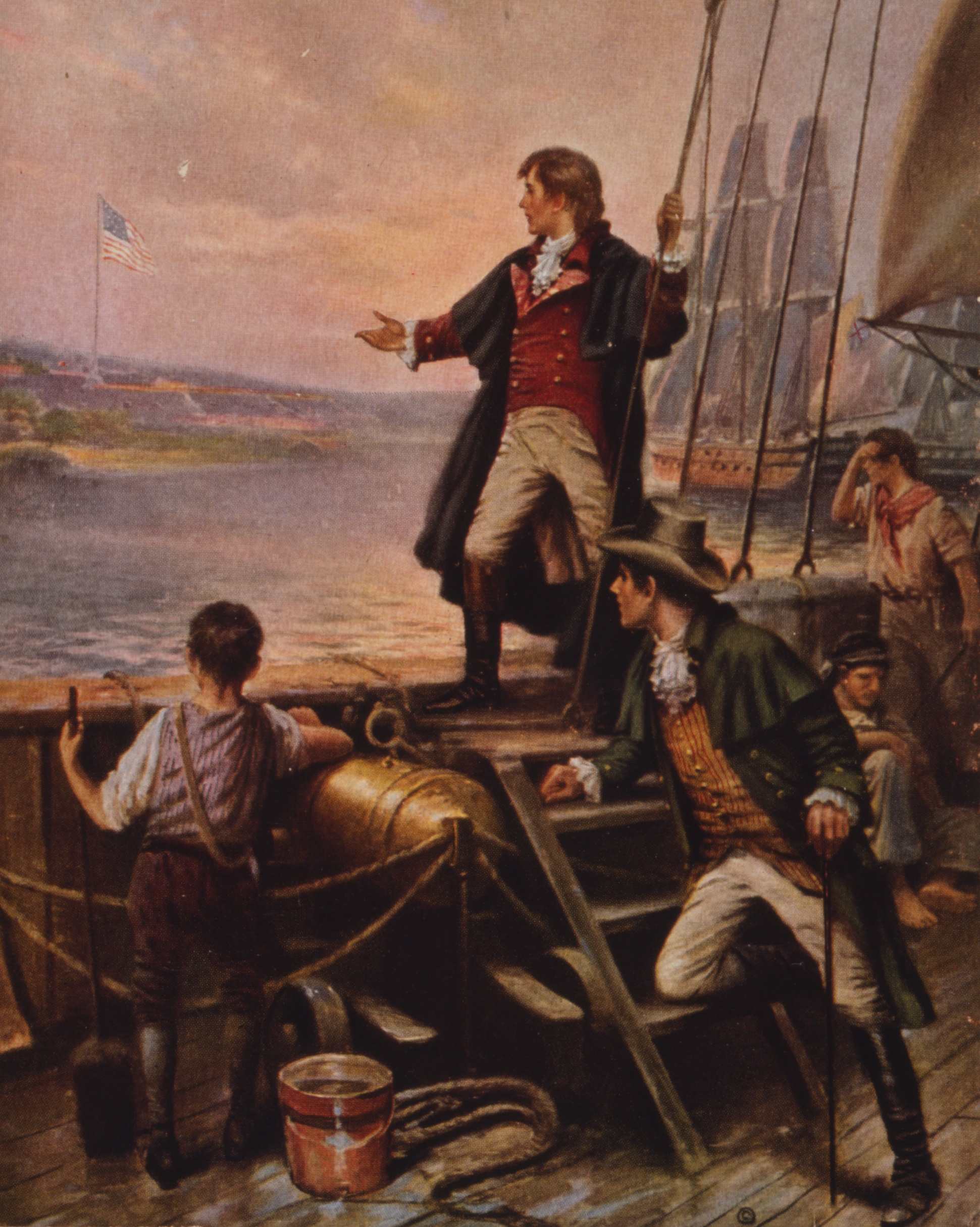
I even checked the lyrics of the Star-Spangled Banner, to make sure Francis Scott Key penned a question on September 18, 1814, and the ? was not a scurrilous punctuation, stuck in by someone protesting the state of our nation. The accuracy of the question mark was confirmed, of course.
Many readers may wonder — as I do — how could a person have missed the ? for all these decades, through singing the national anthem hundreds of times.
After all, Key’s question mark is consistent with a famous line attributed to Benjamin Franklin. At the end of our constitutional convention on September 17, 1787, Elizabeth Willing Powel of Philadelphia asked Franklin, “Well, Doctor, what have we got, a republic or a monarchy?” Franklin reportedly replied, “A republic, if you can keep it.”
Donald Bryson has observed that Franklin’s words encapsulate “the fragile and participatory nature of the newly formed American government. His words serve as both a description of the system’s design and a warning that its survival depends on the active engagement and virtue of its citizens.”
Our democracy remains fragile, and still needs active, informed, and virtuous citizens to maintain it.
It is painful to witness the behavior of President Donald Trump, who got military draft exemptions five times, and disparaged the late Senator John McCain for being a prisoner of war (even as recently as the 2024 campaign). Credible sources said Trump privately called those who died in the service of their country “suckers” and “losers.”
And the hypocrisy doesn’t end. Secretary of Defense Pete Hegseth attacked the press for prominently reporting on the deaths of U.S. soldiers (including Iowans), because it made Trump look bad.
Trump is largely to blame for the current state of chaos in domestic and international actions, which validates the many who warned that he is not fit to be president.
The loss of U.S. respect in global affairs will saddle us the rest of our lives. The best we can work toward is to survive to vote this November. Then we may somehow begin to repair the damage Trump is doing, bolstered by unanimous support from Iowa’s Congressional delegation.
Meantime, Trump’s rampages will continue as he ignores those who know better. For example in her March 3 post, Heather Cox Richarson reported: “About a week before Trump launched Operation Epic Fury, attacking Iran alongside Israel, Chairman of the Joint Chiefs of Staff General Dan Caine warned that the lack of support from allies and depleted reserves of interceptors and Patriot missiles would make an attack on Iran risky.”
American voters have so far failed to live up to Franklin’s challenge about keeping our republic.
The Des Moines Register’s March 5 staff editorial pointed out, “The American people depend on their elected officials to demand clear and convincing assurances that military action can’t be avoided. Congress did not demand it, and Trump hasn’t provided it. Because they treated the onset of war so trivially, countless lives will never be the same.”
“Countless” is an understatement when it comes to the lives Trump has harmed.
3 Comments
No title
A very timely and important reminder. 2026 is an election year
Linda Schreiber Fri 13 Mar 8:35 AM
Election most important
For years we have heard this election year is the most important., but this time our relationship with the world is at stake. The Orange man has set back our standing in the world by eons. Our election this fall gives us a final chance to set him back with a Democratic majority.
GMcGdem Fri 13 Mar 11:37 AM
we are faced with generations of voters
who know little to noting about civics/governance, science/health, economics, education, media literacy, etc, and historically low levels of trust in actually qualified experts. We desperately need Dem leaders/officials to be loud and proud in their support of Higher Ed, trained experts, and the like to help establish new norms and help them respond positively to truthful messaging like
dirkiniowacity Fri 13 Mar 11:56 AM