desmoinesdem

Posts 123 Comments 0

What's the smart play for Vander Plaats?

Bob Vander Plaats had a strong showing in the Republican primary for governor, winning 41 percent of the vote despite being massively outspent by Terry Branstad. He hasn’t endorsed Branstad yet, and the post-primary meeting between the two candidates reportedly “did not go well”. That sparked chatter about Vander Plaats running for governor as an independent candidate. He ruled out that option during the Republican primary campaign, but notably has said nothing during the past week to dispel the rumors. I figured he was trying to keep Branstad guessing in the hope that Branstad would choose a Vander Plaats loyalist as a running mate (perhaps retiring State Representative Jodi Tymeson). But no one from the Vander Plaats camp even made Branstad’s short list, and the final choice, Kim Reynolds, looks straight out of the playbook of the religious right’s nemesis Doug Gross.

Vander Plaats will be the featured guest on Steve Deace’s WHO radio program today at 5 pm, on the eve of the Iowa GOP’s state convention in Des Moines. Like Terry Branstad, I won’t be listening to Deace’s show, but I do enjoy a little scenario spinning about the options facing Vander Plaats.

UPDATE: Vander Plaats said he hasn’t decided yet whether to run as an independent candidate. First thoughts on his comments today are after the jump.

Continue Reading...

EMILY's List endorses Roxanne Conlin

Lots of people have asked me this spring when EMILY’s List is going to get behind Roxanne Conlin’s campaign for U.S. Senate. Now we have our answer:

For Immediate Release

June 25, 2010

EMILY’s List Endorses Roxanne Conlin for United States Senate

WASHINGTON, D.C. – EMILY’s List, the nation’s largest financial resource for women candidates, today announced its endorsement of Roxanne Conlin in her campaign for the Unites States Senate.

“EMILY’s List is thrilled to announce our support for Roxanne Conlin in her campaign to be Iowa ‘s next United States Senator. Roxanne has proven time and again that she is a strong and determined advocate for the people of Iowa ,” said Stephanie Schriock , president of EMILY’s List. “This year, more than ever, is it crucial that we elect smart, effective and capable leaders to take on powerful special interests and those who put corporations over American families. Roxanne Conlin has been fighting for families her entire career. She is not afraid to take on big challenges and stand up for Iowans in the court room or on the Senate floor. EMILY’s List is proud to endorse Roxanne Conlin for the United States Senate.”

“Chuck Grassley has served in Congress for over three decades. Three decades of taking more money from PACs than he has from people.  Iowans don’t need a career politician concerned with his next election,” Schriock continued. “Roxanne is a former United States attorney, Democratic nominee for governor, the first woman president of the American Association for Justice, and a grandmother who is concerned about the next generation, who is poised to move this seat to the Democratic column in November.”

A lifelong champion for women’s rights, Conlin founded and was the first chair of the Iowa Women’s Political Caucus, the president of NOW’s Legal Defense and Education Fund and, while serving as Iowa ‘s assistant attorney general, she wrote the first law of its kind protecting rape victims. Conlin later served as United States Attorney for the Southern District of Iowa, where she worked with law enforcement, led major drug busts and cracked down on violent crime.

EMILY’s List is the nation’s largest resource for women candidates. In the 2007-2008 cycle, EMILY’s List raised more than $43 million to support its mission of recruiting and supporting women candidates, helping them build strong campaigns, and mobilizing women voters to turn out and vote. Since its founding in 1985, EMILY’s List has worked to elect 80 pro-choice Democratic women to the U.S. House, 15 to the U.S. Senate, nine governors, and hundreds of women to the state legislatures, state constitutional offices, and other key local offices.

For more information on EMILY’s List, please visit www.emilyslist.org.

This endorsement is bound to further raise Conlin’s profile on the national scene and bring in more donations from around the country.

This week the Cook Political Report moved its rating on this race from safe Republican to likely Republican. That’s where most other election forecasters, including Swing State Project, have had the race for some time.

Continue Reading...

Events coming up this weekend and next week

The big event in central Iowa the last weekend in June is the Des Moines Arts Festival downtown, which runs Friday through Sunday. The festival is fantastic for art lovers, but I prefer the “other art show,” which takes place Saturday and Sunday in the Varied Industries Building at the State Fairgrounds. That show is more like a craft fair and has lots of affordable art, jewelry, woodworking and clothing. I like buying blank note cards created by Iowa painters and photographers. Both art shows have craft activities for kids.

Follow me after the jump for the rest of the calendar for the coming week. As always, post a comment or send me an e-mail if you know of an event I’ve left out. Iowa Democrats, please let me know about your planned public events, including fundraisers, canvassing, news conferences, and open houses. Send an e-mail with event details to desmoinesdem AT yahoo.com.  

Continue Reading...

Early reaction to Branstad's choice of Kim Reynolds

A string of prominent Iowa Republicans spoke out today praising Terry Branstad’s choice of State Senator Kim Reynolds for lieutenant governor. IowaPolitics.com posted the Branstad campaign’s press releases with encouraging words from Iowa GOP Chairman Matt Strawn, Iowa Senate Minority Leader Paul McKinley, Iowa House Minority Leader Kraig Paulsen, former Congressional candidate and tea party favorite Dave Funk, former gubernatorial candidate Christian Fong, and Iowa’s representatives on the Republican National Committee, Steve Scheffler and Kim Lehman. Scheffler heads the Iowa Christian Alliance, and Lehman is a past president of Iowa Right to Life.

The Branstad campaign is anxious to avoid an embarrassing display of support for Bob Vander Plaats at this Saturday’s Republican state convention. Today they hit convention delegates with an e-mail blast and robocalls stressing Reynolds’ “conservative credentials.” The strong words from Scheffler and Lehman in support of the ticket may prevent any media narrative from developing about religious conservatives rejecting Branstad. The Iowa Family Policy Center (viewed by many as a rival to the Iowa Christian Alliance) backed Bob Vander Plaats in the Republican primary and vowed not to endorse Branstad against Democratic Governor Chet Culver. That group recently affirmed that Branstad would need to undergo a “fundamental transformation” to win their support in the general election campaign.

Lehman wrote at the Caffeinated Thoughts blog today that Reynolds’ “record speaks for itself.” Lehman’s long list of conservative bills co-sponsored by Reynolds in the Iowa Senate impressed Caffeinated Thoughts blogmaster Shane Vander Hart. He supported Rod Roberts for governor and was a leader of the petition drive lobbying Branstad to choose Roberts as his running mate.

To my mind, Reynolds’ record in the Iowa Senate says only that she sticks with the consensus in the Republican caucus. She has not taken any unusual positions or been outspoken on any major issues under consideration. An acquaintance I spoke with today, who spends a lot of time at the capitol every year during the legislative session, had not even heard of Reynolds before this week. That’s how low her profile has been during her two years at the statehouse. Reynolds may be a reliable back-bencher for conservatives, but I don’t see her as a strong advocate for the religious right. She doesn’t have the stature to drive the agenda if Branstad is elected. Like Todd Dorman wrote yesterday, the lieutenant governor gets to do “whatever the governor lets you do. And in a Branstad administration, if the past is an indicator, his mate will be the special director of the Department of Not Much.”

Nor is there any indication that Reynolds would urge Branstad to make social issues a priority. I think this pick indicates the business wing of the Iowa GOP is fully in charge–or at least one faction in that wing. Others in the business community appear to have been pushing for Jeff Lamberti or Jim Gibbons to be selected as Branstad’s running mate.

Lieutenant Governor Patty Judge spoke about Reynolds today on behalf of the Culver campaign. She suggested that Reynolds may not help Branstad with the social conservatives who supported other candidates for governor, because she “comes out of the same camp as Terry and Doug Gross rather than out of the camp of Bob Vander Plaats or Mr. Roberts.” In a press release and news conference, Judge also emphasized that we don’t know much about Reynolds’ views on key issues, and that her learning curve will be steep, because she has relatively little experience at the statewide level: “It will take a lot of study on Kim’s part. […] If [Branstad] keeps her in the basement in a small office as he did [former Lieutenant Governor] Joy Corning, then she’s not going to have much of an opportunity to know what’s going on.” Say what you will about Patty Judge (I’m not a fan), but she did have a strong legislative record and eight years of holding statewide office going into the 2006 campaign. She has had real influence on policy in the Culver administration.

Being a blank slate may have its advantages, however. Iowa State University Professor Steffen Schmidt thinks Reynolds was a good choice because she is so unknown that she won’t turn voters off or take attention away from Branstad.

Share any thoughts about the Branstad/Reynolds ticket in this thread.

UPDATE: Jason Hancock pointed out at Iowa Independent:

Kim Lehman, another member of the Republican National Committee and formerly president of Iowa Right to Life, praised Reynolds’ selection and her legislative record, ticking through each of the bills she has sponsored since entering the state Senate in 2008 and concluding, “Reynolds went into office and took the bull by the horns and got busy.”

However, a closer look at the bills Reynolds signed on to reveals she only sponsored one piece of legislation on her own – a requirement that the Department of Natural Resources develop depredation plans to fill harvest quotas of antlerless deer in each county that have not been met at the end of the last established deer hunting season each year.

Other than that, she nearly always joins with all or a large majority of the state Senate’s 18 Republicans to push bills.

FRIDAY UPDATE: Reynolds gave an interview to Kathie Obradovich and spoke about being a recovering alcoholic. This is not going to be an issue.

The Branstad campaign is trying to counter opposition to Reynolds over her support for a recreational lake project that angered some property rights advocates. Today the campaign released an endorsement from State Representative Jeff Kaufmann, who tried to intervene in that dispute on the side of property owners.

“I remain dedicated to the fight for private property rights in this state,” said Kaufmann. “The last four years of Democratic control of the Legislature has yielded no strengthening of these rights.  The Democratic majority has not allowed debate of a single property rights bill despite overwhelming support for the 2006 landmark legislation.”

“Our attempts to protect property rights will be thwarted, as usual, by Governor Culver and Democratic leadership without Republican control of the Legislature,” added Kaufmann. “To me, all other property rights discussions are secondary to that goal.  I look forward to working with Kim Reynolds in the future to protect property owners in the future.”

The Branstad campaign also sent conservative blogger Shane Vander Hart a statement from Reynolds about eminent domain:

I fully support the 2006 legislation that curtailed the use of eminent domain to take private property. I do not support eminent domain for commercial development purposes. I support eminent domain only for essential public services.

That answer satisfied Vander Hart. However, one issue with these recreational lake projects (like ones proposed for Page County, Clarke County and Madison County in recent years) is that the advocates will claim the land grab serves an essential public service, like providing more drinking water. However, analysts dispute whether the lake is really needed as a drinking water source, or whether that’s a ruse to obscure the real goal behind the project. A few people stand to make a lot of money if the farmland they own can be developed as lakeshore property. So the question is whether the state would allow other people’s farmland to be condemned in order to create a lake that’s basically a private commercial development.

Continue Reading...

Branstad sticking with Doug Gross playbook

Terry Branstad made it official this morning, picking State Senator Kim Reynolds to be the Republican candidate for lieutenant governor. Reynolds is a former Clarke County treasurer and past president of the Iowa county treasurer’s association who was elected in 2008 to represent Senate district 48 in southern Iowa. The Des Moines Register’s Tom Beaumont published more background on Reynolds here. His piece depicts her as “solid on core GOP issues” and “focused on economic development.”

Looks like Branstad has picked precisely the kind of candidate his former chief of staff Doug Gross would want on the Republican ticket.

Continue Reading...

Conflicting rumors on Branstad running mate

IowaPolitics.com reports that Terry Branstad will announce State Senator Kim Reynolds of Osceola as his running mate on June 24. Reynolds is in the middle of her first term representing Iowa Senate district 48, from which Jeff Angelo retired in 2008. Registered Republicans outnumber Democrats in that district by about 3,500 as of June 2010. Some background on Reynolds:

She served four terms as the Clarke County Treasurer, was appointed by Governor Branstad in 1996 to 2001 to serve on the Iowa Public Employees Retirement System Board and was elected president of the Iowa State County Treasurer’s Association in 2000.  She also served on the three-person Senior Policy Team that was instrumental in the research, development and implementation of the Iowa State County Treasurers Association website which brought online property tax and vehicle registration applications to all 99 counties at no cost.

[…] She is a co-founder of the Iowa Republican County Officials Association, a member of the Osceola Tourism board, a former board member of Osceola Main Street and is a member of P.E.O. and TTT.  She is also a member of the Osceola United Methodist Church.

Earlier today, Linn County Supervisor Brent Oleson, who is also a Republican blogger, cited unnamed “GOP insiders” as saying Branstad planned to tap former State Senator Jeff Lamberti of Ankeny. Lamberti retired from the Iowa Senate in 2006 in order to run for Congress against Representative Leonard Boswell. UPDATE: The Iowa Conservative blog reported today, “we have received information which we believe to be credible and which points to the selection of Jeff Lamberti as Terry Branstad’s Lt. Governor nominee.   This may turn out out be wrong, but our source on this is pretty good, and we’ve made a decision to post the rumor for that reason.”

Branstad plans to tour Iowa on Thursday with his lieutenant governor choice. Events are scheduled in Ankeny, Council Bluffs, Sioux City, Clear Lake, Dubuque, Davenport and Cedar Rapids.

UPDATE: Click here for background on Reynolds’ voting record in the Iowa Senate. She seems to be a typical party-line Republican legislator. This page lists her committee assignments, as well as links to bills and amendments she has sponsored.

SECOND UPDATE: Via Jason Hancock at Iowa Independent:

Longtime Branstad critic and Christian radio host Steve Deace was less than excited about Reynolds on Tuesday, saying that several residents of Reynolds’ district were on his show “complaining that she wouldn’t protect their private property from local government trying to confiscate” under the U.S. Supreme Court’s landmark decision, Kelo vs. the City of New London.

Social conservatives may not be wild about Lamberti as Branstad’s running mate. Although Lamberti is anti-abortion, people like Deace still haven’t forgotten “[h]is vote to confirm radical sodomy activist Jonathan Wilson to the State Board of Education while in the state senate[…].”

THIRD UPDATE: Iowa Public Radio’s Jeneane Beck: “Republican insider says he’s 99.9 percent sure Branstad’s pick for Lt. Gov is State Senator Kim Reynolds of Osceola.”

FOURTH UPDATE: Todd Dorman of the Cedar Rapids Gazette makes the case for not caring whom Branstad will choose:

I know it’s supposed to be a coveted office that will magically transform its occupant into the next big thing, but it’s still a lousy job. Branstad’s the last loot-guv to get a promotion, and that’s back when you had to actually win a separate statewide vote and presiding over the Senate was included in the duties.

Nowadays, you get to do whatever the governor lets you do. And in a Branstad administration, if the past is an indicator, his mate will be the special director of the Department of Not Much.

Sounds perfect for a state senator no one’s ever heard of.

THURSDAY AM UPDATE: Branstad did pick Reynolds. My first take is here.

Continue Reading...

New Culver ad starts conversation about Branstad's values

Governor Chet Culver’s campaign released a second television commercial spotlighting Terry Branstad’s record. Like the Culver tv ad that debuted last week, the new commercial mentions Branstad’s dismal record on fiscal issues. It also mentions eight pay raises that Branstad signed for himself, some of them during very tight budget years:

Transcript:

As Governor, Terry Branstad admitted “his books were never balanced.” According to the State Auditor, Terry “cooked the books.” And when state unemployment hit a record high, Branstad asked for a raise. When Terry cut foster care, Branstad took another raise. When the state couldn’t pay its bills, Branstad raised our taxes and raised his pay once again. Terry Branstad: Cooked books, Raised Taxes, Eight pay raises. A past we can’t repeat.

A Culver campaign press release with supporting facts and citations from news reports is after the jump.

We all know Branstad wasn’t a good manager of state finances, but I like the way this ad touches on his deeply flawed priorities as well. Branstad started seeking a pay raise during his very first year in office, when unemployment peaked at 8.5 percent. A few years later, this guy wasn’t ashamed to take home more money even as he was cutting foster care programs.

I hope future Culver ads will underscore how cutting state assistance to vulnerable Iowans has long been Branstad’s knee-jerk preference, rather than his last resort. The foster care cuts highlighted in Culver’s new commercial occurred in 1987. When Iowa faced a budget crisis in 1992, Branstad brought two money-saving ideas to a meeting with state lawmakers in advance of a special legislative session: first, cut spending on foster care, and second, cut Medicaid programs that helped children buy eyeglasses and keep senior citizens out of nursing homes. During this year’s campaign, when asked an open-ended question about how he would cut state government, Branstad

said he’s still looking for ideas but did mention reforming the state’s mental health system and rolling back Medicaid, which has been expanded to cover more people, including children. He said state employees should pay for their health insurance like private sector employees.

That’s classic Branstad. Gee, I haven’t figured out yet how to make the budget numbers add up, but why not change Medicaid so that fewer people qualify? While we’re at it, let’s stop helping tens of thousands of families send their four-year-olds to preschool.

Branstad’s record of incompetence should be at the center of the gubernatorial campaign, but let’s not forget about his skewed priorities.

UPDATE: Conservative blogger Gary Barrett claims the Culver ad distorts the facts on Branstad’s pay hikes. The Culver campaign released a response to Barrett’s post, which you’ll find after the jump.

The Branstad campaign cited a Des Moines Register report from 1982 on how Branstad didn’t want a pay raise and might veto such a bill. Culver’s campaign leaped on that as evidence Branstad “said one thing and did another on pay raises.”

Continue Reading...

IA-03: Zaun internal poll shows lead over Boswell

Victory Enterprises, a consultant for Republican Brad Zaun’s Congressional campaign, conducted a poll showing Zaun leading incumbent Representative Leonard Boswell by 41 percent to 32 percent, with 27 percent undecided. The poll surveyed 400 “likely voters” in Iowa’s third district on June 17, producing a margin of error of plus or minus 4.9 percent. The Des Moines Register’s Kathie Obradovich noticed some unusual features of the sample:

One thing to note is the party distribution: More Democrats (43 percent) than Republicans (38 percent) but only 19 percent independents.  As of the most recent Secretary of State report on voter registration, Democrats make up 38 percent of registered voters in the 3rd District; Republicans, 30 percent and no-party, 32 percent.

The campaign screened to include voters with a history of participating in off-year general elections. That’s why there are fewer independents. The Zaun campaign says they’re not as faithful about voting in off-year elections as registered party members. So these poll results are likely to look different from polls that allow for more participation from independents. It also puts a premium on Polk County voters, which the campaign says is based on history but is also where Zaun is by far the strongest.

No-party voters are less likely to turn out for off-year elections, but 19 percent sounds low. In 2006, about 26 percent of general election voters in Iowa were independents. I don’t know what that figure was in IA-03. Boswell’s campaign manager, Grant Woodard, cast doubt on the poll’s reliability:

“Internal polls created by hired political consultants are almost always bogus.  This “poll” is highly suspect – 30.3 percent heard of him but have no opinion and another 18.3% have never heard of him and have no opinion whatsoever.  In other words if nearly 50 percent of the participants don’t have an opinion on Sen. Zaun how could they come to this conclusion?  It isn’t worth the paper it is written on.   Clearly this “poll” was cooked up in order for Sen. Zaun to jumpstart his notoriously tepid fundraising.   We understand the games that they are trying to play.”

Obradovich posted the Zaun campaign’s defense of the poll here.

I would love to see an independent survey on this race, but public polls of Congressional districts are hard to come by. Zaun was campaigning actively around IA-03 all spring, as he faced a competitive Republican primary, so he may have gotten a bump. Boswell hasn’t kicked his re-election bid into gear yet. When he starts spending his war chest, we’ll get a better sense of how worried he is about Zaun. If Boswell goes negative on Zaun early, instead of talking primarily about his own record, that’s a sign his own internal polling is not encouraging.

Oddly, I agree with Krusty on Zaun’s weaknesses going into the general:

In Zaun, Boswell will face a tenacious campaigner, but also someone that couldn’t raise much money and has a 20-year record to pick apart.

There is no doubt that Zaun will try to make this campaign about the bailouts, Obamacare, and all of that, but Boswell is going to make this race to make this about agriculture and rural issues.

Zaun’s primary opponents said little about his record beyond criticizing his vote for an anti-bullying bill. Boswell’s campaign will probably educate third district voters about other aspects of Zaun’s record as state senator and mayor of Urbandale.

Continue Reading...

"Road diet" hasn't affected commute on major Des Moines artery

When the city of Des Moines put Ingersoll Avenue on a “road diet” last month, some locals warned the change would inconvenience drivers and hurt area businesses. I drive down Ingersoll several times a week and have noticed no change in the traffic flow. Now a new study shows commuters have hardly been affected:

In early May, Ingersoll was “re-striped” between Polk Boulevard and Martin Luther King Jr. Parkway, decreasing the number of vehicle lanes from four to three. There is one lane in each direction, a center left-turn lane and bicycle lanes on both sides of the street.

In the worst case, travel times increased roughly 20 seconds for westbound motorists traveling between Martin Luther King Jr. Parkway and 42nd Street during the afternoon rush hour, said Gary Fox, the city’s traffic engineer. There were essentially no changes overall and slight improvements in midday vehicle travel times, he added. […]

The Ingersoll plan is part of a broader “complete streets” initiative that aims to make Des Moines streets more accessible to bicycles and pedestrians.

Giving people safe alternatives to driving is the main reason to adopt “complete streets” policies, but this re-striping also created about 50 additional on-street parking spaces, which helps Ingersoll business owners and their customers. Click here for more information on road diets and here to learn about complete streets. Like Des Moines, the small town of Cascade, Iowa City and the Johnson County Council of Governments have also adopted complete streets policies. Earlier this year, Dubuque received a federal grant to help residents of the historic Millwork District commute to work on foot, bike, or via public transit.

LATE UPDATE: On June 24 I had to drive west almost the whole length of Ingersoll just before 5 pm, which must be around the worst time for “rush hour” traffic. I didn’t notice any problems, and hardly saw any congestion except for the stretch between 24th and 31st streets. Even that wasn’t bad.

Continue Reading...

Steve King update

Representative Steve King ventured to Colorado to speak at two events on Saturday. A tea party splinter group hastily arranged the “United We Stand with Arizona!” rally in Loveland after Northern Colorado Tea Party organizers made clear King would not be welcome speaking at their “Remember November” rally later in the day. King told his followers on Twitter, “Colorado trip was a complete success. Turnout surpassed projections in both Loveland and Elizabeth. No better friend than Tom Tancredo.”

King didn’t have such kind words for Cory Gardner, the Republican candidate in Colorado’s fourth Congressional district. Last week Gardner canceled a fundraiser King offered to headline. Speaking to the Coloradoan newspaper, King declined to endorse Gardner for Congress. King’s buddy Tancredo expressed hope that Gardner would show “more spine in Congress” than he did reacting to King’s controversial remarks on race.

At the immigration rally, King spoke near a sign that said, “Political correctness = intellectual fascism.” Here’s a clip in which King describes his vision for protecting us from illegal immigrants. For the price of $2 million per mile, he claims, we could build a fence, a road, and a concrete wall (with wire at the top) running the whole length of our southern border. He characterized that as a bargain compared to the $6 million per mile the U.S. spends on our current border security policy. With an offensive flourish that has become his trademark, King boasted to his audience, “If you give me $6 million a mile there will not be a cockroach get across my mile.”

The group America’s Voice, which advocates for comprehensive immigration reform, has compiled this archive on King’s comments about immigration and ties to “anti-immigrant extremist groups.” He has indicated in the past that “his words are weighed ahead of time, never off the cuff and designed to stir discussion of key issues.” King succeeds in drawing national attention to himself and his agenda. But residents of Iowa’s fifth district pay the price, Democratic challenger Matt Campbell noted last week: “Instead of focusing on moving America forward, King is busy making polarizing statements. […] King’s polarizing statements and failure to lead is preventing the people he represents here in Iowa’s fifth district from having their needs met.”

King found time in his busy schedule yesterday to speak up for British Petroleum. He agrees with conservatives who feel President Obama has dealt too harshly with the corporation. They object to plans for BP to finance “a $20 billion escrow fund to pay out claims to individuals and businesses harmed by the spill” in the Gulf of Mexico. The way King sees it, Representative Joe Barton was right to apologize to BP for the “shakedown” (hat tip to Deeth). Many other Washington Republicans have distanced themselves from Barton’s views.

Please give some money or time to Matt Campbell for Congress if you are able.

Show us your balanced budget, Terry Branstad

Republican candidate Terry Branstad claims he learned from his mistakes in handling the state budget and says he will “put the focus back on restoring fiscal responsibility and jobs and education” if elected to a fifth term as governor. Not only will he abide by generally accepted accounting principles, he promises, he will veto any bill that calls for spending more than 99 percent of state revenues collected.

Independent analysts have vouched for Iowa’s strong fiscal condition, but Branstad and other Republicans cry “overspending” because the balanced 2010 and 2011 budgets relied on some money from the federal government and from Iowa’s reserve funds. Never mind that supporting state budgets, thereby reducing the need for big service cuts, was one of the primary goals of the American Recovery and Reinvestment Act (2009 stimulus bill). Never mind that unprecedented flood damage in Iowa coincided with the sharpest drop in state revenues in 60 years because of the longest recession since World War II. Branstad claims Iowa should not spend more than 99 percent of state revenues collected in any fiscal year.

Last Friday Branstad used a story on teacher layoffs in Des Moines to score political points, ignoring the fact that education cuts would have claimed far more teachers’ jobs if not for the federal stimulus bill. Click here for more information on ARRA funds allocated to Iowa education programs for the 2010 and 2011 fiscal years.

It’s time for Branstad to put up or shut up. He has a well-staffed campaign and a policy director who served in the Iowa House for ten years. Taking the 2011 budget Governor Chet Culver signed as a starting point, Branstad’s team should figure out how to do without the $328 million in federal fiscal aid (ARRA funds) and the $267 million in reserve funds that budget incorporates.

Then Branstad should produce the budget he would have demanded for fiscal year 2011, which would spend no more than 99 percent of state revenues projected for the year. Let’s see how K-12 education, Medicaid, public safety and other services would fare under Branstad’s “responsible” Iowa budget.

Hint: the spending cuts Branstad endorsed during the primary campaign (ending the preschool program, family planning funding, and reducing administrative costs at Area Education Agencies) would not come close to bringing the budget into balance for 2011.

Also keep in mind that the spending cuts Iowa Republican legislators proposed during the 2010 session were padded with wildly inaccurate estimates of how much could be saved on services to undocumented immigrants.

Voters deserve more than platitudes about fiscal responsibility. Let us compare the 2011 budget Iowa Democrats adopted with the one Branstad would have demanded.

Weekend open thread: Catching up on the news edition

Who else is watching the World Cup? I am surprised by how much my kids are enjoying the games, even though they don’t play soccer and it’s such a low-scoring sport. Des Moines business owner Tanya Keith and her husband have gone to every World Cup since 1994, and Tanya is blogging here about her family’s trip in South Africa. What I want to know is, how are her two young kids coping with the vuvuzela noise at the games? It sounds deafening even on tv.

I wasn’t around last weekend to write up the Iowa Democratic Party’s state convention in Des Moines. Radio Iowa’s blog covered most of the highlights here. Sue Dvorsky of Iowa City is the new IDP chair, replacing Michael Kiernan, who needs to have surgery on a tumor near his salivary gland. Iowa Democrats nominated Jon Murphy as our candidate against State Auditor David Vaudt. Read more about Murphy at Radio Iowa or at Iowa Independent. I am so glad we’re not giving Vaudt a pass.  

Convention delegates also voted to change party rules so that the gubernatorial nominee can choose the lieutenant governor candidate. The move was intended to undermine Barb Kalbach’s efforts to replace Lieutenant Governor Patty Judge on the Democratic ticket, and will make it impossible for an activist to do something similar in the future.

John Deeth has been pretty harsh on Kalbach, suggesting it’s a waste of time for her to run against Judge when her own Republican state representative and senator don’t have Democratic opponents. I see things differently. Kalbach said in announcing her candidacy, “I am taking this opportunity to represent the progressive, grassroots base of the Democratic Party who feels the issues that they have put forward have been ignored at the state level.” Kalbach wouldn’t have run if the Culver administration and Democratic legislative leaders had done anything to limit factory farm pollution during the past four years. She wouldn’t have run if the governor had done anything to advance the cause of local control (agricultural zoning), which he claimed to support during the 2006 campaign. Kalbach wouldn’t be able to draw attention to those failures as a candidate for the Iowa House or Senate in a conservative district. By the way, Culver would have an army of grassroots volunteers now if he had listened less to Patty Judge. He would also have a great campaign issue to use against Terry Branstad, on whose watch factory farm pollution became a much bigger problem in our state.

Moving to Iowa’s U.S. Senate race, while I was away a group called Americans United for Change started running this television commercial against Senator Chuck Grassley. The ad mentions campaign contributions Grassley has received from oil interests and draws a line between the catastrophe in the Gulf of Mexico and Grassley’s vote for a “resolution of disapproval” that would have limited the Environmental Protection Agency’s ability to regulate greenhouse gas emissions. It’s a poor ad, because as Grassley’s office noted, that particular vote had little to do with big oil or offshore drilling (click here for more background). In voting for the Murkowski amendment, Grassley was carrying water for big coal, utilities that rely on fossil fuels, corporate agriculture interests and major industrial polluters.

Grassley has done plenty throughout his career to represent corporate interests rather than the public interest. There’s no excuse for such a sloppy attack ad.

The Atlantic’s Marc Ambinder interviewed Grassley’s opponent Roxanne Conlin yesterday, and the Cedar Rapids Gazette tried to make a big deal out of her misspeaking on when Grassley won his first election. Rasmussen’s latest Iowa poll of 500 likely voters on June 14 found Grassley ahead of Conlin by 54 percent to 37 percent. The previous Rasmussen survey, taken in late April, had Grassley leading Conlin 53-40. I would like to see other polling of this race. The Washington Post published a feature on Scott Rasmussen this week, including some criticism of his methods.

This thread is for anything on your mind this weekend. Also feel free to post any links to good reads. I am working my way through this article by a self-described Tea Party consultant.

New Branstad running mate speculation thread (updated)

Terry Branstad’s campaign is building up suspense surrounding his choice for lieutenant governor, promising to reveal the name first to those who sign up for campaign texts. Before that happens, I thought I’d invite Bleeding Heartland readers to another round of scenario spinning.

A unity ticket of Branstad and Bob Vander Plaats, who won 40 percent of the votes in the GOP primary, was never in the cards. I see that Branstad supporter Craig Robinson is making sure everyone hears that Vander Plaats allegedly demanded the lieutenant governor slot as his price for not running as an independent candidate. Making Vander Plaats into the bad guy now will help Branstad’s people discredit him if he tries to run as a spoiler. I’ll have more to say on that in a future post, but I can’t see how Vander Plaats could organize or finance a third-party bid. His key staffer, Eric Woolson, just took a job with Senator Chuck Grassley’s re-election campaign.

Getting back to Branstad’s running mate, the obvious choice is Rod Roberts, who finished a distant third in the June 8 primary. He was the best surrogate Branstad could have hoped for during the primary campaign, and the two men acted friendly toward each other during the third gubernatorial debate. A bunch of Republicans, mostly from western Iowa, are lobbying Branstad to pick Roberts, but Roberts is wisely not begging for the job in public.

Roberts might reassure some social conservatives about Branstad’s intentions, but a different way to unify the party would be to choose someone who endorsed Vander Plaats for governor. Retiring State Representative Jodi Tymeson might fit the bill; she co-chaired the Vander Plaats campaign and probably would have been his running mate had he pulled off an upset in the primary. My hunch is that Branstad won’t pick a Vander Plaats supporter. If Branstad felt he needed a Vander Plaats loyalist by his side to win in November, things might be different, but recent polls may have reassured him that he can choose whomever he wants. Why reward someone who was in the opposing camp?

Some people expect Branstad to pick a running mate from eastern Iowa, because about two-thirds of this state’s voters live east of I-35. Plenty of current and former state legislators from eastern Iowa endorsed Branstad during the primary campaign. I wouldn’t rule out former gubernatorial candidate Christian Fong either. He didn’t endorse anyone before the June 8 primary, but key backers of his brief campaign, notably Iowans for Tax Relief, got behind Branstad. Fong would bring generational balance to the ticket. He has been building a new organization, the Iowa Dream Project, which is seeking to increase youngish conservative voter turnout. Since Branstad is copying the Obama campaign’s tactic for getting people to sign up for text messages, why not pick a running mate who is well-versed in Obama-style campaign rhetoric?

On the other hand, Craig Robinson has argued that Branstad doesn’t need help in the east, where he did well in the primary. Branstad’s worst performance was in central Iowa, so Robinson argues that Branstad needs a running mate who’s a social conservative well-known in central Iowa. He pushes former State Senator Jeff Lamberti, who might have beaten Leonard Boswell in a better year for Republicans, and unsuccessful Congressional candidate Jim Gibbons. (But wait, I thought Coach Gibbons “burned the boats!”) Other possibilities named by Robinson include former state legislator Carmine Boal, who has been policy director for the current Branstad campaign. Robinson didn’t suggest Tymeson or any Vander Plaats endorser, as far as I am aware.

Several members of the business community made Robinson’s “short list” for Branstad running mates, including Doug Reichardt, whose name I kept hearing in this context last fall, and Vermeer Corporation CEO Mary Andringa. Last year there was some speculation Andringa would run for governor herself.

What do you think, Bleeding Heartland readers? Who would be a smart lieutenant governor pick for Branstad, and whom will he choose?

UPDATE: Tom Beaumont published a piece on Branstad’s running mate in the Sunday Des Moines Register. Christian Fong says Branstad hasn’t called him, which probably means he is not under serious consideration. (Branstad plans to announce his choice before the June 26 Iowa GOP state convention.) Also off the short list, according to Beaumont, are Vermeer CEO Andringa and former State Senator Chuck Larson.

However, former State Senator Jeff Lamberti is being considered and told the Register that while he is “certainly not looking for a job,” it “would be pretty hard to say no” if asked to be lieutenant governor. Jim Gibbons is also apparently on the list, and he is looking for a job, because he quit his last job to run for Congress.

Beaumont’s article indicates that Branstad is considering Rod Roberts, Iowa GOP chair Matt Strawn and State Senator Kim Reynolds of Osceola (Senate District 48). I know little about Reynolds and don’t see the advantage of choosing her over someone like Carmine Boal or Sandy Greiner, who have worked closely with Branstad. Reynolds is the only elected official I know of who has a protected Twitter account that points to a spammy-looking website.

Grassley backs Republican filibuster, killing jobs bill

The Senate version of a bill designed to create jobs, support state budgets and extend various tax credits and benefit programs failed to overcome a Republican filibuster yesterday. Tom Harkin was among 56 members of the Democratic caucus who voted for the cloture motion (which would end debate on the bill), but Ben Nelson of Nebraska and Joe Lieberman of Connecticut voted with all the Republicans present, including Chuck Grassley, to kill the bill (roll call here). Joan McCarter observed that Senate Majority Leader Harry Reid

voted yes, without changing his vote, signaling that this iteration of the bill is indeed dead.

Reid followed the vote by attempting to pass the emergency provisions of the bill, the “doc fix,” unemployment benefits extension, and FMAP as well as the homebuyer tax credit, as separate bills under unanimous consent. McConnell objected to each, so we’re stuck in further limbo.

Extending unemployment benefits should be a no-brainer when the percentage of unemployed Americans who have been out of work for more than six months is higher “than at any time since the government began keeping track in 1948.” Without the “doc fix,” medical providers’ reimbursements for Medicare patients stand to drop about 20 percent. FMAP stands for Federal Medical Assistance Percentage funding, relating to federal government reimbursements for part of each state’s Medicaid spending. The 2009 stimulus bill temporarily raised FMAP payments for states during the recession, with larger increases going to states with higher unemployment rates. Failing to extend this provision will put state budgets under further strain for the 2011 and 2012 fiscal years.

Republicans who blocked this bill claim we should not be adding to the federal deficit. A spokesman for GOP enabler Ben Nelson laid out his views here. Ezra Klein pointed out a few glaring problems with the analysis: the federal budget can’t start approaching balance with unemployment at 9 percent, polls show Americans are much more concerned about jobs than the deficit, and the current rate of economic recovery is “far, far too slow to really dent unemployment.” Meanwhile, the same senators who claim to oppose adding to the deficit also oppose rolling back tax cuts or tax loopholes for the wealthy in order to pay for extending unemployed benefits, state fiscal aid and tax credits.

I share John Aravosis’ view that it was a terrible mistake for President Barack Obama to talk tough about reducing the deficit earlier this year. As Aravosis writes,

[T]he President didn’t want to blame Bush and the GOP for the deficit, and he didn’t want to sufficiently defend the stimulus and explain to people that they had a choice between a Great Depression and a bigger deficit. […] If the public understood that the deficit was a) mostly caused by Bush, and b) not nearly as important as staving off a Depression and creating jobs, the GOP would be facing far more pressure not to launch these filibusters at all.

Perhaps no jobs bill passed this week would alter the economy enough to affect the November elections, but if we accept current unemployment levels and don’t pass additional fiscal aid to the states, the economy may still be very weak leading up to the 2012 election.

Share any relevant thoughts in this thread. From where I’m sitting, the case for Harkin’s filibuster reform proposal has never looked stronger.

Continue Reading...

Read this before using copyrighted music in web videos

Mr. desmoinesdem alerted me to a recent court ruling in Don Henley’s copyright suit against Republican Chuck DeVore for two web videos DeVore made during his unsuccessful U.S. Senate campaign in California. Ben Sheffner has been covering the lawsuit at the Copyrights and Campaigns blog.

Henley sued over web videos that set new lyrics to two of his songs. DeVore changed “The Boys of Summer” to “The Hope of November” in a video that mocked Barack Obama, and he changed “All She Wants to Do Is Dance” to “All She Wants to Do Is Tax” in a video that mocked Senator Barbara Boxer.

DeVore claimed fair use on the grounds that the songs he put in his videos were parodies. The problem for DeVore was that legally, “a parody comments on the work itself; a satire uses the work to comment on something else.” DeVore wasn’t rewriting lyrics like Weird Al Yankovic used to do to make fun of musicians. He was scoring points against Obama and Boxer. If you haven’t paid for the rights to use a song, you have to meet a higher legal standard for satire than for parody.

You can download Judge James Selna’s ruling here. Excerpt:

Even assuming that “parody-of-the-author” is a legitimate transformative purpose, the Defendants’ songs do not satisfy the fair use analysis, as discussed below. “Tax” does not target Henley at all, and “November,” which only implicitly targets Henley, appropriates too much from “Summer” in relation to its slight jab at Henley and risks market substitution for “Summer” or its derivatives.

DeVore had claimed he was mocking Henley as part of the liberal Hollywood elite, but Henley argued in one legal brief that he has given money to some Republican candidates, including John McCain. (Who knew?)

Selna agreed with the plaintiffs’ claim that by using the Henley songs in their videos, DeVore’s campaign supplanted the market for derivatives of the Henley songs, because “licensees and advertisers do not like to use songs that are already associated with a particular product or cause. […] This injury is the very essence of market substitution.”

While Selna granted the plaintiffs summary judgment on the issue of copyright infringement, he did not issue a finding on whether the infringement was willful. (If so, Henley would have a stronger claim for monetary damages.) Sheffner comments, “I assume there will be a jury trial on the issue of willfulness and damages, unless the parties are able to reach a resolution.”

Selna rejected the plaintiffs’ claim that DeVore violated the Lanham Act by giving people the wrong impression that Henley had endorsed DeVore’s Senate campaign. Sheffner explained in this post why he thought Henley would (and should) lose that portion of the lawsuit.

Other candidates and campaign staffers should review this case before they decide to use copyrighted songs in web ads.

LATE UPDATE: Writing for the Electronic Frontier Foundation blog, Kurt Opsahl doesn’t like this court ruling:

The [DeVore] videos were core political speech, the most protected form of speech under the First Amendment. Yet the court blocked them, relying on copyright law. What happened?

The trouble is the misguided way that some courts have distinguished “parody” from “satire” in when measuring fair use. “Parody,” in the world of copyright, means using a work in order to comment on the work itself (or its creator). Parody gets a wide berth under fair use. So, for example, when 2 Live Crew famously sent-up Roy Orbison’s “Pretty Woman,” the Supreme Court found that the use was permitted. A “satire,” in contrast, involves using a work to comment on something other than the work itself.

Some courts have drawn the conclusion that “satires” are disfavored under the fair use doctrine. That’s the mistake the court made in Henley v. DeVore. […]

Satire is most effective when can draw from the well of society’s shared experiences, using common cultural references to leverage the commentary and reach a wider audience. It can take a known quantity, and add new meaning and message – classic characteristics of a fair use.

Fortunately, courts have increasingly begun to understand that fair use can and should apply to transformative satires. So although the judge in Henley v. DeVore got it wrong, other courts will have a chance to recognize the value of satire and fair use.

Click over to read the whole thing.

Continue Reading...

Culver ad: Branstad's record "not worth repeating"

Governor Chet Culver’s campaign launched its first television commercial of the general election:

Transcript:

When the Republican State Auditor says a Republican Governor ‘Cooked the books’ and “kept two sets of books”… you take notice.

As Governor Terry Branstad admitted, “the books were never balanced.”

The state was so broke they couldn’t pay their bills.

Branstad doubled state spending, raised the state’s sales tax, raised the gas tax, even wanted to tax social security.

Cooked books, deficit spending, increased taxes.

Terry Branstad, a record not worth repeating.

If Culver were in a stronger political position, he’d probably lead off with a commercial highlighting his own record–something like the ad his campaign briefly ran last fall. However, Branstad’s been above 50 percent in several recent polls, and that number needs to come down. Branstad has been offering Iowans an airbrushed version of his own record, and this commercial brings up what Branstad wants Iowans to forget. The Culver campaign presents supporting facts and background here.

After the jump I’ve posted the Branstad campaign’s reaction to this ad and the Culver campaign’s rapid response. Note that Branstad’s people are yet again lying about an alleged billion-dollar budget gap.

Continue Reading...

King bound for Colorado, whether Republicans want him or not

Representative Steve King won’t cancel his planned trip to Colorado this weekend, even though the conservatives he had planned to help don’t want to be associated with him. Via Swing State Project’s morning news roundup I found this Loveland Connection article following up on the controversy over King’s recent comments on race. King is not backing down on his claim that President Barack Obama’s “default mechanism” on race “favors the black person.” As I discussed yesterday, the comments prompted Colorado Congressional candidate Cory Gardner to cancel a fundraiser King was supposed to headline and got King uninvited from a Northern Colorado Tea Party rally to be held in Loveland. From the Loveland Connection piece:

King said he called both [Northern Colorado Tea Party director Lesley] Hollywood and Gardner on Tuesday after their cancellation announcements.

“I have spoken with her and Cory Gardner both, and neither one of them disagreed with what I said or the position I have taken,” King said in an interview.

Gardner’s campaign manager, Chris Hansen, flatly rejected King’s characterization of his conversation with the Northern Colorado congressional candidate: “That is not an accurate reflection of Representative Gardner’s views,” he said in an e-mail.

Hollywood was interviewed Tuesday morning but couldn’t immediately be reached for comment after King’s interview.

The Iowa congressman said he told Gardner and Hollywood he’d be in Colorado on Saturday.

“I pointed out to them that I’m coming to Colorado, that’s in my schedule and they’ll have to figure it out from there,” he said.

He declined to elaborate on his weekend plans: “We will make some arrangements so that works out to be effective.”

A spokesman for Weld County District Attorney Ken Buck, a Republican Senate candidate who also will speak at the Loveland rally, also rejected King’s statement.

“His comments do not represent the Tea Party,” Buck spokesman Owen Loftus told The Associated Press.

Stay tuned–this could get interesting over the weekend if the rank and file Colorado tea partiers stand by King. He typically gets a warm reception from tea party crowds, as Joseph Morton noted in this story for the Omaha World-Herald:

King said that the controversy over his comments had been drummed up by liberal activists and that he was surprised both the Gardner campaign and the local tea party leadership “caved” in the face of that controversy.

“That’s not the kind of people I want guarding my back,” King said. […]

King has spoken at numerous tea party rallies, including one in Washington in April. King was introduced to the enthusiastic crowd as a “tea partier on the inside” and a congressman who is “tea party tested and tea party approved.”

He also hung one of the “Don’t Tread On Me” flags popular among tea party regulars outside his Capitol Hill office. He said at the time that the flag has become “the symbol of taking our country back.”

Obama and race also were mentioned in a speech made last month by King.

“When he had an Irish cop and a black professor, who’d he side with?” King asked. “He jumped to a conclusion without having heard the facts. And he ended up having to have a beer summit.

“The president of the United States has got to articulate a mission. And instead, he’s playing race-bait games to undermine the law enforcement in the state of Arizona and across the country.”

Republican Party of Iowa Chairman Matt Strawn clearly wants this controversy to blow over, but King would rather stand his ground, even if he embarrasses fellow Republicans in the process.

UPDATE: King tweeted on Thursday, “I will do media and two events in Colorado Saturday. One at Elizabeth at 11:00, one at Loveland at 2:30 with Tancredo and others.” Can’t wait!

Meanwhile, Iowa Democratic Party Chair Sue Dvorsky said today,

“King’s statements reflect an absolute callous disregard for the truth and is an embarrassment to all Iowans,” Dvorsky said. “I’m calling on Sen. Grassley, Terry Branstad, and Iowa Republicans to join me and the Northern Colorado Tea Party in denouncing Steve King’s irresponsible and divisive comments.” […]

“It’s truly unfortunate that Matt Strawn and other Iowa Republicans haven’t mustered the courage to put him in his place,” Dvorsky said. “This is a Congressman that spends more time trying to make the news than working for his constituents. It’s time for Iowa Republicans to make a stand and let Rep. King know this kind of behavior is not going to be tolerated.”

UPDATE: Isaiah McGee, the rising African American star of the Republican Party of Iowa, defended King in this post at The Iowa Republican blog. The Iowa Democratic Party asked whether Terry Branstad was indirectly defending King, noting that McGee serves as Young Professionals Chair for the Branstad campaign.

Continue Reading...

Republicans find candidate for Iowa House district 16

When the filing deadline for Iowa candidates passed in March, many Democrats were shocked that no Republican tried to qualify for the ballot in House district 16. The district in Iowa’s northeast corner covers all of Allamakee County and most of Winnishiek County, including Decorah, site of Luther College. Click here to download a district map (pdf file). Republican Chuck Gipp represented this district for 18 years before retiring in 2008. Although the area has been trending toward Democrats for some time, Republicans still have a slight voter registration advantage. As of the beginning of June 2010, there were 6127 registered Democrats in House district 16, 6819 Republicans and 7737 no-party voters.

This week, someone finally stepped up to challenge freshman State Representative John Beard. More details about that Republican and an early look at the House district 16 race are after the jump.

Continue Reading...

No-brainer: Planned Parenthood PAC endorses Culver

To no one’s surprise, Planned Parenthood of the Heartland’s political arm, called the Planned Parenthood Voters of Iowa PAC, endorsed Governor Chet Culver’s re-election bid today. Planned Parenthood’s PAC (at that time called the Freedom Fund) supported Culver during the 2006 Democratic gubernatorial primary and in that year’s general election against Jim Nussle, and the PAC’s statement issued today explains the decision to back him again:

“Governor Chet Culver has done more to reduce the need for abortion and increase access for women’s health care than his opponent ever will,” said Jill June, President and CEO of Planned Parenthood of the Heartland. “During the primary debates, Terry Branstad has made it clear that he would cut basic health care services to more than 50,000 Iowan women by choosing to cut Planned Parenthood as a service provider.”

PAC chair Phyllis Peters cited Governor Culver’s record. “Governor Culver has strongly supported the health care needs of women in many different ways. He has supported vaccine coverage for the HPV vaccine, the only vaccine to prevent cervical cancer; funded the state match to the Medicaid Family Planning Waiver to provide contraception to low income women; supported medically accurate sexuality education in our schools; and supported extending the age a woman can qualify for family planning services. Women in Iowa can count on Governor Culver to listen, understand and respond to the very real health needs of women.”

In the primary campaign candidate Terry Branstad indicated that he would support an Iowa law similar to one just passed in Oklahoma, which would require an invasive sonogram for women who seek abortions. Unlike sonograms currently used in Iowa, this would require a sonogram where a probe is inserted in the woman to show the image of the fetus, even for victims of rape and incest.

“Terry Branstad believes in using intimidation tactics to prevent women from their legal rights. That’s not what Iowan’s believe or want in our state,” said Jill June. “The Planned Parenthood Voters of Iowa PAC is speaking out against these tactics of discrimination and intimidation, as we show our support for Governor Culver.”

Branstad generally avoids mentioning Planned Parenthood by name, but this spring he repeatedly said Iowa “should not provide funding for organizations that provide abortion services.” That wording left the misleading impression that state funding pays for abortions, but no government money pays for any abortions at Planned Parenthood clinics. Most of the state funding to Planned Parenthood of the Heartland covers contraception and is matched on a 9:1 basis by the federal government through the Medicaid family planning program. (That is, every dollar from the state budget is matched by $9 from Medicaid.)

It’s outrageous that Branstad, the former president of a medical school, would support an Oklahoma abortion law that lets the government dictate how some doctors should care for their patients and even how they should talk to their patients. So much for government not getting between you and your doctor.

Culver slammed the Oklahoma approach in this statement his campaign released today:

“I am so pleased to receive the endorsement of Planned Parenthood Voters of Iowa PAC. I’ve worked very hard in my first term to maintain and improve family planning and women’s rights in the state of Iowa and I am proud to have their support in this election.  By contrast, Terry Branstad doesn’t trust the women of Iowa to make their own health care decisions.

“What’s ironic is that the women and men of Iowa cannot trust Branstad on health care. When he was at Des Moines University, he supported mandates. When he was campaigning  in the Republican primary, he opposed mandates. Iowans can only guess as to his position tomorrow. What is clear is that he thinks requirements such as allowing adult children to continue to be insured on their parents’ policy or prohibiting people from being denied insurance for pre-existing conditions is too intrusive but forcing victims to have invasive procedures is all right.

“Branstad even campaigned on enacting a law similar to the one passed in Oklahoma. The law requires a woman to have an invasive and expensive sonogram, for no medical reason, prior to receiving some services, forcing women who are victims of rape or incest to re-live these horrifying violent crimes. Well, I believe that is wrong.

“Terry Branstad is out of touch on this issue. He even refused to comment on the endorsement today because he knows that he’s on the wrong side of women’s issues.

“I have worked hard to invest in a woman’s right to make her own decisions about her health care and I will continue that investment.”

Click here for background on Branstad’s inconsistent stand regarding a proposed individual mandate to purchase health insurance.

No doubt we’ll hear more this fall about Branstad opposing reproductive rights, because it fits Culver’s message about Branstad pushing failed ideas of the past.

Continue Reading...

New Rasmussen poll shows largest-ever lead for Branstad

The Republican pollster Rasmussen finds Terry Branstad enjoying a post-primary bounce against Governor Chet Culver. A survey of 500 “likely Iowa voters” on June 14 found Branstad leading Culver 57 percent to 31 percent, with 6 percent of respondents not sure and 6 percent saying they would support some other candidate. Rasmussen’s previous Iowa poll, taken about six weeks ago, showed Branstad ahead 53-38.

Click here for survey questions and toplines from this week’s poll. President Obama’s approve/disapprove numbers are 50/48, but Culver’s are 41/58. Even if you assume that Rasmussen’s Republican-leaning “house effect” skewed these numbers by a bit more than the stated 4.5 percent margin of error, this is obviously a bad poll for Culver.

I assume we will see some other pollsters survey the Iowa governor’s race soon. I am surprised that the Des Moines Register hasn’t published any new numbers on this matchup lately. Selzer and Co. conducted an Iowa poll for the Register the first week of June, but the newspaper’s coverage so far has focused a subsample of GOP primary voters.

Although Rasmussen has polled many primary contests around the country this year, he never released a survey testing Branstad and Bob Vander Plaats and Rod Roberts before the Republican primary. Post your theories about reasons for the omission, or any comments about the Iowa governor’s race, in this thread.

Steve King embarrassing an ever-wider circle of people

I was offline for a few days and returned to find that Representative Steve “10 Worst” King has been shooting off his mouth again. Historically, King’s offensive outbursts have enhanced his reputation with the country’s right wing, but this time even some conservatives are troubled by his comments. On Monday, King went on G. Gordon Liddy’s talk radio show to talk about Arizona’s new immigration law. Apparently that topic wasn’t controversial enough, because King said of President Barack Obama’s administration,

When you look at this administration, I’m offended by [U.S. Attorney General] Eric Holder and the President also, their posture.  It looks like Eric Holder said that white people in America are cowards when it comes to race.  And I don’t know what the basis of that is but I’m not a coward when it comes to that and I’m happy to talk about these things and I think we should.  But the President has demonstrated that he has a default mechanism in him that breaks down the side of race – on the side that favors the black person.

The Media Matters Action Network’s Political Correction blog posted the audio clip here. Naturally, King misquoted Holder and distorted the meaning of his words. Over at The Atlantic blog, Ta-Nehisi Coates discusses the long American history of claiming your political opponent is “favoring black people.”

We Iowans are used to King embarrassing us from time to time, but some out-of-staters were apparently shocked this week. Republican candidate Cory Gardner, who is challenging a Democratic incumbent in Colorado’s conservative-leaning fourth district, quickly canceled a fundraiser King was planning to headline this weekend (more on that here). Meanwhile, the Northern Colorado Tea Party axed King’s scheduled appearance at its June 19 event, saying, “we do not feel his remarks align with the mission and vision of the Northern Colorado Tea Party, which focuses on promoting fiscal responsibility, limited government, and free enterprise according to Constitutional principles. The race debate does not have a place in the Tea Party movement or in politics today.” Gardner will be at the Tea Party event and presumably wanted to avoid being on stage with King.

King told an Iowa political admirer on Monday, “The fact that liberals have risen to attack me and call me names without rebutting my assertions concedes my point […] When they start calling you names you know they’ve lost the argument.”

No, Congressman, when even your supposed political allies can’t get far enough away from you, it proves you have lost the argument. How often do candidates cancel opportunities to raise money for a campaign?

In case you were wondering what King had planned to say about the Arizona law on Gordon Liddy’s talk show, I infer it’s something like what he said on the floor of the U.S. House Monday evening:

   KING: Some claim that the Arizona law will bring about racial discrimination profiling. First let me say, Mr. Speaker, that profiling has always been an important component of legitimate law enforcement. If you can’t profile someone, you can’t use those common sense indicators that are before your very eyes. Now, I think it’s wrong to use racial profiling for the reasons of discriminating against people, but it’s not wrong to use race or other indicators for the sake of identifying that are violating the law. […]

   It’s just a common sense thing. Law enforcement needs to use common sense indicators. Those common sense indicators are all kinds of things, from what kind of clothes people wear – my suit in my case – what kind of shoes people wear, what kind of accident [sic] they have, um, the, the type of grooming they might have, there’re, there’re all kinds of indicators there and sometimes it’s just a sixth sense and they can’t put their finger on it. But these law enforcement officers, if they were going to be discriminating against people on the sole basis of race, singling people out, that’d be going on already.

Something tells me King wouldn’t be so comfortable with racial profiling if law enforcement singled out people who look like him. But empathy has never been his strong suit. We’re talking about a guy who thinks deporting undocumented immigrants to an area devastated by an earthquake might be a good way to send extra relief workers.

Matt Campbell is the Democratic nominee in Iowa’s fifth district; go here to get involved in supporting his campaign. Rob Hubler, King’s opponent in 2008, spoke with the Sioux City Journal’s Bret Hayworth last week about the challenges of campaigning in this huge district, which covers 32 Iowa counties. He noted that it’s particularly hard for a candidate to get a message out with so many media markets covering portions of the district.

UPDATE: The Political Correction blog followed up on this story today.

Also, King told Radio Iowa that he stands by his remarks. Campbell commented on the controversy too: “I think they’re reflective of a pattern of Mr. King saying polarizing things. I think collectively they preclude meaningful work on issues important to the development of western Iowa because of statements such as this.” Hard to argue with that one.

SECOND UPDATE: Representative Bruce Braley, a Democrat, said King’s comments about Obama favoring black people “were deplorable and an embarrassment to the state of Iowa.”

Republican Party of Iowa Chairman Matt Strawn and third district Congressional candidate Brad Zaun declined to comment, and Zaun said repeatedly that he didn’t know exactly what King had said.

Continue Reading...

Weekend open thread: Best places for families edition

This week Forbes released its 2010 list of “America’s Best Places to Raise a Family,” and the Des Moines/West Des Moines metro area ranked number one. Methodology:

To find the cities where families fare best, we ranked America’s 100 largest Metropolitan Statistical Areas in seven categories. Using numbers from the U.S. Census Bureau, the Federal Bureau of Investigation, Sperling’s Best Places and Moody’s Economy.com, we looked at the cost of living, prevalence of home ownership, median household income, housing costs, commute time, crime and the percentage of young adults that graduate high school.

The Des Moines metro topped the list because, “Its young population is more likely to graduate high school than in other cities, and life for most families is safe and affordable. Short average commute times save working parents precious minutes to spend with their families.”

Click here to view the rest of the Forbes report. I was surprised to see that six mid-sized cities on the east coast made the top 10 list.

Speaking of surprises, you may enjoy this One Iowa story about two men who decided to get married in Pella, where they live. Even in that famously conservative small town, they have found growing acceptance of their relationship and marriage.

This is an open thread. What’s on your mind this weekend?

Continue Reading...

Branstad still pushing false claims, wrong priorities

One day after Terry Branstad won the Republican nomination for governor, his accountability problem was back on display. Speaking to the Iowa Association of Business and Industry’s annual convention in Ames yesterday, Branstad told the audience, “I want to get rid of the present incumbent because he’s driven the state into the biggest budget deficit in history.”

In the psychological field, projection is “a defense mechanism that involves taking our own unacceptable qualities or feelings and ascribing them to other people.” I’m not qualified to offer any professional diagnosis, but Branstad’s the guy who really did keep two sets of books to hide illegal deficits. It’s incredible to hear him keep making that false claim about Governor Chet Culver’s administration. The governor and Iowa’s legislative leaders haven’t run up any budget deficit, let alone the largest deficit ever. If Culver were running deficits, Iowa wouldn’t have a top-level credit rating or be considered one of the states “least like California” in terms of fiscal problems.

How long will Branstad keep getting away with making stuff up about Culver’s record? Your guess is as good as mine.

In other news, Branstad promised the Association of Business and Industry crowd that if elected, he wouldn’t allow key priorities of organized labor like the prevailing wage or collective bargaining bills to become law. I doubt ABI has to worry about that, since Iowa Democrats haven’t delivered on those issues during the past four years.

Culver visited a Cedar Rapids preschool yesterday and blasted Branstad’s “20th Century thinking” on preschool funding:

“This is an investment we cannot afford to not make in the future,” Culver said about the preschool initiative. He said he budgeted $90 million this year for the program and $115 million next year. […]

“While we want to continue to fund preschool … Terry Branstad wants to take that away,” Culver said. […]

The fiscal 2011 funding will assist an additional 150 school districts and school district collaborations under the statewide voluntary preschool program, he said. It is projected that during the 2010-2011 school year about 21,354 four-year-olds will be served by the preschool program in 326 school districts across the state.

Many Iowa families could not afford early education for their children without the state program. Culver is right to pound Branstad for his screwed-up priorities. Culver also criticized the Republican for wanting to go backwards on state-funded stem cell research, women’s reproductive rights and flood recovery funding for the Cedar Rapids area. Like everyone else in the Iowa GOP, Branstad has criticized the I-JOBS infrastructure bonding initiative but not explained how he would have paid for the flood reconstruction and prevention projects Iowa needs.

Branstad told Todd Dorman of the Cedar Rapids Gazette that he would not try to repeal the I-JOBS bonding, but “also compared I-JOBS to the Greek debt crisis.” Give me a break. The professional investor community drove down the interest rate of the initial I-JOBS offering because of Iowa’s solid fiscal condition and plan for repaying the bonds. In fact, I-JOBS was one of the top 10 “deals of the year” in 2009 according to Bond Buyer, the daily newspaper of public finance.

Continue Reading...

Kiernan resigning as head of the Iowa Democratic Party

The Des Moines Register reported this morning that Michael Kiernan is stepping down as chair of the Iowa Democratic Party.

Kiernan is leaving because of personal reasons, [IDP Executive Director Norm] Sterzenbach said. He declined to go into details but noted that Democrats will hold a press conference at 2 p.m.

The Democratic State Central Committee will hold a special meeting Thursday night to vote on a new chairman.

I’ll update this post after Kiernan’s press conference today. UPDATE: Kiernan said he is resigning “because of personal health reasons. I am resigning so that I can focus on my family and my health. Believe me when I say that I would be here fighting to elect more Democrats every day if I could.” I posted the complete statement released by the Iowa Democratic Party after the jump. I’m sure all Bleeding Heartland readers join me in wishing Kiernan a speedy recovery.

Kiernan was selected to chair the Iowa Democratic Party in January 2009. Under his leadership the party has been out-raising the Republican Party of Iowa. He also helped recruit Roxanne Conlin to run against Senator Chuck Grassley. Speaking to her supporters after winning yesterday’s primary election,

Conlin told a story about January 2009.

“I was sitting there innocently with nothing on my mind but the concerns of my clients when an old dear friend insisted on an appointment,” Conlin said.

The old friend, Iowa Democratic Party Chairman Michael Kiernan, told her that he wanted to talk to her about something.

“The something that he wanted to talk to me about was my running against Grassley. I thought he’d lost his mind. I said, ‘You must be kidding me!”

As the crowd laughed, Conlin said: “So it turned out it was a good idea after all.”

That was months before Bob Krause or Tom Fiegen had announced plans to run against Grassley. It showed a lot of foresight for Kiernan to be seeking out a high-profile challenger for that race.  

Continue Reading...

More good news for marriage equality in Iowa

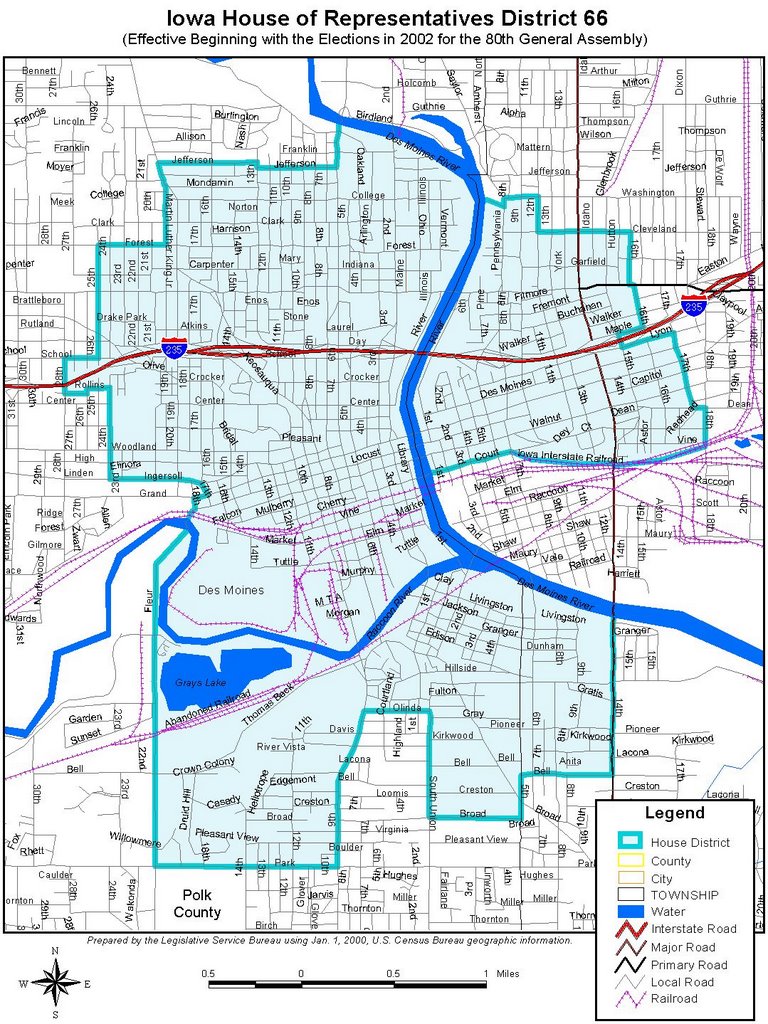
The result was overshadowed by other competitive races, but Democratic voters in Iowa House district 66 produced a big victory for marriage equality yesterday. Elder Clair Rudison, a socially conservative pastor, challenged two-term State Representative Ako Abdul-Samad. Rudison sent out at least five direct-mail pieces attacking Ako’s record, two of which mentioned gay marriage (I posted those here).

Most Iowa politics-watchers were confident Ako would win this primary, but in a low-turnout environment anything can happen, so I was relieved to see Ako won 75 percent of the vote yesterday. The result is important because the only Iowa House Democrat who has consistently worked with Republicans to bring a constitutional amendment on marriage to a vote is retiring this year. If Rudison had won the primary, Republicans would be able to continue to claim bipartisan support for their battle against equality and reproductive rights.

One Iowa released a statment on the House district 66 results. Excerpt:

Voters rejected the negative and divisive tactics he and the Iowa Family Policy Center used to try to smear his opponent. “We congratulate Rep. Ako Abdul-Samad on his decisive victory and welcome his continued leadership at the statehouse,” said Jenison.

Chuck Hurley and his followers at the Iowa Family Policy Center recruited Clair Rudison to run against long-time community activist and current state representative Ako Abdul-Samad in the Democratic primary simply because Abdul-Samad supports marriage equality for all Iowans.

“For more than a year, the Iowa Family Policy Center said repeatedly that the legislative elections in 2010 will be about one thing: gay marriage,” said One Iowa Executive Director Carolyn Jenison. “Tonight’s results prove them wrong. Iowans are not interested in writing discrimination into our constitution. They are concerned with creating jobs, improving our schools, and moving our state forward.”

The recent Research 2000 Iowa poll for KCCI-TV should be a warning to Republicans who think bashing gay marriage will be their winning ticket in November. About 53 percent of respondents said they favored marriage rights for same-sex couples, while only 41 percent opposed them. KCCI’s managing editor for internet broadcasting provided the cross-tabs for that part of the poll. They indicate that support for equality is stronger among women (57-36) than among men (49-46). The KCCI poll showed independents supporting same-sex marriage rights by 58-31, closer to the Democratic numbers of 81-17 than to the Republican respondents, who oppose marriage equality by 83-14.

Continue Reading...

Iowa primary election results thread

Polls close at 9 pm, but I decided to post this thread early in case anyone wants to chat before results start coming in.

I’ll update later with returns in the key Iowa races. For now, share any anecdotes about voting or political talk today. I ran into a friend who was a Republican for most of her life, even voting twice for George W. Bush. She voted for Chet Culver in 2006 and plans to volunteer for his campaign this year, mostly because she doesn’t want Republicans to cut preschool funding and other social services for kids.

9:15 pm UPDATE: 9 percent of precincts reporting, Terry Branstad 47 percent, Bob Vander Plaats 46 percent, Rod Roberts 7 percent. I have no idea which part of the state has reported–if those are from northwest Iowa counties, Branstad probably doesn’t have anything to worry about, but if that’s from central or eastern Iowa, this could be a lot closer than I expected.

Brad Zaun leads the early returns in IA-03, but it seems like Polk County is coming in early.

9:40 pm UPDATE. The Associated Press has called the Democratic primary for U.S. Senate for Roxanne Conlin. She has about 80 percent of the vote in the early returns; Bob Krause and Tom Fiegen have about 10 percent each.

Branstad is opening up a lead on Vander Plaats, about 51-41.

Zaun is dominating the IA-03 primary with over 50 percent of the vote (about half the precincts counted).

10 pm UPDATE: Zaun is being called the winner in the IA-03 primary. He has about half the vote with about two-thirds of the precincts reporting.

Mariannette Miller-Meeks leads the IA-02 GOP primary in the early returns.

Matt Campbell leads Mike Denklau in the early returns for the IA-05 Democratic primary.

Conlin just finished giving her victory speech to her supporters.

Ako Abdul-Samad won the Democratic primary in Iowa House district 66 with about 75 percent of the vote.

10:35 pm UPDATE: The AP has called the gubernatorial primary for Branstad, who has 51 percent of the vote with about three quarters of the precincts counted. Matt Campbell won the fifth district Democratic primary.

Mariannette Miller-Meeks looks smart for not wasting money on tv ads in the IA-02 primary. She has been called the winner with 50 percent of the vote in a four-way race. The NRCC’s favored candidate, Rob Gettemy, may actually finish dead last.

Matt Schultz has a pretty big lead in the GOP secretary of state primary, about 47 percent so far. The big surprise to me is that Chris Sanger (who hardly raised any money) has almost as many votes as George Eichhorn, who had quite a few endorsements and has been active in Iowa politics for a long time.

Tea party candidate Tom Shaw has a narrow lead in the Republican primary in Iowa House district 8, but it’s too early to know if that lead will hold up.

11:25 pm UPDATE: It’s official, Gettemy finished dead last in IA-02. Miller-Meeks won that four-way primary with an impressive 51 percent of the vote. Will Republicans unite behind her?

Zaun is sitting at about 43 percent with most of the IA-03 votes counted.

Branstad is still leading with 51 percent of the vote, to 40 percent for Vander Plaats. If the Club for Growth had invested $1 million in Vander Plaats, this could have been a nail-biter.

Matt Schultz did win the secretary of state primary with 47 percent of the vote. Political veteran George Eichhorn got 27 percent, and Chris Sanger got 26 percent despite spending almost no money.

Dave Jamison easily won the GOP primary for state treasurer with about 67 percent of the vote to 33 percent for Jim Heavens.

Campbell has a very big lead in the IA-05 Democratic primary, with about 76 percent of votes counted so far.

In Iowa Senate district 13, Tod Bowman easily won the four-way Democratic primary with more than 60 percent of the vote. He had key union endorsements. This should be an easy hold for us in November.

Anesa Kajtazovic won the House district 21 Democratic primary with more than 90 percent of the vote (Kerry Burt dropped out of the race this spring).

Democratic incumbents Chuck Isenhart, Dave Jacoby and Mary Gaskill easily held off primary challenges in House districts 27, 30 and 93, respectively. All won more than 80 percent of the vote.

In Iowa House district 8, tea partier Tom Shaw is officially the Republican primary winner over Stephen Richards, who almost beat Dolores Mertz in the 2008 election. I like our chances of holding a seat that should have been the GOP’s best pickup opportunity in the Iowa House.

Check the AP’s page for results in the other statehouse primaries (mostly GOP).

WEDNESDAY AFTERNOON UPDATE: I can’t believe I forgot to mention the results in Senate district 41. State Senator Dave Hartsuch, who defeated incumbent Maggie Tinsman in the 2006 GOP primary, got a taste of his own medicine when he lost the Republican primary to Roby Smith by a 52-48 margin. Rich Clewell won the Democratic primary with 56 percent to 44 percent for Republican-turned-Democrat Dave Thede. Scott County readers, do you think these results improve our chances of winning this district? It has historically been Republican, but registration numbers have been trending toward Democrats, evening things out.

NRCC credibility on the line in Iowa's second and third districts

Washington Republicans have been talking up their chances of retaking the House of Representatives for months, and the National Republican Congressional Committee claims many recruiting successes in competitive House districts. However, Republican primary voters haven’t always sided with candidates favored by the Washington power-brokers. Last month a tea party candidate defeated “top national GOP recruit” Vaughn Ward in Idaho’s first district. In Kentucky’s third district, the NRCC’s candidate finished third with 17 percent in the primary; the winner had over 50 percent. In Pennsylvania’s fourth district, the NRCC-backed candidate was out-raised and eventually beaten 2-1 in the Republican primary. In Alabama’s fifth district, the NRCC backed party-switching Representative Parker Griffith, who proceeded to get crushed in his new party’s primary.

In Iowa, the NRCC has tipped its hat to two Republicans in competitive primaries. In the third district, Jim Gibbons was named an “on the radar” candidate in February and bumped up to “contender” status in April. In the second district, the NRCC put Gettemy “on the radar” about six weeks after he declared his candidacy.

Both Gibbons and Gettemy are newcomers to campaigning, and both are facing at least one more experienced politician in their primaries. Gibbons’ main rival, State Senator Brad Zaun, has won several elections in Urbandale and Iowa Senate district 32. All three of Gettemy’s opponents have run for office before, and Mariannette Miller-Meeks and Christopher Reed both won Republican primaries in 2008.

If Gibbons and Gettemy fail to top the voting in their respective primaries, the NRCC’s ability to identify candidates with strong potential will again be called into question. The “young gun,” “contender” and “on the radar” lists are important signals to NRCC donors about where their money could be most helpful. People who wrote checks to Gibbons or Gettemy without knowing anything about the local landscape may be upset if their money went to a losing candidate.

Iowa Republicans who recruited Gibbons and Gettemy and talked them up to GOP leaders in Washington also have something to lose if today’s primaries don’t go their way. Key members of the Iowa Republican business elite have supported Gibbons, and Gettemy had the backing of prominent Cedar Rapids area Republicans. Republican National Committeeman Steve Scheffler, who heads the Iowa Christian Alliance, is also said to be close to Gettemy, though Scheffler has made no formal endorsement in this year’s primaries.

Both the IA-03 and IA-02 primary battles may end up being settled at GOP district conventions, so Gibbons and Gettemy could conceivably win the nominations if they don’t finish in first place today, as long as no other Republican receives at least 35 percent of the vote. However, they may have an uphill battle persuading district convention delegates.

WEDNESDAY AM UPDATE: Add IA-02 and IA-03 to the list of districts where the NRCC sure doesn’t know how to pick ’em.

Zaun won 42 percent of the vote in the seven-way IA-03 primary, while Gibbons managed just 28 percent. Tea Party favorite Dave Funk didn’t raise enough money for a significant paid media campaign, but he finished not far behind Gibbons with 22 percent. Gibbons did carry several of the smaller counties in IA-03, but Zaun dominated Polk County, containing Des Moines and most of its suburbs. Zaun’s ground game defeated Gibbons’ superior “air power.”

Miller-Meeks won the IA-02 primary in dominating fashion with 51 percent of the vote. She led in all of the district’s 11 counties. Gettemy finished dead last with 13 percent of the vote. Even in his home county (Linn), he came in third. Gettemy won fewer votes across the district than Christopher Reed, who raised very little money and is best known for for calling Senator Harkin “the Tokyo Rose of Al-Qaeda and Middle East terrorism” during the 2008 campaign. All of Gettemy’s tv ads and connections to Cedar Rapids movers and shakers delivered fewer votes than Reed managed with his band of way-out-there wingnut endorsers.  

Rudison now accusing Ako of facilitating racial profiling

Yet another direct-mail piece from Clair Rudison’s campaign went out to Democratic residents of Iowa House district 66 this week. Rudison is challenging two-term State Representative Ako Abdul-Samad and sent out at least four other mailers attacking the incumbent’s record. The new piece claims, “When Rep Abdul-Samad voted to ban texting while driving, he opened the door for young black men and women to be potentially targeted for unnecessary stops by law enforcement.” I’m having trouble uploading the image, but you can view the piece at Iowa Independent.

The mail piece is inaccurate, since the new law makes clear that “Law enforcement cannot stop or detain a person only for suspected violations of texting and local governments are not allowed to adopt their own ordinances.” That language was added to the bill after an anonymous group paid for robocalls in February alleging that a texting ban would give police another excuse for racially-motivated traffic stops and arrests. At that time, Abdul-Samad told KCCI,

“If you have officers that are – it’s not going to be because of texting. It’s because they were going to find a reason to do that anyway,” said Samad.

Samad said he heard the same argument when the seatbelt law was first considered and he said that law has saved thousands of lives.

“If we need to look at racial profiling, I will work with the organization that hasn’t left their name yet or who they are — and say let’s do some legislation. Let’s do something on that. But lets not cloud the issue that there are thousands of young people and adults that are dying,” said Samad.

If you know any Des Moines residents who live in House district 66 (map), please urge them to go vote for Ako today. Polls are open until 9 pm.

Continue Reading...

Rest in peace, Paul Bell

State Representative Paul Bell, a Democrat representing Iowa House district 41 (Newton area) for nine terms, died today. He was only 59 and had been diagnosed with stomach cancer last year. Despite extensive treatments, the cancer spread quickly. Last week Bell’s family told journalists that he had been hospitalized with advanced cancer. Jennifer Jacobs reported for the Des Moines Register,

During this past legislative session, which ran January to March, Bell had chemotherapy and radiation treatment throughout. But he didn’t miss a day at the Iowa Capitol.

As a legislator for 17 years, Bell, a former Newton police officer, was best known for his dedication to the environment. He also worked extensively on law enforcement and public safety issues.

Today Iowa House Speaker Pat Murphy and House Majority Leader Kevin McCarthy released this statement:

“We are deeply saddened by the loss of Rep. Paul Bell.  Our thoughts and prayers are with his wife, Nikki, and their two children.

As a police office and legislator from Newton , he spent his life keeping his community safe and making Iowa  a better place to live.  After serving 18 years in the Iowa House and chairing the Natural Resources Committee, Iowans will benefit from Rep. Bell’s passion and commitment to preserving our natural resources for generations to come.  He will be sorely missed in the Iowa House.”

Please feel free to share your thoughts and memories in this thread.

UPDATE: Iowa House Republican leader Kraig Paulsen released the following statement: “Our thoughts and prayers go out to Rep. Bell’s family during this difficult time. Rep. Bell was a respected legislator who gave his time and energy serving others in the state legislature.”

Environmental organizer and activist Christian Ucles commented:

Iowa Legislator Paul Bell died. He will be sorely missed, he was a man larger than life. A kind, Compassionate, caring man. God Bless You

SECOND UPDATE: Statement from Representative Leonard Boswell:

“Paul Bell was a strong advocate for Newton and Jasper County in the Iowa House and an important partner of mine in representing those communities. I had the opportunity to serve with him for three years during my time as President of the Iowa Senate and I can’t say enough about his tireless commitment to his constituents. My wife, Dody, and I send our thoughts and prayers to Paul’s wife, Niki, and his children.”

Continue Reading...

Secretary of State candidate runs against Obama, "Chicago way"

Republican secretary of state candidate Matt Schultz launched a second television commercial CORRECTION: web ad called “Not the Chicago Way”:

Transcript by me:

I’m Matt Schultz, and I’m running for Iowa secretary of state because I’m worried about the future of my children and the future of your children and grandchildren. It’s time for new leadership in Des Moines, and I’m prepared to stand up and fight for fair and honest elections. Vote early, vote often might be the Chicago way, but it’s not the Iowa way. I’m Matt Schultz, and I approved this message because I’m a conservative Republican fighting to protect the most important right of all: your right to vote.

Like Schultz’s first ad, this commercial raises the specter of voter fraud without any evidence that this has been a problem in Iowa.

When Schultz says, “Vote early, vote often might be the Chicago way,” the visual is a smiling Barack Obama in front of Obama/Biden campaign signs. The hint is sure to play well with Republican primary voters, many of whom may believe the 2008 election was stolen. That’s easier to accept than the reality of a Democratic presidential candidate clobbering the Republican.

Journalists should ask Schultz if he really believes (as this commercial implies) that Barack Obama got where he is because of Chicago-style election fraud. Then they should ask him to prove that “vote early, vote often” has happened even once in Iowa during the past decade or two.

When Schultz says “I’m Matt Schultz, and I approved this message,” the visual shows the words, “TRUST BUT VERIFY.” Schultz used the same Ronald Reagan catch phrase in his first ad, although the Republican icon’s famous words have nothing to do with voter fraud.

Your unintentional comedy of the day comes from Polk County Republican Party chairman Ted Sporer’s blog, commenting on Schultz’s commercial:

The only reason to oppose photo ID for voting is to perpetuate fraud. No other good faith explanation is possible. Although we are lucky to have the rarest of animals, an honest and competent Democrat, serving as Iowa’s SoS, Mike Mauro’s Democrat colleagues are your more garden variety and ethically challenged L/S/Ds.

As I discussed here, photo ID laws threaten to disenfranchise large numbers of voters (the 12 percent of the population lacking a photo ID) in order to solve a virtually non-existent problem (impersonating another voter at a polling place). That’s why advocacy groups who work to protect “the most important right of all, your right to vote” almost universally oppose photo ID laws.

In case you were wondering, L/S/Ds means “Labor/Socialist/Democrats” in “the real Sporer” lingo.

Schultz may pander his way to his party’s nomination, but his rhetoric ignores a fact that even Sporer grudgingly acknowledges: Secretary of State Mike Mauro is honest and highly competent. No one active in politics today has done more to safeguard fair and honest elections in Iowa than Mauro.

Continue Reading...

Attack mailers target Ako in Iowa House district 66

A critical Democratic primary contest is taking place in House district 66, where Clair Rudison is challenging two-term State Representative Ako Abdul-Samad. I discussed this race here. A Bleeding Heartland reader who lives in the district sent me images of direct-mail pieces Rudison’s campaign has sent out during the last week or so. I’ve posted the images after the jump. One says marriage is a “building block of our community,” noting that Clair Rudison wants to “let the people vote” while Ako Abdul-Samad “has consistently voted against allowing the Iowa House to bring this matter to the people.” Another points out that Ako voted for increasing vehicle registration fees. A third says Ako voted for creating the Iowa Film Office and therefore “opened the door for your tax money to be stolen by Hollywood producers.” The fourth piece draws a contrast between Ako and Rudison on all of the above issues (Iowa Film Office, vehicle fee increases, and allowing Iowans to vote on marriage).

Rudison implies that “a majority of Iowans” oppose Ako’s stance on marriage equality, but the latest KCCI poll suggests a majority favor same-sex marriage rights. House district 66 contains some of the most gay-friendly neighborhoods in Des Moines (Drake area, Sherman Hill, “East Village”), so it’s far-fetched to portray Ako as out of step with his constituents.

Rudison unfairly alleges on one mailer, “Instead of tax dollars being spent to fight crime, improve education or increase access to health care, Ako gave our money to Hollywood.” During Ako’s two terms in the Iowa House, Democrats have allocated lots of money to fighting crime, improving education and expanding access to health care, especially for children. I’m no fan of the film tax credit, but the money we wasted on that program didn’t stop Democrats from expanding children’s health care and voluntary preschool for four- and five-year-olds. I was amused to read that Rudison claims to have “opposed creation of the Film Office.” Is there a public record of that? Only one member of the Iowa House and two members of the Iowa Senate voted against creating the film tax credit. Rudison was a pastor in Fort Dodge at the time.

In an overview of this race at Iowa Independent, Jason Hancock noted that Rudison “has focused his campaign on issues like education and the state budget, pointing to the Forrest Avenue Library’s decision to close on Fridays and Saturdays due to budget cuts […].” Although Rudison hasn’t said much about gay marriage, the Iowa Family PAC (which is connected to the Iowa Family Policy Center) is supporting his campaign. Activists on the religious right have reason to support Rudison because no Republican has a prayer of winning House district 66. In addition, the only House Democrat who has consistently voted with Republicans on marriage issues (Dolores Mertz) is retiring. House Republicans would love to have Rudison join the Democratic caucus so they can continue to claim bipartisan support for their efforts to bring a constitutional amendment on marriage to a vote.

Ed Fallon represented House district 66 for 14 years and knows the area well. I share his assessment that Ako “should win this [primary] easily, but he’s not taking anything for granted, which is smart.” Ako has strong roots in the community, and he won a seat on the Des Moines School Board before running for the state legislature. He’s been making lots of voter contacts and has the endorsement of AFSCME. One Iowa’s political action committee, the Fairness Fund, has an organizer working in the district too. However, Rudison has been campaigning actively, and I don’t doubt there are many voters upset about budget cuts affecting their families, schools and local library. If you or any of your Democratic friends live in this district, please do what you can to get out the vote for Ako on Tuesday.

Continue Reading...

New Register poll sees Branstad cruising in GOP primary

About 57 percent of likely Iowa Republican primary voters support Terry Branstad, according to a new poll by Selzer and Co. for The Des Moines Register. Just 29 percent plan to vote for Bob Vander Plaats, and 8 percent plan to vote for Rod Roberts. The Des Moines Register poll surveyed 1,793 Iowans at least 18 years old, and the sub-sample of Republican primary voters included 501 people. (That included independents who said they planned to vote in the GOP primary; Iowa allows people to change their party registration on primary election day.) The poll was in the field from June 1 through June 3, and results for the likely Republican voters have a margin of error of plus or minus 4.4 percent.

Two other recent Iowa polls by Public Policy Polling and Research 2000 for KCCI have found Branstad comfortably ahead of Vander Plaats and Roberts but below 50 percent. In the 2002 Republican primary, Vander Plaats did much better than his final poll numbers, but he benefited that year from a highly negative campaign between Steve Sukup and Doug Gross.

This primary might have played out differently had Vander Plaats had more resources to make his case. About 34 percent of likely Republican primary voters weren’t sure whether they had a favorable or unfavorable opinion of Vander Plaats, and 60 percent said the same about Roberts. Branstad not only is much better known, he also scored highest on attributes like “best ideas for bringing new jobs to Iowa” and “best able to curb government spending” (which is laughable when you consider Branstad’s record on fiscal issues).

I will never understand why the Club for Growth and other national right-wing organizations decided not to get involved in the Iowa governor’s race. Given the way the national conservative movement pushed Marco Rubio against Florida Governor Charlie Crist, you’d think they would have some issues with Branstad (who received a “D” grade from the Cato Institute when he was governor).

Selzer’s poll for the Des Moines Register also asked likely Republican primary voters several questions about gay marriage. While 77 percent of them agreed that “Iowans should have a chance to vote on changing the constitution to specifically ban gay marriage,” I was surprised to see that 20 percent of likely Republican voters disagreed with that statement.

Meanwhile, only 50 percent of likely GOP primary voters agreed that “Iowans should vote to remove current Supreme Court justices from their office because of their decision on gay marriage.” An amazing (to me) 45 percent disagreed with that statement. Regarding the statement, “Some Iowans have overreacted to this issue, and having gay marriage in Iowa is just not that big a deal,” 35 percent of likely Republican primary voters agreed, while 62 percent disagreed.

Share any thoughts about the Des Moines Register’s poll in this thread.

Weekend open thread: Election prediction contest edition

It’s time for another Bleeding Heartland election prediction contest. No prizes will be awarded, but winners will get bragging rights. Can anyone dethrone American007, overall winner of our 2008 election contest?

Enter by answering the following questions. To qualify for the contest, your predictions must be posted as a comment in this thread by 7 am on Tuesday, June 8, 2010. This isn’t like The Price is Right; the winning answers will be closest to the final results, whether or not they were a little high or low.

1. How many votes will be cast in the Republican primary for Iowa governor? (Hint: about 199,000 Iowans voted in the hard-fought 2002 Republican gubernatorial primary.)

2. What percentages of the vote will Terry Branstad, Bob Vander Plaats and Rod Roberts receive in the Republican primary for governor?

3. What percentages of the vote will Roxanne Conlin, Bob Krause and Tom Fiegen receive in the Democratic primary for U.S. Senate?

4. What percentages of the vote will Rob Gettemy, Mariannette Miller-Meeks, Steve Rathje and Chris Reed receive in the Republican primary in Iowa’s second Congressional district? Remember, if you expect this nomination to be decided at a district convention, make sure your guess has the top vote-getter below 35 percent.

5. Who will be the top four candidates in the Republican primary in Iowa’s third Congressional district, and what percentages of the vote will they receive? Again, keep the top vote-getter below 35 percent if you expect this nomination to go to a district convention. Your possible answers are Jim Gibbons, Brad Zaun, Dave Funk, Mark Rees, Scott Batcher, Jason Welch and Pat Bertroche.

6. What percentages of the vote will Mike Denklau and Matt Campbell receive in the Democratic primary in Iowa’s fifth Congressional district?

7. What percentages of the vote will Matt Schultz, George Eichhorn and Chris Sanger receive in the Republican primary for secretary of state? (I covered that campaign in this post.)

8. What percentages of the vote will Dave Jamison and Jim Heavens receive in the Republican primary for state treasurer? (The Iowa Republican blog has been covering this race from time to time.)

9. What percentages of the vote will State Representative Ako Abdul-Samad and challenger Clair Rudison receive in the Democratic primary for Iowa House district 66? (Click here for background.)

10. What percentages of the vote will Tom Shaw, Stephen Richards and Alissa Wagner receive in the Republican primary for Iowa House district 8? (Click here and here for background. Keep in mind that although Wagner withdrew from the race and endorsed Shaw, her name will remain on the ballot.)

Don’t be afraid to make some wild guesses. You can’t win if you don’t play!

This is also an open thread, so share whatever’s on your mind.

Poll shows majority of Iowans favor marriage equality

Research 2000’s latest Iowa poll for KCCI-TV contains good news for supporters of marriage equality. The survey asked, “Now that more than a year has gone by since the Iowa Supreme Court legalized same-sex marriage, do you favor or oppose marriage rights for same-sex couples?” 53 percent respondents said they favor those rights, 41 percent opposed them and 6 percent were unsure.

I haven’t seen the full poll results, showing support for same-sex marriage rights among men, women, Democrats, Republicans and independents. I will update this post with a link to the cross-tabs when I find them. Bryan English of the Iowa Family Policy Center told KCCI he didn’t think the poll was representative of Iowans’ views, but several other statewide polls have shown that the majority of Iowans are not eager to overturn marriage equality. As time passes, public acceptance should increase if the experience of Vermont and Massachusetts are guides.

The KCCI poll also found that 62 percent of respondents support legalizing medical marijuana in Iowa, 33 percent oppose doing so and 5 percent are unsure.

Getting back to the same-sex marriage issue, I give huge credit to the Libertarian candidate for Iowa governor, Eric Cooper. On Thursday he made the case for tolerance while speaking to the Ames Conservative Breakfast Club.

Here’s my rough transcript of the first part of this clip:

You know who the Pilgrims were? The Pilgrims were a group of people in England, and everybody in England hated their guts. And you know what they did? They came to America to live here. And the reason–they came here because we were the land of the free. We started the land of the free. That is, even if everyone in surrounding society hates your guts, in America as long as you’re not hurting other people and their property, you can live the way that you want, as long as you’re being peaceful.

To me, that’s the most American story there is. If you’re a peaceful person who’s not hurting other people, you get to live your life according to your cultural traditions. OK, well, guess what? There are some homosexuals in America today, and to me, they’re the Pilgrims, ok? Surrounding society doesn’t like ’em very much, but you know what? What America is, is you get to live the way that you want to live. And if their cultural tradition is that they can get married, I think that’s America, to allow them to follow that cultural tradition. No, I don’t think that’s [unintelligible] surrounding society as a whole, and I think if we’re gonna restrict that, we’re not America anymore, we’re England, ok? And we’re better than England, we’re America.

Now people say, “Well shouldn’t we be allowed to vote on marriage and what marriage means in the state of Iowa?” Well, yeah, legally, there are mechanisms by which a sufficiently large supermajority can persecute any minority they want. Yes, legally, we could all vote to persecute the Pilgrims if we wanted to and yeah, legally, we could all vote to say, you know, gay people shouldn’t be allowed to marry if we want to. But that’s not America anymore, ok?

Cooper’s a bit off on the history. The Pilgrims were far from laid-back and accepting of other people’s traditions. In fact, “New England Puritans, long viewed as a persecuted group in England, were the least tolerant of other faiths.” But I cut Cooper slack. He’s a neuroscientist, not a historian, and what he did took guts.

You’d expect a Libertarian addressing a Republican group to focus on likely areas of agreement: reducing taxes and the size of government. Instead of just preaching to the choir, Cooper challenged his audience to think about a charged issue differently. He had to know that most people at that breakfast club oppose what the Iowa Supreme Court did.

Post any thoughts on same-sex marriage in Iowa in this thread. The Des Moines Register reports that Iowa’s leading gay wedding planner may star in a television “docu-reality series” about his work. Beau Fodor created Gay Weddings With Panache soon after the Varnum v Brien decision was announced last year.

UPDATE: On Sunday the Des Moines Register published results from a Selzer and Co. Iowa poll of 501 likely Iowa Republican primary voters, which was in the field from June 1 through June 3. The survey included several questions about gay marriage. About 77 percent of likely GOP primary voters agreed that “Iowans should have a chance to vote on changing the constitution to specifically ban gay marriage,” but 20 percent disagreed with that statement. Meanwhile, only 50 percent of likely GOP primary voters agreed that “Iowans should vote to remove current Supreme Court justices from their office because of their decision on gay marriage.” About 45 percent disagreed with that statement. Regarding the statement, “Some Iowans have overreacted to this issue, and having gay marriage in Iowa is just not that big a deal,” 35 percent of likely Republican primary voters agreed, while 62 percent disagreed. I find those numbers encouraging.

Continue Reading...

Iowa House Republican charged with OWI

State Representative Erik Helland was arrested early this morning and charged with operating while intoxicated and interference with official acts, KCCI-TV reported. After a driver in a different vehicle called 911 to report Helland’s erratic driving,

A trooper and Johnston police stopped the vehicle at Merle Hay Road at 12:47 a.m.

Officials said Helland submitted to a preliminary breath screening test, which indicated an alcohol concentration of .08 or more. At 2:21 a.m., he exercised his right to refuse chemical testing.

First-term Republican Helland represents Iowa House district 69, covering most of Johnston, Grimes, and much of rural northern Polk County. From the sound of this statement Helland released, he won’t be fighting the charge:

“I deeply regret the mistake I made to drink and drive. I apologize to my family, constituents, colleagues and all Iowans for the harmful and dangerous error that I made. I fully accept the consequences of my actions and am truly sorry. “

No Democrat filed to challenge Helland, so he is likely to ride out this scandal even if convicted of drunk driving. Democratic State Representative Kerry Burt was arrested on an OWI in early 2009. His political career might have survived if not for a separate incident that led to criminal charges, prompting Burt to retire from Iowa House district 21.

Continue Reading...

Two Iowa polls: so alike, yet so different

KCCI-TV in Des Moines released a new Iowa poll conducted by Research 2000 yesterday. I can’t find details about the sample or when it was in the field, but topline results were in this report. The numbers for the Republican gubernatorial primary and the Democratic U.S. Senate primary were similar to those found in a Public Policy Polling survey released on Tuesday. KCCI’s poll found that Terry Branstad has 44 percent support in the GOP primary, Bob Vander Plaats has 29 percent and Rod Roberts has 12 percent, with 15 percent undecided. Public Policy Polling had Branstad with 46 percent, Vander Plaats with 31 percent and Roberts with 13 percent.

In the Senate primary, KCCI’s poll shows Roxanne Conlin way ahead with 48 percent, Bob Krause with 13 percent, Tom Fiegen with 12 percent and 27 percent undecided. PPP had Conlin with 48 percent support among Democratic primary voters, to 13 percent for Krause and 8 percent for Fiegen.

In the general election matchup for governor, KCCI’s new poll has Branstad leading Governor Chet Culver, 51 percent to 42 percent, with 7 percent undecided. Those aren’t good numbers for Culver, but they’re slightly better than PPP’s poll showing Branstad ahead 52-37.

When the pollsters tested Conlin against Republican Senator Chuck Grassley, the results were shockingly different. KCCI’s new poll by Research 2000 has Grassley at 50 percent, Conlin at 42 percent and 8 percent undecided. Meanwhile, Public Policy Polling has Grassley leading Conlin 57-31 and concludes that Grassley is safe for re-election.

The KCCI poll has a margin of error of plus or minus 4 percent. PPP’s poll has a margin of error of plus or minus 2.7 percent. One of these pollsters is way off on the Senate race. I have no idea which one, and I don’t know whether it has something to do with the sample or the weighting. It’s strange for two polls taken around the same time to show similar numbers in some races but hugely different numbers in one contest. PPP found that Conlin “is an unknown to 53% of voters in the state,” which sounded like a high number to me. I haven’t seen KCCI’s numbers on Conlin’s name recognition.

I will update this post with more details about the KCCI/Research 2000 poll when those become available.

New poll shows Branstad with big lead over Culver

Public Policy Polling’s new poll on the Iowa governor’s race has a lot of bad news for Democratic incumbent Chet Culver. The poll was in the field from May 25 to 27 and surveyed 1,277 Iowa voters, producing a margin of error of plus or minus 2.7 percent.

Former Governor Terry Branstad, the likely Republican nominee, leads Culver 52 percent to 37 percent. Bob Vander Plaats and Rod Roberts lead the governor by smaller margins, 43-38 and 40-38, respectively, but it’s bad for an incumbent to be below 40 percent against all challengers. Only 28 percent of PPP’s respondents approved of Culver’s performance, while 56 percent disapproved.

I don’t have much to add to PPP director Tom Jensen’s comments:

[Branstad] has a 49-33 advantage among independent voters, and wins 20% of the Democratic vote while losing only 7% of the Republicans to Culver. Branstad’s not overwhelmingly popular, with 42% of voters viewing him favorably to 37% with a negative opinion. But more important than the way voters view Branstad may be the way they see Culver, and the current Governor’s approval rating is only 28% with 56% of voters giving him bad marks. His approval with independents is 22% and with Republicans it’s 4%, and even among Democrats he stands only at 56%. […]

It’s a long way until November but for now Republicans are in pretty good shape in this race. Culver can’t get reelected with these approval numbers- he will somehow have to make voters change their minds about him.

You can download PPP’s polling memo (pdf file) here or read it at Iowa Independent.

To my knowledge, 28 percent is the lowest approval rating ever recorded for Culver by any pollster. Incumbents below 50 percent approval are usually considered vulnerable, and incumbents below 40 percent are highly vulnerable. If Culver’s approval really is 28 percent, calling this election an uphill battle would be an understatement.

Branstad needs to make this race a referendum on the incumbent, while Culver needs to make it a choice. Branstad’s record has yet to come under much scrutiny, and he keeps throwing stones from his glass house. Under Culver and the Democratic-controlled legislature, Iowa’s fiscal health has been strong during difficult times for state budgets across the country. In contrast, “Mastercard Governor” Branstad kept two sets of books and borrowed money to pay bills.

PPP’s numbers on the Branstad-Culver matchup are similar to what Republican pollster Rasmussen found a month earlier (though Culver’s approval rating wasn’t nearly as dismal in the Rasmussen poll). So much for the conspiracy theory about PPP being in cahoots with Iowa Democrats. Unfortunately, the recent Research 2000 poll for KCCI showing Branstad ahead of Culver 48-41, with Culver’s favorability in the mid-40s, looks like an outlier.

I keep waiting for the new Selzer and Co. Iowa poll for the Des Moines Register. The last one was in January, and most years Selzer conducts an Iowa poll in May.  

Any comments about the governor’s race are welcome in this thread.

Final note on polling: the Cedar Rapids Gazette’s Todd Dorman fired up the wayback machine and discovered that in the 2002 Republican primary, Vander Plaats significantly outperformed his final poll numbers. He’ll need some GOTV magic to overcome the 46-31 lead PPP found for Branstad in the latest survey. I doubt the one-two punch of James Dobson and Chuck Norris can get the job done for Vander Plaats.

Continue Reading...

The Secretary of State race is getting interesting

The Republican primary campaign for Iowa secretary of state has lacked the drama and publicity of the governor’s race, but it is turning into a test of strength between a “fresh face” and a veteran of Iowa Republican politics.

The nominee challenging our outstanding Secretary of State Michael Mauro will be either Council Bluffs City Council member Matt Schultz or former State Representative George Eichhorn (“say I-Corn”).

A third Republican qualified for the ballot in this race, but I’m focusing on Eichhorn and Schultz because Chris Sanger is not a serious contender. He has no campaign staff and has raised only about $400, all at bake sales in Stuart, where the candidate and his wife own a bakery. The only newsworthy moment in Sanger’s campaign was his involvement in a meet and greet organized by a guy who thinks killing abortion providers is justifiable homicide. In fairness to Sanger, though, he may have a place in the record books for choosing the longest campaign committee name in Iowa history: Elect Chris Sanger, He Will Vote The Way People Want. Someone should have told him the secretary of state isn’t a legislator who votes on policies.

But I digress. Links and commentary about Schultz and Eichhorn are after the jump.  

Continue Reading...

Events coming up this weekend and next week

With only five days left before the Iowa primaries on June 8, many candidates have a busy weekend ahead. Event details are after the jump. Please post a comment or send an e-mail to desmoinesdem AT yahoo.com if you want to suggest an event for this calendar. Iowa Democratic candidates, please add me to your list for press announcements so that I can include your public appearances and fundraisers on these calendars. Also, let me know where you are having your election night parties if you would like me to add them to this post.

Although most of the competitive primaries this year are on the Republican side, please remind your friends and family to vote in the June 8 election. Democrats across the state have a choice to make in the U.S. Senate race between Roxanne Conlin, Tom Fiegen and Bob Krause. Democrats in 32 counties (the fifth Congressional district) will select either Matt Campbell or Mike Denklau to face Representative Steve “10 Worst” King. A few state legislative districts have multiple Democrats running too. County auditors’ offices are open for early voting today, tomorrow, Saturday and Monday.

Stay tuned for a Bleeding Heartland primary election prediction contest. I’ll post more details soon. As usual, no prizes will be awarded, but the winner gets bragging rights.

Most of our Democratic incumbents and challengers are out knocking on doors every weekend and often during the week. Please consider getting involved in an Iowa House or Senate race near you. Candidates for the state legislature can always use volunteer help, and summer parades and county fairs are not far off.

Continue Reading...

Just what the Gulf of Mexico needs: another oil well

Oil from BP’s blown-out Deepwater Horizon well continues to gush into the Gulf of Mexico and will do so until August at the earliest. In response, the Obama administration extended a moratorium on deepwater drilling for six months last week. However, the president also “quietly allowed a three-week-old ban on drilling in shallow water to expire” last week (hat tip Open Left). As a result,

Federal regulators approved Wednesday the first new Gulf of Mexico oil well since President Barack Obama lifted a brief ban on drilling in shallow water, even while deepwater projects remain frozen after the massive BP spill.

The Minerals Management Service granted a new drilling permit sought by Bandon Oil and Gas for a site about 50 miles off the coast of Louisiana and 115 feet below the ocean’s surface. It’s south of Rockefeller State Wildlife Refuge and Game Preserve, far to the west of the Deepwater Horizon oil rig that triggered the BP spill.

Chris Bowers put it mildly when he described the Obama administration’s action here as “difficult to fathom.” The president gave a speech on the economy today and talked about investing in alternative energy, but like all my parenting books say, actions speak louder than words. The greatest environmental disaster in U.S. history is unfolding in the Gulf of Mexico, and BP doesn’t know how to stop it, but it’s business as usual at the Minerals Management Service. Nor is today’s permit approval an isolated case:

In the days since President Obama announced a moratorium on permits for drilling new offshore oil wells and a halt to a controversial type of environmental waiver that was given to the Deepwater Horizon rig, at least seven new permits for various types of drilling and five environmental waivers have been granted, according to records.

The records also indicate that since the April 20 explosion on the rig, federal regulators have granted at least 19 environmental waivers for gulf drilling projects and at least 17 drilling permits, most of which were for types of work like that on the Deepwater Horizon shortly before it exploded, pouring a ceaseless current of oil into the Gulf of Mexico.

Words fail me, so you’ll have to share your thoughts in this thread.

UPDATE: In 1979 it took nine months to stop oil gushing from a shallow well in the Gulf of Mexico.

Continue Reading...

Group names Cedar River fifth most endangered in U.S.

For 25 years, American Rivers has released annual reports on “America’s Most Endangered Rivers.” Only one waterway in the Midwest made the group’s top ten list for 2010: Iowa’s Cedar River, which came in at number 5. American Rivers comments:

The Cedar River harbors globally rare plant communities, provides critical habitat for fish and wildlife, and is a popular destination for paddlers and anglers. However, outdated flood management and poor watershed planning are impacting public health and safety by causing pollution and increasing the risk of flood damage. The Army Corps of Engineers must prioritize lower cost, non-structural flood management solutions on the Cedar River. These natural solutions will help reduce flood damage, improve water quality, restore fish and wildlife habitat, and provide recreational opportunities and economic benefits while saving taxpayer dollars.

Go here to download a factsheet with more information about the Cedar River and why it’s “endangered.”

Perry Beeman posted the full press release from American Rivers at the Des Moines Register’s blog. Excerpt:

“We have an opportunity to learn from the devastating floods of 1993 and 2008 and rebuild smarter and stronger. We need to incorporate non-structural, natural solutions that provide flood protection, improve water quality, enhance fish and wildlife habitat, and provide recreational opportunities and economic benefits to local communities,” said Sean McMahon, state director of The Nature Conservancy in Iowa.

“It is time for Iowans to insist that state and federal flood protection policies work to reduce flood damage by moving people and structures out of harms way, allowing the flood plain to perform its natural function to absorb and slow the river’s flow during future floods,” said Susan Heathcote with Iowa Environmental Council.

“The newly-organized Cedar River Watershed Coalition has recognized the need to take a holistic approach to watershed management by reaching across city and county jurisdictions to take a whole watershed approach to flood mitigation and river restoration.  This innovative group of concerned individuals and communities is committed to working together to reduce the impacts of flooding in the watershed and to improve water quality in the Cedar River,” said Rosalyn Lehman with Iowa Rivers Revival.

By 2008, the Cedar River had had two 500-year floods within 15 years. Rain falls on a radically changed landscape: plowed fields have replaced tall grass prairies; streams and creeks have been straightened; 90 percent of wetlands have been destroyed; floodplains have been filled and developed; and flows have doubled in just the last half century. Even without factoring in possible effects of climate change, which would exacerbate the problems, the landscape changes will bring more frequent and severe floods. The communities along the Cedar River deserve better, 21st century flood protection solutions to ensure public safety and river health.

The Cedar River, a tributary to the Mississippi River, provides drinking water to more than 120,000 residents, and roughly 530,000 people live and work in the Cedar River watershed. The primary land use in the watershed is agriculture and the river is a popular place for boating and fishing. The river is home to globally rare plant communities and fish and wildlife, including two species of endangered mussels.

In response to the devastating floods of 2008, the Iowa legislature passed a bill in 2009 requiring the Water Resources Coordinating Council to draft recommendations on “a watershed management approach to reduce the adverse impact of future flooding on this state’s residents, businesses, communities, and soil and water quality.” The WRCC submitted those recommendations in November 2009.

Unfortunately, Iowa legislators proved unwilling during the 2010 session to take even baby steps on floodplain management. A bill much weaker than the WRCC recommendations passed the Iowa Senate but never made it out of subcommittee in the Iowa House. The League of Cities, among others, lobbied against the measure. But don’t worry, if any of those cities experience a catastrophic flood, their lobbyists will urge legislators to send plenty of state taxpayer money their way.

I would like to see more cities adopt Davenport’s model for co-existing with a river:

In a nation that spends billions annually on structural flood protection (and billions more when the levees fail) Davenport is the national model for a more cost effective and environmentally responsible approach. We are the largest city in the nation on a major river without a system of levees and pumps for “flood control”. We’ve never had them.  And we don’t want them. Instead of viewing the grand Mississippi as just another storm sewer, we treat it appropriately, with a broad floodplain in (99%) City ownership, now the focal point of our “River Vision” plan. The River Vision plan, developed in conjunction with our southern shore partner, Rock Island, Illinois, is the only bi-state riverfront brownfield redevelopment plan of its kind in the nation. Developed with the extraordinary public input of more than a thousand citizens, the plan is guiding the riverfront revitalization of the historic core of the Quad Cities, and has garnered the nation’s “Most Livable Small City” award from the US Conference of Mayors.  In the historic 2008 Iowa floods, Davenport outperformed every city in the state. We even continued to play baseball at our riverfront ballpark as it became an island in the river. In 2009, our unique approach to floodplain management merited review by the National Academy of Science.  A nine minute video of Davenport’s resilience through the 2008 floods is accessible online.

The University of Iowa’s Center for Global and Regional Environmental Research, in cooperation with other groups, has organized a series of seminars on “The Anatomy of Iowa Floods: Preparing for the Future.” The first of the free seminar series took place in Des Moines in March. After the jump I’ve posted the schedule and agenda for future seminars in Burlington, Cedar Rapids, and Waverly this month, and in Mason City and Ames in July.

If you care about protecting Iowa waterways, please consider joining any or all of the following groups: Iowa Environmental Council, Iowa Rivers Revival, Nature Conservancy in Iowa, and the Sierra Club Iowa chapter.

Continue Reading...

Pollster says no one commissioned latest Iowa poll

No one commissioned the Iowa Republican gubernatorial primary survey that Public Policy Polling released yesterday, PPP director Tom Jensen said today. Speaking by telephone from North Carolina, Jensen said the firm does most of its polling on its own with no commission. If a candidate or organization does commission one of PPP’s surveys, “we note that in the press release.” PPP has polled primary contests in many states this spring.

Jensen was commenting on speculation by Craig Robinson of the Iowa Republican Blog. In today’s top story at the blog, Robinson tried to make it sound suspicious that a North Carolina-based firm would survey the Iowa governor’s race. He asserted that since PPP has done polls for Congressional Democrats, pro-choice groups and labor unions, the “most likely scenario” for PPP’s new Iowa poll was that the 527 group Iowans for Responsible Government commissioned it. Former Iowa Democratic Party chair Rob Tully created the 527 group, and Robinson claimed the funders are trying to “see how much damage” their direct mail and advertising campaign has done to Terry Branstad. Jensen characterized Robinson’s line of analysis as “just making stuff up” and repeated that no Iowa Democrats commissioned PPP’s latest Iowa poll.

Jensen added that PPP will release general-election matchup numbers for the Iowa governor’s race later today, and for the U.S. Senate race tomorrow. I’ll post those numbers at Bleeding Heartland when they become available.

Yesterday Republican campaign consultant Steve Grubbs, president of Victory Enterprises, told Iowa Independent that PPP’s findings on the Republican gubernatorial primary were “very similar to what he’s seen in internal surveys done by his company.” He added that Vander Plaats will struggle to bring up his name recognition in time for the June 8 primary

“The fact that Branstad is under 50 percent probably gives Vander Plaats a glimmer of hope,” he said. “But our projections are that 18-40 year-old voters will make up about 18 percent of the electorate on June 8. The rest will be older than 40.”

Those numbers are significant, since Branstad has a commanding lead with senior citizens but is tied among voters younger than 45, according to the PPP poll.

I have a post in progress about the Iowans for Responsible Government attacks on Branstad, but for now you can read more about them in the Des Moines Register (also here), the Waterloo Cedar Falls Courier and Iowa Independent.

Continue Reading...

Teaching kids about politics, part 1

Election years provide many “teachable moments” for children. In 2006 my three-year-old loved coming with me to deliver yard signs. We talked about how some people like to tell everyone in the neighborhood who they are voting for, while other people like to keep that a secret. For weeks he would comment on yard signs as we drove around town. “Mommy, that person is also voting for Chet Culver!”

In 2008 both of our kids experienced the unbearable stuffiness of our precinct caucus, and while they didn’t know the campaign issues, they did understand that people standing in different corners were supporting different candidates. They also understood the goal of getting as many people as possible to stand in your group. Many of my neighbors also brought children to the caucus, and I vividly remember one family whose seven-year-old daughter wore a Hillary button and nine-year-old son wore an Obama sticker even as their mom and dad caucused for Biden and Dodd (then Edwards after realignment).

During the 2008 general election campaign, my five-year-old son got a real-world dose of pluralism when he asked his favorite baby-sitter who she was voting for, and she answered McCain. I still laugh when I remember his follow-up question: “But who are you voting for for president?” It didn’t take him long to understand that yes, Mommy and Daddy were still voting for Barack Obama, but his baby-sitter was voting for John McCain.

I’ve decided to start a diary series about the political lessons my kids learn during this year’s campaign. My first big teaching opportunity of the 2010 election happened a few weeks ago…  

Continue Reading...

Poll finds Branstad leading GOP primary but under 50 percent

Via Todd Dorman’s blog, I see news that will make thegolddome happy: someone has done a public poll on the Iowa GOP gubernatorial primary. Public Policy Polling found former Governor Terry Branstad leading Bob Vander Plaats 46 percent to 31 percent, with State Representative Rod Roberts well behind at 13 percent. The firm surveyed 474 “likely GOP primary voters” between May 25 and 27, and the margin of error is plus or minus 4.5 percent. The polling memo by Tom Jensen notes, “Branstad gets 42-68% of the vote across the ideological spectrum, but does worst against the 74% conservative majority, edging Tea Party favorite Vander Plaats by just 41-35.”

This poll supports what I’ve been thinking for months about Roberts. He is the best surrogate Branstad could have in this primary, diluting the votes of the social conservative base that doesn’t trust the former governor. If one candidate consolidated the “not Branstad” vote, the topline result would be nearly a dead heat.

If PPP’s survey is accurate, Branstad will win next Tuesday’s primary, but with the advantages he took into this race he should be getting 60 to 70 percent of the Republican vote. He’s done the job before, he will have spent more than $2 million before the primary (more than his opponents combined), and he has been advertising statewide on television and radio since the beginning of April. Roberts and Vander Plaats could manage only limited ad buys, and Vander Plaats just went up on television the day before PPP’s poll was in the field.

Incredibly, this is the first public poll of the Republican primary since last July, when The Iowa Republican blog commissioned a survey by Voter/Consumer research. That poll found Vander Plaats way ahead of the rest of the declared Republican candidates, with only Branstad hypothetically able to make the primary competitive.

Branstad created an exploratory committee to run for governor last October. Since then, Selzer has done two Iowa polls for the Des Moines Register, Research 2000 has done three polls for KCCI-TV, The Iowa Republican commissioned another poll in January, not to mention several Iowa polls by Rasmussen. All of those surveys tested Governor Chet Culver against his Republican challengers but not the Republican primary. The lack of polling on Branstad against Vander Plaats and Roberts is a continuing mystery to me. I read Swing State Project regularly and have seen dozens of polls of Democratic or Republican primaries in other states. You would think that at the very least The Iowa Republican blog would want to poll the GOP primary. The fact that they haven’t suggests that last summer’s primary poll may have been intended primarily to help the people recruiting Branstad to run for governor again. Rasmussen is the most prolific pollster in the country, and has polled Republican primaries in many other states. Maybe Rasmussen really is just interested in setting a narrative rather than polling the most newsworthy races.

PPP also polled the Democratic primary for U.S. Senate and found Roxanne Conlin way ahead with 48 percent, compared to 13 percent for Bob Krause and 8 percent for Tom Fiegen.

Share any relevant thoughts in this thread.

UPDATE: Kathie Obradovich highlighted something worth noting from PPP’s polling memo:

Among voters that actually know who Vander Plaats is- whether they see him favorably or unfavorably- he leads Branstad 42-37. The question is if there’s enough time left for Vander Plaats to completely make up the huge gap in name recognition he began the campaign with.

Vander Plaats was never going to be able to match Branstad’s spending dollar for dollar with the huge support for Branstad among Iowa’s business Republican elite. But if Vander Plaats had saved more of what he raised in 2009, he might have been able to raise his name recognition much more this spring.

SECOND UPDATE: Iowa Independent highlighted another part of the polling memo:

There are very clear age divisions in the race. It’s tied among voters under 45, who may not even remember Branstad’s time as Governor. But he’s up 55-20 with senior citizens, who are certainly likely to remember his tenure, and that’s fueling most of his overall victory.

I would think almost anyone over 30 remembers Branstad as governor. I suspect that this discrepancy tells us there are a lot more moderate Republicans over age 45 than under age 45. Branstad leads Vander Plaats among moderates by a huge margin in the poll. The Republican Party has grown much more conservative in the last decade or two, so younger moderates might naturally identify more with Democrats or no-party voters.

Continue Reading...

Linkfest on the Iowa Democratic primary for U.S. Senate

Iowa’s primary election is one week from today, and while most of the competitive races are on the Republican side, Democrats do have some choices to make as well. The Sioux City Journal’s Bret Hayworth wrote a good summary of the campaign between Matt Campbell and Mike Denklau in Iowa’s fifth Congressional district, which covers 32 counties.

In most other parts of Iowa, the only choice facing Democrats is on the U.S. Senate part of the primary ballot. Lots of links on the race between Roxanne Conlin, Tom Fiegen and Bob Krause are after the jump.

Continue Reading...

Memorial Day weekend open thread: Guns, not butter edition

Since Memorial Day was established a few years after the Civil War, Americans have marked the holiday every year by remembering our war dead (ok, almost all our war dead). In his weekly address, President Barack Obama asked Americans to honor “not just those who’ve worn this country’s uniform, but the men and women who’ve died in its service; who’ve laid down their lives in defense of their fellow citizens; who’ve given their last full measure of devotion to protect the United States of America.”

Every so often I read the I Got The News Today profiles of Americans killed in Iraq and Afghanistan. According to an old Jewish teaching, saving one life is equivalent to saving the whole world. The IGTNT diaries, like “Six More Lost to All Who Loved Them,” are a crushing reminder that the death of one person is like the death of the whole world to the people left behind.

The IGTNT series will likely continue for many more years. The number of Americans killed in Afghanistan recently passed 1,000, and we are preparing to send an additional 30,000 troops there. Although we have fewer troops in Iraq now than we did for most of the past seven years, we have more troops deployed in Iraq and Afghanistan combined now than we did when Obama became president.  

The price of these wars is also enormous in monetary terms. On May 30 the estimated cost of U.S. military involvement in Afghanistan and Iraq exceeded $1 trillion. We could have done lots of things with that kind of money. On May 27 the U.S. Senate passed yet another war supplemental funding bill, this time for $58.8 billion. On May 28 the House passed the $726 billion Defense Authorization Bill for 2011 (roll call here). Iowa’s House members split on party lines, with Democrats Bruce Braley (IA-01), Dave Loebsack (IA-02) and Leonard Boswell (IA-03) supporting them and Republicans Tom Latham (IA-04) and Steve King (IA-05) voting no.

Meanwhile, Congress adjourned for the Memorial Day weekend without extending unemployment benefits or passing another jobs bill. This economic relief bill had already been watered down because of “concerns” about deficit spending. You’ll notice few members of Congress are concerned about deficit spending to fund our endless war machine.

For many, Memorial Day is a time to remember lost loved ones, regardless of whether they served in the military. Cedar Rapids Gazette columnist Todd Dorman’s mother recently died, and he wrote this tribute to her.

For some people, Memorial Day is first and foremost the unofficial beginning of summer. Feel free to share any fun plans or picnic recipes in the comments. We’ve been invited to a potluck tomorrow, and I haven’t decided whether to make my favorite chick pea dish (from Madhur Jaffrey’s Indian Cooking), a North African potato salad with olive oil and spices, or a pasta salad with a Chinese-style peanut butter sauce. I like to bring vegan dishes to potlucks so I don’t worry if they sit outside for a few hours. Also, the party I’m attending tomorrow may include some vegetarians and people who keep kosher (they don’t mix meat with dairy in the same meal).

This thread is for anything on your mind this weekend.

UPDATE: Graphs showing number of days in Iraq and number of U.S. deaths in Iraq before and after President George W. Bush announced “Mission Accomplished.”

Congratulations to Donna Buell

Donna Buell of Spirit Lake has just been elected to the Sierra Club’s national board, becoming the first Iowan ever to serve in that capacity. She grew up on a farm in Holstein, Iowa and lived out of state for a number of years.

Moving back to her home state 15 years ago, she got involved with the Okoboji Protective Association, Friends of Lakeside Laboratory and Dickinson County Clean Water Alliance.

Buell said she’s something of an anomaly in environmental advocacy groups, with her background in finance and law. When groups such as the Iowa chapter of the Sierra Club learned she could provide free business expertise, she was quickly brought into leadership roles, she said with a chuckle. […]

Buell still has ownership in three Holstein farms she rents to others. She’s big into the quest to rebuild the carbon level in soils to where they were before decades of growing crops depleted minerals. She said farmers like to say they are stewards, and they need to prove it with actions.

“We’ve always known that building the soil back again is the only thing that will sustain farming. Plus, it makes for better crops, you know, (with) the organic matter,” Buell said.

From the Sierra Club’s Iowa Chapter website:

“The Chapter is thrilled that Donna has been elected to the board,” said Jerry Neff, chair of the Iowa Chapter Executive Committee.  “We’ve never had an Iowan represent the Sierra Club on its national board of directors since we organized in Iowa in 1972.  We’re very excited.”

Buell has served in various capacities with the Sierra Club at the local, state and national level.  In 2006, she organized the Prairie Lake Group that encompasses Buena Vista, Clay, Dickinson, Emmet, O’Brian, Osceola, Palo Alto and Pocahontas counties and served as its chair.  Elected to the chapter executive committee, Buell has served as the chapter treasurer since 2008.    Nationally, she currently serves as Budget Officer of the Council of Club Leaders Executive Committee and on the National Finance and Risk Management Advisory Committee.

A volunteer for the environment for the past 20 years, Buell also served as a member of the Iowa Environmental Protection Commission from 2003 to 2007 as an appointee of then-Gov. Tom Vilsack.  

According to Buell, “roughly 4,000 of the 5,000 members are urban residents who live in or near Des Moines, Iowa City or Cedar Falls.”  If you would like to get involved, you can find much more information about the Iowa chapter here. They also have an e-mail discussion group and a Facebook page.

Continue Reading...

Grassley goes up on tv as "one of us"

Senator Chuck Grassley’s re-election campaign unveiled its first television commercial of the year yesterday:

Rough transcript by me:

Unidentified woman: “Tightwad.”

Unidentified woman: “Penny-pincher.”

Unidentified man: “He’s frugal.”

Unidentified man: “Blunt.”

Unidentified man: “Straight-talking.”

Unidentified woman: “One of us.”

Female voice-over: Chuck Grassley visits every county every year to stay in touch. He’s a farmer and a senator. He’ll do what needs to be done. He’s just like Iowa. Chuck Grassley works … and he never forgets he works for us.

Grassley: I’m Chuck Grassley for Iowa, and I approved this message.

Once Roxanne Conlin went up on television, I figured it wouldn’t be long before Grassley’s campaign responded. He has more than $5 million in the bank and can probably afford to run television commercials from now until November.

Although this commercial doesn’t mention Grassley’s likely Democratic opponent in the general election, I infer from the language in this ad that he’ll run against Conlin as a rich, free-spending lawyer who’s not “one of us.”

This doesn’t seem like a strong commercial to me, but it shows Grassley recognizes he can’t afford to be seen as the candidate representing special interests. The female voice-over suggests to me that Grassley knows he needs to shore up support among women. The most recent Rasmussen poll showed Conlin trailing narrowly among women, and the most recent Research 2000 poll for KCCI showed Conlin slightly ahead of Grassley among women.

Grassley will be hard-pressed to defend his “penny-pincher” reputation when he has voted for every blank check for war and the Wall Street bailout. He also voted for every Bush tax cut for the wealthy, which massively increased our national debt and budget deficits. In the current fiscal year, “a staggering 52.5 percent of the benefits [from the Bush tax cuts] will go to the richest 5 percent of taxpayers. Meanwhile, Grassley voted against many policies that benefit hard-working Iowans, like the Lilly Ledbetter Fair Pay Act.

I’ll post more links on the Senate race soon. For now, share your thoughts on this commercial and the campaign.

Continue Reading...

Let's see how Republicans spin this

To hear Iowa Republicans tell it, our state has suffered terribly under the leadership of job-killing, overspending Democrats. The reality, as measured by the conservative U.S. Chamber of Commerce, is quite different:

Iowa’s focus on entrepreneurship, innovation and exports has led to an eighth-place ranking on a list of top economic-performing states compiled by the U.S. Chamber of Commerce and National Chamber Foundation.

Iowa ranked high overall as “a solid performer across most of our metrics,” according to the chamber’s newly released Enterprising States survey, largely because “Iowa’s strength is perhaps its stability. The state’s largest cluster, agribusiness, food processing and technology, grew at a 1 percent rate since 2002, significantly better performing than the same group of industries nationally.”

The business group also listed Iowa seventh under “top export performers” due to overseas trade offices that provide help to Iowa companies looking to tap international markets. According to the study, “efforts are paying off, as the state places fourth in growth of exports as a share of gross state product.”

Read more at the Des Moines Register’s site, or download the whole report here.

Governor Chet Culver’s office recapped some other favorable reports by outside analysts looking at Iowa’s economy:

[E]arlier this year, Forbes Magazine, the national economic and business journal, named Des Moines as the No. 1 city in America for businesses and careers, and ranked Cedar Rapids as the No. 1 city for projected job growth.

In 2008, Iowa had the eighth-fastest growing economy in the nation, according to the Bureau of Economic Analysis. CNBC’s 2009 “Top States for Business” survey ranks Iowa the fourth best in the nation and No. 1 for low costs of doing business. Finally, last year MarketWatch, another national financial publication, named Des Moines No. 1 in the country for doing business.

Unemployment is too high as we come out of the worst recession since World War II, but Iowa’s unemployment rate is still low by national standards. Contrary to what Republicans would have you believe, our state’s budget is balanced, and our per capita debt burden is low, which is why every major credit rating agency has given Iowa top marks in the past year.

So far I haven’t seen any Iowa Republican reaction to the Chamber of Commerce report. I’ll update this post with any relevant comments.

Continue Reading...

Senate committee and House approve compromise on Don't Ask, Don't Tell

The Senate Armed Services Committee voted 16-12 today to pass a compromise that will probably lead to repeal of the prohibition on gays and lesbians serving openly in the military. Susan Collins of Maine was the only Republican to vote for the compromise. Jim Webb of Virginia was the only Democrat to vote against it. I wouldn’t have predicted that Webb would vote no when people like Evan Bayh, Robert Byrd and Ben Nelson voted yes.

This bill appears to have the votes to pass on the Senate floor. Representative Patrick Murphy (an Iraq War veteran) is offering a comparable amendment to the Defense Authorization bill in the House. Technically, it’s not correct to call this a “repeal” of the Don’t Ask, Don’t Tell, because the legislation allows officials at the White House, Pentagon and Joint Chiefs to leave the policy in place. Here’s what will happen if the amendment makes it into the final bill passed by the House and Senate:

When the President signs the Department of Defense Authorization bill into law, DADT will not instantly be repealed. Repeal would take place only after the study group completes its work in December 2010 and after the President, the Joint Chiefs of Staff, and the Secretary of Defense all certify that repeal will not hurt military readiness or unit cohesion.

So, gay and lesbian soldiers will continue to be discharged several months (and perhaps several years) from now. Still, I agree with Adam Bink; this has to be viewed as a “giant step” toward taking Don’t Ask, Don’t Tell off the books. Ideally, Congress would have passed stronger legislation, but I’d rather have them pass this deal now than shoot for something better next year. If Republicans took control of the House or Senate, we’d have no hope of repealing Don’t Ask, Don’t Tell for a long time.

Iowa’s senators don’t have seats on the Armed Services Committee, but Tom Harkin is expected to support repealing Don’t Ask, Don’t Tell. Chuck Grassley opposes moving forward on this issue until the Pentagon has completed its review of the policy, and it sounds like even if the report recommends repeal, Grassley is a likely no vote: “I’m going to be listening to see what it does for readiness and our national security. Because we’ve had the policy in place for 18 years… and it seems to have worked and not affected the readiness.”

Senator, that policy didn’t work so well for “over 13,500 well trained, able-bodied soldiers willing to take a bullet for their country” who have been “kicked out of the military simply because they were gay.”

Share any relevant thoughts in this thread.

UPDATE: The House passed the amendment 234 to 194 tonight, with five Republicans voting yes and 26 Democrats voting no. I will post a link to the roll call when it’s available, but I think all three Iowa Democrats voted yes. Leonard Boswell’s statement on why he supports repealing Don’t Ask, Don’t Tell is after the jump.

UPDATE: Here is the House roll call. Bruce Braley and Dave Loebsack did vote yes, along with most of the Democratic caucus. Tom Latham and Steve King voted no, with almost all the House Republicans.

Continue Reading...

Arizona immigration law focus of new Vander Plaats ad

Bob Vander Plaats’ first television commercial didn’t mention his Republican rivals in the governor’s race, but a new commercial released today draws distinctions on immigration:

Rough transcript:

Voice-over: Only one candidate for governor supports Arizona’s tough illegal immigration law: Bob Vander Plaats (visual shows Des Moines Sunday Register headline, “Immigration divides GOP trio: 2 candidates say it’s a federal issue; Vander Plaats endorses Arizona law”)

Vander Plaats speaking to camera: Chet Culver and Terry Branstad want to wait for the federal government to do something about illegal immigration. We’ve waited long enough. I’m tired of relying on the federal government and getting no results. As governor, I’ll give our state and local law enforcement the authority to enforce immigration laws. It’s not just common sense; it’s the right thing to do.

The Republican candidates sparred on the immigration issue during the second gubernatorial debate a few weeks ago. All three candidates engaged in misleading and disgraceful pandering. It’s sad that Vander Plaats embraces the Arizona approach. Not only does the new law encroach on civil liberties, it would be very expensive for local governments to implement. Vander Plaats denies the obvious costs that would accompany this kind of law.

This commercial looks like a “hail Mary” pass to me. I understand why Vander Plaats would want to go negative, but criticizing Branstad’s record as governor, as he did during the third gubernatorial debate, would be more honorable than scoring points on the Arizona law. Maybe their internal polling suggests immigration is a salient issue for the Republican base.

This commercial evokes the usual mixed feelings I have when I think about the Republican primary. Part of me would like to see Vander Plaats win the nomination, because I believe Culver would easily beat him. The other part of me wants Vander Plaats and his ill-informed demagoguery to be irrelevant to Iowa politics after June 8.  

Continue Reading...

Links on Newt Gingrich in Iowa

Former House Speaker Newt Gingrich made three stops in Iowa yesterday. First, he headlined a fundraiser in Cedar Rapids for the Republican House Majority fund, then he was a featured speaker in the American Future Fund’s lecture series in Davenport, and finally he gave the keynote at a Polk County GOP dinner in Des Moines. The Republican crowds loved him.

IowaPolitics.com covered Gingrich in Davenport and in Cedar Rapids. Lynda Waddington focused on Gingrich’s remarks about immigration, which weren’t part of his prepared speech. The Des Moines Register has more on what Gingrich told reporters in Des Moines.

I see Gingrich was railing against President Obama’s handling of the ongoing disastrous oil spill in the Gulf of Mexico. I’m not happy about Obama’s policy on offshore drilling, but Gingrich has zero credibility to be posturing as an environmentalist. What did Gingrich or his fellow House Republicans ever do to limit offshore drilling or its potential consequences for oceanic and coastal ecosystems?

Although Gingrich pleased Republican crowds with harsh criticism of the current administration, he assured journalists yesterday that Republicans are not the “party of no”:

Gingrich said his book, “To Save America: Stopping Obama’s Secular Socialist Machine,” is two-thirds solutions. “If you look at what Kevin McCarthy (R-Calif.) is doing to design a contract this fall, it’s all positive. If you look at Paul Ryan’s (R-Wis.) work on entitlement reform, it’s probably the most comprehensive reform done in modern times.”

Republicans should pray that American voters never seriously examine Ryan’s work on entitlement reform.

Getting back to Gingrich, I can’t take anyone seriously who calls the corporate-friendly Obama a “socialist.” As for Gingrich’s positive agenda, it’s notable that he “declined to specify federal programs he would cut” to pay for the big tax cuts he advocates. And let’s take a look at his five major tax cut proposals:

* A one-year, 50 percent reduction in Social Security and Medicare taxes both for employee and employer

* A 100 percent write-off of new equipment

* Abolishing the capital gains tax like China

* Matching the Irish tax rate for corporations at 12.5 percent. He said today U.S. corporations pay the highest taxes in the world with state and federal taxes combained, which he compared to a “backpack with 60 pounds of weight in it.”

* Abolishing the death tax permanently

The first point would exacerbate solvency problems facing the Social Security and Medicare funds, which would bolster the case of conservatives who want to dismantle the programs.

Eliminating the capital gains and estate taxes would overwhelmingly benefit the wealthiest Americans while adding significantly to our long-term deficits.

Gingrich’s claims about corporate taxes are misleading. Thanks to several common deductions, extensions and loopholes, the effective corporate tax burden in the U.S. is lower than in most other developed economies. In fact, corporations have been paying a declining share of total state taxes in Iowa and across the country for decades.

Gingrich didn’t rule out a 2012 presidential bid yesterday, saying he will announce his intentions in February or March 2011. If he does run for president, he will not bypass Iowa. His wife (a Luther College graduate) enjoys spending time here, Gingrich noted. I don’t see Gingrich as a strong potential candidate and will be surprised if he runs. If he has presidential ambitions, though, he must run in 2012. By 2016 he will be 73 years old.

I see Gingrich tried to hint that Governor Chet Culver has ethical problems. Gingrich isn’t on high moral ground when his American Solutions organization routinely uses fake polls to raise money from the conservative grassroots. Polling expert Mark Blumenthal called the sales pitch from Gingrich’s group “a clear cut example of fundraising under the guise of a survey,” also known as FRUGGing. The Marketing Research Association considers FRUGGing unethical.

I will say this for Gingrich: at least the guy on his third marriage didn’t try to lecture Iowans about family values.

I noticed that Gingrich didn’t endorse anyone in the Republican gubernatorial primary. He was also silent about Bob Vander Plaats’ plan for the Iowa governor to halt same-sex marriage by executive order. Last year Vander Plaats claimed Gingrich was among those who backed his plan.

Share any relevant thoughts in this thread.

Continue Reading...

A new glimpse of the old Leonard Boswell

Iowa Republicans love to bash Leonard Boswell as a “liberal,” but that label is laughable when you examine Boswell’s lifetime voting record in Congress. The Progressive Punch database shows that Boswell currently ranks as the 224th most progressive member of the House of Representatives (near the bottom of the Democratic caucus). Progressive Punch divides Congressional votes into 14 categories, and the highest ranking Bowell has in any category is 174th. In other words, Boswell is less progressive than the average House Democrat on just about any issue. On “crucial votes,” which are decided by a narrow margin in the House, Boswell has voted with progressives only about 65 percent of the time during his Congressional career. (Bruce Braley and Dave Loebsack aren’t as liberal as you probably think they are either.)

Progressive Punch scores only take votes into account, but members of Congress can influence policies in other ways too. This week the Savetheinternet.com coalition sent out an action alert:

Seventy-four members of Congress have just signed an industry-drafted letter urging the FCC to abandon efforts to protect Net Neutrality and promote universal broadband access. By signing this letter, these members have sold you out to Comcast, Verizon and AT&T.

Click here to read the industry-drafted letter. The savetheinternet.com coalition annotated the letter with background countering many points of “misinformation.” All the House members who signed were Democrats, but Boswell is the only Iowa Democrat on the list. Major players in the telecommunications industry want to undermine the FCC’s authority, and the letter depicts that as needed to secure private investment in expanding broadband networks. Boswell may think he is merely helping his rural constituents get broadband access, but if corporations get their way on this matter, the likely outcome would be a framework allowing internet providers to charge content providers more to have their sites load.

Click here for more background on what net neutrality is and why some corporations want to undermine it. Excerpts:

Net Neutrality is the guiding principle that preserves the free and open Internet.

Net Neutrality means that Internet service providers may not discriminate between different kinds of content and applications online. It guarantees a level playing field for all Web sites and Internet technologies. […]

The nation’s largest telephone and cable companies — including AT&T, Verizon, Comcast and Time Warner Cable — want to be Internet gatekeepers, deciding which Web sites go fast or slow and which won’t load at all.

They want to tax content providers to guarantee speedy delivery of their data. And they want to discriminate in favor of their own search engines, Internet phone services and streaming video — while slowing down or blocking services offered by their competitors.

These companies have a new vision for the Internet. Instead of a level playing field, they want to reserve express lanes for their own content and services — or those of big corporations that can afford the steep tolls — and leave the rest of us on a winding dirt road. […]

Net Neutrality has been part of the Internet since its inception. […] And non-discrimination provisions like Net Neutrality have governed the nation’s communications networks since the 1920s.

But as a consequence of a 2005 decision by the Federal Communications Commission, Net Neutrality — the foundation of the free and open Internet — was put in jeopardy. Now, cable and phone company lobbyists are pushing to block legislation that would reinstate Net Neutrality.

Writing Net Neutrality into law would preserve the freedoms we currently enjoy on the Internet. For all their talk about “deregulation,” the cable and phone giants don’t want real competition. They want special rules written in their favor.

According to the Savetheinternet coalition, Boswell has accepted $53,500 in campaign contributions from telecom companies or their lobbyists during his Congressional career. Please take a moment to contact Boswell at one of his offices or through his official website to urge him to support the Internet Freedom Preservation Act of 2009 (H.R. 3458). You can also sign an online petition here.

UPDATE: At Iowa Independent, Adam Sullivan reports that in March, Boswell “held a dinner fundraiser hosted by Lyndon Boozer (a lobbyist for AT&T) and Roger Mott (a lobbyist for Verizon), and a breakfast fundraiser hosted by Louis Dupart (a lobbyist for Verizon).”

Continue Reading...

Rathje wants Republicans to bench Miller-Meeks

The plot thickens in Iowa’s second Congressional district, where Steve Rathje has released a new television commercial called “Bench Miller-Meeks”:

Rough transcript:

Voice-over: Two years ago, Mariannette Miller-Meeks challenged Dave Loebsack. She lost by double digits. [visual shows fake newspaper headline: LOEBSACK WINS BIG Loebsack 57% vs. Miller-Meeks 38%]

Rathje: I coached football for several years, and sometimes the returning quarterback didn’t give us our best opportunity to win, so we were forced to make some changes. I believe the same is true for politics.

I’m Steve Rathje. My experience: cutting spending and bringing jobs back home to America. Dave Loebsack’s record: unsustainable spending and a disregard for the constitution.

I’m Steve Rathje, and I approved this message.

It’s gutsy for Rathje to come out against second chances, since he lost the GOP primary for U.S. Senate in 2008. But as attack ads go, this one’s tame. He didn’t take any personal shots at Miller-Meeks or even call her a moderate. He’s just saying she doesn’t give Republicans the best opportunity to beat Loebsack. Then he presents his background as a sharp contrast to the incumbent.

I laughed to hear Rathje hit Loebsack on “unsustainable spending.” Rathje’s promoting a tax holiday plan that would add at least $400 billion to the deficit in two months. Such details probably don’t matter to the typical Republican primary voter, though.

Yesterday I wrote that I still consider Miller-Meeks a slight favorite in the primary. This commercial changes my view somewhat. If she sticks to her plan of running no tv ads before the June 8 primary, she leaves this message unchallenged. It’s not clear that she has the time or the funds to respond on television, and even if she does, I don’t know how to answer Rathje’s point without calling more attention to her double-digit loss to Loebsack. Miller-Meeks seems slightly less right-wing than the other Republicans, which makes her a better general election candidate, but no one won a Republican primary lately by claiming to be the most moderate person in the field.

My hunch is that Rob Gettemy benefits as much as Rathje from this commercial, if not more. Gettemy’s the freshest face in the Republican field, and his own advertising probably gives him as much visibility as Rathje outside his base in Linn County.

What do you think, Bleeding Heartland readers?

UPDATE: The second district candidates clashed at a forum May 26 in Mount Pleasant. James Q. Lynch has the story at the Cedar Rapids Gazette. Excerpt:

Gettemy told the crowd of about 100 people sitting on the lawn outside American Outdoors south of Mount Pleasant he offers the best opportunity to defeat Loebsack because voters are looking for a fresh face, “not a politician.”

His rivals have all run before and lost – “lost big time,” Gettemy said.

Without mentioning names, he noted that Rathje and Reed, who faced off in a U.S. Senate primary two years ago, are still fighting that battle and Miller-Meeks is willing to change her comments to suit various audiences. […]

“You can tell it’s campaign silly season, Miller-Meeks said. “I’ve been smeared so many times that I feel like a bug on a windshield.”

She called for uniting the fiscal, social and constitutional conservatives. “We need all three tent poles” to defeat Loebsack, she said. Miller-Meeks and reminded her rivals that “whatever we do before the primary can be used by the Democrats after the primary.”

United, Miller-Meeks said, the 2nd District can become “the Massachusetts of the Midwest – not in ideology, but in victory.”

Also, Kim Smith of Cedar Rapids claims Rathje is pro-abortion and is trying to spread the word on Twitter and via YouTube. I don’t know whether she or the group calling itself “Coalition for Iowa Values” has endorsed a different candidate in this primary.

SECOND UPDATE: Miller-Meeks responds to the new Rathje ad:

Miller-Meeks called the video “a deceitful, deceptive attack by someone going into a last minute panic” and threw the football analogies back at Rathje.

“So we’re supposed to pick someone who has been sitting on the bench and couldn’t win his primary after running for two years rather than someone who has been playing the game?” she asked. […]

Rathje was the first to run TV ads and Gettemy followed. Reed plans to air aids in June. Miller-Meeks doesn’t plan to run TV ads, preferring to focus her advertising, primarily direct mail, on likely primary voters.

“I have the resources to do what we need,” she said. Referring to her professional training as an ophthalmologist, Miller-Meeks said she works with lasers and prefers a laser focus over a scattershot approach.

“I look at the audience to determine the best method to reach the primary voters and to get them to the polls,” she said.

Continue Reading...

Harkin will help hash out financial reform compromise

Senator Tom Harkin is among 13 senators (eight from the Banking Committee, five from the Agriculture Committee) named to the conference committee that will reconcile differences between the financial reform bills approved by the House last December and the Senate last week. The House will also have 13 representatives on the conference committee. For lists of the key differences between the bills, see Pat Garofalo’s Wonk Room chart and this post by David Dayen. Harkin’s office released this statement on Tuesday:

“Over the last year, Wall Street has repeatedly tried to kill this reform with hundreds of lobbyists and millions of dollars in ads. From my seat at the table, I look forward to ensuring that effort will have been in vain,” Senator Harkin said. “I plan to do everything in my power to preserve the bill’s integrity, strengthen its consumer protections, and stop the reckless financial wheeling and dealing that destabilized our economy and threw millions of Americans out of work. And, given the dangers they pose if not properly regulated, I plan to focus on preserving the key reforms in the Senate-passed derivatives portion of the bill. The Restoring American Financial Stability Act is a step in the right direction, and I look forward to improving it in conference.”

He’ll have his work cut out for him if he wants to preserve the Senate language on derivatives. Dayen wrote last week,

Everyone expects the 716 provision, which forces the mega-banks to spin off their swaps trading desks, to be excised in conference. But Michael Greenberger believes something like it will be retained. The House’s derivatives piece is a mess and nearly useless, but [conference committee chairman] Barney Frank has admitted a mistake on that front, and wants to preserve strong rules against derivatives, like in the Senate bill.

The smart money is on the conference committee dropping the strong derivatives language after the Arkansas Democratic primary runoff election on June 8. Until then, corporate hack Senator Blanche Lincoln needs to be able to brag about standing up to Wall Street lobbyists.

Here’s another battle Harkin should fight during the conference negotiations. On Monday the Senate passed a non-binding instruction to the conference committee supporting “a special exemption to shield automobile dealers from the oversight of a new Bureau of Consumer Financial Protection.” The House bill already contains that exemption. Harkin was among the 30 senators who voted against that instruction, while Republican Chuck Grassley was among the 60 who voted to limit the oversight of the new consumer protection unit. Of the 13 senators named to the conference committee, six voted against the instruction on automobile dealers, four voted for it, and three did not vote (roll call).

According to the White House blog,

The President has been clear on this issue, repeatedly urging members of the Senate to fight efforts of the special interests and their lobbyists to weaken consumer protections.  The fact is, auto dealer-lending is an $850 billion industry, which is larger than the entire credit card industry and they make nearly 80 percent of the automobile loans in our country.

Is there any question that these lenders should be subject to the same standards as any local or community bank that provides loans?

Auto dealer-lenders sell auto loans to working families every single day, and while most dealers are no doubt above board, some cannot resist the bigger profits that come from inflating rates, hiding fees, and tacking on over-priced add-ons.

In this kind of situation, President George W. Bush would make his demands clear and tell members of Congress to send him “a bill I can sign.” We’ll see how far President Obama is willing to go to keep consumer protection provisions in the Wall Street reform bill.  

Continue Reading...

Iowa Libertarian candidate comments on Rand Paul, workplace regulations

The day after Rand Paul won the Republican primary for U.S. Senate in Kentucky, his views on civil rights legislation sparked a media feeding frenzy so intense that Paul became only the third guest in recent history to cancel a scheduled appearance on “Meet the Press.”

Several prominent Republicans, including Iowa’s Senator Chuck Grassley, have distanced themselves from Paul’s ideas about whether the government should be able to bar discrimination by private businesses. Paul walked back his comments on civil rights too.

I contacted the campaign of Iowa’s Libertarian candidate for governor, Eric Cooper, to get his take on Paul’s remarks and government regulation of businesses in general. Cooper’s responses are after the jump.

Continue Reading...

Discouraging signs for the Vander Plaats campaign

Republican gubernatorial candidate Bob Vander Plaats starts running this television commercial today:

Rough transcript by me:

Voice-over: Scandals, mismanagement, loaded budgets. Chet Culver has been a jobs killer.

Vander Plaats: Iowa needs a new governor. I’ll make Iowa the business startup capital of the world by cutting taxes, shrinking government, reducing our long-term debt, and marketing Iowa as a right-to-work state. I’ll create real jobs by growing our state the right way. It’s not just common sense, it’s the right thing to do.

I am shocked by the poor quality of this commercial. Vander Plaats speaks much more naturally in clips I’ve seen from his stump speeches than he does when he talks straight to the camera. They should have ditched the boilerplate anti-Culver visuals at the beginning and pulled 30 seconds worth of material from some of his campaign rallies, or even from the gubernatorial debates. I know I’m not the target audience for this commercial, but it doesn’t seem like a good way to introduce himself to the voters.

If Vander Plaats had not spent so much of what his campaign raised in 2009, he might have been up on television more than two weeks before the June 8 primary. Then he could have introduced himself in an all-positive commercial about his background, and perhaps run a couple of different ads on his issue agenda (making Iowa the business capital of the world).

One good thing about the ad is its focus on economic issues. There’s no reason for Vander Plaats to talk about abortion or same-sex marriage in a commercial. The Republican primary voters who care most about those issues already know where he stands.

Speaking of social issues, I heard a radio news story this morning about Vander Plaats and Rod Roberts being against letting gay couples adopt children. The same brief story paraphrased Terry Branstad as saying gay couples should only be allowed to adopt if no one else is able to take care of the child. I haven’t found a link to the story yet, and I don’t know if it refers to new comments over the weekend. During last Thursday’s Republican debate, which Iowa Public Television broadcast again Sunday, Roberts and Vander Plaats both said same-sex couples should not be allowed to adopt or become foster parents. Branstad gave a more nuanced answer: “I believe that adoption should be in the best interests of the child, I think generally that means that you’d want to have it with a man and woman because that’s the best environment for a child to grow up in.”

That exchange illustrates why having Roberts in the race is so good for Branstad. Roberts prevents the Republican primary from being a two-man race, which would favor the more conservative candidate. Now Branstad only needs a plurality against two rivals who are giving all of the “correct” answers to voters on the religious right. Vander Plaats has support from plenty of social conservatives, such as Bill Salier and most notably the Iowa Family Policy Center, but Roberts prevents Vander Plaats from consolidating the conservative base.

Vander Plaats has something else to worry about today besides Roberts. Bret Hayworth reports in the Sioux City Journal that the organization Opportunities Unlimited replaced Vander Plaats as CEO because he wasn’t raising enough money to keep the non-profit functioning. The Vander Plaats campaign will try to downplay the report, because the main on-the-record source for the article is former board member Jackie Kibbie-Williams. She is the daughter of Iowa State Senator Jack Kibbie (a Democrat). But The Iowa Republican blog, which favors Branstad in the governor’s race, is already hyping the report. While Chris Rants was still running for governor last year, he raised questions about Vander Plaats’ management of Opportunities Unlimited. At that time, former board member Kim Hoogeveen defended Vander Plaats strongly, but Hoogeveen didn’t dispute the Kibbie-Williams account when contacted by Hayworth for today’s piece.

Share any thoughts about the Republican primary in this thread.

UPDATE: Todd Dorman noticed “Huckabee’s trademark subliminal background cross” in the Vander Plaats commercial and had this to say about Salier’s endorsement: “In addition to helping Tom Harkin become senator for life by hobbling his last credible opponent, Salier also endorsed President Tom Tancredo and President Fred Thompson. So clearly, this is a game-changer.”

Continue Reading...

IA-Sen: Roxanne Conlin launches first tv ad

Roxanne Conlin, Democratic candidate for U.S. Senate, begins television advertising across Iowa this week. I’m not able to embed the commercial, but click here to watch. The Conlin campaign released this transcript:

“I’m Roxanne Conlin. Taking on the special interests has been the cause of my life. Like taking on the big banks to help family farms at risk of foreclosure. I took on corrupt politicians and corporations who violated the public trust. I’m running for U.S. Senate to take this fight to Washington. Fight for relief on Main Street, not more bailouts for Wall Street. Because the special interests have had their turn. Now, it’s our turn. I’m Roxanne Conlin and I approved this message.”

I noticed a small omission from that transcript: in the commercial, Conlin says, “As a prosecutor I took on corrupt politicians…” That’s important, because many Iowans may not remember that she served as U.S. attorney for Iowa’s southern district from 1977 to 1981.

This ad is a shorter version of the introductory video Conlin’s campaign released last fall, which I discussed here. It’s a fairly basic message for Iowans who haven’t heard of Conlin, and it makes sense for her to raise her profile just before the June 8 primary. Though this ad doesn’t mention five-term Republican incumbent Chuck Grassley, it starts building the case Conlin will make later in the campaign: Grassley has stood up for special interests throughout his career. I believe Grassley voted for the financial reform bill last week in order to undercut the narrative Conlin will build against him.

All three Democratic challengers to Grassley attended a Johnson County Democrats event over the weekend. John Deeth blogged the “Grassley retirement party” here and posted photos here. At Iowa Independent, Adam Sullivan posted video of Bob Krause and Tom Fiegen criticizing Conlin. I agree with Krause and Fiegen on many domestic policies, and I appreciate the way Krause has spoken out against our military involvement in Afghanistan. However, they are aiming at the wrong target in attacking Conlin now. No one’s under the illusion that it will be easy to beat Grassley, but it’s a stretch for Krause and Fiegen to suggest that they are stronger candidates than Conlin. She has more name recognition already and is in a better position to campaign statewide than they are.

Late last week Conlin called on Grassley to denounce Kentucky Republican Rand Paul’s comments about civil rights. Paul suggested that private businesses should be allowed to discriminate. Without mentioning Paul’s name, Grassley’s spokesperson told Iowa Independent,

Sen. Grassley’s position is that if a place is open for business it should be open for everyone.  You may know that Grassley was a co-sponsor of the 1982 and 2006 reauthorizations of the Voting Rights Act, the 1965 companion to the Civil Rights Act of 1964.  He was in the middle of the agreement reached on the 1982 legislation. Grassley also supported the 1991 extension of the Civil Rights Act.  That was the last major amendment to the Civil Rights Act.  It was broadened in 1972, after its passage in 1964.

Grassley is wise to put some distance between himself and Paul’s views. As Assistant Iowa Attorney General in the 1970s, Conlin prosecuted the first cases under our state’s civil rights law.  

Continue Reading...

Iowa likely to go first again in 2012 presidential race

The Democratic National Committee’s Rules and Bylaws Committee met yesterday in Washington and approved a proposed calendar for the 2012 presidential nominating process. The DemRulz blog noted that the calendar “tracks the DNC Change Commission recommendations,” which state that all primaries and caucuses must be held in March 2012 or later, except for Iowa, New Hampshire, South Carolina and Nevada, which may schedule their nominating contests in February 2012. In a statement released to the media, Iowa Democratic Party Chair Michael Kiernan hailed the vote as “another important step” that “will help us ensure that Iowa is First-in-the-Nation once again.”

The Republican National Committee has moved toward a similar calendar in 2012, with the same four states allowed to schedule primaries or caucuses in February, and all other states allowed to go beginning March 1. The final calendar may not reflect the RNC’s wishes, though; some states may try to jump ahead the way Florida and Michigan did in 2008.

I suspect Iowa’s representatives will have to fight hard to maintain our early position for the 2016 campaign. Democrats in several larger states resent the outsized influence of Iowa and New Hampshire, which are small and predominantly white. The calendar doesn’t matter much on the Democratic side for 2012, because it’s unlikely anyone will challenge Barack Obama for the nomination, but the next cycle will certainly be competitive, whether or not Obama wins a second term.

Illinois prison may not house Guantanamo prisoners after all

In December, the Obama administration signaled its intention to move some federal prisoners as well as detainees from Guantanamo Bay, Cuba to the Thomson Correctional Center in Thomson, Illinois, just across the Mississippi River from Clinton, Iowa.

However, on May 19 the House Armed Services Committee “unanimously approved a defense bill for 2011 that bans spending money to build or modify any facility inside the United States to house Guantánamo detainees,” the New York Times reported.

At TalkLeft, Jeralyn posted an excerpt from the bill summary:

The Committee firmly believes that the construction or modification of any facility in the U.S. to detain or imprison individuals currently being held at Guantanamo must be accompanied by a thorough and comprehensive plan that outlines the merits, costs, and risks associated with utilizing such a facility. No such plan has been presented to date. The bill prohibits the use of any funds for this purpose. Additionally, the bill requires the Secretary of Defense to present Congress with a report that adequately justifies any proposal to build or modify such a facility in the future.

Last fall prominent Iowa Republicans fanned fears about terrorists in the heartland as a political weapon against President Obama and Representative Bruce Braley, who represents the Iowa counties closest to Thomson, Illinois. At the time, Braley expressed support for the plan to convert the Illinois facility, saying his constituents “have told me with a resounding voice they want these jobs to come to their area.” Some jobs will almost certainly come to the area in 2011 or 2012, because the federal government still plans to purchase and renovate the Thomson Correctional Center to use for federal prisoners, with or without detainees from Guantanamo.

Iowa Democrats Dave Loebsack and Leonard Boswell are among the 61 members of the House Armed Services Committee. I don’t know whether they were present at Wednesday’s meeting, where the defense authorization bill passed by a 59 to 0 vote.

Continue Reading...

Cookie-cutter Republican messaging in action

Jim Gibbons unveiled a new tv ad for his Congressional campaign today:

Rough transcript by me:

Male voice-over: Jim Gibbons’ values are hard work, honesty, and family. A champion wrestler, coach and financial adviser, he’s learned that listening to the voters is the most important part of being a leader in Congress. Above all, Jim Gibbons knows what’s important in life is being Annie’s husband and a great father to their three girls. It’s through their eyes Jim is running for Congress, to stop the out-of-control spending, cut taxes, and grow Iowa jobs. Jim Gibbons for Congress.

Gibbons voice: I’m Jim Gibbons, I approved this message.

Like Gibbons’ previous ad, this commercial has strong visuals and production values. The message seems generic to me, but in a crowded primary maybe it’s sufficient to build name recognition and favorable impressions of the candidate.

The Gibbons campaign has purchased “a significant buy of air-time to run this ad” and expects it to reach “a majority of voters” in the third Congressional district. My hunch is that this commercial will run on a broader range of programs than the traditional Iowa combination of local news and Wheel of Fortune. I suspect it will air on some programs with a predominantly female audience; to me this ad seems targeted toward women, whereas State Senator Brad Zaun’s ads seem very male-oriented, with a “tea party” edge. Perhaps Gibbons’ internal polling suggests there are more undecided women voters.

I got a kick out of this passage in Gibbons’ news release:

“This ad will be a great opportunity for me to reach the thousands of voters that will be going to the polls on June 8th.  I am running for Congress to reduce wasteful spending in Washington and grow jobs in Iowa,” said Jim Gibbons.  “I believe central Iowa needs a Congressman that will represent Iowa values, not Nancy Pelosi’s San Francisco-style values.”

Keep bashing Nancy Pelosi and her San Francisco values, Republicans. Your “cookie-cutter” messaging just flopped in the special election in Pennsylvania’s 12th district. PA-12 should have been more winnable for Republicans than IA-03 for the reasons I discussed toward the end of this post.

Bleeding Heartland readers, what do you think of this commercial and the third district race?

P.S. Could some Republican English teacher please inform the Gibbons campaign about correct usage of “that” and “who”? (As in, the thousands of voters who will vote on June 8, and a member of Congress who will represent Iowa values.)

Continue Reading...

New early voting numbers for the Iowa primary election

Secretary of State Michael Mauro’s office released new numbers today for Iowans voting early in the June 8 primary election.

As of today, 9,209 ballots have been received by county auditor offices across the state. The breakdown by political party is as follows:

Absentee Ballots Received: 9,209

Democrats – 2,140

Republicans – 7,069

Absentee Ballots Sent: 20,269

Democrats – 5,305

Republicans – 14,964

To view these numbers by Congressional district, visit www.iowavotes.gov.

The deadline to request a mailed absentee ballot is June 4 at 5:00 p.m. Absentee ballots returned by mail must be postmarked on or before June 7. Voters may still request absentee ballots in-person at their county auditor’s office until close of business on June 7, the day before Primary Day.

On Saturday, June 5, county auditors’ offices will be open for in-person absentee voting. Voters may check with their county auditor for business hours on this day. In addition, voted absentee ballots requested by mail may be hand-delivered to the county auditor’s office until the close of the polls at 9:00 p.m. on Primary Day.

Secretary Mauro encourages those voters who have received absentee ballots to be sure to return completed ballots to their county auditor’s office prior to the deadline.

In order to participate in Iowa’s Primary Election on June 8, eligible voters will need to register either as a Democrat or as a Republican.

For more information on the 2010 Primary Election, visit www.iowavotes.gov.

Note: the number of “absentee ballots received” includes people who have voted early in person, either at a satellite voting location or at their county auditor’s office.

The disparity between ballots requested by Republicans and Democrats is expected, since Democrats have relatively few contested primaries going on (the U.S. Senate race, the fifth Congressional district, a few Iowa House districts and Iowa Senate district 13). Republicans have a three-way primary for governor, two candidates for state treasurer, three candidates for secretary of state, crowded primaries in the first, second and third Congressional districts, and many competitive primaries in Iowa House and Senate districts.

I am surprised there aren’t even more Republican absentee ballots outstanding. From what I’ve heard and read, Terry Branstad’s campaign is making a major push on the absentee ballot front. Supposedly Brad Zaun has been working on turning out third district Republicans to the satellite voting location in Urbandale. I would have expected more than 22,000 Republicans across the state to have voted early or requested an absentee ballot by now. (Approximately 200,000 people voted in the 2002 Iowa Republican primary.) Maybe there will be a surge of voters in the last two weeks before election day, or maybe Republicans just reject early voting on principle.

If you are voting by mail, you can track your absentee ballot through a new feature on the Iowa Secretary of State’s website. I prefer to vote early in person; it only took me a few minutes at the Polk County Auditor’s Office.

UPDATE: Melissa Walker posted a good story on this at IowaPolitics.com. She has numbers and return rates for several large counties. According to Polk County Auditor Jamie Fitzgerald, “many of the early ballots are from the Urbandale area,” which may favor Zaun in the third district primary.

Continue Reading...

Senate passes financial reform; Grassley tries to have it both ways

The U.S. Senate passed the Wall Street reform bill today by a 59 to 39 vote (roll call here). The vote was mostly along party lines, but Democrats Russ Feingold of Wisconsin and Maria Cantwell or Washington voted no, while Republicans Olympia Snowe and Susan Collins of Maine, Scott Brown of Massachusetts and Iowa’s own Chuck Grassley voted yes. Earlier today, a cloture motion to end debate on the bill passed 60 to 40. Only three Republicans voted for the cloture motion (Snowe, Collins and Brown). In other words, Grassley voted against letting the bill advance before he voted for it.

Grassley typically wouldn’t be the only conservative Republican voting with a handful of New England moderates. Like Howie Klein, I wonder whether Grassley was concerned about this bill becoming an election issue. Roxanne Conlin’s campaign blasted Grassley yesterday for joining the Republican filibuster of the bill.

The financial reform now goes to a formal conference committee to reconcile differences between the House and Senate versions. Annie Lowrey discussed that process and some of the contentious issues here. I’m not hopeful about the final product.

Lots of amendments to more strongly regulate the financial industry bill didn’t get a vote in the Senate, including Tom Harkin’s proposed limit on ATM fees. Jeff Merkley of Oregon and Carl Levin of Michigan were unable to get a vote on their amendment to reinstate the “Volcker rule” (banning proprietary trading by banks). There was a small silver lining in that opposition to Merkley-Levin scuttled a horrible idea. Earlier this week Merkley and Levin attached their amendment to a terrible Republican amendment, which would “[exempt] auto dealers from new consumer protection laws, even though auto loans are the biggest instances of financial malfeasance against consumers, especially military personnel.” Today Senator Sam Brownback of Kansas withdrew his auto dealer amendment in order to prevent Merkley-Levin from getting a vote.

UPDATE: Statements from Harkin, Grassley and Conlin are after the jump. Harkin and Grassley both called the bill “a step in the right direction” even as they lamented its flaws. Harkin lamented that several specific proposals were not adopted or considered, while Grassley called attention to his amendments that became part of the bill. Conlin praised Grassley’s vote for the reform bill and claimed that grassroots efforts “turned up the heat” on Grassley, prompting him to reverse “his five previous votes to block debate on Wall Street reform.”

Continue Reading...

Findley pulls in big money for attorney general race

Financial reports for Iowa statewide candidates covering the period from January 1 through May 14 are now available at the Iowa Ethics and Campaign Disclosure Board website. John Deeth summarized the numbers for the statewide races other than the governor’s race, which I discussed earlier today.

The biggest surprise to me was Republican Brenna Findley’s haul in the attorney general’s race. She raised $124,078 since January 1 and has $95,528 on hand. Incumbent Attorney General Tom Miller clearly wasn’t focused on raising money, bringing in just $15,748. Because he started the year with nearly $90,000 in his account, he still has more cash on hand than Findley ($105,200), but Findley has a larger donor base (more than 700 donors).

As a long-time top staffer for Representative Steve King, Findley probably benefits from his donor contacts. It can’t hurt that Terry Branstad is talking up Findley at every campaign stop too. Deeth concludes, “We may have found our downballot sleeper race for the general election.” I don’t think Findley has a chance against Miller, who has been elected attorney general seven times. But she will be able to run a statewide campaign and raise her profile substantially. Miller will have to take this race seriously. His campaigning skills may be rusty, since Republicans gave him a pass in 2006. However, he has a strong record, and it’s worth recalling that he was returned to the attorney general’s office in 1994, an atrocious year for Iowa Democrats.

In all the other statewide races, the incumbents have huge financial advantages over their challengers. Secretary of State Michael Mauro has raised $30,021 since the start of the year, more than his three Republican opponents combined. Mauro has just under $128,000 on hand, whereas Matt Schultz and George Eichhorn both have more outstanding bills than cash on hand, and Chris Sanger has only about $400 on hand. Deeth has more on who’s given to Schultz and Eichhorn. Speaking of this race, I learned recently that the Secretary of State Project has endorsed Mauro.

State Treasurer Michael Fitzgerald hasn’t raised much money so far in 2010 ($4,179), but he started the year with nearly $114,000 and spent almost nothing, leaving about $117,770 cash on on hand. Two Republicans are running against Fitzgerald, and their campaigns have less than $10,000 cash on hand combined. Story County Treasurer Dave Jamison has broader support than James Heavens of Dyersville, who loaned his campaign most of the money raised.

Republican Secretary of Agriculture Bill Northey raised nearly $40,000, and even though he spent quite a lot for this early in the campaign ($53,920), he still has $247,535 on hand. Democrat Francis Thicke raised $58,439, including a $10,000 contribution from the candidate, and has an impressive number of donors (at least 300). He spent a little more than $25,000 and has $33,320 on hand. Corporate interest groups will make sure Northey has tons of money to spend. Thicke will have to run a more grassroots campaign.

Share any thoughts about the statewide races in this thread.

Governor's race fundraising roundup

The major party candidates for governor have submitted financial reports for the first four and a half months of this year. Former Governor Terry Branstad raised the most money during the period and is on track to spend more than $2 million before the June 8 Republican primary. Governor Chet Culver raised almost as much as Branstad since January 1 and has the most cash on hand by far. Republican candidates Bob Vander Plaats and Rod Roberts are way behind in terms of fundraising.

More details and analysis are after the jump. UPDATE: I’ve listed the contributors who gave at least $10,000 to the Culver or Branstad campaigns during the latest reporting period.

By the way, the three Republican candidates face off in their third and final debate today at noon. You can watch live at the Des Moines Register or Iowa Public Television sites.  

Continue Reading...

Boswell's opponents are not ready for prime time

Iowa Republicans are deluding themselves if they think Representative Leonard Boswell is highly vulnerable this year. The more I see of the Republican primary campaigns, the less worried I am about holding Iowa’s third Congressional district in the Democratic column.

Four of the seven Republicans running against Boswell have no chance of winning the nomination. Jason Welch hasn’t attended any candidate forums, and I wonder why he went to the trouble of qualifying for the ballot. Pat Bertroche and Scott Batcher are ill-informed sideshows who will be lucky to win 5 percent of the vote. Mark Rees seems to have the firmest grasp of the issues, but there aren’t enough moderate Republicans anymore for someone like Rees to win a primary. Rees could affect the election, because a strong showing for him (10 to 20 percent of the vote) would increase the chance that no candidate receives at least 35 percent in the primary. But whether Republicans pick a winner on June 8 or at a district convention later, Rees will not be Boswell’s general election opponent.

That leaves the Washington establishment candidate Jim Gibbons, State Senator Brad Zaun and tea party favorite Dave Funk. After watching yesterday’s forum featuring six of Boswell’s opponents, Graham Gillette argued that Funk, Gibbons and Zaun “are all capable of putting together a strong general election effort.” After the jump I explain why I disagree.

Continue Reading...

Financial reform update (not good news)

The massive oil spill in the Gulf of Mexico and the many primary elections this month have drawn much of the media’s attention away from the Senate debate on financial reform. That’s too bad, because this bill will affect the future stability of our financial system and the ability of financial institutions to fleece consumers. I’ve been catching up with David Dayen’s superb coverage of the financial reform debate, and most of the news isn’t encouraging.

Senate Republicans voted several times in early May to block the bill from coming up for debate, but they soon decided that was not a viable strategy. In the early days of Senate debate, some decent amendments were adopted to strengthen the bill. For example, one amendment sponsored by Jeff Merkley of Oregon and Amy Klobuchar of Minnesota, which passed last week, would ban some deceptive practices by mortgage lenders.

This week Republicans have been trying to “run out the clock” on more strengthening amendments. By denying unanimous consent to bring these amendments to a vote, they have been able to keep the Senate from voting on an amendment by Byron Dorgan of North Dakota, which would ban naked credit default swaps. Republicans have also blocked a vote on Tom Harkin’s amendment to cap ATM fees at 50 cents. In addition, a measure backed by Merkley and Carl Levin of Michigan, which would impose the so-called “Volcker rule,” has been denied a vote. Merkley-Levin “would ban proprietary trading at banks and require the Federal Reserve to impose tougher capital requirements on large non-banks that engage in the same type of trading”. I have a sense of deja vu reading about the Merkley-Levin amendment; like the public health insurance option, Merkley-Levin has the stated support of the White House and Senate Majority Leader Harry Reid. And as with the public option, these Democrats won’t do what’s necessary to get Merkley-Levin into the bill.

Meanwhile, many Senate Democrats are doing Wall Street’s bidding by watering down key provisions of the financial reform. Most of the Democratic Senate caucus backed an amendment from Tom Carper of Delaware, which “would block class-action lawsuits by state Attorneys General against national banks” and “would allow the Office of the Comptroller of the Currency to pre-empt regulation at the state level of consumer financial protection laws.” Chris Dodd of Connecticut got an amendment through last night that eliminates real derivatives reform from this bill. Now, instead of forcing some large banks to spin off their businesses in trading derivatives, Dodd’s amendment delays that move for two years so the issue can be further studied.

Dayen concludes, “Overall, we have a bill that got less bad through the Senate process, but is generally as mediocre as the House’s version, better in some ways, worse in others. And there’s a whole conference committee to go.” Looks like we’ll be stuck with a bill that only gives the appearance of solving key problems, as opposed to a bill that would solve the key problems.

One point worth noting: Senator Chuck Grassley joined Republican efforts to block the financial reform bill earlier this month, but during the debate he has voted for some regulations that most Republicans opposed. For instance, he voted for the stronger language on regulating derivatives trading when it came up in the Senate Agriculture Committee. He was also one of a handful of Republicans to vote for the Merkley-Klobuchar amendment on lending standards. Grassley said recently that there’s a lot of anti-incumbent sentiment this year, and I think he is trying to compensate for his long and consistent record of standing up for Wall Street interests. Analysts outside Iowa agree that Grassley’s re-election contest is looking more competitive than it did last year (though Grassley is still favored).

Share any relevant thoughts in this thread.

WEDNESDAY AFTERNOON UPDATE: Dodd withdrew his derivatives amendment today, Merkley and Levin are trying a new tactic to get their amendment considered, and Reid’s cloture vote failed today, 57-42, despite two Republicans yes votes (Olympia Snowe and Susan Collins of Maine). Reid voted no at the last minute so that he could bring up the matter again tomorrow. Two other Democrats voted no: Russ Feingold of Wisconsin and Maria Cantwell of Washington. Like several other Senate progressives, Feingold wants votes on more strengthening amendments, and Cantwell isn’t happy with “a loophole in the derivatives piece”.  

Culver with Biden in Cedar Rapids thread

Vice President Joe Biden headlines Governor Chet Culver’s re-election rally today in Cedar Rapids. If you are watching in person or online, please share your impressions in this thread. I will update the post later with more coverage of the event. Adam Sullivan is live-tweeting for Iowa Independent.

Yesterday the governor kicked off his campaign at Hoover High School in Des Moines, followed by stops in Ames, Marshalltown and Waterloo. Kathie Obradovich felt Culver’s speech “salvaged” the otherwise low-energy event in Des Moines. After the jump I’ve posted excerpts from Culver’s remarks, which his campaign released. He frames the race as a choice of going backwards “to policies that created this recession” or forward to continue the investments his administration has begun. Culver outlined some goals for the next five years, such as completing rebuilding efforts from the 2008 floods, “making quality pre-school available to every Iowa child whose parents want to take advantage of it,” pursuing stem cell research in Iowa, and “increasing the percentage of our energy production coming from alternative sources from 20% to at least 30%.” Culver chided Republicans who “just say no,” think corporate tax cuts are the answer for every problem and “continue to preach the failed doctrine of trickle down economics.”

In addition to the excerpts you’ll find below, the governor spoke up for protecting a woman’s right to make her own health-care decisions and against writing discrimination into the Iowa constitution. Later in Marshalltown, Culver noted that discrimination is “not the Iowa way […] We’ve always been at the front when it’s come to civil rights.”

Any comments about the governor’s race are welcome in this thread. Speaking of Republicans who want to take us backwards, Terry Branstad’s campaign started running a new ad today, which portrays the former governor as “the change we need now.” I’ll have more to say about Branstad’s campaign message in a different post, but for now I wonder whether he will get away with repeating his lie about Iowa running a “billion-dollar deficit.”

UPDATE: Um, what the heck? Someone get the governor a driver who won’t try to chase another driver down for a stupid reason.

John Deeth liveblogged the Biden event here. Kathie Obradovich tweeted here. Key points of Biden’s message: he’s known Chet Culver since he was seven years old and knows he has “the gumption to handle the job at this time.” Also, with Culver in charge “Iowa is better off than almost every other state in the nation … Iowa is still moving forward.” Biden praised Culver for being ahead of the curve in establishing the Power Fund in 2007:

“Government is not the answer but it can prime the pump and encourage the private sector.”

“45 out of [50] governors, Democrat and Republican, are sitting on their hands. Because of Chet’s leadership Iowa is better prepared.” […]

“What are Republicans FOR? Not a joke. Tell me one affirmative thing the Republican Party is for.”

Good question, Mr. Vice President. Biden also noted that the stimulus bill brought $3.3 billion to Iowa, and said Culver had used $4 billion in federal and state flood recovery money well. Biden said Iowa is on the upswing and has an unemployment rate well below the national average, which is “no accident, it’s because of Governor Chet Culver.”

SECOND UPDATE: Todd Dorman found Biden’s praise for Culver a bit over-the-top. Tom Beaumont’s story for the Des Moines Register is here. Kay Henderson’s liveblog for Radio Iowa is here. She’s captured more quotes from the vice president.

Continue Reading...

Victory for local food advocates in Cedar Rapids

Congratulations to the grassroots group Cedar Rapids Citizens for the Legalization of Urban Chickens, which helped convince a majority of City Council members to approve a one-year trial period for allowing backyard chickens. Todd Dorman of the Cedar Rapids Gazette described the group’s “pleasantly pushy” lobbying strategy. Local advocates, take note!

Many municipalities, including Des Moines, allow people to keep hens for eggs within city limits. I’ve never heard of a public nuisance problem. The main issue for the chicken owners is keeping predators away from their hens at night. Click here for more information on the benefits of keeping chickens in urban environments.

I’m glad the majority of Cedar Rapids Council members were open to persuasion and agreed to a reasonable trial period for the chickens. Not all city leaders are so willing to give new ideas a try.

The impact of Reaganomics, amped up by Bush

Between 1984 and 2007, “The gap between the wealth possessed by white and black families grew more than four times larger,” in part because of tax cuts and policies that favored high-income groups. Researchers from the Institute on Assets and Social Policy at Brandeis University also found in a new report that the average middle-income white family was able to accumulate more wealth (assets minus debts) than the average high-income African-American family: “Consumers of color face a gauntlet of barriers – in credit, housing and taxes – that dramatically reduce the chances of economic mobility.”

The growing wealth gap between the races in the U.S. is the focus of the new report, which you can download here. Other researchers have found equally damning evidence of the widening gap between the very rich and everyone else. This graph shows how “the top 10 per cent of income earners in the US took home an ever more outsized share of the total national income starting at the end of the 1970s.” From the World War II era to the early 1980s, the “top 10 percent took 30-35 per cent of total national income,” but by 2007 that figure had grown to about 50 percent–a level not seen since just before the Great Depression.

Ronald Reagan’s fiscal policies started this trend, but George W. Bush accelerated it with his enormous tax cuts for the highest earners. During Bush’s presidency, “The share of the nation’s income flowing to the top 1 percent of households increased sharply, from 16.9 percent in 2002 to 23.5 percent in 2007 – a larger share than at any point since 1928.” In addition, approximately “Two-thirds of the nation’s total income gains from 2002 to 2007 flowed to the top 1 percent of U.S. households […].”  

This enormous wealth gap is invisible to the Reagan-worshippers who now dominate the Republican Party. For them, any attempt to increase working-class wages is a “job-killer,” and tax cuts that disproportionately benefit the well-off are the solution to every problem. Look at how the Republican candidates for Iowa governor balk at spending $42 million to send more than 12,000 kids to pre-school but brag about plans to cut corporate taxes by $80 million to $160 million. Their priorities would be laughable if the real-world consequences were not so tragic.

Share any relevant thoughts in this thread.

Des Moines City Council adopts moratorium on payday lending

The Des Moines City Council voted 6-0 today to impose a six-month moratorium on new payday lending operations and pawn shops.

City leaders will spend the next 180 days examining long-term zoning regulations on such businesses. The action was taken partly in response to concerns voiced by neighborhood leaders and business owners.

Plans to open new Pawn America shops on Merle Hay Road and SE 14th Street prompted the City Council to act. Ideally, Iowa would have enacted stronger regulations on the payday lending industry long ago, because the industry’s business model depends on trapping borrowers in cycles of debt. Some Iowa Democrats tried to pass new regulations on payday lending during this year’s legislative session, but unfortunately the bill didn’t have the votes to get out of subcommittee before the first “funnel” deadline.

After the jump I’ve posted Iowa Citizens for Community Improvement‘s reaction to today’s news. Iowa CCI was one of several organizations that urged the legislature to act to protect consumers from payday lenders.

It’s not yet clear whether payday lending restrictions will be part of the federal financial reform legislation Congress is now considering.

Continue Reading...

Please help re-elect Ako Abdul-Samad in Iowa House district 66

Two-term State Representative Ako Abdul-Samad is one of three Iowa House Democrats still facing active primary challengers. He has long been active in the community as founder of the Creative Visions Human Development Center. Elected to the Des Moines School Board in 2003, Abdul-Samad ran for the Iowa House when Ed Fallon, who represented district 66 for 14 years, vacated the seat to run for governor in 2006. The district (map) includes downtown Des Moines, west side neighborhoods including Sherman Hill, Mondamin and the Drake area, part of the east side including the “east village” and the area around the state capitol, and part of the south side near Gray’s Lake.

In February, Clair Rudison announced plans to run against Abdul-Samad in the Democratic primary. An ordained minister who had a pulpit in Fort Dodge before moving to Des Moines to work with the Iowa Missionary and Educational Baptist State Convention, Rudison characterized himself as “pro-family, pro-life and pro-marriage.” However, his campaign is emphasizing other issues like employment, housing and health care. Rudison also claims he would provide “a clear alternative to mediocrity.”

Ako (as he is generally known in Des Moines) has a solid voting record and a history of community involvement. From what I hear, he is working hard to contact voters, and I expect him to win the primary, but in a low turnout environment anything can happen. I urge Bleeding Heartland readers to help re-elect him. Now that Dolores Mertz is retiring, the last thing we need is a new Iowa House Democrat who will work with Republicans against marriage equality and reproductive rights.

If you have friends or family in this district, please encourage them to vote for Ako in the primary. Election day is Tuesday, June 8, but people can vote earlier by absentee ballot (click here to request a ballot) or simply stop by the Polk County Auditor’s office on any weekday. The auditor’s office is on Second Avenue just south of Court, right in House district 66. I voted a couple of weeks ago at the auditor’s office, and it took less than 10 minutes.

To get more involved, sign up to volunteer for Ako’s campaign here or join his Facebook page.

Biden in Cedar Rapids and other events coming up this week

Governor Chet Culver and Lieutenant Governor Patty Judge are kicking off their re-election campaign this week with events all over the state. One highlight will be Tuesday’s rally at noon in Cedar Rapids’ Greene Square Park, headlined by Vice President Joe Biden. To RSVP for any of the Culver campaign events, click here.

Follow me after the jump for the whole event calendar. If you know of anything I’ve left out, please post a comment or send me an e-mail: desmoinesdem AT yahoo.com.

Continue Reading...

Weekend open thread: City pride edition

By now you’ve probably heard of “We Built Sioux City,” which went viral on YouTube this week (closing in on 120,000 views as of Saturday night). Even the governor linked to it, along with the Sioux City Journal’s Bret Hayworth, of course. This has to be one of the all-time great efforts to promote a RAGBRAI host city. Because of my Sioux City family roots, I forgive creator Melissa Lanzourakis-Joens for getting one of the worst pop songs ever stuck in my brain again.

Sioux City isn’t the only Iowa city to feel proud about this week. Dubuque has received a U.S. Commerce Department award for economic development excellence because of the Roshek Building redevelopment project. It’s nice to see Dubuque leaders recognized, because so much has been done to make that a sustainable community. I haven’t visited Dubuque in some time, but I look forward to being there in October for 1000 Friends of Iowa’s annual meeting at the historic Julien Hotel. I think my kids will love the National Mississippi River Museum and Aquarium.

In the sustainable communities department, Davenport is giving Dubuque some competition. Davenport received the U.S. Chamber of Commerce 2010 Siemens Sustainable Community Award for a Midsize Community, and if you read the long list of accomplishments here, you’ll understand why. Along with many eco-friendly city initiatives, Davenport adopted a property tax rebate plan to encourage improvements on properties in the city and provides “the national model for a more cost effective and environmentally responsible approach” to floodplain management.

Last month the Des Moines metro area topped Forbes’ list of “Best Places For Business And Careers,” while Forbes named Cedar Rapids first in terms of projected job growth.

If you feel like wearing your Iowa pride, head on over to the Raygun website (that’s the hip Des Moines business formerly known as Smash). I believe “Des Moines, Hell Yes” is still their all-time best-selling shirt, but they have many other designs, including “Peace. Love. Iowa.” and “Iowa: The California of the United States.” Within the past few months Raygun launched new designs featuring Iowa cities and towns:

Cedar Rapids: Above water since 2009!

Decorah: Lutherans gone wild!

Iowa City: All our creativity went into the name

Quad Cities: Twice as nice as the Twin Cities

Everything’s greater in Slater

Council Bluffs: Gettin’ lucky in Council’Tucky

Dubuque: The Iowa Riviera

Sioux City: The hottest thing north of Omaha and south of Sioux Falls

Naturally, Raygun is already selling t-shirts inspired by the YouTube video: “We Built Sioux City on Rock ‘n’ Roll.” According to the Des Moines Register, they’re still looking for ideas to put on shirts about Ames and Cedar Falls.

This thread is for anything on your mind this weekend.

UPDATE: I forgot to mention that according to a new survey by Gallup and Healthways, the Des Moines-West Des Moines metro ranks third and Cedar Rapids fourth in the nation “for providing residents with basic needs in health care, safety and other essentials.”

Continue Reading...

Iowa Department of Public Health having trouble with marriage equality

When some Republicans tried to convince county recorders not to issue marriage licenses to same-sex couples last April, Iowa Department of Public Health officials made clear that ignoring the Iowa Supreme Court’s Varnum v Brien ruling was not an option. Unfortunately, the IDPH has determined that marriage equality does not require equal treatment for married gay couples who become parents. Now IDPH Director Tom Newton has foolishly decided to fight a lawsuit brought by a married lesbian couple seeking to have the non-birthing spouse listed on their child’s birth certificate. Heather and Melissa Gartner sued senior IDPH officials on behalf of their daughter this week, having tried and failed to resolve the matter through administrative channels.

Based on advice from the Iowa Attorney General’s Office, the IDPH contends that the non-birthing spouse must complete the adoption process in order to be listed as the second parent on a child’s birth certificate, even if the child was born after the parents were legally married. I’m a big fan of Attorney General Tom Miller, but his office blew it on this one.  

Continue Reading...

New thread on the 2012 Iowa Republican caucuses

The decision won’t be final until the Republican National Committee’s summer meeting in August, but it appears likely that the Iowa caucuses will remain the first presidential nominating contest in 2012. This week the RNC’s Temporary Delegate Selection Committee recommended adopting a rule that would allow only Iowa, New Hampshire, South Carolina and Nevada to hold primaries or caucuses before March 6, 2012. Click here to read the rule, which would also require all states that hold nominating contests before April 2010 to award their delegates proportionally, rather than through a winner-take-all system that is typical for the Republican Party.

So, Iowa will continue to be a frequent travel stop for Republicans considering a presidential bid. It’s been six months since I last discussed the prospects of likely challengers to President Obama in Iowa. New speculation is after the jump.

Continue Reading...

70 ways to "end childhood obesity in a generation" (w/poll)

The White House Task Force on Childhood Obesity released a detailed report including 70 recommendations this week.

The action plan defines the goal of ending childhood obesity in a generation as returning to a childhood obesity rate of just 5 percent by 2030, which was the rate before childhood obesity first began to rise in the late 1970s. In total, the report presents a series of 70 specific recommendations, many of which can be implemented right away.

Pdf files containing the full report, or individual sections, can be downloaded here. After the jump I highlighted a few proposals that caught my attention in each of the five large sections: Early Childhood, Empowering Parents and Caregivers, Healthy Food in Schools, Access to Healthy, Affordable Food, and Increasing Physical Activity.

Continue Reading...

Make that 18 Iowa casinos

The Racing and Gaming Commission voted unanimously today to grant a new casino license for Lyon County in Iowa’s far northwestern corner, but the five commissioners rejected applications for new casinos in Fort Dodge, Ottumwa and Tama County. The vote is no surprise; only the Lyon County project was expected to bring in mostly out-of-state gamblers. Opponents argued that the Fort Dodge, Ottumwa and Tama projects would hurt several of Iowa’s 17 current casinos. Also, the commissioners raised questions about the financing of the other projects during last week’s public hearing.

Governor Chet Culver said today that he respects “the independent body that ultimately makes the decision,” but defended his open letter to commissioners urging approval for all four new casino applications:

“I think it’s important for everyone to know where a governor stands. That’s why a public letter made perfect sense,” Culver said.  “Commission members had asked me prior to that letter. The executive director of the Racing and Gaming Commission had asked me prior to that letter. The four communities had asked me prior to that letter. I felt I had an obligation to make sure everyone understood I was for job creation in those four communities.”

Former Governor Terry Branstad is among those who have criticized Culver for trying to influence an independent body. But let’s not be naive: commissioners usually find out through private channels what the governor thinks of such proposals. I don’t see any reason to keep the public in the dark.

Whether Culver helped himself politically is a different question. Some people in the affected communities may appreciate that he did his best to move the projects forward, but the risk is that the governor looks ineffective now that the commission has rejected the Fort Dodge, Tama and Ottumwa applications.

Share any relevant thoughts in this thread.

UPDATE: Radio Iowa has reaction from the groups that sought casino licenses.

Todd Dorman wasn’t impressed by the commissioners’ decision:

I’ve said many times that I think if a county votes for gambling, has financing and a plan, they should get a license. I don’t care if existing casinos don’t want competition. It’s a mature industry. A free market, supposedly. What’s with gambling titans who don’t like risks? […]

Tama and Ottumwa had public votes, but their plans were full of missed deadlines and big funding holes. I don’t blame the commission for voting them down.

Fort Dodge had a 57-percent yes vote, money and a plan. Oh, and baggage. Two backers are being investigated for possibly giving illegal campaign contributions to Gov. Chet Culver. City workers were famously paid to attend a pro-casino rally, etc. There was plenty of foot-shooting to go around.

But Fort Dodge’s plan could have been certified baggage-free by Good Housekeeping and it still would have been voted down because it threatened to take profits from the Wild Rose Casino in Emmetsburg. Wild Rose paid millions of dollars for a state license in 2005, and that, evidently, includes a no-competition insurance policy.

A commission that was once a friendly dealer handing out licenses to the lucky is now a security guard protecting its flock from competition.

Continue Reading...

Update on Iowa's first Congressional district race

I haven’t written much about the campaign in Iowa’s first Congressional district, because two-term incumbent Representative Bruce Braley is not in any real danger. However, I should mention that only two of the four Republicans who filed to run against Braley are still actively campaigning. Mike LaCoste, a retired John Deere worker from Waterloo, dropped out of the race last week:

“I have tried to run a frugal campaign.,” LaCoste said in a prepared statement. “The problem is being frugal in my own house is one thing, but trying to run a campaign with that same concept in the political scene is a totally different concept. I tried my best to get my message out. But in the end it takes money to run a campaign and to get your message out there for the people.

Jim Budde quit the race last month and endorsed Will Johnson of Dubuque, a Navy veteran who has spent time in China. LaCoste isn’t endorsing another candidate and plans to vote for himself on June 8.

Johnson’s remaining Republican rival is Ben Lange, a former Congressional staffer who owns a small business in Independence. Lange is very much the GOP establishment candidate. Several current and former Iowa legislators support him, and he raised the most money in the Republican field during the first quarter. Lange’s endorsers include a past president of the Iowa Corn Growers Association, which isn’t surprising since Johnson has spoken out against government subsidies for ethanol.

During a recent candidate forum, both LaCoste and Johnson “stated their political stances are closest to Ron Paul, at least among recent national political candidates.” Johnson’s website lists Paul’s 2008 manifesto under “recommended reading” and calls for abolishing the income tax, among other things.

Lange seems on track to win the primary. He doesn’t have a large campaign fund ($27,713 on hand at the end of March), but Johnson hasn’t even raised enough money to file a report with the Federal Election Commission.

Neither candidate would give Braley anything to worry about. His last FEC filing reported $623,736 cash on hand, and his district has a pronounced Democratic lean (D+5 partisan voting index). I expect Braley’s duties at the Democratic Congressional Campaign Committee will take up a lot of his energy when the campaign season is in full swing.

Continue Reading...

Zaun campaigns as "proven conservative"

Republican State Senator Brad Zaun’s Congressional campaign launched new radio and television advertising this week. Here is the tv ad:

The script:

Brad Zaun: There’s a plan for most of the problems that face America, it’s called the Constitution, I’m Brad Zaun.

We need limited government, which means a repeal of Obamacare, and let’s get back to the 10th Amendment and put the power in the hands of the people.

Anncr: Under Brad Zaun, Urbandale had the lowest tax rates and as Senator Brad Zaun has been recognized by business groups with a 100% pro-jobs voting record. Brad Zaun a proven conservative, getting it done.

Brad Zaun: I’m Brad Zaun and I approve this message.

This commercial is nowhere near as slick as Jim Gibbons’ opening tv ad, but it’s an improvement on the first Zaun commercial, which aired briefly in January. Zaun is still hitting very safe Republican themes, but unlike the first ad, the new commercial cites Zaun’s record as mayor and state senator. None of the six other Republicans running for Congress in the third district has ever held elective office before. Zaun’s opening radio ad also emphasizes his record:

BZ: You learn a lot when you own a hardware store for eighteen years, I’m Brad Zaun. I learned to meet a payroll, listen to my customers and during tough times, cut expenses. And that’s what our country needs today.

Anncr: Under Brad Zaun’s leadership as Mayor, Urbandale tightened its belt and enjoyed the lowest tax rates in the metro area and as Senator, Brad Zaun received a 100% rating from the Iowa Association of Business and Industry for supporting job creation.

BZ: In Congress, I’ll vote to repeal Obamacare and support real health care reform that is market-driven and puts you in control of your own healthcare decisions. I will also vote to end wasteful earmarks…if you’re looking for pork barrel spending; I’m not your candidate. And I’ll push for a balanced budget amendment to force Washington to end the out of control spending. Let’s take our country back. I’m Brad Zaun and I approve this message.

Anncr: Brad Zaun…Conservative…Republican….Proven Results. Paid for by Zaun for Congress

Gibbons has also talked about how his career has influenced his political beliefs and has made vague promises to “stop wasteful spending, lower taxes and grow Iowa jobs.” But Zaun has a dash more “tea party” in his campaign message, bringing up the 10th amendment and “Obamacare” in the tv ad and bashing earmarks in his radio ad. Earmarks make up a miniscule and declining portion of federal spending, but it’s a safe bet Republican primary voters aren’t aware of that.

Zaun won’t be able to run as many commercials as Gibbons before the June 8 primary. Republican insider Doug Gross has predicted Zaun will have a stronger ground game than Gibbons, while tea party favorite Dave Funk has support from the “ideologues.” I am curious to see whether Gibbons ever makes a case against any of his Republican rivals. For now he seems to be relying on fame from his wrestling days and a large advertising budget.

The next debate featuring the third district Republican candidates will be hosted by the Des Moines Tea Party this Sunday evening, May 16. Funk and moderate Republican Mark Rees should probably try to do something to stand out from the crowd. If each of them can win 10-20 percent of the vote on June 8, it becomes much more likely that a district convention will decide which Republican will face Representative Leonard Boswell in November.

For what it’s worth, most of the Democrats I talk to expect Zaun to be the eventual nominee, but if it goes to convention Funk cannot be counted out.

UPDATE: According to Kathie Obradovich, Gibbons, Rees, and Jason Welch (who hasn’t campaigned at all) won’t attend this Sunday’s Tea Party debate. Gibbons declined because he doesn’t do campaign events on Sundays.

SECOND UPDATE: In the comments, mirage says Gibbons has done campaign events on Sundays. Meanwhile, Rees explains why he is declining the Tea Party invitation to debate:

My initial concerns with the debate are of fairness and credibility. Although the Des Moines Tea Party has said it will not officially endorse a candidate in the Primary, one of my opponents is widely known and commonly accepted to be, “the Tea Party candidate.” Furthermore, his campaign has been managed by a key organizer and leader of the Tea Party movement in Iowa. I believe these facts raise a large and legitimate red flag as to whether this debate will indeed provide a fair and level playing field for all of the candidates.

Next, recent news reports, along with my own interactions with Tea Party activists during this campaign, have left me deeply troubled by the tone, demeanor, and tactics of the movement.

Continue Reading...

Three Iowa House Democrats face active primary challengers

In March, six candidates filed papers to challenge Iowa House Democrats in the June 8 primary. A labor-backed challenger to State Representative Geri Huser filed in House district 42 (east side of Des Moines and Altoona) but withdrew from the race before the March 19 filing deadline, thereby taking his name off the ballot.

Another primary challenge soon became irrelevant as State Representative Kerry Burt decided not to seek re-election in Iowa House district 21 (Waterloo). Burt has endorsed the woman who challenged him, Anesa Kajtazovic.

Now the Cedar Rapids Gazette reports that John Stellmach has ended his campaign in Iowa House 30 (Coralville) because of a serious medical condition his wife is facing. Stellmach is a past president of the AFSCME union local for University of Iowa workers. He was challenging State Representative Dave Jacoby, who has generally supported pro-labor legislation but opposed a watered-down “fair share” bill during the 2010 session.

Though Burt’s and Stellmach’s names will remain on the June 8 ballot, their withdrawal from the race leaves little doubt about the outcome.

That leaves three Iowa House Democrats still facing active primary challengers. A socially conservative pastor, Clair Rudison, is running against Ako Abdul-Samad in district 66 (Des Moines). Rudison is expected to emphasize his anti-gay marriage and anti-abortion stances, but I don’t know how actively he is campaigning. Abdul-Samad has already started door-knocking, as have many other Iowa legislative incumbents.

I don’t know why Kenneth Oglesby is challenging Chuck Isenhart in district 27 (Dubuque) or why Mike Petersen is running against Mary Gaskill in district 93 (Ottumwa). I would encourage Bleeding Heartland readers in any of the above districts to post a comment or a diary about these primary campaigns. What case are the challengers making against the incumbents, and are those challengers working hard to get their messages out? If you would rather contact me off-blog about these campaigns, feel free to e-mail me (desmoinesdem AT yahoo.com).

Diaries about any state legislative races are welcome at any time.

Last year I expected a few primary challengers to file against members of the “six-pack” who blocked key legislative priorities for organized labor. Some activists tried to recruit Democratic opponents against them. But as I mentioned above, Huser’s challenger withdrew. No challenger materialized against any of the other five: Dolores Mertz (retiring from House district 8), McKinley Bailey (district 9), Larry Marek (district 89), Doris Kelley (district 20) or Brian Quirk (district 15).

Bring on the clash of the auditors

Was anyone else disappointed that the “major endorsement” Terry Branstad’s campaign hyped yesterday turned out to be State Auditor David Vaudt? He’s not exactly a celebrity, and his stamp of approval only reinforces that Branstad is the Republican establishment candidate. I guess the big deal is that Vaudt normally does not endorse in competitive Republican primaries, but when I think “major endorsement,” I think game-changer, and Vaudt doesn’t fit the bill.

At yesterday’s press conference, Vaudt cited several of Branstad’s accomplishments as well as his proposals for the future. For example, he praised the 1985 government reorganization. It takes guts for Branstad to keep bragging about “cutting out half the state agencies” when Iowa’s general fund budget increased by 166 percent during his tenure, and the number of state employees increased by about 15 percent (from 53,342 in 1983 to 61,400 in 1999).

Vaudt also credited Branstad with implementing budget reforms to use generally accepted accounting principles, establishing the rainy day fund, spending no more than 99 percent of expected revenues, and leaving Iowa with a $900 million surplus in 1999 (which happened to be near the peak of an economic cycle). As State Representative Chris Rants has noted, Governor Branstad wanted to spend more:

Republicans were unwilling to go along with Branstad’s desire to spend more money – a fact he forgets when he talks about how much money was left in the reserves when he left office as it was only there because the legislature wouldn’t agree to his spending plans.

Vaudt praised Branstad for promising to reduce the cost of state government by 15 percent. We still haven’t seen specifics about how Branstad will achieve that. The 2011 budget was adopted in March; it’s past time for Branstad to tell us which services or programs he would eliminate to put us on track to reduce the size of government by 15 percent. Cutting funds for preschool programs, family-planning services and Area Education Agencies administrators won’t be nearly enough to keep his promises on spending.

Vaudt’s endorsement invites questions about Richard Johnson, who was state auditor during most of Branstad’s time as governor. Johnson famously endorsed Fred Grandy during the 1994 Republican primary and now co-chairs Bob Vander Plaats’ gubernatorial campaign. Asked about Johnson yesterday, Branstad said,

“First of all let me say, I’ve learned a lot.  Dick Johnson made some valid criticisms back in the 80’s when the Democrats were in control of both houses of the legislature.  As a result we put together the Committee to Reform State Spending in 1991 and passed the spending reforms.  I didn’t just accept the legislature saying, ‘That’s all we can do.’  I brought them back twice in 1992 until we got all the spending reforms.”

Branstad went on to say that, after Republicans got control of the Iowa House in the 1992 elections, they passed the 99% spending limitation, and he strictly enforced that limit the rest of the time he was in office.

Whatever reforms Branstad enacted in 1992 weren’t enough to satisfy Johnson two years later. Johnson also called out Branstad for misleading claims about reducing the size of government. Chet Culver’s campaign released several news clips yesterday about Johnson and Branstad, including this one:

The Cedar Rapids Gazette reported that “Where Branstad claims a 16 percent reduction in the number of management employees in state government, for example, Johnson contends the reality is that jobs weren’t eliminated. Titles were changed. ‘The people and the payroll are still there.'” (Cedar Rapids Gazette, 6/4/1994)

I posted the Culver campaign’s release after the jump for those who want to stroll down memory lane about Branstad’s record on fiscal issues.

Speaking of Branstad’s accountability problem, the Des Moines Register reports today that he spoke out publicly for a racetrack in Cedar Rapids in 1984. Branstad recently criticized Governor Chet Culver for advocating approval of four new applications for casino licenses. He claims that unlike Culver, he never directly contacted members of the Racing and Gaming Commission to urge approval of the Cedar Rapids racetrack. I highly doubt that the commissioners were unaware of then-Governor Branstad’s opinion. Most governors make their views known to state commissions via backdoor channels.  

Continue Reading...

Rod Roberts launches first television ad

Republican gubernatorial candidate Rod Roberts began television advertising this week on WHO-TV in Des Moines, KCCI-TV in Des Moines, KWWL-TV in Waterloo, KCRG-TV in Cedar Rapids, and Mediacom. Here’s the commercial, called “What I Believe”:

Here is the ad script:

“My name is State Representative Rod Roberts, Republican candidate for governor. I would like to tell you what I believe. I believe we need to create new jobs. I have a plan to bring new businesses to Iowa that will create jobs for thousands of Iowans. I believe we need to cut taxes. Iowans work hard, and they deserve to keep more of their paychecks. I believe we need a pro-family governor who will protect the life of the unborn and defend traditional marriage. And I would respectfully ask for your vote in the June 8 Republican primary election for governor. Thank you.”

This is the ultimate play-it-safe commercial for a Republican. There’s nothing unusual about the message, the music or the visuals (Roberts talking with workers, farmers, surrounded by family). Like the radio ads Roberts ran earlier this year, this is a simple way to introduce the candidate to voters. By comparison, the commercials Terry Branstad has been running for the past month are more slick and probably cost a lot more to produce.

Roberts started the year with lower name recognition and less money to spend than his two rivals for the Republican nomination. I would expect a long-shot candidate to take a few more risks with his limited advertising budget, or at least explain why Iowa Republicans should choose him over the better-known candidates in the race. Maybe Roberts plans to unveil a “comparison” ad closer to the June 8 primary, or maybe he is trying to remain the “nice guy” candidate in case things turn nasty between Terry Branstad and Bob Vander Plaats.

If Roberts isn’t seriously competing to win the primary, this commercial makes more sense. Alluding to abortion and same-sex marriage can help him with the social conservative wing of the GOP, voters Vander Plaats desperately needs in order to upset Branstad in the primary. As I’ve said before, if Roberts didn’t exist, the Branstad campaign might want to invent him. I would not be surprised to see Roberts become Branstad’s running mate.

By the way, Democratic campaign strategist Jeff Link says Roberts would be the toughest candidate for Governor Chet Culver to run against, because he’s a “clean slate” with no “baggage.”

What do you think, Bleeding Heartland readers?

Continue Reading...

Events coming up during the next two weeks

Governor Chet Culver kicks off his re-election campaign on Monday, May 17. The governor, First Lady Mari Culver, and Lieutenant Governor Patty Judge will hold events in 41 counties over five days. Members of the public can RSVP to attend the Culver campaign events here.

Details on those and many other events can be found after the jump.

Bike to Work week also begins next Monday and runs through May 21. According to the Iowa Bicycle Coalition,

In 2009, 716 employers, 114 cities, and 2,395 commuters (22% first-timers) participated. Approximately 63,188 commuting miles were pledged, 3,510 gallons of gas saved, and $7,336.83 saved in fuel costs. Contact Mark Wyatt at (515) 309-2867 or mark@iowabicyclecoalition.org.

Here’s hoping the bicycle commuters will get warm, dry weather next week.

Continue Reading...

Rest in peace, Ed Campbell

Ed Campbell, a legendary figure in the Iowa Democratic Party, died last Thursday and was fondly remembered today during his funeral at St. Anthony’s Catholic Church in Des Moines. I hadn’t realized until I read the obituary in the Des Moines Register that Campbell had been a Republican before going to work for Governor Harold Hughes. In that job, he helped “oversee the establishment of the community colleges” in Iowa. Campbell later worked in Hughes’ Senate office, and managed John Culver’s successful U.S. Senate campaign in 1974. He chaired the Iowa Democratic Party during the late 1970s and early 1980s. Though he never held elective office, he advised many political candidates and took immense pride in his wife Bonnie’s election as Iowa attorney general in 1990. He played a central role in that campaign and in her bid for governor four years later.

Click here to read reflections from Kay Henderson of Radio Iowa, as well as statements released by the Iowa Democratic Party, Governor Chet Culver, Lieutenant Governor Patty Judge, Senator Tom Harkin, and former President Bill Clinton. The Des Moines Register noted Campbell’s influence over “a class of political professionals” in Iowa, including Teresa Vilmain, John Cacciatore and John Frew, who told the Register, “He taught a whole generation of us how to count, that every minute of every day in a campaign counts.”

At the bottom of this Radio Iowa story you can listen to audio clips of eulogies delivered by Monsignor Frank Chiodo, Campbell’s sister Christine Lantis, Iowa First Lady Mari Culver, longtime friends Dan Miller and Ned Chiodo, and President Bill Clinton. Kay Henderson posted a partial transcript of Clinton’s eulogy as well. Many of the speakers shared funny stories about Campbell. Clinton spoke about how fortunate he and Hillary Clinton had been to receive advice and support from Campbell over the years. The former president got some of the biggest laughs of the service during this part of his eulogy:

I know Ed Campbell had a gentle, good, kind side, but he was brilliant at hiding it. I mean, the first time I ever met this guy he leans into me with this big bald head and these sharp features and these piercing eyes.  I actually thought I had run into somebody out of Star Wars. I thought I was being interviewed to see whether I was suitable to go on the next inter-galactic conquest mission.

Ned Chiodo told several stories about Campbell’s kindness and generosity to people in need. He also reminded the audience, “Every single one of you have an Edward story and they’re terrific, but I want to assure you Edward had a story about every one of you. And I took copious notes.”

I didn’t know Campbell well but was fortunate to see him in action while I volunteered for Bonnie Campbell’s gubernatorial campaign in 1994. He was a great story-teller, and I hope he wrote down or recorded his political memories. I wish I could remember the details of his story about attending the funeral of Yugoslav President Josip Broz Tito. Somehow Vice President Walter Mondale, who was representing the U.S. at that event, included Campbell in the American delegation. During the procession Campbell brought up the rear of the U.S. group, which meant he was walking immediately in front of the Soviet delegation led by General Secretary Leonid Brezhnev.

Although complications from cancer eventually killed Campbell, he lived far longer than expected after his lung cancer diagnosis in 1983. His family’s wishes are that in lieu of flowers, donations in his memory may be given to the American Cancer Society or the Iowa Democratic Party.

Bleeding Heartland readers, please share your own memories of Ed Campbell in this thread.

Continue Reading...

Rathje is first Loebsack opponent to go up on tv

With the June 8 primary just four weeks away, Steve Rathje of Cedar Rapids is the first of the four Republican candidates in Iowa’s second Congressional district to start running television ads.

Rough transcript by me:

Rathje speaks to the camera: Congress and the president are no doubt lost as to how they’re going to compete with China. Hello folks, I’m Steve Rathje, and for more than 20 years, I’ve been working with companies all across the U.S. in an effort to eliminate waste, cut spending, and bring jobs back home to America.

It’s time to quit sending our jobs overseas and expect foreign countries to buy our debt due to our out-of-control spending. I approved this message because it’s time to compete, not retreat.

Male voice-over: Real-world experience. Steve Rathje Congress.

This strikes me as a very solid introductory ad, highlighting Rathje’s experience as CEO of a company that “find[s] people in Iowa who could make goods quicker, faster, better and cheaper than the foreign competitors.”

According to The Iowa Republican, Rathje is paying about $5,900 to run this commercial on Fox News and KCRG in Cedar Rapids for the week. He probably can afford to stay up on tv until the June 8 primary. At the end of the first quarter, Rathje’s campaign had $55,586 cash on hand, trailing Mariannette Miller-Meeks ($72,702) and political newcomer Rob Gettemy ($120,815 including a $100,000 loan from the candidate). I’m surprised Rathje was able to raise nearly as much money as Miller-Meeks, the 2008 GOP nominee against Representative Dave Loebsack. Gettemy probably has more potential for out-of-district donations now that the National Republican Congressional Committee has put him “on the radar.”

Loebsack’s Republican challengers don’t differ much on the issues. If three of them can afford paid media for the final month of the campaign, that will raise the chances for the nomination to be decided at a district convention. The fourth Republican candidate, Chris Reed, has little money to spend before June 8. He needs to hope that his far-right endorsers and team of volunteers are able to deliver a surprising number of grassroots votes.

Continue Reading...

Obama seeks to move Supreme Court to the right

Numerous media reported tonight that Monday morning, President Barack Obama will nominate his solicitor general, Elana Kagan, to the U.S. Supreme Court. The Above the Law blog saw several “clues” over the last few days that the president would pick Kagan.

I always expected Obama to choose corporate-friendly pro-choice moderate judges like President Bill Clinton’s appointees, Ruth Bader Ginsburg and Stephen Breyer. Instead, Obama is choosing a corporate-friendly pro-choice “blank slate.” Kagan is a lot less qualified than Sonia Sotomayor, whom Obama named to the high court last year. She probably will turn out to be more conservative than Justice John Paul Stevens, whom she will replace if confirmed.

Constitutional lawyer Glenn Greenwald laid out a devastating case against Kagan last month, and he supplemented that on Sunday with more links and commentary.

As far as I can tell, Obama gets two things out of this nomination: a chance to show off how “moderate” he is by enraging liberals, and a Supreme Court justice who will support any expansion of executive power begun under President George W. Bush and continued during the current administration.

If tonight’s reports are true, Obama is on the verge of making one of the biggest mistakes of his presidency. We may all pay for that decades into the future.

UPDATE: To be clear, I’m not advocating a progressive fight against confirming Kagan. That would be pointless and doomed to fail. I wish the president had named someone who would be a counter-weight to the four right-wing ideologues on the court, but not surprisingly, he chose a different course. I guess we’ll all have to hope that Lawrence Lessig is right about Kagan. Incidentally, I didn’t find Walter Dellinger’s case for her convincing; Greenwald decimated that piece here.

Meanwhile, we can count on conservatives to make idiotic arguments against Kagan. Media Matters previews and rebuts 15 “myths” about her nomination we’re likely to hear in the coming weeks.

SECOND UPDATE: Right on cue, the conservative National Review Online blog attacks Kagan’s “remoteness” from the average American because she did not learn to drive until her late 20s.

THIRD UPDATE: Democratic Senate candidate Tom Fiegen released the following statement regarding Kagan’s nomination:

“The President’s nomination of Ms. Kagan is an opportunity for our senior senator Chuck Grassley to either objectively advise and consent to the nomination or to bow to right wing forces in his party which took down Utah U.S. Senator Bob Bennett. Iowans will be watching to see whether Senator Grassley represents us or the most extreme wing of his own party.”

My money’s on “most extreme wing of his own party.” But at least this time Grassley will be able to remember why he voted against the president’s nominee.

FOURTH UPDATE: Oops, I forgot to post Grassley’s statement:

“A lifetime appointment requires a thorough vetting and I expect Elena Kagan to receive fair, respectful and deliberative consideration.  The Constitution gives the Senate a tremendous responsibility to carefully review the President’s nominees to the Supreme Court.   The Judiciary Committee must take time to ensure that the nominee will be true to the Constitution and apply the law, not personal politics, feelings or preferences.  With no judicial experience, it becomes even more important that we ask thorough questions to determine that Ms. Kagan truly understands the constitutional role of a Supreme Court justice.”

Senator Tom Harkin released this statement:

“Elena Kagan is extremely qualified.  She has the intellect and experience necessary to serve on our nation’s highest Court and her stellar legal credentials have been recognized by liberal and conservative lawyers alike.  She clerked for two judges for whom I have enormous respect – Judge Abner Mikva and Justice Thurgood Marshall.  I am also encouraged that in this nomination, the President selected a candidate from outside of the Judiciary.  Elena Kagan is recognized as one of the leading legal educators in our country.  

“I am confident that, if confirmed, she will be an important voice on our Court for the rule of law and constitutional rights and values.  She will ensure equality and give proper effect to our most important statutes, such as the Americans with Disabilities Act and Civil Rights Act, so our most vulnerable citizens receive the fullest protections of the law.

“Elena Kagan’s nomination comes after a series of firsts in her career – first female Dean of Harvard Law School and first female Solicitor General – setting the stage for what may be only the fourth woman to serve on the Court in our history.”

Continue Reading...

Weekend open thread: Mother's Day edition

This thread is for anything on your mind this weekend.

I posted Mother’s Day links on this holiday in 2008 and 2009. For a change of pace this year, I decided to list the Democratic mothers who are currently running for office in Iowa. Please let me know if I’ve inadvertently left anyone out.

Lieutenant Governor Patty Judge

Susan Bangert (candidate in House district 8)

State Representative Sharon Steckman (House district 13)

State Representative Doris Kelley (House district 20)

State Representative Deborah Berry (House district 22)

Mary Wolfe (candidate in House district 26)

State Representative Kirsten Running-Marquardt (House district 33)

State Representative Geri Huser (House district 42)

State Representative Beth Wessel-Kroeschell (House district 45)

State Representative Lisa Heddens (House district 46)

State Representative Helen Miller (House district 49)

Danuta Hutchins (candidate in House district 52)

State Representative Janet Petersen (House district 64)

Ruth Ann Gaines (candidate in House district 65)

Deb Ballalatak (candidate in House district 72)

State Representative Mary Mascher (House district 77)

State Representative Vicki Lensing (House district 78)

State Representative Phyllis Thede (House district 81)

Sheri Carnahan (candidate in House district 84)

State Representative Cindy Winckler (House district 86)

State Representative Mary Gaskill (House district 93)

State Senator Amanda Ragan (Senate district 7)

State Senator Staci Appel (Senate district 37)

State Senator Becky Schmitz (Senate district 45)

Roxanne Conlin (candidate for U.S. Senate)

Continue Reading...

Welcome news on employment gains in April

According to the Bureau of Labor Statistics, the U.S. economy had a net gain of 290,000 jobs during the month of April, the largest monthly increase since March 2006. The number includes 66,000 temporary workers hired to help conduct the U.S. census. Job numbers for February and March were also revised upwards, Steve Benen notes: “While previous estimates showed 14,000 job losses in February, the revised total was a gain of 39,000. Likewise, March was revised from 162,000 to 230,000.”

On the down side, the unemployment rate inched up from 9.7 percent to 9.9 percent because more people are looking for work again. Many economists believe it will take four or five years to bring the unemployment rate back down to the level seen before the last economic recession.

Still, it’s encouraging to see job growth instead of job losses. Down With Tyranny has more analysis of the employment figures as well as the absurdly negative spin some Republicans are putting on the news.

I haven’t seen Iowa-specific employment numbers for April, but earlier this week, officials announced some encouraging numbers:

Iowa’s index of leading economic indicators posted its largest monthly increase in March, a clear signal that Iowa’s is recovering from recession with positive signs starting to appear in the employment sector, officials said Monday. […]

The March index rose to 98.2 compared to 97.2 in February – where 100 represents Iowa economic activity in 1999. That’s a full point gain that marked the largest single increase in the index’s 11-year history and was the sixth straight monthly increase among Iowa’s leading indicators, Harris said. The Iowa index hit a peak of 107.45 in March 2008. The low reading was 94.55 last September.

On the negative side, non-farm employment fell by 0.08 percent for the month and continued a string of 17th consecutive monthly declines, [Iowa Department of Revenue senior fiscal analyst Amy] Harris noted. However, on a seasonally adjusted basis, the state has gained 15,400 jobs over the past three months – which was more than a fourth of the jobs lost in Iowa during the recession.

“On a seasonal basis, we’ve been hiring more than we would expect, but year over year it’s still not pushed us above where we were a year ago,” she noted. The seasonal gain “is a very good sign and the indicators are suggesting that we should start seeing some gains on a non-seasonally adjusted basis in the next few months.”

Average weekly unemployment claims gradually are improving and average weekly manufacturing hours rose to 41 in March, which was up from 39.6 in February and 38.6 reported in March 2009 but still down slightly compared to the historical March average from 1996 to 2008, she said.

Here’s hoping the summer holds more good job news in store. We’re having some roof repairs done because of damage caused by an ice dam, and the contractors tell me they’ve been very busy this spring after a long and slow winter.

Continue Reading...

Big gains for Conlin and Culver in new KCCI poll

Democratic Senate candidate Roxanne Conlin and Governor Chet Culver markedly improved their position in the latest statewide poll by Research 2000 for KCCI-TV. The pollster surveyed 600 likely Iowa voters between May 3 and May 5, producing a margin of error of plus or minus 4 percent.

In the Senate race, five-term incumbent Republican Chuck Grassley leads Conlin 49 percent to 40 percent. The last time Research 2000 polled this race for KCCI in mid-February, Grassley led Conlin 56-35. The firm has not polled Grassley against either of the other Democratic Senate candidates, Tom Fiegen and Bob Krause.

To my knowledge, Grassley has never been below 50 percent in a public poll before. The favorability numbers suggest that support for Conlin has more room to grow, because 20 percent of respondents didn’t know enough about her to have an opinion. Only 5 percent of respondents said the same about Grassley. Michael O’Brien of The Hill declared Conlin “within striking distance” of Grassley.

In the governor’s race, the new poll found former Governor Terry Branstad leading Culver 48 percent to 41 percent. Normally those numbers wouldn’t look good for an incumbent, but in Research 2000’s February poll for KCCI, Branstad’s lead was twice as large (54-38). DavidNYC of Swing State Project quipped that Culver’s numbers no longer resemble those of the 1962 New York Mets but look more like those of the 1963 Mets. Culver led Bob Vander Plaats 44 percent to 40 percent and Rod Roberts by 46 percent to 36 percent.

I frankly expected worse numbers in this poll. The three Republican candidates have been criss-crossing the state bashing Culver full-time for months now. Branstad, Vander Plaats and Roberts have held two debates and countless campaign events and media interviews in towns large and small. Furthermore, Branstad has been running paid television advertising statewide for a full month. Culver’s campaign manager Donn Stanley emphasized that angle in his comment on the poll: “What is particularly surprising is that this poll comes out after weeks of Branstad’s campaign airing hundreds of thousands of dollars worth of television ads across Iowa. He is the only candidate in the race that is running television ads. This poll suggests those ads have not be resonating with Iowa voters.”

Branstad’s campaign spokesman Tim Albrecht told KCCI, “Polls will go up and down, but what’s unchanged is that Governor Branstad is the Republican who can beat Chet Culver in November.”

One problem with the poll is the partisan makeup of the sample: 33 percent Democrats, 29 percent Republicans and 38 percent Independents. That’s quite different from the proportion of Iowans who cast votes in the 2006 general election (pdf file available here): 37 percent were Democrats, 37 percent were Republicans, and 26 percent independents. I would be very surprised if the voter universe this November had a plurality of no-party voters.

Both Grassley and Branstad led comfortably among no-party voters in the new KCCI poll, so if that poll over-sampled independents, the Republican leads in the Senate and governor’s race might be even smaller than they appear. On the other hand, there’s no guarantee that this November’s voter universe will contain more Democrats than Republicans, as this poll assumes. Iowa Democrats still have a voter registration advantage of about 100,000 over the GOP, but Republicans may benefit from an “enthusiasm gap.”

What do you think, Bleeding Heartland readers?

UPDATE: Secretary of State Michael Mauro released the latest Iowa voter registration numbers today: 602,768 Republicans, 711,106 Democrats, and 774,005 no-party voters. The total number of registered voters is 2,089,561. Approximately 1,050,000 Iowans voted in the 2006 general election.

Open thread (UK election edition)

I lived in the UK during the 1992 and 2002 elections, and got most of my news from the BBC World Service during the 1997 election, so I am feeling a lot of British nostalgia today. To mark the occasion, I went to the Polk County Auditor’s office and voted early for the June 8 Democratic primary.

For live UK election coverage, try the BBC, The Guardian or The Independent.

The exit poll looks grim for Labour and the Liberal Democrats. The BBC projects Conservatives (Tories) to be just short of a majority, but Fivethirtyeight.com projects that Conservatives will get the number of seats they need. Note: in theory, a British party needs 326 seats for a majority, but in reality the number is a bit smaller. The Irish separatist party Sinn Fein usually wins a few districts in Northern Ireland, but they refuse to take their seats in the Parliament, which lowers the total number of seats filled.

I was hoping for a hung parliament with significant gains for the Liberal Democrats, but it appears that Nick Clegg’s party peaked a couple of weeks too soon. I think it was a mistake for him to say that he would try first to form a government with the Conservatives. Labour have been saying that a vote for Clegg is a vote for the Tory David Cameron as prime minister, and I suspect that caused a small swing from the Liberal Democrats back to Labour.

This thread is for anything on your mind, including your take on the British election.

UPDATE: Many analysts predicted a hung British parliament, but I don’t think anyone expected the outcome we have, in which all three major parties have reason to be very disappointed.

The Liberal Democrats seemed to be gaining so much ground in the campaign, but their popular vote share went up only 1 percent and they suffered a net loss of seats.

Labour suffered its lowest share of the vote in a long time and would be short of a majority even in coalition with LibDems.

The Conservatives failed to win an outright majority despite Prime Minister Gordon Brown’s unpopularity. In a minority government scenario, the Tories will have to implement some very unpopular economic/budget policies and then face the voters again in a year or two. I am loving listening to the BBC tv livestream.

Fallout continues from Republican pandering on immigration

During Saturday’s Republican gubernatorial debate I was struck by how eager all three candidates were to pander on the immigration issue. For example, in response to a question by Iowa Public Radio journalist Jeneane Beck, all the Republicans said they would deny in-state tuition at Iowa universities to the children of illegal immigrants.

That’s easier said than done, since many children of undocumented immigrants were born in the U.S. and are consequently U.S. citizens. For that reason, former Governor Terry Branstad has backpedaled a bit since the debate. Meeting with the Des Moines Register editorial board on Tuesday morning, Branstad “said he would have to consider the constitutionality” of denying in-state tuition to children of illegal immigrants who were born in this country. Later the same day, Branstad’s campaign spokesman Tim Albrecht told the Des Moines Register, “If they are born here, they are legal residents. If they are, they should be afforded every opportunity as every legal resident of the state.”

Branstad’s leading Republican rival, Bob Vander Plaats, talked a good game about the “rule of law” during Saturday’s debate but insists that he would deny children of illegal immigrants in-state tuition, even if they were born here. I expect Vander Plaats supporters to make a big deal out of Branstad’s “flip-flop” on the issue, even though Branstad’s new stance is correct from a legal standpoint. The Register’s Tom Beaumont reported that the third Republican running for governor, Rod Roberts, “stopped short of saying U.S.-born children of illegal immigrants should not qualify” for in-state tuition.

Meanwhile, Vander Plaats remains the only candidate in the Republican field to advocate an Arizona-style crackdown on undocumented immigrants for Iowa. I oppose Arizona’s new law on principle, because it is un-American to give the police power to put you in jail if you’re not immediately able to “show your papers.” Branstad and Roberts have declined to advocate copying Arizona for more pragmatic reasons, such as the cost of implementation. Polk County Sheriff Bill McCarthy put in his two cents on that angle yesterday:

“It’s all well and good to demagogue the issue, but there’s a reality to it,” McCarthy said during the elected official discussion segment of this morning’s Board of Supervisors workshop.

If illegal immigrants awaiting deportation were detained at the Polk County Jail at a cost of $95 per day without adequate support from the federal government, it could cost millions of dollars, McCarthy said. […]

The current jail system will not work if Iowa adopts a law similar to the one in Arizona, McCarthy said later in an interview with The Des Moines Register.

“The bottom line is that we’re dealing with human beings,” he said. “And I know they shouldn’t be here and I know they entered the country illegally. But if they’re here, they’re people and I think we have to deal with them in a humane way, particularly when there are children involved.”

The immigration issue provides a convenient crutch to Republican candidates, but the favored right-wing approach would be extremely costly, not to mention impractical. While we’re on the subject, I’d like to hear third district Congressional candidate Brad Zaun explain how he would “put [all the illegal immigrants in Iowa] on a bus and send them wherever they came from.”

Any thoughts on immigration policy are welcome in this thread. How long do you think Republican candidates will get away with massively exaggerating the amount of money Iowa could save by cutting services to undocumented immigrants?

Continue Reading...

Miller requests special prosecutor for casino donor investigation

Iowa Attorney General Tom Miller announced yesterday that he is asking the State Executive Council to appoint a special prosecutor to look into allegations that three backers of a new casino in Fort Dodge made illegal contributions to Governor Chet Culver’s re-election campaign. Miller is recommending Lawrence Scalise, who is both a former attorney general and a former chairman of the Iowa Racing and Gaming Commission.

“This was not an easy decision,” Miller said [in a prepared statement]. “My office has rarely withdrawn from a case in this manner. However, I believe the need for public confidence in the criminal justice process outweighs any other consideration.”

Miller did the right thing. A longtime aide in the Attorney General’s Office, Donn Stanley, has just taken over as campaign manager for Governor Culver. Although no one from the Culver campaign appears to be a target in the criminal investigation, there is clear potential for a conflict of interest. Republicans would have screamed about a cover-up if an investigator from Miller’s office found no wrongdoing by the governor’s campaign. Brenna Findley, the Republican candidate for attorney general, has been calling on Miller to step back from the investigation.

The three Fort Dodge residents whose donations have been questioned say their contributions to Culver’s campaign came from personal funds, and a spokeswoman for the company that would manage a new casino in Fort Dodge has denied that the company instructed its local consultants to give to Culver’s campaign.

On Tuesday the Racing and Gaming Commission held a lengthy hearing about four applications for new Iowa casinos. Culver has publicly supported new casinos for a long time and sent commissioners a letter in March urging them to approve all four applications. A decision is expected on May 13. My hunch is that only the casino proposed for Lyon County in far northwest Iowa will be approved, because it is unlikely to draw business away from any of Iowa’s existing casinos. The nearest population center is Sioux Falls, South Dakota.  

Continue Reading...

New Branstad ad airbrushes his record

Terry Branstad’s campaign launched its third television ad today, about a month after his first commercials started running statewide in Iowa. The new commercial depicts Branstad as “the real conservative change we needed then… and now.”

Here’s the ad script:

The farm crisis … Budget deficits… Skyrocketing unemployment…

That’s what Terry Branstad faced when he was elected governor.

But this Winnebago County farm kid put his rural values right to work, recruiting thousands of jobs, cutting out half the state agencies and taxes $124 million – leaving us record employment, and a $900 million surplus.

Terry Branstad is the real conservative change we needed then… and NOW.

Time for a reality check.

Branstad was first elected governor near the bottom of one economic cycle (at that time the most severe recession since World War II) and was fortunate to retire near the peak of the Clinton boom years. However, job gains during Branstad’s tenure as governor did not fulfill promises he made during his campaigns.

Iowa reorganized state government in 1985, eliminating some agencies and merging others into larger departments. On the other hand, total state government employment increased from 53,342 in 1983 to 61,400 in 1999. Total receipts in the state’s general fund increased from $1.899 billion in 1983 to $4.881 billion in 1999. That 166 percent increase was more than the rate of inflation during the same period, and Iowa’s population was no larger when Branstad retired than it was when he was first elected.

The huge growth in the general fund budget would not have been possible without various tax increases Branstad signed into law. Increased revenue from two sales tax hikes dwarfed the $124 million in tax cuts highlighted in Branstad’s new commercial. Those cuts came primarily from reducing income and estate taxes, delivering most of the benefits to wealthier Iowa families. Unfortunately, Branstad’s sales tax increases disproportionately hit lower-income families, who spend a greater share of their money on essentials.

Branstad was far from reluctant to raise taxes. He asked the state legislature to increase the sales tax in his very first budget address, within days of being inaugurated in 1983.

I expect Branstad to win the Republican primary on June 8 despite his accountability problem. Bob Vander Plaats is a strong speaker but doesn’t have the financial resources to publicize his case against the former governor. Rod Roberts isn’t trying to make a case against Branstad, as far as I can tell. His function in the campaign seems to be to prevent Vander Plaats from consolidating the conservative vote in the primary.

However, during the general election campaign, Branstad will face an opponent with the resources to compare his record with his rhetoric. I wonder how many conservative Republicans will either stay home in November or check the Libertarian box in the governor’s race.

UPDATE: Kathie Obradovich says the $124 million figure “is the campaign’s calculation of the net result of all the tax changes enacted under Branstad – an overall reduction of $124 million, in 2008 inflation-adjusted dollars.” I would like to see a calculation of all the Branstad-era sales and gas tax increases in 2008 dollars. Hint: it would work out to a lot more than $124 million.

SECOND UPDATE: Branstad “had an elective heart procedure” today to put a stent in a partially blocked artery. I hope he feels better soon. His campaign released a statement from his doctor saying, “Governor Branstad should be able to resume his normal campaign schedule within the next few days and should quickly return to his normal lifestyle without limitations. He should be fully capable of performing the activities of a candidate and a Governor.”  

Continue Reading...