
# Commentary


Eight classic Claire Celsi moments in the Iowa Senate

I can’t remember when I met Claire Celsi. It was years before she decided to run for the state legislature. Our paths crossed often at Democratic events, and we knew many of the same people in progressive circles. I valued her take on the latest news and her thoughts about blogging, since she had kept an online journal during the 2000s.

Claire was generous with her time as a volunteer for many Democratic candidates, starting with Tom Harkin’s first U.S. Senate race in 1984. She was one of the early organizers of the West Des Moines Democrats, back when that suburb leaned strongly to Republicans. She managed Mike Huston’s Congressional campaign in 2000 and worked hard in 2017 to help Renee Hardman defeat an incumbent to win a West Des Moines city council seat. (Hardman is now the Democratic nominee to succeed Claire in Iowa Senate district 16.)

Josh Hughes described how Claire was the first “grown up” to take him seriously as a Democratic activist. She enjoyed spending time with people of all ages. Josh took this picture near the Surf Ballroom in August 2018, when he and Olivia Habinck were leaders of the College and Young Democrats of Iowa, and Claire and I carpooled with them to the Iowa Democratic Wing Ding.

Continue Reading...

Legislators, honor Claire Celsi's memory by taking action

John and Terri Hale own the The Hale Group, an Ankeny-based advocacy firm focused on older Iowans terriandjohnhale@gmail.com. Dean Lerner is an attorney and former Director of the Iowa Department of Inspections and Appeals dean@kelinsonlaw.com.

With the passing of State Senator Claire Celsi, Iowa has lost the elected official who cared the most and worked the hardest to improve quality of care for residents of Iowa’s nursing facilities.

We collaborated extensively with Claire on aging and nursing home issues. She was as her friends and colleagues described her: tenacious, passionate, a truth-teller and a fighter.

Continue Reading...

Action needed to save the birds and the bees

Kurt Meyer writes a weekly column for the Nora Springs – Rockford Register and the Substack newsletter Showing Up, where this essay first appeared. He served as chair of the executive committee (the equivalent of board chair) of Americans for Democratic Action, America’s most experienced liberal organization.

Lines written by Samuel Coleridge 200 years ago, in 1825:

All Nature seems at work. Slugs leave their lair—
The bees are stirring—birds are on the wing— […]
Work without Hope draws nectar in a sieve,
And Hope without an object cannot live.

It’s an early reference to “the birds and the bees,” (although Coleridge inverts the order), a familiar euphemism for a conversation parents should have with their children. But the poet also mentions work and hope, relevant to this ramble since major doses of both are needed for society to address a serious birds’ and bees’ situation—literally the birds and the bees—and their rapidly diminishing populations. 

Continue Reading...

Congress should work as hard as federal employees going without pay

Rick Morain is the former publisher and owner of the Jefferson Herald, for which he writes a regular column. This essay first appeared on Substack.

As I write this column, the United States government is still shut down. Federal employees are not getting paid.

No, wait, that’s not quite true. Most federal employees are not getting paid.

Who’s still receiving a paycheck?

That would be President Donald Trump, Vice President J.D. Vance, members of Congress, and federal judges. The Constitution requires that they be paid no matter what. Their staffs—and those amount to many thousands of people—are continuing to work, but without receiving their salaries. They’ll be entitled to their back pay once the government reopens.

Continue Reading...

Lawsuits highlight differing applications of teachers' rights

Randy Evans is executive director of the Iowa Freedom of Information Council, a nonpartisan, nonprofit organization that promotes openness and transparency in Iowa’s state and local governments. He can be reached at DMRevans2810@gmail.com. This essay first appeared on his Substack newsletter, Stray Thoughts

The nation’s founders got right to the point when they laid out how to treat the First Amendment freedoms of religion, speech, the press and the rights of people to assemble and to petition the government. They used only 45 words, without asterisks.

Their simple words should lead to simple conclusions. Yet, recent Iowa cases illustrate why people in general, and educators specifically, are perplexed about what is protected and what is not.

Some legal background:

Continue Reading...

The Elders of No Kings

Dan Piller was a business reporter for more than four decades, working for the Des Moines Register and the Fort Worth Star-Telegram. He covered the oil and gas industry while in Texas and was the Register’s agriculture reporter before his retirement in 2013. He lives in Ankeny.

As my wife and I, both spry seventy-somethings, walked the state capitol complex sidewalks to the No Kings rally on October 18, I couldn’t help but notice the gathering crowd and remarking, “I’d feel better about this if the majority of people here didn’t have grey hair.”

photo by Dan Piller from the No Kings rally outside the Iowa state capitol

I put down the seeming preponderance of the Medicare set at the Des Moines rally to Iowa’s elder-leaning demographics. But the next day, Fox News and the right-wing echo chamber used the apparent senior citizen majority of the No Kings crowds elsewhere as their prime talking point. The rallies were impressive in their numbers, but nonetheless may be remembered as the Last Hurrah of a generation with enough wit to make clever signs.

Continue Reading...

No Kings rallies were an important exercise in "gradually"

Bill Bumgarner is a retired former health care executive from northwest Iowa who worked
in hospital management for 41 years, mostly in the state of Iowa.

In my reading over the last couple of weeks, I came upon the following dialogue that someone referenced from Ernest Hemingway’s novel The Sun Also Rises.

“How did you go bankrupt?” Bill asked.

“Two ways,” Mike said. “Gradually and then suddenly.”

That exchange came back to me as I participated in a No Kings gathering in Spirit Lake, Iowa on October 18.

Continue Reading...

Improved water quality in Iowa: Now or never?

Pam Mackey Taylor is the Director of the Iowa Chapter of the Sierra Club.

Every three years, the Iowa Department of Natural Resources (DNR) conducts a Triennial Review of its water quality standards. Part of the review is a determination of what changes need to be made to Iowa’s existing water quality standards.

The agenda for the Triennial Review was simple. The DNR intends to focus on the following topic areas related to water quality standards:

  • Tribal reserved rights
  • Antidegradation
  • Human health criteria
  • Chapter 61/Surface Water Classification document cleanup
  • Use attainability analysis
  • PFAS (per- and polyfluoroalkyl substances, sometimes called “forever chemicals”)
  • Lake nutrients

After digging into these topics during the review meeting, what jumped out was the lack of investment the State of Iowa and the DNR have made in water quality and improved water quality standards over the last two decades. 

Continue Reading...

Tax cuts, tariffs, and deadlock

Al Charlson is a North Central Iowa farm kid, lifelong Iowan, and retired bank trust officer.

As Congressional Republicans and their very high income core supporters entered 2025, their highest priority was the extension and expansion of the 2017 income tax cuts. They told us so.

Back in January 2024, Senator Chuck Grassley told Semafor reporter Joseph Zeballos-Roig why Senate Republicans would not support an expanded child tax credit, which the House had approved by a bipartisan vote of 357 to 70. Grassley explained, “I think passing a tax bill that makes the president look good mailing out checks before the election means he could be reelected and then we won’t extend the 2017 tax cuts.” (There was nothing in the 2024 bill about mailing out checks.)

In any event, the heart of this summer’s budget reconciliation measure, which Republicans called the “One Big Beautiful Bill,” was extending and expanding the 2017 income tax cuts.

Continue Reading...

I'm worried now, but I won't be worried long

Gerald Ott of Ankeny was a high school English teacher and for 30 years a school improvement consultant for the Iowa State Education Association.

When I look at the picture of the Des Moines Public Schools board of directors, I think of the Kingston Trio’s song “It Takes a Worried Man.” In the midst of a crisis, we’re all worried. it’s the last line of the refrain that buoys me: but I won’t be worried long.

It takes a worried man to sing a worried song, oh yes
It takes a worried man to sing a worried song
I’m worried now, but I won’t be worried long

One last word about Dr. Roberts

I recommend Jason Benell’s recent Bleeding Heartland essay, previously published on his Substack newsletter, The Odd Man Out. He gives us a different, eye-opening perspective on the case of the Des Moines Public Schools’ former superintendent, Ian Roberts.

The columnist Chris Espersen shared her perspective in the Cedar Rapids Gazette on October 12. Espersen is a Des Moines parent, a close observer of Roberts, and has had many opportunities to see his student-whispering magic up close. Espersen saw the same potential that then-Des Moines School Board president Teree Caldwell-Johnson must have seen when she recommended that Roberts be hired.

Continue Reading...

Getting a deal done

Bruce Lear lives in Sioux City and has been connected to Iowa’s public schools for 38 years. He taught for eleven years and represented educators as an Iowa State Education Association regional director for 27 years until retiring. He can be reached at BruceLear2419@gmail.com 

The federal government is shuttered. Are there round-the-clock intense negotiations to find a way to reopen? Are leaders proposing new innovative ways to turn the lights back on?  Is there a sense of urgency? Is the president tirelessly practicing “his art of the deal”? 

No, none of that’s happening.

The Senate convenes to vote on both Republican and Democratic funding proposals, knowing neither will pass. There’s no urgency and little concern. After the gavel, they flee to sympathetic shout-shows to point fingers, hoping Americans will blame the other side. 

Continue Reading...

I tried to talk to Joni Ernst about Medicaid. She didn't listen

Tara Guion is a mother of three from Iowa and an advocate for families affected by Medicaid policy, sharing her story to highlight the real impact of proposed cuts on Iowa children and families. 

As I stood in line at the Iowa State Fair, waiting to meet Senator Joni Ernst, I couldn’t help but think about my child, Luca, and the struggles we’ve faced as a family. My experience is a testament to the importance of Medicaid, a lifeline for many families like mine.

As a pregnant mother of two (soon to be three) boys, I’ve had my fair share of challenges, but it’s the memory of Luca’s four-and-a-half-month stay in the NICU that drives my advocacy. Born at just 25 weeks in March 2021, Luca’s prematurity and subsequent medical complications led to $1.7 million in medical costs, a burden that would have been insurmountable without Medicaid.

The care he has received, including occupational and physical therapy, as well as nutritional services, was crucial to his development. Today, at four and a half, he’s a thriving child, defying the odds, and he started school this fall. 

Continue Reading...

How low will Grassley go in his silence about Trump?

Herb Strentz was dean of the Drake School of Journalism from 1975 to 1988 and professor there until retirement in 2004. He was executive secretary of the Iowa Freedom of Information Council from its founding in 1976 to 2000.

Former Des Moines Register columnist Rekha Basu offered an open letter to U.S. Senator Chuck Grassley in the Sunday Des Moines Register on September 28: “Congress must stand up to Trump’s lawlessness. That means you, Chuck Grassley.” Her letter was a 1,000-word indictment of President Trump’s second term, ending with this question:

“What is your tipping point, Senator Grassley? Surely you, too, have apprehensions about how this presidency is playing out.”

She did not have to wait long for a response from Grassley, nor did readers. Alongside Basu’s column, the Register published a “Your turn” 950-word commentary, in which Grassley acknowledged our worrisome times. Excerpt:

Continue Reading...

Ag Secretary Rollins turns USDA into partisan tool for Republicans

Matt Russell is a farmer, political writer, and progressive ag and rural leader. He has published work in the New York Times, TIME, AgInsider, Civil Eats, and many state or local publications. He co-owns Coyote Run Farm with his husband Patrick Standley in rural Lacona, Iowa. A version of this essay first appeared on his Substack newsletter, Growing New Leaders: Perspectives from Coyote Run Farm.

The media is covering the federal government shutdown as a battle between Democrats and Republicans. I disagree that this is a fair assessment. The battle is about more than partisan politics. For President Donald Trump, the MAGA movement, and Republicans, this is a battle about redefining the federal government, the Constitution, our democracy, and our nation as it has developed over 250 years.

I don’t think the federal government has ever been used for this kind of obviously partisan communication, other than what Trump has previously said and done. As a reminder, the president is not covered by the Hatch Act, the law that prevents federal employees from engaging in partisan politics while performing their duties as well as other aspects of their lives.

Without doing further research, I don’t want to claim something like this has never happened, but unless someone can show evidence that it has, I’m willing to suggest it likely hasn’t.

Continue Reading...

The theft of history

Marian Wilson Kimber is Professor of Musicology at the University of Iowa and the editor of the Journal of the Society for American Music.

On October 6, prison laborers began the process of dismantling the 168-year-old State Historical Society of Iowa in Iowa City. State administrators claim it is too expensive to run. You wouldn’t think a music historian like me would have much to look at in the Society’s collection. Spillville was famously visited by Czech composer Antonín Dvořák in 1893. Iowa was the birthplace of Meredith Willson, Bix Beiderbecke, and Simon Estes and the site of the Surf Ballroom, but otherwise, it doesn’t have much of a musical reputation.

I first visited the modest brick building in 2011, searching for the women who posed like the “Grecian urn” ladies satirized in Willson’s The Music Man—yes, they were real. The collection had photographs. But it was something else I encountered there that transformed my research. Archivist Mary Bennett brought me a cardboard box of little program booklets from women’s clubs all over Iowa.

Continue Reading...

Preserve farmland and hold Polk County supervisors accountable

Sondra Feldstein is a farmer and business owner in Polk County and a plaintiff in the litigation discussed here.

Do you care about preserving farmland in Polk County?

Would you prefer that Bob Vander Plaats and his FAMiLY Leader organization not build a national conference center in rural Polk County?

Would you like for your elected representatives to follow the law and not give preferential treatment to powerful organizations?

Do you feel utterly helpless and need to make a difference?

A lawsuit making its way through the courts right now addresses all these issues.

Continue Reading...

Toddlers know, so why can't school officials learn?

Randy Evans is executive director of the Iowa Freedom of Information Council, a nonpartisan, nonprofit organization that promotes openness and transparency in Iowa’s state and local governments. He can be reached at DMRevans2810@gmail.com. This essay first appeared on his Substack newsletter, Stray Thoughts

The lesson of the hot stove emerged again last week.

That is the lesson toddlers learn early and smart ones retain for a lifetime. Touch something hot and you know not to touch it again.

Educator Ian Roberts delivered a new rendition of the lesson over the past fortnight. Time will tell whether government officials take to heart the learning moment offered by the Roberts train wreck.

Continue Reading...

Johnston's unified front for public education: Davidson, Schippers, Smith

This post was a group effort by Johnston Public Schools Supporters, a bipartisan political action committee.

The future of the Johnston Community School District (JCSD) is not merely decided in classrooms or on playing fields; it is shaped in the ballot box. On November 4, 2025, Johnston voters face a critical choice, one that determines whether our tax dollars will continue to build world-class public education or be diverted to systems with zero accountability. The decision is clear: we must elect the unified, experienced, and dedicated team of Justin Smith, Kaycee Schippers, and Rexford Davidson to the Johnston School Board.

This slate of candidates—a veteran educator, an engaged parent and paralegal, and a JCSD alumnus—represents the very best of our community. They will bring a formidable mix of classroom experience, legal knowledge, fiscal prudence, common sense leadership and deep, personal commitment to the Johnston School Board. More importantly, they are united on the singular, defining issue of this election: the unwavering protection and robust enhancement of our public schools as the foundational cornerstone of the Johnston community.

Continue Reading...
ICE robbed more from our community than a public servant

Jason Benell lives in Des Moines with his wife and two children. He is a combat veteran, former city council candidate, and president of Iowa Atheists and Freethinkers. This essay first appeared on his Substack newsletter, The Odd Man Out.

If you care about due process, and if you care about the rule of law, and if you care about justice, then everything surrounding the arrest of Dr. Ian Roberts, former superintendent of Des Moines Public Schools (DMPS), should infuriate you.

This whole event has been awful for everyone involved, from students who looked up to him, parents who trusted him, and administrators who appointed him. But something is being missed in this discussion: the presence of U.S. Immigration and Customs Enforcement (ICE). The agency should be abolished—but if it’s going to be around, it absolutely shouldn’t ever operate this way. Its actions make us less safe, not safer.

Instead of only focusing on Roberts’ purported misdeeds, we should be asking the larger question about what is being taken from our communities. Guess what? It’s more than a trusted school administrator.

Continue Reading...

Iowa needs a Farm Bill geared toward conservation

John Gilbert farms with a brother, a son, and their wives along South Fork, a tributary of the Iowa River. In addition to non-GMO row crops, they raise small grains, forages, cattle, and antibiotic free pigs they sell to Niman Ranch. John is a volunteer with the Southfork Watershed Alliance, and is active in Practical Farmers of Iowa and the Iowa Farmers Union. Their farm has been recognized for its work toward sustainability. 

EDITOR’S NOTE: John Gilbert wrote the following essay, which was first published by the Des Moines Register, before the two-year anniversary of the 2018 Farm Bill’s expiration (September 30). Four members of Iowa’s Congressional delegation (Senators Chuck Grasssley and Joni Ernst, and Representatives Randy Feenstra and Zach Nunn) serve on the Senate or House Agriculture Committees, which are responsible for writing the Farm Bill.

It’s also important to note that this week, the Trump administration is expected to announce bailout payments for soybean farmers—reportedly of about $100 an acre—to offset damages caused by this administration’s erratic tariffs, and trade disruptions. The need for such a payment underscores the weakness of a farm policy based on unrestricted production.


It’s officially time Iowa has one of those warnings, like what you see on cigarette packages: “Caution: Living in Iowa is Hazardous to Your Health!”

The problem isn’t just that Iowa’s water carries way too many farm field pollutants (we’re all tired of hearing about nitrates), although that’s part of it. It’s not just that Iowa has way too many people dealing with cancer; or just that jobs in agriculture, meat packing, construction and manufacturing can be dangerous; or just the dangers of health care deserts in many areas of Iowa. And it’s not just that climate change is making Iowa’s weather more dangerous. The problem is all of those things, and more. 

Continue Reading...

Many Iowans can't get COVID boosters. Kim Reynolds isn't helping

For years, Governor Kim Reynolds resisted COVID-19 vaccine mandates, saying she believed “in Iowans’ right to make health care decisions based on what’s best for themselves and their families.”

But as this year’s cold and flu season begins, many Iowans who want to protect themselves and their families from COVID-19 are unable to get a booster shot, because the U.S. Food and Drug Administration restricted access to updated vaccines.

Public health authorities in about two dozen states have issued guidance or standing orders designed to help adults choose to vaccinate themselves or their children against COVID-19. The Reynolds administration has not acted.

Staff for the governor’s office and Iowa Department of Health and Human Services did not respond to several requests for comment over the past ten days.

Continue Reading...

Trouble in River City, 2025 edition

Channing Dutton is a lawyer in Urbandale. His duty is climate action for all children.

Meredith Willson gave us a timeless Iowa tale in “The Music Man”: a fast-talking charmer named Professor Harold Hill sweeps into River City, peddling a dream of shiny instruments, crisp uniforms, and the vision of a boys’ band that will keep young people out of trouble.

Not everyone was swayed by his pitch. Do you remember the bumbling school board members assigned to track down his credentials? Every time they got close, Hill got the barber shop quartet to start singing instead of digging up the truth.  

Continue Reading...

Leaving more questions than answers educates no one

Randy Evans is executive director of the Iowa Freedom of Information Council, a nonpartisan, nonprofit organization that promotes openness and transparency in Iowa’s state and local governments. He can be reached at DMRevans2810@gmail.com

I spoke to two groups in recent weeks, and at both gatherings, people wanted to know about the work of the organization I lead, the Iowa Freedom of Information Council.

If I had known then what I know now, I could have been more effective. I could have advised them to wait a week or two and watch the news surrounding the arrest of Ian Roberts, superintendent of the Des Moines Public Schools since 2023, for an illustration of how secrecy breeds distrust.

Continue Reading...

Quick fixes don't solve difficult problems

Bruce Lear lives in Sioux City and has been connected to Iowa’s public schools for 38 years. He taught for eleven years and represented educators as an Iowa State Education Association regional director for 27 years until retiring. He can be reached at BruceLear2419@gmail.com 

Americans love a quick fix—an easy answer, immediate satisfaction. We crave comfort. Pharmaceutical ads on TV may not mention what it cures, but if it cures fast, we love it. 

Have you been trapped in an early morning airport coffee line behind “complicated order person?” I have. Their order has more ingredients and steps than Grandma’s top secret chili recipe. Waiting, I sigh as loudly as I can and shrug my shoulders. Then I roll my eyes dramatically like every 13-year-old girl in English class. I’m praying the barista will take pity on my plight. She doesn’t. No quick fix for me.

Right now, we’re faced with politicians calling for a scary quick fix. Charlie Kirk was murdered. No one should celebrate any murder. It’s cruel and ugly. But it seems teachers and late-night comics are held to a higher standard than our political leaders.

Continue Reading...
Fact-checking the Dr. Ian Roberts situation

Adam Shriver is a concerned resident of Des Moines.

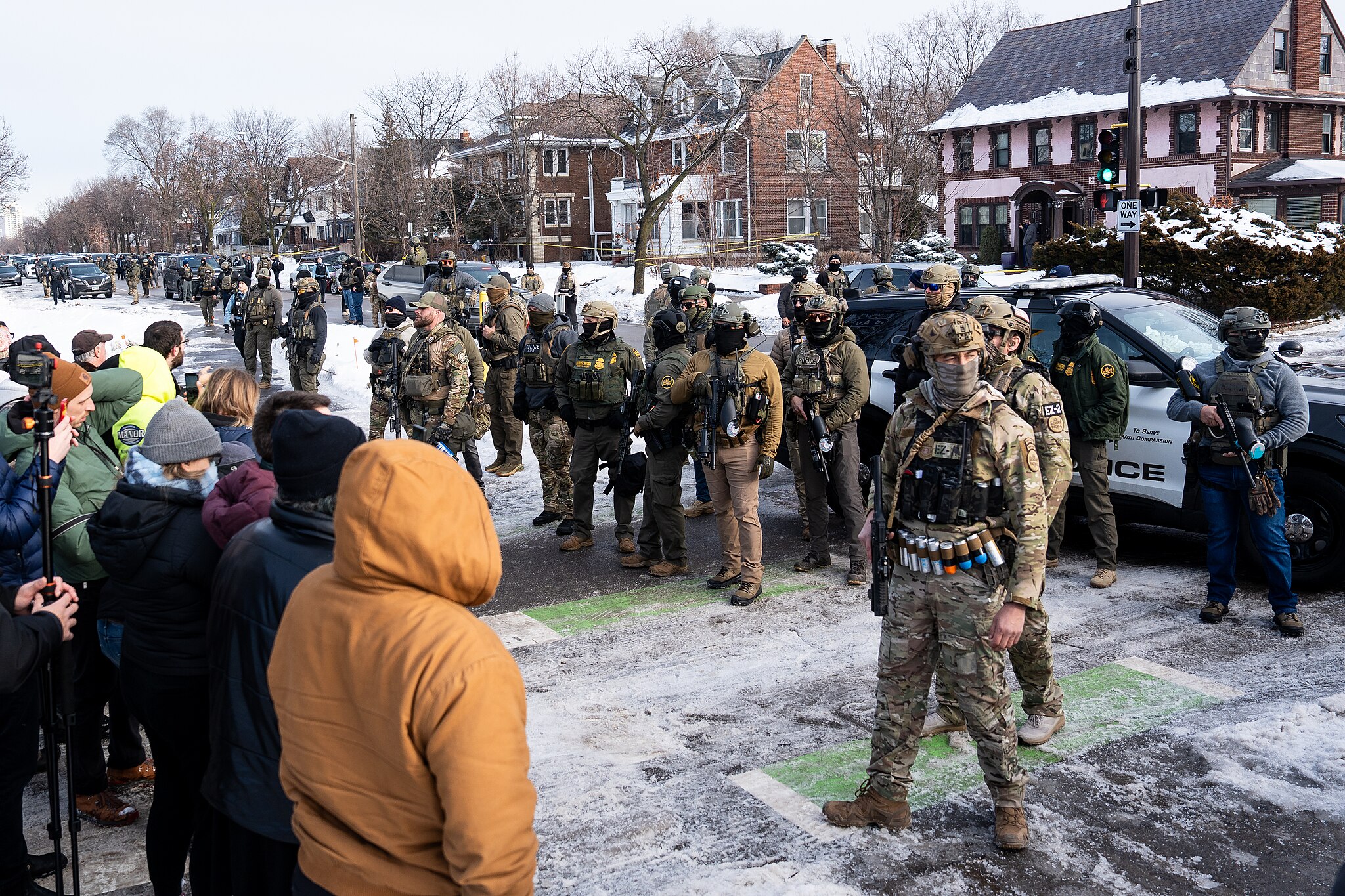
Laura Belin’s been doing an awesome job keeping track of the situation with Dr. Ian Andre Roberts, the former Des Moines Public Schools superintendent who was detained by ICE on September 26 and resigned four days later.

I’ve been seeing a lot of misinformation floating around on right-wing spaces about this, so I thought I’d note a few that need to be corrected.

Former Acting Department of Homeland Security Secretary Chad Wolf shared multiple false and/or misleading points during a recent Fox News appearance.

Continue Reading...

We’re upset about Dr. Roberts' detention—for good reason

Jenny Turner is a public school mom and a school speech therapist. She lives in West Des Moines.

It might be prudent to wait for all the facts before writing an opinion piece on ICE detaining Dr. Ian Roberts, the superintendent of Des Moines Public Schools. It is true that there is a lot we don’t know. Which leads me to the central question: why don’t we know?

Dr. Roberts has allegedly had a removal order for nearly a year and a half. Why did the district not know about this? Why was Dr. Roberts arrested suddenly, in the most dramatic fashion, for what amounts to late paperwork (if true)? Why was no thought put into the effect this would have on the community and the kids? Why was it not done mindfully to minimize the impact?

Continue Reading...
Iowans in Congress choosing shutdown over extending affordable health care

Sue Dinsdale is the Executive Director of Iowa Citizen Action Network and the State Lead for Health Care for America NOW.

Politicians in Washington, D.C. are getting ready to shut down the federal government once again, despite single-party Republican control of the House, Senate, and the presidency. 

This time, disagreements in Congress over health care costs and access are preventing an agreement that would keep critical services going without interruption. 

Earlier this year, Republicans in Congress passed and President Donald Trump signed a massive budget reconciliation bill, the so-called “One Big Beautiful Bill Act,” which extended trillions of dollars in tax breaks that would otherwise have expired this year. The lion’s share of those tax breaks will go to wealthy households making over $400,000 a year and to large corporations through extra loopholes that were reinstated in the law. 

Continue Reading...

This time, the government shutdown may happen

Rick Morain is the former publisher and owner of the Jefferson Herald, for which he writes a regular column. This essay first appeared on Substack.

Congress averted an impending federal government shutdown in March by reaching a bipartisan compromise, which kept the government funded through the end of the current fiscal year. Time passes, and we’re approaching the new deadline.

By now a functional Congress would have performed its due diligence and approved the twelve required federal spending bills for the fiscal year. Has that happened? Of course not. So the House, the Senate, and President Donald Trump are dancing through the same old drill. They have until midnight on Tuesday, September 30, to get it done.

Continue Reading...

How Iowa's public school funding affects property taxes on farmland

Al Charlson is a North Central Iowa farm kid, lifelong Iowan, and retired bank trust officer. This column was first published in the Waverly Newspapers.

We recently received the 2025-26 real estate tax statement for our farmland in my “home county.” The 11 percent increase must have felt like a punch to a lot of our neighbors back home at this time of corn and soybean prices below the cost of production. It hits particularly hard for younger farmers struggling to provide for their families, make farm payments, and maintain their machinery.

As a note to my non-farm friends and neighbors, the assessment of Iowa farmland for real estate taxes is entirely different than it is for our homes. Home assessments are based on recent sale prices of comparable homes. Since 1977 Iowa farmland has been assessed based on soil productivity (estimated value of crops produced minus production costs).

That makes a big difference. Based on the Bremer County Assessor’s valuation, our Waverly home is worth about 1.4 times the estimated fair market value of our “home county” farmland. The non-city portion of 2025-26 taxes on our Waverly home are about 4.4 times the taxes on our farmland. In my opinion this accommodation for agriculture, the base of Iowa’s economy, is reasonable and justified.

Continue Reading...
The sun also sets—but solar batteries are changing that

Chuck Isenhart is an investigative reporter, photographer and recovering Iowa state legislator offering research, analysis, education and public affairs advocacy at his Substack newsletter Iowa Public Policy Geek, where this essay first appeared.

In 2014, Raki Giannakouros and Blue Sky Solar put six solar panels on the roof of my house. I have not paid for an electron since. The installation has paid for itself multiple times. Even with Alliant Energy’s recent 19 percent daily “customer charge” increase, my monthly bill is still less than a Thomas Jefferson.

When natural gas prices doubled for everybody in the months after the Texas freeze, I was able to use an electric space heater on many winter nights to avoid the worst of the gas price surge. All made possible by a net-metering policy in Iowa that allows me to generate power the utility can sell to others in the summer (avoiding costs for the utility) that I can reclaim in the winter (when electricity demand is down).

Continue Reading...

Satanic Temple honors Paradise Lost in "nice place to sit and read a book"

Dave Leshtz is the editor of The Prairie Progressive.

“Satanism is as American as apple pie.”

           –Bill Douglas, author of The People are Kind: A Religious History of Iowa

It was hot as hell on Sunday, September 14, in Toledo, Iowa—the scene of a public reading of John Milton’s Paradise Lost.

For the second time, members of the Satanic Temple of Iowa gathered to honor the epic poem they consider the foundational text of what history calls The Enlightenment. My car’s thermometer reached 93 degrees as I parked in front of the Tama County courthouse. Undeterred by the heat, eight Temple members were dressed in their traditional Satanic black finery as they read Milton’s blank verse masterpiece beneath a black pop-up tent.

When I attended the Temple’s first public reading last summer, members were still smarting from the Iowa Department of Administrative Services’ abrupt cancellation of their planned event at the state capitol. Agency director Adam Steen had yanked its approval, forcing the group to look for another government location.

Continue Reading...

FDR, Margaret Chase Smith, and others warned us about Trump

Herb Strentz was dean of the Drake School of Journalism from 1975 to 1988 and professor there until retirement in 2004. He was executive secretary of the Iowa Freedom of Information Council from its founding in 1976 to 2000.

More than 90 years ago, President Franklin Delano Roosevelt delivered a warning that appears prescient in light of today’s woes. Consider these 53 words from FDR’s inaugural address on March 4, 1933:

(T)he only thing we have to fear is fear itself—nameless, unreasoning, unjustified terror which paralyzes needed efforts to convert retreat into advance. In every dark hour of our national life a leadership of frankness and vigor has met with that understanding and support of the people themselves which is essential to victory.”

Roosevelt’s reference to “dark hours of our national life” calls to mind other rhetoric and survival in dark hours. The reference hints at the lack of frankness and needed vigor in our nation today. And the reference does far more than merely hint about the fear than Trump strikes in the hearts of so many — from the struggling non-profit organizations trying to aid the vulnerable and needy to the well-off members of Congress, apparently confident in their unending terms in office.

Continue Reading...

Someone is testing messages about Randy Feenstra and Rob Sand

A poll in the field this week previews attack lines Republicans may use next year against State Auditor Rob Sand, the likely Democratic nominee for governor.

Some Iowans have received this survey over the phone, and others over text. The questions enclosed below are taken verbatim from a respondent’s screenshots. A different respondent who took the poll by phone confirmed the question wording.

A quick reminder: although you may feel angry when you hear biased or misleading claims about Democratic candidates, it’s better not to hang up or click away. Take screenshots or detailed notes, or record the phone call, and share the questionnaire with me. (I won’t publish your name.)

Continue Reading...

I took on the Reynolds administration and won

Adam Zabner represents Iowa House district 90, covering part of Iowa City.

In April 2024, Bleeding Heartland published an op-ed I wrote detailing my fight with Governor Kim Reynolds’ administration to secure voting rights for Iowans on Medicaid. The fight centered around a federal law, the National Voter Registration Act, which requires states to offer voter registration to people registering for public assistance programs.

As I wrote, at the time, “Iowa’s Medicaid application form is 27 pages long. Many other states include a voter registration form in the packet. In Iowa, at the bottom of page 16, the packet contains one sentence and a link to the voter registration form. The link is printed out. An Iowan would have to type the 46-character link into their browser and access a printer to print it out. This is unlikely to register voters and states with similar policies have been found to be out of compliance with the NVRA.” The result was that far fewer people were registering to vote through Medicaid applications in Iowa, compared to almost any other state.

Continue Reading...

On gender-affirming care and respect

Edward Kelly, Jr. is a former Pentecostal Fundamentalist minister. He lives in Bellevue, Nebraska and works as a case manager at Heartland Family Service.

Imagine this scenario: Stephan had made the appointment with her primary care doctor as a last resort. She had recently developed a habit of delaying seeing a doctor until the symptoms became overwhelming, and the symptoms now were unbearable, so she called. But she knew they would say the same thing. “Stephan, we still do not have a legal change of name. We have you as Stephen.” They just would not recognize her gender nor her name.

It was one big hassle. And when they came out and called her to go in, it was always the same: “Stephen.” She would walk up, and they would announce to the doctor, “Stephen is here.”

Continue Reading...

My Charlie Kirk story: How I was introduced to Turning Point USA

Kira Barker is a Democratic organizer in Polk County. She posted this reflection on Facebook on September 12, two days after Charlie Kirk’s assassination.

It was my first year clerking in the Iowa House (January 2023). I was so naive, I remember working on those House races in Ankeny, thinking if we flipped those seats, we would be able to stop private school vouchers. LOL. I had no idea what the legislature was really like or what I was getting into.

During clerk orientation, staff told us we’d have several weeks to settle in before any bills would be up for a vote. In the second week the Iowa Rs passed the voucher bill. I described it as Dems getting our teeth kicked in; after enough kicks your gums get callused. The team in charge really knew how to set the tone.

Throughout the session there are “Day on the Hill” events where organizations bring members to the capitol to meet legislators, lobby, and set up tables in the first-floor rotunda to highlight priorities. This particular day was “Second Amendment Day on the Hill.”

If you didn’t know, guns are allowed in the capitol. I didn’t know that at the time. I learned it that day.

Continue Reading...

Zach Nunn swings and misses on Social Security

John and Terri own The Hale Group, an Ankeny-based advocacy firm focused on older Iowans. John had a 25-year career with the Social Security Administration, working in Iowa field offices, the Kansas City regional office, and its Baltimore headquarters. terriandjohnhale@gmail.com

No tax on Social Security benefits!

President Donald Trump has said it. U.S. Representative Zach Nunn has said it.

The problem is: It’s just not true.

Continue Reading...

Classes are full of students, but some are missing teachers

Bruce Lear lives in Sioux City and has been connected to Iowa’s public schools for 38 years. He taught for eleven years and represented educators as an Iowa State Education Association regional director for 27 years until retiring. He can be reached at BruceLear2419@gmail.com 

Schools are in full swing. Classes are packed with students, but some are missing a full-time teacher. 

If there’s a vacancy in most professions, another colleague takes up the slack. But teaching is unique. It’s impossible to make an unfilled teaching vacancy invisible since there are always 25 or 30 student witnesses.

As school begins in Iowa, the exact number of unfilled teaching vacancies is hard to determine. The Iowa Department of Education won’t release official numbers until late this year. So, is the teacher shortage a real problem, or nothing to worry about?

Continue Reading...

ICE detained, deported two Iowa workers without due process

Catherine Ross is a pseudonym for one of the authors of this post. Bleeding Heartland is keeping the authors’ names confidential, as well as the location in Iowa where these detentions occurred.

June 16, 2025 began like any other morning for two hardworking men in an Iowa community. As dawn broke, the first—a restaurant employee driving to work—was boxed in by two unmarked cars. Masked figures jumped out, ordered him from his vehicle, and whisked him away.

Three friends, trailing behind, watched in horror, as it appeared their fellow worker was being kidnapped. One friend ran to move the abandoned car off the street, unaware that other masked men lurked nearby. He, too, was seized and driven away. Only two witnesses in the second car remained to tell the tale.

Friends and families did not learn these men’s whereabouts for thirteen hours, when their names were found on ICE’s (Immigration and Customs Enforcement, part of the US Homeland Security) detainee roster at Polk County Jail—a facility paid by ICE for housing ICE detainees. After 48 hours there, they were transferred to Pine Prairie Correctional Facility in rural Louisiana for four more days.

Continue Reading...
Page 1 Page 2 Page 3 Page 4 Page 230