
Despite Iowa’s rightward shift over the past decade, our state is shaping up to be an important 2026 battleground. For the first time since 1968, we have open races for governor and U.S. Senate in the same year. Two of the four U.S. House districts are among the top Democratic targets nationwide. President Donald Trump’s approval rating may be underwater in Iowa, and Democrats are poised to nominate well-funded candidates for state and federal offices.
History tells us that midterm elections often favor the party out of power. Nevertheless, the Iowa landscape is much better for Republicans now than it was during the 2018 election cycle, when Fred Hubbell came within 3 points of winning the governor’s race and Democrats won three U.S. House seats.
It’s time to revisit a topic I explored last June. The GOP’s massive voter registration advantage still makes it hard to construct a winning scenario for Democrats in Iowa’s statewide races—even if Trump’s many failures drive down Republican turnout.
GOP HAS LARGEST VOTER REGISTRATION EDGE IN DECADES
Note: this analysis is about elections where all Iowa voters will determine the outcome: the races for U.S. Senate and any statewide office (governor, attorney general, secretary of state, state treasurer, secretary of agriculture, and state auditor).
Democrats have much better prospects in some Congressional and legislative districts, where voter registrations are less lopsided and Democrats have the capacity for well-organized GOTV.
For every statewide race, though, Republicans far outnumber Democrats in the potential voter universe. That wasn’t the case in the first Trump midterm, or even in the GOP landslide years of 2010, 2014, and 2022.
I created this table using figures the Iowa Secretary of State’s office released at the beginning of November in each midterm election year. The numbers reflect all registered voters (“active” plus “inactive”) but don’t include anyone who registered on election day after Iowa enacted same-day registration in 2007.
Registered voter totals going into Iowa midterms
| 2002 | 2006 | 2010 | 2014 | 2018 | 2022 | |
| Dem | 570,018 | 645,554 | 701,214 | 666,127 | 675,143 | 701,861 |
| GOP | 620,504 | 623,863 | 647,381 | 664,320 | 686,013 | 763,611 |
| Ind | 774,005 | 807,822 | 765,642 | 805,794 | 791,511 | 749,140 |
| net | +50K GOP | +22K Dem | +54K Dem | +2K Dem | +11K GOP | +62K GOP |
Democrats built up voter registration advantages in the 2000s, thanks in part to spirited Iowa caucus campaigns during George W. Bush’s presidency. Following the historic 2008 caucuses, Iowa had about 85,000 more registered Democrats than Republicans. That advantage had stretched to 109,000 by November 2008, when Barack Obama carried Iowa and Tom Harkin won a fifth term in the Senate.
Democrats haven’t had a competitive Iowa caucus campaign since 2020. Meanwhile, Republicans have invested heavily in voter registration efforts in recent years. By December 2023, official figures showed registered Republicans outnumbered Democrats in Iowa by about 85,000.
The GOP’s voter registration advantage grew to about 110,000 in February 2024. With no real presidential race in their own party, thousands of Democrats crossed over to caucus for Nikki Haley or some other alternative to Trump.
But it wasn’t just a temporary bump. By January 2025, Iowa had around 156,000 more registered Republicans than Democrats. The GOP advantage grew again after the Secretary of State’s office removed more than 180,000 inactive voters from the rolls in early 2025.
The latest official figures show that as of March 2026, Iowa had 591,102 registered Democrats—about 5,000 fewer than when I wrote about this topic last June. Now there are 776,586 registered Republicans—nearly 1,500 more than last June. Iowa also has 753,561 no-party voters on the rolls—about 30,000 more than last June. Younger people are more likely than older generations to register with no party affiliation.
The upshot is that registered Republicans currently outnumber Democrats statewide by more than 185,000. Last June the GOP voter registration advantage was around 178,000.
Keep in mind that total votes cast in recent Iowa midterms have ranged from around 1.13 million in 2010 to 1.33 million in 2018.
The Secretary of State’s figures show 19,639 registered voters with some “other” affiliation. The vast majority are Libertarians, and I am leaving them out of this analysis because I assume most will vote for Libertarian candidates in any race where that option is available.
IOWA DEMOCRATS LAG BEHIND GOP IN MIDTERM TURNOUT
Voter registration numbers are only one part of the picture. Unfortunately for Iowa Democrats, the party has historically lagged behind Republican turnout in non-presidential years.
Using the statewide statistical reports on the Iowa Secretary of State’s website, I created this table to break down the turnout rates by partisan affiliation for Iowa’s last six midterm elections. (Note that the official figures measure turnout as a percentage of registered voters, not as a percentage of eligible voters, the preferred metric for many experts in this field.)
Turnout rates in Iowa midterms
| 2002 | 2006 | 2010 | 2014 | 2018 | 2022 | |
| Dem | 65.8% | 62.2% | 56.5% | 56.7% | 67.7% | 60.1% |
| GOP | 70.0% | 64.9% | 69.0% | 68.2% | 71.6% | 66.8% |
| Ind | 37.2% | 35.6% | 36.5% | 37.8% | 45.9% | 38.0% |
| total | 56.3% | 52.7% | 53.0% | 53.1% | 60.8% | 54.7% |
A couple of points stand out. Republican turnout has consistently outpaced Democratic turnout, even in the blue wave year of 2006 and the first Trump midterm.
In addition, turnout for voters not affiliated with either major party tanks in non-presidential years, compared to the turnout rate for partisans.
Low Democratic turnout contributed to the wipe-out midterm elections during Obama’s presidency. Iowa Democrats went into the 2010 general election with a voter registration advantage. Yet the statewide statistical report indicates that around 447,000 Republicans cast ballots that year, while only 395,000 Democrats did.
Democrats and Republicans were nearly even in voter registrations going into the 2014 midterm election. Yet among Iowans who cast a ballot that year, there were more than 452,000 Republicans and just under 375,000 Democrats.
The turnout disparity alone may have cost Democrats two statewide elections in 2022. Roby Smith won the state treasurer’s race by 30,942 votes, and Brenna Bird won the attorney general’s race by 20,542 votes. If the Democratic turnout rate had been 63 percent instead of just over 60 percent that year, Tom Miller would in all likelihood still be Iowa’s attorney general—even without persuading a single Bird supporter to vote for him.
If 65 percent of registered Democrats had turned out for the 2022 midterm, both Miller and Michael Fitzgerald would be extending their record-setting tenures as attorney general and state treasurer. Again, that’s assuming no change in how Republicans or independents voted.
The good news for Democrats is that signs point to strong turnout for the 2026 midterm. Trump’s authoritarian policies, tax cuts for millionaires, and devastating cuts to health care have energized the Democratic base.
Another indicator of grassroots enthusiasm: Democratic candidates flipped two Iowa Senate seats last year, and put up swings of more than 20 points in other special legislative elections.
However, if the current voter registration numbers hold, high Democratic turnout will not be enough to win statewide in 2026—even if a majority of independent voters support Democrats.
To see why, let’s walk through some scenarios for the governor’s race.
GETTING TO A STATEWIDE WIN NUMBER
Iowa’s last close gubernatorial election happened in 2018, when Republicans had only a slight voter registration advantage, and turnout was high for all partisan affiliations. Governor Kim Reynolds defeated Democrat Fred Hubbell by 667,275 votes to 630,986 (50.3 percent to 47.5 percent), a margin of a little more than 36,000 votes.
The statewide statistical report for the 2018 general election indicates that 458,902 registered Democrats cast ballots (a turnout rate of 67.7 percent), 492,802 Republicans cast ballots (71.6 percent turnout), and 368,772 no-party voters cast ballots (45.9 percent turnout).
Those numbers don’t tell us how well Reynolds and Hubbell did among voters of different partisan affiliations. But it’s easy to construct paths to victory for the Democrat.
Winning through better persuasion
If every Democrat and Republican voted for their own party’s nominee, Reynolds would have led Hubbell by 492,802 to 458,902 (an advantage of 33,900). The challenger could have overcome that deficit by winning the independent vote by 55 percent to 45 percent (roughly 202,824 votes to 165,947).
Alternatively, if Hubbell had been able to attract more registered Republicans than the crossover votes Reynolds received from Democrats, he could have won the election with a smaller advantage among independents.
Winning through better turnout
Iowa Democrats and Republicans both had relatively high turnout in 2018. What if Democratic turnout remained high, but GOP turnout had been “normal” for a midterm?
With 67 percent Republican turnout (close to the 2022 level), Republicans would have cast about 461,000 ballots in 2018 instead of nearly 493,000. Assuming almost all Republicans were united behind Reynolds, her vote total would have fallen by around 30,000. That would have allowed Hubbell to win the governor’s race with a bare majority of independents (say, 51 percent of the no-party vote).
With low GOP turnout of 65 percent (comparable to 2006), registered Republicans would have cast about 447,000 ballots in 2018. Hubbell could have won just by staying even with Reynolds among no-party voters.
OVERCOMING THE VOTER REGISTRATION GAP
Now let’s try to piece together a Democratic win in 2026, assuming current voter registration numbers.
We’ll start with a good (but not pie-in-the-sky) turnout scenario for Democrats:
- 68 percent Democratic turnout (slightly higher than 2018, the last Trump midterm).
- 65 percent for Republicans (near the 2006 level). This would assume many low-propensity Trump voters stay home, along with some dedicated MAGA Republicans who don’t like their party’s 2026 nominees for top offices.
- 45 percent for independents (way above average but similar to 2018).
As mentioned above, the latest official figures show that as of March 2026, Iowa had 591,102 registered Democrats, 776,586 Republicans, and 753,561 no-party voters.
- 68 percent of 591,102 registered Democrats = 401,949 Democratic midterm voters
- 65 percent of 776,586 registered Republicans = 504,781 Republican midterm voters
- 45 percent of 753,561 no-party voters = 339,102 independent midterm voters
If the Democratic nominee gets roughly 60 percent of the independents, that produces a net gain of about 68,000 votes. It’s not enough to win the election unless there are few Democratic defections and around 10 percent of Republicans either vote for the Democrat or for a third-party option. (If Libertarians manage to get candidates on the ballot, past results suggest they will draw between 1 percent and 3 percent of the general election vote.)
Let’s game out a more typical turnout scenario for an Iowa midterm:
- 65 percent of 591,102 registered Democrats = 384,216 Democratic voters
- 68 percent of 776,586 registered Republicans = 528,078 GOP voters
- 38 percent of 753,561 registered independents = 286,353 no-party voters
It’s almost mathematically impossible for a Democrat to win. Even if the Democratic nominee captured two-thirds of the independent vote (not likely), the net gain of about 94,000 votes would not be enough to make up the margin, unless large numbers of Republicans cross over.
We might not expect GOP turnout in 2026 to match what we’ve seen in previous midterms. Trump has changed the Republican coalition, bringing in many who previously voted rarely (or never). It’s plausible that lots of Trump fans won’t show up if he’s not on the ballot—especially since the GOP has a weak field of candidates for governor.
Let’s assume Democrats and independents show up in large numbers, while GOP turnout falls far below anything we’ve seen in the past 25 years. The perfect storm scenario:
- 68 percent of 591,102 registered Democrats = 401,949 Democratic midterm voters
- 60 percent of 776,586 registered Republicans = 465,952 Republican midterm voters
- 45 percent of 753,561 no-party voters = 339,102 independent midterm voters
This race looks within reach if the no-party vote skews toward Democrats (which seems likely, given Trump’s sinking approval and recent elections in other states). But notice how even if GOP turnout collapses, Republicans will probably cast more ballots than Democrats this November.
I’m skeptical Iowa GOP turnout could fall as low as 60 percent, given the resources the party will be putting into GOTV. Remember, registered Republicans cast more ballots before election day in 2024 than Democrats did. That was a first in the two decades I’ve closely followed Iowa’s early voting patterns.
SENATE RACE A BIGGER LIFT
Everything I wrote about the governor’s race applies equally to other statewide offices. The Senate race poses greater challenges, because voters seem to view federal elections differently. Several red states have elected Democratic governors in the past decade (Kentucky, Kansas, Louisiana), but it’s been a long time since a non-incumbent Democrat won a Senate race in a red state.
The Cook Political Report and Sabato’s Crystal Ball both rate Iowa’s governor’s race as “lean Republican,” but they see the Senate race as a “likely Republican” hold.
I agree with those ratings, and would add that U.S. Representative Ashley Hinson (the heavy favorite to win the Senate nomination) is a more polished and confident candidate than any of the Republicans running for governor.
Democrats should absolutely make a play for Iowa’s Senate seat, but they should not be naive about the challenge. Even with a favorable turnout scenario, majority support from independents, and a Libertarian on the ballot, the Democratic nominee will struggle without unprecedented crossover Republican voting.
The race would be less of a long-shot if Democrats weren’t so far behind in voter registrations.
THE CAVALRY IS NOT COMING
I wrote last summer that to overcome the long odds in this year’s statewide races, “Democrats will need not only strong GOTV and good messaging, but also a better voter registration effort over the coming year than the party has seen in decades.” I knew Democrats wouldn’t close the gap, but I thought the party might be able to cut the Republican lead significantly before the 2026 election.
It’s clear now that won’t happen.
The Iowa Democratic Party is building a ground game—state party chair Rita Hart hopes to have “60 or more” organizers on the ground by the end of the primary season, she said on Julie Gammack’s Iowa Potluck podcast in February. Field staff will be trained in relational organizing and will work with county parties to train volunteers.
It sounds like persuasion will be the priority. Asked about the current disparity in party registrations, Hart told Gammack, “the reality is that voter registration is a lagging indicator, and what it’s indicating is that we’ve lost so many election cycles.”
Unlike some states that have a large reservoir of unregistered voters, Iowa already has high registration and participation rates, Hart noted. She argued the party needs to do a better job of convincing Iowans that one-party rule is not working, and “It’s time for a change.”
State Auditor Rob Sand’s campaign for governor is building an impressive organization, with a large staff and field offices already open in Des Moines and Cedar Rapids. But Sand doesn’t need to encourage any of his supporters to register as Democrats. His only competition for the nomination, Julie Stauch, failed to qualify for the primary ballot.
More broadly, Sand has not tried to build the Democratic brand or the party’s capacity. In speeches and interviews, he often positions himself against partisanship and the “broken” two-party system. He frequently calls for increasing independent voters’ power at the expense of the two major parties. He has implied he reluctantly became a Democrat and “picked my poison” in order to vote in primary elections.
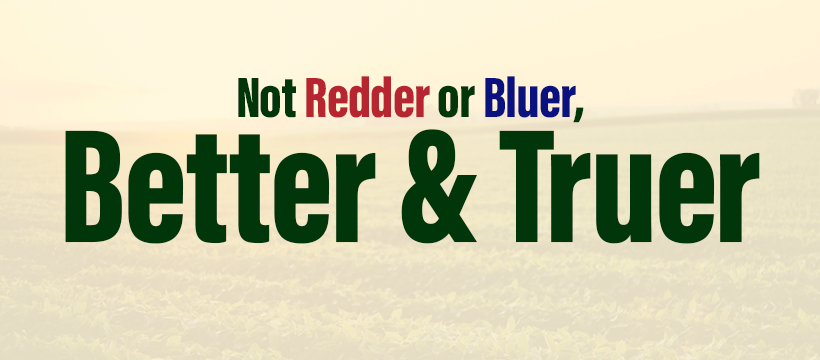
Along those lines, Sand has told Iowans from day one that he is not trying to turn Iowa blue. Here’s the current banner on the Rob Sand for Iowa Facebook page:
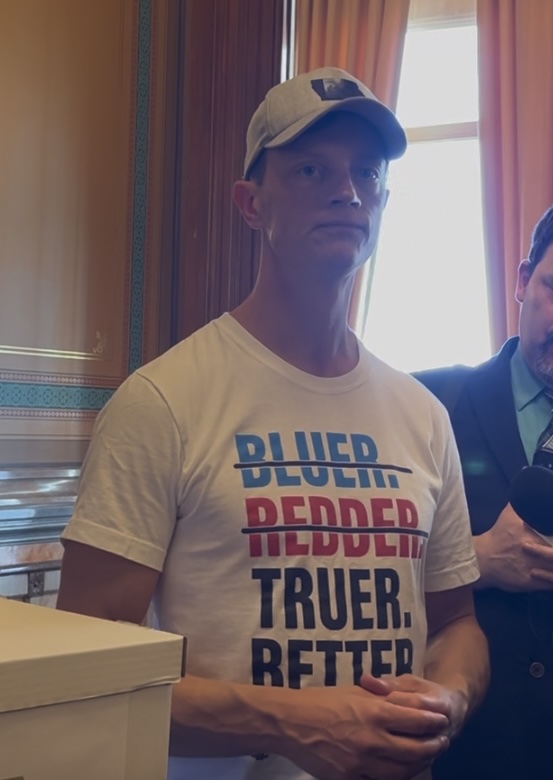
Sand sported a t-shirt with a similar slogan while submitting his nominating papers in the Iowa Secretary of State’s office on March 9.
The strategy makes sense when you consider that Iowans voted for Trump by a 13-point margin in 2024 and last elected a Democrat to the governor’s office in 2006. Sand is trying to connect with voters who share his values, even if they may not agree with all of his policies.
I expect his campaign to help finance the Iowa Democratic Party’s “coordinated campaign” in the fall. And if Sand does win the November election, down-ballot Democratic candidates should benefit.
My point is that the party’s best-funded 2026 candidate is not trying to change the structure of Iowa’s electorate in a way that would lift all Democratic boats. Moreover, his approach risks alienating some of the voters he will need in the general election.
Competitive primaries present other opportunities to engage and register more Democrats. In particular, the two-way Senate race between State Senator Zach Wahls and State Representative Josh Turek may generate enough voter interest to give the party a small boost before June. By the same token, the wide-open Republican primary for governor—with at least three candidates, and possibly four or five on the ballot—could juice the GOP numbers.
The bottom line: it’s too late for Iowa Democrats to climb out of the voter registration hole before November. Candidates for statewide offices can’t win just by mobilizing the faithful. They will also need messages to reach voters who haven’t backed Democrats lately, as well as GOTV strategies to bring those people to the polls.
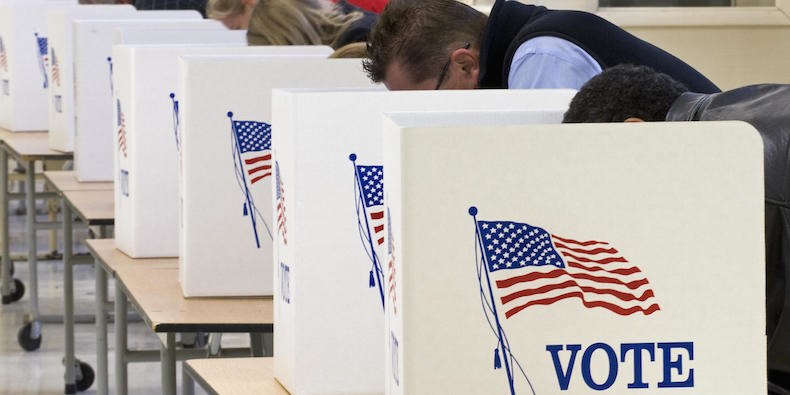
Top image of Iowans voting early posted on the Black Hawk County auditor’s Facebook page on October 24, 2022.
12 Comments
always appreciate these reality checks
and sorry that there will be people who blame the messenger.
This is the real kicker “My point is that the party’s best-funded 2026 candidate is not trying to change the structure of Iowa’s electorate in a way that would lift all Democratic boats. Moreover, his approach risks alienating some of the voters he will need in the general election.”,
and even if he wins things will not go well (he doesn’t even have plan that would really begin to turn the economy around, and Repugs are already gearing up to strip him of whatever power they can) and Dems will bear the blame even tho he keeps throwing them under the bus.
dirkiniowacity Sun 15 Mar 9:40 AM
It's too bad
that Sand’s money and statewide name recognition scared other Dems from entering the gubernatorial race.
And I didn’t realize that Julie Stauch had not qualified for the primary. I read that she had filed her nomination papers last week.
Wally Taylor Sun 15 Mar 10:08 AM
No title
She filed her nominating papers on Thursday morning. But on Friday afternoon she learned she was short in two counties because of technical errors on the petitions. It was too late to go out and collect more signatures. More explanation here:
https://laurabelin.substack.com/p/iowa-candidate-filings-legislative
Laura Belin Tue 17 Mar 10:53 PM
nuts and bolts
Last year after Pete D”alessandro criticized the IDP for lax voter registration, I asked IDP what was the plan for voter registration. No one responded to my email. About ten days ago I asked again. Still no answer.
Like Trump going to war half cocked, IDP will go to November having skipped some basic preparation.
IowaVoter Sun 15 Mar 11:40 AM
turnout vs registration
GOP has the registration advantage but not convinced it will equate to a turnout advantage. Motivated voters can make all the difference. Sand is lightyears a better gubernatorial candidate than DeJear and his in-laws wealth has been a welcome addition along with his middle of the road approach to the issues (including vouchers). As for the federal races IDP has been shutout the last couple of elections. How do you measure success? If IDP can flip one US Congressional seat it will be considered victory after the 2024 and 2022 debacles?
ModerateDem Sun 15 Mar 1:44 PM
No title
It’s true, there may not be a Republican turnout advantage. But when you start with almost 200,000 more Republicans than Democrats, you can end up having more Republicans cast ballots even if the Democratic turnout rate is higher. That is why it is so hard to come up with a win number statewide.
For Iowa to be seen as a swing state again (in my opinion), Democrats need to flip at least two Congressional districts, win at least one statewide race, and keep the Senate race close.
Laura Belin Tue 17 Mar 10:55 PM
Numbers
I’m running for state treasurer as a Democrat. The registration numbers certainly paint a challenging road ahead.
However, Iowans are a pragmatic people. Harold Hughes understood this in 1962 when Republicans dominated, and he overcame the odds to beat incumbent Norman Erbe by championing liquor law reform.
If Democratic candidates offer a pragmatic vision and leadership—most importantly on pocketbook issues that matter to Iowans—we’ll see in November how many voters stick to party lines.
A big wildcard is Trump’s handling of the economy. This could be a decisive factor, just as the inflation Iowans associated with Joe Biden leveled most of the Democratic field in ’22. And Keep your eyes on Iowa’s fiscal budget mess.
For more on our pocketbook issues, including defending IPERS and bringing visibility and common sense to the Treasurer’s office, visit www.norwood4iowa.com.
John Norwood Sun 15 Mar 1:48 PM
Am grateful for this post -- I hate some realities, but it's better to know about them.
And this certainly increases my (already horrified) interest in the Republican gubernatorial primary. Yes, per a comment above, there will of course be very serious problems even if Sand wins. But It would be far better for Iowa to have those problems than the problems that would follow the election of one of the Republican primary candidates.
PrairieFan Sun 15 Mar 2:30 PM
if Iowans were really
“a pragmatic people” we wouldn’t be in this mess in the first place, and Dems here have been largely running on ‘kitchen-table’economics the whole time they’ve been losing, but I guess “common” sense says keep running this model again and again…
dirkiniowacity Sun 15 Mar 5:47 PM
I know that Bird-brain has a lot of outside/dark money
backing her but that could be used against her if someone decided to go populist/anti-trust
“The reason for the swap is that DOJ settled their claims against Live Nation on March 9, and pressured many of the 39 states (and the District of Columbia) in the case, particularly the Republican ones, to go along with them. But in the end, only seven states did so—Arkansas, Iowa, Mississippi, Nebraska, Oklahoma, South Carolina, and South Dakota, all Republican-led. (Only Arkansas, Nebraska, and South Dakota have signed term sheets.) The other 32, including Republican AGs in Florida, Indiana, Kansas, Louisiana, New Hampshire, Ohio, Texas, Tennessee, Utah, West Virginia, and Wyoming, failed to come to agreement after forced settlement talks from the judge.”
dirkiniowacity Tue 17 Mar 2:53 PM
No title
I think Nate Willems will run on a populist message. His main point is the AG should be doing something to help working Iowans for once.
Laura Belin Tue 17 Mar 10:57 PM
Changing the political colors of Iowa
I value the combination of your insights and the reader dialogue here. My take: the right questions aren’t being asked and answered. Why did the Iowa that voted for Obama flip so drastically?
From my time working campaigns in rural Story, Greene, Guthrie and Boone counties, I don’t think Iowans just changed their values. I think Democrats fell behind in the messaging arms race (radio/social) and struggled with flawed GOTV data. There has also been a steady stream of poor advice regarding rural campaigning. We have a major opportunity to use legislative debates more effectively to champion issues that matter to small towns.”
Ralph Rosenberg Sat 21 Mar 1:12 PM