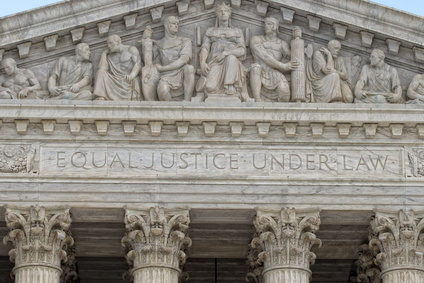
In what has been called the most important abortion rights case for many years, the U.S. Supreme Court today struck down a 2013 Texas law that had forced more than 20 abortion clinics to close. Writing for the 5-3 majority in Whole Woman’s Health v. Hellerstedt, Justice Stephen Breyer determined, “Both the admitting-privileges and the surgical-center requirements place a substantial obstacle in the path of women seeking a previability abortion, constitute an undue burden on abortion access, and thus violate the Constitution.”
Justices Anthony Kennedy, Sonia Sotomayor, Elena Kagan, and Ruth Bader Ginsburg joined Breyer’s opinion. A succinct concurrence by Ginsburg noted, “Many medical procedures, including childbirth, are far more dangerous to patients, yet are not subject to ambulatory-surgical-center or hospital admitting-privileges requirements. […] Given those realities, it is beyond rational belief that [Texas law] H.B. 2 could genuinely protect the health of women, and certain that the law “would simply make it more difficult for them to obtain abortions.”
As Alexa Ura explained at Texas Tribune, today’s decision will not automatically reopen the shuttered Texas clinics. But it could lead to similar laws being struck down in 23 other states, shown on maps in this post by Sarah Kliff and Sarah Frostenson.
Iowa law does not place such restrictions on abortion providers, nor have they been the focus of recent legislative efforts by anti-abortion state lawmakers. But today’s U.S. Supreme Court decision reminded me of the unanimous Iowa Supreme Court ruling from June 2015, which used the same reasoning to reject a state ban on the use of telemedicine for abortion. Just as Iowa Supreme Court justices found no evidence suggesting that women’s health or safety would benefit from being in the same room as a doctor when taking a medication, Breyer’s opinion found nothing in the record supported the claim that the Texas regulations advanced the state’s “legitimate interest in protecting women’s health”; on the contrary, “neither of these provisions offers medical benefits sufficient to justify the burdens upon access that each imposes.”
I sought comment today from Governor Terry Branstad and all members of Iowa’s Congressional delegation, as well as the challengers who had not already released statements on the ruling. I will continue to update this post as needed.
Continue Reading...