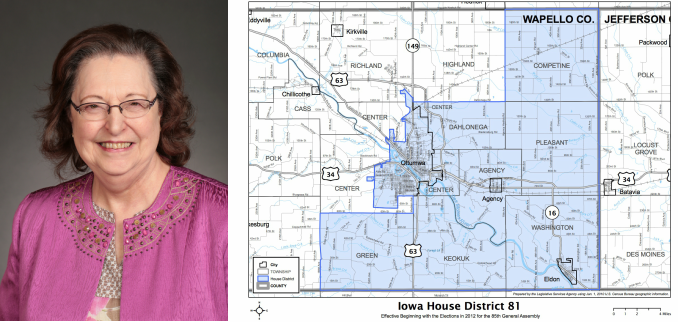
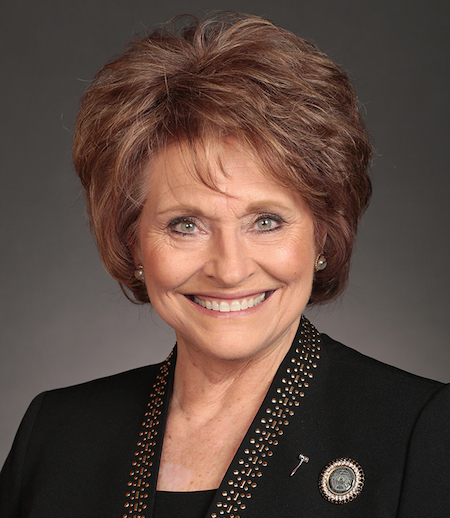
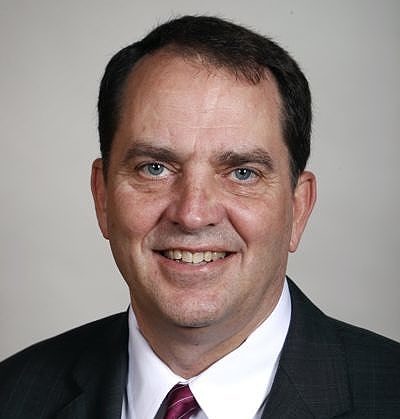
State Representative Mary Gaskill will seek a tenth term in 2020, House Democrats announced on November 7.
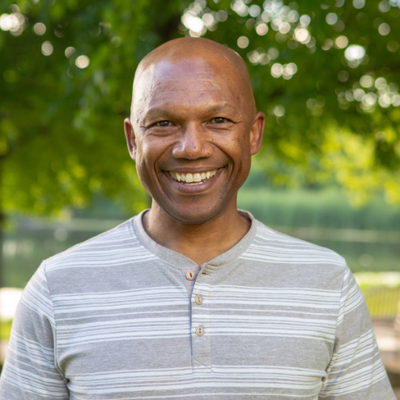
That’s good news for Democrats, who might have had a difficult seat to defend if Gaskill had chosen to retire.
State Representative Mary Gaskill will seek a tenth term in 2020, House Democrats announced on November 7.
That’s good news for Democrats, who might have had a difficult seat to defend if Gaskill had chosen to retire.
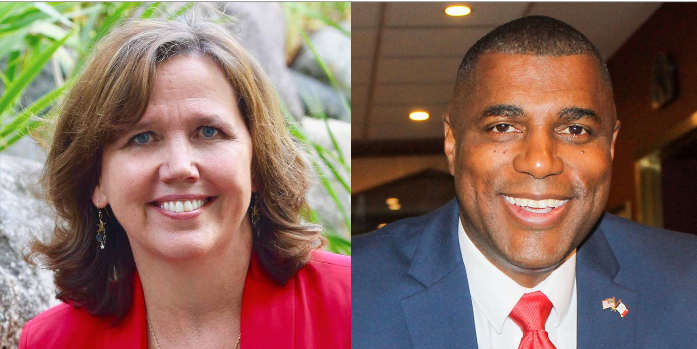
A competitive primary is shaping up in the safest Iowa House seat for Democrats. Last week University of Iowa law professor Christina Bohannan announced she will run for House district 85, setting up a race against ten-term State Representative Vicki Lensing.
State Representative Pat Grassley, who will become Iowa House speaker when the legislature reconvenes in January, is the latest high-ranking Iowa Republican to promise not to change our state’s redistricting process. That’s good.
Unfortunately, GOP legislative leaders and Governor Kim Reynolds have not yet answered an essential follow-up question.
Iowa House Speaker Linda Upmeyer raised more than $1.5 million during the 2018 election cycle and donated most of the money to the Republican Party of Iowa, for use in competitive state legislative races. Upmeyer surely raised significant funds during the first nine months of this year, before she confirmed plans to step down as speaker. (We won’t know how much until Iowa lawmakers file their next campaign finance disclosures in January.)
What’s going to happen to the money in Upmeyer’s campaign account, given that the soon-to-be-former caucus leader won’t run for re-election in 2020?
Democratic State Representative Scott Ourth has been charged with drunk driving, Stephen Gruber-Miller was first to report for the Des Moines Register on October 10. Police in Cherokee pulled Ourth over on the evening of October 5 for driving his truck with headlights off. He failed a field sobriety test, and breath tests indicated his blood alcohol content was over the legal limit.
Ourth lives in Warren County but was scheduled to appear at a fundraiser for fellow state legislator Chris Hall in Sioux City on October 6.
You can follow Andrea Phillips through her campaign website, Facebook page, or Twitter feed. She stepped down as the Iowa Democratic Party’s first vice chair before launching this campaign. -promoted by Laura Belin
My mother worked her way up from bank teller to bank manager while my Dad worked as a blueprint repair man, instilling in me there is no substitute for hard work. Growing up with these influences I worked my way through college, with the help of Pell Grants and student loans, graduating with a degree in economics.
UPDATE: Hanusa announced in March 2020 that she will not seek re-election. Original post follows.
Democrats need a net gain of four seats to take control of the Iowa House after the 2020 elections. One seat that wasn’t on the party’s 2018 target list (but should have been) was House district 16, covering part of Council Bluffs. State Representative Mary Ann Hanusa had a close shave there, defeating Democrat Steve Gorman by only 114 votes, a roughly 1 percent margin.
Gorman is running for the Iowa Senate this cycle, but as of October 1, Democrats have a strong challenger for the House seat: Jen Pellant.
Democratic State Representative Mark Smith will not seek re-election in 2020, Lana Bradstream was first to report for the Marshalltown Times-Republican on September 22. Smith broke the news the previous day during an event featuring presidential candidate Cory Booker in Marshalltown. He elaborated on his reasoning in a column for the Times-Republican.
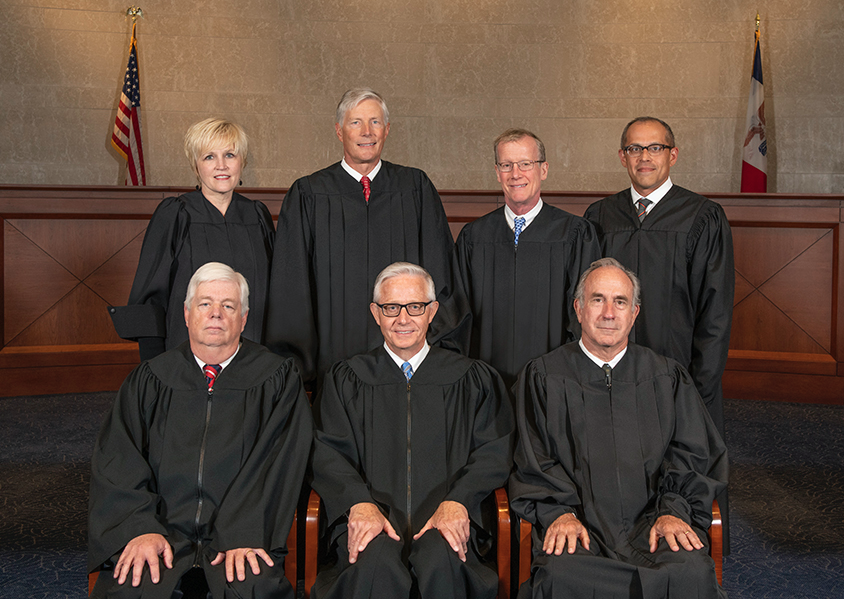
Multiple Iowa Supreme Court justices spoke with Iowa House Republicans shortly before GOP lawmakers approved a bill that gave the governor more influence over the judicial selection process and shortened the chief justice’s term.
But only Chief Justice Mark Cady disqualified himself from considering the legal challenge to that law’s validity, and only Cady has been transparent about his communications on the issue with legislators and staff for Governor Kim Reynolds.
Justice Thomas Waterman and Justice Edward Mansfield appear to have pushed for the bill’s passage and stand to benefit from electing a new chief justice in 2021. Yet neither recused himself from hearing the case. Nor have they revealed their contacts with Republican legislators or the governor’s legal counsel Sam Langholz, despite a judicial rule calling for disclosure of information relevant to a recusal motion.
Board members of the Iowa Communities Assurance Pool, including State Representative Michael Bergan, have “frequently held public meetings at posh out-of-state resorts, costing tens of thousands of dollars while making it harder for the public to attend,” Ryan Foley reported for the Associated Press on September 16.
Art Small is an economist and data scientist who grew up in Iowa and is currently based in Charlottesville, Virginia. He is volunteering through Tech for Campaigns on a state legislative race in Virginia. -promoted by Laura Belin
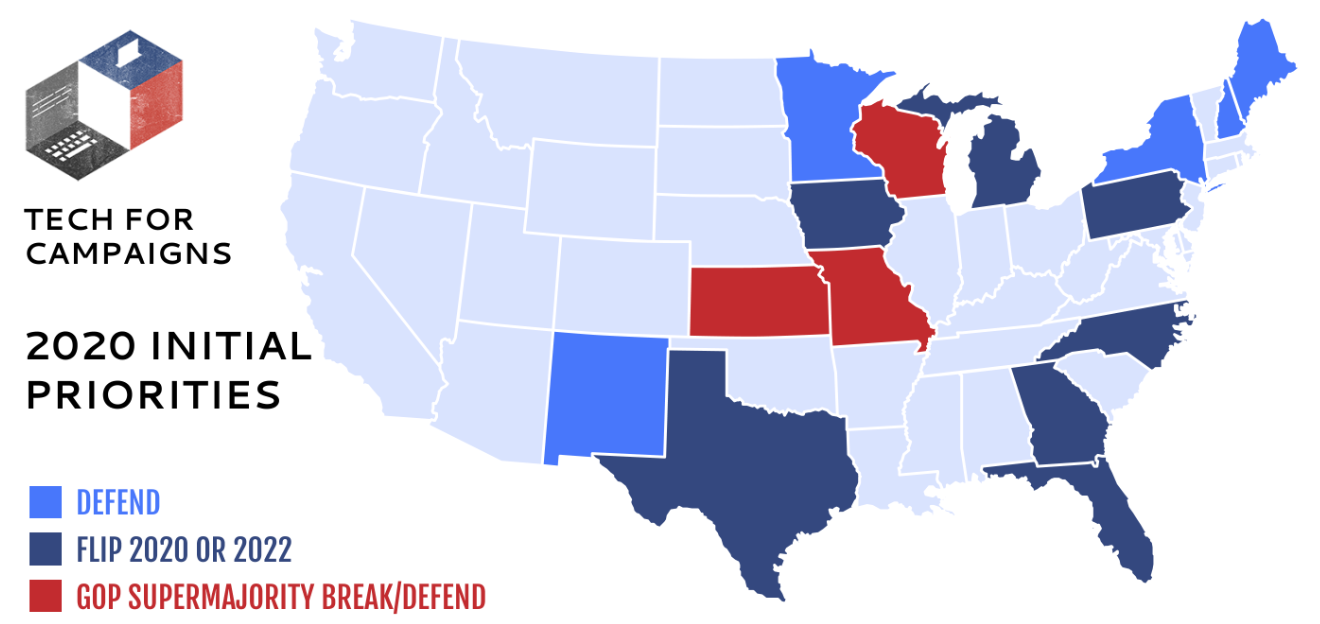
Knowledgeable observers increasingly see the Iowa House as a likely battleground in the 2020 election cycle. In yet another sign that control of the chamber will be in play next year, Tech for Campaigns, a national group that funnels volunteers with digital skills to support Democratic candidates, today announced that the effort to flip the Iowa House has made it on the group’s “priority list” for the 2020 election cycle.
Following gains last November and Andy McKean’s party switch in April, Democrats need a net pick-up of just four seats to flip the chamber blue.
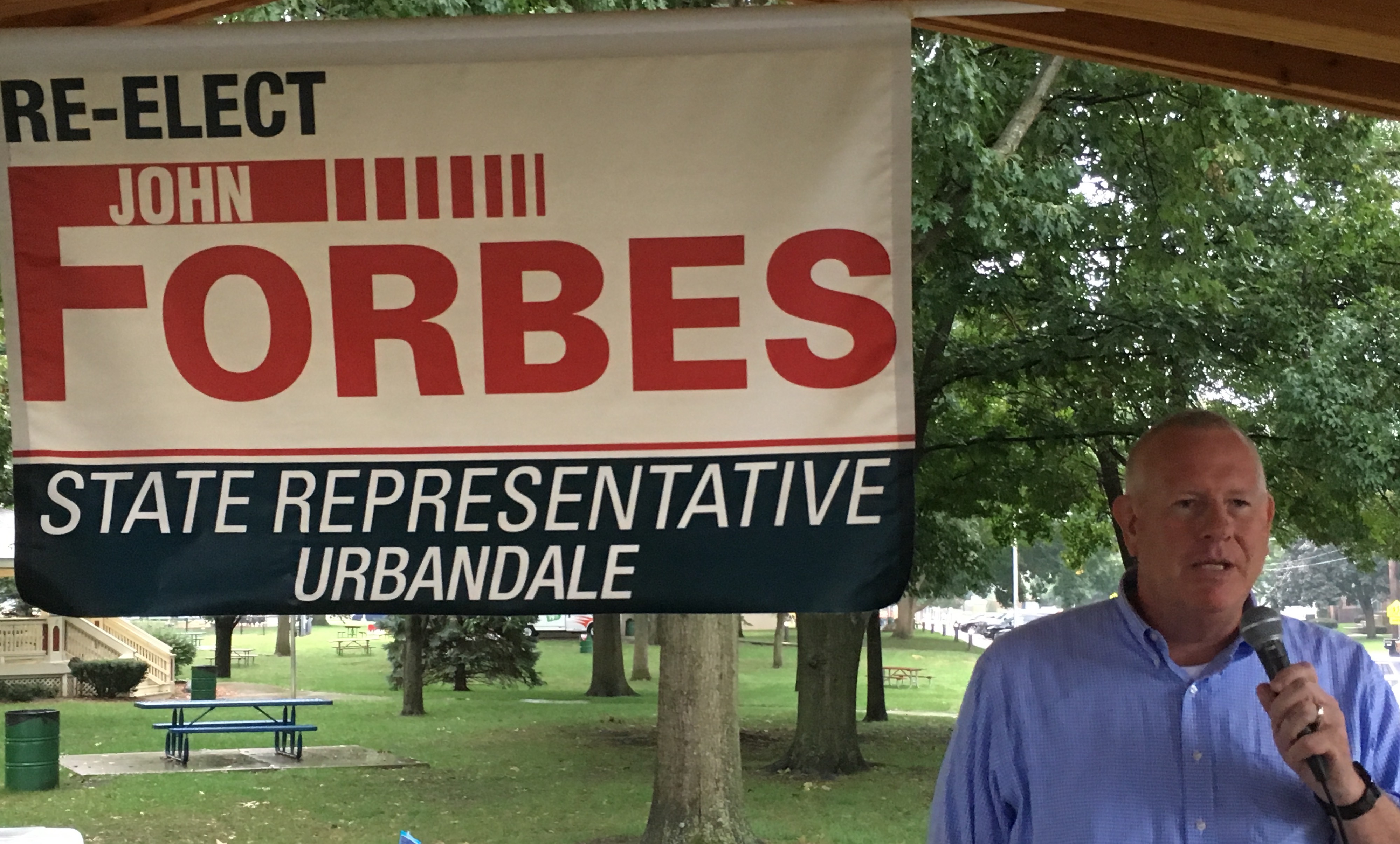
Urbandale Mayor Bob Andeweg recently changed his party registration and will manage Democratic State Representative John Forbes’ 2020 campaign in Iowa House district 40.
Speaking at a fundraiser for Forbes in Lions Park on September 7, Andeweg said he’s “been a Republican my whole life.” Because he believes in nonpartisan local government, he has rarely spoken publicly about his party affiliation as mayor since 2005 or on the city council prior to that. Regarding his party switch, Andeweg said, “I truly believe this is where I need to be at this point in time.”
He and Forbes have been friendly since the early 1990s, and Forbes managed Andeweg’s first campaign for city council in 1999. He fell short in that effort but was later appointed to fill a vacancy, then won his next city council race and subsequently four terms as mayor. The two men “worked well together” when Forbes served on the city council, and Andeweg praised Forbes’ ability to get things done in a Republican-controlled chamber.
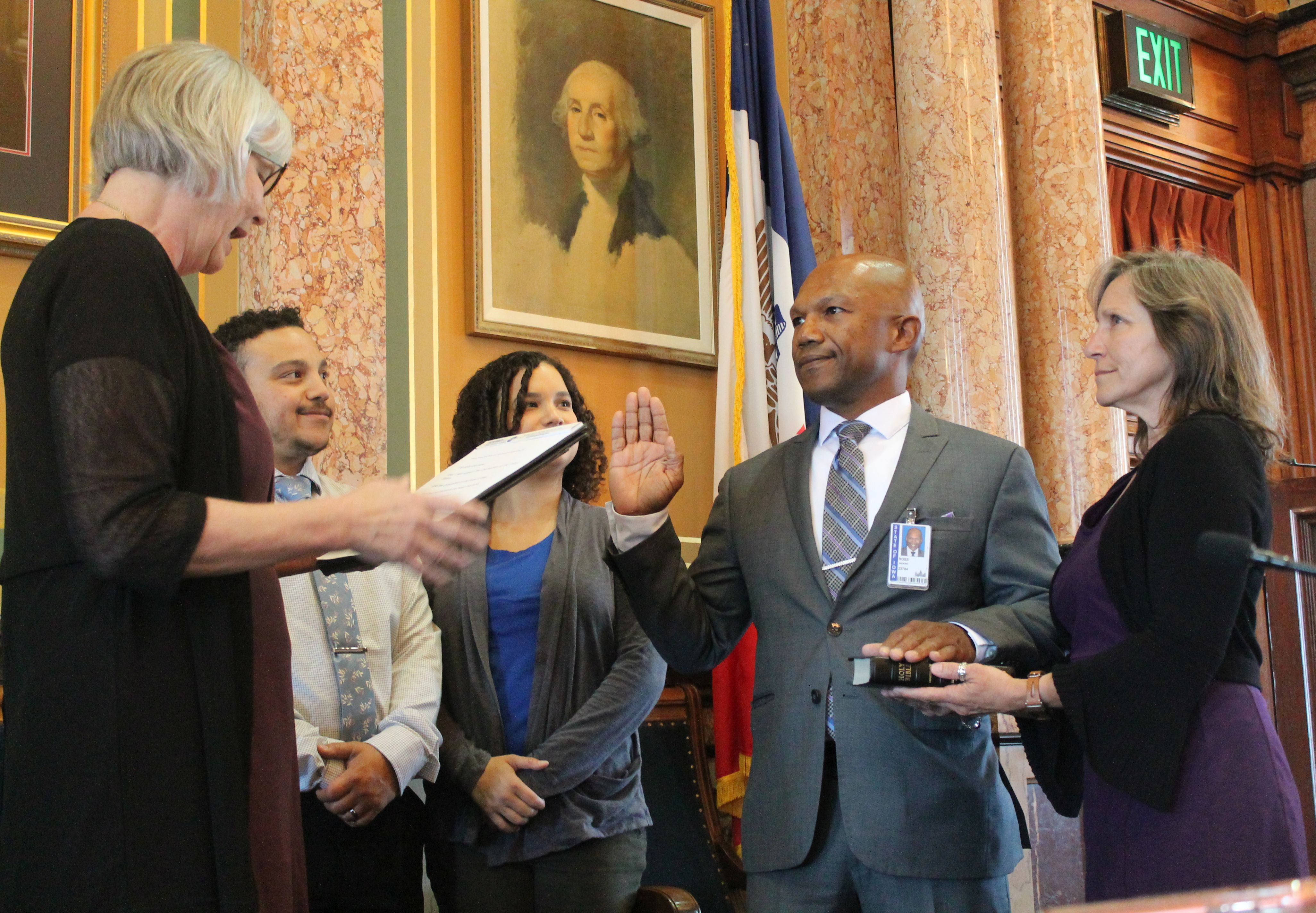
State Representative Ross Wilburn took the oath of office on September 6 to represent Iowa House district 46, covering part of Ames in Story County. Republicans did not field a candidate against him in the August 6 special election to fill the seat vacated by Story County Supervisor Lisa Heddens.
In a September 6 telephone interview, Wilburn said he hasn’t been assigned to committees yet and probably will not know those assignments until November. He’s interested in many aspects of the legislature’s work, including human services (he has a master’s degree in social work), local government or transportation (he’s a former Iowa City mayor and city council member), and veterans’ affairs (he served in the Army National Guard). Education is also a high priority for Wilburn and of great importance to his constituents. Iowa State University is the dominant employer and community presence in Ames. Wilburn is diversity officer and associate director for community economic development at ISU Extension and Outreach.
Wilburn told me he’s looking forward to returning to public service and getting to work for constituents. The issues that came up most often during his conversations with voters this summer were mental health care, Medicaid privatization, public employee collective bargaining rights, and adequate funding for K-12 as well as higher education.
During his swearing-in ceremony, Wilburn recalled that when he first decided to run for city council, he was visiting the Lincoln Memorial in Washington, DC and was near the marker where Rev. Dr. Martin Luther King, Jr. gave his “I Have a Dream” speech.
Reflecting today on the Iowa legislators who came before him, Wilburn recalled the example set by Willie Stevenson Glanton. The second African-American woman admitted to the Iowa bar, Glanton was the first woman to serve as assistant Polk County attorney and in 1964 (the year of Wilburn’s birth) became the first African-American woman elected to the Iowa House. Wilburn had the opportunity to meet Glanton during his time on Iowa City’s council and was inspired by her.
The Iowa House now has a full complement of 100 members again: 53 Republicans and 47 Democrats. Wilburn is one of five African Americans serving in the chamber, along with fellow Democrats Ako Abdul-Samad, Ruth Ann Gaines, Ras Smith, and Phyllis Thede. This year’s House Democratic caucus was the first in Iowa legislative history to have a majority of women, but Andy McKean’s party switch in April, Heddens’ retirement, and Wilburn’s election shifts the balance back to 24 men and 23 women. (Ten women and 43 men are part of the Iowa House Republican caucus.)
Republicans have recruited a strong candidate for what should be one of the top-targeted Iowa House races in 2020.
Before State Representative Andy McKean switched parties in April, he had served in the Iowa legislature for 27 sessions as a Republican. Now House district 58 is the reddest Iowa House seat currently represented by a Democrat.
GOP officials hope Dr. Steve Bradley, a dentist in the area, will prevail among Iowans who heavily favored Donald Trump and Governor Kim Reynolds in the last two elections. Next year’s race in House district 58 will be a fascinating test of whether voters’ growing affinity to Republicans matters more than their longtime support for McKean.
The Libertarian Party of Iowa and its prospective candidate for U.S. Senate in 2020 have filed a federal lawsuit charging that a new law violates their “violates fundamental voting and associational rights,” as well as equal protection guarantees, by requiring candidates from minor political parties to file nominating papers in mid-March, when Democratic or Republican candidates could qualify for the general election ballot as late as August.
Previous court rulings indicate they have a strong case.
Continue Reading...Democrat Ross Wilburn will be unopposed in the August 6 special election to represent Iowa House district 46. The deadline to file nominating papers was on July 12 at 5:00 pm, and Wilburn is the only name on the Iowa Secretary of State’s candidate list.
A spokesperson for the Republican Party of Iowa told the Des Moines Register’s Stephen Gruber-Miller that the GOP would not field a candidate for the special election, but did not indicate why. The Libertarian Party of Iowa also declined to compete for this district; Libertarians have occasionally nominated candidates in House district 45, covering other Ames neighborhoods.
In all likelihood, Wilburn would have won this election regardless of the timing or the competition, given the political layout of House district 46. The strongest potential GOP candidate, Ames City Council member Tim Gartin, took himself out of the running early, and several Democratic presidential candidates have either headlined events for Wilburn or had their staff help knock doors for him.
If Republicans weren’t planning to play for this seat, it was exceptionally foolish for Governor Kim Reynolds to set the election on the first Tuesday allowed under state law. She could have scheduled the vote for late August or September, when most Iowa State University students would be back in Ames.
All Reynolds accomplished by picking August 6 was reinforcing the narrative that she doesn’t care about constituents who don’t politically align with her. She could have shown her commitment to fair play by picking a day that would give more House district 46 residents a voice. Instead, she used the levers of power to depress Democratic turnout–for nothing.
“Leaders vow to keep Iowa’s redistricting system,” declared the headline above Rod Boshart’s latest article for the Cedar Rapids Gazette and other large newspapers.
But did Governor Kim Reynolds and top Republican lawmakers really make that promise? And could they gerrymander our state in 2021 without altering the current process?
Continuing Bleeding Heartland’s coverage of the Iowa legislature’s work during the 2019 session.
Scandals in the Waukee Community School District inspired new protections for whistleblowers in state and local government bodies, which took effect at the start of the 2020 fiscal year on July 1.
Continuing Bleeding Heartland’s coverage of the Iowa legislature’s work during the 2019 session.
Iowa’s environmental community had something to celebrate when state lawmakers adjourned for the year without passing legislation that would crush small-scale solar development. An unusual coalition including solar installers, environmental groups, and livestock farmers helped keep the bill bottled up in the Iowa House despite intense lobbying by MidAmerican Energy and its allies, along with massive spending by undisclosed donors.
Unfortunately, lawmakers approved and Governor Kim Reynolds signed several other measures that will be detrimental for Iowa’s natural resources and take our state’s energy policy in the wrong direction. The new laws take effect today, as the 2020 fiscal year begins.
Ross Wilburn will be the Democratic candidate in the August 6 election to represent Iowa House district 46. Delegates to a special nominating convention in Ames on June 29 chose Wilburn on the second ballot.
The former Iowa City mayor, who has worked for Iowa State University Extension and Outreach since 2014, recently told Bleeding Heartland that if elected to the state House, he wants to address problems with privatized Medicaid, climate change, and gun violence. Other priorities for Wilburn are strengthening public school districts, restoring collective bargaining rights for public workers, and making Iowa more welcoming and inclusive for marginalized groups such as the LGBTQ community, people of color, veterans, and people with disabilities.
For the second time this year, voters in a college town will elect a new Iowa lawmaker when most students are not on campus. Governor Kim Reynolds announced today that the special election in House district 46, covering part of Ames, will take place on Tuesday, August 6.
The College and Young Democrats of Iowa quickly denounced the decision: “Anyone else having some déjà vu with the timing of this special election? @KimReynoldsIA is once again denying students – many who will not be on campus until late Aug. – the chance to vote in the IA House district they heavily occupy.”
Whereas Reynolds clearly tried to suppress student and faculty voting by scheduling the Senate district 30 special election during the University of Northern Iowa’s spring break, the timing of the coming vote in Ames is arguably consistent with standard Iowa practice.
However, the governor could have and should have set the date a few weeks later, allowing greater participation by Iowa State University stakeholders.
A third Democrat hopes to represent Iowa House district 46, where longtime State Representative Lisa Heddens stepped down this week to become a Story County supervisor.
Ross Wilburn confirmed in a June 20 telephone interview that he will seek the nomination at a special convention to be scheduled soon. UPDATE: on June 29.
Ames School Board member Jamet Colton and Ames City Council member Amber Corrieri confirmed on June 17 that they will seek the Democratic nomination for Iowa House district 46, where longtime State Representative Lisa Heddens is stepping down to serve as a Story County supervisor. I enclose below statements with background on both candidates.
Delegates in the precincts that make up House district 46 will select the nominee at a district convention, to be scheduled soon after Governor Kim Reynolds sets a date for the special House election. Although I have not seen any formal announcement from Ames School Board member Lewis Rosser, many Story County sources expect him to compete for the nomination. Dr. Jay Brown, an allergist with the McFarland Clinic, is also considering the race, he told Bleeding Heartland over the weekend.
The Democratic nominee will almost certainly win the special election later this summer, given that the strongest potential Republican candidate, Ames City Council member Tim Gartin, says he is not running. Some locals had speculated that Gartin had a chance to flip the seat, with the election taking place before most Iowa State University students return for the fall semester. I haven’t heard of any announced GOP candidate for this race. Even without the large student population in town, winning this district would be a longshot for a Republican. Residents of House district 46 gave 57.2 percent of the 2016 presidential vote to Hillary Clinton and 65.3 percent of the vote for governor last year to Fred Hubbell.
Regardless of who serves out the remainder of Heddens’ term, which runs through 2020, Democrats may well have a contested primary in House district 46 next June. It’s easy to qualify for the primary ballot in Iowa by collecting 50 signatures on nominating petitions.
UPDATE: I forgot to mention that if elected, Colton would be the first Latinx to serve in the Iowa legislature.
State Representative Lisa Heddens will resign from the Iowa House in the middle of her ninth term after being appointed to the Story County Board of Supervisors on June 13. The Ames Democrat and ranking House member of the Health and Human Resources budget subcommittee was one of five people vying to replace Republican Rick Sanders. He stepped down last month to serve as president of Iowa State University’s Research Park.
Heddens’ appointment creates the first all=female board of supervisors in Iowa history. Her colleagues governing Story County will be fellow Democrats Lauris Olson and Linda Murken, who outpolled GOP incumbent Martin Chitty in November 2018.
Governor Kim Reynolds will soon set a special election for Iowa House district 46, covering part of Ames (see map at the top of this post).
Matt Chapman brings us up to date on a company’s plan to impose exorbitant rent hikes on him and his neighbors. -promoted by Laura Belin
When Havenpark Capital Partners bought up five manufactured housing parks in Iowa, they brought tension, anger and fear along for the ride. On a Friday afternoon before any of us knew they had bought our Waukee community, a notice was posted on all 300 doors in Midwest Country Estates that the rent was going up 69 percent in 60 days. Residents in the other four communities received similar notes.
Governor Kim Reynolds asked for and received a nearly 10 percent budget increase for her office operations during the fiscal year beginning on July 1, with a view to hiring two additional full-time employees. Republican lawmakers told members of the Iowa House and Senate the extra funding was for analysts to focus on health policy and tax policy.
This week the governor’s office posted a new job listing on a state government website. Instead of seeking a health or tax policy analyst, the governor is hiring a full-time “public relations manager” to coordinate messaging about her initiatives.
Governor Kim Reynolds made headlines last week with two vetoes: blocking language targeting the attorney general, and rejecting a medical cannabis bill that had strong bipartisan support in both chambers.
A provision she didn’t veto drew little attention. For the foreseeable future, it will prevent Iowa courts from using a tool designed to make the criminal justice system more fair to defendants of all races and income levels.
Reynolds should appreciate the value of the Public Safety Assessment (PSA), since she works closely with two former State Public Defenders: Lieutenant Governor Adam Gregg and the governor’s senior legal counsel Sam Langholz. But last year she ordered a premature end to a pilot program introducing the tool in four counties. The governor’s staff did not reply to repeated inquiries about the reasoning behind Reynolds’ stance on this policy.
Notably, the owner of Iowa’s largest bail bonding company substantially increased his giving to GOP candidates during the last election cycle, donating $10,100 to the governor’s campaign and $28,050 to Republicans serving in the state legislature.
Continue Reading...A new state law denying sex education funding to Planned Parenthood will likely be found unconstitutional, a Polk County District Court has determined.
Judge Joseph Seidlin issued a temporary injunction to block new statutory restrictions on Planned Parenthood of the Heartland’s access to government sex education grants. His order, enclosed in full below, found Planned Parenthood would suffer “irreparable harm” if the law took effect. State agencies are due to announce fiscal year 2020 recipients for the Community Adolescent Pregnancy Prevention and Services Program (CAPP) and the Personal Responsibility Education Program (PREP) on May 31.
In addition, the court’s order stated Planned Parenthood was “likely to succeed on the merits of its equal protection claim” under the Iowa Constitution, since the law contains an exemption for a “nonprofit health care delivery system” that provides abortions in some locations.
Bleeding Heartland continues to catch up on the legislature’s significant actions during the session that ended on April 27. Previous posts related to the work of the Iowa House or Senate can be found here.
Republicans showed little interest in amending the Iowa Constitution during the 2019 session. Only one amendment passed both chambers. If and when that proposal appears on a statewide ballot, it will spark a costly and divisive campaign about gun rights and regulations.
The Senate and House debate over the pro-gun amendment is the focus of the first half of this post. Arguments raised on both sides will surely return in future television commercials and mass mailings.
The rest of the post reviews this year’s unsuccessful attempts to change the constitution. One amendment (backed by Governor Kim Reynolds) made it through the Iowa House, and four others advanced from a House or Senate committee but did not come up for a floor vote. The rest did not get through a committee, even though some of the same ideas went further last year.
Carl Olsen analyzes the big news the governor tried to bury in a pre-holiday weekend news dump. He has been a leading advocate for medical cannabis in Iowa for many years and closely follows legislative happenings related to the issue. -promoted by Laura Belin
Governor Kim Reynolds vetoed House File 732 on May 24. The bill passed by overwhelming bipartisan majorities in both legislative chambers: 96 to 3 in the Iowa House and 40 to 7 in the Iowa Senate. The full text of the governor’s veto letter is enclosed at the end of this post.
This is a tough issue for me to write about. I totally agree with the governor’s logic. At the same time, I am disappointed with the outcome.
Nick Miller announced his candidacy in Iowa House district 19 at a May 23 event in his home town of Polk City. The fifth-generation Iowan, who is also a small business owner and Drake University student, would face House Majority Leader Chris Hagenow in the general election if he becomes the Democratic nominee. Miller said his campaign will be grounded in the principles of “Investing, Educating, and Sustaining.”
I want to represent all working families and Iowans; I want to represent a new generation of Iowans; and, I want be a voice for the voiceless and will stand up and fight for what is right.
Although I didn’t include this district in my overview of potentially competitive state House races, I’ll be watching this campaign for a couple of reasons.
Governor Kim Reynolds issued her first item veto of the year this week, rejecting part of a budget bill that sought to limit Attorney General Tom Miller’s authority to sign on to multi-state lawsuits. However, she did so only after Miller agreed not to join any such litigation without her permission, ensuring that he “will not be suing the Trump administration” anymore. In addition, the governor’s veto letter praised the “Legislature’s leadership on this issue.”
While not the worst-case scenario, the resolution of this conflict could invite more Republican bills encroaching on the authority of statewide elected Democrats. The governor and her staff could then pressure those officials to cede some of their power in exchange for a veto.
Iowa lawmakers adjourned for the year on April 27. Bleeding Heartland continues to catch up on some of the legislature’s significant work. Previous reporting related to the 2019 legislative session can be found here.
Republicans have enacted new voting restrictions in some two dozen states this decade. Iowa became part of that trend in 2017 with a law requiring voter ID, shortening the early voting period, and imposing new absentee ballot rules that are on hold pending litigation.
The march toward voter suppression appeared set to continue, with Governor Kim Reynolds winning a four-year term and the GOP retaining control over the Iowa House and Senate last November. Senate State Government Committee chair Roby Smith introduced a horror show election bill days before the legislature’s first “funnel” deadline in March. His Republican colleagues in the upper chamber later approved a bill with most of Smith’s bad-faith proposals.
But in a plot twist, House Republicans agreed to remove all the provisions that would make it harder to vote when House File 692 came back to the lower chamber. The final version, which Reynolds signed on May 16, contained largely technical code revisions and big improvements to the process for tracking and counting absentee ballots.
Follow me after the jump for a short history of a voter suppression tragedy averted.
Former Iowa House Speaker Pat Murphy shares his memories of an important legislative victory twelve years ago. -promoted by Laura Belin
Last month Iowans celebrated ten years of marriage equality. Two years prior, the legislature added protections for LGBTQ people to Iowa’s civil rights law. One of my children asked me to share that experience in writing. What you are about to read is an excerpt.
A Linn County attorney and eight Iowa House Democrats are challenging the new law that altered the composition of the State Judicial Nominating Commission and the term of the Iowa Supreme Court chief justice.
Republican lawmakers approved the changes as an amendment to the “standings” budget bill on the final day of the 2019 legislative session. Governor Kim Reynolds signed the bill on May 8, giving herself and future governors nearly unchecked power to choose judges for Iowa’s Supreme Court and Court of Appeals.
The plaintiffs are not claiming the legislature lacked the power to change the commission’s membership through a statute. Although most of Iowa’s judicial selection system is spelled out in the state constitution, which takes years to amend, a loophole in Article V, Section 16 specified the manner of forming judicial nominating commissions only “Until July 4, 1973, and thereafter unless otherwise provided by law.”
Rather, the lawsuit filed in Polk County District Court on May 14 cites two constitutional violations related to the process by which the law passed and one violation related to the separation of powers.
Republicans used their control over state government to inflict tremendous damage on Iowa during the 2019 legislative session: underfunding education, blocking steps that would improve Medicaid services, dismantling effective sex education programs, further undermining workers’ rights, targeting health care for transgender Iowans, and giving Governor Kim Reynolds the ability to pack our highest courts with conservative ideologues.
The disastrous outcomes underscored the urgent need for Democrats to break the Republican trifecta in 2020. The Iowa House is the only realistic path for doing so, since Reynolds won’t be up for re-election next year, and the 32-18 GOP majority in the Iowa Senate will take several cycles to undo. State Representative Andy McKean’s recent party switch improved Democratic prospects, shrinking the Republican majority in the chamber from 54-46 to 53-47. Nevertheless, a net gain of four House seats will be no easy task for Democrats.
The Daily Kos Elections team calculated the 2018 election results for governor and state auditor in every Iowa House district. Jeff Singer discussed their key findings in a May 2 post: Reynolds carried 60 state House districts, Democratic nominee Fred Hubbell just 39. The “median seat backed Reynolds 51.0-46.3, a margin of 4.7 points. That’s about 2 points to the right of her statewide margin of 2.8 points.” Eight Democrats represent districts Reynolds carried, and one (Dave Williams) represents a district where Reynolds and Hubbell tied, while “only one Republican is in a Hubbell district.”
I’d encourage all Iowa politics watchers to bookmark the DK Elections number-crunching, as well as the team’s spreadsheet on 2016 presidential results by House district.
The Daily Kos team also looked at the 2018 voting for state auditor, seeking clues on which House seats might be within reach for Democrats. I don’t find that angle as useful. Previous State Auditor Mary Mosiman ran a terrible campaign. Not only did Rob Sand outwork Mosiman on the trail, he ran unanswered television commercials for six weeks, allowing him to go into election day with higher name ID than the incumbent, which is almost unheard of. Sad to say, Democrats won’t be outspending incompetent, little-known GOP candidates in the 2020 state legislative races.
Here’s my first take on both parties’ best pickup opportunities. What appear to be competitive state House seats may shift over the coming year, depending on candidate recruitment and incumbent retirements, so Bleeding Heartland will periodically return to this topic.
A group that popped up this year to support MidAmerican Energy’s solar bill spent $1.25 million on television commercials alone, as well as at least $11,000 on Facebook advertising and an undisclosed sum on direct mail.
The REAL Coalition conceals its donors and board members but appears to be funded primarily by utility companies and the industry’s trade association.
Republicans slipped a couple of nasty surprises into the health and human services budget on the penultimate day of the Iowa legislature’s 2019 session. One of the new provisions in House File 766 would amend the Iowa Civil Rights Act to deprive transgender and intersex Iowans of access to surgery through Medicaid or other public health insurance programs.
Governor Kim Reynolds should strike this language because denying health care to people in need is reprehensible.
If she lacks the empathy to comprehend why punching down on a marginalized group is wrong, the governor should use her item veto power for a pragmatic reason: the Iowa Supreme Court is unlikely to let this discriminatory act stand.
On the first day of the Iowa legislature’s 2019 session, Secretary of State Paul Pate formally notified lawmakers that a “procedural oversight” by his office had wiped away progress toward adopting two constitutional amendments.
On the session’s final day, lawmakers took steps to ensure that neither Pate nor any future secretary of state can repeat the error.
The Iowa Department of Human Services will not audit a practice that could be inflating costs for Medicaid prescription drug payments by millions of dollars a year.
State Representative John Forbes raised concerns after finding discrepancies on bills for some prescriptions his Urbandale pharmacy filled for patients served by Amerigroup, one of Iowa’s Medicaid managed-care providers. Earlier this month, House members unanimously approved Forbes’ amendment to the health and human services budget, instructing DHS to “audit all prescription drug benefit claims managed by a pharmacy benefit manager under the Medicaid program.”
However, House and Senate Republicans dropped that section from the final version of House File 766.
State Senator Mark Costello, who floor managed the health and human services budget in the upper chamber, claimed Iowa’s Medicaid director Michael Randol and an Amerigroup representative had told him the audit was unnecessary.