desmoinesdem

Posts 123 Comments 0

Super Tuesday election results and discussion thread

Polls have closed in a few of the Super Tuesday primary states, so here’s a thread for any comments about the Democratic or Republican presidential contests. I will update this post periodically with results. So far Virginia and Georgia have been called for Hillary Clinton, while Vermont was called for Bernie Sanders. In his victory speech, Sanders vowed to take his fight to every one of the 35 states that have not yet voted.

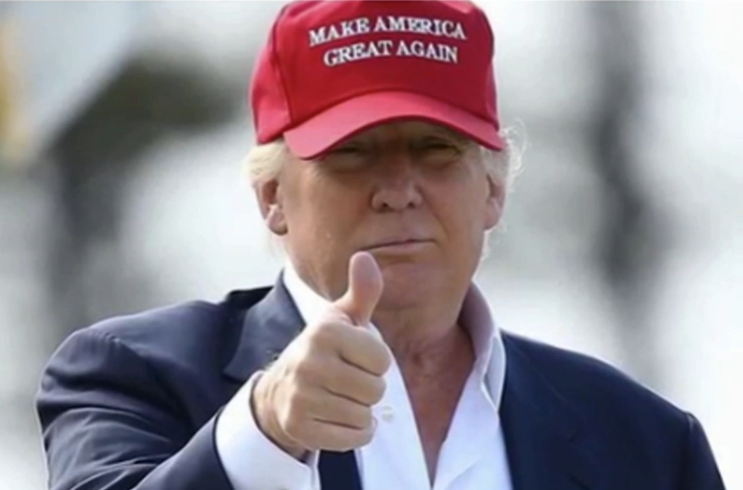
On the Republican side, Donald Trump is the early winner in Georgia and is expected to win most of today’s primaries and caucuses. However, the size of his delegate lead will depend greatly on how many other candidates exceed the threshold for winning delegates in various states. Guest author fladem’s post on Republican delegate scenarios is essential reading, in case you missed it yesterday.

UPDATE: A disappointing night for the “Stop Trump” forces. (By the way, who was it who said, “whenever you hear about a ‘Stop X’ campaign, bet on X?”) Ted Cruz won Texas and Oklahoma, Marco Rubio won Minnesota, and Trump looks likely to sweep the rest of the states. John Kasich and Rubio split enough moderate votes to give Trump the win in Vermont and perhaps also in Massachusetts. Rubio may not hit the 20 percent threshold needed to win any delegates in some of the southern states. Trying to put a good spin on the results, Rubio told CNN that “this was supposed to be Ted Cruz’s big night” and depicted himself as the only person who can stop Trump from winning the GOP nomination. The look on his face when Jake Tapper asked him whether he was in denial was priceless.

New Jersey Governor Chris Christie didn’t look very happy at Trump’s victory party. The times being what they are, Christie’s face spawned immediate memes and caption contests. So far this is my favorite: “That moment when you realize you misunderstood literally every Bruce Springsteen song.”

Clinton had a very big night. Sanders is on track to win just four states: Vermont, Minnesota, Oklahoma, and Colorado. Massachusetts was probably a must-win for him. According to Nate Silver, “Clinton is running ahead of her benchmarks by an average of 16 percentage points tonight, which is equivalent to her holding a 16-point lead over Sanders in national polls.”

Twitter user Xenocrypt (who long ago posted a fascinating piece here) commented tonight, “A socialist won in Oklahoma! Just like old times. Really, really old times.” Turns out Oklahoma had one of our country’s strongest socialist parties a hundred years ago.

Clinton won the four states awarding the most delegates by large margins. Nate Cohn commented, “The biggest lesson of the Sanders campaign is that there is no progressive/left majority in the Democratic Party without black voters.” Farai Chideya speculated, “Pragmatism about black political interests and how the game is played is likely the primary factor [in Clinton’s overwhelming margin among African-Americans], since Sanders has also spoken to issues of core interest to black voters.”

WEDNESDAY MORNING UPDATE: In the UK, they would call this “a right royal mess” for Republicans. By splitting the establishment vote, Kasich and Rubio allowed Trump to win Vermont and Virginia by narrow margins. Trump also barely won Arkansas. Cruz picked up Alaska, despite Sarah Palin’s Trump endorsement. Rubio missed the cutoff for at-large delegates in Texas and Alabama. Cruz outperformed his recent polling numbers to win Texas by a wide margin. One unofficial delegate count puts Trump at 338, with 233 delegates for Cruz, 112 for Rubio, 27 for Kasich and 8 for Carson; full spreadsheet here.

According to Dave Wasserman of the Cook Political Report, Clinton easily surpassed the number of delegates she needed to put her on track to win the Democratic nomination.

Former New Mexico Governor Gary Johnson, who ran for president as a Libertarian in 2012 and is doing so again this year, said in a statement I’ve enclosed below that he “may have won Super Tuesday,” because more voters will be looking for a third-party alternative to Clinton or Trump.
Continue Reading...

Will any elected Iowa Republicans vow to #NeverTrump?

In an effort to halt Donald Trump’s momentum and also to preserve some self-respect, a growing number of Republicans are vowing never to vote for Trump, even if he becomes the GOP presidential nominee. As Megan McArdle reported for Bloomberg, the #NeverTrump faction represents “all segments of the party — urban professionals, yes, but also stalwart evangelicals, neoconservatives, libertarians, Tea Partiers, the whole patchwork of ideological groups of which the Republican coalition is made.”

Former New Jersey Governor Christine Todd Whitman said she would consider voting for Hillary Clinton over Trump. At a funeral in Des Moines this past weekend, the daughter of the deceased (like Whitman a moderate Republican) struck a chord with some of the mourners when she joked during her eulogy that she was a little envious her mother would not have to vote in the presidential election now.

At the other end of the GOP ideological spectrum, staunch conservative U.S. Senator Ben Sasse of Nebraska became the first member of Congress to take the #NeverTrump pledge, laying out his reasoning in a long Facebook post.

So far, the most prominent Iowa Republican to join the #NeverTrump camp is right-wing talk radio host Steve Deace, who explained his stance in a column for the Conservative Review website. Deace worked hard to persuade fellow Iowans to caucus for Ted Cruz. Meanwhile, Marco Rubio endorser and former Waukee City Council member Isaiah McGee described himself to me as a “founding member” of #NeverTrump.

Early signs suggest that few, if any, elected GOP officials in Iowa will join the club.

Continue Reading...

Gary Kroeger considering a challenge to Walt Rogers in Iowa House district 60

March 2 update: Kroeger ended his Congressional campaign. Added his comments on switching to the state legislative race at the end of this post.

One of the three Democratic candidates in Iowa’s first Congressional district may file instead as a candidate in Iowa House district 60, covering parts of Waterloo and Cedar Falls. I sought comment from Gary Kroeger this morning after Pat Rynard mentioned “talk in some Democratic circles” that Kroeger may switch to the statehouse race. Kroeger replied, “I am considering whatever is best for the Democratic Party in terms of my candidacy. State races are also imperative.”

Kroeger launched his Congressional campaign last April, positioning himself for the primary as “an unapologetic progressive, lifelong progressive and a proud lifelong Democrat.” Since Ravi Patel exited that race and Pat Murphy launched his second Congressional campaign last summer, Murphy has claimed the labels of “progressive” and “lifelong Democrat.” A longtime Iowa legislator and the 2014 nominee in IA-01, Murphy is better known around the district than Kroeger, who has trailed far behind Murphy and Monica Vernon in the few opinion polls released so far. Raising enough money to run a district-wide campaign has also proved challenging for Kroeger. The Democratic Congressional Campaign Committee has endorsed Vernon, while the Blue America PAC is supporting Murphy.

That said, the kind of money Kroeger has raised for his IA-01 campaign would go very far in a state legislative race. His local name recognition would make him a strong challenger to three-term State Representative Walt Rogers.

Rogers defeated Democratic incumbent Doris Kelley in the previous version of this swing district in 2010. He held the seat in 2012 by more than 600 votes, even as residents of House district 60 preferred President Barack Obama to Mitt Romney by 50.15 percent to 48.91 percent.

A rising star in the Iowa House GOP caucus, Rogers launched his own Congressional campaign in IA-01 in 2013 but abandoned that race a few months later to seek a third term in the state legislature. He easily defeated Democratic challenger Karyn Finn amid the 2014 Republican wave. Joni Ernst outpolled Bruce Braley among House district 60 voters by nearly a 10-point margin, even though Braley himself is from Black Hawk County.

The latest figures from the Iowa Secretary of State’s office show that House district 60 contains 5,887 active registered Democrats, 7,007 Republicans, and 7,950 no-party voters. Those numbers do not include people who changed their party registration on February 1 in order to participate in the Iowa caucuses. A presidential year electorate creates a better opportunity for a Democratic challenger here.

Any relevant comments are welcome in this thread. A map of House district 60 is after the jump. UPDATE: The Secretary of State’s Office just posted updated voter registration totals, showing 6,164 active registered Democrats, 7,253 Republicans, and 7,208 no-party voters for this House district.

Continue Reading...

Do endorsements matter? Donald Trump's performance in Brad Zaun's Iowa Senate district

As Donald Trump appears increasingly likely to win the Republican nomination, more elected officials are supporting him. This past week, two U.S. House representatives became the first current members of Congress to back Trump. New Jersey Governor Chris Christie and Maine Governor Paul LePage endorsed Trump on Friday. The LePage about-face was hilarious, coming less than a week after he called on GOP governors “to draft an open letter ‘to the people,’ disavowing Mr. Trump and his divisive brand of politics.” On Sunday, U.S. Senator Jeff Sessions of Alabama went public supporting Trump–a embarrassing turn of events for Senator Ted Cruz, who has repeatedly cited Sessions as cover for his stance on immigration reform.

Before the Iowa caucuses, only one GOP elected official in our state publicly supported Trump: State Senator Brad Zaun. That endorsement didn’t reflect any coherent ideology, since Zaun had backed Mitt Romney before the 2008 caucuses, Michele Bachmann before the 2012 caucuses, and was a co-chair for Scott Walker’s campaign last year, saying “we needed someone with some executive experience.” The pivot to Trump had a certain logic, though, as all the presidential candidates Zaun endorsed as a state lawmaker were leading Iowa Republican polls at the time he jumped on the bandwagon.

High-profile endorsements may drive a news cycle or two, but whether they influence a significant number of voters is another question. Join me in taking a close look at how Trump did in Zaun’s Iowa Senate district, which covers much of northwest Polk County.

Continue Reading...

Paula Dreeszen and Royce Phillips seeking GOP nomination in Iowa House district 77

Two Republicans are actively campaigning in Iowa House district 77, a Democratic-leaning seat where State Representative Sally Stutsman recently announced plans to retire this year. Both Royce Phillips and Paula Dreeszen filed documents forming House campaign committees earlier this month.

Dreeszen’s campaign Facebook page calls for efficient government, asserting that “Our state wastes too much money.”

Phillips is pastor of the Tabernacle Baptist Church in Coralville and the former mayor of Tiffin, the second-largest city in House district 77. He sought the Republican nomination in Iowa Senate district 39 in 2014, finishing third in the three-way primary. His campaign is on Facebook and Twitter, and his pitch is “a consistent conservative with a record of results.”

I enclose below excerpts from the Dreeszen and Phillips campaign announcements, as well as a map of House district 77.

The likely Democratic nominee is Amy Nielsen, mayor of North Liberty. That rapidly-growing city is the largest in the district. Click here for background on Nielsen. She’s on Twitter and Facebook and has a campaign website dating from her run for mayor.

I have not heard of any other prospective Democratic or Republican candidates for the open seat, though that may change before the March 18 filing deadline. Qualifying for the primary ballot is relatively easy, as candidates for the Iowa House need only 50 valid signatures from residents of the district on their nominating papers.

The Democratic nominee will be favored to succeed Stutsman, who easily defeated a GOP opponent in 2012. According to the latest figures from the Iowa Secretary of State’s office, House district 77 contains 7,043 active registered Democrats, 5,213 Republicans, and 7,727 no-party voters. Those numbers do not include people who changed their party registration on February 1 to participate in the Iowa caucuses.

President Barack Obama won more than 58 percent of the vote among House district 77 residents in 2012. Bruce Braley outpolled Joni Ernst by 9 points here in the 2014 U.S. Senate race.

Continue Reading...

South Carolina Democratic primary discussion thread

Polls just closed in South Carolina, where Hillary Clinton is favored to defeat Bernie Sanders easily, possibly by as large a margin as Sanders’ big win in New Hampshire. Any comments about the Democratic race for the presidency are welcome in this thread. Here are a few links to get the conversation started.

African-American voters are critically important for Clinton and will make a large share of the electorate not only in South Carolina but also in at least six of the states that vote on “Super Tuesday” (Alabama, Georgia, Tennessee, Texas and Virginia). This chart shows data from the 2008 primaries on the non-white percentages of electorates in the states that will vote on March 1.

Toni Monkovic argued recently, “We’re living in an era when blacks have essentially played kingmaker in the most important elections in the nation.” Sanders did extremely well among white working-class voters in the first three states, but “he does not really have a path to victory unless he can significantly narrow or even erase Mrs. Clinton’s edge among nonwhite voters,” Nate Cohn argued earlier this month. The prevalence of moderate Democratic voters in several of the Super Tuesday states should also work to Clinton’s advantage.

Tim Murphy wrote an interesting piece for Mother Jones on “Clinton’s Most Valuable Allies in South Carolina: the Moms of Black Lives Matter.”

Terrell Jermaine Staff profiled Marcus Ferrell in Fusion. Ferrell’s job with the Sanders campaign is “convincing black folks to ‘feel the Bern.’”

David Sirota took a close look at what economists say about whether Sanders’ plans on single-payer health care and free education at public universities “add up.”

Nate Silver of FiveThirtyEight.com laid out which states Sanders needs to win on Super Tuesday and beyond to win the Democratic nomination.

Excerpts from all of those articles are after the jump.

For comic relief, I recommend Steve Deace’s latest column for the Conservative Review on how 2016 is shaping up to be “the devil’s favorite presidential election.” He takes some ridiculous shots at Clinton and Sanders but the real venom comes out when he writes about Donald Trump. Deace is furious the strong anti-establishment sentiment in the Republican electorate is working mostly in Trump’s favor, rather than pushing Ted Cruz ahead.

UPDATE: Clinton is on track to outperform her lead in South Carolina polling. She gave her victory speech less than an hour after polls closed, and sounded like she was running against Donald Trump, not Sanders. I’ve added excerpts from her speech below. She recognized by name all of the “Black Lives Matter” moms, as well as their children who were killed.

SECOND UPDATE: Wow. A crushing victory for Clinton by nearly a 3 to 1 margin. I don’t remember seeing anyone predict she would even win 2 to 1. Harry Enten speculates that South Carolina “may be the beginning of the end for Sanders.” Added excerpts at the end of this post.

Continue Reading...

IA-Sen: Patty Judge thinking about challenging Chuck Grassley

The Des Moines Register’s Jason Noble snagged a surprising scoop yesterday: former Lieutenant Governor and Iowa Secretary of Agriculture Patty Judge is considering running for the U.S. Senate this year. Referring to Grassley’s approach to the U.S. Supreme Court vacancy, Judge told Noble,

“Iowans have always been straight shooters, and up until the recent time I would have said the same thing about Chuck,” Judge said. […]

“I don’t like this double-speak,” Judge said. “I don’t like this deliberate obstruction of the process. I think Chuck Grassley owes us better. He’s been with us a long time. Maybe he’s been with us too long.”

To qualify for the Democratic primary ballot, Judge would need to submit nominating papers with the Secretary of State’s Office by March 18, three weeks from today. That doesn’t leave much time to collect at least 2,104 signatures, including minimum amounts in at least ten Iowa counties. But Judge could pull together a campaign quickly, having won three statewide elections–for secretary of agriculture in 1998 and 2002 and on the ticket with Chet Culver in 2006.

Three other Democrats are seeking the nomination to run against Grassley: State Senator Rob Hogg, former State Senator Tom Fiegen, and former State Representative Bob Krause. Former State Representative Ray Zirkelbach launched a U.S. Senate campaign in November but ended his campaign last month, Zirkelbach confirmed by phone this morning.

Dozens of Democratic state lawmakers endorsed Hogg in January. I enclose the full list below. Any comments about the Senate race are welcome in this thread.

UPDATE: Rebecca Tuetken notes, “Patty Judge does meet one apparent Iowa requirement: she told @SenatorHarkin ’08 steak fry that she can castrate a calf.” Truly a classic moment for Judge, when Joni Ernst was still the little-known Montgomery County auditor.

Continue Reading...

Cedar Rapids Gazette lets reporters grab other people's scoops without attribution

Attribution such as “first reported by” is an appropriate way for journalists to acknowledge another media outlet’s role in breaking news. The Center for Investigative Reporting’s Ethics Guide states,

Any information taken from other published or broadcast sources should receive credit within the body of the story. Reporters and editors also should be aware of previously published/broadcast work on the same subject and give those news organizations credit if they have broken new ground or published exclusive material before any others.

One of Iowa’s leading newspapers doesn’t hold its reporters to the same standard.

Continue Reading...

Thoughts on the political fallout from Grassley's obstruction of a Supreme Court nominee

The death of Supreme Court Justice Antonin Scalia has put a spotlight on Iowa’s senior Senator Chuck Grassley, who chairs the Senate Judiciary Committee. After wavering last week on whether he would be willing to hold hearings on President Barack Obama’s choice to replace Scalia, on Tuesday Grassley joined all other Republicans on the committee to vow that no Supreme Court nominee will get any consideration this year. Not only that, Senate Republican leaders will refuse to meet with the nominee. Grassley is open to discussing the Supreme Court vacancy with the president, but only as an “opportunity to explain the position of the majority to allow the American people to decide.”

Grassley’s hypocrisy is evident when you compare his recent statements with what he said in 2008 about the Senate’s role in confirming judicial nominees, even in the final year of a president’s term. His refusal to do one of the key tasks of the Judiciary Committee may also undercut what has been the central slogan of the senator’s re-election campaigns: “Grassley works for us.”

UPDATE: Former Lieutenant Governor Patty Judge is thinking about jumping in to the U.S. Senate race, because of Grassley’s “double-speak” and “deliberate obstruction of the process.” My first thoughts on a possible Judge candidacy are here. I’ve also enclosed Grassley’s response to Senate Minority Leader Harry Reid at the end of this post.

Continue Reading...

Iowa caucuses produce "substantial gains" in Democratic and Republican voter registrations

Party-building is said to be one of the key benefits of the Iowa caucus system, and high participation in this year’s caucuses produced “substantial gains” in voter registration totals for both major parties, Iowa Secretary of State Paul Pate announced yesterday. Iowa’s same-day voter registration law allows citizens to change their party affiliation at the precinct caucus site. Tens of thousands of people did so on February 1 as Republican turnout exceeded the previous Iowa caucus record by more than 50 percent, while Democratic turnout was the second-highest in Iowa caucus history. CORRECTION: John Deeth notes in the comments that “Both parties allowed party changes, address changes, or new registrations [on caucus night] long before the Election Day Registration law started in 2008.”

I enclose the full press release below. As of February 22, Democrats have had a net gain of 29,181 registered voters, and Republicans have had a net gain of 21,262 registered voters. Both numbers will rise in the coming weeks, since county auditors have 45 days to process voter registration forms. The GOP will likely add more voters than the Democrats, because the Polk County Auditor’s office has not yet processed some 9,000 forms from Republican caucuses in Iowa’s most populous county, according to Kevin Hall, communications director for the Secretary of State’s Office. It’s not clear how many of those forms represent new registrants and party-switchers and how many are change of address forms for voters already on the rolls.

A plurality of registered Iowa voters are still aligned with neither party, but the number of no-party voters dropped by 47,211 between February 1 and February 22 and will decline further as county auditors continue to process forms from the caucuses.

Note: readers may notice that the numbers from different categories in the press release don’t add up to the overall net gains for each parties. Hall explained the discrepancy in comments I’ve posted below.

Continue Reading...

Nevada Republican caucus results and discussion thread

As expected, Donald Trump won the Nevada Republican caucuses tonight. I’ll update this post later with details on the size of his victory and whether Ted Cruz or Marco Rubio took second place. Either way, the odds on anyone stopping Trump from getting the GOP nomination are getting longer.

Conservative talk radio host Steve Deace has used his megaphone and his access to national media to promote Cruz’s campaign since last summer but has lately been frustrated by the Cruz campaign strategy.

Deace said the voters in South Carolina were responding to Cruz’s reluctance to fight with Trump and his apologies to Rubio and Carson: They are “sending Cruz a message, and I think that message is that they want him to go back to being that alpha male conservative leader that people fell in love with.”

Deace believes “At first Team Cruz was brilliant not to attack Trump from a position of weakness, like so many others did early and failed.” However, in his view, “once Cruz won Iowa, the sole focus should’ve been on Trump instead of worrying about Rubio doing an end-run.” He summarized last week’s Republican political combat as “Cruz-Rubio bicker over bronze medals, mailers, and robocalls. Trump debates the pope and Islam.”

While I see where Deace is coming from, there was a logic to the strategy of trying to eliminate the main competition to be the last man standing against Trump, as opposed to taking on the front-runner first. What do you think, Bleeding Heartland readers?

Any comments about the Republican presidential race are welcome in this thread. Incidentally, the Nevada caucuses were much more poorly organized than Iowa’s. But that won’t help us keep our place in the nominating process. Rather, the widespread problems and mismanagement in Nevada will become ammunition for those seeking to ban all caucuses for presidential selection.

UPDATE: Republican strategist Adrian Gray posted some data yesterday that explains why the GOP establishment is terrified of Trump at the top of the ticket. First look at how Hillary Clinton’s favorability numbers compare to other presidential nominees since 1992. Then look at the eye-poppingly low favorables for Trump.

SECOND UPDATE: A crushing victory for Trump. With 96 percent of results in, the billionaire has 45.9 percent, Rubio 23.9 percent, and Cruz 21.4 percent. I wonder whether Ben Carson’s 4.8 percent was enough to keep Cruz out of second place. Bringing up the rear, John Kasich had 3.6 percent.

THIRD UPDATE: Added below excerpts from Trump’s victory speech. The full transcript is available at Quartz. It sounds like a Monty Python routine.

Continue Reading...

Feds approve Iowa's Medicaid privatization, effective April 1

Iowa’s Medicaid program will shift to managed care for some 560,000 recipients on April 1, in accordance with waivers granted by the federal Centers for Medicare and Medicaid Services. CMS had previously denied the request from Governor Terry Branstad’s administration to privatize Medicaid by January 1, citing numerous signs that the state was not ready. In a letter the Branstad administration released today, Vikki Wachino of CMS noted “significant improvement” in several areas: the provider networks of three insurance companies picked to manage care for Medicaid recipients; plans for reimbursing out-of-network providers for services; better communication between state officials and Medicaid providers and recipients; and training of case managers to assist Medicaid beneficiaries during the transition.

I enclose below reaction to today’s news from the governor, key state lawmakers, and other stakeholders, as well as the full five-page letter from CMS to Mikki Stier, director for Medicaid in the Iowa Department of Human Services. Federal officials set several conditions on their approval of Iowa’s plans, such as monitoring the actions of the three managed-care organizations, making sure call centers are running their helplines competently, and preserving some “continuity of care” for Medicaid recipients.

Although the delay until April 1 will allow more time to prepare for the transition, the policy’s likely impact remains the same: more money for insurance company overhead and profit and less for health care services; a deterioration in care for disabled people, as seen in Kansas and other states; and less access to health care providers (a key issue for the three Iowa Senate Republicans who recently voted with Democrats to terminate Medicaid privatization).

Senate Democrats continue to push for “tough, bipartisan oversight and accountability protections.” Chelsea Keenan reported for the Cedar Rapids Gazette that the Senate Human Resources Committee will consider that bill (Senate File 2213) on February 24. I don’t expect that legislation to go anywhere. All I’ve heard from Iowa House Republicans is happy talk, backed up by no evidence, that privatizing Medicaid will save the state money and improve patient care.

Continue Reading...

Mixed feelings on State Senator Rick Bertrand's possible campaign in IA-04

Bret Hayworth had a great scoop in the Sioux City Journal this weekend: Republican State Senator Rick Bertrand is “strongly, strongly considering” a primary challenge to seven-term Representative Steve King in Iowa’s fourth Congressional district.

Part of me wants him to go for it. Part of me hopes Bertrand will put his ambition for higher office on hold until 2018.

Continue Reading...

South Carolina GOP primary discussion thread: Can Trump be stopped?

A record number of South Carolina Republicans turned out to vote today, a solid majority of whom were evangelicals, and a plurality went to Donald Trump despite (because of?) recent comments by the billionaire that defied all conventional wisdom about what conservatives can and can’t say. Major news organizations called Trump the winner early in the evening. Bitter rival Senators Ted Cruz and Marco Rubio are battling for second place, at least ten points behind Trump, despite having lots of things going their way over the past week. Trump gave Cruz an opening to highlight the businessman’s past “pro-choice” position and positive comments about Planned Parenthood. Rubio was endorsed by South Carolina’s popular Governor Nikki Haley and Senator Tim Scott, bolstering his case that he represents a bright future for the Republican Party.

Exit polls indicated that Cruz had strong appeal for the most conservative Republicans but was way behind the leaders among other ideological groups. In contrast, Trump won self-identified moderates (as he did in New Hampshire) and held his own among conservatives. It’s getting harder to see how anyone can stop Trump from winning the nomination.

While huge numbers of Republicans are drawn to the substance of Trump’s message–bigoted comments about immigrants, an ugly enchantment with torture, and outlandish promises about the economy–I am convinced that Trump’s speaking style is an equally important factor in his success. Cruz and Rubio deliver their stump speeches and handle themselves in interviews reasonably well, but when you listen to them, you can’t forget that they are politicians sticking to a script. Trump often sounds like he is talking off the top of his head. You know his comments weren’t drafted by a speechwriter or approved by campaign strategists.

After the jump I’ve enclosed two videos of Trump, dubbed in a Cockney and in a posh British accent. Besides making me laugh, the clips are a good example of Trump’s stream of consciousness style. His rhetoric is hateful and scary, but his thinking out loud is more appealing than the safe and boring way most candidates express themselves.

Tonight’s results are the end of the road for Jeb Bush, who suspended his campaign after finishing a distant fourth (possibly fifth), in the single digits. Bush’s presidential bid will be studied for many years as proof that money and insider support can’t overcome a candidate’s fundamental weaknesses.

John Kasich will hope to inherit the more moderate voters who had favored Bush, but it’s hard to see any path for the Ohio governor.

Ben Carson told his supporters that he will continue his campaign, despite an apparent sixth-place finish. His persistence will disappoint Cruz, who would be more likely than anyone else in the field to pick up the values voters who favor Carson. But after the Cruz campaign spread false rumors about Carson dropping out on Iowa caucus night, I’m not surprised Carson isn’t eager to step aside.

Any comments about the Republican presidential race are welcome in this thread.

P.S.- The winner of the South Carolina primary has gone on to win the GOP nomination in every cycle since 1980, except for 2012 (when Newt Gingrich carried the state).

Continue Reading...

Nevada Democratic caucuses discussion thread

Nevada Democrats are caucusing this afternoon in a state where Hillary Clinton has built up a stronger organization but Bernie Sanders is perceived to have growing momentum. After the lopsided New Hampshire primary results, Clinton probably needs a strong finish in Nevada more than Sanders does before the Democratic race moves to South Carolina on February 27 and more than a dozen contests happen during the first week of March.

Results among Latino caucus-goers will be particularly scrutinized today. Some national polling suggests Sanders has nearly closed the gap with Clinton among Latinos since the Iowa caucuses. Paul Lewis and Maria L La Ganga reported for The Guardian on “why Latinos in Nevada are switching to Bernie Sanders.” NBC’s Victoria Defrancesco Soto covered some facts about the Latino population in Nevada. Buzzfeed’s Adrian Carrasquillo noted the key opening for Sanders: “49% of Hispanics in Nevada [are] between 18-35 years old.” I enclose below excerpts from those pieces, but encourage you to click through and read the originals.

I will update this post as needed with Nevada results. For those who put stock in entrance polls (I don’t), CBS News says Clinton has a slight lead, and Jon Ralston explains why the demographics may favor Clinton. Turnout seems to be high, with long lines outside some caucus sites and at some locations on the Las Vegas strip designed to help casino workers participate. Some shift workers gave up waiting, concerned about getting docked if they were late to return to work.

Any comments about the Democratic presidential race are welcome in this thread; I’ll put up a separate thread later for talking about the South Carolina Republican primary.

UPDATE: Clinton won by approximately a 5-point margin, thanks to her strength in Clark County. Many cross-tabs from entrance polling are here. But beware: Although entrance polling suggested that Sanders was winning Latino voters, the results from precincts with a large Latino population tell a different story. Clinton appears to have maintained her strong advantage with African-American voters, which is a good sign for her going into next weekend’s contest in South Carolina.

Turnout seems to have dropped more sharply in Nevada than in Iowa. The 2008 Nevada caucus turnout was around 120,000, and early projections suggest approximately 80,000 participated today. Some 239,000 Iowans participated in the 2008 caucuses, compared to about 171,000 this year.

CBS has posted results here and exit poll data here.

Continue Reading...

Dave Nagle to chair committee on Iowa Democratic caucus reforms

The Iowa Democratic Party announced today that former U.S. Representative Dave Nagle will lead the committee to be formed to review Iowa caucus procedures. I enclose below the full statement. Nagle promised to help the caucuses “advance and grow while maintaining their important role in the presidential and party-building process,” saying the committee will seek input “from Iowans in all corners of our state” and “will welcome all suggestions.” Comments from other insiders suggest that Iowa Democratic Party leaders are mainly interested in improving how the caucuses are administered, rather than dramatically changing the current system for reporting results and allocating delegates.

I continue to collect stories from Democrats about what happened at their neighborhood caucuses. The process ran smoothly in many precincts, although features of caucus math led to disappointing outcomes for some acquaintances. I described some of those examples here.

Today I heard a remarkable story about precinct chair incompetence in Norwalk 3 (Warren County). Whether because of inadequate training or a deliberate choice to disregard rules, the temporary chair never held elections for a permanent chair and secretary. More troubling, he did not allow attendees to divide into preference groups by going to different areas of the room. Instead, he told everyone to stay seated in the bleachers of the school gymnasium, asked supporters of Martin O’Malley to raise their hands, counted them himself, and declared O’Malley not viable.

Ignoring objections from many who wanted to form separate groups and count themselves by sounding out loud, the precinct chair insisted on counting the Hillary Clinton and Bernie Sanders supporters the same way, asking for a show of hands and counting people in the crowded bleachers. My friend thought it likely this method produced an inaccurate count. However, she perceived that the delegates probably were allocated correctly. Roughly equal numbers of caucus-goers in Norwalk 3 supported Clinton and Sanders, and the precinct had an even number of delegates, so each candidate got the same number. In a precinct with an odd number of delegates, it would have been crucial to get the exact numbers for each supporter group, because an advantage of even one person would send an extra county delegate to that candidate.

If Nagle’s committee is open to all kinds of feedback, I suspect its members will hear from many Iowa Democrats who are not satisfied with the current system, especially the way converting large numbers of people into a few delegates can skew the results.

Fun for Iowa political history buffs: Before being elected to Congress, Nagle chaired the state party during an epic scheduling fight with the Democratic National Committee. The Des Moines Register’s Jason Noble interviewed Nagle about that controversy for episode 3 of his “Three Tickets” podcast series, starting around the 38:30 mark. Cliff’s Notes version: Iowa and New Hampshire stuck together to maintain an eight-day gap between the first caucuses and the first state primary. After some brinksmanship and arguments within Iowa Democratic circles, the caucuses went ahead a week before the DNC-sanctioned date. The DNC later backed down on threats not to seat our state’s delegates at the 1984 national convention.

Today’s state party leadership is more inclined to tell Iowans what the DNC or the New Hampshire secretary of state won’t let us do than to fight for something better. Here’s hoping the committee Nagle chairs will not be afraid to consider real change to make the caucuses more inclusive and representative.

Continue Reading...

More secrecy and signs of a corporate leadership culture at the University of Iowa

From the day Bruce Harreld was hired as University of Iowa president, his resume problems indicated a disconnect from academic culture. He admitted he would need “a lot of help, a lot of coaching” to adapt to his new position, thanks to an “unusual background” in the corporate world. Harreld paid out of pocket for media training with “top-notch” consultant Eileen Wixted, not only to improve his skills as an interview subject but also to “be as transparent and natural to the UI community as possible.” A different part-time consultant on a contract running to the end of 2015 was charged with writing a communications plan for Harreld.

The Harreld administration has been anything but transparent so far: withholding documents related to statewide polling and other work the university awarded through no-bid contracts; rushing to rename a nearly century-old children’s hospital without public input; appearing to pressure a university librarian to revise her recollection of controversial comments Harreld made at a Staff Council meeting; and combining two top staff positions in the health care unit without going through the usual process to gain prior approval from the Iowa Board of Regents.

On Wednesday Iowans learned that weeks ago, Harreld signed a lucrative contract extension for Athletics Director Gary Barta. The deal’s terms came to light only after an Associated Press correspondent asked to see the contract. Moreover, Harreld gave Barta this strong vote of confidence despite multiple lawsuits and civil rights complaints charging gender bias, as well as “a wide-ranging federal civil rights investigation into allegations that its athletics department does not provide equal opportunities for female athletes.”

The unusual secrecy surrounding Barta’s contract extension and its generous terms while the athletics department is under investigation suggest that Harreld is still operating from the perspective of a corporate executive rather than a leader of a public institution.

Continue Reading...

Iowa House district 39 preview: Jake Highfill vs. Maridith Morris

Iowa House district 39, covering much of northwest Polk County, is represented by the youngest current member of the state legislature. Republican Jake Highfill pulled off a shocking upset in his 2012 primary against then House Majority Whip Erik Helland. He was the only successful one of a dozen primary challengers to sitting Iowa House Republicans that year. Highfill benefited from some blunders by Helland and some help from fellow supporters of Ron Paul’s presidential bid as well as former State Representative Walt Tomenga, whom Helland had beaten in the 2008 GOP primary. Highfill beat Democrat Kelsey Clark in the 2012 general election and Tom Leffler in 2014, but underperformed the top of his party’s ticket both years.

A new Democratic challenger to Highfill emerged last week. Maridith Morris is a nurse at Mercy Medical Center in Des Moines. She is also a personal friend (not through Democratic Party politics), and I can vouch for her commitment to helping others, in volunteer capacities as well as through her vocation.

I enclose below a district map and background on Highfill and Morris. House district 39 leans Republican, with 5,863 active registered Democrats, 9,291 Republicans, and 8,206 no-party voters according to the latest figures from the Iowa Secretary of State’s office. (Those numbers do not include voters who changed party affiliation on February 1 to participate in the Iowa caucuses.) Mitt Romney outpolled President Barack Obama among voters in this district by 55.76 percent to 43.02 percent in 2012, and Joni Ernst had nearly a 20-point margin over Bruce Braley here in the 2014 U.S. Senate race.

While the district is a long-shot for a Democrat, Highfill is weaker than the average GOP statehouse incumbent. He chairs the relatively insignificant International Relations Committee, which has met only once this session and does not appear to have any legislation pending. Quite a few House Republicans from the 2012 cohort and even a few colleagues serving their first terms have better committee assignments than Highfill.

Last year, when then House Speaker Kraig Paulsen needed to yank one opponent of raising the gasoline tax off the Ways and Means committee, he picked Highfill. This year, Highfill was assigned to the Appropriations, Education, State Government, Local Government, and Government Oversight committees as well as International Relations. He has not floor-managed any significant bills, to my knowledge.

In a sense, Highfill is fortunate to remain in the legislature. He drew two primary challengers in 2014, which allowed him to win the GOP nomination despite gaining less than 50 percent of the vote. I wouldn’t be surprised to see a Republican with more stature run here this year, though at this writing I am not aware of any rival GOP candidate in House district 39.

Highfill’s campaign raised $16,990 last year, about half from individuals and the rest from political action committees that give to numerous legislative incumbents. His campaign spent $12,670.17, mostly on a $10,000 contribution to the state party. He entered the election year with $13,283.48 cash on hand and $6,100 in outstanding loans–not a lot to fend off a primary challenge, if one materializes. Assuming Highfill wins the GOP nomination again, House leaders could chip in more funds if they felt he were in trouble during the general election campaign.

Any comments related to the House district 39 race or either candidate are welcome in this thread. I found it strange that a 2012 Ron Paul supporter Highfill endorsed New Jersey Governor Chris Christie before this year’s Iowa caucuses. But some big movers and shakers in Iowa Republican politics were supporting Christie, including Gary Kirke, one of Highfill’s larger individual donors.

Continue Reading...

IA-03: Two big labor endorsements for Jim Mowrer

The Teamsters and United Auto Workers are backing Jim Mowrer for Congress in Iowa’s third district, the Mowrer campaign announced this morning. I enclose the full statement below, which notes that the Teamsters “represent over 12,000 Iowa working men and women in both the private and public sector” and the UAW “represents over 16,000 members throughout Iowa.” Campaign officials were not able to provide membership numbers for either union in the sixteen counties that make up IA-03. I assume most Iowans belonging to those unions live in the first or second Congressional districts.

In December, Mowrer picked up the endorsement of the SMART (Sheet Metal, Air, Rail and Transportation) Union – Transportation Division. I do not have district membership numbers for that union either. The Sheet Metal Workers International Association and the United Transportation Union PAC each contributed $2,500 to Mowrer’s campaign late last year.

To my knowledge, no other Democratic candidate in IA-03 has received any labor union endorsements or campaign contributions this cycle. Former Governor Chet Culver has been considering the race but seems unlikely to run at this point, and even if he did, his relationship with organized labor is complicated. In addition to financial support, labor unions can help with direct mail, phone-banking or other GOTV, which in a low-turnout primary could become important.

Mowrer has the lion’s share of the endorsements from prominent Iowa Democrats who have taken a public stand on this race. He has also raised the most money among first-term Representative David Young’s three declared challengers, though rival Democratic candidate Mike Sherzan has almost as much cash on hand as Mowrer after loaning his campaign $200,000.

The Democratic Congressional Campaign Committee named IA-03 an “emerging district” last week, but in contrast to the first district, where Washington Democrats are explicitly backing Monica Vernon, the DCCC appears likely to wait until after the June primary to promote a specific challenger to Young.

Any comments about this race are welcome in this thread.

Continue Reading...

Iowa Congressional 4Q fundraising news roundup

The Iowa caucuses got in the way of Bleeding Heartland’s usual practice of covering Congressional year-end financial reports soon after the Federal Election Commission’s January 31 filing deadline. In the spirit of “better late than never,” highlights on fundraising and spending by the declared Iowa candidates are after the jump.

These numbers explain why last week the Democratic Congressional Campaign Committee got behind Monica Vernon in the first district primary but declared the third district an “emerging race” without specifying support for any candidate. That said, the New York Jobs PAC gave $1,000 to Jim Mowrer’s campaign in December; that political action committee is affiliated with Representative Steve Israel, who chairs the DCCC.

Continue Reading...

Iowa House district 92 preview: Ross Paustian vs. Ken Krumwiede

Iowa House district 92, covering part of Davenport and other areas in Scott County, has changed hands more times in the last decade than any other seat in the Iowa legislature. Democrat Elesha Gayman defeated Republican incumbent Jim Van Fossen in 2006, when the district was number 84. She held that seat against Republican Ross Paustian in 2008, then retired rather than seeking a third term in 2010. Paustian won the open-seat race by a comfortable margin, with a GOP landslide putting the wind at his back. However, he lost his first re-election bid in the slightly reconfigured House district 92 to former State Senator Frank Wood. Undeterred, Paustian sought a rematch and defeated Wood with some help from another Republican wave in 2014.

Four party switches in the last five elections guarantees that both parties will target this district in the fall.

Paustian is a relatively obscure back-bencher. The vice chair of the House committees on agriculture and environmental protection rarely makes news, except for that time the Des Moines Register’s Brianne Pfannenstiel snapped a photo of him reading the book Sex After Sixty during a long debate over a collective bargaining bill. That story went viral nationally and even made it into a British newspaper.

As of last week, Paustian has a Democratic challenger in Ken Krumwiede. Like Wood, Krumwiede is a career educator, and his campaign announcement signals that school funding will be a central issue in this race. Every Democratic candidate for the legislature should do the same. Last July, Governor Terry Branstad vetoed supplemental spending for K-12 schools and higher education, blowing up a bipartisan budget compromise and blowing a hole in school district budgets. Paustian and most of his fellow statehouse Republicans failed to take up the call to override those vetoes.

I enclose below a district map and background on Paustian and Krumwiede. House district 92 is relatively balanced politically, with 5,686 active registered Democrats, 5,799 Republicans, and 8,820 no-party voters according to the latest figures from the Iowa Secretary of State’s office. (Those numbers do not include voters who changed party affiliation on February 1 to participate in the Iowa caucuses.) President Barack Obama outpolled Mitt Romney among voters in this district by 53.94 percent to 45.0 percent in 2012. But Joni Ernst prevailed over Bruce Braley here in the 2014 U.S. Senate race by a similar margin of 53.26 percent to 43.45 percent.

Any comments related to the House district 92 campaign or candidates are welcome in this thread. The presidential-year electorate may favor Krumwiede, although incumbents have a natural advantage, and Scott County Republicans have been better-organized lately than local Democrats. The Iowa Farm Bureau will surely get involved on Paustian’s behalf, while organized labor including the Iowa State Education Association will likely assist Krumwiede.

Continue Reading...

WellCare loses battle to maintain Iowa Medicaid contract

One of the four companies the Iowa Department of Human Services initially selected to manage care for Medicaid recipients has given up the fight to keep a contract that would have been worth hundreds of millions of dollars. Follow me after the jump for details on the final stages of WellCare’s unsuccessful effort to overturn state officials’ decision to terminate that contract.

Continue Reading...

Iowa Democratic Party to consider caucus improvements, but not real change

In an e-mail newsletter to supporters on February 12, Iowa Democratic Party Chair Andy McGuire hailed the “awe-inspiring,” “historic,” and “extraordinary” happenings at nearly 1,700 precinct caucuses on February 1, adding,

For all the positives that came from caucus night, we are also aware of the concerns that came from some of our precincts. We are listening. We are always looking for ways to make the caucus process better and this year will be no different. That’s why we will be forming a committee to start the process of innovating and improving, while keeping in place what makes the caucus process so special.

As a Democrat with a longstanding interest in making the caucuses more inclusive and a better reflection of Iowa voters’ preferences, I immediately sought further details about the committee, in particular whether its members will consider major reforms such as absentee ballots, proxy voting, or a GOP-style straw poll caucus.

McGuire has not responded to my questions, but Iowa Democratic Party communications director Samuel Lau answered by e-mail, “This committee is still in the very beginning phases of planning, but it will be developed in partnership with our State Central Committee, our partners and our allies. The party has always made it a priority to listen to the concerns of Iowans in order to improve our caucus process, and no discussion topics will be ‘off the table.’”

Comments by various party insiders to the Des Moines Register’s Jason Noble tell a different story. Party leaders are open to ideas for running the precinct caucuses more smoothly but not to broader changes in how the Iowa caucuses work.

Continue Reading...

Weekend open thread: Off-the-wall GOP debate edition

Who watched the six remaining Republican presidential candidates debate in Greenville, South Carolina last night? It was such a free-for-all that the Washington Post’s Alexandra Petri had trouble satirizing some of the exchanges: “nothing I can say is actually more ridiculous than what the candidates in fact said.”

The New York Times posted the full transcript here. I’ve enclosed some excerpts below.

What struck me most about the debate was how Donald Trump kept playing to the nationwide audience, ignoring the crowd that booed many of his comments. In contrast, Ted Cruz seemed to do better with the house, but I’m not convinced he came across as well on television. Jeb Bush continues to gain confidence on the debate stage, but where he can start winning states remains a mystery. Marco Rubio seemed relieved to have most of the attention on others and neither reverted to “robot mode” nor lost his cool in a heated exchange with Cruz over immigration policy. Carson and Kasich failed to make any case for their candidacies. The Ohio governor’s whining about negative campaigning won’t win any votes, nor will his defense of expanding Medicaid–though I agree with him on that issue. Carson’s only memorable comment was a Joseph Stalin quote that turned out to be fake.

As has so often occurred since last summer, pundits quickly concluded that Trump “went too far” and would be hurt by some of his attacks, especially denigrating President George W. Bush’s leadership. I’m not so sure. A sizable number of Republicans may share Trump’s views: Bush didn’t “keep us safe” on 9/11, the Iraq War was a disaster, and the Bush administration lied about weapons of mass destruction. The only comment likely to do significant harm to Trump with the GOP base is his admission that Planned Parenthood does “wonderful things” for women outside of its abortion services.

This is an open thread: all topics welcome.

Continue Reading...

Supreme Court Justice Antonin Scalia has died; will the Senate act on his replacement?

U.S. Supreme Court Justice Antonin Scalia died in his sleep overnight while visiting west Texas, multiple local news sources reported this afternoon. Scalia was the longest-serving current member of the court, having been appointed by President Ronald Reagan in 1986.

I am seeking comment from U.S. Senator Chuck Grassley, who chairs the Senate Judiciary Committee, on whether Senate Republicans will consider a Supreme Court nomination by President Barack Obama, or whether they will decline to take up any nomination until after the presidential election. Last year the GOP-controlled Senate confirmed only eleven federal judges, “the fewest in a single year since 1960.” Some conservatives including Senator and presidential candidate Ted Cruz and Sean Davis, founder of The Federalist website, are already demanding that the Senate refuse to act on any Supreme Court nominees until a new president has been elected.

I will update this post as needed with Grassley’s comments and other Iowa reaction to Scalia’s passing.

UPDATE: Have not heard back from Grassley’s office, but a spokesperson for Senator Mike Lee of Utah, who also serves on the Judiciary Committee, says Scalia’s death “will put a full stop to all Obama judicial nominees going forward” and characterized as “less than zero” the chance of this president getting Scalia’s replacement on the bench.

SECOND UPDATE: Speaking by phone to the Des Moines Register’s Jason Noble, Grassley praised Scalia’s “legacy of scholarship” and said he would be “badly missed” as an interpreter of original intent, adding, “I wouldn’t make any prognostication on anything about the future because there’s so many balls in the air when those things are considered.”

THIRD UPDATE: Senate Majority Leader Mitch McConnell said in a statement, “this vacancy should not be filled until we have a new President.” Senate Minority Leader Harry Reid commented on Twitter, “Would be unprecedented in recent history for SCOTUS to go year with vacancy. And shameful abdication of our constitutional responsibility.”

FOURTH UPDATE: That was fast. In less than two hours, Grassley changed his tune, saying “it only makes sense that we defer to the American people” and let the next president appoint Scalia’s successor. That would mean leaving a Supreme Court seat vacant for more than a year. A statement from Reid’s office noted that since 1975, “the average number of days from nomination to final Senate vote is 67 days (2.2 months).”

Grassley also claimed “it’s been standard practice over the last 80 years to not confirm Supreme Court nominees during a presidential election year.” But he voted to confirm Justice Anthony Kennedy in early 1988. (President Reagan had nominated Kennedy in late 1987.)

FIFTH UPDATE: Added below statements from Grassley and Senator Joni Ernst and a few links on how this vacancy could affect cases currently pending before the high court. Many names have been floated as possible nominees; one that would be particularly awkward for Republicans is Sri Sinivasan. The Senate unanimously confirmed him to the D.C. Circuit Court of Appeals in 2013. He would be the first Asian-American to serve on the Supreme Court. Other possible candidates include Jane Kelly, “a career public defender from Iowa whose nomination for the federal bunch Grassley championed, leading to a unanimous confirmation in 2013.”

SIXTH UPDATE: For more background on Judge Kelly, see Ryan Foley’s report for the Associated Press at the time of her confirmation. Bleeding Heartland’s post on that unanimous Senate vote included Grassley’s floor speech enthusiastically supporting her.

Tom Goldstein argues that 9th Circuit Court Judge Paul Watford is Obama’s most likely pick for the high court this year.

Continue Reading...

IA-Sen: Robert Rees challenging Chuck Grassley in GOP primary

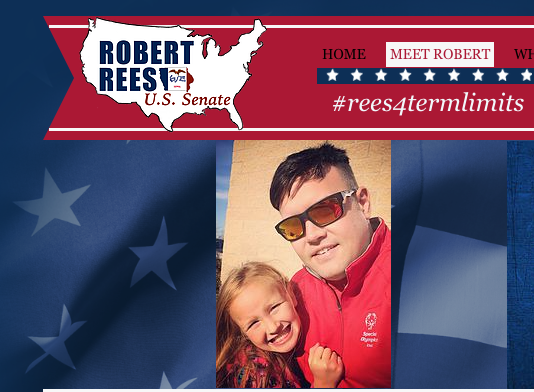
Catching up on news from the busy final weeks before the Iowa caucuses, U.S. Senator Chuck Grassley has a rival for the GOP nomination. Robert Rees launched his campaign on January 18, pledging to support term limits for members of Congress and the 10th Amendment, which reserves for the states powers not delegated to the federal government. Rees most recently worked as a conservative talk radio host but fell victim to a format change in October, when 98.3 FM in Des Moines switched to classic hip hop. Rees has a campaign website and is on Twitter, Facebook, and LinkedIn. He frequently uploads “campaign diaries” and other videos to his YouTube channel.

After the jump I’ve posted background on Rees, some of his answers to frequently asked questions about his challenge to Grassley, and his introductory video, in which he notes that Grassley has been in Washington, DC since a year before Rees was born. I’ve also enclosed excerpts from two articles linked on the Rees campaign website. Among other things, those pieces criticize Grassley for approving too many judges nominated by President Barack Obama–which is comical, since during Grassley’s first year as chair of the Senate Judiciary Committee, the Senate confirmed only eleven federal judges, “the fewest in a single year since 1960.”

I can’t conceive of any scenario in which Grassley loses a Republican primary, but assuming Rees qualifies for the ballot, it will be interesting to see how many conservatives cast protest votes for him. For reference, Tom Hoefling got just under 17 percent of the vote in his 2014 GOP primary challenge to Governor Terry Branstad. Turnout is likely to be very low on June 7, since no other statewide offices are elected this year, and only one of Iowa’s four Congressional districts appears likely to have a competitive GOP primary (Representative David Young is expected to face at least one conservative challenger in IA-03).

Rees had nominating petitions out at some Republican precinct caucuses on February 1. To qualify for the primary ballot, he will need to submit to the Secretary of State’s office by March 18 at least 3,331 signatures (0.5% of the votes cast for Governor Terry Branstad in Iowa’s 2014 general election). In addition, those signatures must be collected in at least ten counties, and for each of those counties, the number of signatures on nominating petitions must equal at least 1 percent of the votes cast for Branstad in the 2014 general election.

A few conservatives made noise about a primary challenge to Grassley in 2009, when it appeared he might support some version of health care reform, but they never followed through. Iowa’s senior senator defused some anger on his right flank by warning that end-of-life counseling provisions in the proposed bill could let people “pull the plug on grandma,” though he had voted for a previous law including such counseling. He later voted against the Affordable Care Act in committee and on the Senate floor, while seeking credit for some of its provisions.

Continue Reading...

Who are Iowa's superdelegates in 2016?

The Democratic Party’s “superdelegates” have been in the news lately as a potential base of support for Hillary Clinton in what may be a long battle with Bernie Sanders for the presidential nomination. I agree entirely with Pat Rynard that talking about superdelegates as Clinton’s “firewall” plays perfectly into the Sanders campaign narrative of anti-establishment warrior. Furthermore, I support eliminating superdelegates, which came into being before the 1984 presidential campaign as a way to give party insiders more leverage over the nominating process.

Since we’re stuck with superdelegates for this cycle, I’ve named Iowa’s likely representatives below. The Democratic National Committee has yet to confirm the list but is expected to do so next month.

Continue Reading...

Three Republicans join Iowa Senate Democrats in vote to terminate Medicaid privatization

This morning the Iowa Senate passed Senate File 2125, which would terminate contracts the state has signed with insurance companies picked to manage care for Iowans on Medicaid. Governor Terry Branstad announced his administration’s “modernization” plans early last year and selected four managed care providers in August, with a view to fully privatizing Medicaid by January 1, 2016. The state later terminated a contract with one of those four companies, and the federal government refused to grant the necessary waivers, saying Iowa would not be ready to shift to managed care until March 1 at the earliest.

Iowa Senate leaders made clear on day one of this year’s legislative session that Medicaid privatization would be a pressing concern. Senate President Pam Jochum has been sounding the alarm since last year, worried about how privatization would affect her developmentally disabled adult daughter and other Iowans with special needs. Jochum gave the opening and closing remarks in support of Senate File 2125 today. She repeatedly warned that the Branstad administration has tried to do too much, too fast, without input from state lawmakers or other stakeholders with expertise in the area. Fellow Democrats Chris Brase, Liz Mathis, Mary Jo Wilhelm, Rich Taylor, and Amanda Ragan echoed many of those concerns in their speeches.

During the floor debate, Republican State Senator David Johnson explained why he would vote for the bill. He read e-mails from numerous constituents expressing concern about access to health services for their loved ones on Medicaid. He pointed out that Minnesota took 20 years to transition to managed care, while Iowa is trying to implement the same changes over just one year. “It’s moving too fast. That’s the issue here. We need to put a dagger in this.”

Last week Johnson became the first GOP lawmaker to come out in favor of terminating the privatization program; I enclose below excerpts from Jason Clayworth’s report for the Des Moines Register. Johnson’s fears about “children at risk of losing services” stem from the failure of the managed care companies to sign contracts with thousands of providers who have been treating Iowans on Medicaid, including children on HAWK-I (Iowa’s version of the State Children’s Health Insurance Program). Scroll to the end of this post for more details on that access problem, based on data from the Iowa Department of Human Services.

Republicans who spoke against the bill today included Senators Jason Schultz and Mark Chelgren. Schultz claimed Democrats took “ownership” of managed care by putting assumptions about Medicaid savings into the health and human services budget for the current fiscal year. During her concluding remarks, Jochum pushed back hard against the idea that a vote for last year’s health and human services budget was a vote for managed care. Rarely do I ever agree with Schultz, but I think Senate Democrats walked into a trap there. The Branstad administration’s estimates on reduced Medicaid costs after privatization were never grounded in reality, but Democrats accepted those assumptions in the budget they passed–not because they supported the Branstad effort, but likely because doing so gave them an extra $51 million to spend on other health-related priorities.

Chelgren argued that lawmakers should keep their word after voting for a budget that assumed Medicaid would shift to managed care. He likened the situation to Congressional Republicans voting to repeal the 2010 Affordable Care Act without having a plan ready to replace “Obamacare.” The analogy fails because terminating Medicaid privatization that hasn’t been fully implemented would not be like repealing Obamacare after several years of operation. The status quo is an available and less disruptive alternative to serving the 560,000 Iowans on Medicaid. Chelgren claimed that halting Medicaid privatization and starting the process over would “betray” those who signed up as providers under the new system. That argument made no sense; public comments from Iowans on Medicaid and health care stakeholders have overwhelmingly opposed the Branstad policy.

During her concluding remarks, Jochum refuted claims that 39 other states have put Medicaid in managed care. In reality, only four states have fully privatized the system, as the governor is doing.

Shortly after the floor debate, senators voted 29 to 19 to approve SF 2125. Republicans Jake Chapman and Tom Shipley joined Johnson and all 26 Senate Democrats. Notably, those three Republicans all represent strongly GOP districts, not marginal seats.

The bill now goes to the Iowa House, where Speaker Linda Upmeyer has indicated she does not plan to bring the measure up for debate. For a nurse practitioner by training, Upmeyer is remarkably insensitive to ordinary people’s health care needs–not only those on Medicaid, but also chronically ill Iowans who could benefit from medical cannabis. A post in progress will catch up on the state of play for medical marijuana in the Iowa legislature.

UPDATE: Added more links and comments on the Medicaid debate below. According to Erin Murphy, Upmeyer confirmed today that the House will not take up SF 2125, because the governor would certainly veto it. Given how unpopular Medicaid privatization is, the public would likely support a legislative override of that veto. But at least five more Republican senators would have to change their stands to override a veto in the upper chamber. In the House, at least 24 GOP state representatives would need to support an override, assuming all 43 House Democrats voted in favor.

Continue Reading...

Bernie Sanders fans, stop citing my work to support your conspiracy theory

A Bleeding Heartland post from January 2015, Three pros and three cons of Andy McGuire as Iowa Democratic Party chair, has been getting a lot of attention lately on websites written by Bernie Sanders supporters. Some have accurately cited the piece to demonstrate that McGuire was a high-profile supporter of Hillary Clinton before the 2008 Iowa caucuses.

Others have used the post to insinuate that some evidence supports their suspicions about the Iowa Democratic Party skewing county delegate totals to boost Clinton. In reality, I have argued that systematic fraud would be impossible, because “Too many witnesses observe what happens in each precinct and would notice if the party got the numbers wrong.”

Even worse, some pro-Sanders websites have paraphrased me as endorsing their conspiracy theory: “The blog BleedingHeartland has been raising concerns that McGuire, who has been involved in Iowa politics for more than 20 years, is manipulating the state’s Democratic Party to favor Clinton over her challenger, Sen. Bernie Sanders (D-VT).” In the same vein: “Blog BleedingHeartland has been all over McGuire’s possible favoritism for Clinton, sounding alarms regarding a possible manipulation of Iowa’s Democratic Party in favor of the former Secretary of State […].”

In that year-old post, written the day the Iowa Democratic Party’s State Central Committee selected McGuire over three other contenders for the position, I commented, “Everyone knows that [McGuire] is a strong Clinton ally,” which has its advantages but also a big drawback (emphasis added):

No one will be fooled by today’s neutrality pledge. The perception will be that the Iowa Democratic Party leadership favors Hillary Clinton for president. There’s a risk that will discourage other potential candidates from competing in Iowa. On the plus side, there aren’t many options for long-shot candidates other than competing in Iowa and New Hampshire. I believe McGuire will not attempt to manipulate the party machinery to benefit Clinton.

Although I’ve criticized the Iowa caucus system generally and the Iowa Democratic Party’s handling of this year’s incredibly close results, I said explicitly last week that I “do not believe [McGuire] tried to fix the caucuses for Clinton.”

Bloggers who “feel the Bern” have linked liberally to Ben Jacobs’ story on one precinct where the Iowa Democratic Party shorted Sanders a county delegate in the first reported results. Yet the same posts have ignored two precincts where the state party’s reporting errors gave Sanders an extra county delegate.

In the past, I have joked that being an Iowa Democrat who criticizes the caucus system is “how to not win friends and not influence people.” Though some insiders may view me as a “rogue” activist “trying to make a statement,” I will keep advocating reforms to make the Iowa caucuses more inclusive and representative, respecting principles including ballot secrecy and every person’s voice carrying the same weight. To my fellow Democrats fighting their own battles against “the establishment”: don’t put words in my mouth. My problem is with some of the Iowa caucus rules. I have never alleged, nor do I believe, that party leaders applied those rules unfairly to hurt Sanders.

UPDATE: A reader tipped me off to Arnold Steinberg’s “humorous” column published in late January in the American Spectator and the Huffington Post. Although he did not link to this site, his satirical piece included the line, “BleedingHeartland.com has been concerned that McGuire, who chaired Hillary’s 2008 campaign in the state, is manipulating the party against Sanders.” That may have influenced some of the conspiracy mongerers who have misrepresented my work since the caucuses.

Continue Reading...

Sally Stutsman retiring, Amy Nielsen running in Iowa House district 77

Two-term State Representative Sally Stutsman will not seek re-election to Iowa House district 77, the Iowa House Democrats announced this morning. A separate press release sent less than two hours later announced that North Liberty Mayor Amy Nielsen will seek the Democratic nomination in the district Stutsman is vacating. I enclose both statements below, along with a map of the district covering a large area in Johnson County (but not Iowa City or Coralville).

To her credit, Stutsman announced her retirement more than a month before the filing deadline for statehouse candidates (on March 18 this year). Too often, Iowa legislative incumbents in both parties have kept their plans secret from all but a few insiders until a day or two before nominating petitions must be submitted to the Iowa Secretary of State’s office. Fairness calls for giving everyone in the district a chance to weigh the pros and cons of running for the legislature. Lots of people who would not challenge an incumbent would seriously consider competing for an open seat.

Nielsen’s quick announcement indicates some insider support, and her base in the rapidly-growing North Liberty area should boost her candidacy. Nevertheless, I would not be surprised to see another Democrat or two seek the nomination. Both Stutsman and Nielsen endorsed Hillary Clinton for president, while Johnson County was among the strongest for Bernie Sanders on February 1.

For reasons I don’t fully understand, many Iowa Democrats have an allergic reaction to primaries. I see no harm in a good, clean competition between two or more people who are focused on the issues. Johnson County has seen some bitterly contested Democratic primaries, though; I hope that dynamic doesn’t develop here.

Incidentally, Zach Wahls told me today that he has no plans to run for Stutsman’s seat. He lives in Johnson County but not in House district 77.

I am not aware of a declared Republican candidate in the district. Stutsman easily defeated a GOP opponent in 2012. Republicans did not field a candidate here in 2014 but will surely compete for the open seat. According to the latest figures from the Iowa Secretary of State’s office, House district 77 contains 7,043 active registered Democrats, 5,213 Republicans, and 7,727 no-party voters. President Barack Obama won more than 58 percent of the vote in the district in 2012, and Bruce Braley outpolled Joni Ernst by 9 points here in the 2014 U.S. Senate race. The winner of the Democratic primary will be favored to replace Stutsman in the legislature.

Continue Reading...

New Hampshire primary discussion thread

Polls have closed in most of New Hampshire, though people waiting in long lines to vote will still be able to cast ballots. Turnout appears to be record-breaking in some parts of the state.

All recent polling has indicated Donald Trump will win the Republican primary and Bernie Sanders the Democratic primary. The only question is by how much. Although Hillary Clinton did well in last week’s televised town-hall meeting and debate, the last few days of media coverage have been brutal for her. Controversial remarks by Gloria Steinem and Madeleine Albright have been spun as attempts to “shame” women into voting for Clinton, and I suspect they will drive many late deciders to Sanders. I would not be surprised to see him win tonight by 20 points or more.

On the Republican side, the big question is whether Marco Rubio can hang on to second place after his disastrous debate performance over the weekend. (Speaking of which, David Frum’s comments on that malfunction were particularly insightful.) John Kasich or Jeb Bush could contend for second place–and while we’re on the subject, why did Bush’s super-PAC not go up on New Hampshire television in the summer, when the pro-Kasich super-PAC started running ads?

Although social conservative candidates have typically done poorly in New Hampshire, Ted Cruz may pick up enough support from Rand Paul’s former supporters to finish second or a close third. Chris Christie has faded in the polls but may not drop out if he ends up in the top five and not too far behind the second-place candidate.

Any comments about the primary or the presidential race generally are welcome in this thread. I don’t believe in the convention scenario for Republicans; unless Rubio comes out of New Hampshire strong, Trump still looks like the favorite to wrap up the nomination by May. Clinton should still be favored to win the Nevada caucuses and South Carolina primary, because the electorates in those states are far more racially diverse than in Iowa and New Hampshire. On the other hand, public opinion in many states swung against her quickly during the 2008 primaries.

UPDATE: As I suspected, Sanders is crushing Clinton by more than 20 points. (Her share of the vote so far is almost exactly what it was in 2008, but with a more fractured field that year, 39 percent was enough to win.) I think we have just experienced our last cycle with Iowa and New Hampshire going first in the process, regardless of who wins the nomination. Sanders should get a big bump out of this win, but it may not be enough to win states that are not overwhelmingly white and don’t allow independents to vote in primaries.

Kasich finishing second to Trump is a terrible outcome for the establishment, which was just about ready to unite behind Rubio until the debate disaster. Bush barely making it to double digits after at least $35 million was spent on his behalf in New Hampshire is unimpressive but will keep him in the race. It will be very interesting to see whether Cruz can knock Rubio out in South Carolina.

SECOND UPDATE: Christie is heading to New Jersey rather than to South Carolina, as planned. He spent tons of time campaigning in New Hampshire and had the endorsement of the state’s largest newspaper, but couldn’t manage better than sixth place. Like their Iowa counterparts, Granite state Republicans just weren’t buying what Christie was selling.

No, the Iowa Democratic Party did not release raw vote totals for the 2008 caucuses

Fox News analyst Howard Kurtz accused Iowa Democratic Party leaders of hypocrisy and “stonewalling” today:

After the ridiculously close squeaker in the Iowa caucuses, the state’s Democratic Party said it couldn’t release the raw vote totals for Hillary Clinton and Bernie Sanders.

That simply isn’t how they do business, party officials insisted. […]

But it turns out that hasn’t been the practice in past elections.

Kurtz then posted what he claimed are “raw vote totals” for Barack Obama, John Edwards, Hillary Clinton, and Joe Biden from the 2008 Iowa caucuses. He took the numbers from CNN’s website.

Those numbers do not reflect the number of Iowans who caucused for each Democratic presidential candidate in 2008. They are just the state delegate equivalents calculated for each candidate, multiplied by 100.

Last week, the Associated Press used the same method when reporting state delegate equivalents for each candidate by county.

In the Democratic caucuses, AP will tabulate State Delegate Equivalents (SDEs), which are the estimated number of state convention delegates that the candidates would receive based on precinct caucus results. AP will input into its election night reporting system 1406 SDEs (1,401 statewide, plus 3 satellite SDEs, plus 2 tele-caucus SDEs, equaling 1,406 total SDEs). AP then will report the total SDEs for each candidate statewide. However, on the county level, the SDE numbers for some candidates are often very small fractions. In order to process these numbers by county without losing precision, the AP will inflate the county numbers by 100.

Various news organizations including the New York Times reposted the AP’s “state delegate equivalents times 100” figures for each Democratic candidate by county. Many people misunderstood what those numbers represented. I saw numerous social media posts linking to the AP numbers as proof of how many Iowans in each county had caucused for each candidate, even though adding those totals didn’t produce a number anywhere near the overall Democratic turnout, which exceeded 171,000.

David Redlawsk, author of a book about the Iowa caucuses, tweeted at Kurtz hours ago explaining the mistake. At this writing (1 pm central), Kurtz has not corrected his post on the Fox News website. A host of television shows critiquing political news coverage should value accuracy in his own work.

I have long called for reforms to make the reported Democratic caucus results more representative of Iowans’ preferences, and I support releasing whatever raw vote numbers the party has now (in many precincts, those numbers were not preserved). But as long as the Iowa Democratic Party insists on releasing only delegate totals for each candidate, news media like CNN and AP should not add to the confusion by reporting state delegate equivalents in a way that resembles raw vote numbers.

FEBRUARY 10 UPDATE: More than 24 hours after multiple people pointed out Kurtz’s error, the Fox News post still has not been corrected, nor has Kurtz acknowledged the mistake on his Twitter feed. His lack of professionalism is disappointing.

FEBRUARY 12 UPDATE: Three days later, Kurtz’s uncorrected piece remains up on the Fox News website. I continue to see it shared on social media and linked by other authors, who accept the false premise that those numbers reflect the “popular vote” from the 2008 caucuses.

Continue Reading...

Iowa Senate district 16: Nate Boulton raised more money in four months than Dick Dearden did in seven years

When Nate Boulton announced his Iowa Senate campaign in September, he subtly indicated he would be a different kind of legislator than State Senator Dick Dearden, the longtime Democratic incumbent who is retiring this year. Boulton promised to “be an active and engaged representative of district interests” and to “bring bold progressive ideas and a fresh, energetic style of leadership to the Iowa Senate.”

Just a few months into his primary race against Pam Dearden Conner, the retiring senator’s daughter, Boulton sent a strong signal that he will be a more “active and engaged” candidate as well. Campaign finance disclosure forms show that Boulton raised $75,383 during the last four months of the year, a phenomenal total for a non-incumbent, first-time state legislative candidate in Iowa. Not only did Boulton out-raise his primary rival, he raised more than Dearden (a 22-year incumbent) has brought in cumulatively since 2008.

Continue Reading...

Rest in peace, David Hurd

Broken Kettle Grasslands near Sioux City, Iowa–photo by Matt Hauge, used with permission

David Hurd passed away in Des Moines this weekend at the age of 86. Police have ruled out foul play in his deadly fall from his condominium building but have not announced whether he took his own life or fell accidentally. He had been suffering from Lewy body disease, a progressive condition.

Hurd was a legendary figure in local business circles, a past CEO of Principal Financial and member of the Iowa Business Hall of Fame since 1994. He left a bigger mark on the capital city than most people of comparable wealth have done. The Des Moines Register’s Lissandra Villa wrote about some of his philanthropic contributions here.

Many progressive organizations benefited from Hurd’s generosity, but it would be particularly hard to overstate how much he did for Iowa’s environmental community. Morgan Gstalter reported for the Register on Hurd’s gift that allowed the Nature Conservancy to acquire the first portion of the Broken Kettle Grasslands in the Loess Hills area: “Now at 3,217 acres, Broken Kettle is Iowa’s largest remaining native prairie and is home to bison and rattlesnakes.” The photo at the top of this post shows a tiny part of the stunning landscape. That gift alone would have secured Hurd’s legacy in the environmental world, but he was just getting started.

I became acquainted with Hurd during several years when we served together on the Iowa Environmental Council board. He was a co-founder of the organization. A few qualities stick out in my mind. First, he was attentive but generally quiet during meetings–the opposite of some business types who tend to dominate group conversations. Possibly reading my mind, Principal’s current CEO Dan Houston told the Register that Hurd was “one of the smartest guys you’d ever meet” but also “a very humble man, very capable, diverse, global, international and kind. He listened so, so very well.” Yes. Hurd was frequently the smartest guy in the room, but he never made a big deal about being the smartest guy in the room.

Hurd didn’t throw his weight around. He never pulled rank on any other board member, despite having given more money to the council than anyone else. I never heard of him trying to interfere with staff work, which large benefactors of many organizations have been known to do. When new ideas or programs were floated, he wanted to know about real-world impact: how would doing this thing potentially make Iowa’s water cleaner, or reduce greenhouse gas emissions?

Even more unusual for a prominent person in the business community, Hurd did not restrict his giving to environmental organizations I consider “politically correct,” such as the Iowa Natural Heritage Foundation or the Nature Conservancy. He supported non-profits that opposed powerful corporate interests in our state. I’m thinking not only of the Iowa Environmental Council, which pushed for water quality rules that Big Ag groups fought all the way to the Iowa Supreme Court. He was a consistent donor to 1000 Friends of Iowa (on whose board I also serve), and our sustainable land use agenda is not popular with developers.

During his retirement, Hurd helped create the local Scrabble club. When people who had played against him would talk about how competitive he was at the game, I was always amused. In other contexts, he came across as laid back and didn’t give off a competitive vibe at all–which also struck me as atypical for a major corporation’s onetime CEO.

At the CNN Democratic candidates’ town hall a few days before the Iowa caucuses, I spotted David and his wife Trudy in the audience and went over to say a quick hello. I wish I had known that was my chance to say goodbye.

Continue Reading...

After Iowa Democratic Party review, Hillary Clinton leads by smaller state delegate margin

After reviewing results in fourteen disputed precincts, the Iowa Democratic Party announced today that new calculations show Hillary Clinton received 700.47 state delegate equivalents (49.84 percent), Bernie Sanders received 696.92 state delegate equivalents (49.59 percent), and Martin O’Malley 7.63 state delegate equivalents (0.54 percent). I enclose below the full statement from the party, with details on the five precincts where county delegate totals had been misreported the night of February 1. In three of those precincts, the Iowa Democratic Party initially reported one too many county delegates for Clinton instead of Sanders. In one precinct, Sanders was allocated a county delegate that should have gone to Clinton. In the last precinct where results were corrected, Sanders was allocated a county delegate that should have gone to O’Malley.

Across 1,681 precincts assigning 11,065 county delegates, a few tabulation or reporting errors are to be expected. That’s why I supported a full review, to dispel any concerns about the accuracy of the results. Contrary to some conspiracy theories I have seen floating around social media, the Iowa Democratic Party could not systematically misreport county delegate totals to give Clinton the victory. Too many witnesses observe what happens in each precinct and would notice if the party got the numbers wrong.

In nine of the precincts the state party reviewed, reported results were found to be correct. The Des Moines Register’s Jennifer Jacobs explained one supposed example of “fishy” math today. In an Ankeny precinct, 148 people caucused for Sanders and 128 for Clinton. The precinct’s eight county delegates split four to each candidate. Sanders supporter Tucker Melssen thought it was a mistake, and Sanders should have gotten more. Welcome to my world in 1988, Tucker. My candidate had a plurality of caucus-goers in the precinct, but our county delegates split evenly.

Party officials correctly applied the formula used to convert supporters to county delegates in Ankeny 12. Drew Miller’s caucus calculator reveals that if 276 people in a precinct allocating eight county delegates split 148 to 128, each candidate should indeed receive four delegates. Playing around with the calculator, you can see that if Ankeny 12 had allocated nine delegates, Sanders would have gotten five of them. Or, if you leave the delegate total at eight, Sanders would need 156 of the 276 caucus-goers to stand in his corner in order to get five of the precinct’s delegates.

Long before I knew there would be such a close result in an Iowa Democratic caucus, I objected to the sometimes distorting effects of caucus math. Since I published this post on Thursday, many naysayers have told me we can’t ever report raw supporter numbers for each candidate, the way Iowa Republicans caucus. In what other context do Democrats support a system where some voters have more influence over the results than others? Where your voice counts for less if you caucus in a high-turnout precinct or county? Where voters are not able to cast a secret ballot and are excluded from participating because of disability, work or family obligations?

Stop telling me what the Democratic National Committee and the New Hampshire secretary of state won’t “let” us do to improve the caucuses. Start thinking creatively about how we can make the system more representative and inclusive while preserving Iowa’s place in the nominating calendar. The first step is Iowa Democratic Party leaders being willing to fight for positive change, rather than digging in to defend a flawed status quo. I’m not the only one who sees the need for reform: Clinton supporter Brad Anderson and Sanders supporter Phil Roeder both have extensive Iowa Democratic campaign experience and called for change in recent days.

Continue Reading...

Weekend open thread: Post Iowa caucus plans edition

What’s on your mind this weekend, Bleeding Heartland readers? This is an open thread: all topics welcome.

Many politically active Iowans have been decompressing from the build up to the Iowa caucuses and their aftermath. A few posts on the presidential race are still in my head, waiting to be written soon, and I am not done advocating for reforms to make the caucuses more inclusive and representative. But whereas fellow blogger Pat Rynard will continue to focus substantial energy on national politics in the coming months, I am eager to bring this site back to the state-level news I am most passionate about covering. So much has happened that I didn’t manage to write during the last couple of months, and new stories are breaking all the time. My writing plans include:

• Iowa campaigns and elections. Thanks to our non-partisan redistricting process, our state is blessed with an unusual number of potentially competitive state legislative districts. Many more close looks at Iowa House and Iowa Senate races are in the works, as well as posts about the Congressional races.

• Legislative and state government news. GOP State Senator David Johnson has just become the first statehouse Republican on record for lawmakers reversing the Branstad administration’s Medicaid privatization. (Johnson knows the policy put “children at risk of losing services” because so few providers have signed contracts with the private insurance companies picked to manage Medicaid.) Criminal justice reform, education funding, and water quality programs are other areas I’ll be following as the legislature continues its work.

• Iowa Congressional voting. Unfortunately, very few votes in the U.S. House or Senate receive any attention in the mainstream media. As I’ve said before, if a member of Congress didn’t brag about it in a press release, conference call, or social media post, Iowans are not likely ever to learn that it happened. Catching up on important votes by our four U.S. representatives and two senators is on my to-do list.

• Significant Iowa court rulings. A post in progress will highly key points from a federal court ruling David Pitt covered for the Associated Press, which determined “Iowa State University administrators violated the constitutional free speech rights of student members of a pro-marijuana group by barring them from using the university logos on T-shirts.”

• Throwback Thursday. These looks back at Iowa political history have been so much fun, I wish I’d started writing them years ago. Several more are in the works, including one relating to a 2010 law on access to firearms by people subject to protective orders. Ryan Foley reported yesterday for the Associated Press, “More than a dozen states have strengthened laws over the past two years to keep firearms out of the hands of domestic abusers, a rare area of consensus in the nation’s highly polarized debate over guns.” Iowa lawmakers adopted and Governor Chet Culver signed our state’s version of this legislation in 2010–but getting it through the state House and Senate took some heavy lifting.

• Iowa political journalism. Media issues are close to my heart, having been one of my main beats as during my decade as an analyst of Russian politics. How the Iowa media are covering (or not covering) important political news will continue to be an occasional focus at Bleeding Heartland. Some posts will be short, others long.

As always, guest pieces about any subject related to Iowa politics are welcome here. There is no need to clear ideas or content with me ahead of time. Anyone can register for an account, and I approve all non-spam, substantive posts. Bleeding Heartland has no minimum or maximum word length or restrictions on format. Looking through the posts by all guest authors in 2015, you will find a wide variety of topics and writing styles.

I also appreciate tips and story ideas. Readers can contact me at the e-mail address near the lower right corner of this page or through Twitter.

"Party school" findings shed new light on University of Iowa's secrecy on polling

Since November, the University of Iowa has refused to release documents related to annual statewide polls measuring Iowans’ attitudes about the university over the last three years. Officials have cited a provision in Iowa Code allowing “Reports to governmental agencies” to remain confidential if their release “would give advantage to competitors and serve no public purpose.” But Iowa Freedom of Information Council Executive Director Randy Evans has referenced decisions by the Iowa Supreme Court and lower courts, which indicate that the exemption “was not designed to cover documents produced for the government at public expense.”

I have assumed the university was concealing documents related to the polling because the work was among several projects awarded through no-bid contracts to a company controlled by former Republican Party of Iowa Chair Matt Strawn. Peter Matthes, the university vice president who supervised those contracts, had prior connections to Strawn through Iowa Republican circles. Matthes also was involved in hiring new University of Iowa President Bruce Harreld, both as a member of the presidential search committee and as a participant in one of Harreld’s secret meetings with key decision-makers.

An exclusive report by Ryan Foley for the Associated Press yesterday pointed to a more straightforward reason to keep the poll findings secret: Iowa’s image as a “party school” had hurt its reputation “as a serious academic institution.”

Continue Reading...

IA-04: Nick Ryan looking for a Republican to run against Steve King

Representative Steve King is among the leading Iowa Republicans basking in reflected glory from Ted Cruz’s big win in the caucuses. His endorsement in mid-November was a catalyst for Cruz’s rise in the Iowa polls. He ran interference when Cruz came under attack for his stands on the ethanol mandate and an amendment to a 2013 immigration bill. In the final hour before the Iowa caucuses convened, King tweeted, “[Dr. Ben] Carson looks like he is out. Iowans need to know before they vote. Most will go to Cruz, I hope.” (Today King expressed regret for “any miscommunications” but pointed to a CNN story asserting that Carson was planning “a break from campaigning.”)

Cruz’s win after trailing in the last ten polls before the caucuses cements King’s status as a hero to many Iowa Republicans. By the same token, King has disappointed some conservatives who supported him in the past.

In particular, King’s efforts on behalf of Cruz made an enemy out of Nick Ryan, who has led various super-PACs and dark money groups. Ryan is looking for a credible candidate to challenge King in a GOP primary to represent Iowa’s fourth Congressional district.

Continue Reading...

Get your heads out of the sand, Iowa Democratic Party leaders

Since 2007, I have been trying to raise awareness about problems with the Iowa Democratic caucus system: barriers to participation for many who want to have a voice in choosing our president; the fact that not every Democrat’s “vote” counts the same toward the delegate numbers; the lack of secrecy and potential for intimidation in caucus rooms; and the distorting effects of caucus math, starting with but not limited to the 15 percent viability threshold.

Again and again and again, I have urged my fellow Democrats to make our caucuses more inclusive and the results more representative of each candidate’s actual supporter numbers. I might as well have been pounding on the walls of a sound-proofed chamber, for all the impact my blogging has had on the Iowa Democratic Party’s leadership.

The slimmest margin ever between the top two Democratic presidential candidates lends new urgency to the task of cleaning up the caucuses. Yet state party chair Dr. Andy McGuire and others are holding the line against even a full review of the calculations that put Hillary Clinton ahead of Bernie Sanders by 700.59 state delegate equivalents to 696.82. They insist that any minor glitches on Monday night were resolved by 2:30 am, when the party sent out its press release declaring Clinton the winner. The results are final. Nothing to see here, folks.

The longer party leaders drag their feet, the more they will stoke conspiracy theories about the caucuses being stolen for the establishment’s favorite.

Continue Reading...

Josh Byrnes not running for re-election in Iowa House district 51

Three-term GOP State Representative Josh Byrnes announced today that he will not seek re-election to the Iowa House. I enclose below the full statement he posted on Facebook, which expressed his “hope that the voters of House District 51 will continue to elect moderate candidates to represent them in Des Moines. The constituents of a district lose when we elect those who are hard line party people.”

Byrnes was occasionally out of step with his caucus, having supported marriage equality and voted with Democrats for expanding Medicaid. Rumors of his impending retirement proved wrong during the last election cycle but flared up again in recent months, following his unsuccessful bid to be House speaker and subsequent criticism of excessive partisanship and failure to approve school funding levels on time.

House GOP leaders have resisted compromise on education funding during the past several years, which likely contributed to decisions by three other Republicans not to run for re-election in 2016. Like Byrnes, State Representatives Brian Moore, Quentin Stanerson, and Ron Jorgensen all have worked in the education field.

With Byrnes retiring, House district 51 immediately moves to the top tier of Democratic pickup opportunities in the lower chamber, which the GOP controls with a 57 to 43 majority. President Barack Obama received 55.19 percent of the vote among its residents in 2012. Only two Iowa House districts currently held by Republicans voted to re-elect the president by a larger margin; one of them was House district 58, which Moore is vacating. According to the latest figures from the Iowa Secretary of State’s office, House district 51 contains 5,119 active registered Democrats, 6,074 Republicans, and 8,247 no-party voters. I enclose below a district map.

UPDATE: Tony Krebsbach announced on Facebook today that he will seek the GOP nomination in House district 51. He has served on the Republican Party of Iowa’s State Central Committee and chaired the Mitchell County GOP and is part of the “Liberty” faction, which supported Ron Paul for president.

Continue Reading...

Pollster Ann Selzer: I'm fine with being "demoted to 'silver standard'"

The Des Moines Register’s longtime pollster Ann Selzer identified the surge of first-time Democratic caucus-goers who would carry Barack Obama to victory in 2008. Her final poll before the 2012 Republican caucuses caught the strong upward momentum for Rick Santorum. Her last snapshot before this year’s caucuses for the Des Moines Register and Bloomberg Politics correctly saw a close race between Hillary Clinton and Bernie Sanders, with fewer first-time participants than eight years ago.

But Selzer’s view of the GOP campaign was unfortunately off the mark in several respects: putting Donald Trump ahead of Ted Cruz, underestimating turnout overall and particularly among evangelicals, and missing the late swing toward Marco Rubio that some political observers sensed by watching the campaign on the ground.

Yesterday Selzer commented to David Weigel of the Washington Post,

“In all the press I did in the last two days—and it was a LOT — I talked about the fluidity,” she wrote in an email. “Up to the last moment — including inside the caucus room — campaigns and supporters are working for change! Surprise! Big evangelical turnout — no doubt the biggest.” […]

“Trump was disliked by vast majority of caucus-goers who didn’t support him,” Selzer said. “Bernie’s extraordinary strength was with first-timers, who showed up in above-projected numbers. […]

“If I’m demoted to ‘silver standard,’ I’m fine with that,” she said. “I was never all that comfortable with the hype.”

Selzer can take some comfort in knowing that the last ten Iowa polls released before the caucuses all put Trump ahead of Cruz. The most recent poll to show Cruz leading was the Iowa State University/WHO-TV survey, which uses an unconventional screen for likely caucus-goers. But Iowa State/WHO understated support for Trump and Rubio. Given the tremendous difficulties involved in polling the Iowa caucuses, especially on the Democratic side, we should expect some misses, even from the top professionals in the field. As the presidential campaign progresses, here’s hoping political journalists will focus less on poll-driven horse race coverage.

UPDATE: Selzer did some “Tuesday morning quarterbacking” of her final poll in today’s Des Moines Register. I enclose excerpts below.

Continue Reading...

Iowa GOP caucus-goers deliver big hit to Terry Branstad's clout

Donald Trump was the obvious Republican loser last night. Despite leading in the last ten Iowa polls released before the caucuses, Trump finished more than 6,000 votes and three percentage points behind Ted Cruz, widely perceived before yesterday to have peaked too soon. Record-breaking turnout was supposed to be a winning scenario for Trump, yet a plurality of caucus-goers cast ballots for Cruz as attendance surpassed the previous high-water mark by more than 50 percent.

For Iowa politics watchers, another big takeaway jumped out from the caucus results: Governor Terry Branstad’s advice doesn’t carry much weight with rank and file Republicans.

Continue Reading...

Iowa caucus results thread

I will update this post throughout the evening. As of 9 pm, 75 percent of Democratic precincts have reported, and Hillary Clinton narrowly leads Bernie Sanders by 50.4 percent to 48.9 percent of state delegate equivalents. Martin O’Malley won less than 1 percent of the state delegate equivalents and is reportedly dropping out of the race. UPDATE: with 81 percent of precincts reporting (but not including some Iowa City and Cedar Rapids precincts), Clinton is barely ahead by 50.2 percent to 49.1 percent. Turnout seems to be considerably higher than I expected, which explains how well Sanders is doing. He could pull ahead to Clinton if she doesn’t have good counties and precincts outstanding.

The Republican race is too close to call between Ted Cruz and Donald Trump, with about 75 percent of the votes counted. Marco Rubio is in third place. I noticed that Bret Hayworth of the Sioux City Journal predicted a Cruz win, as did I. On the Republican side, only Cruz was running a traditional ground game. Supposedly the Trump campaign hired out its phone banking, and I never heard much about door-knocking on his behalf.

What happened in your precinct? Share your stories in the comments. I’ve posted what happened in Windsor Heights 2 below.

9:30 UPDATE: Television networks are calling the GOP race for Cruz. Mike Huckabee is dropping out of the race; he outperformed his polling numbers but is still way behind the leaders at around 7 percent.

9:45 UPDATE: With 88 percent of Democratic precincts reporting, Clinton is ahead by only 49.9 percent to 49.5 percent. Sanders could pull ahead.

10:30 UPDATE: Clinton is speaking now, which surprises me, because she’s only ahead by 50.1 percent to 49.4 percent with 93 percent of precincts reporting. For some reason, the Iowa Democratic Party’s website is showing my own precinct (Windsor Heights 2) as not yet reporting. We were done by around 8:30.

11:20 UPDATE: With 95 percent of precincts reporting, Clinton’s lead is down to 49.8 percent to 49.6 percent. A bunch of Polk County precincts are still outstanding, including mine. At least six precincts around the state had one delegate awarded by a coin flip.

12:00 am UPDATE: Steve Kornacki and Rachel Maddow got the coin flip story badly wrong on MSNBC, claiming the coin flips (all won by Clinton in the various precincts) accounted for Clinton’s statewide lead over Sanders. No. The coin flips resolve who would get the last remaining county delegate from a precinct. Clinton is ahead by a handful of state delegate equivalents.

12:50 am UPDATE: With 99 percent of precincts reporting, Clinton leads by 49.9 percent to 49.6 percent. Just twelve precincts have not reported.

2 am: Make that ten precincts outstanding. I want to hear from Democrats who caucused in Des Moines precinct 43 at Roosevelt High School. There seems to have been some confusion about the count, and Sanders supporters online are accusing the precinct chair and the Clinton precinct captain of “fraud,” based on this video. It’s not unusual for there to be some confusion or people missed during the count. We had to count our Clinton group twice last night.

2:30 am: The Iowa Democratic Party released a statement a few minutes ago, which I’ve enclosed below. According to the party, statewide turnout was 171,109, much higher than I expected but nearly 70,000 below the record turnout of 2008. The party says “Clinton has been awarded 699.57 state delegate equivalents, Bernie Sanders has been awarded 695.49 state delegate equivalents, Martin O’Malley has been awarded 7.68 state delegate equivalents and uncommitted has been awarded .46 state delegate equivalents. We still have outstanding results in one precinct (Des Moines—42), which is worth 2.28 state delegate equivalents.”

The outstanding precinct (Des Moines 42) is on the west side, bordering Windsor Heights. There is no clear trend in the six neighboring precincts, with Sanders and Clinton winning two each and the other two ending in a delegate tie.

With all the excitement on the Democratic side, I forgot to update the Republican results. They are after the jump. The GOP turnout of more than 180,000 was about 50 percent higher than their previous record turnout in 2012.

Continue Reading...

How the Iowa caucuses work, part 6: Pros and cons of the caucus system

Wrapping up this year’s Iowa caucus series. Part 1 covered basic elements of the caucus system, part 2 explained why so many Iowans can’t or won’t attend their precinct caucus, part 3 discussed how Democratic caucus math can affect delegate counts, part 4 described how precinct captains help campaigns, and part 5 explained why the caucuses have been called a “pollster’s nightmare.”

When I have criticized some aspects of the Iowa caucus system or called for reforms to allow more Iowans to participate, I have often heard from activists defending the status quo.

This posts lists some leading arguments in favor of the current caucus system, along with my rebuttals.

Continue Reading...

How the Iowa caucuses work, part 5: A "pollster's nightmare"

Continuing a six-part series. Part 1 covered basic elements of the caucus system, part 2 explained why so many Iowans can’t or won’t attend their precinct caucus, part 3 discussed how Democratic caucus math can affect delegate counts, and part 4 described how precinct captains help campaigns.

Measuring the horse race ahead of the Iowa caucuses poses special challenges, particularly on the Democratic side. Those problems affect even the Des Moines Register’s longtime pollster Ann Selzer, whom FiveThirtyEight.com has given an A+ grade and called “the best pollster in politics.”

Follow me after the jump to see why polling expert Mark Blumenthal has described the caucuses as a “pollster’s nightmare.”

Continue Reading...

How the Iowa caucuses work, part 4: What a precinct captain does

Continuing a six-part series. Part 1 covered basic elements of the caucus system, part 2 explained why so many Iowans can’t or won’t attend their precinct caucus, and part 3 covered Democratic caucus math, which sometimes produces strange results.

Axiom of Iowa politics: the key to winning the caucuses is to “organize, organize, organize, and then get hot at the end.” Although paid staff do much of the ground work, a successful presidential campaign needs a large number of volunteers at the precinct level. I haven’t been engaged as a volunteer this cycle, because for the first time in my life, I remained undecided until shortly before the caucuses. But I spent many hours trying to turn out neighbors for John Kerry in 2004 and for John Edwards in 2008. During the past thirteen years, I’ve talked with hundreds of Iowa Democratic activists who volunteered locally for presidential candidates.

This post focuses on how precinct captains can influence outcomes on caucus night.

Continue Reading...

Weekend open thread: Last Des Moines Register caucus poll and a shady Ted Cruz mailer

Photo of a Ted Cruz supporter’s car spotted in Davenport on January 30; shared with the photographer’s permission.

The final Iowa caucus poll by Selzer & Co. for the Des Moines Register and Bloomberg Politics shows a tight race on the Democratic side and Donald Trump retaking the lead from Ted Cruz among likely Republican caucus-goers. Key findings and excerpts from the Register’s write-ups on the poll are after the jump.

Ann Selzer is “the best pollster in politics,” Clare Malone wrote in a must-read profile for FiveThirtyEight.com this week, which explained Selzer’s methods and “old-school rigor.” One key part of her “A+” methodology is starting from a list of registered voters, rather than using random digit dialing to reach Iowans by phone. Nate Cohn pointed out that Iowa polls drawing respondents from a registered voter list have tended to produce better results for Hillary Clinton, while surveys using random digit dialing have produced the best numbers for Bernie Sanders. Selzer also uses a simpler likely voter/likely caucus-goer screen than many other pollsters.

Bleeding Heartland guest author fladem showed yesterday that the Iowa caucus results have sometimes been noticeably different from the last polls released. Front-runners have often seen their lead shrink, while fast-rising contenders have “come from nowhere.” I am standing by my prediction that the structure of the Iowa Democratic caucuses, where only delegate counts matter, favors Hillary Clinton and will allow her to outperform her poll numbers on Monday night. Speaking of which, there’s still time to enter Bleeding Heartland’s Iowa caucus prediction contest; post a comment with your guesses before 6 pm central time on February 1.

Last spring I was sure Cruz would peak in Iowa too soon and crash before the caucuses. Campaign news from October through December convinced me that I was wrong, and I still believe more in Cruz’s ground game than in Trump’s. However, the Cruz campaign is starting to look desperate, shifting its advertising to attack Marco Rubio instead of Trump, and sending out a deceptive mailer, which implied that Republicans guilty of a “voting violation” could improve their “score” by showing up at the caucuses. I enclose below several links on the controversy and a statement from Iowa Secretary of State Paul Pate denouncing the mail piece, which “misrepresents the role of my office, and worse, misrepresents Iowa election law.”

Pate’s predecessor, Matt Schultz, is chairing Cruz’s Iowa campaign and defended the mailing as “common practice to increase voter turnout.” As Gavin Aronsen discussed at the new website Iowa Informer, it’s rich for onetime “voter fraud” crusader Schultz to be “actively defending a purposefully misleading mailer.” The hypocrisy confirms my view that Schultz and Cruz are a political match made in heaven.

Governor Terry Branstad will introduce Chris Christie at a campaign stop today but won’t officially endorse the New Jersey governor. Several people with close ties to Branstad are active supporters of Christie, who has been stuck at 3 percent in the Register’s polling for months.

Final note: I’m so happy for all the volunteers who are able to knock doors in near-perfect (for January) weather during these last few days of the campaign. Weather conditions leading up to the 2008 caucuses were terrible.

Continue Reading...

How the Iowa caucuses work, part 3: Democratic caucus math

Continuing a six-part series. Part 1 covered basic elements of the caucus system, and part 2 explained why so many Iowans can’t or won’t attend their precinct caucus.

The Republican Party of Iowa will report how many GOP caucus-goers mark ballots for each presidential candidate on Monday night. But the Iowa Democratic Party will report the results only in terms of county delegates won and “state delegate equivalents.” This post is about caucus math and how “realignment” in Democratic precincts can affect how many county delegates go to each presidential candidate. In some cases, those delegate numbers may distort the preferences of voters at a precinct caucus.

Continue Reading...

Thoughts on the final Republican debate before the Iowa caucuses

Expanded from a short take for CNN

The seventh Republican presidential debate and the first without Donald Trump produced more substantive talk about issues and some strong performances by candidates near the bottom of the pack. For political junkies who missed the debate for whatever reason, the New York Times posted the full transcript here. My thoughts are after the jump.

Continue Reading...

How the Iowa caucuses work, part 2: Barriers to participation

Continuing a six-part series. Click here for part 1, explaining the basics of the caucus system.

I love attending my precinct caucus. The first year I was old enough to vote, I came home from college out of state to stand in Paul Simon’s corner. Having managed with a baby in a sling at the 2004 caucus, I brought a toddler and preschooler to the same room (now ridiculously overcrowded) four years later. I showed up for the off-year caucus of 2010, when only the most hard-core party activists turned out to meet prospective candidates, elect county convention delegates, and consider platform resolutions. I caucused in 2012, hoping to win an “uncommitted” delegate from my precinct.

Hundreds of thousands of Iowans who are highly engaged in politics will find some way to get to their precinct caucuses on February 1, no matter how cold it is, how busy they are, or how inconvenient the location may be.

But for one reason or another, many thousands of Iowans who are closely following this year’s presidential race will not gather with their neighbors this Monday at 7 pm. This post examines what will keep them away.

Continue Reading...

Throwback Thursday: When Bob Vander Plaats asked for money to promote his Iowa caucus endorsement

National Organization for Money photo IMG_5284_zpsddttbuk1.jpg

National Organization for Money graphic created by Rights Equal Rights and used with permission.

Donald Trump targeted Bob Vander Plaats on Twitter this week. He speculated that Ted Cruz, who landed Vander Plaats’ personal endorsement last month, may not know about past “dealings” by one of Iowa’s leading social conservatives. The billionaire called Vander Plaats a “bad guy” and a “phony,” claiming the FAMiLY Leader‘s front man had asked to stay in Trump hotels for free and tried to secure a $100,000 payment for himself after “begging” Trump to do an Iowa event. Jennifer Jacobs confirmed that Trump received a $100,000 fee for speaking to a real estate conference in West Des Moines last year, but Vander Plaats told the Des Moines Register “he was paid nothing” for introducing Trump to the head of the company that organized the event, and “no donation was made to the Family Leader.”

The spat reminded me of big news from the final two weeks of the 2012 Iowa caucus campaign, when Rick Santorum confirmed that Vander Plaats had asked for money to promote his endorsement.

Continue Reading...

How to write an Iowa caucus party platform resolution

Many Iowans leave their precinct caucuses after the presidential selection process, but the caucuses also provide an opportunity for politically-engaged people to influence their party’s platform. If you bring a resolution to your precinct caucus, you have a good chance of getting it approved and sent to the county platform committee, which decides what will come to a vote at the county convention.

Little-known fact for those who want to exercise this option: platform resolutions should be written in a different format from other political resolutions you may have read. Follow me after the jump for details and examples of resolutions you can bring to your caucus on Monday night.

Continue Reading...

How the Iowa caucuses work, part 1: The basics

Expanded and revised from a series published at Bleeding Heartland during the 2008 election cycle

Even in Iowa, many people are confused about what will happen at 7 pm on February 1, when hundreds of thousands of people join their neighbors at a public gathering to express a preference for a presidential candidate. This post will cover the basics of the process and how the results will be reported, which is quite different for Iowa Republicans and Democrats. Over the next several days, this series will examine other elements of the caucus system:

Part 2 will explore barriers to participation in the caucuses and why it can be challenging to turn out even highly politically engaged Iowans.

Part 3 will focus on caucus math, which can create different ways to win an Iowa Democratic precinct.

Part 4 will discuss ways a good precinct captain or other volunteers can help a presidential candidate.

Part 5 will explain why the Iowa caucuses are, in Mark Blumenthal’s words, a “pollster’s nightmare.”

Part 6 will lay out the leading arguments for and against the Iowa caucus system, as opposed to a primary.

Continue Reading...

Donald Trump's "Make America great again" pales next to Ronald Reagan's

Donald Trump’s first television commercial grabbed attention for its unsubtle race-baiting on the topic of immigration. His latest commercial hits Ted Cruz as “pro-amnesty,” citing the Texas senator’s past support for legislation that would have provided legal status for some undocumented immigrants.

In between those spots, the Trump campaign released an ad that has been in heavy rotation on Iowa tv stations since January 15. “Our Country” hammers home Trump’s promise to “make America great again,” which inspired me to look back at how Ronald Reagan used the same words in one of his 1980 campaign commercials.

Trump has communication skills, but he’s not on Reagan’s level.

Continue Reading...

Enter Bleeding Heartland's 2016 Iowa caucuses prediction contest

With no clear leader in either party less than a week before the 2016 Iowa caucuses, this latest installment in Bleeding Heartland’s occasional series of prediction contests should be especially fun. Anyone can participate, regardless of whether you live in Iowa or have ever lived here.

To enter the contest, post your answers to the eight questions enclosed below as comments in this thread before 6 pm on February 1. Valid entries must be submitted as comments here. Predictions sent to me by e-mail or posted on social media will not be considered. It only takes a minute to register as a Bleeding Heartland user (a link is near the upper right corner of this screen). You don’t have to use your real name; feel free to choose a screen name that allows you to post anonymously. You’ll be e-mailed a password for logging in. Then you can comment here or on any other thread. To protect against spammers, your comment will be “pending” until I approve it.

It’s fine to change your mind after making your guesses, as long as you post your revised predictions as an additional comment in this thread before the deadline.

No money or prizes are at stake here, just bragging rights. This contest doesn’t work like “The Price is Right”; the winning answers will be closest to the final results, whether they were a little high or low. Even if you have no idea, please try to take a guess on every question.

Continue Reading...

Two views of efforts to increase Latino participation in the Iowa caucuses

The National Journal’s Matt Vasilogambros had a productive visit to Iowa recently. His feature on how immigration raids in 2006 affected the Latino community in Marshalltown is a must-read. Do click through, but prepare to be disheartened by stories of families broken apart and impacts that went far beyond the undocumented immigrants who were swept up in the raids at the Swift & Co. meat­pack­ing plant.

Vasilogambros also followed up on his story from last summer on “Why Latinos Don’t Caucus in Iowa” with a new look at the relatively poor outreach by presidential campaigns to the growing number of potential Latino caucus-goers.

If Latino participation in the February 1 caucuses exceeds the record set in 2008, credit will be due primarily to the League of United Latin American Citizens chapter in Iowa. Adrian Carrasquillo reported for Buzzfeed earlier this month on LULAC’s campaign. Highlights from both articles are after the jump.

Continue Reading...

Comparing Bernie Sanders' "America" to Ronald Reagan's "Morning in America"

The best commercial of the 2016 presidential campaign started running on Friday. Set to the classic Simon and Garfunkel song “America,” the 60-second spot for Bernie Sanders evokes optimism and a sense of purpose. A dejected Hillary Clinton supporter told me a few days ago that this ad will win the Iowa caucuses for Sanders.

I don’t know about that, but “America” is so superb that I was inspired to compare its style and substance to one of the most famous presidential campaign ads of the 20th century. This 60-second spot for Ronald Reagan’s re-election campaign was originally called “Prouder, Stronger, Better” but is better-known as “Morning in America” because of its memorable opening metaphor: “It’s morning again in America.”

Continue Reading...

2016 RAGBRAI route announced: A short ride across southern Iowa

After two straight years of taking bicyclists across northern parts of the state, the Des Moines Register announced this evening that the Register’s Annual Great Bike Ride Across Iowa (RAGBRAI) will cross southern Iowa from July 24 to 30. The route starting in Glenwood and ending in Muscatine will take riders “419.9 miles (third-shortest in the event’s 44-year history), with a total climb of 18,488 feet (making it the 24th flattest).”

Full details on the 2016 route are on the official RAGBRAI website. After the jump I’ve listed the overnight stops, along with daily mileage totals and feet of climb and some political trivia about places riders will visit this summer.

Continue Reading...

Grassley introduces Trump at rally: "We have an opportunity once again to make America great again"

How much do Ted Cruz’s fellow U.S. Senate Republicans not want him to be their party’s standard-bearer? So much that Senator Chuck Grassley introduced Donald Trump at a rally in Pella this afternoon, telling the crowd, “We have an opportunity once again to make America great again.”

Technically, Grassley didn’t endorse Trump for president, and aides for the senator told Jennifer Jacobs of the Des Moines Register that Grassley “will introduce Marco Rubio at the candidate’s Iowa rally next Saturday.” Still, it sends a strong message when a politician of Grassley’s stature echoes Trump’s campaign slogan at a rally for Trump. Anna Palmer reported for Politico from Pella,

“I’m excited to be invited to be here. I’m excited as I see so many large crowd at various events around Iowa,” Grassley said. “I’m excited to see the big crowds because of the big energy that comes with it and we’ve got to keep up this energy that’s shown here today and many other places around Iowa because that is what is going to take for us to win back the White House in November.”

Grassley endorsed his Senate colleague Bob Dole before the 1988 and 1996 Iowa caucuses and supported the establishment’s choice George W. Bush before the 2000 caucuses, but he didn’t pick a candidate out of the crowded GOP fields in 2008 or 2012. On January 11, Grassley told Alex Schuman,

“I’ve told all these candidates as long as eight months ago that I wasn’t going to get involved,” he said Monday. “I’ve told them I wasn’t going to back anybody. I think I’m a person who has a great deal of credibility. My word is good.”

Sen. Grassley continued, “I think it would hurt my credibility if I were to step out for that person or any other person right now.”

Speaking to Politico’s Burgess Everett on January 20, Grassley criticized Cruz’s stand on various energy issues and said he respected Governor Terry Branstad’s call the previous day for Iowans to defeat the Texas senator. But Grassley added that he “won’t get political about it” and campaign against Cruz. I wonder what changed his mind over the past few days. My hunch is that some internal polling is showing Cruz way ahead of others in the field. Although Trump is occupying an outsider niche in this presidential race, it could hardly be more clear that Cruz is the candidate most widely hated by the Republican establishment.

UPDATE/CORRECTION: On second thought, leave Grassley out of the “anyone but Cruz” establishment crowd. Shortly after the Trump event, Jason Noble reported for the Des Moines Register, “Several other campaigns – including those of candidates Ben Carson, Chris Christie and Rand Paul – confirmed they had received offers in recent days to appear with Grassley.” On Saturday evening, the Cruz campaign told Teddy Schleifer that Grassley will appear at a Cruz rally on January 29. So the senior senator appears to be making himself available to all the presidential candidates during the final days of the caucus race.

P.S.- Senator Grassley’s grandson, State Representative Pat Grassley, has not endorsed a presidential candidate this cycle. Grassley is the new Iowa House Appropriations Committee chair and widely considered a likely candidate for Iowa secretary of agriculture in 2018, assuming the current holder of that office, Bill Northey, runs for governor.

Continue Reading...

Memo to journalists: Craig Robinson's firm makes money off the Iowa caucus campaign

Craig Robinson is among the go-to Republicans for national press covering the Iowa caucuses. His insights are partly informed by a wealth of experience: as a staffer on Steve Forbes’ presidential campaign before the 2000 caucuses, as political director of the state GOP during the year before the 2008 caucuses, and as publisher of The Iowa Republican blog since 2009.

One salient fact rarely, if ever, makes it into the news stories quoting Robinson about prospects for Republican contenders in Iowa: his company Global Intermediate has been paid to do direct mail for or against certain candidates in the field.

Continue Reading...

Terry Branstad's warning about Ted Cruz may backfire in the Iowa caucuses

Governor Terry Branstad has long said he did not plan to endorse a presidential candidate before the Iowa caucuses. But speaking to journalists this morning at the Iowa Renewable Fuels Summit in Altoona, Branstad said “it would be very damaging to our state” if Ted Cruz wins the caucuses.

The governor’s anti-endorsement could help Cruz more than it hurts him.

Continue Reading...

Iowa Democratic bloggers roundtable happening on Thursday in Cedar Rapids

I stopped posting upcoming Iowa political events at this blog once social media became the dominant way for people to publicize such happenings, but I’m making an exception for a roundtable discussion the Linn County Phoenix Club will host this Thursday, January 21, in Cedar Rapids. I’ll be there with John Deeth, who writes the longest-running Iowa Democratic blog, and Pat Rynard, whose Iowa Starting Line just celebrated its first anniversary. We’ll be talking about the Iowa caucuses as well as some state-level political issues, campaigns, and elections. The event is a fundraiser for the Phoenix Club, which supports Democratic candidates in Linn County. We bloggers are not being paid to participate. I enclose the invitation below, with details on location, time, and suggested donation.

Continue Reading...

How Iowa political leaders could honor the legacy of Rev. Dr. Martin Luther King, Jr.

When Congress finally passed a bill establishing a federal holiday named after the Rev. Dr. Martin Luther King, Jr. in 1983, national public opinion was split down the middle on whether the civil rights leader should be honored in this way. The holiday is no longer controversial, and members of Congress who voted against it, such as Senator Chuck Grassley, are quick to explain that they admire King’s work. Bleeding Heartland has compiled links related to Dr. King’s legacy and the long slog to establish this national holiday here, here, here, here, here.

I’ve been predicting for months that this year’s legislative session would mostly be a giant waste of many people’s time. I hope Iowa lawmakers and Governor Terry Branstad will prove me wrong by enacting not only the criminal justice reforms Branstad advocated in his Condition of the State speech last week, but also legislation to reduce mandatory minimum sentences, and improve police identification and interrogation procedures as well as police use of body cameras. The NAACP is pushing for a bill to ban racial profiling by law enforcement, which should not be controversial but probably will be a very heavy lift at the Capitol.

Branstad could act unilaterally to reduce one of Iowa’s massive racial disparities by revoking his 2011 executive order that has disenfranchised thousands of people, disproportionately racial minorities. (The procedure the governor established for regaining voting rights is “just about impossible” for felons to navigate.)

Any relevant comments are welcome in this thread. All three Democratic presidential candidates mentioned Dr. King during their opening statements during last night’s debate in South Carolina, and I’ve enclosed the videos and transcript below. I also included the part of the transcript containing Hillary Clinton’s and Bernie Sanders’ remarks on criminal justice reform.

Continue Reading...

High points for Clinton and Sanders in the South Carolina Democratic debate

Expanded from a short take for CNN

Hillary Clinton was solid and Bernie Sanders turned in his best debate performance yet in Charleston last night. Can anyone deny that Democratic National Committee leaders should have allowed more debates and scheduled them on nights when more voters would watch? The sometimes sharp exchanges between the front-runners probably didn’t change many Democratic minds, but Clinton and Sanders both delivered plenty of lines that should reinforce the inclinations of voters who are supporting them or leaning in that direction.

I suspect the following moments will particularly resonate with Iowa caucus-goers, based on my conversations with hundreds of Iowa Democrats and on how I’ve seen multiple crowds react to the candidates.

Continue Reading...

Bruce Harreld ignores request for documents on U of I opinion poll, Matt Strawn's work

After a contentious recent e-mail exchange with a prominent alumnus, University of Iowa President Bruce Harreld vowed that he will “continue to respond to his critics via email,” because “I value direct and candid feedback from our students, faculty, staff, and alumni and if I stop responding I won’t be the kind of president this institution needs and deserves.”

That sentiment doesn’t apply to all critics, though. Iowa Freedom of Information Council Executive Director Randy Evans had received no reply from Harreld more than two weeks after urging him to release documents related to a statewide opinion poll and other work the University of Iowa awarded through no-bid contracts to a company owned by former Iowa GOP Chair Matt Strawn.

Continue Reading...

Weekend open thread: "Making a Murderer" edition

What’s on your mind this weekend, Bleeding Heartland readers? This is an open thread: all topics welcome.

The more I hear about “Making a Murderer,” the more tempted I am to become a Netflix subscriber so I can watch the ten-part documentary myself. The series follows the case of Steven Avery, released from prison after 18 years when DNA evidence showed he was innocent of the rape for which he had been convicted. A few years later, Avery and his teenage nephew Brendan Dassey were charged and convicted of murdering Teresa Halbach. The documentary suggests that Avery and Dassey, who are both serving life sentences, did not kill Halbach and did not receive fair trials.

Lee Rood has a front-page feature in today’s Des Moines Register about how problems highlighted in “Making a Murderer” point to the need for criminal justice reforms in Iowa, such as “uniform best practices for eyewitnesses and the mandatory recording of law enforcement interrogations.” I’ve enclosed excerpts after the jump, but I strongly recommend clicking through to read her whole story.

Avery’s wrongful conviction for rape rested primarily on eyewitness testimony. The latest edition of the New Yorker contains an excellent piece by Paul Kix on how a similar “travesty led to criminal-justice innovation in Texas.” Passages enclosed below cite Iowa State University Psychology Professor Gary Wells, who “has spent decades researching ways in which police lineups can be made more accurate.” Wells testified at a hearing seeking to exonerate a man who had died in prison, serving time for a rape he did not commit. Some of Wells’ recommendations for improving police identification practices were incorporated into a Texas law.

Those measures are different from the reforms an Iowa working group proposed and Governor Terry Branstad endorsed in his speech to state lawmakers this week. But with statehouse Republicans and Democrats deeply divided over education spending, Medicaid privatization, and Planned Parenthood funding, criminal justice reform may provide a rare opportunity for bipartisan cooperation this year. I hope members of the Iowa House and Senate who applauded Branstad’s call to reduce racial disparities will also consider some of the steps Texas has taken to prevent wrongful convictions.

Speaking recently to the Marshall Project, the rape survivor whose mistaken eyewitness testimony sent Avery to prison during the 1980s recounted how seeing a picture of her real attacker doesn’t stir up any emotion for her. In contrast, she says, “I still see Steven Avery as my assailant even though I understand he wasn’t.” I have read other accounts of traumatic memories being altered so that misremembered details evoke panic and terror. The way trauma affects the mind and body and the malleability of traumatic memories are major themes in Dr. Peter Levine’s latest book Trauma and Memory. I hadn’t heard of the book until I received a copy from a friend who found Levine’s approach to healing trauma life-changing.

A videotaped confession by Avery’s “low-functioning” nephew became a key part of the prosecution’s case in the trial that is the focus of “Making a Murderer.” Des Moines defense attorney Gary Dickey told Rood, “Set aside Avery’s innocence or guilt, the most striking thing of the whole series is the clearly coerced confession of Brendan Dassey.” It is surprisingly easy to manipulate a person to admit doing things that never happened, as shown by the New York Police Department’s ability to obtain false confessions from five teenagers accused of assaulting the “Central Park jogger” during the 1980s. Discussing that notorious crime, Saul Kassin, Psychology Professor at the John Jay College of Criminal Justice and Williams College, pointed out that “in some cases people accused of crimes, particularly kids and others who are limited intellectually, become so confused by the lies that they actually come to believe they have committed this crime they did not commit.”

A chapter in Trauma and Memory focuses on “the pitfall of false memory,” such as when therapists (either unscrupulous or well-meaning) induce patients to believe wrongly that they suffered ritual or sexual abuse as children. At the end of this post, I enclose a passage from Levine’s book addressing “malevolent police interrogation methods” used to implant inaccurate memories and thereby obtain false confessions or wrongful convictions.

Among other things, the final installment of “Making a Murderer” covers a post-script to the Avery case: the downfall of District Attorney Ken Kratz, who prosecuted Avery and Dassey. Ryan Foley, an Associated Press correspondent in Iowa, was working for the AP in Wisconsin when he reported that Kratz “sent repeated text messages trying to spark an affair with a domestic abuse victim while he was prosecuting her ex-boyfriend.” Kratz lost his job over that despicable abuse of power, which he later blamed on mental health conditions and prescription drug dependence. All journalism students should listen to Foley’s interview with Kratz before the story appeared, a fascinating example of a newsmaker trying to intimidate a reporter. In quite a show of interrogation techniques, the DA warned that a “hatchet story” on his inappropriate behavior would reveal the journalist to be a “tool” for someone else’s political agenda. Kratz modulated his voice frequently–lecturing, mocking, shouting, even whispering–hoping to throw Foley off balance and trick him into revealing his sources.

Continue Reading...

Clinton making tactical error as Iowa polls show Sanders in striking distance

Hillary Clinton’s campaign has wisely avoided attacking Bernie Sanders these past nine months. But the front-runner’s tactics are changing as multiple Iowa polls show Sanders within striking distance or a little ahead in Iowa only a few weeks before the February 1 caucuses. Clinton would do better making the case that she is a stronger and more battle-tested general election candidate. Attacking Sanders on gun control and especially on health care reform could backfire with Democrats who are undecided or not firmly committed.

Continue Reading...

Cruz finally going after Trump as Iowa polls show tight race at the top

For months, Ted Cruz deliberately did not engage with Donald Trump, positioning himself well to inherit the support of voters who might lean toward the Republican front-runner. But since Cruz emerged as the primary threat to him in Iowa, Trump has hammered the Texas senator during his media appearances and at his campaign rallies. Trump has attacked on policy grounds (“Ted was in favor of amnesty”) and repeatedly raised doubts about whether Cruz, born in Canada to a U.S. citizen, is eligible to become president.

Over the last few days, Cruz finally started hitting back at Trump during public events and media availabilities. A poll in the field this week is testing numerous anti-Trump talking points with Iowa voters, and signs point to the Cruz campaign or an aligned group commissioning that survey. I enclose below Simpson College Professor Kedron Bardwell’s notes on the message-testing poll; look for Cruz to employ some of those lines during Thursday night’s presidential debate.

The Iowa Republican caucus polling average shows a tight race between the top two contenders here, with all other candidates well behind. But a closer look at the Iowa findings, particularly the latest from Selzer & Co for the Des Moines Register and Bloomberg News, suggests that Cruz could easily exceed his topline numbers on caucus night. Meanwhile, Trump seems more likely to underperform his polling numbers, hampered by a much less competent ground game.

Continue Reading...

Iowa Supreme Court Chief Justice describes reforms to reduce racial disparity, improve juries

Last year, racial disparities in Iowa’s criminal justice system were a major theme of Iowa Supreme Court Chief Justice Mark Cady’s annual Condition of the Judiciary report to state legislators. Today Cady followed up by telling Iowa House and Senate members how the judicial branch is addressing the problem through training judges and staff, pilot programs aimed at reducing school referrals to juvenile court, early steps to change the rules on pretrial release of those charged with crimes, and better jury selection procedures. I’ve posted the relevant sections of his 2016 Condition of the Judiciary speech (as prepared) below. The full text is available here. Click through to read sections focusing on what Cady has described as the justice system’s six priorities:

• Protect Iowa’s children
• Provide full-time access to justice
• Operate an efficient full-service court system
• Provide faster and less costly resolution of legal disputes
• Operate in an open and transparent way
• Provide fair and impartial justice for all

Near the end of his speech, Cady discussed the largely unknown problem of human trafficking, which “exists as a dark underworld in many communities across Iowa and is associated with some of Iowa’s most iconic places and events.” I enclose those remarks at the end of this post. For more background on what trafficking looks like in Iowa, listen to this Iowa Public Radio program from 2012 or read Annie Easker’s investigative report for Iowa Watch. Bridget Garrity’s feature on a documentary film about trafficking is another good read. After advocates for trafficking victims raised awareness of Iowa’s poor legal framework for fighting such crimes, state legislators passed and Governor Terry Branstad signed major bills on trafficking during the 2014 and 2015 legislative sessions.

UPDATE: Forgot to mention that Chief Justice Cady is a contender for all-time best appointee during Branstad’s oh-so-long tenure as governor. Who else is in his league?

Continue Reading...

Criminal justice reform is major theme of Branstad's Condition of the State address

Governor Terry Branstad delivered his annual Condition of the State address to members of the Iowa House and Senate and the Iowa Supreme Court justices yesterday. If you missed the speech, the full prepared text is here. Iowa Public Television posted the video and transcript here. The early part of the 30-minute address included one false or misleading assertion after another.

· “Sound budgeting practices and fiscal discipline now have us ranked as the 3rd best managed state in the nation.” Contrary to the idea that Branstad markedly improved Iowa’s operation, a major investors group also ranked Iowa the third best-managed state in 2010 under Governor Chet Culver, recognizing Iowa’s good fiscal position, high credit ratings from leading agencies, and low debt per capita compared to most other states.

· “The Iowa Economy has created 214,000 new jobs; surpassing our 2010 goal.” Sorry, no. That’s a fake statistic no economist would accept. It’s a shame the governor has instructed Iowa Workforce Development to keep cooking the books on employment.

· “If the state fails to implement managed care, the growth of Medicaid spending will consume virtually all of our revenue growth.” The Branstad administration has not been able to demonstrate that managed care will save the state money. Florida’s Medicaid privatization turned out to be more costly without improving patient care.

I was also disappointed not to hear more specifics about how Branstad envisions spending funds he would like to divert from school infrastructure to water programs. What kind of water quality programs would be prioritized, and who would administer them? Then again, details about this plan may be irrelevant, because Iowa House and Senate leaders don’t sound open to the idea.

For now, I want to focus on a much more promising part of Branstad’s address. To my surprise, the governor devoted a major section–roughly eight minutes of speaking time–to advocating for criminal justice reforms proposed by a working group he appointed in August. The group was charged with developing ideas to increase fairness and reduce racial disparities in Iowa’s criminal justice system. Click here to read the full recommendations released in November. Bleeding Heartland will discuss some of the proposals in more detail in future posts. Advocates for defendants’ rights and racial justice have generally welcomed the proposals.

Although some policies do not go far enough, and other important reforms are missing from the document, I’m encouraged to see the governor apply some political capital toward reducing systemic racism and inequities in the justice system. I enclose below the relevant portion of Branstad’s speech, with some annotations.

UPDATE: I can’t believe I forgot to mention one thing Branstad could do immediately to address a massive racial disparity in Iowa. His executive order making it extremely difficult for felons to regain their voting rights disenfranchises Iowans of all ethnic backgrounds but disproportionately affects racial minorities.

Continue Reading...

White nationalist group to stop pro-Trump robocalls in Iowa

A white nationalist super-PAC is ending its telephone campaign to urge Iowa voters to support Donald Trump in the February 1 caucuses, William Johnson told Bleeding Heartland today. Johnson is both the treasurer of the American National Super-PAC and one of three speakers on the robocall, which went out this past weekend. Bleeding Heartland posted the audio and call script here.

Speaking by phone today, Johnson estimated that he had spent about $5,000 on the calls. He said the order was placed to reach some 300,000 households, starting with residents of smaller Iowa towns and building up to voters in larger cities. Johnson said the campaign targeted landlines only, in order to comply with the law. He indicated that his group will not continue to place these calls or any other pro-Trump robocall before the Iowa caucuses, saying, “I didn’t want this to be a big issue.”

Johnson declined to elaborate further. I interpreted his comment to mean he intended to encourage Iowans to caucus for Trump but did not want his own advocacy of white separatism to become a controversy distracting from that goal. I suspect the “big issue” was probably unavoidable, since I am not aware of any precedent for a white nationalist group making independent expenditures to promote a leading major-party presidential candidate among a wide audience. Then again, I have not seen the Des Moines Register or other mainstream Iowa media covering this story, so perhaps Johnson had grounds to hope the American National Super-PAC’s support for Trump could fly below the radar. UPDATE: Ed Tibbetts wrote up the calls for the Quad-City Times; the Cedar Rapids Gazette and Sioux City Journal picked up his piece.

I have not been able to confirm how much Johnson spent on the robocalls, because his super-PAC has not filed independent expenditure reports with the Federal Election Commission. Johnson’s understanding is that such disclosure is not required, he told me today. That may be accurate, assuming the super-PAC spent less than $10,000 cumulatively, as Johnson states, and the expenditure occurred before January 12.

300,000 robocalls seems like a very large number for a state with a population of around 3 million. A source with experience running statewide campaigns in Iowa told me the estimate sounded reasonable, adding that $5,000 would certainly cover calls to at least 160,000 households, depending on the vendor, service, and technology used.

Johnson and Reverend Ronald Tan, another speaker on the robocall, had recorded an hour-long radio program to advocate for Trump’s candidacy. The episode of “For God and Country” was to have aired six times between January 12 and 22 on Des Moines-based KPSZ Radio, also known as “Praise 940.” Johnson forwarded his e-mail correspondence with a sales representative for the Des Moines Radio Group, which shows the company approved the program and sent a contract to Johnson on January 7. Johnson returned the signed contract the following day, indicating that a check for $2,100 was in the mail. Also on January 8, the white nationalist American Freedom Party announced the robocall and radio persuasion campaign.

Shortly after 10 am on January 11, the same representative for the radio group e-mailed Johnson, “Unfortunately, we’ve been advised by our attorney NOT to run the For God & Country program on KPSZ. If/when we receive the check for payment, we will return it uncashed.” I was not able to obtain further details from the Des Moines Radio Group about the attorney’s legal reasoning. Johnson emphasized that the Des Moines Radio Group had listened to the show and approved the content before sending the contract.

Asked whether the pro-Trump radio program may air on another station before the caucuses, Johnson said he contacted all of Iowa’s Christian radio stations, some 40 by his estimate. He is still waiting to hear back from one, which has not ruled out running the program. Some stations did not respond or refused to sell air time, either because they do not run programming containing advertising or because they did not approve of the commercials embedded in “For God and Country.” One of the ads promotes a school run by Mormons, and another promotes the Daily Kenn website. That site describes itself as a “conservative web site with an emphasis on anti-racism,” “including anti-white racism.” Battling pervasive “cultural Marxism” in our society, writers for the Daily Kenn focus on “black-on-white crime,” among other “signature issues.”

I will update this post as needed with details on any Iowa broadcast of “For God and Country.” Asked whether the American National Super-PAC will spend money urging New Hampshire voters to support Trump, Johnson said he set aside money for New Hampshire but was not sure now if he would spend it.

P.S.- Johnson identified himself as a “farmer and white nationalist” on the robocall. He told me today that he grew up on a cotton farm in Arizona and currently owns a stone fruit farm in California.

Budget looms large, social issues largely absent on the Iowa legislature's opening day in 2016

Governor Terry Branstad wore a pink tie and many colleagues remarked on history made yesterday at the Capitol, as Linda Upmeyer became the first woman to preside over the Iowa House as speaker, as well as the first child of an Iowa legislative leader to rise to the same position. Erin Murphy’s take on the milestone is worth a read.

As in recent years, social issues were almost entirely absent from the leaders’ opening remarks to their Iowa House and Senate colleagues. State budget priorities dominated the comments relating to public policy, with Republicans emphasizing the importance of not spending too much and Democrats emphasizing the need to spend enough on education and other vital services. No one mentioned Branstad’s call to extend the penny sales tax for school infrastructure and divert part of the revenue stream to water programs.

Continue Reading...

Who's who in the Iowa Senate for 2016

The Iowa legislature’s 2016 session began on Monday. For the sixth year in a row, the 50 state senators include 26 Democrats and 24 Republicans. Just seven senators are women (six Democrats and a Republican), down from a high of ten women serving in the chamber during 2013 and 2014. All current senators are white. To my knowledge, the only African-American ever to serve in the Iowa Senate was Tom Mann, elected to two terms during the 1980s. No Latino has ever served in the Iowa House or Senate; Nathan Blake fell 18 votes short of becoming the first in 2014. No Asian-American has served in the state Senate since Swati Dandekar resigned in 2011.

I enclose below details on the Iowa Senate majority and minority leadership teams, along with all chairs, vice chairs, and members of standing Senate committees. Little has changed since last year, in contrast to the Iowa House, which saw some big changes in the majority Republican caucus since the legislature adjourned in June.

Term limits are a terrible idea generally but would be especially awful if applied to the Iowa Senate, as the longest-serving current senator bizarrely advocated last year. The experience gap between Democrats and Republicans is striking. As detailed below, only four of the 24 Senate Republicans have ten or more years of experience in the Iowa legislature, compared to seventeen of the 26 Democrats. No current Iowa Senate Republican has more than 20 years legislative experience, whereas six Democrats do.

Some non-political trivia: the 50 Iowa Senate members include three Marks, three Bills, three Richards (who go by Rich, Rick, and Dick), two Mikes, two Toms, two Joes, and two men named Charles (one goes by Chaz).

Continue Reading...

Who's who in the Iowa House for 2016

The Iowa House opened its 2016 session today with 57 Republicans and 43 Democrats. The 100 state representatives include 27 women (21 Democrats and six Republicans) and 73 men. Five African-Americans (all Democrats) serve in the legislature’s lower chamber; the other 95 state representatives are white. No Latino has ever been elected to the Iowa House, and there has not been an Asian member since Swati Dandekar moved up to the Iowa Senate following the 2008 election.

After the jump I’ve posted details on the Iowa House majority and minority leadership teams, along with all chairs, vice chairs, and members of standing House committees. Where relevant, I’ve noted changes since last year. All are on the Republican side, mostly following from Kraig Paulsen’s decision to step down as speaker, Chuck Soderberg’s retirement, and the passing of Jack Drake.

Some non-political trivia: the Iowa House includes two Millers (one from each party), two Taylors (one from each party), and two Moores (both Republicans). As for first names, there are six Davids (four go by Dave), four Roberts (two Robs, one Bob, and a Bobby), four Marys (one goes by Mary Ann), four Johns, and three Brians. There are two Lindas, two Elizabeths (a Beth and a Liz), and two men each named Dan, Mark, Greg, Tom, Bruce, Todd, Chris, and Charles (one goes by Chuck).

Continue Reading...

White nationalists take pro-Trump campaign above ground in Iowa

For months, white supremacist groups have been promoting Donald Trump for president on neo-Nazi websites like The Daily Stormer. Evan Osnos wrote a detailed piece on the phenomenon for The New Yorker in August. If you doubt that neo-Nazi is an appropriate label for the movement, read some of the responses Anna Merlan received from Trump’s white nationalist fans after she published about the same topic at Jezebel.

What had been mostly a stealth campaign to build support for Trump went above ground this weekend with a wave of robocalls to potential Iowa caucus-goers, paid for by the American National Super-PAC. Talking Points Memo posted the audio yesterday. I enclose the same audio clip and my transcript below, thanks to John Deeth, who received the audio file from an Iowan on January 9.

A pro-Trump radio ad campaign paid for by the same white nationalists is set to air on Des Moines Radio Group’s KPSZ-AM from January 12 through January 22. In a January 8 press release, the American Freedom Party’s presidential candidate Bob Whitaker

stated that he did not feel that his campaign is undermined by William Johnson’s efforts. “Our campaign slogan is ‘Diversity is a Code Word for White Genocide.’ Donald Trump’s campaign may help remind Americans that all genocide, even against white people, is evil. My campaign is there to help keep the candidates on point regarding race in America.”

MONDAY AFTERNOON UPDATE: The Des Moines Radio Group ultimately declined to accept this ad placement. Scroll to the end for details.

Open Secrets does not yet have any donor information about the super-PAC, but in the call script, a man identifying himself as “William Johnson, a farmer and a white nationalist” says he paid for the robocalls. A statement of organization filed last week with the Federal Election Commission lists William Johnson as the super-PAC’s treasurer. No independent expenditure reports have been posted yet on the FEC’s website; those are supposed to be filed within 48 hours of an independent expenditure supporting or opposing a candidate. I will update this post if and when more details become available on how much money this PAC is spending to promote Trump’s candidacy. At this writing, I have not yet seen any comments from Trump or his campaign about the white nationalist effort to boost his support in the Iowa caucuses.

UPDATE: The Southern Poverty Law Center’s profile of the “uninspiring but determined white separatist” Johnson is worth reading in full. I’ve posted a few excerpts below. Although Johnson called himself a farmer on the robocall to Iowans, he spent a career as a corporate attorney.

As of Monday morning, Trump has still not commented on this story. He campaigned in Ottumwa on January 9.

UPDATE: The radio ads will be hour-long editions of the “For God and Country” programs, featuring Reverend Ronald Tan and William Johnson. Added more details on the ad campaign at the end of this post.

Continue Reading...

Weekend open thread: Parenting advice for the Iowa caucuses edition

What’s on your mind this weekend, Bleeding Heartland readers? This is an open thread: all topics welcome.

Lauren Whitehead’s post on political activism while parenting got me thinking about my Iowa caucus experiences as a parent of young children. I did a lot of phone banking from home while kids were napping or my husband was watching them. I never brought my kids along to knock doors, but one of my sons enjoyed coming with me in the car to deliver yard signs.

We brought our baby to the 2004 precinct caucus. A good sling or other comfortable baby carrier makes this very manageable, and I would do it again with no hesitation. Caveat: that baby was both extroverted and a night owl. A baby who needs to go to bed early or gets overwhelmed by crowds would do better at home with a baby-sitter.

We brought a toddler and a preschooler to our 2008 caucus, which was much more challenging. Mr. desmoinesdem did most of the kid-wrangling while I was doing precinct captain duties. The caucus can easily take more than an hour, even if you don’t stay for the platform resolutions. The rooms tend to be crowded, leaving no place for a little one to run around. The atmosphere can be overstimulating or too stuffy for young children. Early evening is often not the best time for kids’ behavior anyway. If I could do it over, I would arrange for a nice babysitter who wasn’t interested in politics to watch my kids on caucus night.

I’m 100 percent for bringing older kids to the caucus. It’s a fantastic way for them to learn about the process.

After the 2010 elections, I wrote a post on explaining political disagreements and election outcomes to young children. I’m interested to hear how other parents have handled similar conversations.

Republican Brian Moore retiring, opening up Iowa House district 58

One of the best pickup opportunities for Democrats in the Iowa House got better on Thursday, as three-term Republican State Representative Brian Moore told KMAQ Radio in Maquoketa that he will not run for re-election in House district 58. After an unsuccessful bid for the Democratic nomination in an Iowa Senate district, Moore switched parties, filed in a House seat where there was no Republican challenger, and pulled off one of the most shocking Iowa state legislative upsets in 2010. He won a re-match against Tom Schueller in the next election cycle and defeated challenger Kim Huckstadt by a comfortable margin in 2014.

House district 58 is among the most Democratic-leaning legislative seats currently held by a Republican. In 2012, Barack Obama received 55.6 percent of the vote here; only residents of House district 91 in the Muscatine area gave a higher percentage of their votes to the president while electing a Republican to the Iowa House. According to the latest figures from the Iowa Secretary of State’s office, House district 58 contains 6,968 active registered Democrats, 4,726 Republicans, and 9,151 no-party voters.

Moore has not always fallen in line with House Republican leaders. In late December, he told William Garbe of the Dubuque Telegraph-Herald that he may break with his caucus during this year’s session to support a larger funding increase for K-12 schools. Fellow GOP State Representatives Quentin Stanerson and Ron Jorgensen are also retiring this year and are known to have been dissatisfied with the final compromise on education funding last year. Moore’s announcement will increase speculation that State Representative Josh Byrnes may not seek a fourth term in House district 51. He challenged Linda Upmeyer for the speaker’s chair last summer. After losing that contest, Byrnes criticized excessive partisanship and the failure to meet deadlines for approving school funding. In 2013, Byrnes and Moore were the only two House Republicans to vote with Democrats to expand Medicaid as foreseen under the Affordable Care Act.

Democrat Peter Hird launched his campaign in House district 58 in October. I enclose below some background on Hird and a map of the district, which covers all of Jackson County, a large area in Jones County and two rural Dubuque County townships. Pat Rynard profiled Hird at Iowa Starting Line last month. I would not be surprised to see another Democrat file to run for this seat, since the winner of the primary will have a good chance of being elected in November.

Continue Reading...

16 Iowa politics predictions for 2016

Hoping to improve on my percentages from last year, I offer sixteen Iowa politics predictions for 2016. Please spin your own scenarios in this thread.

I finally gave up on trying to predict whether Governor Terry Branstad will still be in office at the end of the year. Although his close adviser David Roederer “emphatically” says Branstad will serve out his sixth term, I am convinced the governor will resign early. But I can’t decide whether that will happen shortly after the November 2016 election or shortly after the Iowa legislature’s 2017 session.

Continue Reading...

"The View from Nowhere" in Iowa legislative news coverage

When politicians lie, opponents often echo longtime Senator Daniel Patrick Moynihan’s famous words: You’re entitled to your opinion, but you’re not entitled to your own facts.

Politicians can get away with deception, however, when journalists present conflicting facts as opposing viewpoints in a “he said/she said” frame. So it was when Governor Terry Branstad recently touted phony job creation numbers, and reputable Iowa journalists hid behind “critics say” rather than acknowledging reality: no serious economist would recognize those statistics.

And so it was when the Des Moines Register again covered the Iowa Department of Revenue’s unprecedented attempt to rewrite tax code through the rule-making process. Statehouse reporter Brianne Pfannenstiel’s attention to the topic is welcome. The rule change has been an under-reported Iowa politics story this fall, even though it could have a huge impact on the state budget in coming years. Unfortunately, as was the case in earlier articles for the Register on the same controversy, Pfannenstiel avoided stating some important truths about the Branstad administration’s efforts, attributing such observations to “others” including “Democratic lawmakers.”

The journalist’s reflex to appear impartial by presenting factual statements as partisan opinions is part of what media critic Jay Rosen has called the View from Nowhere.

Continue Reading...

Details on President Obama's executive orders on guns, with Iowa reaction

In an emotional White House address, President Barack Obama announced today new executive actions aimed at reducing gun violence, including suicides as well as homicides and other crimes.

• Background Checks: Require all gun sellers — including online and at gun shows — to have a license and perform background checks. Have the FBI overhaul the existing background-check system.
• Enforcement: Improve the use of America’s existing gun laws, and add 200 new agents to the Bureau of Alcohol, Tobacco, Firearms and Explosives.
• Mental Health: Remove barriers that can keep states from reporting and sharing information about people barred from owning guns for mental health reasons, and spend $500 million to increase access to mental health care.
• Technology: Push for research in gun safety technology, such as “smart guns” that can only be fired by authorized users. The research would be done by the Departments of Defense, Justice, and Homeland Security. The White House notes the federal government is “the single largest purchaser of firearms in the country.”

I enclose below more details on steps the president ordered as well as Iowa political reaction. I will update this post as needed, since some of the Iowans in Congress neither released statements on this issue nor responded to my requests for comment.

Continue Reading...

Des Moines Water Works ran nitrate removal system for nearly half of 2015

graph of nitrates in the Des Moines River exceeding safe levels, taken by Steven Witmer using data from the U.S. Geological Survey

The Des Moines Water Works announced yesterday that it spent some $1.5 million during 2015 to operate its nitrate removal system “for a record 177 days, eclipsing the previous record of 106 days set in 1999.” The utility provides drinking water to about 500,000 residents of central Iowa, roughly one-sixth of the state’s population. The U.S. Environmental Protection Agency considers 10 mg/l the maximum safe level for nitrates in drinking water. The Des Moines Water Works switches the nitrate removal system on when nitrates exceed 9 mg/l in both of its sources, the Raccoon River and the Des Moines River. I enclose below the full press release from the Water Works, as well as charts from the U.S. Geological Survey’s website showing recent nitrate levels in the Raccoon and Des Moines rivers.

Runoff from agricultural land is the primary source of nitrates in Iowa waterways. As David Osterberg wrote yesterday, “so little land in Iowa is devoted to urban uses (lawns or golf courses) that even if urban application rates of Nitrogen and Phosphorous fertilizer were much higher than that on farms, only 2 percent of the pollution from land application of fertilizer comes from lawns and golf courses.” This “nutrient pollution” not only incurs extra costs for providing safe drinking water but also creates toxic algae blooms, which caused a record number of beach advisory warnings during the summer of 2015.

Last January, the Des Moines Water Works filed a lawsuit against drainage districts in northwest Iowa’s Sac, Calhoun and Buena Vista Counties. Drake University Law Professor Neil Hamilton wrote an excellent backgrounder on this unprecedented litigation: Sixteen Things to Know About the Des Moines Water Works Proposed Lawsuit. In a guest column for the Des Moines Register last May, Hamilton debunked the “strenuous effort” to convince Iowans that “the lawsuit is unfair and unhelpful.”

Governor Terry Branstad has depicted the lawsuit as a sign that “Des Moines has declared war on rural Iowa” and repeatedly criticized the Water Works last year. Iowa Secretary of Agriculture Bill Northey claims the water utility “has attempted to stand in the way of these collaborative efforts” to reduce nutrient pollution. A front group funded by the Iowa Farm Bureau and other agribusiness interests and led by Cedar Rapids Mayor Ron Corbett, among others, has also tried to turn public opinion against the lawsuit. In recent weeks, that group with the Orwellian name of Iowa Partnership for Clean Water has been running television commercials seeking to demonize Water Works CEO Bill Stowe.

Northey, Corbett, and Lieutenant Governor Kim Reynolds may soon become bitter rivals for the 2018 GOP nomination for governor. But those three will stand together opposing any mandatory regulations to reduce agricultural runoff. All support Iowa’s voluntary nutrient reduction strategy, shaped substantially by Big Ag and lacking numeric criteria strongly recommended by the U.S. EPA.

William Petroski and Brianne Pfannenstiel report in today’s Des Moines Register that Branstad “is exploring a legislative proposal that would provide money for water quality projects by using projected revenue growth from an existing statewide sales tax for schools.” Apparently “superintendents have been getting called to the state Capitol to discuss the proposal” with Branstad and Reynolds. Fortunately, that cynical attempt to pit clean water against school funding appears to have zero chance of becoming law. Of the ten state lawmakers or representatives of education or environmental advocacy groups quoted by Petroski and Pfannenstiel, none endorsed the half-baked idea. Their reactions ranged from noncommittal to negative. Speaking to Rod Boshart of the Cedar Rapids Gazette, Iowa Senate Majority Leader Mike Gronstal said of a possible Branstad proposal on water quality funding, “We certainly would be willing to look at that but we’re not going to cannibalize education or the basic social safety net so that he can put a fig leaf on his record on the environment.”

UPDATE: Erin Murphy reported more details about Branstad’s proposal: extend the 1 percent sales tax for school infrastructure, dedicate the first $10 million in annual growth to schools and allocate the rest to water programs.

SECOND UPDATE: Added below excerpts from Murphy’s report for the Cedar Rapids Gazette on Branstad’s plan. I’m disappointed to see U.S. Secretary of Agriculture Tom Vilsack endorse this ill-conceived proposal. Of course we “need to work on [water quality] now,” but why does the money have to come out of school funds? Remember, the Branstad administration is already pushing a corporate tax break that will cost public school districts millions of dollars a year for infrastructure on top of tens of millions of dollars in lost state revenue.

THIRD UPDATE: Branstad told reporters today he does not believe there is support in the legislature to raise the sales tax. Under a constitutional amendment adopted in 2010, 3/8 of a cent of the next Iowa sales tax increase would flow into the natural resources trust fund. He also indicated that he would not support extending the penny sales tax for school infrastructure beyond 2029, when it is scheduled to expire, without lawmakers agreeing to divert some of the funding to water programs. According to incoming Iowa House Speaker Linda Upmeyer, “House Republicans have been divided on whether to extend the school infrastructure sales tax beyond 2029.”

Continue Reading...

Remembering the 2008 Iowa caucuses

Eight years ago today, record numbers of Iowans showed up for their precinct caucuses. Republican gatherings drew about 120,000 people, way up from the 87,666 who had caucused in 2000, the last contested year for the GOP. Who knows how many Democratic precinct caucuses became fire hazards as close to 240,000 people came out, way beyond the record of around 125,000 set in 2004 and far surpassing any projections I had heard from campaign hacks or political analysts. Nearly 300 caucus-goers plus dozens of observers crowded into the old gymnasium of my neighborhood’s elementary school. John Deeth posted some quick hits on the phenomenal Democratic turnout in some Johnson County precincts.

It was bitterly cold that night, as it had been during the whole stretch of frantic post-Christmas GOTV by volunteers and record numbers of field staff around the state. Everyone in my family got sick later that week, which must have been a common occurrence after so many Iowans spent the evening of January 3 in close quarters.

I wrote up how things played out in my Windsor Heights precinct here. One vivid memory didn’t make it into the post. Joe Biden’s precinct captain cracked up the room when it was his turn to announce the number in his corner after the first division into preference groups: “24 very experienced caucus-goers.” He was alluding to the fact that even for our neighborhood, populated heavily by empty nesters, the average age of Biden supporters was noticeably high.

Please share your memories from that historic night in this thread.

Weekend open thread: Gratitude and accountability edition

Happy new year, Bleeding Heartland readers! Here’s an open thread: all topics welcome.

I am grateful to everyone who contributed guest posts during 2015: Dave Swenson, Jon Muller, fladem, 2laneIA, ahawby, Julie Stauch, Susan Staed, Mike Owen, natewithglasses, sarased, frankly, Jane Kersch, aleand67, Matt Hauge, ModerateIADem, Leland Searles, Eileen Miller, Tracy Leone, Pari Kasotia, Roger Pedactor, Stacey Walker, Mike Draper, cocinero, AbramsMom, mrtyryn, desmoinesiowa15, moderatepachy, Joe Stutler, Zach Wahls, and State Representative Chuck Isenhart.

Guest authors can write about any political topic of state, local, or national importance. Pieces can be short or long, funny or serious. You do not need to contact me ahead of time with your story idea. Just register for a user account, log in, write a post, edit as needed, and hit publish when you are ready. The piece will be “pending” until I approve it for publication, to prevent spammers from using the site to sell their wares.

I also want to thank everyone who participates here by commenting on posts. If you’ve never done so, feel free to register for a user account and share your views. If you used to comment occasionally but have not done so since this blog relaunched on a different software platform in October, you will need to reset your password. E-mail me with any problems registering for an account, logging in, or changing a password; my address is near the lower right-hand corner of this page.

I wish everyone success in sticking to your new year’s resolutions. Keep in mind that new habits typically take a few months to establish. I’m still working on my list of Iowa politics predictions for 2016, but now seems like the right time to hold myself accountable for last year’s effort. Follow me after the jump to see how I did.

Continue Reading...

Throwback Thursday: How Boris Yeltsin's resignation indirectly shaped Bleeding Heartland

On December 31, 1999, Boris Yeltsin resigned the Russian presidency six months before the end of his term, making Prime Minister Vladimir Putin acting president and forcing an early presidential election. I was in graduate school, working on a dissertation about corporate and state power over the Russian media during the post-Soviet period. I had recently spent eight weeks in Moscow reporting on the parliamentary election campaign for my former full-time employer, Radio Free Europe/Radio Liberty. I didn’t realize those would be the last Russian elections in which the outcome was not a foregone conclusion.

As soon as I heard Yeltsin had stepped down, I knew I would be returning to Moscow sooner than planned to help cover the presidential campaign for RFE/RL. I didn’t realize that someday I would look back on the sequence of events from Putin becoming prime minister in August 1999 to his first presidential election as the beginning of the end for what was supposed to be my life’s work.

I continued to freelance for RFE/RL for five more years, occasionally writing up daily news and producing in-depth reports on Russia’s 2003 parliamentary elections and 2004 presidential race. But over time, most of my favorite beats became irrelevant or much less interesting. The way Putin’s rise to power affected me can’t compare to the consequences for 100 million plus Russian citizens and many people in countries neighboring the Russian Federation. The fact remains: had Yeltsin chosen a different kind of successor, I probably would not have immersed myself in Iowa politics later.

Drew Miller didn’t know any of this when he invited me to start writing for Bleeding Heartland’s front page in early 2007. We’d never met in person or talked offline. Soon after creating this website with Chris Woods, Drew landed a new job that was incompatible with blogging. He knew “desmoinesdem” only as one of the earliest registered users at Bleeding Heartland and a regular commenter at other Iowa sites. I hadn’t put much thought into my alter ego’s name; desmoinesdem was just a handle for posting at American political blogs, beginning in 2003 when I was still publishing regularly about Russia under my own byline.

I have become attached to Bleeding Heartland as a vehicle for digging into the same topics I loved covering in Russia during the 1990s: campaigns and elections, legislative work, corporate influence over public policy, and media bias.

Thank you to everyone who has in any way supported my ongoing effort to reinvent myself as a writer.

The 15 Bleeding Heartland posts I worked hardest on in 2015

As I mentioned on Tuesday, writing is a labor of love for me. Some posts are much more labor-intensive than others.

All of the pieces linked below took at least a couple of days to put together. Some were in progress for weeks before I was ready to hit the publish button. (No editor, deadlines, or word limits can be a dangerous combination.) A few of the particularly time-consuming posts required additional research or interviews. More often, the challenge was figuring out the best way to present the material.

Several pieces that would have qualified for this list are not included, because they are still unfinished. Assuming I can get those posts where they need to be, I plan to publish them during the first quarter of 2016.

Continue Reading...

Chairman Grassley oversees "worst year for judicial confirmations in over half a century"

Speaking shortly after the 2014 general election, Iowa’s senior U.S. Senator Chuck Grassley, in line to chair the Senate Judiciary Committee, promised to “work to confirm consensus nominees” for the federal bench, based on factors such as “intellectual ability, respect for the Constitution, fidelity to the law, personal integrity, appropriate judicial temperament, and professional competence.”

But as the Alliance for Justice noted in a recent report on judicial confirmations in 2015,

Only 11 [federal] judges were confirmed, the fewest in a single year since 1960. Only one court of appeals judge was confirmed, the worst since none were confirmed in 1953. And as confirmations dwindled, vacancies shot up. In 2015, vacancies rose from 43 to 66 (they’ll hit 70 by January 1), and officially-designated “judicial emergencies” went up nearly 160% from 12 to 31.

I enclose below the full Alliance for Justice review, with graphs comparing judicial confirmations by year for the last three presidents and during the seventh year of office for the last four two-term presidents. Click here to access the report online, where you can follow the hyperlinks.

Two nominees for judicial vacancies in Iowa are among 14 “consensus” nominees whose confirmations did not come up on the Senate floor before the winter recess, contrary to what was once “routine practice” in the Senate. People for the American Way pointed out in a November 9 blog post that even though Grassley “promised to process [judicial] nominees in the order he received them,” he “leapfrogged” Rebecca Goodgame Ebinger, whom President Barack Obama nominated in mid-September, “over ten longer-waiting district court nominees.” Ebinger would fill a vacancy in Iowa’s Southern District, which is not a judicial emergency. Most of the non-controversial nominees left hanging until the new year would alleviate judicial emergencies; see the appendix to the Alliance for Justice report.

Jennifer Bendery reported today for the Huffington Post that the growing number of vacancies and emergencies are

hurting the court system — and the people it serves. Civil cases are being delayed for years at a time. Judges are burning out trying to keep up. Semi-retired judges are pulling full-time hours to help keep their courts from collapsing under their own weight. The Senate is effectively strangling parts of the judicial system.

“They’re a co-equal branch,” [Carl] Tobias [a scholar of federal judicial selection at the University of Richmond School of Law] said. “Especially in Texas or the border states or the eastern district of California, these judges are just overwhelmed. They carry huge caseloads.”

Continue Reading...

The 15 Bleeding Heartland posts that were most fun to write in 2015

While working on another piece about Iowa politics highlights from the year, I decided to start a new Bleeding Heartland tradition. Writing is a labor of love for me, as for many bloggers, but let’s face it: not all posts are equally lovable.

The most important political events can be frustrating or maddening to write up, especially when there is so much ground to cover.

Any blogger will confirm that posts attracting the most readers are not necessarily the author’s favorites. The highest-traffic Bleeding Heartland post of 2015–in fact, the highest-traffic post in this blog’s history–was just another detailed account of a message-testing opinion poll, like many that came before. Word to the wise: if you want a link from the Drudge Report, it helps to type up a bunch of negative statements about Hillary Clinton.

Sometimes, committing to a topic leads to a long, hard slog. I spent more time on this critique of political coverage at the Des Moines Register than on any other piece of writing I’ve done in the last decade. But honestly, the task was more depressing than enjoyable.

Other pieces were pure pleasure. Follow me after the jump for my top fifteen from 2015.

Continue Reading...

Improving prospects for an early Iowa legislative deal on school funding?

The Iowa legislature’s 2016 session opens two weeks from today. Last year’s session extended more than a month past the scheduled date for adjournment, largely because House Republican leaders refused to compromise on education spending. Lawmakers finally approved a budget deal in early June, only to watch Governor Terry Branstad strike out the key concessions to Democrats on funding for K-12 schools, state universities, and community colleges.

Legislators from both parties sound determined not to let history repeat itself.

Continue Reading...

Weekend open thread, with Christmas links

Peace symbol wreath

Merry Christmas to all in the Bleeding Heartland community who are celebrating today. After unseasonably warm weather for most of December, snow arrived in time to produce a white Christmas for many Iowans. We didn’t get enough accumulation for sledding in central Iowa, but the trees look lovely. This is an open thread: all topics welcome.

The Des Moines Register ran this version of the Christmas story from the New King James Bible on the front page of today’s Iowa Life section. The date that Jesus was born remains unknown; Andrew McGowan offers one historical perspective on how December 25 came to be celebrated as Christmas. Also unknown are the number of wise men (not identified as kings in scripture) who reportedly came to look for the baby just born. The nature of the star of Bethlehem has been a hot topic of debate among religious historians. Apparently it was not Venus, Halley’s comet, a supernova, a meteor, or Uranus. Kenneth Bailey’s discussion of the manger and the inn is worth a read. In his view, the birthplace of Jesus was likely a private home, which may have been in a cave.

After the jump I’ve enclosed the video of Mike Huckabee’s famous “floating cross” Christmas-themed television commercial, which aired soon after he became the Republican front-runner for the 2008 Iowa caucuses. When Huckabee launched his second presidential campaign, I didn’t see him winning the Iowa caucuses again, but I expected him to retain a solid chunk of social conservative supporters, having retained high name recognition as a Fox News network show for years. I never thought we’d see Huckabee languishing below 3 percent in the Iowa polling average, below 2 percent in the South Carolina polling average, off the stage for prime-time debates, and reducing staff salaries for lack of money.

My family doesn’t celebrate Christian holidays, but we did enjoy noodle kugel last night while listening to the Klezmonauts’ “Oy to the World,” the only Christmas music we own and to my knowledge, the only collection of Christmas songs done in the klezmer style. If you love “Jewish jazz” and holiday music, I also recommend the Klezmatics album “Woody Guthrie’s Happy Joyous Hanukkah.” It’s true, the legendary American folk singer wrote lots of Chanukah-themed lyrics. Members of the Klezmatics set Guthrie’s words to new music.

Final note: The peace wreath image at the top of this post originally appeared at the Paint Me Plaid website. The peace symbol first became popular in this country during protests against the Vietnam War, but like so many of our political traditions, it has roots in the United Kingdom–in this case, from the 1950s British anti-nuclear movement.

Continue Reading...

Beth Townsend's embarrassing defense of phony job numbers

“Phony number” graphic created by Dave Swenson

I was encouraged when Beth Townsend became Iowa Workforce Development director early this year. The previous director, Teresa Wahlert, was one of Governor Terry Branstad’s worst appointees; I suspect her record for legal entanglements involving an agency director for the State of Iowa will never be surpassed. In contrast, I’d heard consistently good feedback about Townsend’s work as executive director of the Iowa Civil Rights Commission. The new director has taken several steps to bring Iowa Workforce Development’s operations in line with federal labor laws.

Which makes it even more disappointing to see Townsend sell one of the biggest lies of Branstad’s long, long stint as governor, first in her agency’s annual budget presentation, and now in the editorial pages of Iowa’s largest newspapers.

Continue Reading...

Weekend open thread: New Hampshire Democratic debate edition

What’s on your mind this weekend, Bleeding Heartland readers? This is an open thread: all topics welcome.

The foolishness of the Democratic National Committee’s policy on debates was on display again last night, as three knowledgeable, articulate presidential candidates met in a televised debate bound to draw relatively few viewers because of its timing. I decided to try something different and watch this debate without taking notes or live-tweeting, to experience the event more like a normal person would (to the extent that a person who spends a Saturday night during the holiday season watching a presidential debate could be described as normal). My impressions are after the jump, along with good links on the data breach that allowed Bernie Sanders staffers to access proprietary information about Hillary Clinton’s campaign from the voter file.

Although it didn’t get the biggest play online or on television, the most important political news of the week was arguably Congress approving legislation to fund the federal government through next September. Bleeding Heartland covered the Iowa voting and reaction here. Reading Representative Steve King’s lament about House leaders not including his nine “defunding” amendments in the omnibus budget bill reminded me of one of my all-time favorite King press releases. After House conservatives failed to get language into Homeland Security legislation on defunding President Barack Obama’s immigration-related executive orders, King’s official statement featured an image of interlocking fishing nets to illustrate his analysis: “The fish trap that Republicans have been swimming further and further into finally trapped them today. The White House is having a fish fry.”

The New York Times had to publish major corrections to another blockbuster scoop this week. Matt Apuzzo and Michael Schmidt, the two main authors of the inaccurate story about a San Bernardino shooter, also wrote the almost completely wrong New York Times front-pager from July about Hillary Clinton’s e-mails. The Times’ public editor Margaret Sullivan wrote a strong column about the latest screw-up, a “failure of sufficient skepticism at every level of the reporting and editing process.” Absurdly, the newspaper’s editors tried to blame the unnamed government sources for not understanding social media. Journalists need to confirm key facts before publication, because their anonymous sources may be leading them astray, either accidentally or by design.

One of the best long reads I’ve seen lately was this harrowing piece by Ken Armstrong and T. Christian Miller for The Marshall Project about a serial rapist and one of his victims, whom police wrongly charged with filing a false rape report.

Continue Reading...

Well-placed allies couldn't save WellCare's Iowa Medicaid contract

They were so close. Florida-based WellCare played the game almost perfectly to win a contract for its Iowa subsidiary to manage care for Medicaid recipients, which could have been worth hundreds of millions of dollars over the next three years.

The first sign that WellCare’s ambitions might come to nothing attracted little notice, appearing just before the long Thanksgiving weekend. More bad tidings for WellCare arrived yesterday in a late Friday afternoon dump, the classic way for government officials to bury news. Reading Jason Clayworth’s report for the Des Moines Register, it’s easy to see why the Branstad administration sought minimal attention for fixing an embarrassing oversight.

Continue Reading...

Congress approves spending bill and tax extenders: How the Iowans voted

capital1.JPG

The good news is, the federal government won’t shut down before the end of the current fiscal year on September 30, 2016. The bad news is, members of Congress snuck some awful provisions in the “omnibus” budget bill and package of tax cut or tax credit extensions that just cleared the U.S. House and Senate. You know leaders aren’t proud when they bury news about a deal during another event occupying the political world’s attention, in this case Tuesday night’s Republican presidential debate. I enclose below background on key provisions in the bills, as well as statements from the Iowans in Congress. I will update this post as needed.

The House held separate votes on the “tax extenders” and the omnibus. Republicans were nearly united in support of the tax bill (confusingly named “On Concurring in Senate Amdt with Amdt Specified in Section 3(b) of H.Res. 566”), which passed yesterday by 318 votes to 109 (roll call). The Democratic caucus was split; Naomi Jagoda and Cristina Marcos reported for The Hill that House Democratic leaders “opposed the tax package” but “did not whip their members against it.” Republicans Rod Blum (IA-01), David Young (IA-03), and Steve King (IA-04) all voted for the tax extenders; so did Democratic Representative Dave Loebsack (IA-02), one of 77 House Democrats to do so.

Loebsack was the only Iowan to vote for the omnibus bill, which easily passed this morning by 316 votes to 113 (roll call). Most of the Democratic caucus supported the bill that keeps the federal government open for at least nine more months; just 18 Democrats voted against it.

Although House Speaker Paul Ryan and his team persuaded 150 Republicans to vote for the budget measure, 95 Republicans opposed it, including all three Iowans. Blum and Young appear to have concluded that the bill was simply too expensive. King’s main objection was that none of his nine amendments were included in the final deal. Click through to read the texts of those amendments, which would have barred the use of appropriated funds for: enforcing the 2010 Affordable Care Act (health care reform law); implementing President Barack Obama’s executive orders to provide temporary protection against deportation for some immigrants who entered the country without permission; enforcing the U.S. Supreme Court decision that legalized same-sex marriage nationwide; supporting any activities of Planned Parenthood Federation of America or any of its clinics, affiliates, or successors; implementing or enforcing any change to the U.S. EPA’s Waters of the United States rule; resettling refugees; implementing the multilateral deal struck earlier this year to prevent Iran from obtaining nuclear weapons; implementing any regulation that stemmed from the recent international agreement to combat climate change; or expanding the use of H-2B visas.

The Senate combined the tax extenders and budget bills into one package, which passed this morning by 65 votes to 33 (roll call). Iowa’s Senators Chuck Grassley and Joni Ernst both voted no; in the statements I’ve enclosed below, Grassley went into greater detail about his reasons for opposing the package. However, earlier this week he released a separate statement bragging about some of the provisions he helped to insert in the tax legislation. Members of Congress from both parties use that sleight of hand.

Among the presidential candidates, Bernie Sanders, Ted Cruz, and Rand Paul voted against the omnibus, Lindsey Graham voted for it, and unbelievably, Marco Rubio missed the vote. What is wrong with this guy? He “has missed more than half of the Senate’s votes since October,” Jordain Carney reported for The Hill. I think not showing up for Senate work will hurt Rubio in Iowa, though not having a strong field operation will hurt him more.

The Senate is now adjourned until January 11 and the House until January 5. During the winter recess, Bleeding Heartland will catch up on some of the Iowa Congressional voting not covered here during the late summer and fall.

Continue Reading...

Feds say Iowa not ready, must delay Medicaid privatization until March 1

For months, Governor Terry Branstad has dismissed warnings from patients, advocates, doctors, hospitals, editorial boards, and lawmakers that the state’s rush to privatize Medicaid would disrupt health care for some 560,000 Iowans. Today the governor finally got the message in a form he can’t ignore. Director Vikki Wachino of the federal government’s Centers for Medicare and Medicaid Services wrote to Iowa Medicaid Director Mikki Stier,

Based on our review last week of Iowa’s progress, as well as the information you have provided, CMS expects that we will ultimately be able to approve Iowa’s managed care waivers. However, we do not believe that Iowa is ready to make this transition Jan. 1. CMS previously outlined the requirements to provide high quality, accessible care to Medicaid beneficiaries, and Iowa has not yet met those requirements, meaning that a transition on January 1 would risk serious disruptions in care for Medicaid beneficiaries. While you have made progress in some areas of readiness, our review also identified significant gaps that need to be addressed before CMS can authorize your waiver requests. For that reason, CMS will work with you toward approval of your request effective March 1, 2016, provided that the state demonstrates progress toward readiness consistent with the actions in the attachment to this letter.

Click through to read the full four-page letter and four-page attachment from Wachino to Stier, which the Des Moines Register posted online. CMS officials found that “significant areas of the state did not have many provider types within a reasonable distance,” and that “Relying too heavily on out-of-network providers is likely to create confusion among beneficiaries and providers, result in access issues for beneficiaries, and disrupt continuity of care for beneficiaries.” Many of the points raised echo concerns three Democratic state senators expressed during meetings with CMS officials in Washington last month.

The CMS readiness review also showed that nearly half of Medicaid recipients who tried to call the state’s call centers earlier this month could not get through. Many Iowans who did reach a staffer on the phone were not able to find out whether any of their current doctors had signed contracts with the four managed care providers approved to run Medicaid. The CMS findings are consistent with what I’ve been hearing from acquaintances: the enrollment packets sent to Medicaid recipients did not include basic details they would need to make an informed choice of managed care provider (such as where their family’s current doctors will be in-network).

I enclose below reaction to today’s news from Branstad, who struck an upbeat tone, and key Democratic lawmakers, who vowed to keep fighting to improve legislative oversight of the Medicaid privatization. The Democratic-controlled Iowa Senate approved such a bill during the 2015 session, but the Republican-controlled Iowa House declined to take it up. Oversight is the very least state lawmakers could do to prevent the transition to managed care from becoming a pretext for denying services to vulnerable Iowans.

David Pitt noted in his report for the Associated Press,

Two legal challenges continue including one from the Iowa Hospital Association, a trade group for the state’s hospitals. It sued the state claiming the privatization plan is illegal because it takes millions of dollars from a dedicated hospital trust fund and gives it to the four managed care companies.

Any relevant comments are welcome in this thread. I am grateful that so many Iowans took the time to contact federal officials about Branstad’s disastrous policy. Bleeding Heartland reader Rhonda Shouse has been one of the superstar organizers in that fight.

UPDATE: Added below reaction from Representative Dave Loebsack (D, IA-02). I expect that during next year’s re-election campaign, Loebsack will highlight his efforts to shield constituents from the negative consequences of shifting Medicaid to managed care. His only declared Republican opponent is State Senator Mark Chelgren, who like his GOP colleagues in the upper chamber has done nothing to slow down the privatization or strengthen legislative oversight of the process.

SECOND UPDATE: Added more news and commentary related to this issue.

Continue Reading...