desmoinesdem

Posts 123 Comments 0

IA-04, IA-Gov: Kim Reynolds endorses Steve King

Yesterday Lieutenant Governor Kim Reynolds became the fourth Republican who has won a statewide election to endorse seven-term Representative Steve King in his primary race against State Senator Rick Bertrand. Speaking exclusively to the Sioux City Journal’s Bret Hayworth,

Reynolds said she doesn’t usually get involved in contested primaries, but said King has been an effective congressman.

“He has been an effective advocate for his district and for Iowans,” Reynolds said of King.

Reynolds said she appreciated his support in 2010. She alluded to a floor flight that year at the state Republican convention, where King ultimately placed her name into nomination for lieutenant governor.

I had forgotten that King formally nominated Reynolds. Even in politically active circles, Reynolds was barely known when Branstad announced two days before the Iowa GOP’s state convention that the first-term state senator would be his running mate. Many Republican state delegates were social conservatives who had backed Bob Vander Plaats in the gubernatorial race, so when State Representative Dwayne Alons nominated Vander Plaats for lieutenant governor, there was a real chance the vote might go his way. King’s support for Reynolds must have been helpful. In the end, 749 convention delegates voted for Reynolds to appear on the GOP ticket, while 579 voted for Vander Plaats.

Reynolds will almost certainly run for governor in 2018, either from her current position or (I suspect) as the incumbent, if Governor Terry Branstad resigns before the end of his sixth term. One of her likely rivals in the next gubernatorial campaign is Iowa Secretary of Agriculture Bill Northey, who was the first statewide office-holder to endorse King for the fourth Congressional district primary. U.S. Senators Chuck Grassley and Joni Ernst have also publicly backed King. A poll recently commissioned by a new group supporting the incumbent showed King leading Bertrand among likely voters by more than a 4 to 1 margin.

I enclose below the King campaign’s statement on the Reynolds endorsement. Any comments on the IA-04 race are welcome in this thread.

Continue Reading...

Iowa wildflower Wednesday: Wood betony (Canadian lousewort)

Wood betony (Pedicularis canadensis) is native to most of North America east of the Rocky Mountains, but I’d never seen this wildflower until Iowa naturalist and photographer Eileen Miller showed it to me during my first-ever visit to Dolliver Memorial State Park (Webster County) last spring. The plants were only starting to bloom, and by the time I got back to the park, they were past their peak.

This year I managed to get better shots of wood betony, also known as Canadian lousewort. It’s probably still flowering, so if you want to find it, take the trail that leads to Dolliver’s unusual “Copperas Beds” sandstone formations, then continue across a creek until the trail eventually turns right, going up stairs the Civilian Conservation Corps built during the Great Depression. Many wood betony colonies are growing on either side of that trail as it goes uphill.

I enclose below photographs of wood betony and a couple of bonus shots of those Copperas Beds, which have minerals and petrified wood embedded in the sandstone.

Continue Reading...

Adventures in sexist ledes

I don’t follow news about the University of Iowa’s football program closely, but I read Mark Emmert’s latest story for the Iowa City Press-Citizen because I was curious to see how he handled questions about the recent hire of head coach Kirk Ferentz’s son-in-law as recruiting director. When Tyler Barnes worked for the team in a different role in 2012, Ferentz “pushed to extend Barnes’ temporary position for a second year without disclosing to athletic director Gary Barta or others that Barnes was his future son-in-law,” contrary to the university’s policy on nepotism, Ryan Foley reported for the Associated Press on April 29.

Wanting to see how Ferentz explained bringing his son-in-law back to Iowa City for a well-paying job, I clicked through to today’s piece for the Press-Citizen. I didn’t have time to absorb the Captain Obvious headline “Kirk Ferentz convinced his son-in-law is great addition” before Emmert’s lede smacked me in the face.

Continue Reading...

Looking for prominent Iowa Republicans ready to #NeverTrump (updated)

Donald Trump wrapped up the Republican nomination for the presidency by winning yesterday’s Indiana primary, prompting Ted Cruz to suspend his campaign. Republican National Committee Chair Reince Priebus posted on Twitter, “we all need to unite and focus on defeating @HillaryClinton #NeverClinton.” Republican Party of Iowa Chair Jeff Kaufmann weighed in a little later last night, “The only movement I’m a part of is the #NeverHillary movement #UnitedIowa.”

Yet many lifelong Republicans have vowed not to vote for Trump under any circumstances. After the jump I’ve listed some well-known Iowa activists and strategists in that camp. I have not yet found any elected GOP official in Iowa willing to say #NeverTrump. Governor Terry Branstad and our state’s Republican U.S. Senators and House representatives are poised to support the nominee, despite Senator Joni Ernst’s discomfort with Trump’s way of expressing himself. I welcome tips on any GOP state lawmakers, school board, city, or county elected officials willing to go on record that they will not vote for Trump.

UPDATE: Hardin County Auditor Jessica Lara (R) confirmed on May 4 that she is “not ashamed” to say, “NEVER TRUMP.” She further commented that she is “low key when it comes to politics” and did not endorse any candidate before the Iowa caucuses, adding that Trump “does not represent me or my values.”

Senator Chuck Grassley, Ernst, and Representatives Steve King and David Young confirmed that they will support Trump. I’ve added below excerpts from the Des Moines Register story by Brianne Pfannenstiel and Matthew Patane.

Continue Reading...

Now he tells us: Hatch bashes property tax law he voted for, campaigned on

Jack Hatch isn’t happy with the work of his former colleagues in the Iowa Senate. Writing in the Sunday Des Moines Register, he declared the 2016 legislative session to be a “disaster for Democrats,” who made no progress on improving water quality, protecting public employees, raising the minimum wage, or funding education adequately. In Hatch’s view, Governor Terry Branstad has “bullied” Senate Democrats “into siding with him in serving only the top 10 percent.” In particular, he cited the “historic levels of tax relief for corporations” senators approved three years ago, part of a trend toward providing generous tax breaks for business while Iowa schools lack essential resources.

I couldn’t agree more that the commercial property tax cut lawmakers approved at the end of the 2013 legislative session was too expensive and mostly oriented toward businesses that didn’t need help, with foreseeable consequences for public services. Undoubtedly, that legislation and other corporate tax breaks are largely responsible for budget constraints that drove Democrats toward lousy deals on funding for K-12 school districts as well as higher education.

Just one question: why didn’t Hatch listen to the experts who warned at the time that the tax cut amounted to “Christmas for Walmart and McDonald’s”?

Continue Reading...

This is not what leadership looks like

When the Iowa Board of Regents picked Bruce Harreld over finalists far more qualified to be president of a major university, supporters of the hire touted the non-traditional candidate’s leadership ability, honed in the corporate world. Regents President Bruce Rastetter has repeatedly commented on Harreld’s “successful, collaborative skills” and experience “making organizations better and bringing teams together and developing a strategic plan of how we make organizations better.”

Six months into Harreld’s tenure, those purported leadership skills have yet to be seen. The president declined to respond when challenged over the University of Iowa’s refusal to release documents related to statewide opinion polling. He extended Athletic Director Gary Barta’s contract for five years despite lawsuits and federal investigations of possible gender discrimination on Barta’s watch. (The university didn’t disclose that decision until a journalist asked weeks later to see the contract.) When the Associated Press reported that the head of campus police had “interfered with an investigation into a hit-and-run drunk driving accident by his stepson,” an incident not disclosed even to key members of the Board of Regents, Harreld made no public statement for two days. Then he told one reporter “there’s no there, there”–less than 48 hours before the university announced the official’s demotion.

Yesterday Harreld showed up at a forum on social justice issues unprepared to answer the most obvious question that could have been asked.

Continue Reading...

IA-Sen: Poll shows Grassley's favorability below 50 percent

Only 42 percent of Iowa voters have a favorable view of Senator Chuck Grassley and a majority disagree with the Senate Judiciary Committee chair’s refusal to give U.S. Supreme Court nominee Judge Merrick Garland hearings and a confirmation vote, according to a new poll Seung Min Kim reported exclusively for Politico today. Hart Research Associates surveyed 400 Iowa voters and conducted “101 additional interviews with registered independents in the state” between April 22 and 24 on behalf of the Constitutional Responsibility Project and the League of Conservation Voters. Geoff Garin’s two-page polling memo is available here.

While Grassley’s favorable/unfavorable ratings were 42/30 in the new poll, a Hart survey two years ago showed 60 percent of Iowa respondents responded positively to Grassley and just 19 percent negatively.

A couple of caveats:

Continue Reading...

Was "streamlined" voting rights process designed for felons or Iowa Supreme Court justices?

Last week, Governor Terry Branstad’s office rolled out a new “streamlined application form for those seeking a restoration of their voting rights,” so that “Iowa’s already simple voting rights restoration process will become even more efficient and convenient.”

“Simple,” “efficient,” and “convenient” wouldn’t be my choice of words to describe a process used successfully by less than two-tenths of 1 percent of affected Iowans since Branstad ended the automatic restoration of voting rights for felons five years ago. The governor’s first stab at simplifying the system in December 2012 did not significantly increase the number of Iowans applying to get their rights back. Three years after that change, fewer than 100 individuals out of roughly 57,000 who had completed felony sentences since January 2011 had regained the right to vote.

The new double-plus-streamlined process seems unlikely to produce a large wave of enfranchised Iowans, because it leaves intact major barriers.

The latest announcement looks like an attempt to convince Iowa Supreme Court justices that they need not intervene to give tens of thousands of felons any realistic hope of exercising a fundamental constitutional right again.

Continue Reading...

Weekend open thread: Iowa Democratic district conventions edition

What’s on your mind this weekend, Bleeding Heartland readers? This is an open thread: all topics welcome.

The Iowa Democratic Party’s conventions in the four Congressional districts yesterday elected 29 delegates and four alternates for the Democratic National Convention as well as members of various party committees.

Unlike 2008, when Barack Obama gained significant ground at Iowa’s county and district conventions, this weekend’s allocation of delegates for Hillary Clinton and Bernie Sanders was the same as what would have been predicted based on the February 1 precinct caucus results. The Iowa Democratic Party released this table on April 30:

IDP district convention delegates photo IDPdistrictconventions_zps5ibx8ljl.png

I’ll update this post later when the full lists of delegates and State Central Committee members become available. Some notable results are after the jump.

Continue Reading...

IA-Sen: Two big labor endorsements for Rob Hogg

Two of Iowa’s largest labor organizations are backing State Senator Rob Hogg in the four-way Democratic primary for the U.S. Senate. Speaking to delegates at the Iowa Democratic Party’s second Congressional district convention this morning, Hogg announced that the Iowa Federation of Labor has endorsed him, Des Moines Register’s Jason Noble reported. A couple of hours later at the first district convention, Hogg announced the support of AFSCME Council 61, which represents tens of thousands of public employees.

During his speech at a campaign event in Urbandale on April 25, Hogg mentioned his strong pro-labor voting record during four years of service in the Iowa House and ten in the Iowa Senate. Also relevant: Hogg’s main primary rival is Patty Judge, who was not known as a champion on labor issues in the Iowa legislature and was lieutenant governor when Governor Chet Culver vetoed a collective bargaining bill in 2008. I do not recall Judge speaking publicly about that bill at the time, but the veto caused lingering bad blood between Culver and the organized labor community.

Labor support doesn’t always carry the day in Iowa Democratic politics. Mike Blouin fell a bit short against Culver in the 2006 gubernatorial primary despite having more labor endorsements, including from AFSCME. Still, financial and/or organizational help from AFSCME and the IFL will be a boost for Hogg as he competes against Judge, Bob Krause, and Tom Fiegen to get out the vote before June 7. Judge spoke this morning to delegates at the third and fourth district conventions and is scheduled to appear at the other conventions in the afternoon. Krause and Fiegen were planning to appear at all the conventions today as well.

Any comments about the Senate race are welcome in this thread. At this writing, statements about the latest endorsements for Hogg have not appeared on either labor organization’s website or on Hogg’s Senate campaign website. I will update as needed.

UPDATE: Speaking by phone on April 30, Hogg said he was “really excited about the labor endorsements. I think it will really magnify the grassroots support that I already have. I think it’s because we share a view that we need to create an economy that works for all Americans. And I have that voting record in the Iowa legislature–I’ve got a 99 percent lifetime Iowa Federation of Labor voting record. I didn’t set out to have that, but that’s how they’ve scored me, and I’m very, very proud of that and very excited about the endorsement.”

Continue Reading...

Fake compromise lets Iowa GOP save face on Planned Parenthood capitulation

The Iowa House and Senate adjourned for the year this evening. As usual, the health and human services budget was one of the last deals Senate Democrats and House Republicans agreed on. Both sides gave significant ground on oversight of Iowa’s recently-privatized Medicaid program; a future post will look more closely at the terms of that agreement. In another example of history repeating itself, key negotiators had trouble finding common ground on what to do about Planned Parenthood funding through the Iowa Family Planning Network.

The outcome of last year’s budget talks left little doubt that Republicans wouldn’t achieve their goal of creating a new state family planning program, excluding abortion providers. Yet House Speaker Linda Upmeyer had promised a “deliberate and unwavering battle” on “pro-life issues,” and specifically to make defunding Planned Parenthood a “priority” for her caucus.

I’ve been wondering what Democrats might offer Republicans in exchange for preserving status quo language on state funding for Planned Parenthood’s non-abortion services.

As it turned out, they didn’t have to make any real concession.

Continue Reading...

IA-04: Super-PAC will spend heavily to "protect" Steve King--despite own poll showing him way ahead

The things some people choose to spend money on.

A “group of investors loyal to presidential candidate Ted Cruz” announced on April 27 that they have created the Reignite Iowa super-PAC “to help protect Iowa conservative Steve King” from “Republican Establishment” efforts to remove the seven-term U.S. House incumbent. Jason Noble reported for the Des Moines Register that the super-PAC “will support King with direct mail, TV, radio and digital advertising in the district, with a budget anticipated in the ‘high six figures.’”

Yet a poll commissioned by the super-PAC suggests King had a four to one lead over State Senator Rick Bertrand, less than two months before the GOP primary.

Continue Reading...

Two ways to vote early in Iowa's June 7 primary

Early voting for Iowa’s Democratic and Republican primaries began today, 40 days before the June 7 election. Several candidates held events to mark the occasion. Jim Mowrer’s campaign had a presence in the morning at the Polk County Elections Office, while his third Congressional district Democratic rival Mike Sherzan was first in line to cast an early ballot in Dallas County. Iowans have two options for voting early in the primary.

Continue Reading...

Iowa House Republicans try to evade accountability on medical cannabis

What do state lawmakers do when they don’t want to pass something the overwhelming majority of their constituents support?

A time-honored legislative strategy involves 1) keeping the popular proposal from coming up for a vote, and 2) giving your members a chance to go on record supporting a phony alternative.

Iowa House Republicans executed that statehouse two-step this week in order to block efforts to make medical cannabis more widely available to Iowans suffering from serious health problems.

Continue Reading...

Desperate times call for desperate measures: Why the Cruz-Carly ticket makes sense

Needing a victory in Indiana’s May 3 primary to have any hope of stopping Donald Trump from winning a majority of delegates before the Republican National Convention, Ted Cruz announced yesterday, “If I am nominated, I will run on a ticket with @carlyfiorina as my Vice President.”

Many politics-watchers laughed at the idea of Cruz picking his running mate a day after distant third-place finishes in five primaries put him 400 delegates behind Trump. But Cruz has nothing to lose from the alliance, and neither does Fiorina.

Continue Reading...

Iowa wildflower Wednesday: Missouri gooseberry (wild gooseberry)

Spring flowers are exploding across Iowa. If you’re out in the woods this coming week, expect to see plenty of violets, spring beauties, sweet William, and littleleaf buttercup or larger buttercups. If you’re lucky, you may see some bellwort or Jack-in-the-pulpits too. Toothwort and Virginia bluebells are fading in my corner of central Iowa, but sweet Cicely and May apples (umbrella plants) are starting to bloom, and buds have formed on wild geranium and Virginia waterleaf.

Today’s featured flowering plant is a shrub native to much of the U.S. east of the Rocky Mountains. In Iowa, it usually blooms in April or May. Missouri gooseberry (Ribes missouriense) plants produce fruit that is sour but edible for humans. However, it’s a challenge to harvest the berries before the birds pick the bushes clean.

After the pictures of Missouri gooseberry, I’ve enclosed a couple of shots of another shrub you are likely to see flowering in Iowa woods now. Unfortunately, those sweet-smelling honeysuckle plants are considered invasive.

This post is also a mid-week open thread: all topics welcome.

Continue Reading...

Mary Andringa stepping down from Iowa Board of Regents (updated)

Saying she had “underestimated the time required to fully serve in this role,” Mary Andringa announced today she will step down from the Iowa Board of Regents, just one year into her six-year term. I enclose the official statement below, along with more background on Andringa, who has had a long and distinguished career in business and industry advocacy work. As a regent, she is best known for participating in a secret Ames meeting with Bruce Harreld and three other board members, then sending Harreld an effusive e-mail encouraging him to apply for the University of Iowa’s presidency.

Governor Terry Branstad will select Andringa’s successor on the nine-member Board of Regents, almost certainly after the state legislature has adjourned for this year. Consequently, the Iowa Senate will consider that nominee during the 2017 session.

Since 2011, state senators have confirmed the overwhelming majority of Branstad appointees unanimously or nearly so. However, Senate Democrats rejected two of Branstad’s picks for the Board of Regents in 2013. Craig Lang faced criticism for allegedly interfering with state university policies during his first term as a regent, while Robert Cramer drew fire for his record of social conservative activism, including as a member of the Johnston school board.

Branstad thinks highly of Andringa, naming her to a newly-created state economic development board a few years before appointing her to the even more prestigious board that oversees Iowa’s state universities. In fact, Branstad and his onetime chief of staff Doug Gross were said to have recruited Andringa to run for governor in 2009, a few months before GOP heavyweights persuaded Branstad to come out of political retirement. A poll commissioned by an organization linked to Gross had tested voters’ interest in female business leaders as potential gubernatorial candidates. Some news coverage in the spring of 2009 named Andringa among the possible GOP challengers to Governor Chet Culver.

UPDATE: Casting Andringa’s resignation in a new light, Ryan Foley reported for the Associated Press on April 28 that the outgoing regent “has long been a director for a national furniture company but failed to publicly disclose that relationship before its local distributor signed a major no-bid contract with the University of Iowa last year.” Excerpts from that story and from Jeff Charis-Carlson’s report on that no-bid contract are after the jump.

Continue Reading...

Iowa Senate district 4 preview: Dennis Guth vs. Susan Bangert

When the filing deadline passed for major-party candidates to run in Iowa’s June 7 primary, seven Republican state senators up for re-election this year had no challengers: Randy Feenstra (Senate district 2), Dennis Guth (Senate district 4), Mark Segebart (Senate district 6), Mark Costello (Senate district 12), Amy Sinclair (Senate district 14), Tim Kapucian (Senate district 38), and Ken Rozenboom (Senate district 40). Recruitment continued, as special district conventions may nominate candidates for seats where no one filed in time to be on the primary ballot.

Based on 2012 election results and incumbent weirdness, the most potentially competitive of the uncontested GOP-held Iowa Senate seats was arguably Guth’s. Democrats announced on April 25 that Susan Bangert will run in Senate district 4. I enclose below a map of this district and details about its recent voting history, along with background on Guth and Bangert.

Also on Monday, Dennis Mathahs confirmed plans to drop out of the Democratic primary in Iowa House district 75 in order to run against Kapucian in Senate district 38. A future post will preview that race.

Continue Reading...

"Acela primary" discussion thread

Five states along the east coast held primaries today. Donald Trump had a clean sweep on the Republican side of the so-called Acela primary, named for the Amtrak express train that connects Boston to Washington, DC. As of 8 pm central time, Trump had won more than 50 percent of the votes counted in Pennsylvania, Maryland, Delaware, Connecticut, and Rhode Island.

Dark days lie ahead for the #NeverTrump crowd. Even if Ted Cruz manages to win the Indiana primary next week and John Kasich wins Oregon and New Mexico, stopping Trump from reaching 1,237 delegates before the Republican National Convention will be a tall order. Dave Wasserman published a good analysis of Trump’s success at FiveThirtyEight.com. I’ve posted excerpts after the jump.

Networks called Maryland for Hillary Clinton immediately after polls closed. At this writing, she has also been projected to win Pennsylvania and Delaware, while Bernie Sanders is set to win Rhode Island, and Connecticut is still too close to call. Clinton’s remarks to her supporters in Philadelphia tonight sounded very much like a general-election stump speech.

Dave Weigel noted Clinton has won eleven states she lost to Barack Obama in 2008: Iowa, Maryland, Illinois, Missouri, Louisiana, Alabama, Mississippi, Georgia, South Carolina, North Carolina, and Virginia. Even more striking, Weigel pointed out, “After tonight, Donald Trump will have won 12 of the 13 original colonies. He’s also favored to win in the 13th, New Jersey.”

Any comments about the presidential race are welcome in this thread. Today the admin for U.S. Senate candidate Tom Fiegen’s social media blocked me on Twitter after I challenged one of Fiegen’s many tweets suggesting the Democratic superdelegates should switch from Clinton to Sanders. So touchy! Fiegen proceeded to block several people who had re-tweeted me or commented negatively about the blocking.

UPDATE: Added below the full text of Clinton’s speech tonight and a statement released by Sanders. Although he did not concede the nomination, he appears to be shifting to a fight about the Democratic Party platform, rather than trying to beat Clinton.

SECOND UPDATE: Clinton ended up winning Connecticut by about 5 points. Trump’s margins of victory were enormous in all five states: 29 points ahead of Kasich in Connecticut, 35 points in Pennsylvania, 31 points in Maryland, 39 points in Rhode Island, and 40 points in Delaware.

Continue Reading...

IA-03: Sherzan highlights values through "different way of doing business"

Many candidates point to successful careers to communicate their leadership or management skills. Mike Sherzan, one of three Democrats seeking the nomination in Iowa’s third Congressional district, is highlighting his experience as founder and chief executive of a financial services firm in order to show that he values hard work and putting people first.

Last Friday, Sherzan became the first candidate in IA-03 to start running television commercials. I enclose below his introductory spot and latest direct mail, which build on his earlier promise to be “a voice for hardworking families.”

UPDATE: Have added the second tv ad for Sherzan, which launched on April 26 and hits similar themes, with a focus on treating women fairly in the workplace.

Continue Reading...

IA-04: Joni Ernst is all in for Steve King

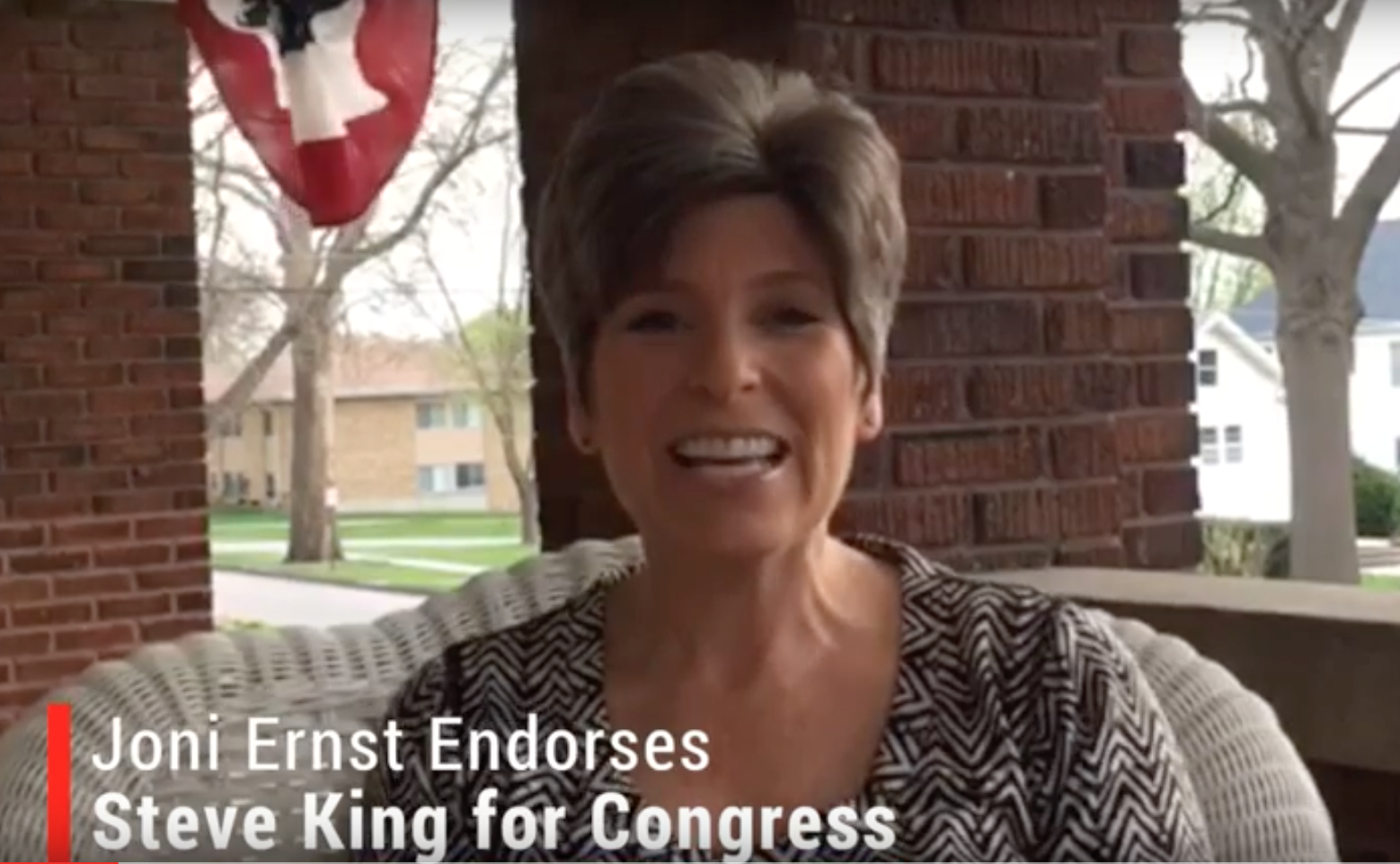
Today U.S. Senator Joni Ernst became the third Iowa Republican heavyweight to endorse Representative Steve King, who faces a primary challenge from State Senator Rick Bertrand in Iowa’s fourth Congressional district. Ernst didn’t just allow King’s campaign to announce her support in a statement, she also filmed a short video which I’ve enclosed below, along with a transcript.

Birds can be heard singing in the background as Ernst praises King for supporting life, liberty, the military, four-laning U.S. Highway 20, and the fuel blender tax credit. The sound you can’t hear is the door slamming on Bertrand’s already slim chance to win this primary.

Ernst served with Bertrand in the Iowa Senate GOP caucus from 2011 through 2014, so has observed his political work more closely than most Republicans. She could have stayed neutral, though seven-term incumbent King was heavily favored to win the IA-04 primary even before Iowa Secretary of Agriculture Bill Northey and U.S. Senator Chuck Grassley publicly backed him.

As with Grassley’s endorsement, I wonder whether Ernst wanted to dish out some payback to Nick Ryan, the dark money operative who was recruiting a primary challenger in IA-04 and endorsed Bertrand immediately after the state senator made his campaign official.

Ryan worked for Mark Jacobs during his race against Ernst and others in the 2014 GOP primary for U.S. Senate. (Bruce Rastetter, a frequent ally of Ryan and major ethanol industry figure who is also supporting Bertrand against King, backed Ernst early in that race.)

Bertrand has been promoting himself as someone who will deliver for IA-04 in Congress, rather than trying to be a “national figure.” Last week, he asserted in an interview with the Des Moines Register’s William Petroski that there is widespread “discontentment” with King, who “has gone Washington.” Echoing that talking point, Ryan told Petroski, “I believe we can do better. I want a conservative congressman that cares more about getting things done for his district than booking an appearance on Fox or MSNBC.”

Ryan can raise a lot of money to spend on campaigns, but his track record in Iowa GOP contests is mixed. Unsuccessful candidates who benefited from spending controlled by Ryan include: Jim Gibbons in the 2010 primary for Iowa’s third Congressional district, Annette Sweeney in the 2012 primary for Iowa House district 50, Jacobs in the 2014 Senate primary, Matt Schultz in the 2014 primary for IA-03, and Mike Huckabee before the latest Iowa caucuses.

P.S.-Asked this morning whether he wants “to see King defeated” in June, Governor Terry Branstad replied, “It’s up to the voters to decide in each of these instances and I’ve always had confidence in the voters of Iowa to make a good decision and I will obviously support the Republican nominees,” O.Kay Henderson reported for Radio Iowa. Branstad made headlines by calling for Ted Cruz’s defeat less than two weeks before the Iowa caucuses. King was Cruz’s leading surrogate in Iowa after endorsing the Texas senator for president in November.

Continue Reading...

Iowa Democrats trying to add autism insurance coverage to budget bill

Earlier this month, Claire Celsi informed Bleeding Heartland readers about the demise of an autism insurance bill after State Representative Peter Cownie refused to bring the measure up for a vote in the Iowa House Commerce Committee, which he chairs.

As both Autism Awareness Month and the 2016 legislative session wind down, Democrats in the Iowa House and Senate have been working to add the same requirements to a must-pass budget bill. Follow me after the jump for background and where things stand in this fight.

Continue Reading...

Weekend open thread: Exposing abuse edition

What’s on your mind this weekend, Bleeding Heartland readers? This is an open thread: all topics welcome.

The Pulitzer Prizes announced this week recognized some powerful reporting on the misuse of power. The Associated Press won the public service award for “an investigation of severe labor abuses tied to the supply of seafood to American supermarkets and restaurants, reporting that freed 2,000 slaves, brought perpetrators to justice and inspired reforms.” Margie Mason, Robin McDowell, Martha Mendoza, and Esther Htusan contributed to this incredible investigative work; the whole series is available here.

The Washington Post won the Pulitzer’s national reporting category for its “revelatory initiative in creating and using a national database to illustrate how often and why the police shoot to kill and who the victims are most likely to be.” The database is available here; reporters who contributed to this work include Kimberly Kindy, Wesley Lowery, Keith L. Alexander, Kimbriell Kelly, Sandhya Somashekhar, Julie Tate, Amy Brittain, Marc Fisher, Scott Higham, Derek Hawkins, and Jennifer Jenkins. In one of the articles for this series, Kindy and Tate explored the common practice of police departments withholding video footage of fatal shootings, using the January 2015 death of Autumn Steele in Burlington, Iowa as the touchpoint.

The Pulitzer for explanatory reporting went to T. Christian Miller of ProPublica and Ken Armstrong of The Marshall Project “for a startling examination and exposĂ© of law enforcement’s enduring failures to investigate reports of rape properly and to comprehend the traumatic effects on its victims.” An Unbelievable Story of Rape was a stunning and depressing piece.

Speaking of stunning and depressing, previously unreported abuses of teenagers at the now-closed Midwest Academy boarding school came to light earlier this year. Several former students spoke to Ryan Foley of the Associated Press about being kept in isolation boxes for days or weeks at a time. (Isolation is particularly harmful to developing adolescent brains.) The Des Moines Register’s Lee Rood reported on approximately 80 law enforcement calls to the facility in Keokuk during the last three years the school was open. Abusive practices by staff went back more than a decade, though.

No state agency had ever inspected the Midwest Academy, prompting calls for the Iowa legislature to prevent future problems at unregulated schools. The Iowa Senate unanimously approved a bill setting out certification and inspection standards for boarding schools. House Republicans amended Senate File 2304 before approving it in the lower chamber, making “some exemptions for religious facilities.” The Senate refused to concur in the House amendment, and on a mostly party-line vote, the House rejected the Senate version. The school oversight bill now goes to a conference committee. I hope lawmakers will work out a deal before adjourning, but this legislation is not a must-pass bill like the health and human services budget (currently hung up over disagreements on Medicaid oversight and Planned Parenthood funding).

Alleged verbal abuse by Iowa State University women’s basketball coach Bill Fennelly was among the actions that inspired a discrimination lawsuit by former star player Nikki Moody. The AP’s Luke Meredith and Ryan Foley broke news about that lawsuit on April 18. After the jump I’ve enclosed excerpts from their report and some reaction, but I highly recommend reading the plaintiff’s jaw-dropping twelve-page court filing. Looking through some Cyclone fan board threads about the lawsuit, I was struck by two contradictory lines of argument from the coach’s defenders: Moody is lying, because this or that former player says Fen was always supportive and would never behave that way; or alternatively, Moody is lying, because Fen is tough on all his players, not just the black ones. Cheyenne Shepherd, an unheralded player for ISU during the 1990s, provided strong support for Moody in a guest column for the Des Moines Register about her experience as one of Fennelly’s “non-favorites.” Retired ISU journalism professor Dick Haws discussed the “not-very-well-hidden secret” of how Fennelly berates and humiliates some of his players. Gavin Aronsen asked at Iowa Informer whether the lawsuit is “A Symptom of Broader Diversity Problems at ISU.”

Since Thursday, I’ve been reading reflections on the life and work of Prince. I remembered his exceptional creativity, charisma, and talent as a songwriter (for many other artists as well as for himself), but I didn’t realize how highly regarded he was as a guitarist. His solo during this performance of “While My Guitar Gently Weeps” was mesmerizing. Billy Gibbons of ZZ Top described Prince’s “sensational” guitar playing in an interview with the Washington Post: “Even today, I’m struggling to try and emulate that guitar introduction to ‘When Doves Cry.’ It’s just a testament to his extraordinary technique.” The whole “Purple Rain” album brings back strong high school memories for me, especially “When Doves Cry.” Prince’s biggest fan in the Iowa blogosphere was John Deeth, easily recognized at political events by his raspberry beret. Deeth reflected on what the music meant to him here.

Continue Reading...

IA-Sen: DSCC makes the obvious official, Judge doesn't talk about it

The Democratic Senatorial Campaign Committee recruited former Lieutenant Governor Patty Judge to run against Senator Chuck Grassley, praised her as a “formidable challenger” the day she launched her campaign, and invited her to lunch with Democratic senators in Washington a few days later. So it was no surprise when the DSCC made its support for Judge official on April 20.

Judge’s campaign has touted endorsements from influential Iowa Democrats but didn’t spread the word about the DSCC’s announcement this week–probably because backing from Washington insiders feeds into talking points Republicans and Democratic rivals have already been using.

Continue Reading...

Stage set for another battle over Planned Parenthood funding in Iowa

Only days ago, some Iowa legislative sources indicated lawmakers were on track to adjourn by the end of this week. That never seemed likely, with the health and human services budget not yet approved by either chamber. Disagreements over abortion-related language in that bill have been one of the last sticking points between Iowa House Republicans and Senate Democrats in recent legislative sessions. The pattern is set to continue this year.

Continue Reading...

Iowa wildflower Wednesday: Striped cream violet (striped white violet)

Aside from dandelions, violets are probably the wildflowers most likely to turn up in Iowa yards, whether you live in the city, suburb, or countryside. Common blue violet (Viola sororia) is prevalent and blooming in large numbers now. I see quite a few Downy yellow violets (Viola pubescens) near wooded areas of Windsor Heights. Today’s featured plant is native to Iowa and most states to our east, but according to John Pearson of the Iowa Department of Natural Resources, it is relatively rare in our state.

I enclose below more pictures of Striped cream violet (Viola striata) in the company of other spring wildflowers.

This post is also a mid-week open thread: all topics welcome.

Continue Reading...

Why is Iowa's secretary of state playing politics with felon voting case?

Iowa Secretary of State Paul Pate is a defendant in Kelli Jo Griffin’s lawsuit claiming Iowa violates her constitutional rights by disenfranchising all felons. The Iowa Supreme Court heard oral arguments in the case on March 30. Justices are expected to decide by the end of June whether to uphold the current system or declare that Iowa’s constitutional provision on “infamous crimes” should not apply to all felonies.

Defendants typically refrain from commenting on pending litigation, but during the past three weeks, Pate has carried out an extraordinary public effort to discredit the plaintiffs in the voting rights case. In his official capacity, he has addressed a large radio audience and authored an op-ed column run by many Iowa newspapers.

Pate amped up his attack on “the other side” in speeches at three of the four Iowa GOP district conventions on April 9. After misrepresenting the goals of Griffin’s allies and distorting how a ruling for the plaintiff could alter Iowa’s electorate, the secretary of state asked hundreds of Republican activists for their help in fighting against those consequences.

At a minimum, the secretary of state has used this lawsuit to boost his own standing. Even worse, his words could be aimed at intimidating the “unelected judges” who have yet to rule on the case. Regardless of Pate’s motives, his efforts to politicize a pending Supreme Court decision are disturbing.

Continue Reading...

New York primary discussion thread

New York voters delivered the expected results today: a huge victory for Donald Trump and a solid showing for Hillary Clinton. Trump is winning by a large enough margin in all regions of New York to take the overwhelming share of delegates. He’s set to sweep every county in the state except for his home turf of Manhattan, where John Kasich led the early returns. Ted Cruz had to settle for third behind Kasich statewide. Over the past month he has whittled Trump’s delegate lead down, but tonight’s results are a blow to his hopes for keeping Trump below the 1,237 delegates needed to clinch the Republican nomination.

Bernie Sanders carried quite a few upstate counties but Clinton crushed him in the five boroughs of New York City. She will add to her pledged delegate lead as well as her popular vote lead–which is symbolically important, even though delegates will determine the nominee. According to Tom Snee, Clinton rose to 90 cents on the Iowa politics prediction market after today’s primary; Sanders fell to 7 cents.

Several factors were working against Sanders today, besides the fact that Clinton represented this state in the U.S. Senate. As a group, New York Democrats are less white than Democrats in the states Sanders has been winning. Also, New York has a “closed” primary, meaning that independents were not able to change their registration. In several states, including Michigan, independent voters provided Sanders’ margin of victory. I prefer open primaries, though there is a case for allowing voters with a stake in a political party decide that party’s nominee.

What’s indefensible: New York has neither early voting nor same-day voter registration. Same-day registration alone is estimated to increase turnout by about 10 percent. Early voting would also boost participation in a state that has had some of the lowest turnout rates in the country in recent elections. New York Controller Scott Stringer offered other recommendations for making voting more accessible.

Excerpts from the Trump and Clinton victory speeches are after the jump. Any comments about the presidential race are welcome in this thread.

Continue Reading...

One Iowa House Republican's strange and lonely battle against marriage equality

Seven years have passed since the Iowa Supreme Court struck down our state’s Defense of Marriage Act. The Republican-controlled Iowa House failed to approve a constitutional amendment to overturn that court ruling more than three years ago. Fewer than a quarter of GOP state representatives were willing to co-sponsor the marriage amendment in 2015. Even if Iowa lawmakers tried to turn back the clock on marriage equality, the effort would be futile, since the U.S. Supreme Court ruled last year that all states must recognize marriages between same-sex couples.

Nevertheless, one Iowa House Republican won’t let this fight go. Today he seized on an unusual and futile way to register his discontent with the Iowa Supreme Court’s Varnum v Brien decision.

Continue Reading...

Iowa Congressional 1Q 2016 fundraising news roundup

You’d never guess Representative Steve King was facing a primary challenger backed by Iowans with deep pockets by looking at Federal Election Commission filings alone. King isn’t raising money like an incumbent who’s worried about getting re-elected, and his Republican opponent Rick Bertrand didn’t disclose any fundraising or spending.

Follow me after the jump for highlights from all the first quarter FEC reports from Iowa’s U.S. House candidates. One Democrat out-raised all four of our state’s incumbents, and another Democrat nearly did so.

Continue Reading...

Weekend open thread: "The resources we have" edition

What’s on your mind this weekend, Bleeding Heartland readers? This is an open thread: all topics welcome. The Des Moines Register ran an extraordinary lead editorial on Saturday about a Des Moines police officer’s “pattern of misconduct” and “poor judgment.” Click through to read the most strongly-worded warning about a law enforcement official I’ve seen in an Iowa newspaper.

An emerging compromise on higher education funding was one of the biggest state-level news stories of the week. The Iowa legislature’s joint Education Appropriations Subcommittee, co-chaired by Democratic State Senator Brian Schoenjahn and Republican State Representative Cecil Dolecheck, agreed on April 13 that the fiscal year 2017 budget for higher education will include an additional $6.3 million for public universities: $2.8 million for the University of Northern Iowa, $2.2 million for Iowa State University, and $1.3 million for the University of Iowa. Iowa Public Radio’s Joyce Russell noted that the increases work out to a little less than 3 percent more state funding for UNI, 1.2 percent for ISU, and less than 1 percent for UI.

The Iowa Board of Regents had requested an extra $20 million in state funding for the coming fiscal year: $4.5 million for UI, $8.2 million for ISU, and $7.65 million for UNI. Governor Terry Branstad’s draft budget had included a combined $8 million in additional state funding for the public universities. Last month, Board of Regents President Bruce Rastetter said at least $8 million would be needed to avoid raising tuition. In a statement released April 14, Rastetter said the board would “immediately start discussions regarding tuition increases at our universities for Fall 2016.”

More background and details on the higher education funding compromise are after the jump, but I want to highlight a couple of misconceptions. Russell quoted Dolecheck as saying “we did the best we can with the resources that we have,” and quoted Schoenjahn as saying lawmakers tried to stretch “the precious resources we had” but couldn’t do more without raising taxes.

No. Just last month, the Iowa House and Senate approved a tax bill that will reduce fiscal year 2017 revenues by nearly $120 million: $97.6 million by harmonizing Iowa tax code with federal statutes, and around $21 million by reducing state sales taxes for manufacturing companies. Another $280 million was taken off the table long before this year’s budget negotiations began, when most lawmakers in both chambers approved an expensive commercial property tax cut in 2013. Leaders of both parties bragged about that tax cut at the time but did not acknowledge how the windfall for commercial property owners would affect the state’s ability to pay for other priorities down the road.

Speaking on behalf of the union that represents UNI faculty, Professor Joe Gorton said this week, “It seems clear to me that the regent universities are being sacrificed on the altar of corporate welfare.” An Iowa Fiscal Partnership analysis from January shows Gorton was closer to the truth than were Schoenjahn or Dolecheck. Business tax credits are expected to cost the state around $272 million during fiscal year 2017.

Writing at Blog for Iowa this weekend, Dave Bradley argued, “Had Branstad’s administration not given tax cuts to businesses without consulting the legislature we would probably [be] OK. […] while the special interests that the Republicans have given breaks to are no longer paying what they once did, Iowa’s parents will see higher tuition fees on their kids university bills.” Fact-check: mostly false. Over many years, the legislature approved and failed to revise Iowa’s generous business tax breaks. Most Democrats in both chamber joined their GOP colleagues to pass the costly property tax cut three years ago. Just six state senators and thirteen representatives voted no; I’ve listed them after the jump. The Branstad administration did try to enact the manufacturing sales tax break without legislative approval last year, and was on track to succeed. However, the tax bill lawmakers negotiated and approved last month included a scaled-back sales tax break, superseding the Department of Revenue’s proposed administrative rule.

Speaking of money for state universities not living up to expectations, Ryan Foley of the Associated Press revealed on April 15 that Rastetter has paid only $1.5 million toward his 2008 pledge of $5 million to the University of Iowa’s football program. Before 2015, Rastetter had donated just $500,000 toward that pledge, raising “questions about whether the delay was part of the pressure he put on former university President Sally Mason.” Excerpts from Foley’s article are at the end of this post.

Continue Reading...

Landowners challenge use of eminent domain for Bakken pipeline

Pipes intended for use in the Dakota Access pipeline being stored in Jasper County, Iowa during 2015. Photo provided by Wallace Taylor, used with permission.

The Iowa Utilities Board issued a permit for the Dakota Access (Bakken) pipeline on April 8, after declaring that Dakota Access LLC “has substantially complied with the requirements” of the board’s March 10 order. The same day, a group of agricultural landowners filed a lawsuit challenging the board’s use of eminent domain for the pipeline, intended to carry oil roughly 400 miles across eighteen counties from northwest to southeast Iowa. Litigation grounded in environmental concerns about the pipeline is expected later this year.

Follow me after the jump for more details on the land use lawsuit and ongoing efforts to block the pipeline at the federal level.

Continue Reading...

Iowa wildflower Wednesday: Pasque flower

Pasque flowers (Anemone patens) are native to much of North America and derive their common name from the French word for Easter, because they are often blooming around the time of that holiday. I’ve never seen today’s featured wildflower, also known as Eastern Pasque Flower, Prairie Crocus, or Cutleaf Anemone. Fortunately, Iowa naturalist and photographer Eileen Miller found a patch of them a couple of weeks ago at Brushy Creek State Recreation Area in Webster County. She agreed to share some of her pictures and her description of the plant here.

This post is also a mid-week open thread: all topics welcome.

Continue Reading...

The Des Moines Register is looking for a new chief politics reporter

The Des Moines Register announced in late March that Jennifer Jacobs was leaving the newspaper after twelve years, the last five as chief politics reporter. A national search is under way for her successor, who will handle “top-level political reporting, including breaking news, Iowa Poll results, analysis of the Iowa political scene and how it relates to the national conversation.”

As a heavy consumer of Iowa political journalism, I look forward to seeing someone new take on this important job. I wish Jacobs all the best covering the presidential campaign for Bloomberg News, but it’s no secret I wasn’t a fan of how she approached her beat, sometimes seeming to favor certain candidates, recycling comments reported by others as clickbait, and even occasionally allowing newsmakers to review a full story draft before publication.

While campaigns and elections will remain the primary focus for the Register’s chief politics reporter, I hope Jacobs’ successor will also dig in to the work of Iowa’s elected officials at the state and federal level. Though the Register’s editors seem to like the “8 things to watch for” genre, my preference would be for less speculation about what might happen and more scoops on what politicians have done or said, especially actions that were never intended to reach a wide audience (as opposed to news leaked with the goal of maximizing exposure in Iowa’s leading newspaper).

I enclose below excerpts from the job listing Gannett posted on April 11. Another must-read for any journalist thinking about applying: the memo Gannett circulated in early 2015 on “Minimal job requirements of a self-directed reporter” at the Des Moines Register.

Continue Reading...

Paul Ryan says he won't accept GOP nomination. Is he for real?

image from House Speaker Paul Ryan’s video, “Politics These Days”

A few minutes ago, U.S. House Speaker Paul Ryan told reporters, “Let me be clear: I do not want, nor will I accept the Republican nomination.” According to Amber Phillips of the Washington Post, today’s announcement was the nineteenth time Ryan or someone speaking on his behalf has ruled out running for president in 2016. Yet many Republicans hope that neither Donald Trump nor Ted Cruz will win the 1,237 votes needed to secure the presidential nomination at the GOP national convention in Cleveland, allowing delegates to turn to Ryan as a unifying figure on the third or fourth ballot. That scenario may be the least-bad among a number of unappealing possibilities facing Republicans, as the party’s front-runner has historically high unfavorable ratings.

Ryan said today that delegates should “Count me out” if there is a brokered convention: “I simply believe that if you want to be the nominee for our party – to be the president – you should actually run for it. I chose not to do this. Therefore, I should not be considered. Period. End of story.”

Meanwhile, the House speaker is running a “parallel policy campaign,” which he calls #ConfidentAmerica. This campaign could be designed to insulate GOP House candidates from a landslide loss at the top of the ticket. But to me and many other observers, the #ConfidentAmerica materials resemble presidential candidate tv ads. I’ve enclosed one video after the jump, so you can judge for yourself.

Any speculation about what might happen in a GOP brokered convention is welcome in this thread. Whether Trump can lock down the nomination on June 7 depends on several factors Bleeding Heartland user fladem discussed here, and on whether Cruz continues to outperform late polling in the remaining primaries.

Governor Terry Branstad has so far refused to say how he would vote on a second or subsequent ballot, if he becomes a delegate to the RNC. Senator Joni Ernst has suggested that “it would be hard to get buy-in” for nominating someone who did not run for president this year.

UPDATE: NPR’s Susan Davis observed, “Paul Ryan raised $17.2m in Q1. He’s raised $23.5m since becoming speaker in Oct. This probably means he’s running for president.” Yes, it probably does.

Continue Reading...

IA-01: Monica Vernon first to go up on tv

image from Monica Vernon’s debut television commercial

Today Cedar Rapids City Council member Monica Vernon launched the first television commercial of this year’s campaign in Iowa’s first Congressional district. I enclose below the video and transcript from “The Schumachers,” which features three generations of a Iowa family that owns the Cobble Hill restaurant in Cedar Rapids.

Vernon faces former Iowa House Speaker Pat Murphy in the June 7 Democratic primary. Compared to the introductory spot for Vernon, Murphy’s four television commercials before the 2014 primary focused more on his own biography and political record. Those ads are still available on YouTube: “Story” (which began running the second week of April 2014), “Joint Effort” (starting in late April), “Voice” (starting in mid-May), and “Right Choice” (starting in late May).

Murphy’s budget for television commercials is likely to be more limited for this year’s race, judging by his year-end financial report. We’ll know more once Congressional candidates have disclosed their fundraising and expenditures for the first quarter of 2016. Those reports are due on April 15; Bleeding Heartland will cover them shortly thereafter.

UPDATE: Added below the Murphy campaign’s statement on this ad, which touched on his main argument against Vernon’s candidacy: she was a registered Republican until 2009.

Continue Reading...

IA-03: Mike Sherzan promises to be "a voice for hardworking families"

The first direct mail piece on behalf of a Democratic candidate in Iowa’s third Congressional district hit our mailbox yesterday. Mike Sherzan’s mailer incorporated several messages tested in an internal poll a few weeks ago, regarding Sherzan’s working-class family background, respect for hard work, and fair treatment of employees, including “equal pay and equal opportunity” for women. Follow me after the jump for photos and the text.

The Des Moines Register’s Brianne Pfannenstiel reported on Sherzan’s recent tour of the district. Register political columnist Kathie Obradovich recently profiled the other two Democratic candidates, Jim Mowrer and Desmund Adams.

Any comments about the IA-03 race are welcome in this thread. The winner of the June 7 primary will take on first-term Representative David Young in a district with an even partisan voting index. The latest figures from the Iowa Secretary of State’s office indicate that the sixteen counties in central and southwest Iowa contain 158,291 active registered Democrats, 170,361 Republicans, and 152,430 no-party voters.

Continue Reading...

IA-Sen: Judge playing down, Hogg playing up differences on water quality

Photo of Iowa stream courtesy of InIowaWater.org, a project of the Environmental Law & Policy Center

By entering the U.S. Senate race, former Lieutenant Governor Patty Judge ensured that environmental issues would become salient for many Iowa Democrats trying to choose among the four candidates running against Senator Chuck Grassley.

During the past two weeks, Judge has sought to minimize the daylight between herself and State Senator Rob Hogg on the need to address water pollution. But Hogg, widely considered Judge’s leading rival for the nomination, has made environmental concerns a big part of his pitch to Democrats.

Continue Reading...

Weekend open thread: Ted Cruz delegate domination edition

What’s on your mind this weekend, Bleeding Heartland readers? This is an open thread: all topics welcome.

Newly-disclosed details about the sex abuse charges filed against former U.S. House Speaker Dennis Hastert caught my attention. As Talking Points Memo’s Josh Marshall explained here, “Without the unending hunt into Bill Clinton’s sex life, you never would have heard of Denny Hastert. It also seems highly unlikely he ever would have had to answer, even in this limited way, for his own past.” While the Monica Lewinsky scandal unfolded, I was covering Russian politics and had many Russian colleagues. They were astounded by the Republican effort to remove Clinton from office. I remember some joking, if only our president (the rarely-seen-in-public Boris Yeltsin) were healthy enough to have an affair.

The big Iowa politics news of the weekend came out of the GOP district conventions on Saturday. Repeating a storyline that has played out elsewhere, Ted Cruz’s campaign destroyed the competition with superior organizing in every part of the state. Cruz didn’t entirely shut out other candidates here the way he did in Colorado, but his supporters took eleven of the twelve Republican National Convention delegate slots. Although Donald Trump has belatedly started to build a serious RNC delegate strategy, his campaign’s efforts leading up to this weekend in Iowa were remarkably incompetent. Cruz’s team have been preparing for a prolonged delegate battle since last summer and have executed the strategy well lately.

Trump still hits the magic number of 1,237 delegates (an overall majority) in most of the scenarios guest author fladem played out this week (most recently updated here). Sam Wang showed at the Princeton Election Consortium that current polling still indicates Trump could clinch the nomination on June 7–though Cruz has been over performing his poll numbers lately, which increases the chance of a brokered convention. The Cruz sweep of Colorado delegates and near-sweep of Iowa’s GOP district conventions are a reminder that the first ballot at the RNC in Cleveland may be Trump’s only chance for the nomination.

More links and commentary about the district conventions are after the jump.

Continue Reading...

IA-04, IA-Gov?: Bill Northey endorses Steve King for Congress

The Republican National Convention delegate elections grabbed most of the attention from today’s Iowa GOP district conventions, but Secretary of Agriculture Bill Northey made some news at the fourth district gathering in Fort Dodge. Kathie Obradovich reported for the Des Moines Register,

“When I think of somebody I want in the room talking with conservative congressmen and senators, a potential president, on ethanol issues, I want Steve King,” [Northey] said.

King, in turn, suggested a promotion for Northey — but not to governor, a job for which he is often mentioned as a potential candidate. He noted there will be a new U.S. Agriculture secretary next year. “We’ll no longer have Secretary (Tom) Vilsack. I think maybe Secretary Northey sounds pretty good to me.”

King touted the quadrupling of ag land values during the first 12 years he was in Congress. “We should not forget, those are the best 12 years that agriculture has ever had in the history of this state during that period of time,” he said.

You don’t have to be an economist to know the rise in Iowa farmland values since 2003 has very little connection to who represented our state in Congress. But let’s leave that aside for now. Northey and King have long had a friendly political relationship. The ag secretary cut a radio ad King aired near the end of his toughest re-election campaign, the 2012 race against Christie Vilsack in a substantially redrawn district. Click through to read the transcript of that commercial, in which Northey touted King’s record on agriculture issues and support from farm groups. I would not be surprised to see a similar testimonial hit the airwaves before King’s June 7 primary against State Senator Rick Bertrand. People linked to the ethanol industry are among Bertrand’s heavy-hitter supporters, largely because King endorsed Senator Ted Cruz for president, despite Cruz’s stand on the Renewable Fuel Standard.

Speaking of the presidential race, King discussed possible brokered convention scenarios on this weekend’s edition of Iowa Public Television’s “Iowa Press” program. He predicted that “neither Trump nor Cruz delegates are going to tolerate anyone coming in from the outside that hasn’t been a candidate,” such as U.S. House Speaker Paul Ryan. The full video and transcript are here; I’ve enclosed relevant excerpts below.

Northey is widely considered likely to run for governor in 2018 rather than for a fourth term as secretary of agriculture. King’s support could be helpful in a primary that will almost certainly include at least two other candidates: Lieutenant Governor Kim Reynolds and Cedar Rapids Mayor Ron Corbett. Neither has a strong base in rural Iowa, although Corbett has tried to bolster his credentials with the farm community by touting all-voluntary efforts to reduce agricultural runoff and bashing some efforts to regulate farm-based pollution.

Any relevant comments are welcome in this thread.

Continue Reading...

IA-01: Blum releases internal poll showing him ahead of Vernon, Murphy

First-term Representative Rod Blum, one of the top Democratic targets in this year’s U.S. House races, released partial results from an internal poll showing him with 12-point leads over either Pat Murphy or Monica Vernon, his two challengers in the first Congressional district. I enclose below the campaign’s statement, which says Blum leads Murphy by 45 percent to 33 percent and Vernon by 43 percent to 31 percent among 500 “likely voters” in IA-01. In the same survey, 43 percent of respondents said they approved of Blum’s work, while 27 percent disapproved.

It’s not clear what likely voter screen the polling co, inc used for this survey. Blum’s campaign has not responded to my request for further information, including the gender and partisan breakdown of the sample, the question wording, and what questions were asked before the ballot tests. Also unknown: whether this poll was in the field before or after Blum made headlines for wishing a recession on Washington, DC.

Former Iowa House Speaker Murphy was Blum’s general election opponent in 2014, and Cedar Rapids City Council member Vernon was the runner-up in that year’s five-way Democratic primary. Murphy takes higher name recognition into this year’s race, while Vernon has raised more funds and has more support among the establishment in Iowa and Washington, DC. This week, her campaign rolled out endorsements from State Senator Jeff Danielson and the Congressional Progressive Caucus, which includes 75 House Democrats. Vernon’s campaign also announced that it brought in more than $335,000 during the first quarter of 2016 and had $774,000 cash on hand as of March 31. Bleeding Heartland will follow up on Iowa Congressional fundraising after the April 15 deadline for candidates to file reports with the Federal Election Commission; year-end numbers are here.

The 20 counties in IA-01 contain 160,106 active registered Democrats, 139,973 Republicans, and 181,173 no-party voters, according to the latest figures from the Iowa Secretary of State’s office.

Continue Reading...

Grassley digs in on Supreme Court vacancy, denounces "pressure" campaign

Senator Chuck Grassley faced more critics than usual at his home-state public events during a two-week Congressional recess, and major Iowa newspapers continue to weigh in against the Senate Judiciary Committee chair’s determination not to give Judge Merrick Garland any confirmation hearings.

But in a 20-minute speech on the Senate floor yesterday, Grassley defended the Republicans’ determination to let the “American people weigh in on this important matter,” adding that “I am no stranger to political pressure and to strong-arm tactics.” The same day, Grassley told Senate Judiciary Committee colleagues he came away from his meetings in Iowa “feeling positive about the position we had taken,” saying “the recess reinforced my thinking” about the Supreme Court vacancy.

Meanwhile, earlier this week Iowa’s senior senator took the extraordinary step of attacking Supreme Court Chief Justice John Roberts. One legal commentator called that speech “close to breathtaking in its intemperate incoherence.”

Continue Reading...

Throwback Thursday: When state lawmakers chose not to change "infamous crime" to "felony" in the Iowa Constitution

A 2008 amendment to the Iowa Constitution became a matter of debate in Griffin v Pate, the major voting rights case before the Iowa Supreme Court. The amendment changed Article II, Section 5, which as adopted in 1857 read, “No idiot, or insane person, or person convicted of any infamous crime, shall be entitled to the privilege of an elector.” The same section now reads, “A person adjudged mentally incompetent to vote or a person convicted of any infamous crime shall not be entitled to the privilege of an elector.”

Two of the seven Supreme Court justices have previously held that when approving the 2008 constitutional amendment, the legislature “ratified its own existing interpretation of that provision under which infamous crime meant a felony.” In its brief for the Iowa Supreme Court on behalf of defendants in Griffin, the Iowa Attorney General’s Office carried forward that claim: “By failing to alter the Infamous Crime Clause when other portions of Article II, section 5 were amended, the Legislature and the public ratified the definition of infamous crime as all felonies under state and federal law.” During the March 30 Supreme Court hearing on Griffin v. Pate, Solicitor General Jeffrey Thompson likewise argued “the simple answer here” is the 2008 constitutional amendment was “passed twice by the General Assembly, adopted by the people of Iowa, in the context of a legal system and historical cases and practices that said felonies are the line.”

My curiosity piqued, I decided to look into the legislative intent behind the 2008 constitutional amendment. What I found does not support the view that Iowa lawmakers envisioned “infamous crime” as synonymous with “felony” or intended to ratify such an interpretation when voting to remove offensive language from the state constitution.

Continue Reading...

Iowa wildflower Wednesday: Early spring mix

First spring beauty of 2016

As bloodroot blossoms fade, an explosion of early spring wildflowers begins. Almost every day lately, I have noticed new wildflowers in Windsor Heights. Instead of focusing on one native plant today, I’ve enclosed below pictures of flowers you are likely to see in wooded areas this coming week, as well as a “preview of coming attractions”: stems and leaves of plants that will flower within the next month or two.

This post is also a mid-week open thread: all topics welcome.

Continue Reading...

Unpacking Joni Ernst's mixed messages about Donald Trump

Senator Joni Ernst has consistently pledged to support the Republican presidential nominee, whether that person is Donald Trump or someone else. She told Erin Murphy last week that she hopes the eventual nominee will headline her biggest campaign event of the year, the second annual “Roast and Ride” this August.

But in an apparent rebuke to the GOP front-runnner, Ernst made a splash a few days ago by saying women should not put up with Trump’s “nonsense,” and that she is “disappointed” by the “name calling and finger-pointing” dominating the Republican race for the presidency.

Looking more closely at what Ernst told WHO-TV’s Dave Price, I have trouble finding any coherence to her views on Trump.

Continue Reading...

Wisconsin primary links and discussion thread

Polls just closed in Wisconsin, but thousands of people are still waiting in long lines to vote. Why does this country tolerate the failure to open enough polling places in so many states? High turnout for both the Democratic and Republican primaries should have been anticipated, especially since Wisconsin has an “open” primary, where independents can change party registration on election day.

Voters had to show photo ID to cast ballots today. A federal lawsuit challenging Wisconsin’s new law is pending.

I’ll update this post periodically with results from tonight. Here are a few links to get the conversation started.

Bernie Sanders is expected to win today’s primary, but he is unlikely to net significantly more delegates than Hillary Clinton will. Craig Gilbert of the Milwaukee Journal-Sentinel explains why.

Clinton and Sanders will debate next in New York ahead of that state’s primary. The New York Daily News transcript of Sanders’ recent interview with the editorial board has been a frequent topic of conversation on social media. Conventional wisdom (embodied as it is so often by Chris Cillizza of the Washington Post) holds that it “was pretty close to a disaster.” I doubt many voters will turn away from Sanders because of it.

Eric Ostermeier of Smart Politics challenged the idea that this year’s Democratic presidential contest is less competitive than Hillary Clinton’s race against Barack Obama in 2008 (emphasis in original):

Clinton has won 18 state primaries and caucuses with 14 states going for Sanders; back in 2008, Obama had won 21 of these state primaries and caucuses with just 11 in Clinton’s column. […]

Five states have already had victory margins inside of two percentage points: Missouri (0.2 points), Iowa (0.2), Massachusetts (1.4), Michigan (1.5), and Illinois (1.8). Unfortunately for Sanders he lost four of these with the only late-night close race call in his favor coming in Michigan.

By contrast, just one of the 32 states to vote thus far in 2016 had a victory margin under two points in 2008 – Missouri (1.4 points).

Overall, contests in 15 states have been more closely decided than they were in 2008 with 17 states having a larger margin of victory.

Sanders has cut into Clinton’s pledged delegate lead since March 15 but still faces long odds of catching Clinton in the delegate race. Patrick Healy and Yamiche Alcindor wrote an interesting piece for the New York Times on some strategic errors by Sanders early on, which may end up costing him the nomination.

Donald Trump had arguably the worst week of his campaign last week. The fact that he could not win a general election is starting to sink in with Republican voters. He’s let go some of his campaign staff (though not the one accused of assaulting a reporter). Ted Cruz has been rising in Wisconsin’s polls, as Trump’s prospects for winning an overall majority of pledged delegates before the Republican National Convention appear to be falling. However, Trump still has a commanding lead in his home state of New York, the next to vote, and other big northeastern states don’t look like promising territory for Cruz.

UPDATE: NBC called Wisconsin for Sanders and Cruz before 8:30 pm. All further updates are after the jump.

Continue Reading...

Weekend open thread: Threats to public health edition

What’s on your mind this weekend, Bleeding Heartland readers? This is an open thread: all topics welcome.

On April 1, three months later than originally planned, Iowa officially switched to a managed-care model for the Medicaid program. Erin Murphy explained here how privatization will affect almost all of our state’s roughly 560,000 Medicaid recipients.

Many Iowans on Medicaid are learning that their current health care providers are now out of network, a particular concern for those who have special medical needs. The Mayo Clinic in Rochester, Minnesota has not signed contracts with any of the three insurance companies selected to be managed-care providers in Iowa. KCRG’s Katie Wiedemannn reported on March 31 about a 9-year-old cancer patient whose scheduled treatment at Mayo has been delayed because of the new policy. I am aware of other families whose children on Medicaid have relied on out-of-state medical specialists to treat their children’s rare genetic or chronic conditions.

Iowa House Republican leaders have refused to act on an extensive Medicaid oversight bill that cleared the Senate with bipartisan support. However, they promise to unveil their own Medicaid oversight proposal soon. Senate Democrats will seek to add many oversight provisions to the human services budget, which is often one of the last bills to be resolved before lawmakers adjourn for the year.

One major red flag: Iowa hired only “two ombudsmen to investigate and work as advocates for the 560,000 poor or disabled people” on Medicaid. As Jason Clayworth reported for the Des Moines Register in January, a working group that studied the issue recommended hiring 134 more ombudsmen at a possible cost of $17 million annually.

Rhonda Shouse has been among the most vocal opponents of Medicaid privatization. She shared with Bleeding Heartland some resources for recipients who run into problems with their new managed-care providers. I enclose those below.

Some good public health news: state lawmakers recently approved a bill that would allow “First responders, emergency medical service providers, police, firefighters and licensed health care professionals” to maintain a supply of the drug Naloxone (also known as Narcan). The medication can prevent death after an overdose of heroin or prescription opioid pain-killers, both of which have become more prevalent in Iowa, as in many other states. Senate File 2218 passed the upper chamber the Senate unanimously and cleared the House by 93 votes to 2 (the dissenters were Republicans Stan Gustafson and Mike Sexton). Several groups representing law enforcement or medical professionals lobbied for this bill. At this writing, Governor Terry Branstad has not yet signed it.

UPDATE: Branstad signed the bill about the overdose drug on April 6.

Continue Reading...

Seven thoughts about the oral arguments in Iowa's major voting rights case

On March 30 the Iowa Supreme Court heard oral arguments in Griffin v. Pate, Iowa’s most important voting rights case in many years. The court had scheduled an hour for the hearing, twice as long as for most cases. Several of the attorneys went over the allotted time, as justices interrupted frequently with questions. You can watch the entire proceeding here, and it’s well worth an hour and eighteen minutes of your time. For summaries of the key points raised, read reports by Ryan Foley for the Associated Press or Grant Rodgers for the Des Moines Register. Radio Iowa’s Dar Danielson, Iowa Public Radio’s Sarah Boden, and Des Moines Register columnist Kathie Obradovich provided shorter takes.

I’m on record predicting at least four Iowa Supreme Court justices will determine that not all felonies rise to the level of “infamous crimes.” That outcome would allow Kelli Jo Griffin and thousands of other Iowans to vote after completing their prison sentences or terms of probation or parole.

After what I heard Wednesday and watching the hearing again on YouTube, my gut feeling hasn’t changed, though I wouldn’t be shocked to see the majority go the other way. Almost certainly the decision will not be unanimous. Any comments about the Griffin case or felon disenfranchisement generally are welcome in this thread. I enclose below some of my takeaways from the oral arguments.

Continue Reading...

Iowa to require inventory of untested rape kits

Yesterday Governor Terry Branstad signed a bill requiring a statewide inventory of untested rape kits. The Iowa Attorney General’s Office pushed for House File 2420, which passed the Iowa House and Senate unanimously with the support of various groups representing law enforcement, crime victims, and attorneys.

I enclose below background on the provisions, benefits and limitations of the bill State Public Defender Adam Gregg described as a “significant step toward justice in Iowa.”

Continue Reading...

Iowa wildflower Wednesday returns: Bloodroot

The fifth year of Bleeding Heartland’s Iowa wildflower Wednesday series kicks off with the native plant that got the ball rolling in 2012. Bloodroot (Sanguinaria canadensis) is native almost everywhere in North America east of the Rocky Mountains. Follow me after the jump for more pictures of one of the first spring wildflowers to bloom in Iowa woodlands.

This post is also a mid-week open thread: all topics welcome. I recommend the Iowa Wildflower Report and Raccoon River Watershed public Facebook groups for native plant lovers and nature photographers.

Continue Reading...

Democrats settle for quarter of a loaf on tax deal, crumbs on school funding

The more things change, the more they stay the same.

Leaders in the Democratic-controlled Iowa Senate agreed early in the 2015 legislative session to pass two major tax bills backed by top Iowa House Republicans. The moves left Democrats no leverage to obtain concessions from Republicans on state spending for vital services, especially education. After months of negotiations, the final deal struck after Memorial Day gave House Republicans what they wanted on global budget targets and acceded to their demand for “allowable growth” of only 1.25 percent for K-12 education budgets.

As a gesture toward compromise, Republicans agreed last year to a supplemental spending bill, which included one-time funding for K-12 school districts, community colleges, and state universities. But once lawmakers had adjourned, Governor Terry Branstad item-vetoed some $56 million for education from that bill. The governor pleaded fiscal responsibility in his veto message, though such concerns hadn’t stopped him from signing $99 million in tax cuts into law months earlier.

I had high hopes for a better outcome this year when I saw Senate Democrats balk at passing a $97.6 million “tax coupling” bill much like the one that sailed through the upper chamber in 2015.

But during the past two weeks, Democrats approved harmonizing the state and federal tax codes as part of compromise legislation that was not linked to education spending. Then they agreed to school funding levels very close to the House Republicans’ initial offer for fiscal year 2017, which begins on July 1 and runs through next June. Lower projected state revenues forced Democrats to accept insufficient allowable growth for K-12 school budgets, lawmakers told disappointed students and educators. As usual, budget constraints never seem to be a reason for the Iowa legislature to say no to constituencies seeking expensive tax breaks.

Continue Reading...

IA-01: Rod Blum distancing himself from Chuck Grassley on Supreme Court nominee? (updated)

First-term Representative Rod Blum received unflattering attention last week in Iowa and nationally for opining on social media that Washington, DC “needs a recession,” because various construction projects in the city are “Being built on the backs of US taxpayers.” Blum hasn’t backed down from those comments, despite intense criticism.

However, little-noticed remarks he made in his district over the weekend suggest that Blum wants to avoid political fallout from the ongoing controversy over the U.S. Supreme Court vacancy.

Continue Reading...

IA-03: Mowrer campaign says internal poll shows big lead in Democratic primary

An internal poll conducted for Jim Mowrer’s campaign indicates that the Iraq War veteran “holds a commanding advantage over both of his opponents” seeking the Democratic nomination in Iowa’s third Congressional district. Some 36 percent of respondents would support Mowrer if the primary were today, according to the limited information released to Bleeding Heartland. Desmund Adams registered 17 percent support and Mike Sherzan 13 percent. After respondents heard “balanced messages on Mowrer and Sherzan, along with a slightly shorter message from Adams (to account for campaign funding discrepancies), […] Mowrer wins 50 percent of the vote to Sherzan’s 20 percent and Adams’ 18 percent.” I enclose below the one-page polling memo from the firm GBA Strategies.

Mowrer’s campaign declined to provide further findings from this survey or details from the questionnaire. I was most interested in the wording of the “balanced messages,” but no dice. (Perhaps Iowans who received this polling call will contact me to fill in the blanks.) Campaign manager Andrew Mulvey said the messages contained neutral biographical background, not negative information akin to another survey on the IA-03 Democratic race that was also in the field last week. Bleeding Heartland posted positive and negative messages from that poll here. Both Mulvey and Mowrer told me that their campaign did not commission the other survey, which Bernett Research Services conducted.

As mentioned in the GBA Strategies memo, the internal poll for Mowrer gave respondents less information about Adams because of “campaign funding discrepancies.” Year-end financial reports indicate that unlike the other two contenders, Adams will not have the funds for district-wide paid media before the June 7 primary.

Adams has been holding events around IA-03 since declaring his candidacy last July. Sherzan launched his campaign in December and is touring all sixteen counties in IA-03 this week. Mowrer joined the race in August and has attracted the most support from Democratic insiders and from organized labor. On March 24, his campaign announced endorsements from former Iowa Democratic Party chairs Roxanne Conlin and Scott Brennan. The same day, Mowrer unveiled constituency outreach chairs for veterans, women, Latinos, LGBT voters, and youth/students.

Any comments about the IA-03 campaign are welcome in this thread. Bleeding Heartland welcomes guest posts advocating for Adams, Mowrer, or Sherzan. Please read these guidelines before writing.

UPDATE: Added below a March 29 press release from the Adams campaign.

Continue Reading...

Iowa county governments: Don't inconvenience us by protecting fundamental constitutional rights

The Iowa State Association of Counties has asked the Iowa Supreme Court to keep tens of thousands of citizens permanently disenfranchised so county auditors will have “a definition of infamous crime that can be easily discerned and quickly applied” as they administer elections.

In addition, the association representing county officials suggests auditors will be unable to provide “the orderly conduct of elections” if the high court does not abandon efforts to distinguish certain felonies from the “infamous crimes” that disqualify Iowans from voting under our state’s constitution.

The disturbing attempt by county governments to place administrative convenience above a fundamental constitutional right came in a “friend of the court” (amicus curiae) brief filed in connection with a case the Iowa Supreme Court will consider this week. Yet Polk County Auditor Jamie Fitzgerald, the chief elections officer in Iowa’s largest county, maintains that a new standard allowing some felons to vote would not be “an administrative burden any more than the myriad other provisions that county auditors and poll-workers must contend with.”

Continue Reading...

Weekend open thread: Easter and Western caucus and primary edition

What’s on your mind this weekend, Bleeding Heartland readers? This is an open thread: all topics welcome.

Happy Easter to all who are celebrating. Usually this Christian holiday falls during the Jewish festival of Passover, which is still weeks away. Kimberly Donnelly explains,

Easter is the first Sunday after the first full moon after the spring equinox. Passover, on the other hand, begins on the first full moon of Nisan, the first month of the Jewish lunar-based calendar.

The Jewish lunar calendar occasionally adds a leap month rather than the leap day we add to our solar calendar every fourth year. Passover is late in 2016 because a second month of Adar was added before the month of Nisan (often written Nissan).

In past years I’ve posted Easter and Passover related links here and here. A false claim about a Cedar Rapids Gazette front page headline on Easter Sunday figured prominently in University of Iowa Professor Stephen Bloom‘s 2011 hatchet job on our state, which provoked strong reactions from many Iowans.

Bernie Sanders swept yesterday’s caucuses in Washington, Alaska, and Hawaii by wide margins. He also won the Utah and Idaho caucuses on March 22, while Hillary Clinton won the Arizona primary. The big story out of Arizona was disgraceful voter suppression, as officials reduced the number of polling places in the state’s largest county from 200 in 2012 to only 60 this year. That’s just 60 polling places for a county with a population much larger than Iowa’s. As Ari Berman explained, the long lines to vote in Arizona were a direct consequence of the U.S. Supreme Court majority “gutting” the Voting Rights Act in 2013.

Republicans didn’t hold any nominating contests this weekend. The GOP caucuses in Alaska and Hawaii happened earlier this month, and Washington Republicans will vote in a May primary. On March 22, Ted Cruz won caucuses in Utah and Idaho by huge margins. John Kasich came in second in Utah, knocking Donald Trump to third place in a state for the first time this year. However, Trump crushed the competition in the Arizona primary, grabbing all of that state’s delegates.

UPDATE: Forgot to mention that John Deeth’s speculation on what went wrong in Arizona is worth a read. A few excerpts are after the jump.

Continue Reading...

Prospects for increasing diversity in the Iowa legislature (post-filing edition)

Now that the deadline to compete in the Democratic or Republican primaries has passed, the field of candidates is set in most of the 100 Iowa House districts and 25 Iowa Senate districts that will be on the ballot this fall.

It’s time for a first look at chances to increase diversity in the state legislature for the next two years. The proportion of white lawmakers is unlikely to change, while the proportion of women could move in either direction.

Continue Reading...

Throwback Thursday: When a computer malfunction may have robbed Ronald Reagan of a 1980 Iowa caucus victory

Steve Roberts is a walking encyclopedia of Iowa GOP politics since the 1970s. The Des Moines-based attorney is a past state chair of the Republican Party of Iowa as well as a longtime Republican National Committeeman. In 2008, state lawmaker Sandy Greiner suggested Roberts should be declared “king of Des Moines” after he helped beat back an effort within the RNC to take away Iowa’s first in the nation spot for the 2012 election cycle. Someone needs to persuade Roberts to write his memoirs or let a video archivist capture his entertaining stories.

I called Roberts on March 3 to ask about events at the 1980 state Republican convention, which I plan to cover in a future Throwback Thursday post. Roberts was the top Iowa GOP official at that time. While answering one of my questions, he mentioned in passing,

[George H.W.] Bush won the Iowa caucuses, but I’ll tell you now, in looking back on it, our computers broke down. We didn’t get to count a number of rural counties, and very possibly [Ronald] Reagan won.

Wait, what?

Continue Reading...

Mid-week open thread: Mind-blowing presidential campaign developments

The last few months have been such a busy time in Iowa politics, I’ve slacked off on posting mid-week open threads. All topics are welcome here, but I’m especially interested in takes on what Karen Tumulty of the Washington Post observed today:

Of all the unlikely things that have happened in this election year, the most is @tedcruz becoming the last hope of the GOP establishment.

No question, for Donald Trump-induced panic to reach the stage of Jeb Bush endorsing Ted Cruz must be among the most surprising aspects of this presidential race. Yet two developments strike me as even more unexpected:

• Trump winning almost the whole Bible belt, due to his strength among evangelicals;

• Bernie Sanders raising enough money to outspend Hillary Clinton in many of the states.

What do you think, Bleeding Heartland readers?

P.S. Iowa wildflower Wednesday will return soon. Please get in touch if you’d like to contribute a guest post for that series, especially if you have pictures of early spring bloomers like skunk cabbage or pasque flower. Lately I’ve been enjoying other people’s nature photography in the Iowa Wildflower Report and Raccoon River Watershed Facebook groups.

Continue Reading...

IA-Sen: Patty Judge highlights support from women in first batch of endorsements

Claiming to have “a broad, statewide network that can work together to defeat Chuck Grassley,” former Lieutenant Governor Patty Judge today released a list of nearly 60 prominent Iowa Democrats supporting her candidacy for U.S. Senate. I enclose below the full campaign statement, which highlighted endorsements from:

• “every living Democratic woman to hold a statewide office in Iowa,” namely former Attorney General Bonnie Campbell, former Secretary of State Elaine Baxter, and former Lieutenant Governors Sally Pederson and Jo Ann Zimmerman. Gender will be a factor for many Iowa Democrats weighing their choices in the four-way IA-Sen primary.

• “activists and community leaders,” such as LGBTQ advocates Nate Monson, Cecilia Martinez, and Bobbi Fogle; Jill June, the longtime leader of Iowa’s largest Planned Parenthood chapter; Joe Henry, national vice president of the League of United Latin American Citizens; and former Secretary of State nominee Brad Anderson.

• “current and former elected officials,” including former U.S. Representative Leonard Boswell, Polk County Auditor Jamie Fitzgerald, former Davenport Mayor Bill Gluba, and former Cedar Rapids Mayor Kay Halloran.

• former Iowa Democratic Party chairs Rob Tully and Michael Kiernan (and Bonnie Campbell), along with current and former county party chairs.

Also worth noting:

• While Judge’s list is heavy on Iowans who backed Hillary Clinton for president, it includes some well-known Bernie Sanders endorsers like Gluba and Henry.

• Judge has not peeled away any of the 61 Democratic state lawmakers (including 25 women) who endorsed State Senator Rob Hogg for IA-Sen earlier this year, before the former lieutenant governor and Iowa secretary of agriculture was known to be considering this race.

Any comments about the Senate campaign are welcome in this thread. With all respect to Judge and the women and men named below, someone who aligned herself with the Iowa Farm Bureau against efforts to clean up waterways will never get my vote in a Democratic primary.

P.S.- I got a kick out of seeing both Joe Henry and Des Moines activist Sean Bagniewski on Judge’s supporter list. Less than two weeks ago, they were key players on opposite sides in the epic drama also known as the Polk County Democratic Convention.

Continue Reading...

Local government advocates concerned about Iowa Supreme Court ruling on open meetings

Advocacy groups representing local government bodies are concerned that the Iowa Supreme Court’s new decision on open meetings will make it difficult for elected officials to obtain information from staff and conduct business. On Friday, a divided court ruled that Warren County supervisors were not in compliance with Iowa law when they used a staffer as a go-between while working out a county downsizing plan behind closed doors. Writing for the majority of four, Justice David Wiggins argued that allowing such a scheme “would result in absurd consequences undermining the clear purpose of the open meetings law.” He further explained that “open meetings requirements apply to all in-person gatherings at which there is deliberation upon any matter within the scope of the policy-making duties of a governmental body by a majority of its members, including in-person gatherings attended by members of a governmental body through agents or proxies.”

Three justices dissented, seeing it as a job for state lawmakers “to redefine the requirements of the open meetings law” and warning that the court’s new standard “will have a chilling effect on well-intentioned public officials” who rely on information from staff when considering policy options.

The full text of the majority decision and dissents in Hutchison v Shull can be found here. Bleeding Heartland posted background on the case and highlights from the opinions here.

Justice Thomas Waterman’s dissent lamented the absence of “friend of the court” briefs from the Iowa State Association of Counties, the Iowa League of Cities, and the Iowa Association of School Boards. I asked representatives of each organization to explain how their training for elected officials addresses Warren County-like methods to avoid discussing public policy in open meetings. I also sought comment on the Hutchison v Shull majority ruling and on the concerns Waterman raised.

Continue Reading...

IA-04: Bruce Rastetter confirms support for Rick Bertrand

You didn’t need to be Sherlock Holmes to work this one out, but Bruce Rastetter helpfully confirmed today that he will support State Senator Rick Bertrand’s GOP primary challenge to Representative Steve King in Iowa’s fourth Congressional district.

Assuming Rastetter puts his money where his mouth is–and years of disclosed and undisclosed political contributions suggest that he will–he may become a major donor to Nick Ryan’s effort to take out seven-term incumbent King.

Continue Reading...

This is why they raise taxes in non-election years

Early in last year’s legislative session, state lawmakers voted to raise Iowa’s gasoline tax for the first time in more than two decades. Unlike many controversial policy questions, this issue did not split the public or elected officials along party lines. The Des Moines Register’s February 2015 statewide poll showed Iowans generally and subgroups of Democrats, Republicans, and independents were all divided on whether to raise the tax by 10 cents a gallon to pay for road and bridge repairs. In the Iowa House and Senate, lawmakers from both parties voted for and against the tax increase. Senate Majority Leader Mike Gronstal had reportedly refused to bring the bill to the floor without a guarantee that at least half of the 24 GOP senators would vote for it.

The immediate backlash against the gas tax hike came mostly from Republican circles. Former Iowa GOP Chair A.J. Spiker and former state party co-chair David Fischer were among the vocal critics. Conservative WHO Radio host Simon Conway urged Republicans to “send a message” by changing their party registration.

Governor Terry Branstad signed the gas tax hike into law within 24 hours of its passage. The following day, conservative activist Eric Durbin announced on Conway’s show that he would challenge nine-term incumbent State Representative Clel Baudler in the 2016 GOP primary to represent Iowa House district 20.

Yet a year later, there is little sign of political fallout for the 28 state senators and 53 state representatives who voted to make Iowans pay a little more at the pump.

Continue Reading...

IA-03: Poll is testing negative messages about Jim Mowrer and Mike Sherzan (updated)

UPDATE: I got this call myself on March 22 and recorded the questions, so was able to fill in gaps below.

A poll is in the field testing negative messages about two of the three Democratic candidates running in Iowa’s third Congressional district. I haven’t received the call, but I discussed it with two respondents, one of whom shared notes on the poll with me. I encourage all activists to take notes on political surveys, whether they are legitimate message-testing polls, like this one, or push-polls. Campaigns use message-testing to collect and analyze data about candidates’ strengths and weaknesses and which talking points resonate with voters. In contrast, as Kathy Frankovic explained here a push-poll is “political telemarketing masquerading as a poll,” designed solely to disseminate negative information.

Three Democrats are seeking the nomination in IA-03: Desmund Adams, Jim Mowrer, and Mike Sherzan. The respondents who told me about this poll heard negative messages about Mowrer and Sherzan only. Both had said on the first ballot test that they were supporting Mowrer. If any Bleeding Heartland readers receive the same call, please say you plan to vote for Adams and then let me know whether the caller presents a list of unflattering statements about him. (UPDATE: Another respondent reports that he indicated strong support for Adams but was not given negative information about him.)

It’s possible that whoever paid for this call–my hunch is Sherzan’s campaign–is more concerned about Mowrer than Adams, because Mowrer has a lot of support from Democratic insiders and more funds to raise his name recognition across the district before June 7.

Continue Reading...

How did this Iowa state senator escape a primary challenge?

State legislative incumbents typically are unchallenged for their party’s nomination, but every election cycle, some hopefuls take on sitting members of the Iowa House or Senate in a primary election. This year, nine Iowa House members (four Democrats, five Republicans) will face competitive primaries. Sometimes these long-shot candidates just want to serve in the legislature, like State Representative Kevin Koester’s GOP opponent in House district 38. Brett Nelson has run for the Iowa House more than half a dozen times.

Other primary challengers are motivated by ideology, like the Liberty-oriented former Congressional candidate Bryan Jack Holder. Wearing an 18th-century style tri-corner hat, he filed this year against State Representative Greg Forristall in House district 22.

Some challengers have a specific bone to pick with the incumbent. Conservative Dave Hartsuch ousted State Senator Maggie Tinsman, one of the last pro-choice Republicans to serve in the Iowa legislature, in a 2006 GOP primary. Hartsuch proved too extreme for his district and fell to Roby Smith in a primary four years later.

Occasionally, an incumbent who appears destined to fight for his party’s nomination ends up in an uncontested primary. In what I deemed a St. Patrick’s Day miracle two years ago, State Representative Josh Byrnes drew no GOP challenger despite having publicly supported marriage equality, Medicaid expansion, and a gasoline tax increase.

This year’s escape artist serves in the Iowa Senate, where no incumbents have any competition on the primary ballot. How he managed to avoid a battle with the far right is completely beyond me.

Continue Reading...

Weekend open thread: Iowa primary filing deadline edition

What’s on your mind this weekend, Bleeding Heartland readers? This is an open thread: all topics welcome.

The filing period for Democratic and Republican candidates for Iowa offices ended on Friday, March 18. The last-minute retirements by three Iowa House incumbents grabbed my immediate attention, but I have many other posts in progress related to statehouse and Congressional races. Meanwhile, John Deeth already finished his overview of all 125 state legislative contests, and Pat Rynard highlighted ten districts where Iowa Democrats need to field candidates, in case Donald Trump at the top of the GOP ticket produces a “massive wave that sweeps Republicans out of office at all levels.”

I couldn’t agree more. Remember, the 2010 landslide allowed Republicans to pick up three Iowa House seats where the party hadn’t even fielded challengers in 2008. They also defeated Democratic State Representative John Beard, who was unopposed at this point in the 2010 campaign, by nominating a GOP candidate in his House district at a special convention in June. The six Republicans who picked up Democratic-held Iowa Senate seats in 2010 included Mark Chelgren. No one took “Chickenman” seriously until he beat a Democratic incumbent by ten votes in an Ottumwa-based district neither party believed to be in play.

Almost anything can happen in a wave election, so finding Democratic candidates for the more promising uncontested Iowa House and Senate seats is imperative. Trump could “cause a massive electoral wipe-out,” but you can’t beat something with nothing.

Three Iowa House Democrats retire in last three days of filing period

State Representative David Dawson announced today that he will not seek a third term in Iowa House district 14. I enclose below a news release he posted on Facebook at approximately 6:00 pm on March 18. Although I am on the press distribution list for the Iowa House Democrats, at this writing I have not received the statement by e-mail. Earlier today, Timothy Kacena filed for the Democratic nomination in the district, which covers the west side of Sioux City in Woodbury County (scroll down to view a map). I have not received a press release announcing Kacena’s candidacy, though it is not unusual for several days to pass between a campaign launch and the House Democrats e-mailing a statement about the race.

I have not found a campaign website or Facebook page for Kacena. He appears to have retired from Sioux City Fire Rescue. When I reached him by phone this evening, Kacena declined to comment on whether he is personally acquainted with Dawson or when he was recruited to run for House district 14. Most Iowa politics watchers had no idea until today that Dawson was not planning to seek re-election. No one who didn’t have advance notice could have collected 50 signatures and driven from Sioux City to Des Moines in time to file for the primary ballot by the close of business. Kacena will face Robert Henderson, who filed today for the GOP nomination in the district.

I am seeking comment from Dawson on why he didn’t announce his retirement earlier, whether he is acquainted with Kacena, whether he recruited him for this seat, and if so, when they first talked about the race. If I hear back, I will update this post. The photo accompanying today’s Facebook post shows Dawson with three young children. Spending several months a year in Des Moines is demanding work, taking a lot of time away from lawmakers’ families. Opting out is an understandable decision, and for all I know it may have been a last-minute call for Dawson. While I don’t begrudge anyone that choice, I wish state legislators would let it be known that they are wavering on a re-election bid, so others have a chance to consider running for public office in an open seat.

House district 14 leans Democratic, with 5,938 active registered Democrats, 4,102 Republicans, and 4,710 no-party voters, according to the latest figures from the Iowa Secretary of State’s office. President Barack Obama received 59.33 percent of the vote here in 2012, and Bruce Braley ran only 1 percent behind Joni Ernst among the district’s voters, far better than his statewide showing in the 2014 U.S. Senate race.

Dawson is the third Iowa House Democrat in as many days to announce a surprise retirement. As Bleeding Heartland discussed here, State Representative Nancy Dunkel revealed her plans on Wednesday, the same day Tom Stecher declared his candidacy in House district 57. State Representative Deborah Berry disclosed Thursday that she will not seek another term in House district 62. Ras Smith filed to run in that heavily Democratic seat the same day. At this writing, neither Berry nor Smith have returned my phone calls or responded to my e-mails asking questions such as: How did they become acquainted? When did they first discuss her retirement and his possible candidacy?

I have received some pushback on this post, but even more encouragement from activists who are as disappointed by the insider dealing as I am. Iowa Democratic leaders seeking more grassroots involvement should think about the message these last-minute handovers send to ordinary people about the political process.

I learned today that California law extends the filing period by five days if a state legislative incumbent does not file for re-election. Five days isn’t “enough” time to give serious consideration to a campaign, but it would be better than nothing. The Iowa House and Senate should adopt similar language to prevent insiders from treating a seat in the public’s house like a private club membership.

UPDATE: Mentioned in the previous post but should add here as well that Nebraska law sets an earlier filing deadline for incumbents across the board. Iowa could adopt that approach rather than California’s.

SECOND UPDATE: Ben Nesselhuf commented,

As a grassroots activist in Woodbury County, I can assure you that the only people cut out of the loop were the [R]epublicans. The search for Dave’s successor ranged far and wide. Anyone with any association with the party who had ever expressed an interest in running, and several who hadn’t, was approached. This was not decided in some smoke filled backroom.

THIRD UPDATE: Democratic State Representative Brian Meyer posted this revealing comment on March 20: “I can assure you everyone knew about the retirements well in advance. It was not nothing [sic] wrong with anything my leadership did. It is hard to find candidates.”

Note Meyer’s use of the word “everyone,” apparently to connote members of the Iowa House Democratic caucus and select party activists. Clearly “everyone” did not know about the lawmakers’ impending retirements. On the contrary, I have heard two separate reports of people directly asking Dunkel about her plans, coming away with the impression that she was seeking a third term.

Meyer’s comment assumes recruiting candidates is a job for leaders before a vacancy becomes public knowledge. His perspective does not acknowledge any benefit to an open process, where people who want to run for office can come forward, even if leaders don’t know about them or prefer other prospects. Relevant background information: when former House Minority Leader Kevin McCarthy resigned in 2013, leaving a safe Democratic seat open in the middle of a term, three Democrats announced their candidacies for the special election, only to have Meyer clear the field almost immediately after he expressed interest.

MARCH 21 UPDATE: Three days later, neither Ras Smith nor Deborah Berry have returned my phone calls or responded to my e-mails asking questions about how they arranged this transfer of power and why Smith was selected over all other potential Democratic candidates living in House district 62.

I forgot to mention that this Facebook thread from March 17 belies Meyer’s claim that “everyone knew about the retirements well in advance.” Democratic State Representatives Abby Finkenauer and Liz Bennett assert that they found out Berry was not running for re-election the day before the filing deadline. I have no reason to doubt their accounts.

Continue Reading...

Iowa Supreme Court rejects county supervisors' scheme to evade open meetings law

Just in time for “Sunshine Week,” a divided Iowa Supreme Court today rejected a scheme by Warren County supervisors to evade Iowa’s open meetings law by discussing a downsizing plan individually in turns with the county administrator. Four justices agreed, “the open meetings law does prohibit the majority of a governmental body gathering in person through the use of agents or proxies to deliberate any matter within the scope of its policy-making duties outside the public view.”

Follow me after the jump for background on the case and excerpts from the majority and dissenting opinions. Three Iowa Supreme Court justices would have upheld the District Court ruling, which stated that using a county administrator as a “conduit” or “messenger” to discuss policy did not trigger state law’s requirements for an open meeting with advance public notice.

Continue Reading...

IA-04: GOP State Senator Rick Bertrand will challenge Steve King

Bret Hayworth had the scoop this morning for the Sioux City Journal, and State Senator Rick Bertrand told the rest of the world at a press conference this afternoon:

“I’m Rick Bertrand, I’m real, and I’m running!” Bertrand said in announcing his candidacy [in the fourth Congressional district]. He added, “I am a viable and credible candidate, and will pose the greatest challenge Mr. King has faced in 14 years.”

Continue Reading...

First thoughts on Obama nominating Merrick Garland for the Supreme Court

President Barack Obama decided to nominate Judge Merrick Garland of the DC Circuit Court of Appeals for the U.S. Supreme Court vacancy. Of the six judges most often named as possible nominees, Garland was my least favorite. He’s a 60-something white guy with a lot of conservative fans whose record shows a slant toward law enforcement and against criminal defendants. We can do better.

I’ve heard speculation that the president didn’t want to “waste” a good nominee this year, knowing the Republican-controlled Senate will likely not confirm his choice. This way, all of the more appealing choices will be fresh faces for Hillary Clinton to choose from next year, if she is elected president.

My immediate concern is that GOP senators will wake up in the fall and realize that 1) Donald Trump cannot win the presidency, and 2) weakness at the top of the ticket may take down their Senate majority, so 3) they better hurry up and confirm Garland before Clinton has a chance to pick a more liberal judge.

Iowa’s Senator Chuck Grassley was one of the 23 Republicans who voted against confirming Garland in 1997, not because of Garland’s qualifications, but because in his view, “the evidence does not support filling the [appeals court] vacancy at a cost to taxpayers of $1 million a year.”

I will update this post with more reaction after Obama’s announcement. UPDATE: Further news is after the jump.

Continue Reading...

Conservative group smearing Judge Jane Kelly in tv ad

Whether Eighth Circuit Appeals Court Judge Jane Kelly is still on President Barack Obama’s short list for the U.S. Supreme Court vacancy is an open question. Multiple news organizations confirmed that she was under consideration for the appointment, and she remains a leading contender according to analysts like SCOTUSblog’s Tom Goldstein. Julia Edwards and Jeff Mason reported for Reuters over the weekend that the “White House has narrowed its search for a U.S. Supreme Court nominee to three federal appeals court judges, Sri Srinivasan, Merrick Garland and Paul Watford.” (This piece by Dylan Matthews contains short backgrounders on each of those judges.)

The conservative Judicial Crisis Network is taking no chances. They announced Friday a “a six-figure television and digital advertising campaign in several states exposing potential Supreme Court nominee, U.S. Circuit Court Judge Jane Kelly, as a liberal extremist.” I enclose below the video, transcript, and analysis of the 30-second commercial, which is running in Iowa because our senior Senator Chuck Grassley chairs the Senate Judiciary Committee. Part of the $250,000 ad buy also went toward airing the spot “during Sunday morning public affairs shows in Colorado, Indiana, North Dakota, Washington D.C. and West Virginia,” hoping to put pressure on potentially vulnerable Democratic senators.

Continue Reading...

Florida, Ohio, Illinois, Missouri, and North Carolina primary thread

Voters in five states weighed in on the presidential race today. This thread is for any comments related to the primaries in Florida, Ohio, Illinois, Missouri, or North Carolina. Journalists have not settled on any shorthand reference for the March 15 elections; the Des Moines Register’s Jason Noble suggested “Super Tuesday. Superer Tuesday. Supererer Tuesday. Mega Tuesday. Ultra Tuesday. Uber Tuesday. Hella Tuesday. Big Tuesday and the Delegates.”

On the Republican side, today’s looking like “Four men enter, two men leave Tuesday.” Read fladem’s latest analysis of the GOP delegate race, if you haven’t already. I will update this post periodically with results as they come in. So far Donald Trump and Hillary Clinton are heading toward big wins in Florida, which could give Clinton more delegates than she needs to stay on track to win the nomination. Ohio should be much closer on both sides, in part because independents can vote in either the Democratic or Republican primaries.

7:45 pm UPDATE: As expected, Marco Rubio dropped out after getting crushed in his home state. I was so wrong about Trump and Ted Cruz last year, but Rubio would have done better to run for re-election to the Senate and put off his presidential ambitions until 2020 or later.

CNN just projected Kasich to win Ohio, which keeps the “stop Trump” campaign alive, barely. But fladem has convinced me that the delegate math still favors Trump.

On the Democratic side, Clinton not only won Florida and North Carolina by apparently large margins, but has been declared the early winner in Ohio, which surprised me. Waiting for more detailed results to see how she did in the white working-class areas where Bernie Sanders exceeded expectations in Iowa, New Hampshire, and most recently in Michigan.

Further updates are after the jump.

Continue Reading...

IA-Sen: Robert Rees ends GOP primary challenge to Chuck Grassley

Conservative Republican Robert Rees announced this afternoon that he is ending the U.S. Senate campaign he launched in January. He explained in a statement posted on his campaign’s website,

Due to the death of Justice Antonin Scalia and the subsequent entrance in to the race by former Lt. Governor Patty Judge, the dynamics of the U.S. Senate race in Iowa have changed.

While we are on pace to get on the ballot, I have decided to not run for U.S. Senate at this time.

Rees had been struggling to collect enough signatures to qualify for the GOP primary ballot. Nominating papers must be submitted to the Iowa Secretary of State’s office by the close of business this Friday, March 18. At this writing, Grassley and two of his four declared Democratic challengers (tate Senator Rob Hogg and former State Senator Tom Fiegen) have qualified to run in the June 7 primary. Former State Representative Bob Krause and Judge have not yet submitted their petitions.

Although Rees was never positioned to defeat Grassley, I regret his exit from the race, because his performance on June 7 would have signaled how many highly engaged Iowa Republicans are dissatisfied with the party’s most popular establishment figure. Little-known Tom Hoefling won just under 17 percent of the vote in his 2014 GOP primary challenge to Governor Terry Branstad.

Continue Reading...

Abbie Weipert sets up a competitive Democratic primary in Iowa House district 77

I had a feeling this open seat would prove too tempting for just one Democrat. Abbie Weipert announced at the Johnson County Democratic Convention on March 12 that she will run for Iowa House district 77. North Liberty Mayor Amy Nielsen declared her candidacy a few weeks ago, hours after Democratic State Representative Sally Stutsman made her retirement plans public.

Weipert’s campaign is on the web here and on Facebook here. I enclose below the statement she released today as well as information about her experience and and political priorities. Scroll to the end of this post for a map of House district 77, which includes North Liberty, Tiffin, Oxford, and other areas in western and southern Johnson County.

Bleeding Heartland will not endorse a candidate in this primary. Nielsen, Weipert, or others supporting their campaigns are welcome to post guest commentaries here. Before writing, please read the site guidelines on advocating for Democratic candidates.

Republicans Paula Dreeszen and Royce Phillips are also seeking to represent House district 77. The winner of the Democratic primary will be favored in the general election. House district 77 contains 7,736 active registered Democrats, 5,681 Republicans, and 7,070 no-party voters, according to the latest figures from the Iowa Secretary of State’s office. President Barack Obama won more than 58 percent of the vote here in 2012, and Bruce Braley outpolled Joni Ernst by 9 points in the district despite the 2014 Republican wave.

Final note: I sincerely appreciate Stutsman’s sense of fair play in letting her constituents know last month that she did not plan to seek re-election. Iowa has an unfortunate bipartisan tradition of state lawmakers waiting until a day or two before the filing deadline to announce their retirement. That tactic allows insiders to hand-pick a replacement without giving other politically active people time to consider running for the open seat.

UPDATE: Forgot to add that the Iowa House Democrats sent out Nielsen’s campaign announcement. At this writing, the have not sent Weipert’s press release, which suggests that party insiders favor Nielsen.

SECOND UPDATE: I sought comment from Weipert on whether she was active in any of the presidential campaigns before the Iowa caucuses. She was a precinct captain for Hillary Clinton in Clear Creek Amana. Nielsen and Stutsman were also active Clinton supporters.

Continue Reading...

Grassley's Republican challenger: "GOP Leadership Doesn't Want Me On The Ballot"

Six-term U.S. Senator Chuck Grassley qualified for the Republican primary ballot today after submitting more than 20,000 signatures to the Iowa Secretary of State’s office on Friday. But Grassley’s would-be GOP challenger Robert Rees is struggling to meet the March 18 deadline to submit at least 3,331 valid signatures from at least ten Iowa counties. In an e-mail blast on Saturday, Rees asserted, “part of the reason we’ve had a tough time getting the signatures required is because the establishment doesn’t want me on the ballot.”

Record-breaking attendance at this year’s Republican caucuses created good opportunities for GOP candidates to put their nominating papers in front of activists around the state. However, Rees asserted in the e-mail (enclosed in full below) that only eight of the 99 GOP county chairs helped his campaign collect signatures on caucus night. His campaign sent petition forms to the 30 largest counties ahead of this weekend’s county conventions, but “Early on in the day on March 12th, we were being told that some counties were dissuading people from signing them and some didn’t put them out at all!” Rees then described and refuted “some new arguments” being used to justify denying him ballot access. Rees has been working hard in recent weeks to collect signatures–reaching out to voters at the girls state high school basketball tournament, for instance. But as of yesterday, his campaign still needed well over a thousand signatures to reach its goal. (Candidates typically submit far more than the minimum number, in case some signatures turn out to be invalid.)

If Rees ends up on the ballot for the June primary, I doubt he would receive even the 16.8 percent of the vote Tom Hoefling got in his bid for the 2014 gubernatorial nomination against Terry Branstad. It’s interesting that GOP leaders are actively working against his efforts to qualify for the primary, though. I guess they don’t want someone traveling the state for the next two and a half months telling voters that Grassley has been in office too long.

Continue Reading...

The Polk County Democratic convention fiasco

The most important business at yesterday’s Iowa Democratic and Republican county conventions was electing delegates to each party’s district conventions in April and state convention in June. Iowa Democratic rules do not bind county convention delegates to the candidates they supported at their precinct caucuses, and not all delegates chosen at precinct caucuses show up for the county conventions. Those factors helped Barack Obama make big gains in March 2008, from a lead of “16 state delegates to Clinton’s 15 on caucus night […] to a 25-14 lead after the county conventions.” John Deeth explained the 2008 county convention happenings at the time and on Friday provided a detailed look at what goes on behind the scenes to organize these events.

Yesterday’s conventions didn’t change Clinton’s expected lead over Bernie Sanders in state delegates. After the Iowa caucuses, the Iowa Democratic Party calculated Clinton had 700.47 state delegate equivalents, Sanders had 696.92 state delegate equivalents, and Martin O’Malley 7.63. The Iowa Democratic Party reported last night that the 99 county conventions elected 704 state delegates for Clinton, 700 for Sanders, one for O’Malley, and one uncommitted. Scroll to the end of this post to see the numbers for each candidate from all 99 counties. The projected national delegate count from Iowa remains 23 for Clinton and 21 for Sanders.

While most counties saw little change after yesterday’s conventions, the balance of power did shift slightly in some counties. For example, Johnson County elected 54 delegates for Sanders yesterday and 38 for Clinton. Those numbers represented a net gain of one delegate for Clinton compared to what was expected following the precinct caucuses.

Sanders improved his standing most in Polk County. He won only about 46 percent of the county delegates here on February 1 to 53 percent for Clinton. But at the end of a very long day in West Des Moines, the Polk County convention elected 115 delegates for Clinton and 113 for Sanders, a net gain of about six state delegates for Sanders.

That could have been big news, except for one problem. Hours before Polk County delegates ratified their slates, social media exploded as thousands of people, eventually including Sanders himself through his campaign Twitter account, alleged that Clinton allies had tried to “steal” the convention.

I wasn’t at Valley High School, but I followed postings yesterday by dozens of delegates for each candidate. Since the convention, I have spoken to or received direct messages from multiple delegates on both sides, including leaders of the Clinton and Sanders groups and members of the Polk County Credentials Committee. My best effort to piece together what happened is after the jump.

Short version: evidence points not to “stealing,” but to mismanagement by convention leaders, especially Rules Committee Chair Jeff Goetz. Unusual procedures implemented without transparency fueled suspicions among people who may have gone into the convention expecting dirty tricks from party establishment types supporting Clinton.

Continue Reading...

IA-02: Dr. Christopher Peters is the new Republican challenger to Dave Loebsack

Two days after State Senator Mark Chelgren confirmed that he has decided not to run for Congress this year, Republicans have a new challenger for five-term Representative Dave Loebsack. Ed Tibbetts of the Quad-City Times reported that GOP officials at the Scott County convention said Dr. Chris Peters of Iowa City will run for Congress in the second district. A supporter spoke to Johnson County GOP delegates at today’s county convention on Peters’ behalf. Among the 24 counties in IA-02, Scott and Johnson are the largest by population.

Peters is a thoracic and cardiac surgeon affiliated with a surgery practice in Coralville and the UnityPoint Health-Allen Hospital in Waterloo. According to a Bleeding Heartland reader who is active in Republican circles, Peters is aligned with the libertarian wing of the party. I will update this post with more background as it becomes available.

To qualify for the GOP primary ballot, Peters needs to collect and submit to the Iowa Secretary of State by March 18 at least 1,562 signatures from at least twelve of the 24 counties in the Congressional district. Assuming petitions were available for delegates to sign at today’s county conventions, the Peters campaign should have no trouble clearing that hurdle.

The latest official figures indicate that IA-02 contains 160,118 active registered Democrats, 139,960 Republicans, and 180,519 no-party voters. The district has a partisan voter index of D+4, meaning that voters here skewed about 4 percentage points more Democratic than voters nationally in the last two general elections.

UPDATE: John Deeth notes in the comments that Peters ran as a Libertarian against State Senator Bob Dvorsky in 2010, when no Republican filed for that seat. He received about a quarter of the vote.

SECOND UPDATE: Peters posted on Facebook the morning of March 13,

I originally considered running as an Independent candidate, which would have been much more difficult, but perhaps more interesting. Instead, I’m running as a Republican, which should remove significant obstacles, and I am quite pleased that Iowa GOP leaders have thus far encouraged me remain true to my independent views and values. This will be an entirely positive campaign, and a primary focus will be to raise the level of civic discourse, which I believe is greatly deficient at present.

Continue Reading...

Guidelines for Bleeding Heartland guest authors advocating for candidates in Democratic primaries

This morning I wrote about a state legislative race where two Democrats are seeking the nomination.

This afternoon I received a robocall from Pat Murphy’s campaign in Iowa’s first Congressional district, directing me to the GOP Monica website to “get the facts” about rival candidate Monica Vernon’s Republican past.

Earlier this week, I wrote two posts about the Democratic primary for U.S. Senate, which is getting much more attention in Iowa and nationally now that Patty Judge has entered the race.

Meanwhile, supporters of U.S. Senate candidate Tom Fiegen posted two guest pieces here in two days on behalf of their favored candidate.

All of which reminded me that it’s time to post guidelines for writers advocating for Democratic candidates at Bleeding Heartland. Unfortunately, competitive elections can bring out bad behavior on political blogs.

Continue Reading...

Another Iowa House Republican in a competitive district retires

First-term GOP State Representative Darrel Branhagen announced yesterday that he will retire this year rather than seek another term in Iowa House district 55.

He is the eighth of the 57 House Republicans to announce retirement plans since last summer. The others are Kraig Paulsen (House district 67), Linda Miller (House district 94), John Kooiker (House district 4), Ron Jorgensen (House district 6), Quentin Stanerson (House district 95), Brian Moore (House district 58), and Josh Byrnes (House district 51).

Kooiker’s district is the most solidly Republican in the state. Based on current voter registration numbers, Republicans will be favored to hold House districts 6, 67, and 94. On the other hand, the seats being vacated by Branhagen, Byrnes, Moore, and Stanerson will be strong pickup opportunities for Democrats. Bleeding Heartland previously discussed the political balance and recent voting history of districts 51, 58, and 95.

House district 55 covers most of Winneshiek County (including Decorah), part of Fayette County (including West Union), and a small area in Clayton County (including Elkader). A map is after the jump. According to the latest figures from the Iowa Secretary of State’s office, the district contains 5,539 active registered Democrats, 6,568 Republicans, and 6,499 no-party voters.

President Barack Obama took 55.19 percent of the vote among House district 55 residents in the 2012 general election. Joni Ernst outpolled Bruce Braley here in the 2014 U.S. Senate race, but by 50.28 percent to 45.60 percent, substantially less than her statewide margin of victory.

House district 55 was open for the 2014 general election following the retirement of longtime Democratic State Representative Roger Thomas. Branhagen defeated Democrat Rick Edwards by just 27 votes, the closest Iowa legislative result of the cycle.

Two Democrats had already begun campaigning here before Branhagen made his retirement plans known. I enclose below a press release with background on Pat Ritter, an attorney from West Union who launched his campaign in December. Former Winneshiek County Supervisor Steve McCargar announced his candidacy last month. A press release noted McCargar “was a co-manager at Oneota Food Coop for 25 years, helped start Hometown Taxi in 1987 and is currently a pre-school teacher and farmers market manager in Decorah.” I have not yet heard of a Republican candidate in House district 55, but Decorahnews.com reported yesterday that an “announcement is expected soon.”

Continue Reading...

Democrats will keep pushing Medicaid oversight despite bill's demise in Iowa House

Two bills to address the impending privatization of Medicaid died in the Iowa House this week. Effective April 1, some 560,000 Iowans on Medicaid will have their health care services managed by one of three private insurance companies. Last month, three Republicans joined Iowa Senate Democrats to pass approved Senate File 2125, which would terminate the state’s contracts with the managed care companies. Last week, six GOP senators voted with their Democratic colleagues for Senate File 2213, which would strengthen oversight of Medicaid by the Iowa Department of Human Services and the state legislature.

To stay alive after the Iowa legislature’s second “funnel” deadline today, non-appropriations bills must have been passed by one chamber and by a committee in the other chamber. However, the bill to end privatization and the oversight bill both died in House Human Resources subcommittees. To my knowledge, the only bill related to Medicaid privatization that remains alive is Senate File 2260, which would prohibit the Iowa DHS from releasing to managed care organizations certain information about board members of non-profits that provide Medicaid services in Iowa.

Speaking to journalists yesterday, Iowa Senate President Pam Jochum described the House failure to act on the oversight and termination bills as a “disappointment” but added, “I can assure you the fight over Medicaid is not done. You will see the human services budget bill contain many of the measures that we believe are needed to protect Iowa’s most vulnerable citizens.” Click here for a detailed summary of the oversight bill’s provisions. Maridith Morris described here how privatization will affect services available for her nephew on Medicaid.

House Speaker Linda Upmeyer told statehouse reporter Erin Murphy that Senate Democrats spent too long “working on killing the Medicaid modernization plan,” while passing the oversight bill too close to the funnel deadline: “That’s an 80-page bill that arrived very late last week. So we will look at oversight. We will work on oversight. But that bill just could not be managed in the time frame we were given. So we’ll look at opportunities.”

For the last five years of divided control at the statehouse, the human services budget has been one of the last bills to be resolved before lawmakers adjourn. Count on history to repeat itself this spring, because negotiations could drag on for months over Medicaid oversight and the near-certain Republican effort to eliminate Planned Parenthood funding for contraception services. A Bleeding Heartland post in progress will cover the family planning funding debate, as well as the fate of abortion-related legislation in the Iowa House and Senate this year.

IA-02: Mark Chelgren will not run for Congress

Republican State Senator Mark Chelgren confirmed today that he has decided not to run for Congress in Iowa’s second district. Chelgren launched his campaign against five-term Representative Dave Loebsack last October but never filed a year-end report on fundraising and expenditures with the Federal Election Commission. I sought comment after Iowa Starting Line’s Pat Rynard reported rumors that Chelgren planned to end his Congressional bid.

Speaking by phone, Chelgren said “I do believe it is a winnable race,” but he felt the timing was wrong for his family, since his daughter is 10 years old and his son 15. “While they’re still young, I didn’t want to spend my full time fundraising and campaigning,” he explained. Based on conversations with members of Congress and other candidates, he became convinced that those activities would dominate his life if he were elected. “It’s not a question of whether or not I’m afraid to lose, at this point in my life, it’s more, what do I do if I win.” Chelgren added that he is only 48 years old and has time to think about running for Congress in the future, when his daughter is older.

Chelgren is not aware of any other Republican ready to challenge Loebsack. To appear on the GOP primary ballot this June as a candidate in IA-02, a Republican would need to submit nominating petitions with at least 1,562 signatures from a minimum of twelve counties in the district by Friday, March 18. Chelgren suggested that a candidate may be nominated at the upcoming second district Republican convention in April.

The 24 counties in IA-02 contain 160,118 active registered Democrats, 139,960 Republicans, and 180,519 no-party voters, according to the latest figures from the Iowa Secretary of State’s office. The district has a partisan voter index of D+4, meaning that voters here skewed about 4 percentage points more Democratic than voters nationally in the last two general elections. In a presidential election year, any Republican would face an uphill battle against Loebsack.

Having won his second four-year term in the Iowa Senate in 2014, Chelgren will be up for re-election to the state legislature in 2018. His seat will surely be a top target for Democrats, who have a voter registration advantage in the district that includes Ottumwa and Fairfield (map enclosed below).

MARCH 11 UPDATE: A libertarian-oriented candidate is rumored to be collecting signatures to file for the Republican primary in the second Congressional district. I do not yet have a name.

Chelgren told me yesterday that he did not have another candidate in mind but he would support any “conservative” Republican running for Congress.

Continue Reading...

Market forces may kill Bakken pipeline despite likely Iowa Utilities Board approval

Pipes intended for use in the Dakota Access pipeline being stored in Jasper County, Iowa during 2015. Photo provided by Wallace Taylor, used with permission.

UPDATE: As expected, the board voted unanimously to approve the permit. Scroll to the end of this post for more details and reaction.

The Iowa Utilities Board will meet this afternoon to issue a decision on the proposed Dakota Access pipeline. Everyone I know in the environmental community expects the three board members to approve the permit for this project, better known as the Bakken pipeline. Litigation is sure to follow, as opponents charge the Iowa Utilities Board’s eminent domain powers may be used only in the service of a “public good,” not “to privilege a private corporation.”

Other legal hurdles include the need for a permit from the Iowa Department of Natural Resources, because the pipeline route would cross “four areas in Iowa that have been identified as sovereign lands.” The Sierra Club Iowa chapter has been pushing for a thorough Environmental Impact Study and archaeological review. (Too many Iowa politicians from both parties signed a letter to the utilities board opposing an independent environmental impact assessment.)

Iowa State University economist Dave Swenson has long cast doubt on the “bloated” economic impact numbers Dakota Access has used to market the project. Click here for Swenson’s detailed analysis on the pipeline’s “purported economic and fiscal benefits to the state of Iowa.”

A growing number of observers believe the project no longer makes economic sense even for Energy Transfer Partners, the parent company of Dakota Access.

Continue Reading...

Michigan and Mississippi primary discussion thread: Epic fail for Rubio--and pollsters

Lots of votes remain to be counted from tonight’s primaries, but two losers are already clear.

Republicans are overwhelmingly rejecting Marco Rubio. To my mind, that’s a bigger story than Donald Trump winning the two biggest contests. In Mississippi, Trump won nearly half the vote, Ted Cruz won more than a third of the vote, and Rubio is down around 5 percent–in fourth place behind John Kasich. Trump won Michigan with more than a third of the vote, Kasich and Cruz are fighting for second place with about 25 percent each, while Rubio is unlikely to hit the 10 percent cutoff for delegates. As Taniel noted, Rubio missed statewide delegate cutoff thresholds in Alabama, Texas, Louisiana, Maine, and Vermont, and barely cleared them in Tennessee and Alaska.

Rubio and his surrogates continue to express confidence about winning the Florida primary a week from today, but the way he’s been hemorrhaging support, that scenario seems highly unlikely. Furthermore, Taniel observed, “Michigan & Mississippi (from which Rubio is probably being shut out) have as many delegates combined as Florida. Can’t all be about 1 state.”

On the Democratic side, Bernie Sanders trailed by double digits in every recent Michigan poll but is leading by 50 percent to 48 percent with about half the results in. Although Hillary Clinton may be able to win the state narrowly once all the votes from the Detroit area come in, pollsters need to ask themselves some tough questions. For instance, did they underestimate how many independents would vote in the open primary? CNN’s exit poll suggests Clinton won Michigan Democrats by double digits but Sanders is ahead by more than 40 percent among independents. Whatever the final results, Sanders will be encouraged going into next week’s contests.

Clinton won Mississippi in a rout, with nearly 83 percent to just 16 percent for Sanders, at this writing.

Any comments about the presidential race are welcome in this thread. Trump’s victory speech/press conference was one of his most absurd yet–more like an infomercial than a political event.

UPDATE: Referring to the Michigan Democratic primary, Harry Enten pointed out that the difference between winning or losing narrowly means little in terms of delegates awarded to Clinton and Sanders. Psychologically, a win is always better than a loss, though.

SECOND UPDATE: One key factor for Sanders in Michigan was cutting down Clinton’s margin with African-American voters. She is still winning the black vote, but “only” by about a 2 to 1 margin. Nate Silver pointed out that Michigan results have confounded pollsters before.

THIRD UPDATE: Shortly after 10:30 pm, the Associated Press called the Michigan primary for Sanders. With a little more than 90 percent of the votes counted, he leads by 50 percent to 48 percent. Clinton is still above 80 percent in Mississippi, which is remarkable, but the Michigan upset is clearly the bigger story on the Democratic side.

Cruz leads in the early returns from the Idaho primary (Democrats didn’t vote there today) and has edged in front of Kasich for second place in Michigan.

According to the Michigan Campaign Finance Network,

Here’s a run down of spending in support of each candidate in Michigan as of March 6:

Bernie Sanders, $3.5 million
Hillary Clinton, $2.6 million
Marco Rubio (Conservative Solutions Super PAC), $1.2 million
John Kasich (Kasich campaign, New Day For America Super PAC), $770,353
Donald Trump, $184,636
Ted Cruz, $1,112

Likely final delegate allocation from Michigan: 25 for Trump 25, 17 for Cruz and Kasich, zero for Rubio.

WEDNESDAY MORNING UPDATE: Many people on social media have shared anecdotes about Democrats in Michigan who crossed over to vote for Kasich, thinking (based on polls) Clinton would easily win the Democratic primary. Nate Silver called the Sanders win the biggest upset since Gary Hart winning the New Hampshire primary in 1984. However, Bleeding Heartland user fladem worked on that Hart campaign and showed why Silver is wrong.

Cruz won Idaho’s primary with 45.4 percent of the vote, to 28.1 percent for Trump, 15.9 percent for Rubio, and 7.4 percent for Kasich. Trump took the Hawaii caucuses with 42.4 percent, to 32.7 percent for Cruz, 13.1 percent for Rubio, and 10.6 percent for Kasich. Neither Rubio nor Kasich will win any delegates from Idaho or Hawaii.

Former presidential candidate Carly Fiorina endorsed Cruz at a rally in Miami on March 9.

I haven’t seen a definitive delegate count yet, but fladem and Taniel have both updated their tables.

On the Democratic side, Mark Murray calculates that Clinton now leads Sanders by 761 to 547 in pledged delegates and by 1193 to 569 when superdelegates are counted. The overwhelming majority of superdelegates (including in Iowa) have endorsed Clinton.

After the jump I’ve posted excerpts from three early attempts to explain why Sanders won Michigan.

Continue Reading...

Iowa Senate approves transgender protections in hate crimes law

The Iowa Senate voted today to add protections for transgender people to Iowa’s hate crimes law. Currently, hate crimes are defined as offenses “committed against a person or a person’s property because of the person’s race, color, religion, ancestry, national origin, political affiliation, sex, sexual orientation, age, or disability, or the person’s association with a person of a certain race, color, religion, ancestry, national origin, political affiliation, gender identity, gender expression, sex, sexual orientation, age, or disability.” Senate File 2284 would add the words “gender identity” and “gender expression” to that list. The full bill text is after the jump.

Democratic State Senator Matt McCoy has championed this bill and addressed his colleagues yesterday about last week’s horrific murder of Kedarie Johnson, a 16-year-old high school student in Burlington who was transitioning from female to male. I enclose the video of that speech below.

During today’s floor debate, Republican State Senator Mark Chelgren, who is also running for Congress in Iowa’s second district, offered an amendment that would have removed all individual classes from the state code on hate crimes. McCoy countered that such an amendment would “destroy the point of a hate crimes statute.” Senators rejected Chelgren’s amendment by 30 votes to 18, with Republicans Bill Dix, Mike Breitbach, Charles Schneider, and Jack Whitver joining all 26 Democrats to vote no. Chelgren then withdrew another amendment he had proposed, which would have added “military veteran or military personnel status” to the list of protected classes.

Republican Senator Jake Chapman offered an amendment to add “unborn status” to the hate crimes bill, but as he was speaking in its favor (and graphically describing abortion procedures), Democratic Senator Tony Bisignano questioned whether the remarks were relevant. McCoy then formally objected that the amendment was not germane, and Senate President Pam Jochum ruled the objection “well-taken” and Chapman’s amendment out of order.

Schneider was the only Republican to join all 26 Democrats in approving the bill on final passage. Republicans Rick Bertrand and Brad Zaun were absent, and the 21 other GOP senators voted no. Schneider represents my own district in the western suburbs of Des Moines, and I’m proud to see him continue a tradition of Republicans from this area supporting protections for LGBT Iowans. The same was true when the Iowa House and Senate added sexual orientation and gender identity to the state’s Civil Rights Code in 2007, and when lawmakers approved an anti-bullying bill the same year.

I don’t expect Iowa House Republican leaders to bring up Senate File 2284 this year, but I hope to be proven wrong.

UPDATE: The video from today’s debate is up on the Iowa legislature’s website. Chapman went on for several minutes, starting around the 1:38 mark. Jochum repeatedly asked him to confine his remarks to why “unborn status” should be included in the hate crimes statute, but Chapman kept talking about abortion procedures.

Continue Reading...
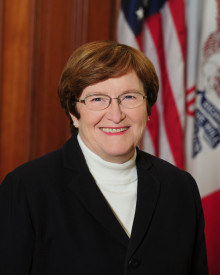
Two bizarre takes on the IA-Sen Democratic primary

Patty Judge’s decision to run for U.S. Senate was Iowa’s biggest political news last week. Taking their cue from Washington-based pols who recruited the former lieutenant governor, many national reporters who covered the story took for granted that Judge will be the Democratic challenger to six-term Senator Chuck Grassley, glossing over the fact that she will face serious competition in the June primary.

On the flip side, the Des Moines Register’s Kathie Obradovich and Howie Klein of the Down With Tyranny! blog recently made some odd assessments in their reviews of the Democratic race for Senate.

Continue Reading...

Weekend open thread: Iowa Ag Summit anniversary edition

What’s on your mind this weekend, Bleeding Heartland readers? This is an open thread: all topics welcome.

A year ago this weekend, nine presidential candidates, both of Iowa’s U.S. senators, three of our U.S. House representatives, Governor Terry Branstad, and Lieutenant Governor Kim Reynolds were among the speakers at Bruce Rastetter’s inaugural Iowa Ag Summit. Wisconsin Governor Scott Walker was the early front-runner in the presidential field and had just rolled out his first big batch of endorsements here. Although Donald Trump had recently hired heavyweight conservative organizer Chuck Laudner, few people expected him to be a strong contender for the Iowa caucuses. The billionaire didn’t make it to Rastetter’s event; like Marco Rubio, he initially accepted the Ag Summit invitation but developed schedule conflicts later.

Jeb Bush looked like a strong presidential contender in March 2015. He was raising money like no one else in the GOP field and had hired veteran Iowa political operative David Kochel earlier in the year. The day before the Ag Summit, the Des Moines Register ran a front-page feature on Bush that was so flattering to the former Florida governor, I felt compelled to write this post and begin work on a lengthier critique of the Register’s political coverage, which took nearly two months to complete.

Chris Christie was among the Ag Summit speakers. More than six months later, he picked up endorsements from Rastetter and several other prominent Iowa business Republicans. Christie’s poor performance on caucus night showed the limits of the would-be kingmaker’s influence, and that of others in Branstad’s orbit who had actively supported Christie’s presidential campaign.

Rastetter invited more than a half-dozen prominent Democrats to his Ag Summit. Wisely, U.S. Secretary of Agriculture Tom Vilsack and all of the potential presidential candidates blew off the event. Only one Democrat spoke to the gathering: former Lieutenant Governor Patty Judge, in her capacity as co-chair of America’s Renewable Future. That group was formed and funded by biofuels companies and related interest groups to advocate for the Renewable Fuel Standard. (Later in 2015, America’s Renewable Future spent more than $100,000 on radio ads and direct mail attacking Ted Cruz over his stand on the ethanol mandate.)

I enclose below a video of Judge’s remarks a year ago this weekend. Near the beginning of her speech, she commented, “Let me say from the outset, I truly believe that I disagree with just almost everyone that you will see on this stage today, on almost every issue. However, I certainly hope that we do agree on the importance of maintaining the Renewable Fuel Standard and keeping Iowa leading our nation forward in the development of renewable fuel.”

I doubt anyone would have predicted a year ago that Walker wouldn’t even make it to the Iowa caucuses, that Trump and Cruz would be leading in the GOP delegate count, or that Judge would enter the race against U.S. Senator Chuck Grassley.

P.S.- The Greeley (Colorado) Tribune published a good backgrounder on where all the remaining presidential candidates stand on agricultural issues.

Continue Reading...
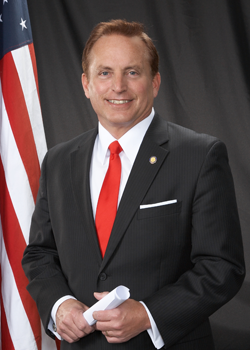
Kansas, Kentucky, Louisiana, Maine, and Nebraska presidential contest thread

Democrats and Republicans are caucusing today in Kansas and voting in the Louisiana primary. Republicans are also caucusing in Maine and Kentucky; Democrats will caucus in Maine tomorrow. Democrats caucused in Nebraska today, while Republicans will hold a primary there in May. This thread is for any comments about the presidential race. I will update throughout the evening.

Ted Cruz won the Kansas caucuses, which went to Rick Santorum in 2012 and Mike Huckabee in 2008. Speaking from Idaho about his latest victory, Cruz told supporters, “The scream you hear, the howl that comes from Washington DC, is utter terror at what We the People are doing together.”

Trump is still on track to win the Republican nomination, but a brokered GOP convention can’t be ruled out, especially if Cruz wins states dominated by social conservatives, John Kasich wins Ohio and possibly Michigan, and Marco Rubio wins the Florida primary. Ben Carson has ended his campaign, which could help alternatives to Trump win other states. Cruz just won the straw poll at the Conservative Political Action Conference, a sign of his continuing strength with hard-core activists.

Pat Rynard previewed the Democratic caucuses in Nebraska and in Kansas (where some voters will have to drive very long distances to participate). His account and others suggest that Bernie Sanders will win those states. However, Hillary Clinton is favored in Louisiana and has already built up a substantial pledged delegate lead. Unless Sanders can overtake Clinton in pledged delegates, the superdelegates are expected to go overwhelmingly for Clinton (Iowa is no exception).

UPDATE: Further updates are after the jump. It’s a disastrous night for Rubio: a distant third in Kansas, where most of the establishment was supporting him, and fourth place in Maine. He pursued a flawed strategy over the past couple of weeks, culminating in Thursday night’s debate in Detroit. Rubio went after Trump by getting down to Trump’s maturity level. Cruz had a much better debate, attacking Trump on policy and mocking him as childish. After some particularly un-presidential comments by Trump, Cruz scored his best points, asking the viewers at home whether this was the kind of debate they want to see play out over the summer.

Not only did Cruz dominate the field in Kansas, he won the Maine caucuses, a rare victory for a social conservative in New England and a rebuke to Governor Paul LePage, who endorsed Trump on February 26, less than a week after trying to mobilize GOP governors to stop Trump. So far, Trump leads the vote count in Kentucky and may carry Louisiana as well, but Cruz took a big step toward cementing his position as the viable alternative to Trump. He has called on Rubio to promise to drop out if he doesn’t win the Florida primary on March 15.

Continue Reading...

Anatomy of a missed opportunity for Bruce Harreld

Shortly before starting work as the University of Iowa’s president, Bruce Harreld told the Iowa City Press-Citizen’s Jeff Charis-Carlson that he had no immediate plans for high-level staff changes.

“I’ve done this in different environments multiple times,” said Harreld, who was an executive at Boston Chicken and Kraft Foods before becoming senior vice president for marketing and strategy at IBM. “And I always believe that the institutional knowledge that the existing team has is enormously important.”

There will be changes, of course, Harreld said, but agendas for change will involve the people who know the university best.

“I see a lot of leaders do this wholesale changing of leadership, and I think they lose a lot of momentum in that process,” Harreld said. “I’m a huge believer in culture and context, and I’ve been teaching that and practicing it all my life.”

This week Harreld demonstrated too much commitment to the university’s existing team.

Continue Reading...

IA-Sen: Des Moines Register poll shows strong approval for Grassley

Iowans who approve of U.S. Senator Chuck Grassley’s work greatly outnumber those who disapprove, according to the latest poll by Selzer & Co for the Des Moines Register and Mediacom. Selzer conducted the survey between February 21 and 24, when Grassley’s stance against filling the U.S. Supreme Court vacancy was a prominent news topic. Among the 804 Iowa respondents, 57 percent said they approved of the way Grassley is handling his job and 28 percent disapproved.

That approval is down 7 percentage points from a year ago, but it remains well within his normal range over the last several years, Register pollster J. Ann Selzer said. Over the past decade, Grassley has rated as high as 75 percent, in January 2009, and as low as 54 percent, in February 2010.

Public Policy Polling’s last several Iowa surveys have all measured Grassley’s approval at 50 percent or higher, well above his disapproval rating, and showed the senator leading any of his declared Democratic challengers by more than 20 points. PPP surveys in the field last week indicated that GOP senators up for re-election in Ohio and Pennsylvania could be hurt by the refusal even to consider President Barack Obama’s Supreme Court nominee. However, those senators don’t have Grassley’s 36 years of constituent service and traveling the state every year to fall back on.

Whether Grassley’s general election opponent turns out to be Patty Judge or Rob Hogg, Democrats have a long way to go to make this race competitive.

Incidentally, the Selzer poll showed that about a year into Senator Joni Ernst’s tenure, 43 percent of respondents approve of her work, while 31 percent disapprove and 25 percent are not sure. PPP has found similar approval numbers for Ernst in recent months, with disapproval numbers also in the low 40s.

UPDATE: Public Policy Polling released a new Iowa poll on March 4. Grassley’s approval and disapproval numbers were 47 percent and 44 percent, “down considerably from what we usually find for him as he loses crossover support from Democrats because of his intransigence on the Supreme Court issue.” Some 56 percent of all Iowa respondents and 58 percent of independents in the sample “want the Supreme Court vacancy to be filled this year.” In addition, by a 66 percent to 26 percent margin, Iowa respondents “say that the Senate should at least wait and see who’s put forward before deciding whether to confirm or deny that person.” Among independents in the sample, just 24 percent say they would be more likely to vote for Grassley if he refuses to confirm the president’s Supreme Court nominee, 48 percent say they would be less likely to vote for him, and 28 percent say it would make no difference.

Continue Reading...

IA-Sen: Three fault lines in a Democratic primary between Patty Judge and Rob Hogg

Former Lieutenant Governor and Iowa Secretary of Agriculture Patty Judge will seek the Democratic nomination for U.S. Senate, Jason Noble reported today for the Des Moines Register, citing multiple unnamed sources. She will make her candidacy official tomorrow. Two weeks should be plenty of time for her supporters to collect the 2,104 signatures needed to qualify for the ballot.

Three Democrats are already competing for the chance to run against six-term incumbent Senator Chuck Grassley, but once Judge enters the race, the main contest will be between her and State Senator Rob Hogg. Intending no disrespect to Tom Fiegen or Bob Krause, their performance in the 2010 IA-Sen primary suggests they will not be major factors on June 7.

I see three main factors influencing Iowa Democrats as they decide between Judge and Hogg.

Continue Reading...
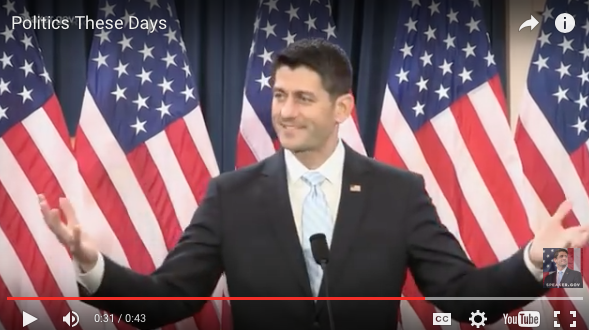
Medicaid oversight bill passes Iowa Senate with bipartisan support

Since Terry Branstad returned to the governor’s office, the overwhelming majority of Iowa Senate votes on contentious political issues have fallen along strict party lines: 26 Democrats one way and 24 Republicans the opposite. However, the Branstad administration’s rush to privatize Medicaid has created space for bipartisanship, as a growing number of Republicans acknowledge the dangers of shifting to managed care for a program through which one in six Iowans access health services.

Last month, three GOP senators joined their Democratic colleagues to vote for a bill that would have halted Iowa’s Medicaid privatization. That legislation is going nowhere in the Republican-controlled state House, and federal officials recently approved waivers to allow the Iowa Department of Human Services to implement the managed care policy as of April 1.

Yesterday a quarter of the GOP state senators voted with all 26 Democrats for a Medicaid oversight bill that had cleared the Senate Human Resources Committee unanimously. In her remarks to open floor debate on Senate File 2213, Human Resources Committee Chair Amanda Ragan said the bill was designed “to safeguard the interests of Medicaid members, encourage the participation of Medicaid providers, and protect Iowa taxpayers.” She told colleagues, “we must require DHS and the managed care companies to protect consumers, preserve provider networks, address the unique needs of children and assure accountability.”

I enclose below highlights from the debate on SF 2213, the roll call on final passage, and Ragan’s full remarks, along with a Democratic staff analysis summarizing the bill’s key points.

Continue Reading...
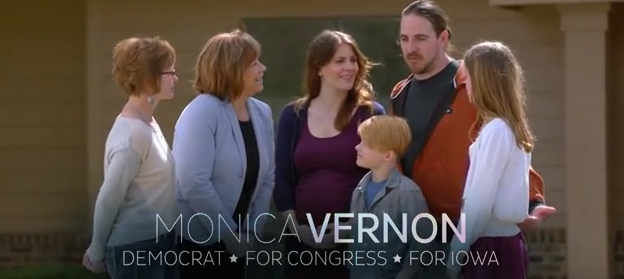
Casual sexism in the Iowa House becomes easy clickbait for Radio Iowa

The Iowa House Government Oversight Committee wasted more time today arguing over efforts by some Republicans to investigate last year’s Governor’s Conference on LGBTQ Youth. For background on the controversy surrounding the annual event organized by the non-profit Iowa Safe Schools, see reporting by Iowa statehouse correspondents William Petroski and James Q. Lynch, as well as Mark Joseph Stern’s article for Slate. Committee Chair Bobby Kaufmann could be directing his oversight energy toward the governor’s hasty privatization of the Medicaid program, which will affect health care for one in six Iowans. But no, Kaufmann asserts “it would be a dereliction of my duty if we did not have an investigation” of the Governor’s Conference on LGBTQ Youth, attended by roughly a thousand people last year. (I am a longtime supporter of the conference but play no role in planning it.)

Iowa Safe Schools Executive Director Nate Monson has declined invitations from Kaufmann’s committee to testify about the conference. Today Democratic State Representative Mary Wolfe, a defense attorney by trade, and Republican State Representative Dawn Pettengill, occasionally prone to paranoid fears, disagreed over whether Monson should be compelled to appear. I’ve enclosed below excerpts from their remarks at the latest committee meeting.

House Republican Clel Baudler interrupted the exchange to declare it a “catfight,” “eliciting laughter from some committee members, including Pettengill,” by Lynch’s account.

It’s disappointing but not surprising that an Iowa lawmaker would belittle two of his female colleagues by reducing their substantive disagreement to a “catfight.”

Equally disappointing and much more surprising: O.Kay Henderson validated Baudler’s assessment by elevating his description to the headline and lede of her story for Radio Iowa. Putting the word in quotation marks signified that the label came from someone other than the journalist. Nevertheless, a story called “Committee ‘catfight’ over panel’s subpoena power,” with the opening sentence “One committee member today used the word ‘catfight’ to describe this debate,” gave Baudler’s interjection more importance than it warranted. Henderson’s reports reach thousands of Iowans, not only online but also through more than 50 affiliate radio stations.

In contrast, Lynch played it straight with his title (“Iowa lawmakers clash on scope of oversight in LGBT case”) and lede (“Members of an Iowa House committee that reviews the performance of state agencies clashed Wednesday over the scope of its authority to compel testimony from members of the public”). He mentioned Baudler’s comment near the end of the story, where the colorful detail belonged.

I don’t expect Baudler to provide enlightened commentary on legislative happenings. I do expect one of Iowa’s most accomplished and respected female journalists not to seize on a sexist cheap shot as clickbait.

Continue Reading...
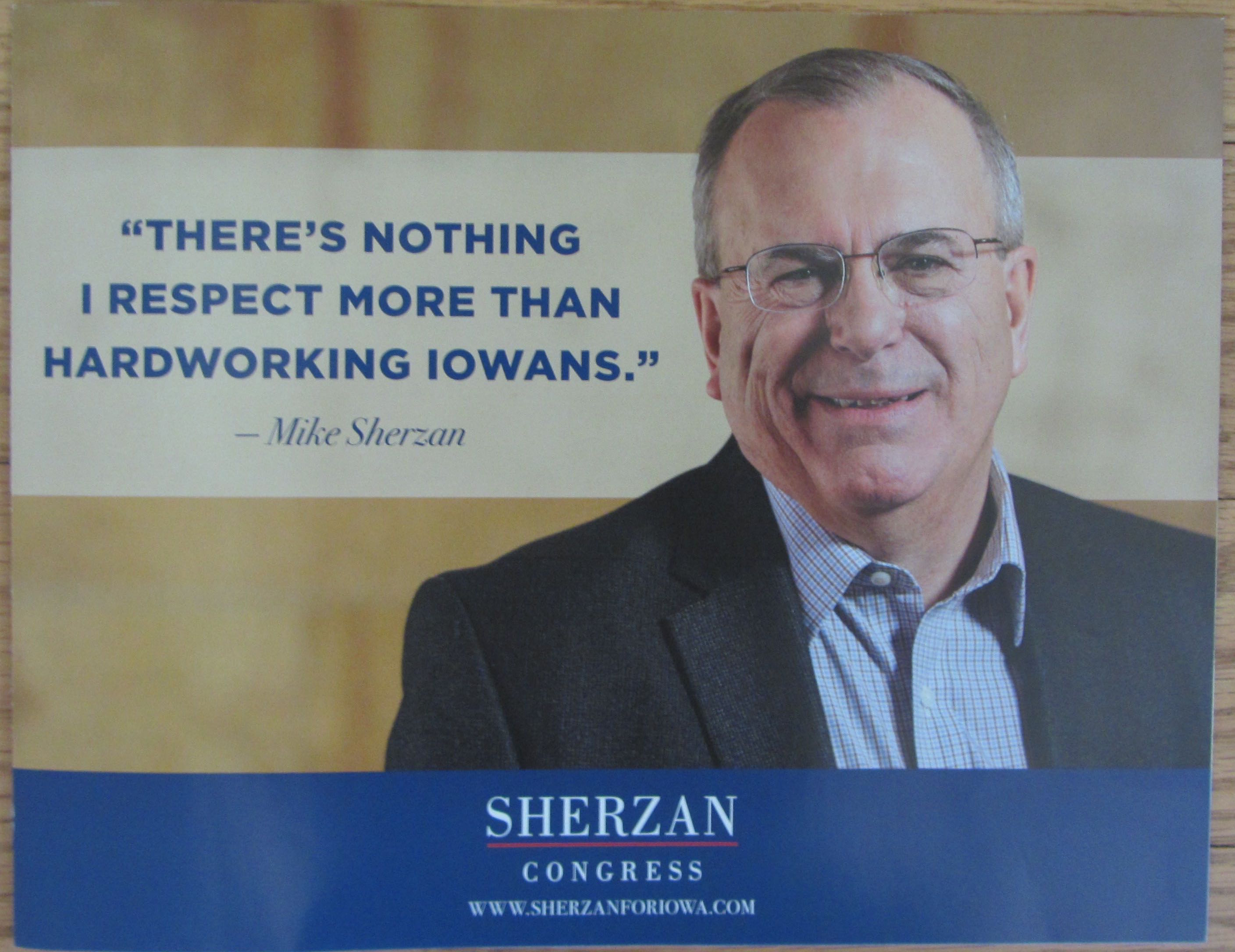
Obama considering Supreme Court nomination that would put Grassley on the spot

“The Federal Bureau of Investigation has been conducting background interviews” on Eighth Circuit Court of Appeals Judge Jane Kelly, Julie Hirschfeld Davis reported today for the New York Times. Assuming that news is accurate, Judge Kelly is on President Barack Obama’s list of possible nominees to the U.S. Supreme Court. Within hours of Justice Antonin Scalia’s death last month, many court-watchers speculated that Kelly could be named to replace him. After spending most of her career as a federal public defender, she won unanimous confirmation to the Eighth Circuit Court of Appeals in 2013 with strong support from Iowa’s senior Senator Chuck Grassley.

As Senate Judiciary Committee chair, Grassley has the power to schedule hearings and votes on any judicial nominee. He has promised not to give Obama’s choice any hearing in the Senate. Denying a Supreme Court nominee any consideration for a full year is without precedent in U.S. history. Yet Grassley and Senate Majority Leader Mitch McConnell stuck to that stance yesterday during a White House meeting with the president and Vice President Joe Biden. I enclose below Grassley’s official comment on that meeting, a guest column the senator’s office submitted to Iowa media outlets late last week, and Grassley’s Senate floor speech from April 2013, urging colleagues to confirm Kelly.

Already, Democrats are bombarding Grassley and other GOP senators with calls to “do your job.” Nominating Kelly for the Supreme Court vacancy would put Grassley in a particularly awkward position, forcing him to explain over and over why he refuses to give a well-regarded, highly-qualified Iowa judge even the courtesy of a Senate hearing, let alone a floor vote.

UPDATE: According to appellate attorney Steve Klepper, Kelly set the record for fastest Senate approval of an Obama appeals court nominee: 83 days from nomination to confirmation.

SECOND UPDATE: The Cedar Rapids Gazette reported, “Grassley said Wednesday [March 2] that news the White House had ordered checks on Judge Jane Kelly of Cedar Rapids as a possible Supreme Court nominee wouldn’t neutralize his stance against any choice of President Barack Obama.” The same article quoted from a statement the senator released last month, noting that “It’s not an issue of any particular candidate. […] If a Democrat wins the White House, I’m sure Jane Kelly would be on any Democrat’s short list of candidates.”

Continue Reading...