desmoinesdem

Posts 123 Comments 0

Quinnipiac finds Trump ahead in Iowa

Donald Trump leads Hillary Clinton by 50 percent to 44 percent in a two-way race, and by 44 percent to 37 percent in a field including Libertarian Gary Johnson (10 percent) and Green Party candidate Jill Stein (2 percent), according to the new Quinnipiac survey of 612 likely Iowa voters. Trump has gained ground since last month’s Quinnipiac poll showing a small lead for Clinton in both the two-way and four-way races. The polling memo noted Trump’s 52 percent to 26 percent lead among men, which overcame Clinton’s 47 percent to 37 percent advantage with women. Trump also had higher levels of support among Republican respondents (86 percent) than Clinton did among Democrats (83 percent).

Nuggets from the cross-tabs:

• Independents split 38 percent Trump, 33 percent Clinton, 19 percent Johnson, and 4 percent Stein in a four-way race. Against Clinton alone, Trump led 47 percent to 41 percent among independent respondents.

• As expected, Trump has a big lead among non-college-educated whites: 55 percent to 41 percent in a two-way, 48 percent to 33 percent in a larger field.

• Surprisingly, Trump leads among whites with a college degree (49 percent to 44 percent)

• By self-reported party identification, 33 percent of this poll’s respondents were Republicans, 30 percent Democrats, 33 percent independents, and 5 percent other/don’t know. That party breakdown better reflects the 2012 general electorate in Iowa than did last week’s Monmouth poll.

According to Quinnipiac, its poll has a margin of error of plus or minus 4 percentage points–though that number refers to only one of many potential sources of error in opinion polls. I am seeking further details on Quinnipiac’s likely voter screen, which wasn’t explained in the note on methodology. Nate Cohn’s latest post at the New York Times Upshot blog explained how four different approaches to separating “likely voters” from other poll respondents produced four different results from the same set of interviews with North Carolina voters.

Iowa absentee ballot numbers in the 2016 general election

Early voting was a major factor in Barack Obama’s margin of victory in Iowa four years ago. Although both parties launched their absentee ballot drives a little later this year, Democrats and Republicans will soon be fully engaged in banking as many votes as possible before election day.

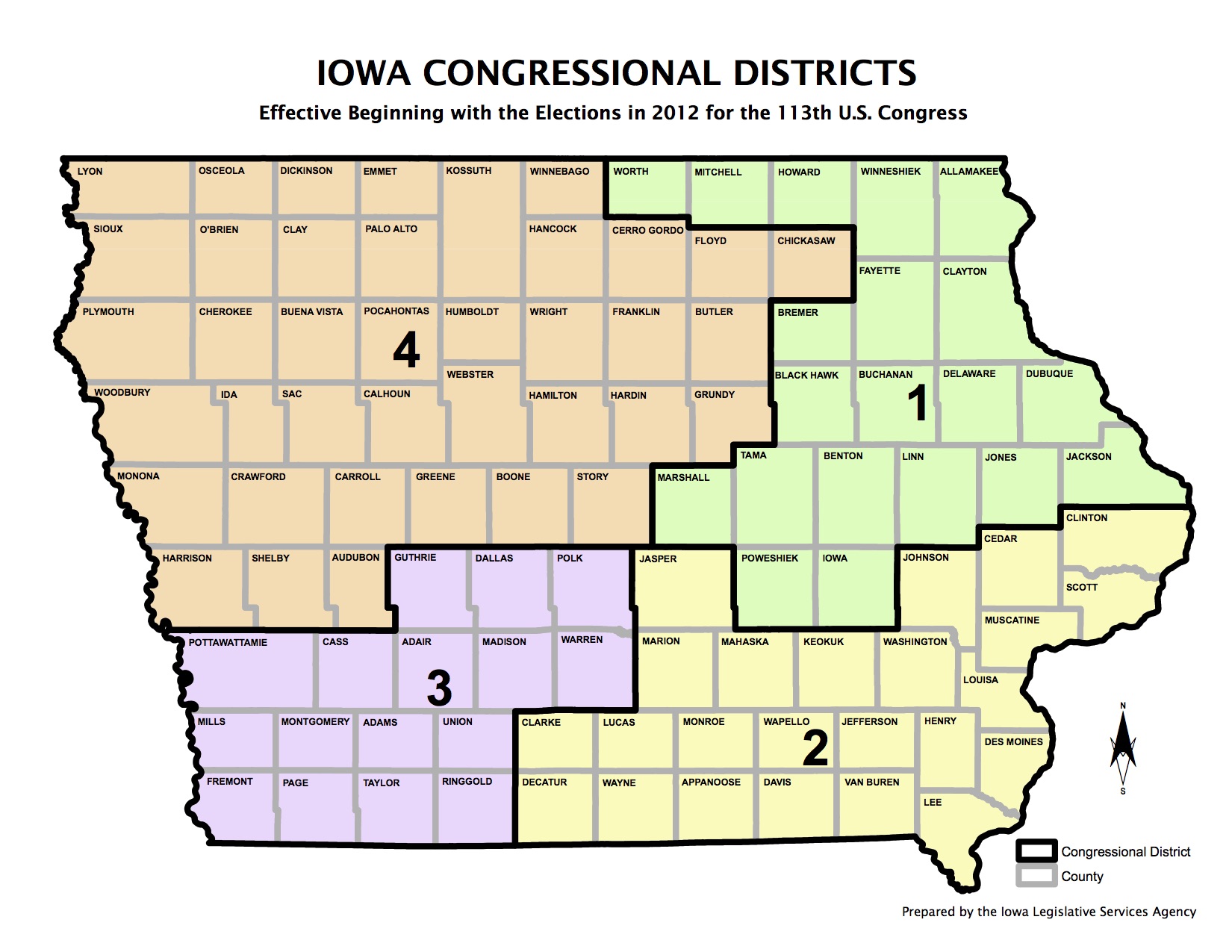
I will update this page every weekday with the latest absentee ballot numbers released by the Iowa Secretary of State’s office, presented in two tables. The first shows the number of absentee ballots Iowans have requested, in each of the four Congressional districts and statewide. The second shows the number of absentee ballots county auditors have received from voters, in each Congressional district and statewide. (For now, those numbers are small, because county auditors only just started mailing ballots to voters who don’t live overseas or serve in the military.)

In-person early voting will begin on September 29 at county auditors’ offices. When an Iowan votes early in person, either at the county auditor’s office or at a satellite location, that counts as an absentee ballot requested by the voter and as an absentee ballot received by the auditor on the same day.

You can compare this year’s early vote numbers to the daily charts from the last two election cycles by clicking through to Bleeding Heartland’s archive of absentee ballot totals from 2012 and 2014.

You can find the latest absentee ballot figures in each Iowa House and Iowa Senate district on the Secretary of State’s website.

Continue Reading...

Iowa wildflower Wednesday: Flowering spurge

Last week’s featured wildflowers stand out, even in a colorful summer prairie landscape. In contrast, you could easily walk past flowering spurge (Euphorbia corollata) without spotting them. The species is native to most of North America east of the Rocky Mountains and grows in a wide range of habitats. But although flowering spurge isn’t a rare plant, I don’t recall noticing it before this summer.

I took the enclosed photos in late August and early September where the edge of woods meets a restored prairie in Dallas County.

Continue Reading...

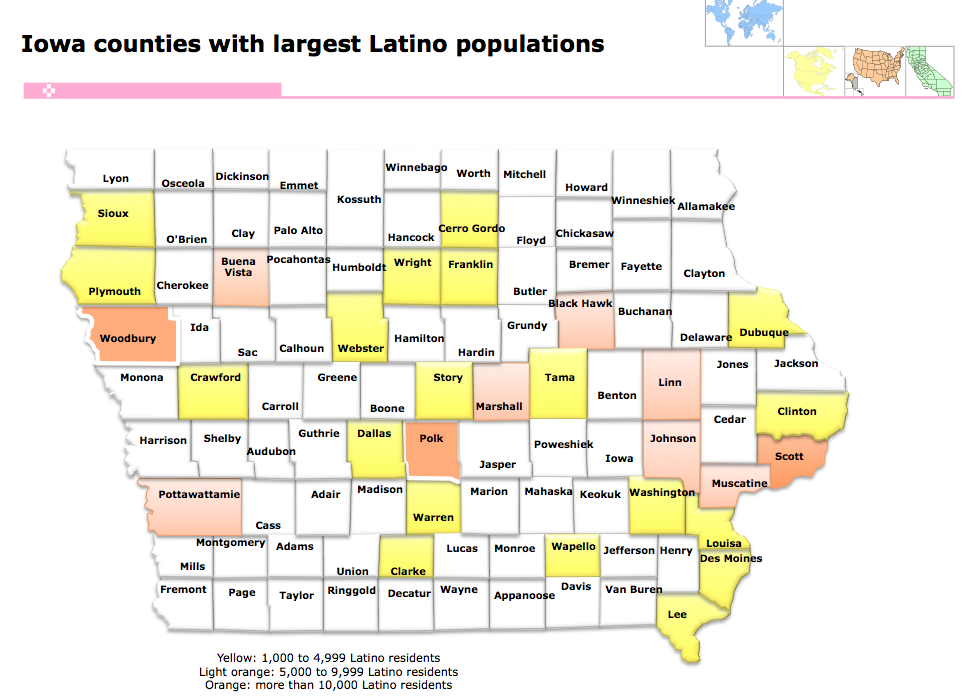
Where Iowa's Latino, African-American, and Asian-American voters are

Iowa is at more risk of swinging to Donald Trump than any other state President Barack Obama carried twice. Demographics go a long way toward explaining why.

Compared to most battleground states, Iowa has a less diverse population. About 86.7 percent of residents are non-Hispanic whites, according to the latest census data. Roughly a quarter of Iowans at least 25 years old have a bachelor’s degree or higher level of education. Polls have indicated race and education levels are strongly correlated with support for Trump or Hillary Clinton, with non-college-educated whites among the strongest voting blocs for the Republican.

On the flip side, numerous polls have found very low levels of support for Trump among Latino, African-American, and Asian-American voters.

Traditionally, Americans in those groups have voted at lower rates than have non-Hispanic whites. But it would be a mistake to discount their impact, even in this overwhelmingly white state. Al Gore won Iowa by just 4,144 votes out of more than 1.3 million cast in 2000. Four years later, George W. Bush defeated John Kerry by just 10,059 votes out of more than 1.5 million cast.

A strong GOTV campaign aimed at minority voters who support Clinton (or at least despise Trump) could mobilize enough Iowans to change the statewide outcome.

Follow me after the jump to see where organizers and volunteers for the Iowa Democratic “coordinated campaign” will likely concentrate those efforts.

Continue Reading...

Thoughts on Hillary Clinton underperforming in Iowa polls (updated)

Several forecasters have recently upgraded Donald Trump’s chances of winning Iowa’s six electoral votes. Only a month ago, Larry Sabato’s “Crystal Ball” and FiveThirtyEight.com both considered Iowa a “lean Democratic” state. Sabato now sees Iowa leaning Republican, while FiveThirtyEight gives Trump about a two-thirds chance of winning Iowa in different scenarios.

This week, both The Fix at the Washington Post and NPR’s Domenico Montanaro moved Iowa from toss-up to lean Republican.

Forecasters that still see Iowa as a toss-up include the Cook Political Report and NBC News, though it’s been a couple of weeks since NBC updated their battleground map. The New York Times Upshot puts a 53 percent probability on Trump winning here.

The latest Rothenberg & Gonzales Political Report also shifted its Iowa rating in Republicans’ favor, though that forecast still sees our state as “toss-up/tilt DEM.”

Why isn’t Hillary Clinton doing better in a state Barack Obama carried twice?

Continue Reading...

Iowa early vote numbers down compared to same point in 2012 and 2014

Although Iowans won’t be able to cast ballots in person or by mail until next Thursday, September 29, candidates and volunteers have been collecting absentee ballot request forms for weeks as they knock on doors.

Today the Iowa Secretary of State’s Office provided this year’s first statewide early voting numbers. Absentee ballot requests are down considerably compared to mid-September 2012 and 2014.

That the Republican Party of Iowa has not yet mailed its first big piece of early vote literature can’t fully explain the trend. At this point in the last two election cycles, absentee ballot requests from Iowa Democrats alone far exceeded current numbers.

Continue Reading...

Will wonders never cease: Windsor Heights moves toward more sidewalks

Fulfilling the hopes of residents who have been working toward this goal for many years, the Windsor Heights City Council voted 4-1 last night to approve a new sidewalks ordinance with a view to installing sidewalks soon on more city streets.

To the surprise of many who don’t live here, sidewalks have aroused passionate opposition in Windsor Heights, becoming a key issue in multiple local elections.

Continue Reading...

Weekend open thread: Trump detractors, Trump defenders

What’s on your mind this weekend, Bleeding Heartland readers? This is an open thread: all topics welcome.

The Des Moines Register’s Kyle Munson published an excellent profile of Iowa Republican operative David Kochel and his battle with leukemia. I enclose excerpts below, but do click through to read the whole piece. Kochel has worked for numerous Republican candidates, most recently Jeb Bush. He was a senior strategist for Joni Ernst’s Senate campaign in 2013 and 2014 and for Mitt Romney during the last presidential election cycle.

Kochel has been on the #NeverTrump train for months–an anomaly in Iowa circles, where most well-known Republicans have fallen in line behind the nominee. Yet around the country, a stunning number of GOP elected officials, commentators, or former staffers have said they will not vote for Trump under any circumstances.

Last month, Tara Golshan and Sarah Frostenson compiled a list of more than 100 #NeverTrump Republicans, and 50 former national security officials from GOP administrations signed a letter warning that Trump “lacks the character, values and experience” to be president and “would put at risk our country’s national security and well-being.”

Several newspapers that had endorsed GOP presidential nominees for decades have rejected Trump, most recently the New Hampshire Union Leader, which called Trump “a liar, a bully, a buffoon.”

All those traits were on display this past week, when Trump tried to blame Hillary Clinton for starting the “birther” movement, called for Secret Service agents protecting Clinton to disarm and “see what happens to her,” and went off script during a rally to complain about a mosquito.

On the plus side for Trump, the media’s renewed focus on the Republican candidate’s contributions to birtherism kept devastating scoops by Kurt Eichenwald and David Fahrenthold from getting much traction this week. Excerpts from Eichenwald’s cover story for Newsweek are after the jump.

Meanwhile, pathetic lackey and convicted felon Dinesh D’Souza took to Twitter to defend Trump’s admiration for Russian President Vladimir Putin, who “unlike someone else we know–LOVES his country & FIGHTS for its interests.” When a commenter pointed out that D’Souza “would be dead” if he were in Russia and criticized the president, D’Souza countered that opposition figure Garry Kasparov “is a public critic of Putin & very much alive.” The former world chess champion posted a priceless response: “Have you noticed I live in New York now? Stop spitting on the graves of Putin’s victims with your dictator worship.” Kasparov added a few minutes later, “If you can’t articulate criticism of Hillary Clinton or Obama without praising a brutal dictator, you’re incompetent & should just shut up.”

It wasn’t for nothing some called D’Souza “Distort D’Newsa” when he became a nationally-known flame-thrower during the 1980s.

Continue Reading...

Rest in peace, Joe Seng

Democratic State Senator Joe Seng has died after a two-year battle with brain cancer, Iowa Senate leaders confirmed today. I enclose below comments released by Senate Majority Leader Mike Gronstal and Senate President Pam Jochum.

With the upper chamber split 26-24 and many important votes falling along party lines, Democratic leaders needed Seng’s presence often during the last two legislative sessions. He had phenomenal dedication and kept showing up for work while fighting a monstrous disease and undergoing regular chemotherapy. The Des Moines Register’s William Petroski posted a video of Seng singing and playing the accordion for his colleagues in April 2015.

Seng served as Davenport’s alderman-at-large and mayor pro-tem before representing parts of Iowa’s third-largest city for two years in the state House and fourteen in the Senate. A veterinarian by training, he chaired the Senate Agriculture Committee in recent years and served on the Commerce, Ethics, Labor and Business Relations, Natural Resources and Environment, and Ways & Means committees.

After Iowa’s new map of political boundaries put Scott County in the second Congressional district, Seng challenged U.S. Representative Dave Loebsack and won about 18 percent of the vote in the 2012 Democratic primary. In his final re-election campaign two years ago, Seng easily defeated a primary challenger and did not face a general election opponent.

Seng’s passing will force a special election later this year in Senate district 45 (map enclosed below). Because the district contains more than twice as many registered Democrats as Republicans, the only real competition to replace Seng will be for the Democratic nomination, to be decided at a district convention. Democrats Jim Lykam and Cindy Winckler have represented the two halves of Seng’s Senate district in the Iowa House since 2003.

Continue Reading...

Steve King doesn't get it: Equating protest with terrorism is un-American

Blogger’s dilemma: which of Representative Steve King’s latest embarrassing, bigoted comments on national television should I focus on today?

Arguing that the government should guarantee parental leave only for the so-called “natural family” (which in King’s mind does not include gay or lesbian parents) was reprehensible. Why does he keep looking so hard for ways the state can treat LGBT people like second-class citizens? A parent’s sexual orientation should have no bearing on whether a baby deserves more time to bond with the primary caregiver. CNN’s Chris Cuomo already did a good job challenging King, pointing out research shows babies in LGBT households “are doing just as well if not better” than children being raised by a man and a woman.

I’ll take door number 2: King telling a friendly interviewer that professional football player Colin Kaepernick engaged in “activism that’s sympathetic to ISIS” and should be forced to “take a knee and beg forgiveness from the American people.”

Continue Reading...

IA-Gov: Sales tax hike for conservation may become fault line in 2018

Leaders of a campaign to provide a “permanent and constitutionally protected funding source dedicated to clean water, productive agricultural soils and thriving wildlife habitats” in Iowa touted support in the business and agriculture communities this week. You can watch Iowa’s Water and Land Legacy‘s September 12 press conference here or listen to the audio at Radio Iowa. Under a state constitutional amendment Iowa voters adopted in 2010, revenues generated by the next 3/8th of a cent sales tax increase (estimated at more than $180 million per year) would flow into a Natural Resources and Outdoor Recreation Trust Fund. Scroll to the end of this post for a current list of IWLL coalition members and details on the formula for allocating trust fund money.

Without knowing which parties will control the Iowa House and Senate next year, it’s hard to gauge prospects for passing a sales tax increase. Democratic State Senator Matt McCoy commented on Monday, “The best time to move on a piece of legislation is just following an election. That’s when you get your best bipartisan compromises, and I think ultimately, this is something we can find a bipartisan compromise on.”

Who might lead statehouse Republicans toward such a compromise is unclear. The GOP lawmaker most supportive of IWLL has been State Senator David Johnson. But he left the party this summer to protest presidential nominee Donald Trump and told Bleeding Heartland in a recent interview that he plans to remain an independent during the 2017 legislative session.

At least one Republican running for governor in 2018 will support the sales tax increase: Cedar Rapids Mayor Ron Corbett. That stance will put him in conflict with either Governor Terry Branstad or his chosen successor, Lieutenant Governor Kim Reynolds. In addition, support for funding IWLL among major farm lobby groups could create problems for Iowa Secretary of Agriculture Bill Northey, also a likely gubernatorial candidate in 2018.

Continue Reading...

Iowa wildflower Wednesday: Tall thistle

Most thistles growing along Iowa roads or fields are invasive plants. Bull thistle and Canada thistle are on Iowa’s noxious weeds list.

But if you’re lucky, you may see a thistle that belongs in our state’s wooded or prairie habitats.

Tall thistle (Cirsium altissimum) is native to most of the U.S. east of the Rocky Mountains. Its seeds are a “staple” food for the eastern or American goldfinch, Iowa’s state bird.

I took the pictures enclosed below in late August and early September on a restored prairie in Dallas County.

Continue Reading...

Have the Waterloo Police implemented any recommended reforms?

A series of disturbing incidents involving Waterloo police officers came to light this summer through legal settlements, a pending lawsuit, and a criminal trial. The common thread was white police officers using excessive force or offensive language toward African-Americans in Waterloo, the Iowa city with the largest proportion of black residents.

Waterloo Police Chief Dan Trelka announced an investigation into one officer, who laughed at the scene of an 18-year-old’s fatal shooting, called the victim a “dead mother f—-er” and said “we just need a semi-apocalyptic event to get rid of 90 percent of them.”

But Trelka has also accused the media of making too much of the scandals, telling local radio host Bob Bruce last month that negative news coverage obscures great progress being made in the department. Trelka acknowledged “we needed to adjust,” adding that “we have adjusted with changes in policy and training.”

Last year, external reviewers suggested at least ten reforms for the Waterloo Police Department. I have been unable to find evidence that Trelka and his staff acted on any of those recommendations.

Continue Reading...

Former Lieutenant Governor Joy Corning joins #NeverTrump camp

Donald Trump is too ignorant to be president, according to former Lieutenant Governor Joy Corning, the most prominent Iowa Republican to disavow the GOP nominee.

Corning served six years in the Iowa Senate, then eight years as lieutenant governor during Terry Branstad’s third and fourth terms. Since unsuccessfully seeking the GOP nomination for governor in 1998, she has held leadership roles in numerous non-profit organizations. As a pro-choice moderate, she has been increasingly outnumbered within Iowa GOP ranks. Nevertheless, she supported every Republican presidential nominee from Dwight D. Eisenhower through John McCain, Corning told Bleeding Heartland yesterday in a telephone interview. Despite voting for President Barack Obama in 2012, she never left the Republican Party and endorsed Jeb Bush before this year’s Iowa caucuses.

Corning said she realized while watching the Republican debates that Trump was not a candidate she could ever support. As for why, she cited his “know-it-all demeanor when he really doesn’t know what he’s talking about.” Had she ruled out voting for him by the time he locked up the GOP nomination? “Oh, yes. Yes.”

Like State Senator David Johnson, who came out against Trump this summer, Corning declined to state publicly for whom she will vote in November.

After Jeb Bush announced in May that he would not support Trump, I sought comment from State Senator Charles Schneider and the six Iowa House Republicans who had endorsed the former Florida governor before the caucuses. Schneider said, “I intend to vote for Trump assuming he is the nominee,” while State Representative Greg Forristall likewise confirmed he “will vote for the Republican nominee.” State Representative Dave Heaton commented at that time, “It’s pretty hard for us to turn our back on the party’s selection, so I probably would support [Trump].” State Representatives Zach Nunn, Linda Miller, and Ron Jorgensen did not respond to my inquiries.

Continue Reading...

Another poll shows a nearly-tied presidential race in Iowa

Adding to the consensus that Iowa’s six electoral votes could go either way, a new poll by RABA Research for Simpson College shows Donald Trump leading Hillary Clinton by 43 percent to 42 percent in a two-way race or by 40 percent to 39 percent in a field including Libertarian Gary Johnson (10 percent) and Green Party candidate Jill Stein (3 percent). The remaining 8 percent of respondents were undecided.

Full poll results are here; I enclose below the page containing the cross-tabs.

Clinton is winning women by 43 percent to 37 percent in a four-way race and by 46-38 against Trump alone. Trump is winning men by 44-34 when Johnson and Stein are included and by 48-38 against Clinton alone. Among the 40 percent of respondents who identified as evangelicals, just 56 percent back Trump in a four-way race and 57 percent in a two-way race.

Clinton leads among respondents who have a college degree, but she is not winning that group by enough to compensate for Trump’s advantage among non-college-educated voters. The latest census data indicate that about 26 percent of Iowans at least 25 years old have a bachelor’s degree or post-graduate education.

Like other recent polls, RABA’s survey suggests that third-party candidates are drawing roughly equally from voters who would otherwise lean toward the Democratic or Republican nominees. Johnson remains on track to far exceed any previous Libertarian candidate’s showing in Iowa. This morning FiveThirtyEight.com’s Harry Enten examined Clinton’s underperformance with young millennials (18-25), who are more likely than older voters to support third-party candidates.

Any comments about the presidential race are welcome in this thread. Trump’s campaign just started running television commercials in Iowa this month. Scroll down to see the video and transcript of the latest spot, a rapid response to the weekend’s news that Clinton had referred to the GOP nominee’s supporters as “a basket of deplorables.” Charles Blow wrote the best take I’ve seen on that gaffe.

Continue Reading...

Group polled Iowans on Supreme Court retention vote (updated)

Leaders of the campaigns to oust Iowa Supreme Court justices in 2010 and 2012 have chosen not to engage in this year’s retention elections, which will decide whether the last three justices who participated in Iowa’s marriage equality ruling will stay on the bench.

However, the coalition formed to stop “extremists from hijacking Iowa’s courts” is taking no chances. Justice Not Politics commissioned a statewide poll last week to gauge voters’ attitudes toward Chief Justice Mark Cady and Justices Brent Appel and Daryl Hecht, as well as some issues related to controversial Iowa Supreme Court rulings.

Continue Reading...

Weekend open thread: 9/11 memories

Fifteen years later, images of the burning and collapsing World Trade Center towers are fresh in the minds of just about everyone old enough to remember 9/11. All topics are welcome in this thread, including any reflections on that horrific day.

Many people casually refer to “3,000 Americans” killed on 9/11, but hundreds of the victims were from other countries. Last year, the Brilliant Maps website posted a map created by reddit user thepenaltytick, showing all countries that lost at least one citizen. Most of the globe is covered.

The United Kingdom lost 67 citizens (some tourists, others working in the U.S.), making 9/11 the deadliest terror attack in that country’s history.

I was living in London fifteen years ago. Having watched the BBC’s uneventful news over lunch, I turned off the tv to get back to work on my dissertation. Around 2:00 pm, which would have been 9:00 am in New York, someone called and told me to turn the tv back on. I was glued to the BBC for the rest of the day and night. Watching the people trapped on the roof of the World Trade Center, I couldn’t understand why none of the helicopters could get close enough to rescue them before the towers collapsed. I could not believe a plane was able to crash into the Pentagon.

In Britain, as in the U.S., there was a tremendous public outpouring of grief after the attacks. British people are normally reserved with strangers, but many approached me after hearing my American accent in a shop or a train station, just to say how very sorry they were about what had happened in my country. UPDATE: Added below photos a reader sent, showing piles of flowers and gifts and notes left outside the U.S. embassy in London in September 2001.

I didn’t lose any friends on 9/11, and only one of my acquaintances lost a loved one that day; his father was on one of the planes that hit the towers. Even without experiencing a personal bereavement, I felt enraged, especially when reading newspaper profiles of the victims. During the Jewish high holidays in late September 2001, the last thing I felt like doing was reflecting on the past and forgiving wrongs from the past year. At that time, I heard a BBC radio segment featuring the UK’s Chief Rabbi, David Sacks. He reminded listeners that the Bible (he meant the Hebrew Scriptures or “Old Testament”) tells us once to love our neighbors, but tells us approximately 30 times to love the stranger. That’s because it is easier to love our neighbor, who is probably a lot like ourselves, than it is to love a stranger. It’s the only quote I remember from what must have been dozens of radio commentaries by Sacks I heard during my years abroad.

This week, Green Party presidential candidate Jill Stein called for a new investigation of the 9/11 events. Stein is headlining a rally at the state capitol in Des Moines today from 3 pm to 5:30. To any readers who attend: feel free to write about the speakers or crowd atmosphere in a comment or a guest post for Bleeding Heartland later. MSNBC’s Alex Seitz-Wald analyzed Stein’s campaign strategy a few weeks ago, arguing she “seems unsure how to speak to anyone this side of Noam Chomsky” and has “misread” the Bernie Sanders playbook while attempting to appeal to Sanders supporters.

Big news on Friday: in a move without precedent, the Obama administration ordered that construction of the Dakota Access (Bakken) pipeline “will not go forward at this time” on Army Corps land bordering or under a North Dakota lake on Standing Rock Sioux tribal land. Gavin Aronsen wrote up the story for Iowa Informer. The federal action will not affect Bakken pipeline construction in Iowa. Though the project will probably be completed in all four states eventually, James MacPherson reported for the Associated Press that the government’s intervention “may forever change the way all energy infrastructure projects [affecting tribal land] are reviewed in the future.”

Continue Reading...

Iowa Senate district 32 preview: Brian Schoenjahn vs. Craig Johnson

To win control of the Iowa Senate, where Democrats have held a 26 to 24 majority for the last six years, Republicans will need to beat at least two Democratic incumbents. One of their top targets is Senator Brian Schoenjahn, who is seeking a fourth term in Senate district 32.

Follow me after the jump for a map and details on the political makeup of this northeast Iowa district, along with background on Schoenjahn and his challenger Craig Johnson, the key issues for each candidate, and a look at Johnson’s first television commercial.

Continue Reading...

Throwback Thursday: A year since Bruce Harreld shook up the University of Iowa

One year ago today, the University of Iowa’s Faculty Senate voted no confidence in the Iowa Board of Regents, saying the board “has failed in its duty to take care of the University of Iowa and citizens of Iowa and shown blatant disregard for the shared nature of the university governance.” Five days earlier, the regents had offered the university presidency to Bruce Harreld, passing over three other finalists with substantial support among campus stakeholders and far more experience in higher education.

Harreld’s first year on the job did little to reassure his critics, in part because he’s never acknowledged any flaws in the process that brought him to Iowa City. The American Association of University Professors issued a detailed report last December on the presidential search. Cliffs Notes version: key members of the Board of Regents decided early on to pick a “non-traditional” candidate from the business world, who would preside over “transformative” change at the university; diminished faculty power on the search committee; made Harreld a finalist without a committee vote and despite substantial opposition from faculty; and discounted input from staff, students, and faculty in choosing Harreld over finalists with strong backgrounds in academic administration.

In June, delegates to the AAUP’s national meeting voted unanimously to sanction the University of Iowa for “substantial non‐compliance with standards of academic government” in connection with Harreld’s hiring. Soon after, Harreld commented on the sanctions, “It’s bizarre to me. […] It doesn’t make any sense.” As Mark Barrett noticed, Harreld had the same reaction last fall when asked about controversy surrounding his secret meetings with decision-makers before he formally applied for the presidency: “I find the criticism bizarre, to be really honest about it. […] There is an assumption that I somehow was given preferential treatment. I didn’t see that at all.”

Speaking of bizarre, the University of Iowa will hold a celebration next week to “officially welcome” Harreld to campus, more than ten months after he started work.

I decided to mark this anniversary by cataloguing my coverage of events that inspired the hashtag #prezfiasco. Before Harreld arrived on the scene, University of Iowa politics had inspired only a handful among more than 5,000 posts I’d written over eight and a half years. Some pieces about the Harreld hire turned out to be among the most-viewed Bleeding Heartland posts of 2015.

Readers with a strong interest in this subject should check out Barrett’s more extensive archive of “Ongoing Harreld Hire Updates” at the Ditchwalk blog.

Continue Reading...

3 ways Matt Lauer failed to press Donald Trump on his Russian entanglements

Donald Trump’s potential to be unduly influenced by Russian President Vladimir Putin has been worrying me for some time, so my head nearly exploded when I watched NBC’s Matt Lauer question Trump about Putin during last night’s “Commander-in-Chief forum.”

Other commentators have already noted how Lauer interrupted Hillary Clinton repeatedly but let Trump get away with long-winded non-responses, didn’t follow up when Trump lied (again) about supposedly having opposed the war in Iraq and military intervention in Libya, and didn’t mention controversial Trump statements of obvious relevance to an audience of veterans.

Lauer also flubbed a perfect chance to scrutinize Trump’s Russia connections.

Continue Reading...

Iowa wildflower Wednesday: Biennial gaura (Biennial beeblossom)

Today’s featured plant was a new discovery for me a few weeks ago. Its tall, branching stems with many delicate flowers compelled me to pull over my bicycle, despite being hungry for breakfast at the downtown farmers market.

Biennial gaura (Oenothera gaura) is native to much of North America east of the plains states. As its name suggests, the plant has a two-year cycle, developing a “a rosette of basal leaves” during the first year and flowering the next year. You are most likely to find it in “tall grass prairie, woodland openings and river banks.” Biennial gaura thrives in full sun but “tolerates many kinds of soil.” Its alternate name biennial beeblossom testifies to the plant’s appeal to various insect pollinators.

I took the enclosed photos along the Meredith bike trail in Des Moines, close to the southeast end of Gray’s Lake.

Continue Reading...

Latest PPP survey shows Clinton up by 2, Grassley by 6

Democratic nominee Hillary Clinton leads Republican Donald Trump by 45 percent to 43 percent in a two-way race, and U.S. Senator Chuck Grassley leads Democratic challenger Patty Judge by 49 percent to 43 percent, according to a Public Policy Polling survey of 827 “likely voters” in Iowa on August 30 and 31. PPP conducted the poll on behalf of We Need Nine, which advocates for filling the U.S. Supreme Court vacancy as a project of the Constitutional Responsibility Project. (That advocacy group has spent $31,273 so far against Grassley.)

PPP did not include minor-party presidential candidates in its ballot test, and at this writing no cross-tabs are available to shed light on Clinton’s narrow lead over Trump. The main purpose of the survey was to gauge support for Grassley and Iowa voters’ opinions on the Supreme Court vacancy.

For those wondering about priming effects–that is, whether the pollster “primed” respondents to evaluate Grassley on this issue in order to reduce his lead over Judge–PPP asked respondents about the Senate race before the series of questions about judicial confirmations. It’s worth noting that PPP did some internal polling for Judge’s campaign before the Democratic primary in June.

Buzzfeed’s Chris Geidner was first to report on this survey. I enclose below excerpts from PPP’s polling memo and other findings from the survey.

Continue Reading...

Zika funding a classic case of systemic Congressional failure

U.S. House and Senate members returned to work Tuesday, no better equipped to handle basic tasks of governance than they were before their unusually long summer recess.

You might think funding to combat a public health emergency would be easy to pass even in a hyper-partisan, election-year atmosphere. But you would be wrong, because legislation to pay for a Zika virus response remains tied up over “poison pills.”

Continue Reading...

Key funder confirms no plans to go after Iowa Supreme Court justices

The National Organization for Marriage does not plan any “campaigning or intervention” in this year’s retention elections for three Iowa Supreme Court justices, Grant Rodgers reported for the Des Moines Register on September 5. The group was the largest single funder of the two previous anti-retention campaigns, contributing more than $635,000 to help oust three justices in 2010 and more than $148,000 to the unsuccessful effort to remove Justice David Wiggins two years later.

The last three justices involved in Iowa’s 2009 marriage equality ruling will be on the ballot this November: Chief Justice Mark Cady, author of the Varnum v Brien decision, and Justices Brent Appel and Daryl Hecht. National Organization for Marriage spokesperson Joe Grabowski told Rodgers, “There’s nothing planned at this time,” adding that “We always keep our options open.”

Those options are fading fast, with early voting set to begin in Iowa on Thursday, September 29. The previous two anti-retention campaigns, led by social conservative activist Bob Vander Plaats, were well underway by the end of August 2010 and 2012. As Bleeding Heartland discussed here, Vander Plaats and his allies have not signaled any plan to go after the Iowa Supreme Court justices. It’s a remarkable admission of weakness on their part, but also a rational decision. Convincing voters to remove justices over same-sex marriage (now allowed in all 50 states) would be a tall order, especially in a presidential election year, which brings out hundreds of thousands more voters than a typical midterm election.

This year’s high-profile voting rights case could have provided fodder for an anti-retention campaign, but that scenario failed to materialize when Cady joined three other justices to uphold Iowa’s current broad lifetime ban on voting by most people convicted of felonies.

Rodgers discussed another possible peg for a campaign against Cady, Appel, and Hecht: all joined a 4-3 decision (authored by Appel), which held that “juvenile offenders may not be sentenced to life without the possibility of parole under article I, section 17 of the Iowa Constitution.” You can read the majority opinion, concurring opinions, and dissents in Iowa v. Sweet here. The majority ruling drew heavily on a 2012 U.S. Supreme Court decision, which invalidated mandatory life without parole sentences for juveniles, and several 2013 Iowa Supreme Court cases related to juvenile sentencing. Cady, Appel, and Hecht were all part of the majority in those 2013 cases.

Rodgers spoke to Lyle Burnett and Josh Hauser, who have experienced the tragedy of losing a loved one to a teenage killer. Both oppose retaining the three justices on the ballot this November, but “So far, neither Hauser nor Burnett have been contacted by any group or political organization that could elevate their personal campaigns.” Two victims’ advocates quoted in the Register said they do not support ousting Cady, Appel, and Hecht over this issue. It’s worth noting that neither the Iowa Supreme Court’s 2013 ruling in State v Ragland nor this year’s decision in Sweet guaranteed the release of any convicted murderer. Parole boards will still have discretion to approve or deny parole, based on expert assessments of whether the prisoner has been rehabilitated or still poses a danger to society.

Thoughts on Gary Johnson's Des Moines rally and Iowa prospects

Libertarian presidential candidate and former New Mexico Governor Gary Johnson made his first Iowa campaign stop this year over the holiday weekend. His September 3 rally in Des Moines attracted hundreds of people, making it possibly the largest Libertarian event in Iowa history. You can watch his full speech at C-SPAN or Caffeinated Thoughts.

Johnson will qualify for the ballot in all 50 states and is consistently polling far better than the Green Party’s Jill Stein, the only other minor-party candidate routinely included in public opinion surveys. I continue to hear the Libertarian’s radio ads on various Des Moines-based stations and have seen pro-Johnson television commercials by the Purple PAC on some cable networks.

The four most recent Iowa polls measured Johnson’s support at 8 percent (Emerson College), 12 percent (Quinnipiac), 6 percent (Suffolk), and 12 percent (Marist). Polls have historically overstated support for third-party candidates. Nevertheless, if the competition between Hillary Clinton and Donald Trump remains very close here, even a 2-3 percent showing for Johnson could determine who wins Iowa’s six electoral votes.

Though I wasn’t able to attend Saturday’s rally, listening to Johnson’s stump speech reinforced my view that he is on track to outperform all previous Libertarian presidential candidates in Iowa by a considerable margin.

Continue Reading...

Labor Day weekend open thread

Happy Labor Day, Bleeding Heartland readers! If you are enjoying a three-day weekend, thank the labor activists from past generations who made it possible. In fact, go ahead and thank the organized labor movement for every weekend off.

The Iowa Policy Project’s latest report on the Cost of Living in Iowa found that “Nearly 114,000 Iowa families”–close to 19 percent of the state’s working households–“do not earn enough to provide for a basic standard of living without public supports, despite one or more full-time wage earners in the family.” Part 1 estimates how much a family needs to get by in Iowa, taking into account expenses for “rent, utilities, food prepared at home, child care, health care, transportation, clothing and other household necessities,” but not “savings, loan payments, education expenses, any entertainment or vacation, social or recreational travel, or meals outside the home.” Part 2 explores how many Iowa families aren’t earning enough to cover essentials, and shows that “rural regions have substantially higher shares of working families with incomes below self-sufficiency.”

For political junkies, Labor Day kicks off the most intense phase of the general election campaign. Candidates at all levels can use help identifying supporters and getting them signed up to vote early. Direct voter contacts are particularly important for state legislative races. I highly recommend Laura Hubka’s 15 tips for volunteers knocking on doors. Two years ago, I posted my own canvassing dos and don’ts.

One of my funniest door-knocking experiences happened on this day last year. I was canvassing in Beaverdale for Des Moines school board candidate Heather Anderson. Normally I would not be out on a holiday, but the school board election was scheduled for September 8, the day after Labor Day. One house on my walk list already had a Heather Anderson sign in the yard. I decided to knock anyway, in case the supporter needed extra literature to give to friends and neighbors, or a reminder about the polling place location and opening hours. During our conversation, the voter said, “You know who else is for Heather? Bleeding Heartland. She’s on our side.” Yeah, I heard that

Hillary Clinton is scheduled to appear at the Quad Cities Labor picnic later today. I’ll update later with a few links. I enclose below a video her campaign released this week featuring Ruline Steininger, a 103-year-old supporter in Des Moines. Echoing what I’ve heard from many women including former Lieutenant Governor Patty Judge and my mother-in-law, Steininger commented that when she was in high school, the only career options were to become a teacher or a nurse. She views Clinton as “more prepared” than anyone has ever been for the presidency, and also thinks her election would let “little girls know that you can be anything you want to be in this country. People won’t have to wonder whether they’re going to be a school teacher or a nurse. The sky’s the limit now. You can be president.”

I only knew one of my grandparents well. Although I didn’t get many chances to talk politics with my grandmother, I’m confident that if she were still alive, she also would be voting for Clinton. Having been active in the Sioux City Maternal Women’s Health League (later a founding organization in Planned Parenthood of Greater Iowa) during the 1940s, she probably would not need to hear more than “defund Planned Parenthood” to turn her off voting for any Republican.

Lisa Desjardins and Daniel Bush reported for National Public Radio this week on the Donald Trump campaign’s “jaw-dropping gap in the ground game.” Clinton has “more than three times the number” of field offices in battleground states. In Iowa, Democrats have at least 25 “coordinated campaign” offices open around the state, possibly more by now. Trump and the Republican Party of Iowa have nine offices open, according to NPR’s data.

Speaking of jaw-dropping: Trump’s volunteers, including those participating online, are being asked to sign an absurdly broad and in some places illegal “non disclosure form.” Among other things, the volunteer must promise not to “demean or disparage” the Trump campaign or any member of Trump’s family or any Trump business, “during the time of your service and at all times thereafter.” Attorneys tell me this document probably would not be enforceable because of legal flaws such as lack of consideration. The illegal part: requiring volunteers to promise that none of their employees will volunteer for Clinton.

Thanks to all the readers whose accounts informed Thursday’s post on Republican message-testing in key Iowa House races. Democratic State Representative Todd Prichard posted on Facebook that his wife was a respondent on one of these calls. Good news: she’s still voting for him, even after hearing all the awful things he supposedly did. I am seeking details about similar telephone surveys that may be ongoing in battleground Iowa Senate districts. My e-mail address is near the lower right corner of this screen.

Continue Reading...

Poll sampling landlines only shows Trump ahead by 4, Grassley by 11

The campaigns of GOP presidential nominee Donald Trump and U.S. Senator Chuck Grassley were eager to spread the word on Friday about the new Emerson College Iowa poll. Trump led Democratic opponent Hillary Clinton by 44 percent to 39 percent among Iowans sampled on August 31 and September 1, with Libertarian candidate Gary Johnson gaining 8 percent and the Green Party’s Jill Stein 1 percent. Grassley led Democratic challenger Patty Judge by 51 percent to 40 percent in the same poll.

Buried at the bottom of the polling memo and not mentioned in most of the related media coverage: Emerson sampled its 600 Iowa respondents on landlines only.

Continue Reading...

Iowa House district 95 preview: Richard Whitehead vs. Louis Zumbach

A wave of Republican retirements created more open seats in potentially competitive state House districts than in any election since Bleeding Heartland started following Iowa politics nearly ten years ago. Most of the battleground races are in the first Congressional district, including House district 95, where state Representative Quentin Stanerson announced last December that he would not seek a third term. The high school teacher was one of only two House Republicans to request a special session last summer to override Governor Terry Branstad’s education funding vetoes.

Stanerson’s seat is probably a must-win for Democrats to have any hope of gaining control of the Iowa House (currently 57 Republicans and 43 Democrats). House district 95 covers a large area in Linn County outside the Cedar Rapids metro area, along with some rural precincts in Buchanan County. I enclose a map below.

The 2012 presidential voting in this district almost perfectly matched the statewide results. President Barack Obama defeated Mitt Romney in Iowa by 822,544 votes (51.99 percent) to 730,617 (46.18 percent). In House district 95, Obama won 52.01 percent of the vote to 46.69 percent for Romney. According to the latest figures from the Iowa Secretary of State’s office, the district contains 6,095 active registered Democrats, 6,224 Republicans, and 7,530 no-party voters.

Neither party had a competitive primary here. Democrat Richard Whitehead and Republican Louis Zumbach have backgrounds shared by many successful candidates for the Iowa legislature. Whitehead spent a career in education, rising from social studies teacher to principal to superintendent. Zumbach is a farmer and small business owner who operates an auctioneering company with his wife. Scroll down to read the official biographies and main talking points for each candidate.

Facebook feeds for Whitehead and Zumbach show that both contenders have shown up for lots of parades and summer festivals around the district. I don’t have access to voter contact data, but Whitehead is rumored to be one of the top Democratic House candidates in terms of number of doors knocked.

Zumbach will likely be able to outspend Whitehead during the final two months of the campaign–not by virtue of raising more money, but because House Republican leaders have accumulated a much larger war chest than their Democratic counterparts. The fundraising totals for the House district 95 candidates were remarkably similar. Whitehead reported $12,480.00 in campaign contributions by early May and another $2,895.00 during the next two months. As of mid-July, he had $14,179.60 cash on hand. Zumbach’s campaign brought in $12,950.00 by early May and another $950.00 by early July. His campaign spent more than Whitehead’s did, largely on signs, merchandise, and advertising, so as of July 14 he had just $5,290.76 cash on hand.

Any comments about this campaign are welcome in this thread.

Continue Reading...

A close look at Republican message-testing in key Iowa House races

Republicans are testing potentially damaging messages about Iowa House Democratic candidates, along with statements that might increase support for GOP candidates in battleground legislative districts. After listening to several recordings of these telephone polls and hearing accounts from other respondents, I have three big takeaways:

• Republicans are seeking ways to insulate themselves from voter anger over inadequate education funding and the Branstad administration’s botched Medicaid privatization;
• The time-honored GOP strategy of distorting obscure legislative votes is alive and well;
• The Iowa Democratic Party’s platform plank on legalizing all drugs may be used against candidates across the state.

Read on for much more about these surveys.

Continue Reading...

Iowa wildflower Wednesday: Rosinweed

Since last Wednesday’s post featured a woodland plant with blossoms that are easy to miss, I thought it would be fun to go to the other end of the Iowa wildflowers spectrum today. Rosinweed (Silphium integrifolium) grows in prairie habitats in most of the plains and Midwestern states. These tall plants with large yellow flower heads are bound to catch your eye when they are blooming.

Rosinweed (sometimes called wholeleaf rosinweed) is one of four Silphiums. Bleeding Heartland has profiled two of the others: compass plant and cup plant. The last Silphium is prairie rosinweed, also known as prairie dock. The website of the Friends of the Eloise Butler Wildflower Garden in Minnesota has a handy comparison chart.

I took the enclosed pictures at either the Neal Smith National Wildlife Refuge near Prairie City (Jasper County) or at Whiterock Conservancy near Coon Rapids (Carroll County). You should be able to find plenty of rosinweed blooming at either location over Labor Day weekend.

Continue Reading...

IA-Sen: Grassley running a negative ad for the first time in decades

Only a few days after launching his general-election advertising blitz, U.S. Senator Chuck Grassley started running a 30-second commercial attacking his Democratic challenger Patty Judge. I enclose the video and transcript below, along with the response from the Judge campaign.

Grassley did not run any negative commercials during his 2010 re-election bid. In fact, I am fairly certain you’d have to go back to the 1980s to find any attack ads paid for by Grassley’s campaign. UPDATE/CORRECTION: I’ve been told Grassley ran one negative spot against Democratic challenger David Osterberg in 1998, saying (among other things) that the former Iowa lawmaker had been educated in socialist Sweden. SECOND UPDATE: Osterberg confirmed Grassley ran negative advertising in his race, but he recalls that the commercial was on radio rather than television. Scroll to the end of this post for details.

Incumbents who are not worried about the election typically stick to positive messages in their paid media. The last four public polls of Iowa’s U.S. Senate race have found Grassley ahead of Judge by 45 percent to 38 percent (CBS/YouGov), 51 percent to 42 percent (Quinnipiac), and 52 percent to 42 percent (Suffolk and Marist). Those are smaller leads than the senator has had over previous Democratic challengers.

SEPTEMBER 2 UPDATE: The Washington Post’s James Hohmann called Grassley’s ad “another very telling sign of how scared Senate Republicans are running right now,” adding that the attack was “thin gruel.”

The commercial hits former Lt. Gov. Patty Judge for not voluntarily taking a pay cut when the Great Recession led to a state budget deficit. Grassley, of course, has accepted many pay increases when the federal deficit was much larger…

Grassley’s campaign manager Bob Haus told KCCI-TV that the ad “states just the facts pure and simple” and that Grassley will run more commercials focused on Judge’s record.

Continue Reading...

Smooth sailing for Iowa Supreme Court justices up for retention in 2016

Three of the seven Iowa Supreme Court justices who concurred in the historic Varnum v Brien ruling on marriage equality lost their jobs in the 2010 judicial retention elections. A fourth survived a similar campaign against retaining him in 2012.

The last three Varnum justices, including the author of the unanimous opinion striking down our state’s Defense of Marriage Act, will appear on Iowa ballots this November. At this writing, no one seems to be organizing any effort to vote them off the bench. Iowa’s anti-retention campaigns in 2010 and 2012 were well under way by the end of August, but the social conservatives who spearheaded those efforts have shown no interest in repeating the experience.

Continue Reading...

IA-Sen: Chuck Grassley's back on tv, and he brought his lawnmowers

The “barrage” of television commercials promoting U.S. Senator Chuck Grassley’s re-election began a few days ago. The senator’s campaign stayed off television for most of the summer following short buys for two commercials in late May and early June.

In style and content, the new 60-second ad resembles the first commercials Grassley ran during the 2010 general election campaign. The focus is on the senator’s personal qualities and work ethic, not policy accomplishments. The viewer hears about Grassley’s past work in factories as well as on the farm, his near-perfect attendance for Senate floor votes, and his commitment to visiting all 99 counties every year. Finally, as Iowa politics watchers have come to expect, the ad includes footage of Grassley mowing his own lawn, using his “cheap” invention of two push mowers attached to the back of a riding mower.

Continue Reading...

Iowa among the target states for Libertarian candidate Gary Johnson

Libertarian presidential nominee Gary Johnson has begun airing radio commercials in Iowa. I heard some of the spots on stations in the Des Moines market over the weekend and will update this post with full transcripts if I can record them. Daniel Strauss reported for Politico on August 26 that the Libertarian candidate “is spending $806,195 this month on radio ads in Colorado, Iowa, New Hampshire, New Mexico, Oregon, Utah and Wisconsin.”

One of the ads features Johnson arguing that “if a Democrat is elected president, if a Republican is elected president, in four years we will still be at war, America will be four years deeper in debt, we will have four more years of rising taxes.”

A second ad is Johnson arguing against a two-party system.

“Google me, 60 percent of you have said you want another choice in 2016 and now you have one in me,” Johnson says in the ad. “We the people have a chance to do something in 2016 that may not come again in our lifetime. We have a legitimate chance to elect one of our own to the highest office in the land.”

Iowa may be an appealing place to advertise because air time is less expensive here than in many other swing states.

Super-PACs supporting the Libertarian ticket have produced some television and radio commercials, but I haven’t seen or heard any of those yet. AUGUST 31 UPDATE: This Purple PAC ad is on the air in the Des Moines market. I’ve added the video below.

The early advertising push is designed to boost Johnson’s support in national polls to at least 15 percent. The Presidential Debate Commission has said candidates must hit that threshold to be included in the three debates featuring presidential nominees and the one vice presidential debate.

No Libertarian presidential candidate has ever won more than 1 percent of the vote in Iowa; I compiled our state’s results for all previous tickets here. In the last three public polls of likely Iowa voters, Johnson had support from 12 percent, 6 percent, and 12 percent of respondents in a four-way race against Democrat Hillary Clinton, Republican Donald Trump, and Jill Stein of the Green Party.

The Libertarian Party of Iowa has a far stronger organization than any other third party in this state. In addition to Johnson and vice presidential nominee Bill Weld, Libertarian candidates are running for Iowa’s U.S. Senate seat, for the U.S. House in the third Congressional district, for six Iowa Senate seats, and for twelve Iowa House seats. Some of these candidates already have yard signs and other campaign materials.

In contrast, the Green Party did not nominate any candidates in Iowa other than Stein and her running mate Ajamu Baraka, even though access to the general election ballot is relatively easy here.

Johnson’s first rally in Iowa this election cycle is scheduled for this Saturday, September 3, at the Grand View University Johnson Wellness Center, 200 Grandview Avenue in Des Moines. Doors open at 1 pm. Stein will headline a Green Party rally at the Iowa State Capitol in Des Moines on Sunday, September 11.

Continue Reading...

Double payback: Steve King staffer will challenge GOP Senator David Johnson

Zach Whiting, a staffer for U.S. Representative Steve King, will run for the Iowa Senate in 2018 against Republican State Senator David Johnson, Tom Lawrence reported today for nwestiowa.com. Whiting told Lawrence, “David Johnson’s decision to leave the Republican Party has left his constituents without a representative, without an effective representative.” Johnson announced on June 7 that he was changing his registration to no-party because of Donald Trump’s “racist remarks and judicial jihad.” I assume he will rejoin the GOP soon after the November election, though he has not promised to do so.

Lawrence’s article did not mention another likely motivation for Whiting’s bid: Johnson supported and donated to Iowa Senate colleague Rick Bertrand’s challenge to King in the fourth Congressional district this year. King won just under 65 percent of the Republican primary vote. Johnson later told the Sioux City Journal he would support Bertrand for Congress again, adding, “There is too much blind loyalty to Steve King.”

Follow me after the jump for more about the political make-up of Iowa Senate district 1, background on both candidates, and first thoughts on Whiting’s chances.

Continue Reading...

Weekend open thread: Trump at the Ernst "Roast and Ride" edition

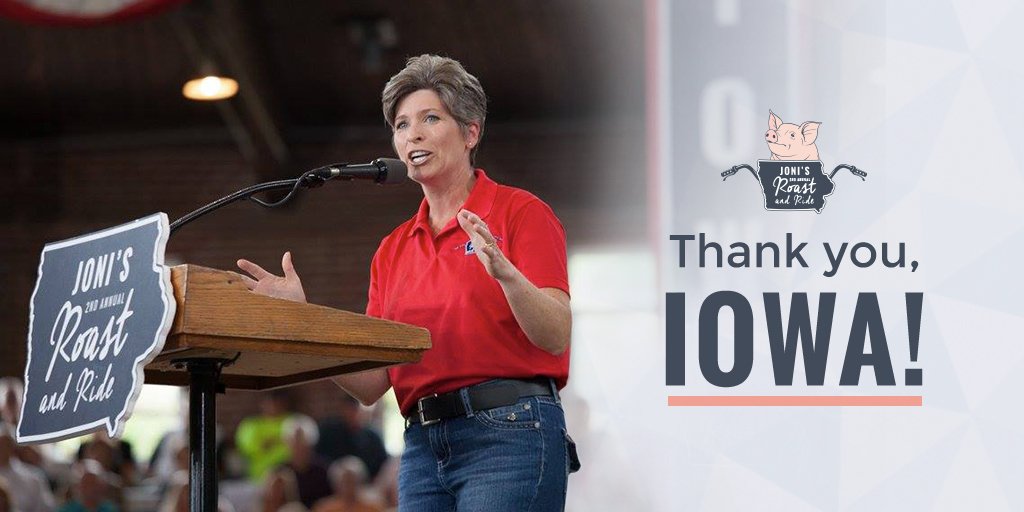
Republican presidential nominee Donald Trump was back in Des Moines yesterday as the headliner for Senator Joni Ernst’s second annual “Roast and Ride” fundraiser. Approximately 400 people rode their motorcycles to the state fairgrounds, where politicians addressed a crowd of about 1,800. Radio Iowa posted the full audio of Trump’s remarks and highlights here. Shane Vander Hart live-blogged the event for Caffeinated Thoughts.

I got a kick out of the Ernst Twitter feed, featuring photos of the rock band The Nadas, various other special guests and crowd shots, but not a single picture of headliner Trump.

Why so shy, Senator?

Not to worry, lots of other people got pictures of Ernst standing next to Trump and recorded her urging Iowans to get out the vote for the whole GOP ticket.

Representative Steve King (IA-04) was up there with Trump and Ernst, despite telling Radio Iowa on Friday he was “uneasy” about the presidential nominee seeming to backpedal lately on his promise to deport undocumented immigrants. ABC’s Meghan Keneally recapped Trump’s mixed messages about immigration policy this past week. For more, see Nick Corasaniti’s latest report for the New York Times and this piece by Peter Beinart for The Atlantic. Trump attempted to clean up the mess in an interview with CNN’s Anderson Cooper on Friday. His campaign manager Kellyanne Conway tried but failed to articulate a coherent position on CBS this morning.

At the Roast and Ride, Trump promised, “We’re gonna get rid of these people, day 1, before the wall [is built on the Mexican border], before anything.” The family of Sarah Root, the inspiration for Steve King’s “Sarah’s law,” joined Trump on stage. My heart goes out to them. Losing a loved one to a drunk driver would be devastating.

Senator Chuck Grassley and Representatives Rod Blum (IA-01) and David Young (IA-03) all spoke to the Roast and Ride crowd but declined to stand on stage for the group photo with Trump. Who can blame them?

Speaking of Trump’s toxicity, Hillary Clinton delivered an excellent speech this week to connect the dots on how Trump has promoted racist and race-baiting ideas, giving hope and cover to white supremacists. The full transcript is here. Watching the white nationalist movement become emboldened by Trump’s campaign has been one of the most disturbing political developments of the last year.

This is an open thread: all topics welcome. I skipped the Roast and Ride to go knock some doors on behalf of Jennifer Konfrst, the Democratic candidate in Iowa House district 43. Incumbents have a lot of advantages when running for re-election, especially a powerful legislator like Konfrst’s opponent, House Majority Leader Chris Hagenow. But a leadership role has drawbacks in a campaign too. For instance, when a no-party voter in this district tells me at the door she’s upset the legislature hasn’t done anything on bike safety, it’s nice to be able to mention that as majority leader, Hagenow has a huge say in what bills come out of committee and up for votes on the House floor. So if you want the House to act on bills that have already passed the state Senate (like the safe passing law that’s a high priority for the Iowa Bicycle Coalition, or real medical cannabis reform, or insurance coverage for autism services, or better oversight of privatized Medicaid), you need to change the House leadership.

Continue Reading...

Prospects for electing more women to the Iowa legislature

In honor of Women’s Equality Day, let’s revisit the field of women candidates in the 100 Iowa House districts and 25 Iowa Senate districts that are up for grabs this year. Since Bleeding Heartland last surveyed the scene, a few more women candidates have emerged, while others are no longer in the running.

Following the 2014 election, the number of women in the Iowa House rose from 25 to 27 (six Republicans and 21 Democrats). The number of women in the Iowa Senate dropped from ten to seven (one Republican and six Democrats) because men replaced three retiring female Republican senators.

Iowa’s general assembly has fewer women as a percentage of lawmakers than do 29 other state legislatures. Despite efforts by the bipartisan group 50/50 in 2020 to promote political equity in Iowa and to increase the number of women candidates at all levels of government, next year’s legislature may have even fewer female state representatives and senators.

Speaking of Women’s Equality Day, did you know Iowa women came close to gaining the right to vote during the 1870s, and again in 1916? Neither did I before I researched this Throwback Thursday post last year.

Continue Reading...

Throwback Thursday: Ed Fallon reflects on endorsing Ralph Nader for president

Before #BernieOrBust or any other hashtag existed to convey some activists’ feelings about the Democratic Party’s establishment candidate, there was Ralph Nader’s 2000 presidential campaign.

Iowa’s best-known politician to endorse Nader rather than Al Gore was State Representative Ed Fallon. The Des Moines Democrat had found himself at odds with the rest of his Iowa House colleagues before. Some of his politically inexpedient decisions have aged well, most famously his heartfelt speech before voting against our state’s Defense of Marriage Act in 1996.

Supporting Nader caused more intense fallout.

Though Fallon no longer considers himself a Democrat and has devoted most of his energy lately to environmental activism, he still endorses some Democratic candidates, including Bernie Sanders before this year’s Iowa caucuses.

Fallon spoke with Bleeding Heartland recently about his decision to back Nader, how that choice affected his subsequent bids for public office, and his advice for activists drawn to Green Party presidential candidate Jill Stein instead of Democratic nominee Hillary Clinton.

Continue Reading...

An Iowa mom's perfect care package for Mylan CEO Heather Bresch

Outrage has been building for several days over news that the Mylan corporation jacked up wholesale prices for EpiPens from $56.64 to $317.82 between 2007 and 2015. Mylan is the sole suppler of devices patients can use to inject epinephrine in case of life-threatening allergic reactions. Manufacturing costs for EpiPens have not increased, and the active ingredient is a “generic drug that has been in use for decades.” Adding to the scandal, the annual total compensation for Mylan CEO Heather Bresch has increased from $2,453,456 to $18,931,068 since 2007. The company exploited a loophole called “inversion” two years ago to reduce its tax bill.

Yesterday Democratic presidential nominee Hillary Clinton called on Mylan to reduce the price of EpiPens. Members of Congress including Iowa’s Senator Chuck Grassley have asked the company to explain the pricing changes and asked the Food and Drug Administration “to answer questions about its approval process and other steps for alternatives to the EpiPen.” Michael Hiltzik reported for the Los Angeles Times that another device used to self-inject epinephrine “was taken off the market last year because of manufacturing defects,” and a similar product from a generics company “hasn’t yet won approval from the Food and Drug Administration.” Another generic product is available at a lower cost but works differently, “in ways that can lead to critical errors if users aren’t properly trained,” and it “can’t be substituted when filling a prescription” for an EpiPen.

Mylan promised today to offer more assistance for people who need to buy EpiPens. But as Andrew Pollack reported for the New York Times, the extra discounts are “not lowering the list price of EpiPen, just making it easier for consumers to pay for it. So insurance companies, federal health programs like Medicare and Medicaid and school districts that stock the products could still pay the same price.” Bresch sounded shameless this morning during a CNBC interview, justifying the price increase because of higher marketing and distribution costs and other improvements to the product. “No one is more frustrated than I am,” she claimed.

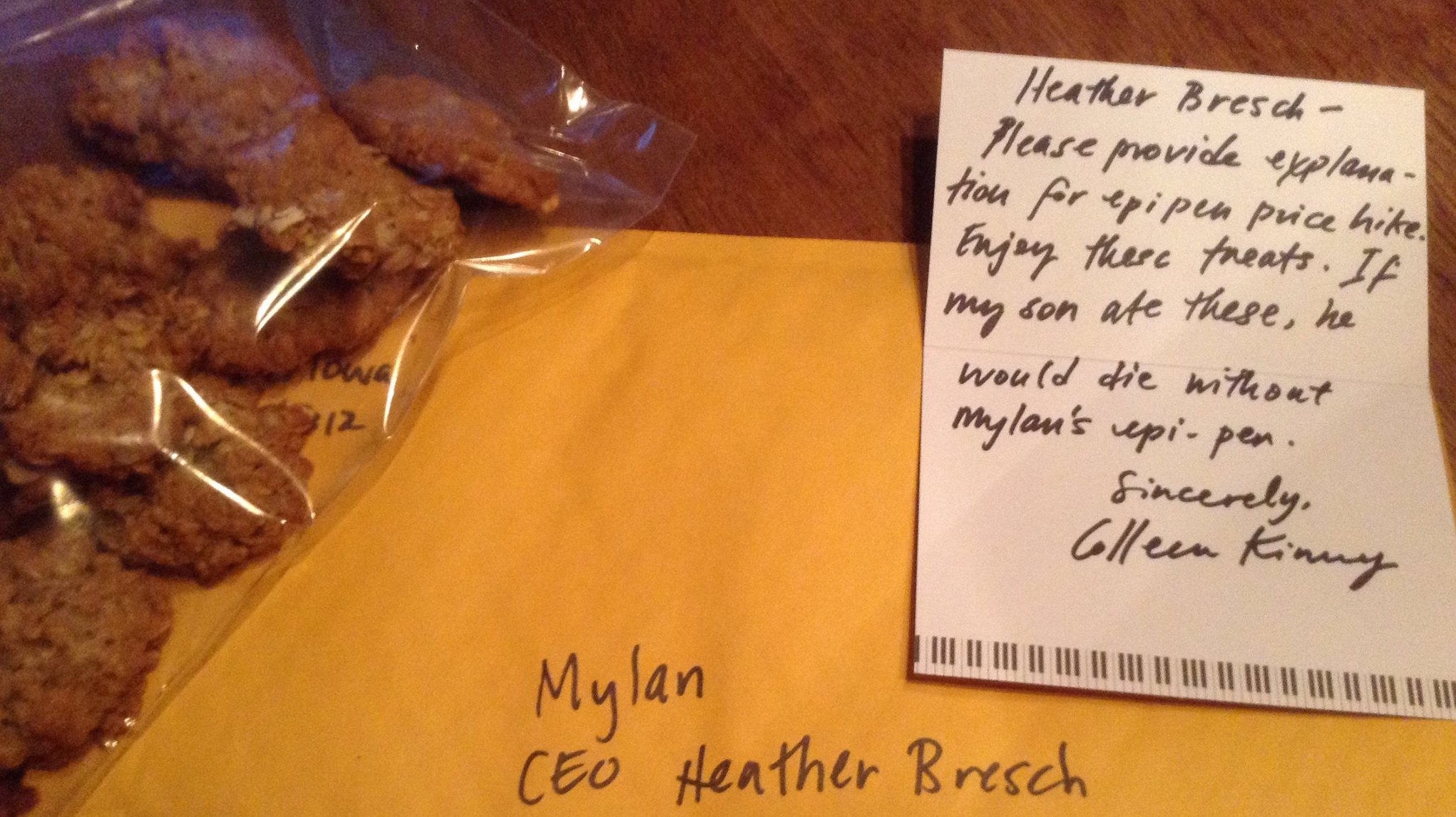
My friend Colleen Kinney, a Des Moines mother of a child with severe food allergy, is mailing Bresch a care package today. She gave me permission to publish this photo of the cookies she baked and will send along with a note: “Heather Bresch, Please provide explanation for epipen price hike. Enjoy these treats. If my son ate these, he would die without Mylan’s epi-pen.”

Continue Reading...

Iowa Senate district 28 preview: Mike Breitbach vs. Jan Heikes

Hours after Democrats across the country had begun to celebrate President Barack Obama’s re-election on the night of November 7, 2012, Iowa’s political junkies were still on the edge of our seats, waiting for votes to be reported in the last few state Senate races. Sometime after 1 am, results from Senate district 42 in Iowa’s southeast corner confirmed that Democrats would control at least 26 seats in the upper chamber. For at least two more years, that firewall would stop Republicans from implementing some of the disastrous policies seen in places like Wisconsin, Kansas, or Ohio.

Democrats are still clinging to the ledge with a one-seat Iowa Senate majority. While Republicans have several districts to target in their quest for 26, Democrats have only one obvious pickup opportunity: Senate district 28 in the northeast corner of the state. This race was the “one that got away” four years ago, as former State Representative John Beard fell an agonizing 17 votes short against Republican Mike Breitbach in the battle for an open seat. Now Breitbach has the advantages of incumbency as he seeks re-election against Jan Heikes.

Follow me after the jump for more on this district’s political make-up and voting history, along with background on both candidates and Breitbach’s first television commercial.

Continue Reading...

Iowa wildflower Wednesday: Smooth hedge nettle

This week’s featured plant is a species I learned to identify only a few weeks ago. Far from the most impressive flowers you’ll see blooming in moist habitats during the summer, smooth hedge nettle (Stachys tenuifolia) “is easy to overlook,” since it “tends to be rather small-sized and non-descript.” This member of the mint family is native to most of North America east of the Rocky Mountains. I took all of the enclosed pictures along the Windsor Heights or Urbandale bike trails.

The foliage of smooth hedge nettle strongly resembles that of American or Canada germander, which grows in similar wet places and was the focus of a Bleeding Heartland post last month. At first glance, the flowers are hard to tell apart too, but hedge nettle blossoms have an upper lip that is absent on germander flowers.

Some hedge nettle species are also known as woundwort. That name may ring a bell, because General Woundwort is a memorable character from the fantastic adventure story Watership Down. If the name doesn’t sound familiar, make time to read Watership Down sometime. That book has been one of my favorite novels since I read it as a child. My kids enjoyed it too when we read it together a couple of years ago.

Continue Reading...

Patty Judge, in new tv ads: "Washington changed Chuck"

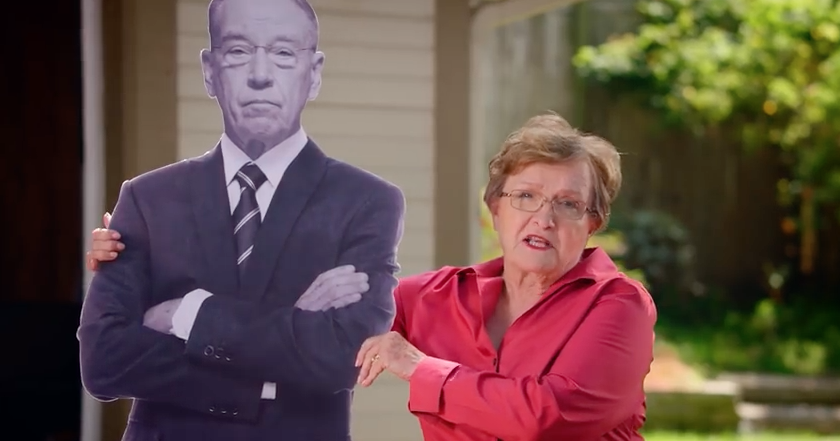
Democratic U.S. Senate nominee Patty Judge took the fight to 36-year Senator Chuck Grassley in her campaign’s first two general election television commercials, launched on Tuesday. Both 30-second spots assert that Grassley has “changed” during his long tenure in Washington. One spot features Judge delivering the message alongside a cardboard cutout of the incumbent. A string of “ordinary Iowans” question the cardboard Grassley during the other ad. Scroll down for videos and transcripts.

Grassley hasn’t run any commercials since the two ads his campaign aired before the June primary, which Bleeding Heartland analyzed here and here. I’m surprised he didn’t prepare a spot to run during the Rio Olympics, after reporting more than $1.2 million in contributions during the second quarter and nearly $6 million cash on hand as of June 30. Judge’s campaign raised $347,707 during the second quarter and had only $228,292 cash on hand at the end of June.

Three of the four Iowa polls released this month showed Grassley’s support barely above 50 percent; Judge was running 9 or 10 points behind. The most recent survey, conducted by CBS/YouGov, found Grassley leading Judge by only 45 percent to 38 percent. An incumbent polling below 50 percent traditionally signals an opening for the challenger.

But contrary to KCRG’s misleading headline and write-up, a 45-38 lead is not a “statistical tie.” The margin of error of plus or minus 4 percent in CBS/YouGov’s poll means that assuming professional sampling methods, there’s a 95 percent chance that Grassley’s support is between 41 and 49 percent, and that Judge’s support is between 34 and 42 percent. In other words, Grassley is extremely likely to be ahead if CBS/YouGov’s respondents are representative of the likely voter universe. He’s just not dominating the race by the kind of margins he’s enjoyed over previous Democratic opponents.

Over the weekend, the Des Moines Register’s Jason Noble reviewed data from earlier re-election campaigns pointing to Grassley’s strong performance among no-party voters, as well as his “crossover appeal” for thousands of Iowa Democrats.

Continue Reading...

Iowa Senate district 8 preview: Mike Gronstal vs. Dan Dawson

No Iowa Democrat has frustrated Republicans more over the last six years than Senate Majority Leader Mike Gronstal. The 26 to 24 Democratic majority in the state Senate has kept dozens of bills on the conservative wish list from reaching Governor Terry Branstad’s desk. After a net gain of six Iowa Senate seats in the 2010 wave election, many Republicans were confident that gaining control of the upper chamber was only a matter of time. However, Democrats managed to keep that one-seat majority despite a new map of political boundaries that gave Republicans lots of opportunities in 2012. Another GOP landslide in 2014 failed to deliver any net gain for the party in the Iowa Senate.

I’ve long believed Gronstal was well-positioned to win re-election again. Earlier this year, the Iowa Firearms Coalition PAC made the same calculation, leaving Gronstal’s district off its list of targeted Iowa Senate races.

But even if Senate district 8 isn’t among the most promising GOP pickup opportunities, Republican leaders will invest resources in this race, especially since their preferred challenger, Dan Dawson, won a three-way GOP primary. A television commercial introducing Dawson to voters is already in the can.

Follow me after the jump for a closer look at Senate district 8, its recent voting history, the two candidates, and likely themes of the general election.

Continue Reading...

Two Iowa Democratic blogs merge

Pat Rynard announced today that the Iowa Starting Line blog has merged with the Iowa Daily Democrat. Both websites launched in early 2015. Iowa Starting Line will host the new site, with writers from the Iowa Daily Democrat including Rick Smith and Mike Glover providing regular content. Former State Senator Jack Hatch, Charlotte Hubbell, and Tim Urban “will help with financing and guest writing.” Rynard commented,

Over a year and a half ago, I launched Starting Line to help Democrats where they were struggling in 2014: online messaging and social media. We have accomplished that goal. During the 2014 campaign, conservatives in Iowa held too big an influence in key campaigns thanks to their online news and social media advantage. Today, progressive outlets are overwhelming the dominant force in Iowa thanks to both our efforts and those of Bleeding Heartland, Blog for Iowa and John Deeth. It’s a complete sea change, and it happened in really just one year.

Many state-based progressive websites have dwindled over the past several years, so the relative health of Iowa’s Democratic-leaning blogosphere provides a welcome contrast. Deeth is the voice of the state’s longest-running Democratic website. Blog for Iowa has also been going for more than a decade and provides a platform for several regular authors. Bleeding Heartland is approaching its tenth anniversary, and while I enjoy writing about Iowa politics nearly every day, I’m proud to run a community site where this year alone, dozens of guest authors have shared their views and knowledge.

Iowa’s newest progressive voice online is Iowa Informer. Gavin Aronsen conceived of the site in part as an alternative news source for the Ames area. He also publishes stories of statewide importance, some of them thoroughly researched. Along with the Fallon Forum, Iowa Informer has become a must-read site for updates on the Dakota Access (Bakken) pipeline project.

Conservatives still dominate Iowa talk radio, but as Rynard mentioned, Republicans were better positioned to drive the online news agenda two years ago. Most famously, The Iowa Republican blog injected a damaging story about U.S. Senate candidate Bruce Braley into the mainstream media, with a little help from the Des Moines Register’s chief politics reporter Jennifer Jacobs. But The Iowa Republican has not published new content since May. Its demise has left a hole in the state’s conservative blogosphere.

Shane Vander Hart blogs frequently at Caffeinated Thoughts about national politics as well as Iowa campaigns and state government news. David Chung provides good insight on internal party happenings, but he posts infrequently at Hawkeye GOP. Iowa developments are rarely the focus of talk radio host Steve Deace’s regular columns for the Conservative Review or his widely-read Facebook status updates. The Bean Walker, once a Drudge Report-style aggregator for news about Iowa politics, has been defunct for years.

Continue Reading...

Forecasters still mixed on whether Iowa is toss-up state or leans Democratic

When Bleeding Heartland reviewed presidential election forecasts nearly two months ago, four projections had Iowa leaning Democratic, while five labeled our state a toss-up. Since then, Donald Trump and his running mate Mike Pence have each visited Iowa twice. Hillary Clinton and her running mate Tim Kaine have each visited Iowa once. Clinton’s campaign and allied groups including the super-PACs Priorities USA and VoteVets have spent substantial sums on television commercials here. After the Republican and Democratic national conventions, Clinton improved her standing in many nationwide and swing state polls, but Iowa polls continue to show no clear advantage for either side.

The fourth Iowa poll released this month is another snapshot of a closely contested race. CBS/YouGov surveyed 987 “likely voters” via the internet between August 17 and 19 and found Clinton and Trump tied at 40 percent, with 7 percent of respondents supporting Libertarian Gary Johnson, 2 percent backing Jill Stein of the Green Party, 4 percent “someone else,” and 7 percent not sure. The cross-tabs show Clinton leading among women by 44 percent to 38 percent and Trump leading among men by 43 percent to 36 percent. Among the CBS/YouGov respondents who identify as Democrats, Clinton leads Trump by 80 percent to 9 percent (3 percent Johnson, 1 percent Stein). Trump leads Clinton among self-identified Republicans by 76 percent to 4 percent (8 percent Johnson, 0 percent Stein) and also leads independents by 39 percent to 31 percent (10 percent Johnson, 4 percent Stein).

With relatively few Iowa voters undecided and both candidates quite well-known, the election is shaping up as a test of identifying supporters and turning them out, rather than a persuasion game. Speaking with highly engaged Iowa Democratic activists lately, I’ve heard many acknowledge Trump could carry this state, although the general feeling seems to be “I’d rather be us than them.” Early voting begins less than 40 days from now on Thursday, September 29.

Time to check in again with leading election forecasters.

Continue Reading...

News websites have too few moderators, not too many anonymous commenters

This weekend the Quad-City Times shut off comments on its website. Executive editor Autumn Phillips had been “debating this for months” and discussed the change with some longtime readers as well as with the newspaper’s staff. The last straw was a stream of racist or otherwise offensive off-topic comments below a story about man who had died after being attacked in an area public park.

I’ve been watching this for years at newspapers across the country. It’s not unique to the Quad-City Times, though the prejudices vary by region. Every once in a while, I see a lively, on-topic debate. In a sea of ridiculousness, hate speech and online bullying, I occasionally read thoughtful perspectives I hadn’t considered. Unfortunately, that isn’t the norm and it’s been a very long time since I believed in the dream media companies once had about providing a town square for the community to meet and use our journalism as a launching pad to connect, debate and bring about change. […]

Today, if you want to comment on an article, you won’t be able to post anonymously on our website. You’ll need to use one of the other forums we provide. […]

It takes courage to share an opinion when your name is attached. Knowing that, it’s my hope that disabling comments on qctimes.com will contribute to a civil equilibrium, a return to thoughtful discourse and elevate the discussion around the important issues we are facing in the Quad-Cities and as a nation.

I support Phillips’ decision and wholeheartedly agree that for the most part, newspaper comments sections are a “sea of ridiculousness, hate speech and online bullying.”

But the key problem isn’t anonymous commenters. It’s the failure to moderate.

Continue Reading...

Weekend open thread: Olympics and Iowa State Fair edition

Who else is sad that the Olympics are ending today? Although we’re not big sports fans, all screen time limits in our household go out the window during the winter or summer Olympics. We’ve been watching for hours every day, despite the poor quality of NBC’s broadcasts. I was spoiled by living in Europe during the 1996 and 2000 Olympics. State broadcast networks provided remarkably thorough coverage, not only of their own country’s athletes, with no commercial breaks. I was also able to watch some of the more obscure events, which don’t receive a lot of attention here. Viewership of the Rio Olympics on NBC was reportedly down 17 percent from the London Olympics in 2012, a “nightmare” for the network. Here’s an idea: try more live coverage of more competitors in more events, with less schlock passing for “human interest” features.

While the Olympics are arguably the greatest show on earth, the greatest show in Iowa is certainly the state fair, which also wraps up today. A summer cold kept my family away from the fairgrounds last week, so my kids and I only visited the fair once this year. We still enjoyed the day enormously, and I have no regrets about not trying to follow Republican vice presidential candidate Mike Pence around. I enclose a few photos below. I didn’t attempt to take a picture of the guy on the midway wearing a “Hillary Clinton for Prison 2016” t-shirt.

This is an open thread: all topics welcome, especially any favorite moments from the Olympics or the state fair. The huge model train display near the giant slide is one of the most under-rated fair attractions in my opinion. Well worth $2 a person. Looking at a toy train set might not sound that interesting, but the scenes are elaborately constructed, and as you move along, there are lists of things to find in the model (a boy flying a kite, a beekeeper, Superman, a waterfall, etc.). It’s a fun game, and the air-conditioned building provides a nice refuge on a hot day. I recently learned that the central Iowa railroad group opens up this exhibit for free on the last Friday of every month from 7 to 9 pm.

Continue Reading...

Ten presidential candidates qualify for the Iowa ballot

The filing deadline to run in Iowa’s general election ended at 5 pm today, and the Secretary of State’s Office has updated the list of candidates who submitted nominating papers and petitions with enough signatures. The following ten presidential tickets will appear on Iowa ballots:

2016 presidential candidates in Iowa
Names Party affiliation
Donald J. Trump/Michael R. Pence Republican
Hillary Clinton/Tim Kaine Democratic
Darrell L. Castle/Scott N. Bradley Constitution Party
Jill Stein/Ajamu Baraka Iowa Green Party
Dan R. Vacek/Mark G. Elworth Legal Marijuana Now
Gary Johnson/Bill Weld Libertarian
Lynn Kahn/Jay Stolba New Independent Party
Gloria La Riva/Dennis J. Banks Party for Socialism and Liberation
Rocky Roque De La Fuente/Michael Steinberg Nominated By Petition
Evan McMullin/Nathan Johnson Nominated By Petition

The last three public polls in Iowa put Johnson at 12 percent, 6 percent, and 12 percent in a four-way race against Clinton, Trump, and Stein. Although those surveys probably overstate Johnson’s support, the unusual unpopularity of this year’s major-party nominees gives the Libertarian a good chance to improve on all of his party’s previous showings in Iowa. Click here to view results for Libertarian presidential candidates going back to 1976. At a Polk County Democratic event last night, a number of activists were concerned that Johnson’s name was not yet on the Secretary of State’s candidate list, because Johnson is presumed to draw more support from traditionally Republican-leaning voters. Libertarian activists cut it close by submitting nominating papers today, but all’s well that ends well.

Others who filed on the last possible day included Evan McMullin, a former CIA officer who launched his presidential campaign only last week, and the candidates for the New Independent Party and Legal Marijuana Now, which seem like decent names for picking up protest votes.

Five candidates qualified to run for Iowa’s U.S. Senate seat: Republican Charles E. Grassley, Democrat Patty Judge, Libertarian Charles Aldrich, Jim Hennager of the New Independent Party, and Michael Luick-Thrams, “Nominated By Petition.”

Only major-party candidates will appear on the ballot in three of Iowa’s four Congressional districts: Republican Rod Blum and Democrat Monica Vernon in IA-01, Republican Christopher Peters and Democrat Dave Loebsack in IA-02, Republican Steve King and Democrat Kim Weaver in IA-04.

The field will be more crowded in IA-03, with Republican David Young, Democrat Jim Mowrer, Libertarian Bryan Jack Holder, and two candidates to be listed as “Nominated By Petition”: Claudia Addy and Joe Grandanette.

Continue Reading...

Manafort's departure shouldn't end questions about Trump's Russia ties

Only two months after firing campaign manager Corey Lewandowski, Donald Trump accepted Paul Manafort’s resignation this morning. Manafort had already been “sidelined” earlier this week, keeping the title of “campaign chairman” while pollster Kellyanne Conway was promoted to “campaign manager” and Stephen Bannon given the “chief executive” position. Bannon is best known as chairman of the none-too-reputable Breitbart News website.

For a Republican presidential nominee to give Bannon such an important role in a faltering campaign is itself newsworthy. Former Breitbart staffer Kurt Bardella told ABC News that Bannon “regularly disparaged minorities, women, and immigrants during daily editorial calls at the publication.” Ben Shapiro, who spent four years as an editor-at-large for Breitbart before resigning in March, wrote this week that Bannon had “Turned Breitbart Into Trump Pravda For His Own Personal Gain” and had encouraged the website to embrace white supremacists.

But let’s get back to Manafort. He reportedly resigned so as not to become a “distraction” for Trump, as journalists have dug more deeply into his lobbying work for pro-Russian forces and business ties to shady “oligarchs” from Russia and Ukraine. Manafort may have committed a crime by not registering as a lobbyist for foreign entities during the years he “tried to sell” former pro-Russian Ukrainian President Viktor Yanukovych to U.S. policy-makers. Eric Trump said today, “my father just didn’t want the distraction looming over the campaign […].”

Ditching Manafort won’t resolve the many valid concerns about whether Russian entities could exert undue influence on Trump. Here are five questions journalists should keep investigating.

Continue Reading...

Dan Kelley files as third-party candidate in Iowa House district 29

A surprise popped up on the Secretary of State’s general election candidate list today. Dan Kelley, a three-term state representative from Newton, has filed to run as a third-party candidate in Iowa House district 29. He lost the June Democratic primary to Wes Breckenridge by nearly a two to one margin. That campaign turned nasty and personal, with supporters on both sides calling each other “bullies.” In what has no recent precedent in Iowa politics, two major labor unions endorsed a challenger to a Democratic incumbent. Kelley was the only state legislative incumbent in either party to lose his party’s nomination this year.

At this writing, Kelley has not responded to my inquiries, nor has he posted anything on Twitter or Facebook to explain why he decided to run as a third-party candidate. The candidate list provides a big clue: Kelley is named as the candidate for the “Stand Up To Bullies” party. UPDATE: Added comments from Kelley below.

House district 29 covers most of Jasper County in central Iowa (scroll down for a map). The seat leans Democratic, but not overwhelmingly so. President Barack Obama won 56 percent of the vote here in 2012. Kelley defeated his Republican opponent that year with more than 62 percent of the vote. The district contains 7,645 active registered Democrats, 5,608 Republicans, and 6,864 no-party voters according to the latest figures from the Secretary of State’s office.

Kelley wasn’t the most popular member of his caucus, and House Democratic leaders will surely back Breckenridge in the general election. But no one in the party will relish the thought of spending money on this district when there are so many competitive House races around the state. Moreover, even if the party establishment goes all in for Breckenridge, a split in the Democratic vote could give Republican Patrick Payton the opening he needs to take this seat for the GOP. (Republicans haven’t represented the Newton area for decades.) Democrats need a net gain of eight House seats to win control of the lower chamber.

Continue Reading...

Quinnipiac adds to remarkable polling consensus on IA-Sen race

Today Quinnipiac supplemented its latest poll on the presidential race in Iowa with findings about Senator Chuck Grassley’s campaign against Democratic challenger Patty Judge. Key graphs from the polling memo:

Quinnipiac IA-Sen photo Screen Shot 2016-08-18 at 3.39.14 PM_zpsdvw0h0a4.png

The 51 percent to 42 percent lead for Grassley is remarkably close to the 52-42 gap in last week’s polls by Suffolk University and Marist for NBC and the Wall Street Journal.

I infer that polls from earlier this summer, showing Grassley below 50 percent and leading Judge by just 7 points, slightly understated his lead. One of those polls looked like a outlier in general. Two of the surveys were conducted by Public Policy Polling, which did some work for the Judge campaign before the Democratic primary.

That’s not to say that Judge can’t make this election more competitive–only that she can’t wait around for the race to fall into her lap. She’s losing men by a lot and isn’t making up for it among women voters. She hasn’t held many public events this summer and needs to campaign more aggressively over the next two and a half months. In addition to improving her name ID, Judge has to give Iowa voters a reason to fire Grassley after so many years of public service. The obvious issue, the one she has vowed to hammer home since the day she announced her campaign, is the Senate Judiciary Committee chair’s refusal to hold confirmation hearings for Judge Merrick Garland. Iowans don’t support Grassley’s stance on the U.S. Supreme Court vacancy, but it will take more work to convince enough of them to send the senator into retirement for that reason.

The Democratic Senatorial Campaign Committee put their thumb on the scale for Judge before the Democratic primary, but national strategists have quite a few more promising pickup opportunities than Iowa at present. The DSCC won’t come in with big money here unless the polling starts to show Grassley more vulnerable than he now appears.

Iowa wildflower Wednesday: Virginia mountain mint

The tiny white flowers on today’s featured plant aren’t the most impressive-looking blossoms you’ll find in late summer, but they are in a family of “deer-resistant pollinator magnets.”

Virginia mountain mint (Pycnanthemum virginianum) is native to most of North America east of the Rocky Mountains. Also known as common mountain mint, these plants thrive in a range of moist habitats and are “not fussy about soil texture.” A wide range of insects pollinate the flowers, but mammals tend to avoid the fragrant foliage. The strong mint smell is unmistakable when you crush a few leaves. I took these pictures a few weeks ago at Whiterock Conservancy near Coon Rapids and next to the Meredith bike trail in Des Moines, close to the southeast parking lot at Gray’s Lake.

Scroll to the end of this post for two bonus shots of a much more “showy” wildflower. I was sad to learn that the native range of Royal catchfly (Silene regia) does not extend to Iowa. However, this plant with bright red flowers can be cultivated here and reportedly attracts hummingbirds. I found these growing in one of the plantings at a Gray’s Lake parking lot.

Continue Reading...

Q-poll shows Clinton slightly ahead of Trump in Iowa

Yet another Iowa poll shows a close race between Hillary Clinton and Donald Trump. Quinnipiac surveyed 846 “likely voters” between August 9 and 16, producing a statistical margin of error of plus or minus 3.4 percentage points. Clinton led Trump by 47 percent to 44 percent in a two-way race, and by 41 percent to 39 percent in a field also including Libertarian Gary Johnson (12 percent) and Jill Stein of the Green Party (3 percent).

The Quinnipiac polling memo notes the large gender gap:

[Iowa] women back Clinton 56 – 38 percent, while men back Trump 51 – 37 percent. Trump leads 85 – 8 percent among Republicans. Independent voters are divided, with 45 percent for Trump and 41 percent for Clinton. Democrats back Clinton 97 – 1 percent.

Iowa voters give Clinton and Trump negative favorability ratings, 37 – 58 percent for her and 33 – 60 percent for him.

With both major-party nominees so well-known and so unpopular, and relatively few voters undecided with two and a half months to go, the key to winning Iowa will be executing an effective turnout operation, rather than a persuasion strategy.

Democrats have been dominating the “air war” this summer; Trump has yet to run any general-election television commercials, while Clinton’s campaign and allies including the super-PAC VoteVets have been running lots of tv ads during the summer Olympics. (I enclose below videos of two spots now in rotation.) Democratic vice presidential nominee Tim Kaine received lots of media coverage in Iowa’s largest markets today, headlining a morning rally in Cedar Rapids before making an unscheduled Iowa State Fair visit in the afternoon. Trump will return to Iowa for Senator Joni Ernst’s “Roast and Ride” fundraiser on August 27, which is sure to receive heavy media attention statewide.

The “ground war” will be especially important once early voting begins on September 29. More than 43 percent of the Iowans who cast ballots in the 2012 presidential election voted early, and women are more likely than men to vote before election day. Iowa Democrats registered more new voters in the final weeks of the 2012 campaign and did a better job identifying and turning out no-party voters who supported President Barack Obama.

Margins of error for subsamples are always higher than for an opinion poll as a whole, but let’s assume Trump is really ahead among Iowa no-party voters, as Quinnipiac’s poll indicates. Effective GOTV by the Democratic coordinated campaign could compensate for that problem by banking more votes from Democrats and independents already identified as Clinton supporters. (Democrats have two dozen Iowa field offices open already.) The Quinnipiac sample consisted of 28 percent self-identified Democrats, 28 percent Republicans, and 39 percent independents.

Any comments about the presidential race are welcome in this thread. Cross-tabs for the Quinnipiac poll are available here.

Continue Reading...

Iowa House district 51 preview: Tim Hejhal vs. Jane Bloomingdale

Among the dozens of potentially competitive Iowa House and Senate races (a collateral benefit of our state’s non-partisan redistricting process), the contest in House district 51 will be one of the most closely watched. GOP State Representative Josh Byrnes immediately put this northeast Iowa seat on the top tier of Democratic pickup opportunities when he decided not to run for re-election. The district covers Worth, Mitchell, and Howard counties, plus a small area in Winneshiek County, not including Decorah. Scroll down to view a map.

Democrat Tim Hejhal, a retired lieutenant colonel in the Iowa Air National Guard and principal of Osage High School (Mitchell County), is running against Republican Jane Bloomingdale, an accountant and tax preparer who is mayor of Northwood (Worth County), where she previously served 17 years on the city council. Hejhal and Bloomingdale were unopposed in their respective party primaries. A former Iowa GOP State Central Committee member who had declared plans to run in district 51 did not file for the seat. I enclose more background on Hejhal below; I was unable to find an official campaign biography for Bloomingdale.

House district 51 is a must-win seat for Democrats hoping to gain control of the state House, where the party currently holds 43 of the 100 seats. Though the GOP has a registration advantage, the plurality of voters are affiliated with neither party. According to the latest figures from the Iowa Secretary of State’s office, House district 51 contains 5,139 active registered Democrats, 6,418 Republicans, and 7,811 no-party voters. President Barack Obama received 55.19 percent of the vote among the district’s residents in 2012. Only two Iowa House districts currently held by Republicans voted to re-elect the president by a larger margin. One of them was House district 58, another open seat in eastern Iowa likely to be targeted by both parties.

Whether either party’s presidential candidate will have coat-tails here is hard to guess. In the February 1 caucuses, Donald Trump narrowly won Mitchell and Howard counties, nearly tying Ted Cruz in Worth. Hillary Clinton carried Mitchell County, while Bernie Sanders won Howard and Worth.

Intensifying the focus on this part of the state, House district 51 makes up half of Senate district 26, where Republican Waylon Brown is challenging State Senator Mary Jo Wilhelm. Both parties and a number of interest groups are heavily involved in that Senate race, which could determine control of the upper chamber. Democrats have had a campaign office up and running in Osage since early May. Iowa House districts are small enough for candidates to reach a significant percentage of voters in person, and Hejhal has been working the doors here, as have volunteers on his behalf. Bloomingdale has done some canvassing too and has had a campaign presence at various summer parades and festivals.

Neither candidate has raised much money for this race. Hejhal reported $2,650.00 in contributions through early May, and Bloomingdale took in $3,700 during the same period, loaning her campaign $500 as well. Through early July, Hejhal brought in another $5,020.00 and Bloomingdale raised another $5,825. (All contributions to both candidates came from individuals rather than political action committees.) The bulk of the money spent on this race will come from Democratic and Republican leadership committees.

Any comments on this or other state legislative campaigns are welcome in this thread.

Continue Reading...

Branstad, Rastetter, Northey join Donald Trump's Agricultural Advisory Committee

So much for an “unofficial” role: Governor Terry Branstad, Iowa Secretary of Agriculture Bill Northey, and Republican power-broker Bruce Rastetter are among more than 60 people named this morning to Donald Trump’s “Agricultural Advisory Committee.” Its “executive board members will convene on a regular basis,” according to a news release I’ve posted after the jump. Note that the campaign statement misspells Northey’s name and describes Rastetter as having hosted the “first Republican Presidential debate.” Actually, Rastetter organized an Iowa Ag Summit at which nine presidential contenders (not including Trump) appeared in March 2015. New Jersey journalist Claude Brodesser-Akner was the first to report Branstad’s and Rastetter’s involvement as Trump advisers last week.

The other Iowans on the list released today are:

• Sam Clovis, who traded in his conservative and religious principles last summer to become Trump’s “national chief policy advisor”;

• former State Representative Annette Sweeney, a friend of Rastetter’s since childhood who chaired the Iowa House Agriculture Committee until redistricting forced her into a losing primary battle against fellow House Republican Pat Grassley. She was a key player in passing Iowa’s unconstitutional “ag gag bill,” the first of its kind in the country. Soon after finishing her legislative service, Sweeney became president of a public policy group called Iowa Agri-Women.

• Ron Heck, identified as an Iowa farmer and past president of the American Soybean Association.

Any comments about the presidential race are welcome in this thread. Northey is widely expected to run for governor in 2018 rather than seek a fourth term as secretary of agriculture. His likely opponents in a GOP gubernatorial primary include Lieutenant Governor Kim Reynolds and Cedar Rapids Mayor Ron Corbett. While the lieutenant governor has repeatedly urged Iowans to vote for Trump at public events, Corbett has wisely kept some distance between himself and the presidential nominee. He steered clear of Trump’s rally in Cedar Rapids on July 28.

Continue Reading...

Using a flag to express a political view is protected speech

A Calhoun County judge has dismissed a short-lived criminal case that never should have been filed. Homer Martz was arrested last week and charged under Iowa’s flag desecration statute, because he “flew a U.S. flag upside down under a Chinese flag.” An upside-down flag is a widely recognized distress signal. Martz was protesting the Dakota Access (Bakken) pipeline, which will run near his Calhoun County home.

Trouble is, U.S. District Court Judge Robert Pratt ruled in December 2014, “Conduct involving the American flag has long been recognized by the United States Supreme Court as expressive communication that falls within the protection of the First Amendment.” Click here for the full opinion in that case, brought by the American Civil Liberties Union of Iowa on behalf of Westboro Baptist Church members who had dragged the flag on the ground while trying to disrupt military funerals.

Word of that court decision didn’t reach law enforcement in Calhoun County. David Pitt reported for the Associated Press on August 15,

Calhoun County Attorney Tina Meth Farrington filed a motion to dismiss the charges Monday, saying that she read the 2014 federal ruling and concluded she shouldn’t pursue the charge.

“The Legislature should take immediate action to repeal this law so that other citizens and law enforcement are not caught in this type of situation again,” she said.

A judge approved the motion Monday afternoon.

Calhoun County Sheriff William Davis said at the time Martz was arrested, he and the two arresting officers were unaware the law had been struck down.

When I was growing up, flag protection laws and constitutional amendments were a salient topic, as Republicans exploited a tiny number of flag-burners on the left in search of a wedge to use against Democrats. In recent years, some conservatives have displayed upside-down flags to protest President Barack Obama or his policies. On a busy corner in Windsor Heights, an upside-down flag flew for several weeks in late 2014, presumably to communicate the homeowner’s view of the president’s executive orders on immigration policy.

We can debate whether an unconventional flag display is an effective tool for political persuasion. But no matter how deeply offensive the message may be to some Americans, there is no legal recourse against those who use or abuse a flag to make their point.

Continue Reading...

Transgender athlete sets new milestone for LGBT youth in Iowa

Of all the cultural changes in Iowa since I grew up here during the 1970s and 1980s, few are more striking or more inspiring than the growing acceptance for LGBT people. When I was a teenager at Valley High School in West Des Moines, no kids were “out” in our student body or at any other Iowa high school, as far as I’ve been able to ascertain by talking to peers my age. A few of my Valley classmates came out soon after starting college, but I could never have imagined Iowa high school students openly identifying as LGBT. Now gay-straight alliances are active in at least 80 Iowa high schools. Students from much smaller communities than West Des Moines have not only come out, but become leaders in their communities, forming support groups and raising awareness of anti-LGBT discrimination that remains. Even some Iowans attending Catholic high schools have fought to create safe spaces for LGBT students.

In recent years, several transgender teens have sought not just acceptance but understanding of issues they face in high school, including at my alma mater.

Ben Christiason of Cedar Falls set another milestone by becoming Iowa’s first openly transgender high school athlete. I heard of him for the first time in June, when he was among more than a dozen graduating seniors honored at the Eychaner Foundation‘s Matthew Shepard Scholarship dinner. The American Civil Liberties Union of Iowa awarded its annual Robert Mannheimer Youth Advocacy Award to Christiason because of “his pioneering role in transgender equality.” I enclose that announcement below, along with excerpts from Courtney Crowder’s excellent profile of Christiason, which the Des Moines Register published earlier this month. Crowder’s piece on other transgender children in Iowa is a must-read as well.

The non-profit Iowa Safe Schools is hosting Iowa’s First Annual Trans Educational Conference this November, hoping to enlighten “school administrators, school board members, educators, healthcare providers, youth-serving professionals, and parents” about “the specific needs of trans and gender non-conforming students” in communities of all sizes.

UPDATE: A new national poll of millennials provides the latest evidence that LGBT equality is becoming a consensus issue for the younger generation of Americans. Added the toplines below.

Continue Reading...

Weekend open thread: More Iowa Republicans throwing in with Trump

While Republican insiders across the country despair about the presidential race, dozens urging the Republican National Committee to stop investing in Donald Trump, others wishing in vain that Trump would drop out, and some even quitting their political jobs, Iowa’s most influential Republicans continue to stand with the GOP nominee.

This week, Governor Terry Branstad confirmed plans to advise Trump on policy; his major influencer Bruce Rastetter will reportedly do the same. In addition, two other well-known GOP operatives took on formal roles in Trump’s Iowa campaign. Jamie Johnson will be coalitions director and Jake Ketzner a senior advisor. Johnson is a veteran of Rick Santorum’s 2012 presidential bid. After a spell supporting Ted Cruz, he landed with Rick Perry’s short-lived campaign this cycle. An ordained minister, he will presumably focus on engaging evangelical Christians, a key constituency for Santorum in 2012 and for Cruz this year. Jake Ketzner managed Representative Steve King’s re-election campaign in 2012, the year he faced Christie Vilsack in a substantially redrawn district. Ketzner left Branstad’s staff for a lobbying job last summer and soon became a senior adviser to New Jersey Governor Chris Christie’s Iowa caucus campaign.

Why are more respectable Republicans joining what looks like a sinking ship? For one thing, the latest public polls show Trump running better in Iowa than in national polls or surveys in swing states with more diverse populations. So even if Trump gets blown out nationally, working on his campaign here might not be a liability, especially if he carries Iowa or loses by a relatively small margin. Also, hitching your wagon to a toxic nominee is less risky when your state’s governor, lieutenant governor, GOP U.S. senators and representatives are giving you cover. UPDATE: Forgot to mention that going all-in for Trump helped our state’s establishment secure a promise from the nominee that if he’s elected, the Iowa caucuses will remain first in the nominating calendar.

Neither Branstad nor any Republicans who represent Iowa in Congress have responded to my questions about worrying aspects of Trump’s candidacy. To my knowledge, only two GOP elected officials in Iowa have publicly ruled out voting for Trump: State Senator David Johnson and Hardin County Auditor Jessica Lara. Tips are welcome if readers know of other GOP officials willing to say #NeverTrump. I’ve sought comment from many whom I considered “likely suspects.”

Several experienced Iowa campaign operatives have said they won’t vote for the GOP nominee, including David Kochel, a former strategist for Mitt Romney and senior figure in Jeb Bush’s 2016 campaign. Justin Arnold, former state political director for Marco Rubio, explained in a March op-ed column for the Des Moines Register why he would not support Trump under any circumstances. He announced earlier this month that he has joined the direct mail and political consulting firm Majority Strategies. That company’s clients include U.S. Representative Rod Blum (IA-01) and at least one Iowa GOP state committee.

Joel Kurtinitis, a onetime staffer on Ron Paul’s presidential campaign and former Republican State Central Committee member, published a blistering commentary at The Blaze on Friday: Five Things You Can Never Say Again After Voting Trump. I enclose below excerpts from a piece that social conservatives might describe as “convicting.”

Meanwhile, Hillary Clinton’s campaign continues to build a strong field operation in Iowa and other battleground states, while Trump’s ground game is remarkably weak and in some areas literally missing in action.

This is an open thread: all topics welcome. The Iowa State Fair opened on Thursday and runs through Sunday, August 21. A summer cold moving systematically through our household has so far kept us from the fairgrounds, but we will get there once or twice this week. Bleeding Heartland has previously published my best advice for enjoying the fair, especially in the company of young children. The schedule of candidates speaking at the Des Moines Register’s “soapbox” near the administration building is here. Like Brad Anderson, I was surprised Senator Chuck Grassley passed on the opportunity. Maybe I shouldn’t have been, though. Grassley tends to avoid putting public events on his schedule in Polk and several other large-population counties.

Continue Reading...

IA-03: Someone is testing negative messages about Jim Mowrer

A poll in the field is testing some negative messages about Jim Mowrer, the Democratic challenger to Representative David Young in Iowa’s third Congressional district. Details are after the jump, based on a report from a Bleeding Heartland reader who received the call on Friday. I will update this post as needed if I get the call myself or other respondents share further details.

IA-03 is among the most competitive U.S. House races, with an even partisan voter index and an incumbent serving his first term in a district President Barack Obama carried in 2012. Early last year, the National Republican Congressional Committee put Young in its “Patriot Program” for vulnerable House members. The Democratic Congressional Campaign Committee added Mowrer to its “Red to Blue” program shortly after the June primary election. According to the latest figures from the Iowa Secretary of State’s office, the sixteen counties in IA-03 contain 161,156 active registered Democrats, 172,272 Republicans, and 153,533 no-party voters.

Continue Reading...

A disturbing glimpse of police practices in Iowa's sixth-largest city

The Justice Department issued a horrifying report this week on Baltimore Police Department conduct. Reading about widespread racial discrimination, gender bias during sexual assault investigations, and unconstitutional strip searches and arrests by Baltimore officers, I hoped nothing that bad routinely happens in Iowa but wondered how police departments here would withstand such scrutiny.

The racial disparities in our state’s criminal justice system have long been among the largest in the country, landing Iowa on multiple lists of the “worst places” for black people. Statistics on arrests and prison populations don’t prove police acted improperly in any specific case, but they may signal racial profiling or other systemic problems.

Those statistics don’t reflect every questionable interaction between law enforcement and people in minority communities. Three cases that didn’t result in any prison sentences nonetheless point to excessive uses of force by Waterloo police against black residents.

Continue Reading...

Trump up by 1, Grassley by 10 in new Suffolk Iowa poll

Suffolk University’s new poll of Iowa “likely voters” shows Donald Trump leading Hillary Clinton by 41 percent to 40 percent in a two-way race and by 37 percent to 36 percent in a field including Libertarian nominee Gary Johnson (6 percent) and the Green Party’s Jill Stein (3 percent). Suffolk’s news release noted that 53 percent of respondents expect Clinton to win the election, while 31 percent think Trump will win, and 16 percent were unsure. A higher share of respondents thought Trump was “honest and trustworthy” (34 percent) than said the same of Clinton (29 percent). Johnson did best in Iowa’s southwest counties, while Stein had 9 percent support among respondents between the ages of 18 and 34, a group presumably including a lot of Bernie Sanders backers.

After the jump I’ve posted a few more numbers that caught my eye from Suffolk’s full results and cross-tabs, along with excerpts from Jason Noble’s reports for the Des Moines Register this week on the likely paths to victory for Trump and Clinton in Iowa.

Suffolk found U.S. Senator Chuck Grassley ahead of Democratic challenger Patty Judge by 52 percent to 42 percent–the same margin as in the Marist poll released Tuesday. However, the Marist survey indicated a slight lead for Clinton in the presidential race. Grassley’s favorability numbers in the Suffolk poll were good for an incumbent on the ballot: 54.4 percent favorable, 31 percent unfavorable. Judge was not nearly as well known, with 32.4 percent of respondents expressing a favorable opinion and 27.8 percent an unfavorable one.

Continue Reading...

Rushing the stage at a presidential candidate event is not "civil disobedience"

Hillary Clinton came to Iowa yesterday for the first time since the February 1 caucuses. After visiting the Des Moines t-shirt shop Raygun, she spoke primarily about economic policies to a packed Lincoln High School gymnasium.

During the rally, a woman jumped over the barricade and ran toward the stage. Several Secret Service agents tackled her, while Clinton showed remarkable composure as she kept delivering her stump speech. The protester was apparently representing the “Direct Action Everywhere” community, trying to call attention to “Hillary’s support for Costco and other corporate animal abusers.”

As a card-carrying member of the American Civil Liberties Union, I support anyone’s right to protest peacefully, to hold up signs, and even to disrupt a political event by shouting taunts or slogans (though heckling’s not my personal style). But rushing the stage is not an acceptable form of protest, especially right after the Republican presidential candidate hinted that “Second Amendment people” might be the only way to stop Clinton from appointing judges to the federal bench.

So I was disturbed last night to see former State Senator Tom Fiegen advocate more barricade jumping at Clinton campaign events.

Continue Reading...

Iowa wildflower Wednesday: Ox-eye (False sunflower)

Large yellow flowerheads are abundant this time of year along roadsides and on almost any Iowa prairie, even small remnants or restoration projects. You may find cup plants, compass plants, yellow coneflowers, black-eyed Susans, brown-eyed Susans, rosinweed (soon to be featured at Bleeding Heartland), Jerusalem artichokes, common sunflowers, Maximilian sunflowers, or today’s plant.

Ox-eye (Heliopsis helianthoides) is native to most of North America east of the Rocky Mountains. Also known as false sunflower, oxeye sunflower, smooth oxeye, or sweet smooth oxeye, it has a longer blooming period than many prairie flowers. The shape of the leaves and the raised flower centers, which are yellow or orange, help distinguish ox-eye from other members of the aster family with yellow flowerheads. Ox-eye grows in wooded areas and on disturbed ground as well as in prairies.

A huge colony of ox-eye is thriving at a rest stop on the north side of I-80 near Bettendorf (Scott County), where I took most of the enclosed pictures in July. As a bonus, I included a few shots of goldenrod plants with an unusual feature.

Continue Reading...

Branstad to be "unofficial" Trump adviser; Bruce Rastetter may have same role

New Jersey journalist Claude Brodesser-Akner had the scoop today for NJ.com: Donald Trump’s soon-to-be-announced economic advisers include Iowa Governor Terry Branstad and “Bruce Rastetter, a multimillionaire livestock and bio-fuel tycoon who insiders say is also a leading candidate to be Trump’s agriculture secretary.” They

will advise Trump on agribusiness and energy policy, according to a source within the Trump campaign who was not authorized to speak publicly about the move.

“There’s a clear nexus between [New Jersey Governor Chris] Christie, the Branstads and Rastetter,” explained one Iowa GOP insider familiar with all three men’s dealings with one another but who was fearful of alienating the Iowa governor by speaking out publicly.

Rastetter helped talk Branstad into running for governor again in 2009 and was his campaign’s top donor in 2010. He has exerted substantial influence since Branstad returned to office in 2011, speaking to the governor “at least once a week.” Rastetter tried to recruit Christie to run for president in 2011 and endorsed him in a highly-publicized event last September. Though Branstad did not endorse any presidential candidate before the Iowa caucuses, several people close to him were involved in Christie’s campaign.

Branstad’s spokesperson Ben Hammes confirmed via e-mail that the governor “was asked to advise Mr. Trump in an unofficial role. He will be offering his advice on important issues to Iowa, none more important than renewable fuels.” Iowa Republicans have seized on a recent report by Reuters, suggesting that as president, Hillary Clinton might change federal policy on the Renewable Fuel Standard, a mandate for biofuels blends into gasoline. The governor’s son Eric Branstad is running Trump’s general election campaign in Iowa, having coordinated an ethanol industry group‘s political efforts here before the caucuses.

Hammes declined to comment on Rastetter’s possible role in the Trump campaign or a prospective Trump cabinet. At this writing, Rastetter’s office has not responded to my inquiry. The man often described as an “ethanol baron” sought to enhance his reputation as an authority on agriculture policy last year, when he organized an Iowa Ag Summit, attended by nine presidential hopefuls and a who’s who of Iowa GOP elected officials. Though Rastetter would surely want to have a strong voice in any Republican administration, I have trouble seeing him in a cabinet secretary’s role, with many public events and press availabilities. The way Trump’s poll numbers are looking lately, we will likely never find out whether Rastetter was really the top contender to head the U.S. Department of Agriculture.

UPDATE: According to Cedar Rapids Gazette columnist Todd Dorman, Rastetter met privately with Trump not long before the nominee’s July 28 rally in Cedar Rapids. Excerpts from that story are after the jump, along with comments Hammes provided to Gazette reporter Vanessa Miller.

Continue Reading...

Clinton up by 4, Grassley by 10 in new Iowa poll (updated)

The first public poll of Iowa since the Republican and Democratic national conventions shows Hillary Clinton slightly ahead of Donald Trump by 41 percent to 37 percent. Marist surveyed 899 registered voters for NBC News and the Wall Street Journal between August 3 and 7, producing a margin of error of plus or minus 3.3 percent. In last month’s Marist poll of Iowans, Clinton led by 42 percent to 39 percent.

When the 2016 presidential race is expanded to four candidates – including Libertarian nominee Gary Johnson and the Green Party’s Jill Stein – Clinton and Trump are tied at 35 percent each in Iowa, with Johnson at 12 percent and Stein at 6 percent. (Last month in the state, Clinton and Trump were tied in the four-way horserace at 37 percent.)

Historically, third-party presidential candidates have received far fewer votes in November than their summer poll numbers would suggest. But even assuming Marist is greatly overstating support for Johnson and Stein, those candidates could set records for their respective parties in Iowa. No Libertarian presidential candidate has ever surpassed 1 percent of the vote in our state. The Green Party’s best showing in a presidential election here was roughly 2.2 percent, which Ralph Nader received in 2000.

Both major-party presidential candidates are underwater among Iowa voters on favorability. Some 36 percent of Marist’s respondents have a favorable view of Clinton, 58 percent unfavorable. Those would be terrible numbers if Trump weren’t in even worse shape at 31 percent favorable, 64 percent unfavorable in the same poll. Without seeing more detailed results, it’s hard to tell which candidate has more room to grow support. Some recent surveys have found that remaining undecided voters “lean toward being [Bernie] Sanders holdouts,” which could mean more potential growth for Clinton than for Trump. That said, I’m 100 times more confident that Clinton will win 270 electoral votes than I am of her carrying Iowa. She is generally polling better in states that are more diverse than Iowa, where more than 86 percent of residents are non-Hispanic whites.

UPDATE: Nate Cohn pointed out that Iowa is the state “where Democrats are most dependent on less [educated] white voters.” Non-college-educated whites were a big part of Barack Obama’s winning coalition here. According to the latest data from the U.S. Census Bureau, 26.4 percent of Iowans who are at least 25 years old have a bachelor’s degree or higher level of education.

Marist found U.S. Senator Chuck Grassley leading Democratic challenger Patty Judge by 52 percent to 42 percent. That’s a smaller lead for Grassley than he has enjoyed in most of his re-election campaigns, but better than the single-digit leads other pollsters found for the senator earlier this summer. Iowa Republicans will be encouraged to see Grassley above the 50 percent mark. The senator confirmed to Radio Iowa today that he is still supporting Trump for president, citing scheduling conflicts to explain his absence from the GOP nominee’s rallies in Davenport and Cedar Rapids on July 28 and in Des Moines on August 5. In a statement I enclose below, Judge demanded that Grassley explain “exactly what Donald Trump meant” when he said today at a North Carolina rally, “If she [Hillary Clinton] gets to pick her judges, nothing you can do, folks. Although the Second Amendment people — maybe there is, I don’t know” (full comments here).

In related news, Senator Joni Ernst’s office has not yet responded to my request for comment on the extraordinary public letter released yesterday by 50 former high-ranking national security officials in Republican administrations, explaining why they will not vote for Trump. Ernst has repeatedly depicted Trump as the best candidate to keep America safe, but the former security officials warned Trump “would be a dangerous President,” lacking the requisite “character, values, experience,” or “temperament,” while displaying “little understanding of America’s vital national interests” and “alarming ignorance of basic facts of contemporary international politics.”

SECOND UPDATE: Added below some other findings from the Marist poll; click here for full results.

Continue Reading...

Joni Ernst sticking to ISIS claims despite fact-checker's "F" grade

Three weeks ago today, U.S. Senator Joni Ernst took the stage at the Republican National Convention to make the case for Donald Trump and bash Hillary Clinton, particularly on issues related to foreign policy and the military. For those who missed the speech, I’ve embedded the video at the end of this post. The full text is available here.

Other controversies of the day overshadowed the substance of Ernst’s remarks, delivered late in the evening to an “almost empty” hall. Most of the senator’s statements about Clinton and Trump were matters of opinion. However, Erin Jordan of the Cedar Rapids Gazette zeroed in on one verifiable claim: “According to the FBI, ISIS is present in all 50 states. Think about it for a moment — terrorists from ISIS are in every one of our 50 states.”

After researching federal data on terrorism and the material Ernst’s office provided in support of her assertions, Jordan gave Ernst an “F.” But Ernst refuses to acknowledge that she distorted and exaggerated what FBI investigators have found.

Continue Reading...

Weekend open thread: Dangerous territory (updated)

What’s on your mind this weekend, Bleeding Heartland readers? This is an open thread: all topics welcome. Here are some links that caught my eye during the past few days; excerpts from several of the articles and columns are after the jump.

Donald Trump’s advocacy for policies that serve Russian interests continue to set off alarm bells for those who are familiar with Russian President Vladimir Putin’s leadership style. In an op-ed for today’s New York Times, former CIA Director Michael Morrell explained why he is publicly endorsing a presidential candidate (Hillary Clinton) for the first time: “Donald J. Trump is not only unqualified for the job, but he may well pose a threat to our national security.”

At this writing, none of Trump’s most prominent Iowa Republican endorsers (Governor Terry Branstad, Senators Chuck Grassley and Joni Ernst, Representatives Rod Blum, David Young, and Steve King) have responded to my e-mails seeking comment on Trump’s Russia connections and other worrying aspects of his candidacy. UPDATE: Clinton’s campaign is now highlighting “Trump’s bizarre relationship with Russia.” Scroll to the end of this post for more.

If weakening the NATO alliance, running down parents of a veteran who died in wartime service, and refusing to release tax returns don’t raise enough red flags, Iowa Republicans could read up on the GOP nominee’s connections with organized crime figures. Timothy L. O’Brien reviewed some evidence for Bloomberg. Two journalists who covered Trump and the casino industry for decades have discussed Trump’s mob ties in greater detail: David Cay Johnston in this article for Politico and Wayne Barrett in an interview with CNN.

Fact-checkers have found that Clinton is much more truthful than Trump, or as Nicholas Kristof put it, “Clinton is about average for a politician in dissembling, while Trump is a world champion who is pathological in his dishonesty.” Former Wall Street Journal reporter Neil Barsky had more to say here about Trump’s lies and poor results in business.

Meanwhile, large segments of the Republican base remain convinced Clinton is a liar or worse. Chants of “Lock her up” are now a staple of Trump rallies in Iowa and elsewhere. Matthew Rezab reported for the Carroll Daily Times Herald on August 2 that at last weekend’s parade to celebrate the 100th anniversary of the fire department in the small town of Arcadia (Carroll County), children were encouraged to throw water balloons at one float, featuring “a man dressed in an orange jumpsuit and Hillary Clinton mask while standing on a platform inside bars, fencing and barbed wire above a ‘Hillary For Prison’ sign tacked onto the side.”

Several national polls, including today’s release by the Washington Post and ABC News, reinforce what Dan Guild noted here a few days ago: Clinton got a larger bounce out of her party’s national convention and is well-positioned going into the final months of the presidential campaign. No public polls from Iowa have come out since the conventions; I’m curious to see whether the state of the race has changed here. Iowa is expected to be among the most closely-contested states this fall. The Washington Post/ABC poll findings on support for Clinton and Trump by education level are stunning. I enclose excerpts from the write-up below.

Final note: Iowa’s annual two-day sales tax holiday is happening this weekend. In theory, the temporary break is supposed to stimulate the economy. The Iowa Policy Project’s experts have been saying for years that the policy is a sham. In her latest column for the Cedar Rapids Gazette, Lynda Waddington compiled more evidence for scrapping this 16-year Iowa tradition.

Continue Reading...

Don't expect hard-hitting journalism in the "new and improved" Cityview

After 25 years of weekly publication, central Iowa’s self-styled alternative paper Cityview is now a monthly targeting “higher-income demographics,” publisher Shane Goodman explained in the final weekly edition.

We know that readers want even more of our alternative style of reporting, but we also recognize that advertisers’ needs are changing. They want glossy paper stock. They want to reach higher-income demographics. They want digital editions and social media connections. And they don’t see the need to advertise on a weekly basis like they once did. With advertising as our sole source of revenue, we need to do all we can to accommodate these needs, or we won’t survive the next 25 years. As a result, this is our last weekly issue of Cityview, and you will see a new and improved monthly edition on the stands and online starting Aug. 11. It will continue to have much of the content you have come to know and love, but it will also have a number of new features and will be printed on glossy and high-bright stock paper, in a larger format, with more pages — in both print and digital formats.

I’ll be surprised to see any investigative journalism in the “new and improved” Cityview, based on the “2016 media kit” the publication is shopping around to advertisers. Gavin Aronsen posted that document in his excellent analysis of the weekly’s “sad decline.” I’ve enclosed some excerpts below, but do click through to read the whole Iowa Informer piece. Aronsen flagged some questionable articles and columns, as well as a sexist dark side to what Goodman approvingly called a “testosterone-driven approach” to news coverage. The Iowa Informer post did not mention what I consider one of Cityview’s lowest points: the editors’ disgraceful slut-shaming of former Des Moines Public Schools superintendent Nancy Sebring. Bleeding Heartland discussed that episode here.

In other central Iowa media news, KCCI-TV reporters Emmy Victor and Vanessa Peng are leaving for jobs in other states. Victor told the Des Moines Register this week that the racism she sometimes encountered while working in Iowa “did not help my decision to stay.” That should be embarrassing (but not surprising) for white Iowans. As a place to live, our state has many wonderful attributes, but we won’t make any nationwide top-10 lists for tolerance of diversity. On the contrary: Iowa has been named one of the “worst states for Black people,” and two Iowa metro areas made a list of ten cities across the country with “the worst racial inequality.”

Earlier this summer, Victor gained national attention after being charged at by a woman screaming racial abuse while on location. The reporter handled herself well during what must have been a scary event. I hope she never experiences anything like it again. I did not agree with KCCI’s decision to make a big news story out of a distraught mother’s meltdown, though. Like Damon Young, I don’t mean to excuse the woman’s behavior, but she had just watched her son get fatally shot by police near where the KCCI crew set up. Victor has not responded to my questions about whether she or KCCI pressed assault charges over that incident.

Continue Reading...

Six questions Iowa Republicans should answer about Donald Trump

GOP presidential nominee Donald Trump continued to disgrace himself over the past five days, feuding with the parents of fallen Captain Humayun Khan and revealing shocking ignorance about a foreign policy challenge the next president will face.

The response from prominent Iowa Republicans has been inadequate (in the case of Trump’s insulting comments about Khizr and Ghazala Khan) or nonexistent (in the case of his latest statements about Russia and Ukraine).

Every Republican candidate or office-holder in this state, aside from #NeverTrump State Senator David Johnson, should answer the following questions.

Continue Reading...

Filing period for Iowa's minor-party and independent candidates begins

The general election filing period for candidates seeking state or federal offices in Iowa began today and runs through Friday, August 19, at 5:00 pm. The Iowa Secretary of State’s Office will update the candidate list daily. John Deeth often reports notable filings at his blog.

Candidates hoping to run for the Iowa House or Senate as a Democrat or Republican, who did not win their party’s primary on June 7, must be nominated by a special convention in the appropriate district. Candidates affiliated with minor political parties (such as the Libertarian or Green Party) or no party organization must file nominating papers including petitions with a certain amount of signatures, depending on the office sought.

Getting on the ballot is relatively easy in Iowa, compared to some states. I enclose below three pages from the Secretary of State’s candidate guide, including the signature and other requirements for candidates seeking various offices. Click here for the full 21-page document.

In 2014, I wondered why obscure U.S. Senate candidate Rick Stewart was identified on the Iowa ballot as an “independent,” while fellow candidate Ruth Smith was identified by her name only. The Secretary of State’s Office guide explains,

The term “independent” is used by candidates and the general public to refer to candidates who are not running under any party or NPPO’s ticket. In Iowa, if a candidate writes the word “Independent” on nomination papers, that candidate is indicating membership in the “Independent” NPPO [non-party political organization] and will be listed on the ballot that way. If a candidate intends to run without any party or NPPO affiliation, the box next to “Not affiliated with any organization” on the nomination petition and affidavit of candidacy should be checked. The candidate’s name will appear on the ballot without any reference to a party affiliation.

Early voting in Iowa will begin 40 days before the general election, on Thursday, September 29. Other important dates can be found on this general election calendar.

Continue Reading...

The Des Moines Register is looking for a new executive editor

The Des Moines Register announced today that executive editor Amalie Nash will soon start a new job supervising the work of “about 50” Gannett news organizations “in the Midwest and the west side of the country.”

Nash, who has served as the Register’s executive editor since January 2014, has focused heavily on watchdog reporting and innovation.

She advocated for changes to Iowa’s public records laws and spearheaded a push for access to public records, including two lawsuits seeking records in high-profile cases. She also was one of the editors of the award-winning project “Harvest of Change,” the first virtual reality news project in the country to be designed for the Oculus Rift platform.

Nash oversaw the Register’s award-winning coverage of the 2016 Iowa caucuses, which broke digital traffic records and saw the organization launch new initiatives such as public forums and mock caucuses.

I enclose below background on those open records lawsuits.

Nash will be in charge of the search for her successor, while the newspaper’s news director Carol Hunter “will serve as interim editor until Nash’s replacement is hired.” I’ll update this post with the job listing when one becomes available.

My probably impossible dream is that the new executive editor will make the Register’s website more user-friendly, with as few auto-play videos as possible. Those videos are usually a waste of time for reporters and readers, especially when there is no extra content, just a writer summarizing an article out loud. Most online news consumers would rather read a story.

UPDATE: Added below comments from Randy Evans, executive director of the Iowa Freedom of Information Council, for which Nash has served as first vice president.

SECOND UPDATE: Added the job description Gannett posted on August 9.

Continue Reading...

Weekend open thread: Top moments from the DNC in Philadelphia

Last weekend, when internal Democratic National Committee correspondence published by Wikileaks was all over the media, and Hillary Clinton inexplicably reacted to the scandal by giving outgoing DNC Chair Debbie Wasserman-Schultz an honorary role in her campaign, I feared the worst. Would Democrats fail to clear the very low bar Republicans set at their “disastrous” convention in Cleveland?

The DNC turned out to be the best I’ve ever seen, and I’m not alone in that assessment. I’ll be surprised if Clinton doesn’t get a substantial boost in the next few days’ polling. Who knows whether this year’s race will conform to trends Dan Guild described in his deep dive into the history of convention bounces. But I’m with Steven Mazie: if Clinton loses to Trump in November, it won’t be because of anything that happened in Philadelphia.

In a week with many good speeches, First Lady Michelle Obama’s was the highlight for me. So well-crafted, so well-delivered. The full video is after the jump, along with some other notable prime-time DNC appearances.

This is an open thread, so all topics are welcome. But please share your own favorite moments from the DNC.

Continue Reading...

Highlights from Donald Trump's swing through Davenport and Cedar Rapids

Republican presidential nominee Donald Trump campaigned in Iowa Thursday for the first time since the February 1 precinct caucuses. Follow me after the jump for clips and highlights from his events in Davenport and Cedar Rapids.

Among Iowa’s 99 counties, Linn County (containing the Cedar Rapids area) and Scott County (containing the Iowa side of the Quad Cities) are second and third in the number of registered voters. Trump finished third in Linn County on caucus night, behind Senators Ted Cruz and Marco Rubio. He was a close second to Rubio in Scott County and repeatedly praised the Florida senator during his Davenport speech.

Continue Reading...

Iowa wildflower Wednesday: Pointed-leaf tick trefoil

Like last week’s featured wildflowers, today’s plant thrives in wooded areas and has delicate, faint pink flowers. Pointed-leaf tick trefoil (Desmodium glutinosum) is native to most of North America east of the Rocky Mountains. I found the colony pictured below near the main road through Maquoketa Caves State Park (Jackson County).

As a bonus, I included two photos of a non-native plant with much brighter pink flowers, which I saw recently in a seep (wet area) at Whiterock Conservancy near Coon Rapids (Carroll County).

Continue Reading...

Bakken pipeline received final federal permit; land use lawsuit pending

The U.S. Army Corps of Engineers has granted the Texas-based Dakota Access company a federal permit to build the Bakken pipeline across Iowa.

Although opponents plan various forms of direct action, the best remaining chance for stopping the pipeline is a lawsuit challenging the Iowa Utilities Board’s authority to use eminent domain for a project with no legitimate public purpose.

Continue Reading...

Democrat Jessica Kean to face GOP's Andy McKean in Iowa House district 58

Democrats have a new candidate in Iowa House district 58, which will likely be targeted by both parties. Jessica Kean, who works for a non-profit organization in Maquoketa, will seek the nomination at a special convention next month. Previous Democratic candidate Peter Hird had been running for the seat since last October and was unopposed in the primary, but yesterday he announced plans to end his campaign for unspecified “personal reasons,” following “much deliberation.” The party’s new recruit Kean will be favored at the special convention, even if other Democrats enter the fray.

Among the most Democratic-leaning Iowa legislative seats currently held by a Republican, House district 58 is a must-win for Democrats to have any hope of regaining control of the lower chamber, where the party now holds 43 of the 100 seats. It became one of the top pickup opportunities when GOP State Representative Brian Moore decided not to seek re-election, joining more than half a dozen of his colleagues this cycle.

I assumed Moore would be a one-term wonder after his shocking, narrow victory in 2010. But his constituents re-elected him even as Barack Obama received 55.6 percent of the vote in House district 58 in 2012. Only residents of House district 91 in the Muscatine area gave a higher share of their votes to the president while electing a Republican to the Iowa House. According to the latest figures from the Iowa Secretary of State’s office, House district 58 contains 7,038 active registered Democrats, 5,236 Republicans, and 8,567 no-party voters.

The GOP candidate in House district 58 is former state lawmaker Andy McKean. He easily won a three-way primary with more than 62 percent of the vote. He served fourteen years in the Iowa House and ten in the Senate before retiring in 2002 to run successfully for Jones County supervisor.

Given McKean’s political experience and long career as an attorney in the Anamosa area, I am surprised he hasn’t raised more money for his House campaign. He reported $8,351.00 in contributions by mid-May, mostly from individuals, but spent almost all of that cash before the June primary. He raised another $5,115.00 in the next reporting period, of which $3,000 came from a PAC representing general contractors. As of July 14, McKean had just $4,594.23 cash on hand. House Republican leaders will probably need to spend part of Speaker Linda Upmeyer’s huge war chest defending this seat.

I enclose below background on both candidates and a map of the district, which covers all of Jackson County, much of Jones County, and two rural Dubuque County townships. Donald Trump carried Jackson County and most of the Jones County precincts in the February 1 precinct caucuses, while Marco Rubio carried the Dubuque County precincts. On the Democratic side, Hillary Clinton carried Jackson County; the Jones County precincts were a mixed bag, and the Dubuque precincts were a tie.

More voters in House district 58 live in Jackson County (Kean’s base) than in Jones County, where McKean has lived for decades. On the other hand, Kean is a first-time candidate, whereas McKean has been elected to the state legislature ten times.

Continue Reading...

Weekend open thread: Secret weapons

This post’s title came from the unintentionally humorous Bloomberg News analysis by Jennifer Jacobs and Kevin Cirilli: “America Meets Trump’s Secret Weapon: Ivanka.” The nut graph declared, “Ivanka […] might be her father’s single strongest asset for changing his perception among women, one of Trump’s weakest demographic groups, strategists and campaign insiders said.” Support came primarily from Ivanka’s brothers Donald Jr. (“She’s an impressive woman”) and Eric (“I think she brings in independents. I think she brings in Democrats quite frankly”). Unnamed strategists described Ivanka as “a character witness” who can be a “bridge between her father and women,” thanks to her “refined and feminine, but unmistakably Trump” brand. Lacking data to bolster that assertion, Jacobs and Cirilli wrote, “Even Trump’s opponents agreed that Ivanka, a balm to her dad’s shock-jock tactics, is a strong weapon for Trump.” The only detractor quoted was the former leader of a stop Trump super-PAC, who called Ivanka “smart, poised, graceful and dignified.” No question, she is. So was Ann Romney. The 2012 presidential election still had the largest gender gap ever recorded.

Jacobs and Cirilli rightly noted that unlike Democrats, Donald Trump “hasn’t called for” making quality child care more affordable, a goal Ivanka flagged in her convention speech. They could have added, nor has the GOP nominee endorsed “equal pay for equal work,” for which Ivanka promised her father would fight. Hillary Clinton has been emphasizing those and related issues like paid family leave in almost every campaign appearance for more than a year. I doubt she or her strategists are losing sleep over Trump’s “secret weapon.”

If any campaign analysis could make you lie awake in terror, it would be Josh Marshall’s July 23 post at Talking Points Memo about Trump’s entanglements with Russian President Vladimir Putin. I’ve enclosed excerpts below, but you should click through to read the whole piece.

I knew Trump had occasionally praised Putin, and vice versa. I’d seen a small army of Russian trolls stir things up for Trump on Twitter last year. I knew Trump was getting favorable spin from the Kremlin-backed English-language television network and from Russian-language websites with ties to the authorities. I had read that Trump campaign operatives “gutted” GOP platform language related to Russian interference in eastern Ukraine. On Thursday, I saw Trump’s startling interview with the New York Times, in which he signaled he might not honor our country’s obligations to NATO allies attacked by Russia, if those countries had not “fulfilled their obligations to us.”

Though I was vaguely aware Trump had some business dealings in Russia, I didn’t appreciate until reading Marshall’s post that “Trump’s financial empire is heavily leveraged and has a deep reliance on capital infusions from oligarchs and other sources of wealth aligned with Putin.” Marshall observed, “if Vladimir Putin were simply the CEO of a major American corporation and there was this much money flowing in Trump’s direction, combined with this much solicitousness of Putin’s policy agenda, it would set off alarm bells galore.”

Having seen how Putin uses financial leverage to bring people in line, I’m ready to skip the alarm bell ringing and raise the threat level to orange.

I spent a decade covering Russian politics, including the election cycle when Putin rose to power and the early years of his presidency. My main research focus was Putin’s wide-ranging campaign to reassert state power over the Russian media.

Putin had a lot of weapons in the toolkit, such as physically restricting journalists’ access to some stories; enacting new laws on media coverage of terrorist conflicts; using government authority to issue or deny broadcast licenses; refusing to air political advertising created for an opposition figure; and launching criminal investigations or civil lawsuits against journalists, editors, and owners.

One of the most potent methods for taming the Russian media was getting entities in the Kremlin’s sphere of influence to turn the financial screws on Putin’s critics.

Putin has been using state-controlled corporations to go after disobedient news organizations or their key investors since his earliest months on the national scene, indeed before his election as president in March 2000. The first blood drawn in Putin’s effort to neuter Russia’s leading private television network NTV came in February 2000, when the gas monopoly Gazprom abruptly demanded repayment of a $211 million loan to the network’s parent company.

After various forms of legal and monetary pressure wrested NTV away from a troublesome oligarch, several prominent journalists and managers landed jobs at a different tv network with a smaller broadcast area. But before long, a pension fund linked to a state-controlled oil company used its position as a minority shareholder to force that network into liquidation. The move made no economic sense. The pension fund refused buyout offers and eliminated any prospect of recouping its investment by pursuing a legal strategy to take the network off the air. The band of NTV refugees found jobs at a third television company, this time partnering with someone “who [had] direct access to the president.” Financial problems finished off that network in a little more than a year. Its major investors included an oligarch with close ties to Putin, but he didn’t lift a finger to cover the company’s debts as the broadcast license hung in the balance.

Putin has altered many aspects of his country’s political life. Those still working in the Russian field could speak about how he expanded his power over other sectors. My window onto Putin’s leadership style leaves no doubt in my mind: it’s not just plausible but probable that if Trump companies were deeply indebted to Russian business interests, the Kremlin would try to use those relationships to its advantage.

As if Trump’s comically narcissistic temperament, dishonesty, short attention span, use of divisive language and race-baiting, and lack of constructive ideas weren’t enough to disqualify him from serving as president.

Continue Reading...

Breaking Iowa Democratic hearts, Hillary Clinton picks Tim Kaine for VP

Hillary Clinton’s campaign announced a few minutes ago that U.S. Senator Tim Kaine, a former mayor of Richmond and governor of Virginia, willge the Democratic candidate for vice president. Kaine’s been the front-runner for the job all along, by virtue of his extensive political experience, stature in a swing state, good ties with the business community, and fluency in Spanish.

I suspect that the Bernie Sanders endorsement last week, combined with the mostly disastrous Republican National Convention, gave Clinton confidence to make a “safe” choice, rather than someone who would excite our party’s base, like Senator Elizabeth Warren or even Senator Cory Booker. Too bad Ohio has a Republican governor, otherwise Senator Sherrod Brown would have been an ideal running mate. Some pundits are calling Kaine a “governing pick,” someone Clinton feels comfortable working with for the next four or eight years, as opposed to the person who can do the most to boost her campaign over the next four months.

Of all the people Clinton was considering, Kaine arouses the most antipathy from the Sanders wing for various reasons. His vocal support for the Trans-Pacific Partnership trade agreement is just one of the problems. Kaine’s defenders point to his perfect voting record in the Senate on reproductive rights and LGBT equality, his near-perfect record on labor issues, his background as a civil rights attorney, and numerous accomplishments as governor. He is not outside the Democratic Party’s mainstream. On the other hand, the Progressive Punch database ranks Kaine the 40th most progressive among the 46 current senators who caucus with Democrats.

U.S. Secretary of Agriculture and former Iowa Governor Tom Vilsack was repeatedly named in news reports and commentaries about Clinton’s short list. He’s got an inspiring personal story and developed a tremendous grasp of public policy over his long career in local, state and federal government. By all accounts, he and Clinton get along very well, having been acquainted since Clinton became friends with Christie Vilsack’s brother Tom Bell during the 1970s. Like Kaine, he has a reputation for making few mistakes. I regret that Clinton didn’t choose Vilsack, though I would have been equally happy with Labor Secretary Tom Perez.

No one is more disappointed tonight than the Iowa Democrats who know Vilsack best. Sometimes in politics, you hear how so-and-so big shot elected official was a nightmare to work for. You never hear those stories about Vilsack. On the contrary, the former Vilsack staffers I know rave about how knowledgeable, thorough, caring, engaging, and funny he was.

Then First Lady Clinton came through for Vilsack at a critical time during his underdog 1998 gubernatorial campaign. I have no doubt she will tap him for an important job if she is elected president. Iowans will see plenty of Vilsack on the trail this fall as a supporter of Clinton and down-ticket candidates.

Any thoughts about Kaine or the presidential race generally are welcome in this thread.

UPDATE: Added below some comments from Iowa Democrats to the Des Moines Register’s Jason Noble and Brianne Pfannenstiel.

SECOND UPDATE: Embedded below the video from the first joint campaign appearance by Clinton and Kaine, in Miami on July 23. His stump speech is worth watching in full; it was remarkably well constructed and delivered. I see more clearly now what this “happy warrior” could bring to the ticket. He wove together personal details, policy accomplishments, and a clear contrast between Clinton’s vision for the country and Donald Trump’s. I didn’t know much about Kaine’s legal work to combat housing discrimination, or that he and his wife sent their kids to public schools. If he does as well at the DNC on Wednesday night, Republicans should be worried.

Continue Reading...
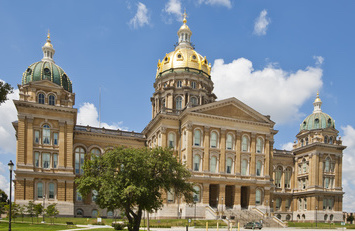
Ted Cruz is playing a smarter long game than Scott Walker or Marco Rubio

Three 40-something politicians who had hoped to be this year’s GOP presidential nominee addressed the Republican National Convention last night. Only one of them upstaged what was supposed to be the evening’s highlight: a speech by vice presidential nominee and Indiana Governor Mike Pence.

Although Senator Ted Cruz drew boos from many in the crowd and was panned by some journalists, he ended the night better-positioned for a possible 2020 race than either Wisconsin Governor Scott Walker or Senator Marco Rubio.

Continue Reading...
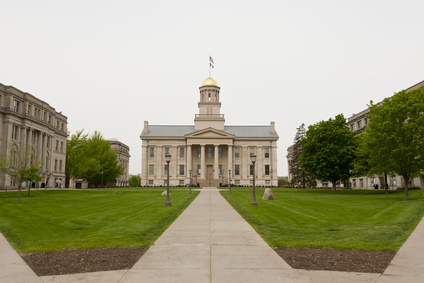
Iowa wildflower Wednesday: Canada germander (American germander)

Following Marla Mertz’s post last week about a spectacular and rare prairie plant, I wanted to feature some unassuming wildflowers common in a range of wet habitats.

Nine species of germander are native to North America, but according to John Pearson of the Iowa Department of Natural Resources, only one (Teucrium canadense) is native to Iowa. (Pearson added that other kinds of germander may be found in gardens.)

Sometimes called American germander or wood sage, Canada germander often grows in ditches, at woodland edges, or next to streams. I took all of the enclosed pictures along North Walnut Creek, near where the Windsor Heights bike trail passes under College Drive.

Side note for nature lovers riding RAGBRAI next week: please keep an eye out for Milkweed Matters volunteers handing out common milkweed seed balls for bicyclists to cast in unmowed ditches along the route. Monarch butterflies depend on milkweed plants to reproduce.

We now return to your regularly scheduled edition of Iowa wildflower Wednesday.

Continue Reading...
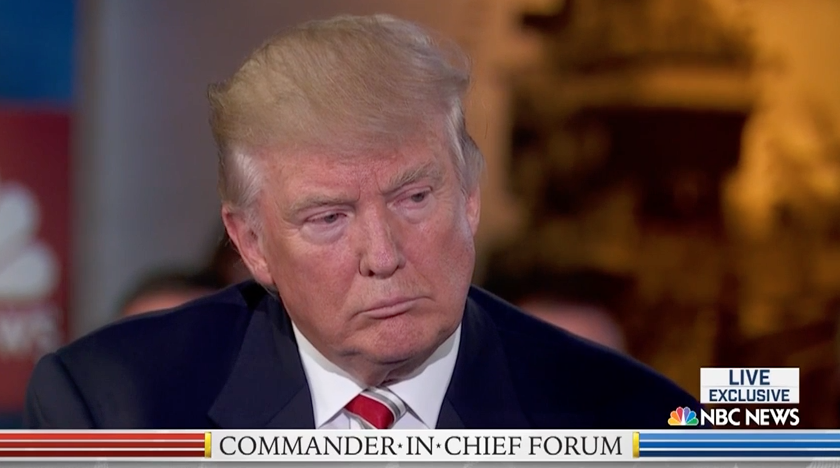
Why Iowa's RNC votes all went for Trump, even though Cruz won the caucuses

The Republican Party of Iowa changed its bylaws earlier this year to prevent a repeat of what state party chair Jeff Kaufmann has called “the 2012 fiasco.” During the last Republican National Convention, 22 of Iowa’s delegates cast their ballots for Ron Paul, who had finished third in the Iowa caucuses. Only six of our state’s delegates cast ballots for GOP nominee Mitt Romney.

Kaufmann has described the Iowa GOP’s new rules as designed to force RNC delegates to “vote with the intentions of the caucusgoers — the wishes of the grassroots.”

So why did all 30 of Iowa’s votes go to Donald Trump during today’s roll call vote in Cleveland?

Continue Reading...

Steve King: Whites have contributed more to civilization than other "sub-groups"

Representative Steve King’s concerns about people of non-European origin damaging American civilization are not news to anyone who has followed the Iowa Republican’s career. In the last month alone, King has asserted that it is “racist” to add the image of Harriet Tubman to the $20 bill and that the United Kingdom vote to leave the European Union may help save western civilization. At the same time, King has no problem displaying a Confederate flag, under which people fought and died to preserve slavery and divide this country, on his office desk.

King takes the alleged superiority of white culture for granted, which might not raise eyebrows on the conservative radio and television programs where he is a frequent guest. But when King floated those views to MSNBC’s national viewing audience this afternoon, the reaction was as explosive as the wave of outrage and mockery regarding House Speaker Paul Ryan’s “so white” selfie with interns.

Continue Reading...
Calling on RAGBRAI riders to help plant milkweed for monarchs

Monarch butterfly enthusiasts have prepared more than 50,000 balls containing common milkweed seeds for riders participating in next week’s Register’s Annual Great Bike Ride Across Iowa (RAGBRAI). As its name suggests, common milkweed (Asclepias syriaca) is the most prevalent among the 17 types of milkweed found in Iowa. However, the use of genetically-modified Roundup Ready corn and soybeans greatly diminished common milkweed on Iowa cropland. “Kelly Milkweed” Guilbeau and a friend scattered some milkweed seeds while doing RAGBRAI in 2014, then prepared about 2,000 balls of seed to hand out during last summer’s ride across Iowa.

Elizabeth Hill, who manages the Conard Environmental Research Area at Grinnell College, has collaborated with Guilbeau on the Milkweed Matters initiative, greatly expanded this year. I wish them every success; driving around Iowa last week, I saw huge stands of wild parsnip along too many roadsides.

I enclose below two pictures of common milkweed blooming, as well as a press release explaining where riders can pick up seed balls to toss in unmowed ditches along the RAGBRAI route, which runs across southern Iowa from July 24 through 30.

You can learn more at the Milkweed Matters website and receive regular updates on Twitter (@milkweedmatters) or Facebook. Butterfly fans can find more good links at the Monarchs in Eastern Iowa website. Although I’m not skilled at identifying butterflies, I enjoy the occasional “butterfly forecasts” by the Poweshiek Skipper Project.

P.S.- Hill will always have a special place in my heart as the accidental godmother of Bleeding Heartland’s Iowa wildflower Wednesday series.

Continue Reading...
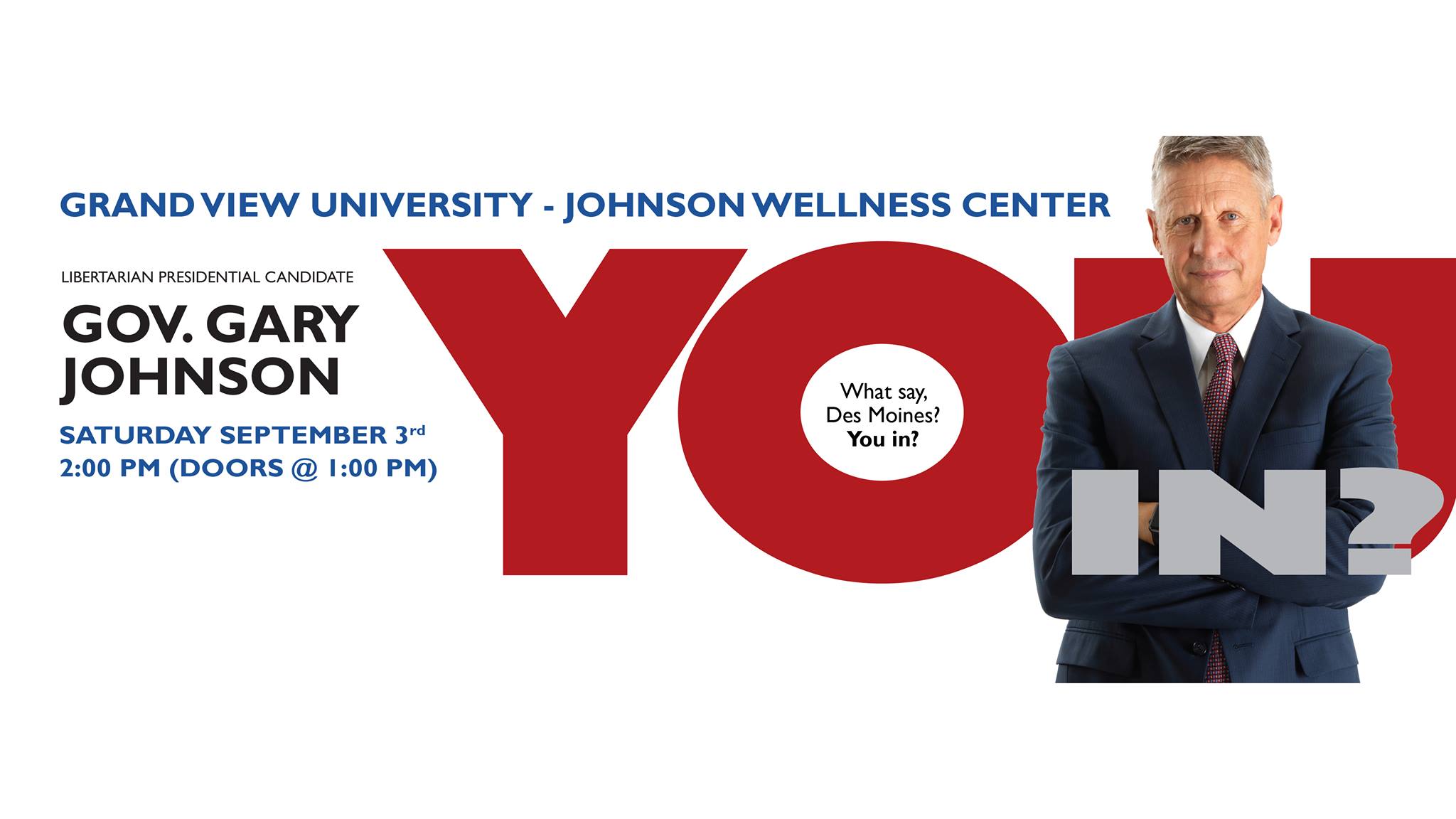
Another Iowa poll shows tight presidential race, single-digit lead for Chuck Grassley over Patty Judge

In more support for forecasters who view Iowa as a toss-up state, Donald Trump leads Hillary Clinton by a statistically insignificant 40 percent to 39 percent in a new CBS News Battleground Tracker Iowa poll conducted by YouGov. About 3 percent of the 998 “likely voters” surveyed between July 13 and 15 back Libertarian Gary Johnson, 2 percent Green Party candidate Jill Stein, 7 percent “someone else” and 8 percent are “not sure.”

Among respondents supporting Clinton, 50 percent said it is mainly because they like her, 37 percent said mainly to oppose Trump, and 13 percent said mainly because she will be their party’s nominee. The opposite was true for respondents planning to vote for Trump: 53 percent said they will do so mainly to oppose Clinton, 36 percent said mainly to support Trump, and 11 percent said because Trump will be their party’s nominee.

In Iowa’s U.S. Senate race, the CBS/YouGov poll found Senator Chuck Grassley ahead of Democratic challenger Patty Judge by 45 percent to 37 percent, with 16 percent not sure and 2 percent favoring “someone else.” In his previous re-election bids, Grassley has never been below 50 percent and less than 10 points ahead of his challenger in any public survey by a reputable pollster. YouGov now becomes the third firm (after Public Policy Polling and Loras College) to find a single-digit lead for the incumbent.

The full questionnaire for the CBS/YouGov poll is available here, along with cross-tabs. Assuming random sampling techniques produced a representative respondent pool, the margin of error for this survey would be plus or minus 4.8 percent. One possible problem with the sample: 41 percent of respondents said they are currently registered Republicans, 42 percent registered Democrats, and just 14 percent “not affiliated with either party.” More than 31 percent of Iowans who cast ballots in the 2012 general election were no-party voters. It’s possible that many of the registered Republicans or Democrats sampled by YouGov think of themselves as “independents” but changed their registration in order to participate in the February 1 Iowa caucuses or June 7 primaries.

YouGov polls are conducted over the internet; the firm received a “B” grade in FiveThirtyEight’s pollster ratings.

Democrats nominate Ryan Drew to face David Kerr in Iowa House district 88

Local Democrats have nominated Ryan Drew to run in Iowa House district 88, which became a potentially competitive race when House Ways and Means Committee Chair Tom Sands decided not to seek re-election. Drew was unopposed at the July 14 special district nominating convention. Bleeding Heartland posted background on the longtime labor activist from the Burlington area when he announced his campaign last month.

Drew will face David Kerr in November. I never did hear a good explanation for why Republicans nominated Kerr with as little publicity as possible, instead of Jason Delzell, the early establishment GOP candidate to succeed Sands.

House district 88 includes most of Des Moines County outside the cities of Burlington and West Burlington, all of Louisa County, and a large area in Muscatine County, not including the city of Muscatine. I enclose a district map below.

Both parties are likely to target this race. According to the latest figures from the Iowa Secretary of State’s office, House district 88 contains 5,594 active registered Democrats, 6,388 Republicans, and 6,801 no-party voters. President Barack Obama outpolled Mitt Romney here by 50.9 percent to 47.9 percent in 2012. Antipathy to Republican presidential candidate Donald Trump could become a factor in the large Latino communities of West Liberty and Columbus Junction.

Continue Reading...
Donald Trump's hilariously bad rollout of a smart VP pick

I was hoping for Newt Gingrich, and Donald Trump’s “gut” wanted to go with Chris Christie, but family members and campaign chairman Paul Manafort managed to persuade the impulsive billionaire that Mike Pence was the smart pick. The Indiana governor is a strong conservative and could do the most unify the party, having endorsed Ted Cruz in April.

Trump should have been able to get a boost from his running mate choice going into the Republican National Convention. Instead, he fumbled the rollout in several ways, summarized well by Philip Bump. It must have humiliated Pence to have CNN, the New York Times, NBC News, and other media outlets focus on Trump’s last-minute doubts about the pick, instead of on what Pence brings to the ticket. Christie suffered an even greater blow at the hands of the man he endorsed in February.

I’m no graphic design expert, but the Trump-Pence logo is a disaster. I thought it was a joke the first time I saw it yesterday, when a Facebook friend shared this not-safe-for-work commentary. Gregory Krieg reported more delicately for CNN that the logo “is raising eyebrows” and “drawing titters from cheeky tweeters.” Iowa Twitter user @jbelcap pointed out that there is a “hidden negative space H” in the graphic as well.

Any comments about the Trump-Pence ticket are welcome in this thread. UPDATE: It took only one day for the Trump campaign to dump the logo and scrub all images of it from the website. The new logo is after the jump.

Continue Reading...
Why did Chief Justice Cady change his mind about felon voting rights?

I don’t usually write posts like this one.

Check that: I don’t think I’ve ever written a post like this one.

I’m making an exception because the question has been nagging at me since the Iowa Supreme Court announced its 4-3 decision in Griffin v Pate two weeks ago today, and because a number of people who share my interest in felon voting rights have asked for my opinion.

Only Chief Justice Mark Cady knows the answer, and we won’t hear his side of the story until he writes his memoirs or speaks to some interviewer in retirement.

So with no claim to telepathic powers and full awareness that my analysis may therefore be flawed, I will do my best to understand why the author of the 2014 opinion that inspired Kelli Jo Griffin’s lawsuit ultimately decided our state constitution “permits persons convicted of a felony to be disqualified from voting in Iowa until pardoned or otherwise restored to the rights of citizenship.”

Continue Reading...

Stop badgering Bernie Sanders supporters to vote for Hillary Clinton

Bernie Sanders endorsed Hillary Clinton for president Tuesday morning during a joint campaign event in Portsmouth, New Hampshire, as well as in an e-mail blast and a Facebook note.

Some enthusiastic Sanders fans, including his captain in the precinct next door to mine, have made their own pitches to their fellow Berners today. I enclose below an e-mail that former State Senator Daryl Beall sent to friends and acquaintances. Johnson County Supervisor Mike Carberry shared the Sanders Facebook post calling on progressives to continue the political revolution. More power to them, and to those who are expressing their newfound support for Clinton in a humorous way.

I still see too many arguments on social media between Clinton backers and #BernieOrBust holdouts. Please stop. Give people time to grieve. Most Democrats who backed Sanders in the primaries will eventually support Clinton this fall. Some small percentage won’t. It’s not productive for those who were “with her” from the beginning to engage with them, especially not now. No amount of arguing on Facebook or Twitter will convince diehard Hillary-haters to support the Democratic nominee. It can only antagonize people.

Some in the #HillYes crowd get upset seeing fellow Democrats bash a woman they admire. My best advice: you don’t have to make it your mission to get them to see what you see. Either try to find common ground with them by talking about down-ballot races, or back off and focus your energy on mobilizing other voters.

Continue Reading...
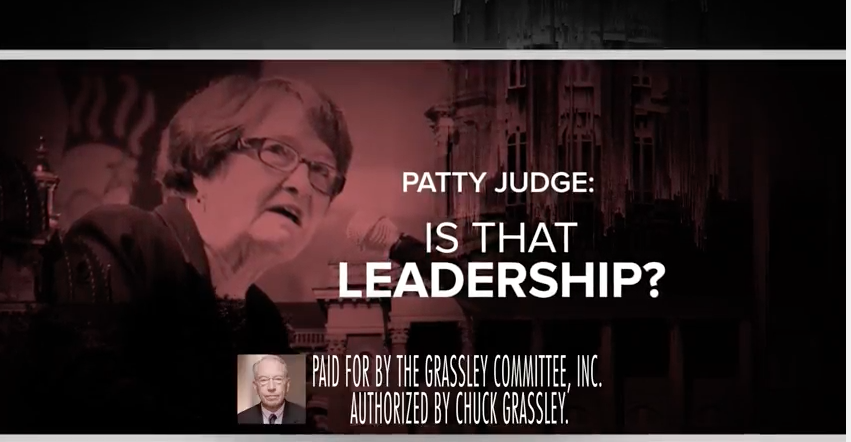
Monmouth poll: Trump leads Clinton by 2 in Iowa, Grassley leads Judge by 10

Donald Trump leads Hillary Clinton by 44 percent to 42 percent, and U.S. Senator Chuck Grassley leads Democratic challenger Patty Judge by 52 percent to 42 percent, according to a Monmouth University poll released today.

Only 6 percent of Iowa respondents surveyed between July 8 and 11 were undecided on the presidential race. Monmouth also found 6 percent support for Libertarian nominee Gary Johnson, 1 percent for the Green Party’s Jill Stein, and 2 percent saying they will vote for some other candidate. No Libertarian presidential candidate has ever received more than 1 percent of the vote in Iowa. Historically, minor-party presidential candidates have performed far less well in November elections than their summer poll numbers would suggest.

Iowa is a toss-up state in many election forecasts, and I’ve always expected a close race here, so I am not surprised to see Trump slightly ahead in a poll. That said, these Monmouth data are difficult to believe:

One unusual finding in the poll is that Trump leads among voters under 50 years old in Iowa. In Monmouth polls conducted nationally and in other states, Clinton has held an advantage with younger voters. Specifically, 51% of Iowa voters under age 50 currently support Trump, compared to 32% for Clinton, 7% for Johnson, and 3% for Stein or another candidate. Among voters age 50 and older, Clinton has the edge with 50% support, compared to 38% for Trump, 4% for Johnson and 1% for Stein or another candidate.

Monmouth’s numbers indicate that Grassley is in for his most competitive re-election bid. The last two public polls of Iowa’s U.S. Senate race were by Public Policy Polling, which does a lot of work for Democratic clients, including Judge’s campaign during the primary. So it was easy for Republicans to dismiss PPP’s findings showing Grassley below 50 percent and only 7 points ahead. In Monmouth’s survey, Grassley leads by just 10 points, which for him is a very small margin. He enjoyed larger leads in 2010 polls, other than those by Research 2000, a firm later discredited for apparently fabricating data.

You can’t say Monmouth’s sample is skewed to Democrats, because Trump is leading Clinton. The best news for Grassley is his job approval rating: 56 percent, with only 33 percent disapproving of his work in the Senate. However, only 25 percent of Monmouth’s respondents approve of the Judiciary Committee chair’s decision not to hold hearings on U.S. Supreme Court nominee Merrick Garland.

Grassley’s favorables are in net positive territory, according to Monmouth: 46 have a favorable opinion of him, 31 percent unfavorable. Judge has more room to grow: 30 percent favorable, 14 percent unfavorable, and 56 percent of respondents not knowing enough about her to have an opinion. Grassley’s campaign has been trying to define the Democratic challenger in a negative way, most recently claiming in a press release today that she is harder to find around Iowa than a Pokemon.

Any comments about the presidential or Senate race are welcome in this thread. Monmouth surveyed 401 “Iowa residents likely to vote in the November election” between July 8 and 11, producing a margin of error of plus or minus 4.9 percent. Monmouth’s polling memo did not mention the likely voter screen used.

Continue Reading...

Watchdog filed IRS complaint against dark money group run by Chris Rants

An advocacy group run by former Iowa House Speaker Chris Rants “is operating with the primary purpose of influencing political campaigns” in violation of federal tax code, according to the watchdog group Citizens for Responsibility and Ethics in Washington.

Last month CREW filed Internal Revenue Service complaints against ten 501(c)(4) groups, which claim non-profit status as “social welfare” organizations but spent a large share of their funds on political activity during the 2014 election cycle. One of them was the Iowa-based Legacy Foundation Action Fund, for which Rants serves as president and secretary. (The fund did not seek to influence any Iowa elections in 2014.) CREW also filed criminal complaints against six of the ten groups for “falsely representing the amount of money they spent on political activity in 2014”; the Legacy Foundation Action Fund was not among them.

Although Rants’s 501(c)(4) does not disclose its donors, CREW was able to determine that most of its 2014 funding came from American Encore, a “secretive” 501(c)(4) group “formerly known as the Center to Protect Patient Rights.” American Encore has been described as “the linchpin” of the Koch brothers dark money network. The Legacy Foundation Action Fund reported $980,000 in “contributions and grants” on its 2014 tax return; $880,000 of that amount came from American Encore.

More details on CREW’s IRS complaint are below. Rants responded via e-mail, “I am confident that Legation Foundation Action Fund is in compliance with the IRS rules. Legal counsel is reviewing the tax returns and we will file any amendment necessary to ensure the tax returns accurately reflected the organizations actives.”

Continue Reading...
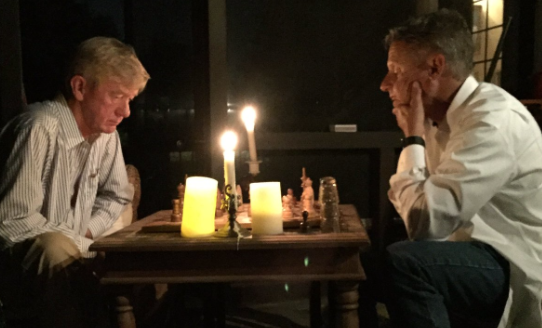
Weekend open thread: ISU cronyism and favoritism edition

Insider dealing at the University of Iowa has drawn intense scrutiny since President Bruce Harreld’s hiring last year. This week, several news reports cast an unflattering light on the culture President Steven Leath is fostering at Iowa State University.
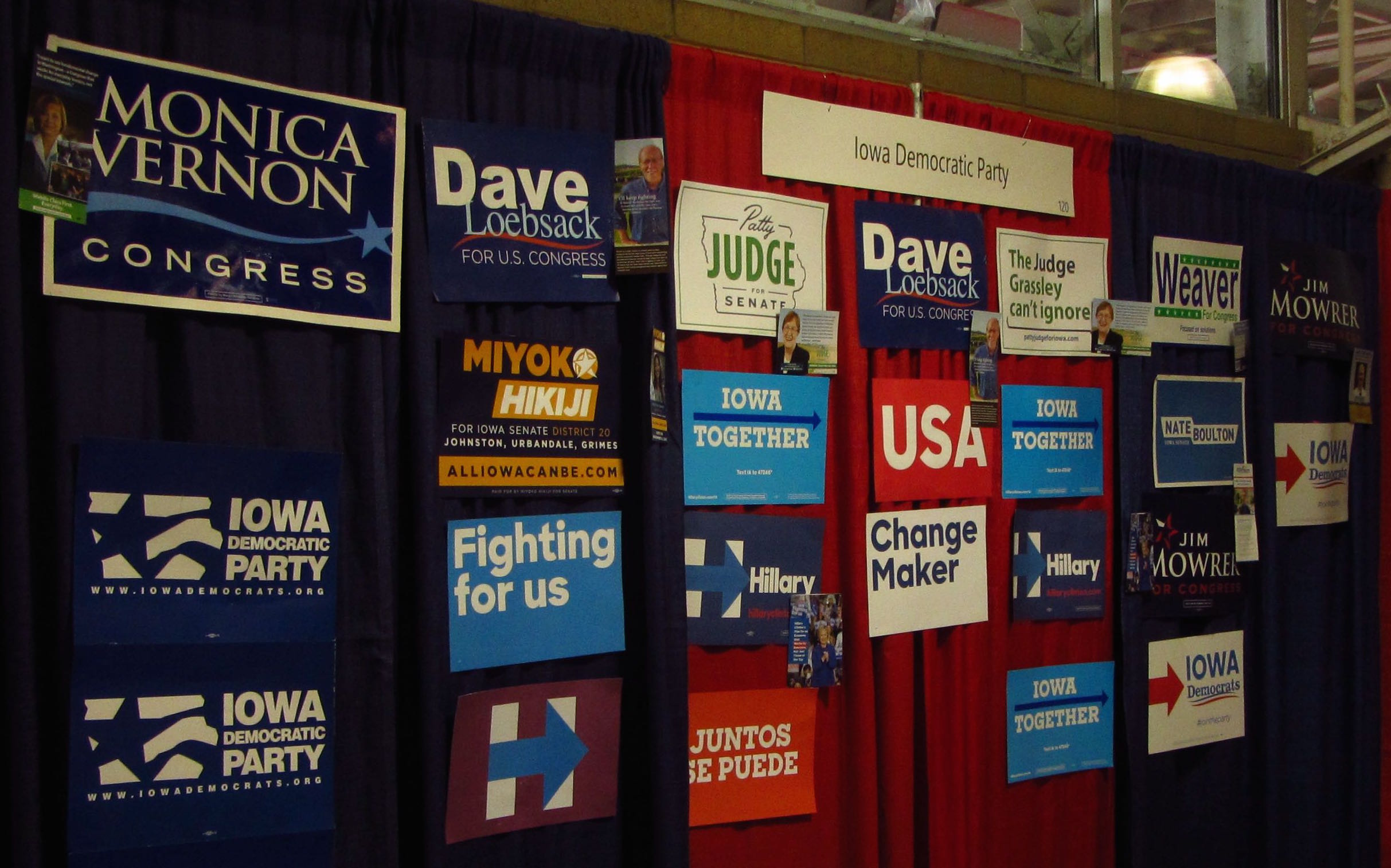
The July 9 Des Moines Register carried a front-page story by Lee Rood on Leath’s recent purchase of land from one of the companies controlled by Iowa Board of Regents President Bruce Rastetter. After trying to weasel out of answering questions regarding what he called his “personal life,” Leath insisted he got no “special deal” on the land. However, the arrangement appears highly irregular, as discussed below following excerpts from Rood’s article.

Two recent stories by Vanessa Miller for the Cedar Rapids Gazette raised further questions about what kind of operation Leath is running. Click through to read about the hiring of former Republican lawmaker Jim Kurtenbach for a high-paying job that was never advertised, as well as Kurtenbach’s restructuring of ISU’s information technology services unit, which involved eliminating 23 positions and paying 19 people not to work since May 25. Excerpts from those stories are below as well.

This is an open thread: all topics welcome.

P.S.- Speaking of cozy Republican networks, Ryan Foley reported for the Associated Press on Friday that the University of Iowa “is retaining a social media startup company with Republican Party ties that benefited from earlier no-bid contracts.” Wholecrowd is run by Jim Anderson, who served as Iowa GOP executive director during part of the time the University of Iowa’s current Vice President for External Relations Peter Matthes was a staffer for the GOP state Senate caucus. Under no-bid contracts Matthes signed with former Iowa GOP state party chair Matt Strawn’s company, Wholecrowd did the same kind of “digital advocacy” work as a subcontractor. The university’s new contract, signed directly with Wholecrowd after a competitive bidding process, seems to have cut Strawn out as the middleman.

Continue Reading...