desmoinesdem

Posts 123 Comments 0

Spokesman: Governor Terry Branstad uses neither public nor private e-mail

E-mailing practices by government officials have drawn an unusual amount of scrutiny this year, thanks to the national press corps’ months-long fixation on Hillary Clinton’s use of a private server and e-mail account during her years as secretary of state. Though the most sensational reports about Clinton’s e-mails were wrong, a drumbeat of news articles and commentary pointed to her private e-mail use as a scandal, or at least a serious political problem.

For years, people who have submitted records requests for Governor Terry Branstad’s e-mails have been told the governor does not use e-mail. So I was surprised this week to see footage of Branstad telling his top donor and Iowa Board of Regents President Bruce Rastetter to “send me an e-mail” with facts about Bruce Harreld, at the time a candidate for the University of Iowa presidency. Iowa Public Television’s “Governor Branstad: Behind the Scenes” documentary includes video of Branstad talking with Rastetter during the Iowa State Fair. I transcribed the brief conversation here.

In light of Branstad’s comment to Rastetter, I asked the governor’s communications director Ben Hammes to clarify whether Branstad has an e-mail account for official or private use. He replied, “The governor does not use email or have email. The governor was referring to sending information to our office, which is what he asks of constituents, when he is traveling around Iowa. He will often ask them to send information to the appropriate policy person in our office.”

Since Branstad asked Rastetter to send “me” an e-mail (rather than asking for the background to be sent to his staff), I asked Hammes whether he could confirm that the governor never communicates directly with Rastetter or with anyone else via e-mail, and that “people wishing to e-mail information to the governor can do so only by e-mailing intermediaries.” Hammes responded, “Correct. The governor does not have an email account.” Duly noted with regret, since the lack of an official e-mail account will make it harder for reporters and future historians to reconstruct Branstad’s actions and decision-making process during his fifth and sixth terms.

On a related note, today’s New York Times reported that Defense Secretary Ashton Carter “relied on a personal email account to conduct a portion of his government business during his first months at the Pentagon.” Today’s lead editorial in the Des Moines Register took Des Moines City Council member Christine Hensley to task for, among other things, using a private e-mail account to discuss city business. The newspaper also criticized city policy that allows officials to search for and disclose e-mails that are the subject of open records requests, because those people “lack the technical expertise to conduct document searches” and “have a strong motive to withhold damaging emails they have sent or received.” Hensley is refusing to release a legal opinion on whether she should recuse herself from a policy matter because of a potential conflict of interest. The controversy doesn’t reflect well on the longtime city council member, who I believe is positioning herself to be Cedar Rapids Mayor Ron Corbett’s running mate for the 2018 governor’s race.

UPDATE: I had forgotten that Branstad admitted during a deposition last year to using a Blackberry. More details on that are below. I am seeking further comment on whether the governor receives work-related or private messages from people on that Blackberry.

DECEMBER 21 UPDATE: Hammes was quick to respond to my first questions on this topic last week, but four days since I followed up with a question about the Blackberry, still radio silence from the governor’s office.

Continue Reading...

Mike Sherzan becomes third Democratic candidate in IA-03

Mike Sherzan fuzzy photo 12345433_1536683933290188_7888591554410449181_n_zpspx3oabs2.jpg

Mike Sherzan announced today that he will seek the Democratic nomination in Iowa’s third Congressional district. He recently stepped down as leader of the financial services company he founded in order to focus his full attention on the Congressional race. I enclose below Sherzan’s press release and statements from his campaign website, which outline the candidate’s four priority issues: protecting retirement security by not privatizing Medicare or Social Security; promoting clean energy, with a focus on renewables and ag-based technologies; increasing the number of college graduates by reducing the cost of tuition and student loans; and rebuilding the middle-class by supporting equal pay for women and a minimum wage hike.

Sherzan has had a successful career in finance and may be able to largely self-fund his campaign, but he is distancing himself from stereotypes about corporate leaders who run for office. His “about” page and policy statements repeatedly refer to growing up in a family of modest means and working his way through college, with the help of Social Security benefits after his father’s sudden passing. Speaking to Bleeding Heartland last month, Sherzan emphasized that he “comes from a Democratic background” and urged people not to “judge my positions based on my business experience,” adding that “government was never meant to be a business.” His campaign is on Twitter and Facebook, though strangely, at this writing the campaign launch hasn’t been announced on either of those pages.

Sherzan briefly ran for Congress during the last election cycle but withdrew from that race in April 2013, citing unspecified health issues. He now joins Desmund Adams and Jim Mowrer in a Democratic field that may expand to include former Governor Chet Culver, who is in no hurry to make a decision. A few hours after Sherzan announced, Mowrer’s campaign rolled out a new batch of endorsements, which I’ve added at the end of this post. The 2014 challenger to Representative Steve King in IA-04 has lined up the most support from Iowa Democratic insiders, including Representative Dave Loebsack (IA-02), former Lieutenant Governor Sally Pederson, and eight current state legislators.

The winner of next June’s Democratic primary will face first-term Representative David Young in what may become Iowa’s most competitive Congressional district. The sixteen counties in IA-03 contain 150,733 active registered Democrats, 163,699 Republicans, and 166,740 no-party voters, according to the latest figures from the Iowa Secretary of State’s office. Polk County will be central to every candidate’s strategy for winning the nomination, because two-thirds of the registered Democrats in IA-03 live in the district’s most populous county.

Continue Reading...

Bruce Harreld walks into "teachable moment"; some critics give the wrong lecture

University of Iowa President Bruce Harreld has been paying out of pocket this fall for coaching from a “top-notch” communications consultant, but his public speaking skills apparently need more work. Last week Harreld suggested to the university’s Staff Council that instructors who go to class unprepared for their teaching obligations “should be shot,” Ryan Foley reported today for the Associated Press.

It’s not the first time and probably won’t be the last time Harreld has some trouble adapting to academic culture.

But I hope it will be the last time Harreld’s critics on campus discredit themselves by reacting to the president’s missteps in a ridiculous way.

Continue Reading...

Thoughts on Terry Branstad's longevity and legacy

Terry Branstad front photo photo_front_gov_zpsobbhiahu.png

December 14 marked 7,642 days that Terry Branstad has been governor of Iowa, making him the longest-serving governor in U.S. history, according to Eric Ostermeier of the Smart Politics website. Because most states have term limits for governors, “The odds of anyone passing [Branstad] in the 21st Century are next to none,” Ostermeier told Catherine Lucey of the Associated Press.

Speaking about his legacy, Branstad has emphasized the diversification of Iowa’s economy, even though a governor has far less influence over such trends than Branstad seems to believe. Some have cited “fiscal conservatism” as a hallmark of Branstad’s leadership. I strongly disagree. The man who has been governor for nearly half of my lifetime is stingy about spending money on education and some other critical public services. He opposes bonding initiatives commonly used in other states to fund infrastructure projects (“you don’t borrow your way to prosperity”). But he is happy to provide tens of millions or hundreds of millions of dollars in tax breaks to corporations that don’t need the help, without any regard for the future impact of those tax expenditures on the state budget. Many of Iowa’s “giveaways” in the name of economic development will never pay for themselves.

Branstad’s governing style has changed Iowa in important ways. He has altered Iowans’ expectations for their governor. He has expanded executive power at the expense of both the legislative branch and local governments. And particularly during the last five years, he has given corporate interests and business leaders more control over state policy. More thoughts on those points are after the jump, along with excerpts from some of the many profiles and interviews published as today’s landmark approached.

P.S.- Speaking of Branstad doing what business elites want him to do, Iowa Public Television’s “Governor Branstad: Behind the Scenes” program, which aired on December 11, included a telling snippet that I’ve transcribed below. During a brief chat at the Iowa State Fair, Iowa Board of Regents President Bruce Rastetter asked Branstad to call Bruce Harreld, at that time one of the candidates to be president of the University of Iowa. That Rastetter asked Branstad to reassure Harreld was first reported right after the Board of Regents hired the new president, but I didn’t know they had the conversation in public near a television camera.

P.P.S.-Now that Branstad has made the history books, I remain convinced that he will not serve out his sixth term. Sometime between November 2016 and July 2017, he will resign in order to allow Lieutenant Governor Kim Reynolds to run for governor in 2018 as the incumbent. Although Branstad clearly loves his job, he is highly motivated to make Reynolds the next governor. She lacks a strong base of support in the Republican Party, because she was relatively inexperienced and largely unknown when tapped to be Branstad’s running mate in 2010. Even assuming she is the incumbent, Reynolds strikes me as more likely to lose than to win a statewide gubernatorial primary. Remaining in Branstad’s shadow would give Reynolds little chance of topping a field that will probably include Cedar Rapids Mayor Ron Corbett and Iowa Secretary of Agriculture Bill Northey.

P.P.S.S.-I will always believe Branstad could have been beaten in 1990, if Democrats had nominated a stronger candidate than Don Avenson. Attorney General Tom Miller lost that three-way primary for one reason only: he was against abortion rights. Miller later changed that stance but never again ran for higher office.

Continue Reading...

Quentin Stanerson retiring, creating open seat in Iowa House district 95

Republican State Representative Quentin Stanerson will not seek a third term in Iowa House district 95, he announced on Facebook today (hat tip to Iowa Public Radio’s Clay Masters). Rumors of Stanerson’s plans to retire have circulated for some time. The high school teacher was reportedly unhappy with Iowa House leaders’ hard line on education spending and was one of only two House Republicans to support Democratic efforts to override Governor Terry Branstad’s education funding vetoes this summer.

House district 95 covers a large area in Linn County outside the Cedar Rapids metro, as well as some rural precincts in Buchanan County. I enclose below a district map and the press release announcing Stanerson’s decision.

This seat should be a top target for Democrats, who currently hold only 43 of the 100 Iowa House seats. As of December 2015, House district 95 contained 5,906 active registered Democrats, 6,082 Republicans, and 8,300 no-party voters according to the Iowa Secretary of State’s office. The last time this district was open, Stanerson defeated Kristin Keast by just 200 votes in the sixth-closest result of the 2012 Iowa House races. Stanerson won a second term by a more comfortable margin in his rematch with Keast, thanks to the smaller midterm electorate and the Republican wave year. I am not aware of any declared Democratic candidate here for next year’s election.
Voters in House district 95 favored Barack Obama over Mitt Romney by 52.01 percent to 46.69 percent in 2012, very close to Obama’s statewide margin of victory. Joni Ernst outpolled Bruce Braley in last year’s U.S. Senate election by 52.47 percent to 43.73 percent in the House district 95 precincts.

Continue Reading...

New Selzer poll: Clinton 48 percent, Sanders 39 percent in Iowa

Hillary Clinton has a narrow but stable lead over Bernie Sanders among likely Democratic caucus-goers in Iowa, according to the new poll Selzer & Co conducted for the Des Moines Register and Bloomberg News. Clinton is the first choice of 48 percent of respondents, while 39 percent favor Sanders and 4 percent Martin O’Malley. Selzer’s previous survey in October showed Clinton ahead of Sanders by 48 to 41 percent with Joe Biden not in the race, and by a 42-37 margin when respondents had the option of choosing Biden. After the jump I enclose highlights from Tony Leys’ write-up on the latest survey in today’s Des Moines Register and from Margaret Talev’s report for Bloomberg News.

The question now is whose campaign will do a better job identifying supporters and turning them out on a cold night in February. Our household continues to receive regular phone calls from field organizers for Clinton and Sanders and occasional calls from O’Malley’s campaign. Clinton could outperform her poll numbers if her larger field staff in Iowa does its job well, or if Sanders’ support is more concentrated in certain areas. Candidates can win only so many delegates per precinct, whether 50 people or 500 people show up there on February 1, so the Iowa Democratic caucus system rewards candidates with support more evenly spread out across the state.

Sanders could outperform his poll numbers in Iowa on the strength of greater enthusiasm among his backers. He still consistently draws larger crowds to his Iowa events. Now that the campaign seems to be going more smoothly for Clinton, Democrats leaning toward her may not feel it’s important for them to show up for the caucuses.

A Bleeding Heartland post is in progress on why O’Malley can’t get any traction here, even though he has been doing everything right in terms of retail politics and organizing, and his stump speeches are consistently well-received among Iowa Democratic audiences.

O’Malley’s best hope for viability in most precincts will be gamesmanship by well-trained precinct captains for Clinton or Sanders. The Iowa Democratic Party sets a fixed number of county delegates for each precinct, and the math that determines delegate apportionment creates a zero-sum game. “Donating” a few of candidate A’s supporters to candidate B can cost candidate C a delegate. This kind of maneuver cost Paul Simon a delegate in my precinct at my very first caucus in 1988.

Let’s assume O’Malley’s supporters are below the 15 percent threshold in my precinct, and I’m a captain for one of the other candidates. When it’s time to realign, sending a few people from my group to make O’Malley viable may cost our main rival a delegate, compared to what would happen if the O’Malley crowd were forced to go to corners for their second-choice candidates. I heard many stories along these lines after the 2008 caucuses. For instance, in the Clive precinct next door to my neighborhood, Democrats backing Clinton and John Edwards helped make Bill Richardson viable, in order to prevent Barack Obama from winning a second delegate.

UPDATE: Quinnipiac released its latest Iowa poll on December 15: Clinton is at 51 percent, Sanders 40 percent, O’Malley 6 percent, and just 3 percent undecided. I’ve added below highlights from the polling memo; click through for full results with cross-tabs.

Continue Reading...

No, half of Iowa Republican caucus-goers do not support single-payer health care

Although I put up another thread for discussing the key findings from Selzer & Co.’s latest survey for the Des Moines Register and Bloomberg News, I want to focus on one surprising data point that some liberals were passing around social media on Saturday night: supposedly 49 percent of Iowans likely to attend the Republican caucuses support a single-payer health care plan.

Ann Selzer is a polling genius, no doubt about that. But this is a rare example of poor question wording in one of her surveys.

I’m going to mention some stands on issues some candidates have taken. For each, please tell me if you agree or disagree with this position. (Rotate list.) […]

Supports a single-payer health care plan instead of the current law

I would bet the farm that most of the Republican respondents who said they agree with that position heard “instead of the current law” and thought the caller was referring to a GOP candidate who wants to repeal and replace the dreaded Obamacare–not to Bernie Sanders, who supports “Medicare for All.”

I would also bet that most of the respondents had no idea that a single-payer health care plan means “socialized medicine,” as it’s often described in conservative circles.

Continue Reading...

Weekend open thread: Conflicting Iowa Republican caucus polling edition

What’s on your mind this weekend, Bleeding Heartland readers? This is an open thread. The big news for Iowa politics watchers is the new poll by Selzer & Co. for the Des Moines Register and Bloomberg Politics, which shows a surge for Ted Cruz since October, a stable second-place position for Donald Trump, a big drop for Dr. Ben Carson, and Marco Rubio the only other candidate in double digits among likely Republican caucus-goers.

It’s the second poll this month to show Cruz in first place here. Like the Des Moines Register/Bloomberg poll, Monmouth University found Cruz gaining most from Carson’s falling support. Last month’s endorsement by Representative Steve King has helped the Texas senator consolidate the most conservative parts of the Republican base, and he has an enormous lead among evangelicals. Some will attribute that development to backing from the FAMiLY Leader’s front man Bob Vander Plaats, but for months now, Cruz has had the largest number of evangelical pastors supporting him, as well as major social conservative voices like radio host Steve Deace and Dick and Betty Odgaard, the so-called “religious liberty ambassadors” because they shut down their business rather than buckle to pressure to allow same-sex marriages there.

Trump and his supporters have been touting a CNN poll released on December 7, which had him ahead of Cruz in Iowa by 33 percent to 20 percent, but I don’t believe that for a second–and not only because Ann Selzer has the best track record for polling this state. The CNN poll showed Trump does much better among no-party voters than among registered Republicans. An Iowa State University/WHO-HD poll that was in the field during early November found that a disproportionate number of Trump supporters have not voted in a Republican primary during the last ten years.

I don’t believe that Iowa State/WHO-HD poll reflects the current state of the race (it had Trump running behind Ben Carson, Marco Rubio, and “don’t know,” with Cruz in fifth place). But I do agree with those pollsters that whether someone has voted in a recent Republican primary should be factored into a likely caucus-goer screen. Attending the caucus takes considerably more time and effort than casting a ballot in a primary. You have to find your precinct caucus location (usually different from where you would vote in a November election) and go out for an hour or more on a cold night in February. Trump doesn’t have anything like the massive organization Barack Obama’s campaign built to identify and turn out supporters who had never caucused before January 2008.

I enclose below highlights from the new Selzer poll for the Des Moines Register as well as the main findings from the latest Monmouth University and CNN polls of Iowa Republican caucus-goers. Steven Shepard’s profile of Ann Selzer for Politico is worth a read.

A Bleeding Heartland post in progress will consider whether Cruz is now firmly in position to win the Iowa caucuses, or whether he is on track to peak too soon. I’m on record predicting Cruz would not win here, but that view was grounded in several assumptions that have turned out to be false.

Trump claims the Des Moines Register is biased against him, and speaking to a rally in Des Moines on Friday night, he characterized the Register’s chief politics reporter Jennifer Jacobs as “the worst.” For the record, I do not agree, even though I’ve had some serious issues with Jacobs’ reporting. But I did find something strange in her Sunday Des Moines Register piece about “the skinny” on each candidate. Jacobs called Carly Fiorina (at 1 percent in the Selzer poll) an “also-ran,” described Mike Huckabee (3 percent) and Rick Santorum (1 percent) as “yesterday’s news,” and said Rand Paul had “little opportunity” after dropping to 3 percent. Yet she put a positive spin on Chris Christie’s 3 percent showing:

After some of the best days of his campaign, the tell-it-like-it-is New Jersey governor has seen a slight bump in support, up from 1 percent in October.

And his favorability rating is no longer underwater. In the October Iowa Poll, it was 39 percent favorable, 49 percent unfavorable. Now it’s 46 percent favorable, 42 percent unfavorable.

I had a feeling that securing more friendly coverage in the Register was the one thing Iowa Republican elites could deliver for Christie’s campaign.

Continue Reading...

Call to nominate Iowa's best sustainable development projects

Best Development Awards photo 1000FRIENDSBDA-150x150_zpsg4vgs3lg.jpg

The deadline is approaching for Iowans to nominate projects for 1000 Friends of Iowa’s Best Development Awards. Since 2005, the awards have recognized good development and planning practices by cities, companies, non-profit organizations, or local leaders.

I have long been involved with 1000 Friends of Iowa, though I have no role in selecting the award winners. The external panel of judges will look for buildings and projects that “help advance sustainability across our state by considering site placement, design, water efficiency, energy management, materials and resources used, indoor environmental quality, public use, and long-term benefits.” There’s no fee to apply for an award in any of the following categories: New Residential, Renovated Residential, New Commercial/Civic, Renovated Commercial/Civic, Mixed Use, Leadership, or Storm Water Management. Click here to download an application form to submit by December 15.

Every year I am inspired to read about the latest batch of Best Development Awards. After the jump I’ve posted summaries of the winning projects from 2014. You can find full descriptions and photos of them all here, including bullet points on “smart growth principles” that impressed the judges. Complete archives on all the Best Development Awards from the past decade are available at the 1000 Friends of Iowa website.

Bonus trivia for Iowa politics junkies: the Green Pilot Streetscape Project in West Union (Fayette County), which won the 2014 Best Development Award in the Renovated Commercial/Civic category, indirectly spawned the bogus “heated sidewalks” claim that became one of the big lies of the 2010 general election campaign.

Continue Reading...

Five troubling aspects of the University of Iowa's no-bid contracts with Matt Strawn

As if we haven’t heard enough lately about backroom dealings involving the University of Iowa, Ryan Foley reported yesterday for the Associated Press,

The University of Iowa has quietly awarded several no-bid contracts totaling $321,900 to a prominent GOP consultant for polling and social media services often delivered through subcontractors, a review by The Associated Press discovered.

Critics say the contracts with former Iowa Republican Party chairman Matt Strawn’s namesake company — uncovered through a public records request — look like a sweetheart deal among Republican insiders and a potential waste of money.

That’s putting it mildly.

Continue Reading...

Eddie Mauro challenging Jo Oldson in Iowa House district 41 Democratic primary

Eddie Mauro announced this week that he will seek the Democratic nomination in Iowa House district 41, covering some neighborhoods on the west side of Des Moines in Polk County. I enclose below a district map and background on Mauro and State Representative Jo Oldson, who was first elected to the legislature in 2002. Mauro’s campaign is on Facebook here. Oldson has a personal Facebook feed, but I’m not aware of any campaign Facebook page or other social media account.

The winner of the Democratic primary will almost certainly win next year’s general election. House district 41 contains 9,648 active registered Democrats, 4,766 Republicans, and 5,441 no-party voters, according to the latest figures from the Iowa Secretary of State’s Office. President Barack Obama won nearly 68 percent of the vote here against Mitt Romney in 2012. Bruce Braley won nearly 67 percent of the vote here against Joni Ernst in the 2014 U.S. Senate race. Oldson defeated her Republican opponent in 2012 by more than a 2:1 margin. She did not have a GOP challenger in 2014 and won more than 80 percent of the vote against a Green Party opponent.

Continue Reading...

Following up on the Iowa Utilities Board and funding for two energy research centers

In the spirit of the Russian proverb “Trust, but verify,” I checked last week to see whether funding the Iowa Utilities Board promised before Thanksgiving to release had reached energy centers housed at Iowa’s state universities.

Good news: the Iowa Energy Center at Iowa State University and the Center for Global and Regional Environmental Research at the University of Iowa have both received all of the remittances the IUB collected on their behalf from gas and electric utilities. The centers do not appear to have in hand all of the interest payments to which they are entitled under Iowa Code, but IUB spokesperson Don Tormey assured me the agency “will forward the additional interest funds” to the energy centers, if any more interest accrues.

Strange news: the IUB chose an unusual way to send this year’s funding to the energy centers, and I don’t fully understand why. I’ve enclosed what I learned below, along with details on the money sent to the Iowa Energy Center and the Center for Global and Regional Environmental Research so far, and what may yet be owed to them.

Continue Reading...

Iowa GOP chair pulls punches on Donald Trump's bigotry

Republican Party of Iowa Chair Jeff Kaufmann blew a gasket in March when soon-to-be presidential candidate Scott Walker hired a consultant who had said some disparaging things about Iowa:

“It’s obvious she doesn’t have a clue what Iowa’s all about,” Mr. Kaufmann said. “I find her to be shallow and ignorant,” he added, “and I’ll tell you, if I was Governor Walker, I’d send her her walking papers.”

A few months later, Kaufmann brought down the hammer on some volunteers who displayed the Confederate flag on behalf of a county GOP committee:

“I am just absolutely, utterly disgusted on multiple levels,” Kaufmann said in a telephone interview. “Shame on them and I don’t want them in my party.”

The Iowa GOP leader’s reaction to Donald Trump’s latest disgraceful, illegal idea was weak by comparison.

Continue Reading...

Iowa House district 21 special election preview: Tom Moore vs. Tim Ennis

Voters will elect a new state representative tomorrow in Iowa House district 21, which covers all of Union and Adams counties, most of Cass County, and some rural areas in Pottawattamie County (see enclosed map). The winner will succeed longtime Iowa House Republican Jack Drake, who passed away in October.

Tom Moore is the GOP candidate here, having won a six-way contest at a special nominating convention easily on the first ballot. I have been unable to find a detailed bio on Moore, but Ian Richardson reported for the Creston News Advertiser that Moore lives in Griswold (Cass County) and is a “retired teacher and former assistant manager for Southwest Iowa Ag in Massena.”

Moore will face Democrat Tim Ennis, a longtime resident of Corning (Adams County) who has held various jobs in the agriculture sector, particularly grain marketing. More background on Ennis is below. He was the 2014 Democratic challenger to Drake.

Although anything can happen in a low-turnout special election, Moore should hold Drake’s seat with little trouble. House district 21 contains more than twice as many registered Republicans as Democrats, according to the latest figures from the Iowa Secretary of State’s office. Mitt Romney outpolled Barack Obama here by 53.64 percent to 45.01 percent in 2012; Joni Ernst crushed Bruce Braley here by a 2:1 margin in the 2014 U.S. Senate race. Also last November, Drake defeated Ennis in the Iowa House race by more than 3,000 votes.

I enclose below a district map and more background on Ennis. UPDATE: Added more information about Moore.

SECOND UPDATE: Moore won the election by 1,409 votes to 853 according to unofficial results. I had to laugh at the comment from Republican State Leadership Committee President Matt Walter: “His victory allows House Republicans to strengthen their majority—proving yet again that Republicans win by running qualified and experienced candidates who connect with voters, even in states twice carried by President Obama.” No, Moore’s victory allows the GOP to maintain the same Iowa House majority (57 to 43 seats), and he won because this is a strongly Republican district.

Continue Reading...

Hasty U of I hospital renaming shows Regents' contempt for critics of Bruce Harreld hiring

The Iowa Board of Regents voted unanimously on Wednesday to rename the University of Iowa’s Children’s Hospital the “Stead Family University of Iowa Children’s Hospital,” to honor contributions made by alumni Jerre and Mary Joy Stead.

The regents sought no public comment on the proposal, which was unveiled with the bare minimum of advance notice required under Iowa’s open meeting law.

They also “had no discussion on the name change” before voting to approve it, Ryan Foley reported for the Associated Press.

The Steads deserve recognition for supporting a children’s hospital where countless Iowans have received life-saving care. Many people with comparable wealth are far less generous. The university acknowledged the Steads’ $20 million commitment to the hospital by naming the Pediatrics Department after the donors and fundraising campaign co-chairs in 2013.

By rubber-stamping the university’s request to rename the hospital, the Board of Regents failed to consider the opportunity cost of giving up naming rights for a nearly century-old institution in exchange for an additional $5 million pledge from the Steads.

The optics of renaming the hospital without public input are also bad, coming so soon after the regents’ pick of Bruce Harreld as president of the university. Not only has Jerre Stead had longstanding business relationships with Harreld, he and university Vice President for Medical Affairs Jean Robillard and Regents President Bruce Rastetter strongly influenced Harreld’s hiring.

Continue Reading...

Terry Branstad can't quit pushing phony job creation numbers

For years, Governor Terry Branstad and his appointees have cited fake job creation statistics to create the illusion that Iowa was on track to fulfill one of Branstad’s key promises from the 2010 campaign. This week, the deception culminated in an official slideshow “indicating that 206,200 gross jobs have been created in Iowa since 2011, based upon current employment statistics.”

It’s a shame the governor can’t celebrate Iowa’s low unemployment rate without exaggerating job growth during his administration.

It’s even more unfortunate when major news media downplay the dishonesty underlying Branstad’s claims.

Continue Reading...

Jon Neiderbach ends campaign in Iowa House district 43

Jon Neiderbach announced on Facebook today that he has decided not to run in Iowa House district 43: “We desperately need to fight hard to fix Iowa government, but I came to the conclusion that this wasn’t the best way for me to help make that happen.” He added that he “strongly” endorses fellow Democrat Jennifer Konfrst, “a wonderful candidate with strong connections to HD 43,” and will volunteer for her campaign. Neiderbach was the Democratic candidate for state auditor in 2014 and launched his bid for the Iowa House this September.

Incoming Iowa House Majority Leader Hagenow will be favored to win a fifth term here. His campaign will have virtually unlimited financial resources, and for decades, voters in this part of the Des Moines suburbs have elected Republicans to the state legislature. However, Hagenow is far more conservative than most of those predecessors. In addition, as Bleeding Heartland has noted before, Hagenow won re-election by fewer than two dozen votes in the last presidential election cycle, after Republicans spent heavily on negative tv ads that Democrats left unanswered. He won by fewer than 100 votes in 2008.

House district 43 leans slightly to the GOP on paper, with 6,673 active registered Democrats, 7,416 Republicans, and 5,981 no-party voters, according to the latest figures from the Iowa Secretary of State’s office. President Barack Obama outpolled Mitt Romney in these precincts by 50.6 percent to 48.3 percent, smaller than his statewide winning margin. Then again, Joni Ernst beat Bruce Braley by only 2 percent in HD-43, a lot less than her 8-point victory in the 2014 U.S. Senate race.

Any comments about potentially competitive Iowa House races are welcome in this thread. I enclose below a map of House district 43. Click here for background on Konfrst, who is on the web at JenniferKonfrst.com as well as on Facebook and Twitter.

Final note: few Iowans in either party know more about the inner workings of state government than Neiderbach, who worked in the non-partisan Legislative Fiscal Bureau for fourteen years and as a management analyst for the Iowa Department of Human Services for fifteen years after that. He would be a valuable asset to any Democrat’s efforts to improve state budgeting and operations.

Continue Reading...

Joni Ernst has retired from the Iowa Army National Guard

 photo 73acd6ba-1d0a-4f1e-acd7-f3b5f5cef4ba_zpsmqzjzqkg.jpg

U.S. Senator Joni Ernst announced today that she has retired from the Iowa Army National Guard, effective November 30, after more than 23 years of military service. O.Kay Henderson reported for Radio Iowa,

Ernst was the commander of a battalion of 150 soldiers who did a 14-month tour of duty in Kuwait and Iraq in 2003 and 2004. After her election in 2014, she shifted to duty at Camp Dodge as the assistant to the Iowa Army National Guard chief of staff.

“Obviously serving as a United States Senator does take a lot of time, a lot of energy and I, of course, want to continue serving Iowans, but it will be in a much different capacity here in the United States Senate,” Ernst said, “and, of course, I would love to spend more time with my family as well.”

During an Iowa Public Television appearance in May, Ernst said she planned to retire from military service “within the next year,” after ensuring “that we have an appropriate backfill for me” and someone ready to take on her National Guard work. On that same television program, Ernst was asked whether she is “more careful” about criticizing President Barack Obama because of military codes of conduct. Ernst responded that she is “respectful of the President. I respect him because he is our President. I am going to disagree with him on many different issues.”

In the same spirit, I respect Ernst’s military service and thank her for it. By all accounts she was a highly capable commander, including during wartime. I did not expect her to retire from the National Guard, because of how large a role her military career has played in her political image-making. For various reasons John Deeth articulated well, it’s the right time for Ernst to focus on representing her constituents, and I appreciate that she made the same call. I didn’t vote for her, and her voting record in the Senate could hardly be more opposed to my political values, as she is further to the right even than Senator Chuck Grassley. But I wish her well as she works more family time into her schedule next year.

Continue Reading...

Iowa officials disappointed by EPA's final Renewable Fuel Standard

capital1.JPG

Iowa politicians from both parties may disagree on hundreds of policy issues, but they have long been united in supporting the biofuels industry. Iowa’s elected officials expressed outrage in late 2013, when the U.S. Environmental Protection Agency proposed reducing the Renewable Fuel Standard, a “federal program that requires transportation fuel sold in the United States to contain a minimum volume of renewable fuels.” Governor Terry Branstad and then-Representative Bruce Braley were among those who urged the EPA not to reduce the amount of ethanol required. Political pressure eventually delayed the EPA’s action on adjusting the Renewable Fuel Standard.

Yesterday the EPA released the final version of the RFS. More details, background and supporting documents on the rule are available here. The final standards for 2014 and 2015 “reflect the actual amount of domestic biofuel used in those years, and standards for 2016 (and 2017 for biodiesel) […] represent significant growth over historical levels.” They rule also sets higher goals than those the EPA proposed earlier this year. Christopher Doering reported for the Des Moines Register,

Janet McCabe, the acting assistant administrator for EPA’s Office of Air and Radiation, said in an interview the ethanol quotas follow Congress’ intent to promote the increased use of renewable fuels. She said slower-than-expected growth in the nascent cellulosic ethanol industry and lower gasoline demand made the 2007 figures from Congress no longer achievable.

These numbers will “really drive the volumes significantly beyond where they have been in the last couple of years, which is what Congress intended, and that’s substantial growth, achievable growth,” McCabe said. “The industry is going to really have to push to achieve these, but it provides the signal they’ve been asking for. I think when people look at the numbers they will see that this really is very good for the industry.”

Nevertheless, Iowa politicians expressed strong disapproval yesterday of the EPA’s final rule. I’ve enclosed below statements from the governor’s office and several members of Congress and will update this post as needed.

Once you venture outside political circles, you can find Iowa voices questioning the consensus about federal policy on biofuels. At a January 2014 hearing organized by Branstad, Francis Thicke was the only speaker “to talk about the ‘other side’ of ethanol,” arguing that it is “disingenuous to frame the debate on the Renewable Fuels Standards (RFS) as a struggle between farmers and Big Oil.” Bleeding Heartland user black desert nomad also defended the EPA’s planned update to the RFS. Whereas elected officials tend to cite Renewable Fuels Association statistics as gospel, Iowa State University economist Dave Swenson has questioned industry claims regarding biofuels production and job creation.

Continue Reading...

Iowa House district 67 preview: Ashley Hinson vs. Mark Seidl

Ashley Hinson photo IMG_1164-e1448453427244-276x300_zpsrllkaego.jpg

Television reporter and former KCRG morning show anchor Ashley Hinson emerged today as the likely Republican nominee in the Iowa House district that outgoing Speaker Kraig Paulsen is vacating. Paulsen announced in August that he would not seek another term in House district 67. Instead, he will take up a newly-created senior position at Iowa State University next year.

Hinson is on Twitter here and has a campaign website and Facebook page. At this writing, HinsonforHouse.com says little about political priorities; there’s no issues page or even a full bio of the candidate. The blurb on the front page offers a vague call to “stand up” against “politics as usual” and a promise to “make sure that everyone feels heard and is heard in Des Moines.” Hinson’s working campaign slogan appears to be “Trusted. Proven. Leader.”

Democrat Mark Seidl made his campaign in House district 67 official earlier this month. He unsuccessfully challenged Republican State Representative Renee Schulte in 2010 and ran against Paulsen in 2012. I am not aware of a Seidl campaign presence on Twitter or Facebook, but the candidate’s website is here. The issues page consists of bullet points on improving the business climate in Iowa, creating well-paid jobs, supporting education, balancing the budget, and maintaining “Iowa’s leadership in renewable energy.”

I enclose below a map of House district 67, details about the district’s political make-up and recent voting history, and background on Hinson and Seidl.

Continue Reading...

Thanksgiving weekend open thread, with ideas for leftovers

What’s on your mind this long weekend, Bleeding Heartland readers? This is an open thread: all topics welcome.

Thanksgiving has been a national holiday on the last Thursday in November since 1869. I didn’t know that President Franklin Delano Roosevelt caused an uproar when he tried to move the date a week early in 1939, hoping to stimulate the economy.

For many people, Thanksgiving is inextricably linked to certain food traditions. One of them is leftovers the day after the feast. Please share your own favorite recipes for leftovers in the comments. Des Moines restauranteur George Formaro offered three of his favorite uses for extra turkey here. Most years I make soup on the day after Thanksgiving. Here are four ideas, two of which would work for vegetarians as well as for omnivores. We had a smaller gathering than usual yesterday, so I baked chicken rather than a turkey. I made curried butternut squash soup early in the day; this recipe also works well with canned pumpkin. I didn’t make cranberry sauce this year, but when I do, I like to mix the leftover sauce with apples for a pie a day or two later.

Matt Viser published a fantastic piece in the Boston Globe this week: “Michael Dukakis would very much like your turkey carcass.” Turns out the former Massachusetts governor and Democratic nominee for president in 1988 “collects Thanksgiving turkey carcasses to make soup for his extended family for the year to come.” I enclosed excerpts from Viser’s piece below, but do click through to read the whole thing. The Dukakis family recipe for turkey soup is simple and easy to adapt to personal tastes.

Ideally, everyone could have a restful and enjoyable Thanksgiving, but the holiday season brings extra stress to many. Some tips for battling anxiety or depression this time of year are here and here. The first holiday season after a major bereavement can be particularly difficult for mourners; Compassion Books has hundreds of resources for people coping with “serious illness, death and dying, grief, bereavement, and losses of all kinds, including suicide, trauma, sudden loss, and violence.” A separate section inclues age-appropriate books for children who have lost a parent, sibling, grandparent, or even a treasured family pet. Carol Staudacher’s book of short meditations, A Time to Grieve, has been a source of comfort to me at difficult times. Whether or not you are religious, Harold Kushner’s verse by verse analysis of the 23rd Psalm is fascinating and provides some helpful perspectives on grieving.

Continue Reading...

Iowa wildflower Wednesday: Heath aster and Calico aster

After today’s installment, Iowa wildflower Wednesday is signing off for the winter and will return sometime in March or April. All previous posts in the series are archived here. I often hear positive feedback about the wildflower diaries. To my surprise, one that struck a chord with lots of readers this year featured Poison hemlock and Wild parsnip, a pair of potentially harmful invasive plants.

Guest authors are welcome to contribute posts anytime at Bleeding Heartland. Please get in touch if you would like to be part of Iowa wildflower Wednesday during 2016. I’d be particularly grateful if some talented photographer could capture usable shots of “plants that got away” from me: Cardinal flower (Red Lobelia), Four O’Clock, Purple poppy mallow, or Common rose mallow. I never get any depth or definition on flowers with red or deep pink petals.

In keeping with a Bleeding Heartland tradition, I’m closing out this year’s series with asters, some of which are among the latest-blooming fall wildflowers. Click through to see New England asters and Frost asters (I think) from 2012, 2013, and 2014.

According to Elizabeth Hill, the first plants you’ll see after the jump are Heath aster (Symphyotrichum ericoides). I took those pictures in early October at the Grinnell College Conard Environmental Research Area. Elizabeth deserves a lot of credit for Iowa wildflower Wednesday’s existence, because she inspired me to learn more about native plants.

Iowa naturalist and photographer Leland Searles identified the next plant featured today as a subspecies of Calico Aster called Symphiotrichum lateriflorum ssp. lateriflorum. They are growing near the bank of North Walnut Creek in Windsor Heights.

I have trouble distinguishing aster species with white ray flowers and yellow disk flowers, so a few mystery plants are pictured below too. They include some unidentified asters I found today just off the Windsor Heights bike trail, behind the Iowa Department of Natural Resources building on Hickman Road. Last weekend’s snowfall finished off the last few flowering black-eyed Susans and brown-eyed Susans, but even now, a few asters are in full bloom.

Continue Reading...

Three reasons Geri Huser should not have picked the fight the Iowa Utilities Board just lost

Geri Huser photo Geri_D._Huser_-_Official_Portrait_-_83rd_GA_zpszhoxeda1.jpg

The Iowa Utilities Board (IUB) announced yesterday that it “has started the process to transfer funds earmarked for the Iowa Energy Center (IEC) at Iowa State University and the Center for Global and Regional Environmental Research (CGRER) at the University of Iowa.” The retreat came less than a week after a spokesperson had insisted, “The board will disburse the funds when they are satisfied (the centers) have answered all the board’s questions.”

Restoring the flow of money means the centers charged with promoting alternative energy and efficiency and “interdisciplinary research on the many aspects of global environmental change” no longer face possible staff layoffs or program cuts. But yesterday’s climb-down won’t erase the damage done by IUB Chair Geri Huser’s unwise and unprecedented decision to withhold funding, in the absence of any legal authority to do so. She miscalculated in three ways.

Continue Reading...

Iowa Senate district 30 preview: Jeff Danielson vs. Bonnie Sadler

A Republican challenger to three-term State Senator Jeff Danielson in Iowa Senate district 30 emerged last week. Bonnie Sadler is on Facebook here and on Twitter here. Danielson has a campaign website as well as a Facebook page and Twitter feed.

Danielson was the Iowa legislative incumbent re-elected by the narrowest margin in 2008, beating Walt Rogers by just 22 votes out of more than 32,000 cast. Although Danielson won his third term by a somewhat larger margin in 2012, Republicans are still likely to target this race as one of their top two or three pickup opportunities. The Republican State Leadership Committee has committed to play for the Iowa Senate majority in 2016. Democrats currently control the chamber by 26 votes to 24.

I enclose below a map of Senate district 30, a review of its voter registration numbers and recent voting history, background on both candidates, and first thoughts on what should be a central issue during next year’s campaign.

Continue Reading...

Incoming Iowa House Speaker promises to fund education "early," not fund Planned Parenthood

Incoming Iowa House Speaker Linda Upmeyer says the majority House Republican caucus will handle education spending early during the 2016 legislative session, and will likely not approve funding for Planned Parenthood clinics in Iowa. I recommend reading Erin Murphy’s whole interview with Upmeyer, which appeared in the Quad-City Times on Sunday. Follow me after the jump for more thoughts on Upmeyer’s comments and how state support for public school districts and Planned Parenthood’s family planning programs may play out next year.

Continue Reading...

Weekend open thread: Threat assessments

What’s on your mind this weekend, Bleeding Heartland readers? This is an open thread: all topics welcome.

Arguments over the appropriate U.S. response to refugees from Syria were a hot topic this week in personal conversations as well as in the news media. I saw some longtime friendships strained over heated Facebook threads about the question. Governor Terry Branstad’s order “to halt any work on Syrian refugee resettlements immediately in order to ensure the security and safety of Iowans” provoked commentaries in several major newspapers and an unusually strong statement from Iowa’s four Catholic bishops.

The U.S. House vote to in effect stop the flow of refugees from Syria and Iraq generated passionate comments from supporters and opponents of the measure. Dozens of Iowans expressed their disappointment on the thread under Representative Dave Loebsack’s official statement explaining his vote. In an apparent response to negative feedback from progressives, Loebsack’s Congressional campaign sent an e-mail to supporters the following day, trying to distinguish his position on refugees from the Middle East from that of many Republicans, and assuring that “we will not turn our backs on those in need.” (Scroll to the end of this post to read that message.)

Calls by some politicians to admit only certifiably Christian refugees from the Middle East triggered strong emotions in many American Jews this week. I saw it on my social media feeds, where many people reminded their non-Jewish friends and acquaintances that the U.S. turned away a ship carrying hundreds of Jews fleeing Nazi Germany in 1939. The United States Holocaust Memorial Museum issued a rare statement on a political matter (enclosed below), urging “public figures and citizens to avoid condemning today’s refugees [from Syria] as a group.”

I’ve seen many people object to that analogy, saying reluctance to admit Syrian refugees is grounded in legitimate fears for public safety, unlike the prejudice that influenced U.S. immigration policy during the 1930s. But as historian Peter Shulman explained in this commentary for Fortune magazine,

Opposition to Jewish refugees was not simply timeless bigotry. With today’s talk of “Judeo-Christian” values, it is easy to forget the genuine alienness and threat to national security these refugees represented. […]

Behind these [1939 poll] numbers [showing widespread hostility toward Jews] lay a toxic fear of Jewish subversion. For decades, Jews had been linked to various strains of un-American threats: socialism, communism, and anarchism, of course, but also (paradoxically) a kind of hyper-capitalism. Many believed that the real threat to the United States lay not from abroad, but within.

One author of a recent letter to the Des Moines Register called for vetting Syrian refugees at the U.S. facility for holding suspected terrorists at Guantanamo Bay: “My Irish ancestors went through a similar process at Ellis Island. The vetting procedure was very different for them. They were checked to be sure they weren’t carrying diseases into America. We need to be sure that the refugees coming into our country don’t come with a mind disease goal of killing us, instead of seeking a new life for themselves, like my Irish ancestors did.” Here’s some news for letter-writer Janet Boggs: when the first large waves of Irish ancestors entered this country during the 1840s and 1850s, many native-born Americans considered them and other Catholic immigrants an existential threat to this country, not harmless migrants seeking a better life. Read up on the Know-Nothing Party.

Today’s Sunday Des Moines Register includes a letter to the editor from Republican State Representative Steve Holt, who thanked Branstad for making “the safety of Iowans” his priority. Holt warned, “If we expect Western civilization to survive, we must abandon political correctness and educate ourselves on the realities of Islam, and the instrument of its implementation, Sharia law.” Holt represents half of GOP State Senator Jason Schultz’s constituents in western Iowa; Schultz has been beating the “Sharia law” drum for months while agitating against allowing any more refugees from the Middle East to settle in Iowa. UPDATE: I should have noted that today’s Register also ran a letter to the editor from Democratic State Representative Marti Anderson, who made the case for welcoming refugees. I’ve added it after the jump.

Speaking of security risks, yesterday Ryan Foley reported for the Associated Press on questions surrounding the threat assessment teams many universities formed after the 2007 mass shooting at Virginia Tech. I didn’t know that the University of Iowa sent “a detective with the campus threat assessment team” to a fake news conference communications Professor Kembrew McLeod organized in August to poke fun at efficiency measures outside consultants recommended for Iowa’s public universities. I had forgotten about the lawsuit stemming from false accusations that a whistleblower employee in the Iowa State College of Engineering’s marketing department might be a “potential terrorist or mass murderer.” Officials spreading such rumors about the employee included the former boss whose shady conduct he had exposed. Excerpts from Foley’s article are below, but click through to read the whole piece.

Continue Reading...

IA-03: More signs Chet Culver may run

 photo 28274210-1de6-441f-96ec-e3e1860a650a_zps5ovf2sp1.jpg

Former Governor Chet Culver “is getting closer” to joining the Democratic field in Iowa’s third district, Civic Skinny reports in the latest edition of the weekly Cityview.

He is looking at the numbers — the money numbers and the registration numbers — and lining up a staff. He is studying the issues and talking to longtime supporters. He is looking at the problems of running — and, he hopes, serving — while still being a good father to two teenagers and a supportive husband to a wife who works part-time as a lawyer in Des Moines. […]

Culver says he is getting in shape physically for a run and just got a good report from his doctor.

Last week, Culver made clear that he would enjoy returning to public service, views IA-03 as a “good fit,” and is confident he could raise the resources to run a successful campaign.

Civic Skinny speculated that beating the other likely candidates in the Democratic field (Desmund Adams, Jim Mowrer, and Mike Sherzan) “probably wouldn’t be hard [for Culver], with his name recognition and zest for campaigning.” But I would expect a battle royal in an IA-03 primary involving the former governor. Not only has Mowrer lined up support from many prominent local Democrats, he is rumored to have strong backing in labor circles. Culver’s uneasy relationship with organized labor dates to the 2006 gubernatorial primary, when some large unions including AFSCME endorsed his main rival Mike Blouin. The bad blood really set in when the governor vetoed a collective bargaining bill in 2008.

It’s also important to remember that for a Congressional race, Culver will not be able to collect very large donations from his strongest supporters. Individual contributions for federal candidates max out at $2,700 for the primary election and $2,700 for the general election (but that money can’t be used until after the June 2016 primary). During the first four months of 2006, Culver’s campaign for governor collected $25,000 gifts from three donors, $10,000 from five more donors, and $5,000 from more than a dozen others. Two more $10,000 gifts and some $5,000 checks came in during the final weeks before the 2006 primary. Culver’s 2005 campaign disclosure report included several $10,000 gifts and one for $15,000 as well.

Running a Congressional primary campaign will be less expensive than running for governor statewide, especially since about two-thirds of the registered Democrats in the district live in Polk County. Nevertheless, Culver will have a short time span to raise a lot of money in increments of no more than $2,700 from any one person.

Any comments about the IA-03 campaign are welcome in this thread.

Continue Reading...

Where are they now? Swati Dandekar edition

President Barack Obama has named former State Senator Swati Dandekar “to be United States director of the Asian Development Bank, with the rank of ambassador,” the White House announced yesterday. Created in 1966 and representing dozens of member countries, the bank had nearly $23 billion in operations last year. It “finances development in the Asia and Pacific region with the aim of reducing poverty” through “loans, technical assistance and grants for a broad range of development activities.”

After growing up and getting her education in India, Dandekar moved to Marion, Iowa with her husband during the 1970s. She became active in local schools while raising her children and served for six years on the Linn-Mar School Board before winning three elections to the Iowa House and eventually a 2008 election to the Iowa Senate. That last victory prompted the Asian-American newspaper AsianWeek to name Dandekar the Asian Pacific American of the year. During her years as a state lawmaker, Dandekar focused on many education and economic development issues; she was also involved in efforts to promote trade between Iowa and India. A past leader of the National Foundation for Women Legislators, Dandekar did not serve out her term in the Iowa Senate, accepting an appointment to the Iowa Utilities Board in 2011. She left that position in order to run for Congress in Iowa’s first district. Dandekar finished third in the 2014 Democratic primary behind Pat Murphy and Monica Vernon.

Dandekar disclosed earlier this year that she was considering running for Congress again. She confirmed by phone today that because of her new position, she has ruled out any election campaign. I doubt she will endorse a candidate in the three-way primary between Murphy, Vernon, and Gary Kroeger to take on IA-01’s Republican incumbent Rod Blum.

Loebsack, King cross party lines on bill halting refugees from Syria, Iraq

capital1.JPG

Today the U.S. House approved a bill that “would prevent any refugees from Syria or Iraq from entering the United States until the FBI, Department of Homeland Security and Director of National Intelligence certify that none of them are dangerous,” Cristina Marcos reported for The Hill. Representative Dave Loebsack (IA-02) was among 47 Democrats who joined 242 Republicans to pass the bill (roll call). Representatives Rod Blum (IA-01) and David Young (IA-03) also voted yes, but Representative Steve King (IA-04) was one of only two House Republicans to vote no. His office has not yet responded to my request for comment or issued a statement explaining that vote.

President Barack Obama has threatened to veto the American Security Against Foreign Enemies Act, which according to White House would “‘provide no meaningful additional security for the American people’ and impose new certification requirements that effectively end the refugee program” to assist those fleeing Syria or Iraq. Marcos reported, “GOP aides noted that because of absences, the vote would have met the two-thirds requirement to override a presidential veto if that vote had been held Thursday. Still, there’s no guarantee that Democrats would vote to override the president if the bill comes back to the floor.” Senate Minority Leader Harry Reid sounds confident the bill will not clear the upper chamber.

I will update this post as needed with comments from Iowa’s Congressional delegation or other reaction to today’s vote. The epic fail of the day goes to the Republican Party of Iowa for sending out the press release enclosed below. In that statement, Iowa GOP chair Jeff Kaufmann “applauds King, Blum, Young on Refugee Vote.” Check the roll call first, guys.

Note: most of the perpetrators of last week’s horrific terrorist attacks in Paris were French citizens.

UPDATE: King’s office provided the following statement: “I voted against the American SAFE Act because it fails to restore Congress’ Article 1 authority over admissions of migrants to the United States. How can we trust this Obama Administration who will not utter the words ‘radical Islamic jihad’ to accurately screen Syrian and Iraqi refugees as required in this bill? For that reason, I submitted an amendment to rules, which was ultimately not adopted, that would create international safe zones for refugees in their homeland. The safety and security of the American people is paramount. I respect the House trying to find a solution but I do not believe this was the right or strong enough one.”

The Iowa GOP issued a corrected press release, blaming “incorrect press reports of a unanimous Republican vote” for their error. Always wait for the official roll call. I’ve added the new statement below, along with a screen shot of a tweet (since deleted) from state party co-chair Cody Hoefert thanking all three Iowa Republicans “for voting to strengthen our national security.”

SECOND UPDATE: Blum’s statement is below as well.

THIRD UPDATE: Added Loebsack’s official comment on the vote. When I asked whether Loebsack would vote to override a presidential veto of this bill, his communications director Joe Hand responded, “Will have to see what happens in the Senate before we talk overriding any possible veto.”

FOURTH UPDATE: I’ve seen lots of progressives criticize Loebsack’s vote on social media, and some of that feedback must be getting through. On Friday afternoon, Loebsack for Congress sent out an e-mail blast with the subject line “my vote.” Scroll to the end of this post to read the full text. Most of the commenters on Loebsack’s Facebook status update about this vote criticized his stance. As of November 21, neither Loebsack nor his staff had responded publicly to the comments.

Continue Reading...

Iowa wildflower Wednesday: Late boneset

The first snow since last winter is expected to hit much of Iowa this weekend. Next week’s edition of Iowa wildflower Wednesday will be the last before this series goes on hiatus until the spring. Click here for Bleeding Heartland’s full archive of wildflower posts since March 2012, depicting more than 115 native plants and a few European invaders.

As its name suggests, late boneset (Eupatorium serotinum) blooms relatively late in the year. This plant is native to most of the U.S. east of the Rocky Mountains. The Illinois Wildflower website explains,

The delicate flowers of Late Boneset closely resemble the flowers of other Bonesets, such as Eupatorium altissimum (Tall Boneset) and Eupatorium perfoliatum (Common Boneset), in both color and structure. These Bonesets can be distinguished readily from each other by an examination and comparison of their leaves. Tall Boneset has leaves that are pubescent, more narrow, and less coarsely serrated than Late Boneset, while Common Boneset has leaves that wrap around the stem and are without petioles.

Bleeding Heartland featured common boneset here. The stem appears to be growing through (perforating) the leaves. After looking at tall boneset leaves pictured on the Illinois Wildflowers or Minnesota Wildflowers websites, I am fairly confident I photographed late boneset plants.

I took all of the shots enclosed below between late August and mid-October near the north or south ends of the Windsor Heights bike trail. Some late boneset plants are growing in the small prairie patch in Colby Park. Many more are thriving in the larger patch of native plants behind the Iowa Department of Natural Resources building on Hickman Road.

Continue Reading...

Preview of an Iowa House district 7 rematch: Tedd Gassman vs Dave Grussing

Democrat Dave Grussing announced earlier this month that he will challenge two-term Republican State Representative Tedd Gassman again in Iowa House district 7, which covers Emmet and Winnebago counties plus half of Kossuth County on Iowa’s northern border. A detailed district map is below, along with background on both candidates. Grussing’s campaign is on the web at Grussing for Iowa House and on Facebook here. His key campaign issues include job creation for rural Iowa, more funding for K-12 schools and community colleges, “encouraging veterans and military retirees to locate in Iowa,” and raising the minimum wage. Grussing has also expressed concern about Governor Terry Branstad’s unilateral decision to close two in-patient mental health institutions and privatize Medicaid.

House district 7 has been one of the most competitive state legislative districts in recent election cycles. Democrat John Wittneben defeated Republican Lannie Miller in an open-seat race by just 32 votes in 2010. That campaign likely would have ended differently if Iowa Republican leaders and key GOP-leaning interest groups such as the Iowa Farm Bureau Federation and the Iowa Association of Business and Industry had not left Miller behind. Redistricting following the 2010 census made House district less friendly territory for a Democrat, and Wittneben lost his 2012 re-election bid to Gassman by just 44 votes.

House district 7 leans Republican, with 5,269 active registered Democrats, 6,323 Republicans, and 8,307 no-party voters, according to the latest figures from the Iowa Secretary of State’s office. Voters living in the district supported Mitt Romney over Barack Obama by 51.82 percent to 46.97 percent in 2012 and favored Joni Ernst over Bruce Braley in last year’s U.S. Senate race by 55.71 percent to 38.56 percent, nearly double Ernst’s statewide margin of victory. Grussing’s challenge to Gassman was one of seven Iowa House races the progressive group Democracy for America targeted last cycle, probably because of Gassman’s narrow win in 2012. But Gassman easily won by more than 1,700 votes.

Even in a presidential election year, when more Democrats turn out to vote, Grussing will need to outperform the incumbent substantially among independents and win some crossover Republican votes. That’s not an insurmountable task for a hard-working candidate, though. Especially since Gassman promised during the 2014 campaign to “support education at all levels,” saying “his first priority would be to approve a supplemental state aid bill for K-12 education.” Although Gassman served as vice chair of the House Education Committee during the 2015 legislative session, to my knowledge he did not speak out for investing more in education as Republican House leaders refused for months to compromise on school funding. Nor did I hear of him criticizing Branstad’s decision to strike nearly $65 million in K-12, community college, and state university funding from the supplemental spending bill lawmakers approved. Gassman certainly didn’t try to override Branstad’s vetoes. Grussing should remind voters frequently that their elected representative stood by while the governor blew a hole in the budgets of K-12 school districts and Iowa Lakes Community College in Emmetsburg.

In addition, for lack of a more tactful way to say this, Gassman is kind of weird. He has often put himself way outside the mainstream, even in his own party. For instance, during an Iowa House subcommittee hearing to consider his 2013 bill to end no-fault divorce for couples with children under age 18, Gassman speculated that his daughter and son-in-law’s divorce put his 16-year-old granddaughter at risk of becoming “more promiscuous.” Only six of his fellow Iowa House Republicans co-sponsored that no-fault divorce bill. The same year, Gassman was among just ten GOP state representatives to co-sponsor a bill that would have banned county recorders from issuing marriage licenses to same-sex couples “until such time as an amendment to the Constitution of the State of Iowa defining marriage as the legal union of one man and one woman is submitted to the electorate for ratification.” The bill was clearly unconstitutional and would have created a circus like what Kentucky experienced this summer, thanks to rogue county clerk Kim Davis.

Gassman’s not a strong fundraiser, although his campaign disclosure reports for 2013 and 2014 (see here, here, and here) show that he receives a fair amount of “free money” from political action committees that give the same amount to dozens of state lawmakers. During the 2014 campaign, Grussing benefited from a number of labor union PAC donations, which will likely come through again if he can demonstrate he is running an active campaign.

Continue Reading...

Bobby Jindal accepts reality, ends presidential campaign

Louisiana Governor Bobby Jindal suspended his presidential campaign today, acknowledging that “this is not my time.” I enclose below the full text of his “thank you” message.

Jindal had visited Iowa 27 times, spending all or part of 74 days here since the beginning of 2013. Republican audiences generally received him favorably, despite his disastrous record as governor. His riff on “hyphenated Americans” was a crowd-pleaser, as was his assertion that “Immigration without assimilation is an invasion.” But in a crowded field with at least half a dozen candidates targeting the social conservative niche, Jindal didn’t have a lot of money to raise his profile through direct mail or paid advertising. Nor did he have a path to the main debate stage, since television networks have made the cut using national polls rather than surveys of Iowa Republicans.

Jindal had been scheduled to visit Iowa again this week, including an appearance at the FAMiLY Leader’s Presidential Family Forum. I suspect Representative Steve King’s endorsement of Senator Ted Cruz yesterday factored into the governor’s decision not to waste his time on that event. Although the FAMiLY Leader has showcased Jindal’s illegal efforts to defund Planned Parenthood in Louisiana, it appears to be a foregone conclusion that Bob Vander Plaats will jump on the Cruz bandwagon.

Any relevant comments are welcome in this thread. Douglas Burns interviewed Jindal for his latest “Political Mercury” column in Cityview. It’s a good read and a reminder of why some had speculated Jindal might become this cycle’s social conservative peaking at just the right time before the Iowa caucuses.

UPDATE: Added below some reaction and commentary to Jindal dropping out.

Continue Reading...

Branstad joins rush to slam door on Syrian refugees

Yesterday Governor Terry Branstad joined the club of 24 governors (23 Republicans and a Democrat) who have said their states will not accept refugees from Syria. They don’t have the power to block resettlement of refugees within their state borders, any more than pandering presidential candidates would be able to adopt unconstitutional religion-based criteria for deciding which people to allow into this country.

Still, Branstad’s knee-jerk reaction to Friday’s terrorist attacks in Paris is a disappointing retreat from the more reasonable stance he took earlier this fall on refugees from Syria coming to Iowa.

Continue Reading...

Iowa Utilities Board Chair Geri Huser's disturbing power play

In an unprecedented and “perhaps illegal” step, Iowa Utilities Board Chair Geri Huser is “withholding funding from the state’s renewable energy research center until its leaders satisfy her questions about its programs and finances,” Ryan Foley reported today for the Associated Press.

Huser’s overreach reflects a serious misunderstanding of her role as a member of the Iowa Energy Center’s advisory council. Her power play also raises questions about why Huser would go to such extraordinary lengths to disrupt activities at a center that has been promoting energy efficiency, conservation, and renewable technologies for nearly 25 years.

Continue Reading...

Steve King: Ted Cruz is the "constitutional conservative" who can "restore the soul of America"

Steve King official photo photo 220px-Steve_King_Official_zpsf7dpktqu.jpg

Representative Steve King endorsed Senator Ted Cruz for president a few minutes ago, calling the senator from Texas “the answer to my prayers, a candidate God will use to restore the soul of America.” After going through several key issues, including the need to stop President Barack Obama’s executive actions on immigration and to repeal “root and branch” the 2010 Affordable Care Act, King said his candidate would need to be committed to those policies. In addition, King said a successful candidate needs to be able to appeal not only to establishment Republicans, but also to “constitutional Christian conservatives” and libertarians. The candidate must be able to raise enough money to run a strong campaign, and must be able to inspire Christian conservatives for a large turnout. In King’s view, one reason Republicans lost the 2012 presidential race was millions of Christian conservatives staying home.

King argued that Cruz is “unmatched in his tenacity to take on the Washington cartels” and has “consistently stood on principle” against the D.C. elites. He “does listen, and he does think.” Asked how much he will do to support Cruz before the Iowa caucuses, King joked that “if they’ll let me,” he is prepared to hit the campaign trail, adding, “I’m in with both feet, I’m in all the way.” Asked to sum up his reasoning in one sentence, King said, “Ted Cruz is the full package, the constitutional conservative that can restore the soul of America.”

King didn’t endorse a candidate before the 2012 Iowa caucuses, and didn’t take a stand the previous cycle until shortly before the 2008 caucuses, when he endorsed Fred Thompson. I suspect that coming out so early for Cruz reflects King’s concern about Donald Trump’s and Ben Carson’s long ride at the top of the Iowa and national polls. During the Q & A, King said he hopes his endorsement will add “clarity” to Cruz’s position on immigration, and asserted that some others are trying to distort Cruz’s stance on that issue. When a reporter asked King why he doesn’t see Carson as a candidate who can restore the soul of America, King praised Carson’s intellect but suggested that Washington, DC is not “a zone that he is familiar with.” Later in the Q & A, King made a similar point about Trump–he doesn’t know enough about how Washington works. He made clear that he would support Trump if he became the GOP nominee and said he appreciated that Trump has raised some of the issues King has worked on for a long time.

UPDATE: Added below some reaction to today’s news and the official video of King endorsing Cruz, which the senator’s campaign sent out a few minutes before King made the big reveal at his press conference. One of the pro-Cruz super-PACs also announced King’s endorsement before the congressman did.

Continue Reading...

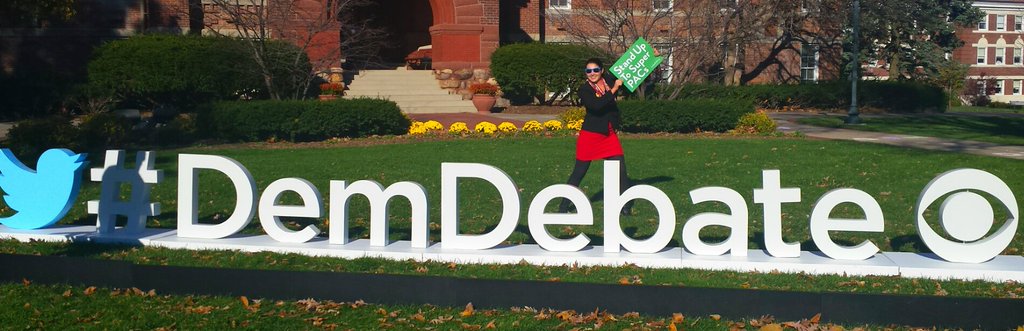
Drake Democratic debate highlights and discussion thread

The second Democratic presidential debate kicks off in a few minutes at Drake University’s Sheslow Auditorium. Why Democratic National Committee leaders scheduled this event on a Saturday night is beyond me; but then, their whole approach to debates this year has been idiotic. I wonder how many politically-engaged Iowans who would normally tune in for a debate will watch the Iowa Hawkeyes football game against Minnesota tonight.

I’m not a fan of curtain-raisers such as lists of “things to watch for” or mistakes candidates might make. I will update this post later with thoughts on each contender’s performance.

Any comments about tonight’s debate or the Democratic presidential race generally are welcome in this thread. I enclose below the latest commercials Hillary Clinton and Bernie Sanders have been running in Iowa. The new 30-second Sanders spot mostly uses images and phrases pulled from his strong introductory commercial. Clinton’s ad-maker this year is putting out much better material than I remember from her 2007 Iowa caucus campaign. To my knowledge, Martin O’Malley has not aired any television commercials in Iowa yet, but the Generation Forward super-PAC has run at least one spot promoting his candidacy, which Bleeding Heartland posted here.

UPDATE: My first take on the debate is after the jump.

Continue Reading...

New details on how the Koch brothers boosted Joni Ernst's campaign

Kenneth P. Vogel reports new details at Politico today on how the billionaires David and Charles Koch provided indirect financial support to Joni Ernst’s 2014 campaign for U.S. Senate. Politico’s headline “How the Kochs created Joni Ernst” (changed after a few hours to “How the Kochs launched Joni Ernst”) overstates the case somewhat. Arguably, the dark money employed to attack Ernst’s main rival for the GOP Senate nomination would have been less effective if either 1) Mark Jacobs hadn’t chosen to live outside this state for 30 years. fatally wounding his candidacy in my opinion; or 2) the other Republicans in the race had raised enough money to become credible alternatives to Jacobs themselves.

Still, money funneled through the Kochs’ network was a big help to Ernst. We already knew that the Kochs invited her to their 2013 summer “seminar” a few weeks after she kicked off her Senate campaign. We already knew that in the summer of 2014, the Koch brothers front group Concerned Veterans for America kicked off what became a sustained attack on Bruce Braley’s Veterans Affairs Committee hearings attendance. Vogel has shown that Ernst got more assistance before winning the primary than was previously known.

I enclose below excerpts from Vogel’s article, but I recommend clicking through to read the whole piece. Vogel concentrates on the Trees of Liberty PAC, which raised funds through the Koch network and spent most of that money to air a tv ad attacking Jacobs. You can view that ad here. It masquerades as non-election communication by ending with the line, “Call Mark Jacobs. Tell him Iowa families can’t afford higher energy costs from Washington,” instead of urging viewers not to vote for Jacobs.

Vogel does not address the role of American Heartland PAC, a single-candidate super-PAC supporting Ernst. American Heartland PAC piled on with more tv ads targeting Jacobs less than a week after the Trees of Liberty statewide ad buy ended on May 2, 2014. The super-PAC did disclose its donors (longer list here). The largest contributors were Robert McNair, owner of the Houston Texans football team, and hedge fund operator Robert Mercer.

P.S.-It’s worth recalling on “Throwback Thursday” that Governor Terry Branstad helped launch Ernst when he picked the little-known Kim Reynolds as his running mate in 2010. Reynolds’ election as lieutenant governor that year opened up the Iowa Senate seat Ernst won two months later. If Branstad had chosen a different running mate, Reynolds would have stayed in the state legislature, and Ernst would likely still have been the Montgomery County auditor in 2013–not a promising springboard for a statewide candidate.

Continue Reading...

Iowa wildflower Wednesday: Wild blue sage (Pitcher sage)

Credit for this week’s edition of Iowa wildflower Wednesday goes to Matt Hauge. In September, he posted a gorgeous picture of wildflowers I’d never seen before. They turned out to be Wild blue sage (Salvia azure grandiflora), also known as Pitcher sage, after “Doctor Zina Pitcher, a 19th century U.S. Army field surgeon and amateur botanist.” Matt found these flowers at the Kuehn Conservation Area in Dallas County. I enclose below his picture as well as some photographs of wild blue sage I took a few days later in a field dominated by Maximilian sunflowers.

Wild blue sage is native to much of the American South, Midwest, and plains states, but it is relatively rare. In fact, the plant is a state-listed “threatened” species in Illinois. Although wild blue sage does not appear on Iowa’s lists of “endangered, threatened, and special concern plants,” knowledgeable people tell me they have not seen this plant often in Iowa. According to Leland Searles, wild blue sage used to grow along the Neal Smith Trail in Polk County, between the Saylorville Visitors Center and the Butterfly Garden. He does not know whether those colonies still exist.

Unseasonably warm weather this fall has produced some surprisingly late blooms in central Iowa. Scroll to the end of this post for two bonus shots of common evening primrose and goldenrods that were flowering on November 7 in Windsor Heights.

Continue Reading...

New poll is testing messages and attitudes about the University of Iowa

A poll in the field this week is measuring Iowans’ views of the University of Iowa and whether certain changes would increase the perceived value of a degree from the university. The phrases enclosed below reflect what one respondent was able to recall from the survey, which lasted approximately 15 minutes.

I hope to update this post with much more detail about the question wording. If you receive this call (or any message-testing poll), please take notes and send them to the e-mail address at the bottom right of the Bleeding Heartland front page.

The survey included at least one question about the performance of the University of Iowa’s new president, Bruce Harreld. In interviews with Iowa Public Television and Iowa Public Radio today, Harreld said he has been “building trust” by meeting with as many stakeholders on campus as possible. He also endorsed a plan to seek more state funding for the university next year. Jeff Charis-Carlson reported for the Iowa City Press-Citizen on November 6 that the “faculty vitality” proposal would provide $4.5 million for recruiting new faculty and increasing salaries of tenure-track faculty during the 2017 fiscal year. Iowa Board of Regents President Bruce Rastetter orchestrated adding $4.5 million to the budget request for the University of Iowa a few days after the regents hired Harreld. The move was widely perceived as an effort to placate those who disapproved of the hiring before a scheduled meeting of the Faculty Senate. Iowa Public Television’s “Iowa Press” program will broadcast the full episode with Harreld this Friday and Sunday.

Continue Reading...

Veterans Day links, with thanks to the Iowans in public life who have served

November 11 first became a day to honor war veterans in 1919, one year after the First World War ended. Congress officially designated “Armistice Day” a national holiday in 1926 and changed its name to Veterans Day in 1954. Many Americans will make a special effort today to thank the veterans they know. In that spirit, Bleeding Heartland acknowledges some of the Iowans in public life who have served in the armed forces.

Iowa’s Congressional delegation includes only one person who has served in the military: Senator Joni Ernst. The number of veterans in Congress has declined dramatically over the last 40 years. In 1971, “when member military service was at its peak, veterans made up 72 percent of members in the House and 78 percent in the Senate.” But in the current Congress, just 81 U.S. House representatives and 13 U.S. senators have served in the military. I enclose below more statistics from Rachel Wellford’s report for NPR.

Governor Terry Branstad is the only veteran among Iowa’s current statewide elected officials.

Of the 50 Iowa Senate members, seven are veterans: Democrats Jeff Danielson, Tom Courtney, Dick Dearden, Bill Dotzler, and Wally Horn, and Republicans Bill Anderson and Jason Schultz.

Of the 100 Iowa House members, nineteen are veterans: Republicans John Kooiker, Stan Gustafson, John Landon, Dave Maxwell, Kraig Paulsen, Sandy Salmon, Quentin Stanerson, Guy Vander Linden, Matt Windschitl, Dave Heaton, Darrel Branhagen, Ken Rizer, Zach Nunn, John Wills, and Steve Holt, and Democrats Dennis Cohoon, Jerry Kearns, Todd Prichard, and Brian Meyer.

The population of veterans faces some special challenges, including higher rates of mental health problems such as post-traumatic stress disorder (PTSD). An estimated 22 U.S. military veterans die by suicide every day, which means suicide “has caused more American casualties than wars in Iraq and Afghanistan.” The Military Suicide Research Consortium provides information on the problem and resources for those needing help, in addition to white papers summarizing current research on factors that contribute to suicides. For instance, sexual assault in adulthood or childhood sexual abuse both increase the risk of suicidal thoughts and attempts. Also, veterans who know someone who died by suicide “reported more than twice the frequency of suicidal ideation.” I was surprised to read in this paper that major public holidays are not associated with higher rates of suicide. On the contrary, “holidays may act as more of a protective factor” against suicide, possibly because of greater “social integration during holiday periods.”

Last month the Iowa Department of Public Health released the Iowa Plan for Suicide Prevention 2015-2018, which “seeks to reduce the annual number of deaths by suicide in Iowa by 10 percent by the year 2018 – a reduction of 41 from the 406 three-year average from 2012-2014 – with an ultimate goal of zero deaths by suicide.” The full report (which does not focus on veterans) is available here (pdf). Iowans with suicidal thoughts or who are concerned a loved one may be considering suicide can call the Suicide Prevention Lifeline at (800) 273-TALK or Your Life Iowa at (855)-581-8111. For online assistance: Suicide Prevention Lifeline or Your Life Iowa.

Continue Reading...

IA-03: Mike Sherzan sounds ready to seek Democratic nomination

Mike Sherzan 2 photo CTd-cDqUYAAsUZn_zpsrgjfhz6g.jpg

A third candidate may soon join the Democratic field in Iowa’s third Congressional district. Mike Sherzan confirmed by telephone this morning that he has been talking to potential constituents about the race and will decide whether to run before the end of the year. Sherzan was the first Democrat to launch a campaign in IA-03 in 2013 but withdrew from the race two months later, citing health issues. Asked whether he is seriously considering another Congressional bid, Sherzan said today he is “farther along than that.” He noted that he recently stepped down as president and CEO of Broker Dealer Financial Services Corp. in West Des Moines (positions he had held since 1991). According to Sherzan, it is “not possible” to run a company and run for Congress at the same time, because a campaign “takes everything you have and more.”

Key political issues for Sherzan include the “huge gap in income levels in this country” and the worsening economic position of the middle class. He supports raising the minimum wage and is concerned about the gap between men and women’s pay. Sherzan also said we “should be able to talk about gun control,” namely common-sense measures most gun owners would support. He identified college student debt as a major problem as well.

Sherzan has been successful in the business world and argued that his background in negotiations would help him work across the aisle. But he emphasized that he “comes from a Democratic background” and urged people not to “judge my positions based on my business experience.” For instance, Sherzan believes “government was never meant to be a business”–a contrast to rhetoric often heard from corporate leaders who run for office. Click here for more background on the likely candidate.
This summer, Desmund Adams and Jim Mowrer became the first two Democrats to declare candidacies against first-term Representative David Young. So far, Mowrer has raised more money and has more backing from Iowa Democratic insiders. IA-03 covers sixteen counties in central and southwest Iowa and contains 150,549 active registered Democrats, 163,411 Republicans, and 165,750 no-party voters according to the latest figures from the Iowa Secretary of State’s office.
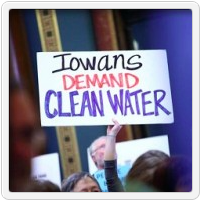
Continue Reading...

Kraig Paulsen lands sweetheart deal at Iowa State University

Kraig Paulsen photo photo_zpsfoehx0by.png

When Kraig Paulsen announced plans to resign as Iowa House speaker and not seek re-election in 2016, he indicated he would continue to work as an in-house attorney for the trucking company CRST International Inc.

News broke last week that Paulsen has landed a high-paying position at Iowa State University’s College of Business. University officials waived a policy requiring such jobs to be advertised when they offered Paulsen the job, Vanessa Miller reported for the Cedar Rapids Gazette on November 6.

Continue Reading...

12 examples of President Barack Obama being weak during his first term

whitehouse.JPG

Former Maryland Governor Martin O’Malley’s presidential campaign is pushing a new line of attack against Senator Bernie Sanders: in 2011, Sanders said President Barack Obama was “weak” and perhaps should face a challenger in the 2012 Democratic primary. O’Malley’s communications staff have also pushed out reports suggesting Sanders himself was considering a primary challenge to Obama and failed to campaign vigorously for the president’s re-election later in 2012 (not that Vermont was ever in play for Mitt Romney).

Those talking points may fire up Democrats who already resent the fact that the self-proclaimed democratic socialist Sanders has always campaigned as an independent. But I doubt they are a promising line of attack for moving caucus-goers and primary voters away from Sanders and toward O’Malley. The inconvenient truth is that Obama’s record hasn’t always lined up with progressive principles or with his own campaign promises. I suspect those who “feel the Bern” are more likely to agree with than be offended by Sanders’ critique of the president.

I don’t know yet for whom I will caucus, the first time I’ve ever been undecided so late in the election cycle. But I count myself among those “millions of Americans” Sanders described as “deeply disappointed in the president” during the interview O’Malley’s campaign portrays as harmful. I caucused uncommitted in 2012 to send the message that the president “hasn’t stood up for core principles of the Democratic Party.” Moreover, O’Malley’s own stump speech hints at some valid reasons for Democrats to be disaffected by Obama’s rightward drift.

Continue Reading...

Ray Zirkelbach becomes fourth Democrat to run for U.S. Senate--but why?

capital1.JPG

Former State Representative Ray Zirkelbach is officially exploring a candidacy for U.S. Senate in 2016, James Q. Lynch reported for the Cedar Rapids Gazette on November 7.

Although the field is getting crowded — former legislators Bob Krause of Fairfield and Tom Fiegen of Clarence, and State Sen. Rob Hogg of Cedar Rapids have all entered the race — Zirkelbach, 37, believes he’ll be the Democratic Party’s best candidate to defeat [Senator Chuck] Grassley. His ideas will set him apart from the others, Zirkelbach said. […]

“It’s about progress,” he said.

First elected to the Iowa House in 2004, Zirkelbach served three terms before losing his 2010 re-election bid. He missed the 2006 and 2007 legislative sessions, because his Iowa Army National Guard unit had been called up to serve in Iraq.

I have not seen a website or Facebook page for Zirkelbach’s U.S. Senate exploratory committee yet, but will update this post as needed. In lieu of an up to date official bio, I have posted the “member profile” that appeared on the Iowa House Democrats website during Zirkelbach’s third term. Zirkelbach’s Twitter account hasn’t been active since 2009; his personal Facebook feed is here.

I struggle to understand why Zirkelbach would run for Senate when we already have three progressive Democrats in the field, including one (Hogg) with a much stronger background of legislative accomplishments.

Meanwhile, to my knowledge, Democrats have no declared candidate against GOP State Representative Lee Hein in Iowa House district 96, where Zirkelbach lives (a map is at the end of this post). Hein defeated Zirkelbach in the 2010 wave election, and Democrats didn’t field a challenger against him in 2012 or 2014. Taking on the incoming House Agriculture Committee chair would be a long-shot race; House district 96 leans to the GOP with 4,386 active registered Democrats, 5,761 Republicans, and 8,483 no-party voters according to the latest figures from the Iowa Secretary of State’s office. But Zirkelbach would be much better positioned to defeat Hein than Grassley.

UPDATE: Pat Rynard spoke to Zirkelbach about his Senate bid. Added excerpts to that post below.

Continue Reading...

Weekend open thread: Lousy deal-making edition

What’s on your mind this weekend, Bleeding Heartland readers? This is an open thread: all topics welcome.

In what the Des Moines Register’s editors described as a “new low in the out-of-control race to keep or attract employers,” a state board unanimously approved $4.75 million in financial assistance to Kraft Heinz, which plans to replace a large factory in Davenport with a new facility on the northwest side of town. Although at least 900 people are expected to lose their jobs in the downsizing, the city of Davenport will put up $10 million in tax-increment financing to support the project. The Iowa Department of Transportation and the city are expected to commit $5.8 million for road work around the new factory site too. Never one to shy away from handing state funds to large corporations, Iowa Economic Development Authority Director Debi Durham has let all downsizing companies know that the state of Iowa’s wallet is open: “‘Will I take this deal any day? You bet,’ Durham said Thursday morning. ‘This is a future play.’” Durham also told reporters she “expects the state to do more of these kinds of deals in the future, as more massive companies merge.”
Iowa State University economist Dave Swenson characterized the Kraft Heinz incentive package as “bizarre,” adding, “The idea of providing public assistance for a company that has billions of dollars of annual sales cannot make sense to anybody.” The Register’s editors noted, “the company could get $20.75 million in state and local assistance,” which “works out to nearly $43,700 for every job Kraft Heinz agrees to keep”–and roughly 200 of the jobs the company promised to save will pay less than $37,000 a year.”

Speaking of lousy deals, Iowa’s plan to privatize Medicaid looks worse and worse. A post in progress will discuss this policy in more detail; for now I enclose below excerpts from several stories by Jason Clayworth for the Des Moines Register. In recent weeks, Clayworth has exposed damning facts, including:

Some claims made in bidding documents from the four private insurers chosen to manage Medicaid in Iowa “contain unverifiable data, misleading statements or half-truths.”

No data support the government’s estimate that privatizing Medicaid would save $51 million from the state budget during the first six months of the program.

The insurers selected to manage Medicaid “have each been held accountable in other states for serious service and administrative errors, including some that wrongly delayed or denied medical services to poor residents […].”

Iowa’s Medicaid director Mikki Stier “had improper communications with an insurance company consultant and former lawmaker during a critical review period that ended with the for-profit company being selected” as a managed care provider for Medicaid.

A November 6 letter from the Centers for Medicare and Medicaid Services to Stier enumerated “significant concerns” about the transition to managed care; excerpts from that letter are at the end of this post. Federal officials and Iowa Senate Democrats have scheduled “listening sessions” around the state to focus on Medicaid privatization. Click through for meeting details, as well as a list of state and federal officials to contact with concerns. Only the feds can stop this train by denying the necessary waivers. Branstad administration officials have been unmoved by any of the Register’s revelations or by the risks to vulnerable Iowans, which many speakers raised during Legislative Oversight Committee hearings on November 3.

Continue Reading...

Iowa reaction to Obama rejecting the Keystone XL pipeline

President Barack Obama announced yesterday that he is rejecting the Keystone XL pipeline, which would have transported tar sands oil from Canada to the Gulf Coast of the U.S. Earlier in the week, TransCanada had asked the Obama administration to suspend its review of the pipeline project, presumably hoping to “delay the review process in hopes that a more sympathetic Republican administration will move into the White House in 2017.”

I enclose below the full text of the president’s statement on Keystone and reaction from members of Iowa’s Congressional delegation. U.S. Senators Chuck Grassley and Joni Ernst sharply criticized the decision, as did Republican Representative David Young (IA-03). I have not seen any comment from GOP Representatives Rod Blum (IA-01) or Steve King (IA-04) but will update this post as needed. King is currently visiting the Middle East. Both he and Blum have consistently backed the Keystone XL project.

Democratic Representative Dave Loebsack (IA-02) refrained from criticizing the president’s decision, instead calling on politicians to “focus on the issues that are important to the American people.” Loebsack’s voting record on Keystone XL is mixed, but earlier this year he twice supported a bill that would have authorized the pipeline. (Obama vetoed that legislation.)

All three Democratic presidential candidates welcomed the news about Keystone’s demise, while most of the GOP field denounced Obama’s decision.

The USA Today reported that Secretary of State John Kerry said in a statement, “The critical factor in my determination was this: moving forward with this project would significantly undermine our ability to continue leading the world in combating climate change.” Kerry’s outstanding lifelong voting record on environmental issues was a major reason I became a precinct captain for him before the 2004 Iowa caucuses and continued to volunteer during that year’s general election campaign. I wish he had acted much sooner on Keystone XL, but better late than never. He doesn’t seem to have entirely convinced the president, though; speaking yesterday, Obama asserted that the pipeline would not have been “the express lane to climate disaster proclaimed” by climate hawks.

I enclose at the end of this post a joint statement from Iowa Citizens for Community Improvement and the Bakken Pipeline Resistance Coalition, which called on “all the other pipelines proposed from the Tar Sands of Canada and the Bakken Oil fields of North Dakota” to be rejected on the same grounds as Keystone XL. Energy analyst Aurelien Windenberger published an interesting commentary this week questioning whether the Dakota Access (Bakken) Pipeline even makes “economic sense” anymore for parent company Energy Transfer Partners. Click here for more background on the Bakken proposal.

UPDATE: Added below a statement from Pat Murphy, one of the Democratic candidates in Iowa’s first Congressional district.

Continue Reading...

13 ways a top Branstad administration lawyer didn't comply with state policies

The Iowa Department of Administrative Services presents itself as “an organization of excellence, providing services and support to meet our stakeholder agencies’ needs and ever mindful of good stewardship in resource utilization.” Among other responsibilities, DAS “handles personnel matters for all of state government.”

Yet the agency’s former top attorney Ryan Lamb didn’t comply with various personnel rules during the nearly three years he worked for state government, State Auditor Mary Mosiman revealed yesterday in a detailed report (pdf). The headline news from the audit: Lamb was “overpaid” and “unqualified” for his job. Ryan Foley reported for the Associated Press,

A key lawyer in Gov. Terry Branstad’s administration wasn’t qualified for his position and was paid $22,600 that he shouldn’t have received while on military leave, according to a report released Thursday.

Department of Administrative Services chief legal counsel Ryan Lamb also failed to record vacation days and was promoted and given major raises even though he didn’t have a resume on file […].

That sounds bad. But wait! There’s more.

Continue Reading...

Claire Celsi challenging Peter Cownie in Iowa House district 42

Claire Celsi photo 12193318_10153708767548767_1620323103440660694_n_zpsajsu95cd.jpg

Claire Celsi announced on Monday that she is running against Republican State Representative Peter Cownie in Iowa House district 42, which covers most of West Des Moines in Polk County. A detailed district map is below, along with background on both candidates. Celsi’s campaign is on the web at Claire4Iowa.com and on Facebook here. Celsi is also on Twitter. Her key campaign promises are to “fight for strong public education, protecting our environment and for sensible economic development that includes the district’s small business owners in the mix.”

House district 42 is relatively balanced politically, with 6,242 active registered Democrats, 7,097 Republicans, and 6,676 no-party voters, according to the latest figures from the Iowa Secretary of State’s office. The HD-42 precincts voted slightly more Republican than Iowa did as a whole in the 2012 presidential election, giving Barack Obama 49.85 percent of the vote while Mitt Romney won 48.83 percent. On the other hand, Joni Ernst outpolled Bruce Braley here in the 2014 U.S. Senate race by a little less than her winning margin statewide: 51.55 percent to 45.51 percent.

Cownie outperformed the top of the Republican ticket in the last two general elections, winning 56.61 percent of the vote in 2012 and 60.17 percent of the vote last year. He comes from a well-connected family in Polk County, which helped him raise far more money than a typical Iowa House incumbent for his 2012 and 2014 re-election campaigns. Cownie spent very little of those funds on his own race, kicking most of the cash over to the Republican Party of Iowa and its Eisenhower Club for use in other statehouse contests.

First elected in 2008 to replace retiring Republican lawmaker Libby Jacobs, Cownie has chaired the House Commerce Committee since 2013 and led the State Government Committee for two years before that. He is not what you’d call a workhorse at the Capitol. He has co-sponsored various bills and resolutions, but I’m not aware of any particular legislative achievements or causes he has tried to advance. Although many moderate Republicans live in West Des Moines, I can’t think of a time Cownie voted independently from his caucus or stuck his neck out to advocate a less conservative stance on a high-profile issue. For instance, even though he represents an LGBT-friendly district and is of a generation that mostly supports marriage equality, Cownie voted just like everyone else in the GOP caucus for a constitutional amendment to ban same-sex marriage in 2011. (He opted not to co-sponsor the marriage amendment in subsequent legislatures, but to my knowledge he has never spoken out for equal marriage rights.) Nor did Cownie criticize, let alone try to over-ride, Governor Terry Branstad’s education funding vetoes this summer, which blew a $1 million hole in the West Des Moines school district’s budget after the start of the current fiscal year.

Cownie was rumored to be interested in the House speaker’s chair in 2013, but when the position became available this summer, he did not put his name in as an alternative to Linda Upmeyer.

Iowa House Democratic leaders have not made this district a top target in the past. However, Celsi has been involved with enough Democratic campaigns to understand what successful candidates need to do. If she can raise enough money to run a credible effort, HD-42 could become a targeted race. At the very least, Cownie will need to spend more of his energy and money on his own turf. I consider Celsi a friend and will make time to volunteer for her campaign next year, when I’m not knocking doors for the Democratic nominee in my own House district. (Jennifer Konfrst and Jon Neiderbach are competing for the chance to take on House Majority Leader Chris Hagenow in HD-43.)

Continue Reading...

Iowa wildflower Wednesday: Brown-eyed Susan

A surprising number of wildflowers are still blooming in central Iowa, thanks to unseasonably warm weather for most of the autumn, with no hard frosts yet. This week’s featured plant is brown-eyed Susan (Rudbeckia triloba), which is native to most of the United States east of the Rocky Mountains. Although it’s not a rare plant, black-eyed Susan is much more prevalent.

The Illinois Wildflowers website explains, “Brown-Eyed Susan can be distinguished from similar species by the smaller size of its flowerheads and the smaller number of ray florets per flowerhead. It is usually more tall and bushy than Rudbeckia hirta (Black-Eyed Susan), but it is shorter with fewer lobed leaves than Rudbeckia laciniata (Cutleaf Coneflower).” Iowa wildflower Wednesday profiled cutleaf coneflower here and black-eyed Susan earlier this fall.

The Minnesota Wildflowers website notes, “While a Minnesota species of special concern in the wild from loss of habitat to agriculture and invasive species, Brown-eyed Susan flourishes in gardens across the state. One of the best cut flowers around it can last for weeks in a kitchen vase.” Gardeners may appreciate that this plant “attracts numerous nectar-seeking and pollen-seeking insects to its flowers.”

I took all of the photographs enclosed below just off the Windsor Heights bike trail, behind the Iowa Department of Natural Resources building on Hickman Road. Whoever is maintaining this restored patch of native plants is doing a fantastic job. So many native species are thriving, including some wildflowers that are rare in Iowa, and I’ve hardly seen any invasive plants there all year.

This post is also a mid-week open thread: all topics welcome.

Continue Reading...

District Court lets stand Branstad veto of mental health institute funding

Polk County District Court Judge Douglas Staskal has dismissed a lawsuit challenging Governor Terry Branstad’s authority to veto funding intended to keep two in-patient mental health facilities open. Twenty Democratic state lawmakers and the president of Iowa’s largest public-employee union filed the lawsuit in July, arguing that the governor’s line-item vetoes violated Iowa Code provisions requiring that the state “shall operate” mental health institutes in Mount Pleasant and Clarinda. But Judge Staskal found that “Existing statutes cannot limit the Governor’s item veto authority,” which “is of constitutional magnitude. The only limitations that have been placed on that authority have been derived from the language of the constitution itself. […] And, there is no language in the item veto provision which suggests a statutory limitation on the power it creates. It is elementary that, to the extent there is conflict between a constitutional provision and a statute, the constitution prevails.”

I enclose below longer excerpts from the court ruling, which can be read in full here. Mark Hedberg, the lead attorney representing the plaintiffs, told Bleeding Heartland they “are preparing an appeal” to the Iowa Supreme Court “and will ask that it be expedited.”

Continue Reading...

Latest polls show larger Clinton leads in Iowa, but who are the likely caucus-goers?

Hillary Clinton has gained ground in polls of Iowa Democrats since the first debate on October 13 and her marathon questioning by a hostile U.S. House select committee on October 22. The four most recent surveys here, all released in the last two weeks, put her ahead of Bernie Sanders by disparate margins. I enclose below highlights from polls released by Loras College, Monmouth College, Monmouth University, and Public Policy Polling, which has the newest Iowa poll out.

The big question is which pollster, if any, has a handle on distinguishing likely caucus-goers from others who will pick up the phone for an unknown number and agree to take a survey. Clinton leads by 14 points in Monmouth College/KBUR/Douglas Fulmer & Associates but by 32 points in Public Policy Polling and by a very-hard-to-believe 41 points in Monmouth University. One or more of those polls has to be off by much more than the mathematical margin of error, which assumes a respondent pool that perfectly represents the target population.

How many Iowans will come to their Democratic precinct caucuses on February 1 is anyone’s guess. No one seems to expect turnout close to the record-shattering level of nearly 240,000 in January 2008. If it’s much lower than that, who benefits: Clinton, by virtue of a superior campaign organization, or Sanders, whose supporters appear to be much more excited about their candidate? Former Senator Tom Harkin, who is backing Clinton, told the New York Times after the Iowa Democratic Party’s Jefferson-Jackson dinner, “This is not a slam dunk for her,” citing the tremendous enthusiasm for Sanders. With just a fraction of the mainstream media coverage Obama was receiving at similar stages of the campaign in 2007, Sanders has been drawing huge crowds in Iowa. His campaign is just starting to draw explicit contrasts with Clinton and only began running television commercials this week.

On a related note, Shane Goldmacher reports for Politico today on speculation about turnout for the 2016 Republican caucuses. Some Iowa GOP insiders predict 150,000 caucus-goers or more, while others think turnout will be only slightly higher than the record of 121,501, set in 2012. Bleeding Heartland will cover the latest Republican polling in Iowa in a future post; Ben Carson has led in most surveys conducted during the past month.

Continue Reading...

Iowa local election results discussion thread

What election results were you watching tonight, Bleeding Heartland readers? I was excited to see the “Core 4” progressive slate sweep the Iowa City council elections, despite a well-financed campaign for the rival group, representing Chamber of Commerce types who have long dominated local government. John Deeth described what was at stake in those races, and Tom Carsner put it succinctly in a letter to the Iowa City Press-Citizen:

The “growth at any price to grow the tax base” philosophy of the present council majority puts Iowa City at financial risk when one TIF-financed Big Bang project turns south. A series of smaller investor-financed mixed use — business and residential — projects can energize multiple neighborhoods and build a more reliable and sustainable tax base.

[…] I urge Iowa City to welcome the just, equal, affordable, inclusive and sustainable growth vision presented by John Thomas, Rockne Cole, Pauline Taylor and Jim Throgmorton. Vote for them to shake loose the scared establishment of the present City Council.

UPDATE: In his analysis of the Iowa City results, Deeth sees outgoing Mayor Matt Hayek’s “ham-handed editorial” in the Iowa City Press-Citizen on October 14 as “a turning point in the campaign.” Bleeding Heartland user corncam points to another factor that may have helped the “Core 4.”

Davenport voters resoundingly elected Frank Klipsch mayor, ousting incumbent Bill Gluba by more than a 2: 1 margin. It’s the end of a long political career for Gluba, who won his first election (to the Iowa legislature) 45 years ago. Gluba was an activist even before running for office, participating in the 1963 march on Washington for civil rights. His handling of some local controversies this year, including his role in forcing out Davenport’s city manager, prompted the Quad-City Times to endorse Klipsch, a former CEO of the local YMCA who has a “reputation for bringing diverse groups together” and a “more collaborative style.”

In my own corner of the world, I was pleasantly surprised that challengers Threase Harms and Zac Bales-Henry defeated the two Windsor Heights City Council incumbents on the ballot. CORRECTION: Only Harms won her seat outright. Bales-Henry will have to face Charlene Butz in a December 8 runoff election. Butz and Dave Burgess were frequent “no” votes on any kind of change or progress, and Butz was a particularly dedicated opponent of new sidewalks on streets where they are badly needed. Bales-Henry promised to work to “Create a more efficient and walkable neighborhood […] and ensure that each citizen can walk, run or bike to any location within city limits safely and easily,” as well as trying to improve the local trails system. Harms also expressed support for new sidewalks on key city streets. You never know what could become a hot-button issue in local politics, and the sidewalks question has been one of the most divisive issues in Windsor Heights over the past decade. UPDATE: The anti-sidewalks voters may come out in force for the December 8 runoff, but even if Butz is re-elected, there might be enough votes for change, because two of the incumbents who were not on the ballot this year (Steve Peterson and Tony Timm) have expressed support for new sidewalks in the past.

My son and I stopped at Harms’ home while trick-or-treating on Friday. When I mentioned that I’d seen lots of her yard signs around town, she responded, “Yard signs don’t vote.” Right answer! Clearly she knows how to GOTV, because she finished way ahead of the rest of the field in our at-large elections. That’s a rare accomplishment for a first-time candidate running against incumbents.

UPDATE: I was sorry to see that Cedar Rapids residents rejected a levy to fund public libraries. Todd Dorman covered the campaign for library funding over the weekend.

Voters in Des Moines re-elected Mayor Frank Cownie and the city councillors who were on the ballot. I didn’t realize that Cownie is now the longest-serving Des Moines mayor. In the most hotly-contested race, the open seat in Ward 2 on the east side of Des Moines, turnout was down and Linda Westergaard, backed by business interests including a realtors’ lobbying group, defeated Marty Mauk.

photo credit: Mark Carlson

Continue Reading...

Group highlights Iowa DNR's failure to enforce manure management plans

Numerous large-scale hog confinements in five Iowa counties are not following recommended practices for applying manure to farmland, according to findings the advocacy group Iowa Citizens for Community Improvement released today. Under Iowa law, livestock farms “with 500 Animal Units or more (equivalent to 1,250 hogs)” must have a Manure Management Plan. Iowa CCI members studied 234 of those plans in Adair, Boone, Dallas, Guthrie, and Sac counties (central and western Iowa). They found “missing documents, double-dumping, over-application, potential P-index violations, incorrect application rates, and potential hazards of manure application based on the geography and farming practices of the land.” Iowa CCI filed a complaint with the Iowa Department of Natural Resources today, requesting a thorough investigation of manure management plan violations as well as reforms “to improve oversight and to hold factory farm polluters accountable,” including stronger enforcement of plans and permits, “increased public access to manure application records,” more thorough inspections of livestock farms, and “better training across field offices for DNR staff.”

I enclose below the executive summary of Iowa CCI’s findings. The full complaint to the DNR is available here (pdf). Pages 4 through 6 offer detailed recommendations for “next steps” to address the problems. Appendix A lists 91 farms in the five counties that are large enough to need Manure Management Plans, but for which such plans are missing. Appendix B lists five farms for which Manure Management Plans were not in the DNR’s animal feeding operations database. Appendix C shows which documents were missing from dozens of farms’ Manure Management Plans across the counties. The file also includes county maps of watersheds and roads to show where the farms in question are located.

Since Iowa CCI members examined Manure Management Plans in only five of Iowa’s 99 counties, today’s case study reveals only a small fraction of statewide problems related to manure application. Kudos to those who researched and exposed the DNR’s failure to do its job.

Calls for tougher enforcement may be a dead letter, given the Branstad administration’s hostility to regulations that inconvenience business owners and the Iowa legislature’s resistance to approve even small measures to improve water quality (and I’m not just talking about Republican lawmakers).

Iowa CCI’s mission and methods have made it unpopular in powerful circles. But those who criticize the group’s controversial acts (like heckling politicians) should also acknowledge important work like today’s case study. While some Democratic elected officials are deeply committed to addressing our water pollution problem, as a group Iowa Democratic officialdom has said little and done less about agricultural runoff. Iowa CCI speaks for many people who are angry about pollution impairing hundreds of waterways, and who know that electing more Democrats alone will not solve the problem. That’s why it has long been among the largest non-profits working on environmental and social justice issues in this state.

Continue Reading...

First Bernie Sanders commercial makes powerful case for his candidacy

Bernie Buttons

Senator Bernie Sanders’ presidential campaign started running its first television commercial in Iowa and New Hampshire this week, roughly three months after Hillary Clinton’s campaign went on the air in the first two nominating states. I enclose below the video and annotated transcript for “Real Change,” which packs a surprising amount of Sanders’ personal background and political goals into 60 seconds, without being too wordy. A viewer who knew nothing about the candidate before watching this spot would come away with a decent grasp of where Sanders came from and why he is running for president. That’s not easy to accomplish in an introductory commercial, though it’s more doable in a minute than in 30 seconds.

When Sanders launched his campaign in April, few would have expected him to be able to go up on statewide television three months before the Iowa caucuses. Through an outpouring of grassroots support, Sanders has raised an astonishing amount of money. His campaign brought in $26 million during the third quarter, including about $2 million on September 30 alone and nearly another $2 million during the 24 hours after the first Democratic debate on October 13. (The new Republican establishment darling, Senator Marco Rubio, only raised about $6 million for his presidential campaign during the entire third quarter.) The Sanders tv ad refers to “over a million contributions.” In every version of his stump speech that I have seen this year, Sanders points out that the average donation to his campaign is a little more than $30, whereas some other candidates rely mostly on large contributions from millionaires.

Any comments about the Democratic presidential race are welcome in this thread. If you never read Paul Lewis’s profile of Sanders for The Guardian this summer, I highly recommend it.

Continue Reading...

Bruce Rastetter recruited Bruce Harreld earlier than previously acknowledged

Bruce Harreld officially begins work today as the University of Iowa’s 21st president. Speaking to the Iowa City Press-Citizen’s Jeff Charis-Carlson on October 30, Harreld promised to “fight, fight, fight for this institution”–a response to widespread fears that he would accede to the Iowa Board of Regents’ plan to shift funding away from the university.

In the same interview, Harreld revealed new details about how he was recruited for the presidency, undermining parts of an official narrative that had already shifted several times during the month of September.

Critics of the Board of Regents’ decision to hire the only finalist who had no base of support on campus are being told to stop complaining and give the new president a chance. I wish Harreld every success in his new job and hope to be proven wrong about what his tenure will mean for the university.

But this is no time to stop scrutinizing the hiring process and whether leaders of the search committee and the Board of Regents misled the public about their early contacts with Harreld. The University of Iowa is a public institution. The search for its new president cost taxpayers more than $308,000. Iowans have a right to know if the search committee‘s deliberations and finalists’ campus forums were merely a sham concealing the Regents’ intent to choose a hand-picked candidate.

Continue Reading...

Weekend open thread: Halloween edition

What’s on your mind this Halloween weekend, Bleeding Heartland readers? Share any holiday stories or comments on any topic in this thread.

Two unusual Halloween customs are noteworthy in the Des Moines area: first, “Beggar’s Night” happens on the evening of October 30; second, trick-or-treaters are expected to tell a joke to receive candy. My unscientific observations based on jokes I heard in our neighborhood and at our children’s school “trunk or treat” earlier in the month: classics such as “knock knock” jokes and variants on “Why did the chicken cross the road?” never go out of style. Monster jokes are also popular. (What’s a ghost’s favorite fruit? Boo-berry. What’s a zombie’s least favorite room in the house? The living room. What’s a vampire’s least favorite room in the house? The sun room.) But aside from my kids, no one tells elephant jokes anymore.

As for Halloween costumes, I still see lots of ghosts, witches, skeletons, and vampires. Zombies are more popular than they were during my years as a trick-or-treater. Superheroes are a staple, but I saw fewer Star Wars-themed costumes this year than in the recent past. Many more children wore Hogwarts robes and carried wands. Compared to my childhood, fewer kids dress up as something generic; I saw some firefighters but only one police officer, one pirate, one professional baseball player, and no cowboys or football players. Princess outfits remain popular with girls, and I was surprised to see four or five Dorothys from the Wizard of Oz at the school event.

The coolest family I saw this year featured an Andre the Giant dad with his much-shorter sons dressed as Wesley and Inigo Montoya from The Princess Bride. The dad told me his daughter was Buttercup last year but wanted to wear something different this time.

Apparently someone in Iowa City was handing out packs of candy cigarettes to trick-or-treaters. I didn’t even know they made those anymore.

I love obsolete political bumper stickers and saw a fantastic one while out with my son on Friday night: Re-Defeat Bush 2004. Wish I’d had my camera with me.

Final note: Jeb Bush supporters must have been terrified to learn new details this week about the state of his campaign in Iowa. U.S. News and World Report posted a leaked internal document from the Bush campaign on Thursday. The idea behind the presentation was to calm skittish donors, but the numbers tell a horror story. Pat Rynard flagged the “terrible internal Iowa numbers” at Iowa Starting Line. Most shocking to me: zero doors knocked for Bush so far here. How is that possible? All of the major Democratic campaigns started canvassing in the late spring or early summer. The same was true before the 2008 caucuses. A Bush campaign official put a positive spin on the numbers, telling Trip Gabriel of the New York Times that even if Bush has only 1,260 identified supporters in Iowa, “I’m also confident we have more IDs than anybody else in the establishment lane.” I’ve got news for that person: some of those IDs will change their minds before caucus night, especially if they see another “establishment” contender in (such as Marco Rubio) looking more viable than Bush.

Continue Reading...

Sounds like Jim Webb is leaning toward an independent presidential bid

Jim Webb photo 220px-Jim_Webb_official_110th_Congress_photo_zpsfr9dwbml.jpg

Ten days after ending his quest for the Democratic presidential nomination, former U.S. Senator Jim Webb appears to be leaning toward an independent candidacy. His guest editorial in today’s Washington Post is titled, “America needs an independent presidential candidate.” Excerpt:

Sen. Bernie Sanders (I-Vt.) notwithstanding, the Democratic Party has coalesced around a member of a powerful, moneyed dynasty whom at this point most Americans do not trust and half do not like. If successful, she would guarantee further gridlock; if unsuccessful, she could lead the Democratic Party to the same dismal results it experienced in the elections in 2010 and 2014.

Tectonic shifts occur slowly but eventually they produce earthquakes. It is becoming ever clearer that we are on the cusp of a new era in U.S. politics, driven by the reality that a large percentage of Americans really do dislike both political parties and their leaders. They want and deserve something different, and nowhere is that reality more clearly seen than in the presidential race, in which the extremes that have taken over the nominating process have become glaringly obvious.

There can be no better answer to these developments than electing as president a tested, common-sense independent who can bring to Washington a bipartisan administration to break the gridlock paralyzing our political debates and restore the faith of our people in their leaders.

I am in the process of deciding whether to mount such a campaign. Clearly, the need for another option grows stronger and more apparent by the day.

Disenchantment with the major political parties is nothing new. But if the much better-known independent candidate Ross Perot couldn’t win a single state after spending some $60 million on his 1992 presidential bid, how on earth does Webb think he could be elected next year? He’d need to raise an estimated $8 million just to get on the ballot in all 50 states. In his last fundraising quarter as a Democratic candidate, Webb raised less than $700,000.

For a fraction of the expense of running for president, Webb could become an influential nationwide advocate for criminal justice reform. I remain hopeful that after weighing the costs and benefits, Webb will reject a hopeless vanity bid in favor of an issue-based campaign to change this country for the better.

Continue Reading...

Paul Ryan elected House speaker: How the Iowans voted

Yesterday House Republicans elected 2012 vice presidential nominee Paul Ryan as House speaker to replace the retiring John Boehner. Ryan received 236 votes to 184 for Democratic leader Nancy Pelosi and nine for Daniel Webster, the candidate endorsed by the House Freedom Caucus and some other conservatives. For some time after the implosion of House Majority Leader Kevin McCarthy’s aspirations to be speaker, Ryan had insisted he would prefer to remain Ways and Means Committee chair, but last week he succumbed to an intense recruiting effortby senior Republicans.

Iowa Republicans Rod Blum (IA-01), David Young (IA-03), and Steve King (IA-04) all voted for Ryan yesterday on the House floor. Democrat Dave Loebsack (IA-02) voted for Pelosi. I enclose below comments from Blum and King after the speaker election. Both had voted for Webster rather than to re-elect Boehner in January. Since Boehner announced his retirement last month, King has been one of the loudest advocates for Webster as speaker. Blum belongs to the House Freedom Caucus, so I suspect he was among the 43 Republicans who voted for Webster in a closed caucus meeting on October 28. However, neither Blum nor his staff responded to my request for comment on whether he supported Webster or Ryan, who received 200 votes in that closed meeting.

I did not see any public comment from Young in recent weeks on whom he would support for speaker. I assume he backed Ryan in closed session as well as on the House floor, but his staff did not disclose that information when I sought comment.

Webster said on October 28 that

his campaign for speaker had been a game-changer, one that had all but forced Ryan and others to promise an overhaul of the culture of the GOP Conference.

“I think we have changed the debate, changed the discussion away from a power-based system, away from a top-down approach, to one that works,” Webster said. “And if we can do that, we’ll be successful. If we don’t, we won’t be.”

King’s case for Webster slammed the “abuse of power plays by leadership” under Boehner and the “schism created by leadership’s persistent and relentless punishment of principled Members who vote their conscience.” Ryan promised yesterday to unify the GOP caucus, suggesting he will not seek revenge on those who opposed him as speaker, like Boehner did earlier this year.

Continue Reading...

The CNBC Republican debate really was that bad

One of the three CNBC panelists for the Republican presidential debate in Colorado made clear earlier in the day that he wasn’t looking for dry policy discussions.

“We’ve had fireworks up to this point. I think the fireworks will just be as big if not bigger,” [Carl] Quintanilla said in an interview. […]

“[W]e hopefully won’t need to go in there with a blow torch. The fires are going to get stoked and it is the moderators job to make sure those fires don’t die,” [Carl] Quintanilla said. “[T]he race is getting serious. This is about the economy, which is our wheel house, and our hope is this gives the candidates a different set of pitches at which to swing and I think that will, it will mark a turning point in the race one way or another.”

The biggest home runs on stage last night came when candidates swung at the debate moderators. For once, Republican whining about the “mainstream media” was mostly justified.

Continue Reading...

Iowa wildflower Wednesday: Blue giant hyssop (anise hyssop)

Today’s featured wildflower was new to me until a few weeks ago. I noticed a handful of plants with purple flowers blooming in the patch along the Windsor Heights bike trail, behind the Iowa Department of Natural Resources building on Hickman Road. Several people in the Raccoon River Watershed Facebook group suggested they might be Blue giant hyssop (Agastache foeniculum), also known as anise hyssop. Leland Searles told me the easiest way to identify this plant is to crush a leaf. Sure enough, a strong anise smell confirmed the ID. This member of the mint family is native to most of Canada and some northern parts of the U.S., but Searles speculated, “If the plant is anise hyssop, I suspect someone [from the DNR] ordered a moist-medic seed mix from Prairie Moon in Wisconsin. The plant is endangered in Iowa mainly because two northern counties are at the limits of its range.” It’s rare in Illinois as well.

I enclose below several pictures of blue giant hyssop.

As a bonus, I also included two shots of what I believe to be the smallest white snakeroot plant in bloom I’ve ever seen. I noticed the tiny white flowers yesterday next to the curb of our street. Usually white snakeroot plants are a few feet tall before they start flowering. White snakeroot is prevalent in Iowa and won’t hurt you, provided you don’t drink milk from animals that have grazed on it. Before the connection between this native plant and “milk sickness” was understood, thousands of people (including Abraham Lincoln’s mother) died on the American frontier.

Continue Reading...

New state office will seek to identify and exonerate wrongfully convicted Iowans

Six months after the Federal Bureau of Investigation acknowledged that flawed testimony about hair analysis may have caused innocent people to be convicted of crimes, the State Public Defender’s office has created a new Wrongful Conviction Division “to determine whether similar errors have occurred in Iowa cases” and to “pursue available legal remedies.” I enclose below the press release announcing the new office, which will collaborate with Iowa Division of Criminal Investigation, the Innocence Project of Iowa, and the Midwest Innocence Project. People seeking to have their cases reviewed can submit this 12-page intake questionnaire (pdf).

State Public Defender Adam Gregg deserves credit for making this happen less than a year after Governor Terry Branstad appointed him to the job. (A former legislative liaison for Branstad, Gregg ran unsuccessfully for Iowa attorney general in 2014.) The press release indicates that Gregg repurposed a vacant position in his office using existing appropriations. Taking that route allowed him to move more quickly than if he had lobbied state lawmakers for funding to create a Wrongful Conviction Division. Gregg also hired a serious person to run the new division in Audrey McGinn, who spent four years as a staff attorney for the California Innocence Project. Scroll to the end of this post for more background on McGinn’s work.

Radio Iowa’s O. Kay Henderson reported from the October 26 press conference,

“What’s an acceptable error rate for our criminal justice system?” State Public Defender Adam Gregg asked this morning. “Even if we get it right 99 percent of the time and only get it wrong one percent of the time, that would mean there are over 80 innocent people currently incarcerated in Iowa prisons. And at what cost? To the state, it’s about $34,000 per year per inmate. But what about to their families, to their lives and to their sanity? And at what cost to public safety?”

Gregg said when the wrong person is convicted, that means the real criminal isn’t held accountable. The first batch of cases to be reviewed by this new division date back to the 1980s and early ’90s.

Criminal defense attorney Nick Sarcone commented to Bleeding Heartland, “I think this is an important step towards ensuring the integrity of our justice system. However, we need to spend more time, energy and money fixing the substantial issues which plague our system at the trial court level. We need to ensure this new unit is not investigating cases from 2015 in 2030.”

UPDATE: Added below criminal defense attorney Joseph Glazebrook’s reaction to this news.

Continue Reading...

Warning to Marco Rubio: Iowa Republicans primed to care about missing work in Congress

U.S. Senator Marco Rubio is treading on dangerous ground by continuing to avoid the Capitol when he already has missed more votes than most of his colleagues. Last week, he cast his first vote in nearly a month, then skipped several more roll calls to go back on the presidential campaign trail. Rubio apparently feels he can frame his poor attendance as a virtue. “Frustrated” by the ineffective Senate, he prioritizes running for president “so that the votes they take in the Senate are actually meaningful again.”

I doubt that argument will convince many politically engaged people, judging by comments I’ve seen in news accounts and on social media. It’s particularly ill-suited for Iowans, who have been primed to value a good attendance record and to view missed work in Congress as a major character flaw.

Continue Reading...

Iowa Senate district 26 preview: Mary Jo Wilhelm vs. Waylon Brown

After several months of recruiting efforts, Republicans finally have a candidate willing to run against two-term State Senator Mary Jo Wilhelm in Iowa Senate district 26. This race is among a half-dozen or so contests that will determine control of the upper chamber after the 2016 elections. Since Iowans elected Governor Terry Branstad and a GOP-controlled state House in 2010, the 26 to 24 Democratic majority in the state Senate has spared Iowa from various disastrous policies adopted in states like Kansas, Wisconsin, Michigan, Ohio, and Pennsylvania. Of the senators who make up that one-seat majority caucus, Wilhelm was re-elected by the narrowest margin: 126 votes out of nearly 31,000 cast in 2012.

I enclose below a map of Senate district 26, a review of its voter registration numbers and recent voting history, and background on Wilhelm and challenger Waylon Brown. Cautionary note: although Brown is the establishment’s pick here, he is not guaranteed to win the nomination. “Tea party” candidates won some upset victories in the 2012 Iowa Senate Republican primaries, notably Jane Jech against former State Senator Larry McKibben in Senate district 36 and Dennis Guth against former State Senator James Black in Senate district 4.

Continue Reading...

Thoughts on the Iowa Democratic Party's final Jefferson-Jackson dinner

The Iowa Democratic Party held its final Jefferson-Jackson dinner Saturday night, drawing some 6,000 activists to hear three presidential candidates speak in Des Moines. Last night’s spectacle won’t loom as large over the Iowa caucus campaign as the JJ did in 2007, when it took place in November and the caucuses were scheduled for early January, rather than February. But some new tactics emerged during the speeches by presidential candidates Bernie Sanders, Martin O’Malley, and Hillary Clinton. My thoughts on the evening’s highlights are after the jump.

I am a sucker for hand-made political signs, so I also enclose below my favorite pictures from the crowds in the bleachers. I put “Feel the Bern” in lights up top because I’ve never seen electrified signs at the JJ before.

While I see the value in supporters waving signs (or glow sticks, as many did last night) at a big rally, the “sign wars” some campaigns stage before multi-candidate events have always struck me as pointless. How does it demonstrate “organizational strength” to send a few staffers to put up printed materials in windows or along a road? Why would anyone want their volunteers to stand around yelling for hours before the dinner, rather than saving their energy and voices to show that enthusiasm inside the hall? For those who disagree with me and love the show, Pat Rynard chronicled the morning and afternoon activities by all three campaigns at Iowa Starting Line.

As for why I called it the “final” JJ, the Iowa Democratic Party’s annual fall fundraiser will continue under a to-be-determined name honoring icons considered more inclusive. You can send your suggestion to the state party using this form through February 15, 2016.

Continue Reading...

When will Mike Huckabee, Bobby Jindal, or Rick Santorum go after Ben Carson?

Two new polls of Iowa Republicans show Dr. Ben Carson has taken the lead from Donald Trump. Selzer & Co’s latest survey for the Des Moines Register and Bloomberg Politics shows Carson is the first choice of 28 percent of likely Republican caucus-goers, followed by Trump at 19 percent, U.S. Senator Ted Cruz (10 percent), U.S. Senator Marco Rubio (9 percent), former Florida Governor Jeb Bush and U.S. Senator Rand Paul (5 percent each), business executive Carly Fiorina (4 percent), former Arkansas Governor Mike Huckabee (3 percent), Louisiana Governor Bobby Jindal, Ohio Governor John Kasich, and former Senator Rick Santorum (2 percent each), New Jersey Governor Chris Christie (1 percent), and the rest of the field below 1 percent.

Similarly, Quinnipiac’s latest poll of likely Republican caucus-goers found Carson ahead of Trump by 28 percent to 20 percent, followed by Rubio (13 percent), Cruz (10 percent), Paul (6 percent), Fiorina and Bush (5 percent each), and no one else above 3 percent.

Carson is the best-liked candidate among those likely to participate in the Iowa GOP caucuses. Both the Selzer and Quinnipiac surveys found that 84 percent of respondents view him favorably. I’ve posted more excerpts from the poll write-ups after the jump.

Carson is crushing the competition among social conservatives, an important bloc that tends to break late in Iowa caucus campaigns, as Bleeding Heartland guest author fladem discussed here. He has invested heavily in direct mail and leaving copies of his paperback books on Iowa Republican doorsteps, while generally escaping scrutiny from his competitors.

At some point, other candidates who are appealing primarily to the religious right must recognize that their path to relevance in Iowa runs through Carson. Only 22 percent of Selzer poll respondents said their minds are made up; 78 percent could change their minds. I’m curious to see when 2008 winner Huckabee, 2012 winner Santorum, and/or Jindal will start making a case against the surgeon. To be stuck in the cellar after spending substantially more time in Iowa than Carson must be so frustrating.

Cruz may also need to give Iowans a reason not to support Carson. Perhaps some of his Christian conservative surrogates could take on that role. “Opinion leaders” backing Cruz include numerous evangelical clergy, talk radio host Steve Deace, and Dick and Betty Odgaard, the self-styled martyrs to marriage equality in Iowa.

UPDATE: I should have mentioned that Nick Ryan, who led the 501(c)4 group American Future Fund for several election cycles and headed the pro-Santorum super-PAC during the 2012 primaries, signed on earlier this year to lead a super-PAC supporting Huckabee. It might make more sense for that group to go after Carson than for Huckabee to do so directly. Still, the next GOP debate on October 28 would be a good opportunity for rivals to score points against the new Iowa front-runner.

Continue Reading...

Lincoln Chafee exits Democratic race

Former Governor and Senator Lincoln Chafee of Rhode Island ended his presidential campaign today, saying to a conference of the Women’s Leadership Forum that “the Republican agenda sets back women’s rights and I pledge all my energy towards a big 2016 victory for Democrats across the country.” Chafee was getting no traction in national or Iowa polls of Democrats, nor did he perform well in last week’s televised debate.

With Vice President Joe Biden ruling out a third presidential bid and Jim Webb ending his quest for the Democratic nomination this week, the primaries are shaping up to be a straightforward choice between Hillary Clinton and Bernie Sanders. Martin O’Malley won’t have to fight with other second-tier candidates for attention anymore, but he has a lot of work to do to present himself as a viable alternative to the front-runners.

Chafee had been scheduled to speak last at tomorrow night’s Jefferson-Jackson dinner in Des Moines, and I was dreading the prospect of hundreds of people leaving the hall during his remarks. Way too many Iowa Democrats did that during Chafee’s speech to the “Wing Ding” in August and during Webb’s speech to the IDP’s Hall of Fame dinner in July. Such poor form not to hear out all the candidates, even marginal ones.

Steve King still pushing Daniel Webster for House speaker, not sold on Paul Ryan

Representative Steve King (IA-04) is still urging fellow Republicans to elect Representative Daniel Webster of Florida as speaker, even as House Ways & Means Committee Chair Paul Ryan of Wisconsin has gained momentum as a consensus choice to lead the chamber. King voted for Webster in the January election for House speaker and affirmed that he favored Webster when House Majority Leader Kevin McCarthy was favored to replace outgoing Speaker John Boehner.

After repeatedly saying he was not interested in the job, Ryan announced on Tuesday he would run for speaker if certain conditions were met. King advocated for Webster in a guest piece in yesterday’s Conservative Review. I’ve posted excerpts after the jump. Although King didn’t mention Ryan by name, he alluded to him when asserting, “We cannot have a reluctant Speaker. Webster is confident and sees the Speaker’s job as an opportunity to serve with purpose and principle.”

Appearing on MSNBC’s “Hardball” program yesterday, King suggested it would be a “bridge too far” to change House rules so members could not pass a motion to remove the chair, as Ryan has demanded. He predicted that condition would be a big problem for many Democrats as well as for some Republicans. King also noted that while Ryan had promised not to bring any major immigration reform bill to the House floor while President Barack Obama is still in office, he is still concerned that a bill including a path to citizenship for some undocumented immigrants could come up in the next Congress. King and his allies successfully pressured Boehner not to bring the Senate’s 2013 bipartisan immigration reform up for a vote in 2013 or 2014.

King leads the House Republican group called the Conservative Opportunity Society. Another right-wing faction called the House Freedom Caucus includes first-term Republican Rod Blum (IA-01). I haven’t seen any recent public comment from Blum on his preference for speaker. Like King, he voted for Webster rather than for Boehner in January. The majority of House Freedom Caucus members voted last night to support Paul Ryan for speaker. According to Drew Desilver’s close look at the House Freedom Caucus for the Pew Research Center’s “Fact Tank,” its members are more conservative and have less seniority than the average House Republican.

Any relevant comments are welcome in this thread.

Continue Reading...

New Des Moines Register poll: Clinton 48, Sanders 41

Hillary Clinton leads Bernie Sanders as the first choice of likely Iowa Democratic caucus-goers by 48 percent to 41 percent, with all other candidates far behind, according to a new poll by Selzer & Co. for the Des Moines Register and Bloomberg Politics. Jennifer Jacobs reported the main findings in today’s Des Moines Register. Since the poll was in the field before Vice President Joe Biden ruled out running for president again, the Register reallocated Biden’s supporters to their named second-choice candidate. Selzer’s previous Iowa poll showed Clinton ahead of Sanders by 37 percent to 30 percent with Biden in the field and by 43 percent to 35 percent without Biden as an option.

After the jump I’ve posted excerpts from Jacobs’ report, focusing on weak points for Clinton and Sanders.

Just 2 percent of respondents named Martin O’Malley as their first choice in the Register’s latest poll, behind “not sure” at 4 percent and “uncommitted” at 3 percent. Bleeding Heartland has a post in progress with my hypothesis on why O’Malley is getting no traction in Iowa, despite doing all the right things in terms of organizing and retail politics. Every time I’ve seen the former Maryland governor campaign here this year, audiences have responded favorably to his stump speech. I usually hear good feedback from other Democrats who have attended his events too, but it’s not translating into enough people signing supporter cards. Unfortunately for O’Malley, both Clinton and Sanders performed very well in last week’s debate, which drew record viewership for a debate featuring Democratic presidential candidates.

Jim Webb made the right choice to drop out of the race; the Register’s new poll showed him tied with Lincoln Chafee at 1 percent. Yesterday, Webb tweeted that it’s time for this country to “fix” the criminal justice system. I hope he will become heavily engaged in criminal justice reform efforts at the federal and state levels, instead of pouring his energy into an independent presidential bid.

The most shocking finding in the the Register’s latest poll: Iowa Democrats are more likely than Republicans to say the Trans-Pacific Partnership trade agreement is “good for Iowa.” Among likely Democratic caucus-goers, 39 percent said the TPP deal is good for Iowa, 27 percent said bad for Iowa, and 34 percent were unsure. Among likely Republican caucus-goers, just 27 percent said TPP was good for Iowa, 30 percent said bad for Iowa, and 42 percent were unsure. For decades, the Iowa business community and in particular representatives of Big Ag have spun “free trade” agreements as good for this state, so I would have expected much stronger support for TPP among Republicans.

UPDATE: Quinnipiac released a new Iowa poll on October 23 showing Clinton leading Sanders by 51 percent to 40 percent, with O’Malley at 4 percent. I enclosed below excerpts from the polling memo. Last month’s Quinnipiac poll of likely Democratic caucus-goers showed Sanders at 41 percent and Clinton at 40 percent.

Continue Reading...

Iowa wildflower Wednesday: Maximilian sunflower

Today’s featured plant is native to most of the United States and Canada. In Iowa, it can start blooming as early as July and continues well into October. I took all of the enclosed pictures of Maximilian sunflower (Helianthus maximiliani) in mid-September at the Kuehn Conservation Area in Dallas County. Many plants still had unopened buds.

Sometimes called Maximilian’s sunflower, this plant is named after the naturalist Prince Alexander Philipp Maximilian, who described it and many other flora when he explored the American West during the 1830s.

Trigger warning for arachnophobes: this post also includes two pictures of spiders, which had spun their webs across Maximilian sunflower plants. I can’t remember seeing so many spider webs in a patch of native plants before. The coloration and the “bold, zigzag band of silk” running down almost all the webs suggest that these are female black and yellow garden spiders.

This post is also a mid-week open thread: all topics welcome.

Continue Reading...

U.S. Attorney Nick Klinefeldt stepping down, not running in IA-03

 photo Nick Kleinefeldt_zpsegllmkdr.jpg

After six years as U.S. attorney for Iowa’s Southern District, Nick Klinefeldt will leave that position next month to go back to private law practice. I enclose below the full press release on his departure. Among other things, the former defense attorney highlighted his work on national committees “to update and expand discovery policies to ensure defendants [in federal courts] receive all of the information they need to adequately defend themselves, and revamp sentencing practices to ensure the end result of a prosecution is fair.” He also

developed a comprehensive discovery policy for the Southern District of Iowa that ensures criminal defendants receive even more information about the case against them than is required by the rules and that they receive it quickly. This policy included the development of a Stipulated Discovery and Protective Order that is now universally used in all criminal cases across the district. United States Attorney Klinefeldt also changed the way the office utilized mandatory minimum sentences, to ensure that they were only used when absolutely necessary.

U.S. House race-watchers had their eye on Klinefeldt earlier this year as a possible Democratic candidate in Iowa’s third Congressional district, but I have never heard of Klinefeldt signaling any intention to run. In recent weeks, the local Democratic establishment has been consolidating around Jim Mowrer, one of two declared challengers to first-term Representative David Young. Today Klinefeldt confirmed that he is not planning to run for Congress, Grant Rodgers reported for the Des Moines Register.

UPDATE: Michael Gartner wrote an excellent commentary on Klinefeldt’s record for the Des Moines-based weekly Cityview. Scroll to the end of this post for excerpts.

Continue Reading...

Joe Biden not running for president

Official portrait of Vice President Joe Biden in his West Wing Office at the White House, Jan. 10, 2013. (Official White House Photo by David Lienemann) This official White House photograph is being made available only for publication by news organizations and/or for personal use printing by the subject(s) of the photograph. The photograph may not be manipulated in any way and may not be used in commercial or political materials, advertisements, emails, products, promotions that in any way suggests approval or endorsement of the President, the First Family, or the White House.

Official portrait of Vice President Joe Biden in his West Wing Office at the White House, Jan. 10, 2013. (Official White House Photo by David Lienemann)
This official White House photograph is being made available only for publication by news organizations and/or for personal use printing by the subject(s) of the photograph. The photograph may not be manipulated in any way and may not be used in commercial or political materials, advertisements, emails, products, promotions that in any way suggests approval or endorsement of the President, the First Family, or the White House.

Vice President Joe Biden announced earlier today that he will not run for president in 2016, because while his family has “worked through the grieving process” for his son Beau Biden, the window for “mounting a realistic campaign […] has closed.” Click through to watch Biden’s full statement from the White House Rose Garden. He vowed to stay involved in political discourse: “But while I will not be a candidate, I will not be silent. I intend to speak out clearly and forcefully, to influence as much as I can where we stand as a party, and where we need to go as a nation.”

Biden also urged other Democratic candidates not to run away from President Barack Obama as they seek office in 2016: “I believe that President Obama has led this nation from crisis to recovery, and we’re now on the cusp of resurgence, and I’m proud to have played a part in that. This party–our nation–will be making a tragic mistake if we walk away or attempt to undo the Obama legacy. […] Democrats should not only defend this record, and protect this record, they should run on the record.”

Any comments about the vice president’s announcement or the Democratic presidential race generally are welcome in this thread. I think Biden made the right choice. I don’t see the current Democratic field lacking the vision or the experience he would have brought to the table. Conventional wisdom suggests that Hillary Clinton will benefit more than Bernie Sanders from Biden staying out of the race. Martin O’Malley could gain ground too, because Democrats who were hoping the vice president would run again clearly were not satisfied with the current front-runners.

UPDATE: I enclose below reaction to Biden’s decision.

Continue Reading...

A better use of Jim Webb's time than running for president as an independent

criminal justice photo Fotolia_71346710_XS_zpsmefhkwwz.jpg

Former U.S. Senator Jim Webb ended his campaign for the Democratic presidential nomination today. Warning that “The very nature of our democracy is under siege due to the power structure and the money that finances both political parties,” Webb said he will spend the next few weeks deciding whether to run for president as an independent. He still believes he “can provide the best leadership” to meet the country’s challenges and intends “to remain fully engaged in the debates that are facing us.”

Former New Mexico Governor Gary Johnson, who was the Libertarian Party’s presidential nominee in 2012, recently estimated that getting on the ballot in all 50 states would cost about $8 million and would require a lot of organizational work. Webb asserted today, “I have no doubt that if I ran as an independent we would have significant financial help.” But his presidential campaign raised less than $700,000 during the entire third quarter. Nor did Webb build much of an organization, even in the early-nominating states.

Webb could devote the next year to seeking ballot access and public attention, winning a few percent of the vote in the best-case scenario. Or, he could influence a salient public policy debate that is close to his heart with a much smaller investment of his time and other people’s money.

Continue Reading...

Poll testing pro-Sanders, anti-Clinton messages with Iowa Democrats

Bernie Buttons

A new poll is in the field testing numerous statements designed to convince Iowa Democrats to caucus for Bernie Sanders rather than for Hillary Clinton. I received the call last night and enclose my notes below. If you were a respondent for the same survey and can provide additional details, please post a comment in this thread or contact me via e-mail (the address is near the lower right corner of this page).

My best guess is that an outside group wanting to boost Sanders commissioned the poll. The questionnaire did not include any negative statements about the senator from Vermont. If the Sanders campaign were designing a poll like this, I think they would have tested a few arguments against supporting the candidate, to identify his possible weak points. An outside group planning to produce direct mail or paid advertising to influence Iowa Democrats wouldn’t need that information. They would only be interested in the best way to discourage people from caucusing for Clinton and/or encourage them to caucus for Sanders.

Although Sanders doesn’t have a super-PAC promoting his campaign, progressive advocacy groups that want him to become president may make independent expenditures supporting him. Note that the survey asked respondents whether they had a favorable or unfavorable opinion of the environmental group Friends of the Earth; no other non-profit organizations were mentioned in the questionnaire. Friends of the Earth endorsed Sanders this summer and would presumably be interested in knowing how well they are known/liked among early state Democrats.

It’s also possible that a conservative organization would commission a poll like this, hoping to hurt Clinton in the early nominating states.

Continue Reading...

Weekend open thread: Strange courtroom pronouncements edition

Kent Sorenson official photo Kent_Sorenson_-_Official_Portrait_-_84th_GA_zpsnmaxx4mw.jpg

What’s on your mind this weekend, Bleeding Heartland readers? This is an open thread: all topics welcome.

Former State Senator Kent Sorenson testified this week in the trial of two former Ron Paul presidential campaign aides. (A judge dismissed charges against a third man who had been indicted in the same case.) After initially claiming to be the victim of a “straight-up political witch hunt,” Sorenson eventually pled guilty to federal charges related to accepting hidden payments. He had been negotiating with Paul’s operatives for months on a price for changing his allegiance from presidential candidate Michele Bachmann to Paul less than a week before the Iowa caucuses.

Russ Choma wrote up Sorenson’s testimony for Mother Jones, and Grant Rodgers has been covering the trial for the Des Moines Register. On Thursday, Sorenson testified that he was upset when some staffers for Michele Bachmann’s campaign treated him “like a leper,” after he revealed that he had considered switching to Paul and was offered money to do so. Dude, what did you expect? Asking to be paid for a presidential endorsement should get a person shunned from polite society. People with leprosy should take offense at being compared to a guy like you.

Sorenson said in court the next day that going into politics was “a waste of my life, and I wish I had not done it.” I would guess a large number of Iowans in both parties also wish he had never gotten involved with politics.

Ten days ago, Polk County District Court Judge Douglas Staskal heard arguments in a case challenging Governor Terry Branstad’s veto of funding for two in-patient mental health facilities his administration decided to close earlier this year. In one exchange, Deputy Attorney General Jeffrey Thompson asserted that the governor could theoretically shut down the state’s court system by exercising his veto power to reject all appropriated funds for the judiciary. He noted that the constitution gives state lawmakers power to override a governor’s veto (through a two-thirds majority vote in both the Iowa House and Senate), and courts should not take on that role if legislators decline to do so.

I would like to hear attorneys’ opinions on whether the governor’s veto power extends so far. Can the governor eliminate virtually any part of state government by blocking appropriations for it, as long as at least one-third plus one member of one chamber of the legislature will back up his political agenda?

I’ve posted excerpts from these reports after the jump.

Continue Reading...

Iowa Congressional 3Q fundraising roundup

U.S. Capitol photo Fotolia_45139367_XS_zpsfdhhn9cd.jpg

October 15 was the deadline for Congressional candidates to report details on their donations and expenditures between July 1 and September 30 to the Federal Election Commission. Highlights from the FEC filings are after the jump.

I didn’t see any big surprises in this quarter’s fundraising numbers from Iowa, though one challenger raised more money than any of the four U.S. House incumbents, which I don’t ever remember happening before longtime GOP Representative Tom Latham retired in 2014.

None of the incumbents spent lavishly on their campaigns between July and September, but Representative Rod Blum was remarkably thrifty.

Continue Reading...

Special election in Iowa House district 21 will be on December 8

Iowa Capitol photo Fotolia_24694213_XS_zpsbnpz4jnl.jpg

Today Governor Terry Branstad scheduled a special election in Iowa House district 21 for Tuesday, December 8. Voters will elect a successor to longtime State Representative Jack Drake, who passed away last weekend.

Iowa House district 21 covers all of Union and Adams counties, most of Cass County, and some rural areas of Pottawattamie County. A detailed map is after the jump. Like most of southwest Iowa, it leans heavily Republican. The latest figures from the Iowa Secretary of State’s office indicate that House district 21 contains 3,720 active registered Democrats, 8,256 Republicans, and 7,401 no-party voters. Mitt Romney carried 53.64 percent of the vote here in the 2012 presidential election, and Joni Ernst (who is from nearby Montgomery County) won 63.75 percent of the votes in House district 21 in last year’s U.S. Senate race.

Continue Reading...

Throwback Thursday: The road not taken on Iowa's "Ag Gag" law

A U.S. District Court ruling in August inspired today’s edition of Throwback Thursday. That ruling struck down an Idaho law making it a crime to lie to obtain employment at an agricultural facility, among other things. Iowa was the first state to adopt what critics call an “ag gag” law, aimed at making it harder for animal rights or food safety activists to obtain undercover recordings at farms or slaughterhouses. Idaho’s law went further than the bill Governor Terry Branstad signed in 2012; for instance, the Idaho statute also banned unauthorized audio or video recordings at a livestock farm or processing facility. Still, to this non-lawyer, some passages of federal Judge Lyn Winmill’s ruling (pdf) suggested that Iowa’s prohibition on “agricultural production facility fraud” might also violate the U.S. Constitution, specifically the First Amendment’s free speech clause and the Fourteenth Amendment’s equal protection clause.

Bleeding Heartland posted relevant excerpts from the Idaho ruling here, along with a brief legislative history of House File 589.

I sought Governor Terry Branstad’s comment on the court ruling and whether Iowa lawmakers should amend or rescind the language in Iowa Code about “agricultural production facility fraud.” In response, the governor’s communications director Jimmy Centers provided this statement on August 6:

House File 589 passed with bipartisan support and under the advice and counsel of the Attorney General’s office. The governor has not had the opportunity to review the ruling from the federal court in Idaho and, as such, does not have a comment on the case.

“Under the advice and counsel of the Attorney General’s office” didn’t sound right to me. When I looked further into the story, I learned that the Iowa Attorney General’s office neither recommended passage of this law nor signed off on its contents.

Continue Reading...

Republicans not giving up efforts to defund Planned Parenthood in Iowa

 photo 83faedd6-fba0-4fa6-b5d7-44081776b279_zps5aocw69m.png

Iowa’s social conservatives have suffered several setbacks lately in their crusade against Planned Parenthood. The Iowa Supreme Court unanimously struck down an administrative rule that would have banned the use of telemedicine for medical abortions in several Planned Parenthood clinics. Iowa Attorney General Tom Miller informed a large group of Republican lawmakers that his office has neither “jurisdiction over transfers of fetal tissue” nor the “authority to investigate or demand information about the transfer of fetal tissue.” (Not that it mattered, since Planned Parenthood clinics in Iowa have never participated in fetal tissue donation programs.)

Governor Terry Branstad, who has always opposed abortion rights, acknowledged two weeks ago that “we cannot defund Planned Parenthood,” because a review of Planned Parenthood’s contracts with the state revealed that the health care provider has not “violated their responsibilities under the grants that they have received” for family planning services. An official review also confirmed no taxpayer money goes toward abortion services at Planned Parenthood clinics in Iowa.

During this year’s legislative session, Republicans successfully pushed for ultrasound requirements for women seeking abortions, but the final adopted language on ultrasounds did not add any new roadblocks or delays to the process of getting an abortion in Iowa.

Advocacy groups like Bob Vander Plaats’ FAMiLY Leader organization continue to pressure Branstad to keep his 2010 campaign promise to end Planned Parenthood’s state funding. Last week, Iowa House Republicans indicated that they plan to continue their “deliberate and unwavering battle” for the “pro-life” agenda.

Here’s how efforts to defund Planned Parenthood are likely to play out during next year’s Iowa legislative session. What happens after that depends mostly on whether the 2016 general election changes the balance of power at the statehouse.

Continue Reading...

Iowa Republican lawmakers not eager to block Branstad's latest power grab

Among the many examples of corporate cronyism Governor Terry Branstad’s administration has provided these past five years, getting the Iowa Department of Revenue and Finance to rewrite tax code without legislative approval “on behalf of the Iowa Taxpayers Association” is among the most brazen.

Not only does this unprecedented use of the rule making process usurp legislative authority, it may end up being more expensive than “the worst economic development deal in state history.” At least tax incentives benefiting Orascom (for a fertilizer plant the company would have built anyway) have an end point. The Iowa Department of Revenue’s proposed sales tax cut for manufacturers will cost the state of Iowa tens of millions of dollars in revenue every year, indefinitely.

Democratic state lawmakers weren’t happy that the Branstad administration unilaterally decided to let private insurance companies manage the state’s Medicaid program, especially since some corporate representatives were briefed on that managed care plan long before state officials informed lawmakers or the general public. But state lawmakers didn’t have a way to block the Medicaid privatization.

In contrast, the Iowa House and Senate could stop the Iowa Department of Revenue’s proposed rule and thereby assert the authority of the legislative branch to approve tax code changes. Alas, signs from Tuesday’s meeting of the legislature’s Administrative Rules Review Committee (ARRC) point to House Republicans going along with the Branstad administration’s ”serious overreach of executive power.”

Continue Reading...

Iowa wildflower Wednesday: Blue vervain

Today’s featured wildflower, Blue vervain (Verbena hastata), is native to most of the United States and Canada. Also known as Blue verbena, Swamp verbena, or Simpler’s joy, this plant is a survivor. According to the U.S. Department of Agriculture’s fact sheet, blue vervain “can grow in disturbed sites and is commonly found in moist meadows, thickets, and pastures, as well as riversides, marshes, ditches, and river-bottom prairies.” I took all of the photographs enclosed below in late August in the patch of native plants along the Windsor Heights bike trail, behind the Iowa Department of Natural Resources building on Hickman Road.

This plant resembles its close relative hoary vervain, which Bleeding Heartland featured last summer. I see hoary vervain more often along roadsides. Blue vervain typically has more branches with flowers, which can give the plant the appearance of a candelabra. The Minnesota Wildflowers website says that compared to hoary vervain, blue vervain “has smaller flowers, stalked leaves that are longer and proportionately much narrower, and prefers moist habitats.”

Blue vervain has various uses in herbal medicine but “can interfere with blood pressure medication and hormone therapy” and may “induce vomiting and diarrhea” if taken to excess. I’ll stick to enjoying the purple flowers.

Continue Reading...

First Democratic presidential debate discussion thread

In a few moments, five Democratic presidential candidates will take the stage in Las Vegas for their first televised debate. I wish the Democratic National Committee hadn’t stood in the way of scheduling more debates, starting this summer. Listening to DNC Chair Debbie Wasserman-Schultz try to defend her stance in an interview with CNN’s Wolf Blitzer today, all I could think was, thank heaven for the “Big Blue Wall.” We aren’t going to win elections on Wasserman-Schultz’s strategic skills, that’s for sure.

All of the candidates are under pressure tonight. Hillary Clinton wants to change the dominant media narrative, which has been relentlessly negative about her candidacy for months. Bernie Sanders has his first substantial block of tv time to talk about his policies. In recent months, network news coverage has devoted far more air time to Joe Biden’s possible presidential bid than to Sanders’ actual campaign, which is drawing record crowds.

As the loudest voice for more debates, who has received relatively little media attention so far, Martin O’Malley needs a strong showing tonight, especially since the other debates scheduled before the Iowa caucuses are all happening on weekends, when viewership will likely be low. Jim Webb and Lincoln Chafee will also want to break through to a national audience, but they are not building real campaign organizations the way O’Malley has done. Twitter user dcg1114, who posted this guest piece at Bleeding Heartland last month, noted today that the first debate of the 1984 election cycle gave Gary Hart his “first real sign of life.” In particular, that debate helped Hart improve his standing for the Iowa caucuses.

Incidentally, former Iowan and Democratic activist Tommi Makila wrote a blistering commentary contrasting O’Malley’s criticism of the DNC’s “rigged” process with the “rigged” Democratic primaries Makila has observed since moving to Maryland years ago.

Please share any relevant comments in this thread. I’ll update this post later with first thoughts on the debate. UPDATE: My impressions are below.

After the jump I’ve posted videos of the latest commercials Clinton has been running, as well as the debut tv ad the Generation Forward PAC put on the air in Iowa supporting O’Malley.  

Continue Reading...

Brad Zaun won't run in IA-03, will face Miyoko Hikiji in Iowa Senate district 20

State Senator Brad Zaun confirmed earlier this month that he will run for re-election in Iowa Senate district 20 rather than challenging U.S. Representative David Young in the third Congressional district GOP primary. Zaun cited “unfinished business that I want to see accomplished in the Legislature” and expressed optimism that Republicans will gain control of the Iowa Senate in next year’s elections. Democrats have had a 26 to 24 state Senate majority since 2011.  

Zaun was the GOP nominee in IA-03 in 2010 and won a plurality in last year’s six-way Congressional primary, only to lose to Young on the final ballot at the district nominating convention. Although Zaun made noise about a possible challenge to Young, it always sounded like a far-fetched scenario. In both absolute and relative terms, Zaun gained fewer votes in the 2014 IA-03 primary than he had in the 2010 primary, even though the district’s population increased after Iowa dropped down from five to four Congressional districts. Amazingly, Zaun also raised less money for his 2014 Congressional campaign than he had before the 2010 primary, even though he had higher name recognition as a former GOP nominee.

An enduring mystery: how can a Republican who has represented some of Iowa’s wealthiest precincts as Urbandale mayor and state senator be such a consistently poor fundraiser?

In any event, Zaun will be heavily favored as he seeks a fourth term in the legislature. Iowa Senate district 20 contains 11,967 active registered Democrats, 16,551 Republicans, and 14,276 no-party voters, according to the latest figures from the Iowa Secretary of State’s office. Mitt Romney carried about 52.75 percent of the vote in the Senate district 20 precincts in 2012, and Joni Ernst won 55.15 percent of the vote here in last year’s U.S. Senate race.

Democrats failed to field a challenger to Zaun in 2008 and 2012, but Iraq War veteran Miyoko Hikiji has stepped up and appears poised to run a serious campaign in 2016. Iowa Starting Line profiled Hikiji recently, discussing among other things her efforts to lobby for a military sexual assault bill the legislature adopted last year (Senate File 2321). Hikiji’s on Twitter, Facebook, and has a website at Alliowacanbe.com.

No Democrat currently represents an Iowa Senate district with as large a GOP voter registration advantage as Senate district 20, but Hikiji’s supporters feel her military background will help attract crossover votes. A Republican vouches for her in her first campaign video, “New Mission.” For now, it’s only up on YouTube, but the spot looks tv-ready for next year, assuming the candidate can raise enough funds for paid advertising on Des Moines stations. After the jump I’ve posted that video, along with more background on Hikiji and a detailed map of Senate district 20. Any relevant comments are welcome in this thread.

Continue Reading...

Rest in peace, Jack Drake

State Representative Jack Drake passed away this weekend at the age of 81. He had been the longest-serving Iowa House Republican, representing parts of southwest Iowa since his first election in 1992. His current district (House district 21) covers all of Union and Adams Counties and parts of Cass and Pottawattamie Counties. Since the Republicans regained the Iowa House majority in the 2010 elections, Drake had chaired the Agriculture and Natural Resources Appropriations Subcommittee. Iowa House Speaker-Select Linda Upmeyer said in a statement today, “Iowa lost a dedicated public servant with the passing of Rep. Jack Drake. […] During his time in the Iowa House, Jack was a leader and trusted resource on agricultural issues which are so important to the State of Iowa. As the most senior member of the House Republican Caucus, his expertise and guidance will be sorely missed.”

I have never met Drake, but by all accounts he was a wonderful person to work with. The word “kind” came up again and again today in my conversations with people who interacted with him, either as fellow lawmakers or as advocates.

Former State Representative Frank Wood, who was the ranking Democrat on Drake’s appropriations subcommittee in 2013 and 2014, told me he was “shocked” by the news and said Drake would be “sorely missed.” Wood “thought very highly of him when I worked with him. He always kept me in the know of what was going on and what his limitations were” in terms of the budget targets. Democrats often requested additional funding for various programs, and according to Wood, Drake “understood and flat-out told me, if I had more money, I would definitely put it in those areas.” During the 2014 legislative session, when environmental advocates and a bipartisan group of lawmakers fought for extra funds for the Resource Enhancement and Protection (REAP) program, Drake was generally supportive. (The legislature approved record funding for REAP that year, but Governor Terry Branstad vetoed part of the money.) Wood also described Drake as “a gentle giant” and “a very non-partisan individual.” He toted the Republican line, but was “very pleasant to work with. I don’t think he had a mean bone in his body.”

State Representative Scott Ourth, the ranking Democrat on the Agriculture and Natural Resources Appropriations Subcommittee during this year’s legislative session, told me, “What a sad day it is. Jack and I struck up a fast friendship right from the get go. He was very fair, an honest guy to work with, willing to compromise where his leadership would allow him to.” He “never stood in the way” of Ourth advocating for REAP funding or other Democratic priorities. Echoing Wood’s sentiments, Ourth described Drake as “a loving, kind, and generous man” and an elected official out of “the old school” with “no partisan divisiveness.” He was willing to work “with anyone and everyone” at the statehouse. Ourth summed up that he had “nothing but good things to say about that man” and would “miss him terribly.”  

Ourth also mentioned that since June, he has been working long hours in Drake’s district for a subcontractor on a large MidAmerican Energy wind farm project. (64 wind turbines are going up between Corning and Lennox in Adams County.) During these months, Ourth has talked with many of Drake’s constituents, who invariably said “what a great guy they thought he was” and how well he represented their district.

State Representative Chuck Isenhart, who also served on Drake’s subcommittee and is the ranking Democrat on the House Environmental Protection Committee, told me today, “Jack Drake was a kind and soft-spoken man.” He added that Drake “offered crucial, public bipartisan leadership to the establishment of Iowa’s local farms and food initiative in 2010, and has been a reliable supporter of the program ever since.”

With Drake’s passing, the most senior members of the Iowa House Republican caucus are Health and Human Services Appropriations Subcommittee Chair Dave Heaton and Transportation, Infrastructure and Capitals Appropriations Subcommittee Chair Dan Huseman, both of whom were first elected in 1994.

Two Iowa metros on list of ten "worst cities for black Americans"

The Des Moines metro area has made plenty of “best places” lists during the last five years, but Chamber of Commerce types won’t be bragging about the top ten ranking that appeared last week. After examining “the disparities between white and black Americans in several economic and social measures” across the country, Thomas C. Frohlich and Sam Stebbins of the 24/7 Wall St. website “identified the 10 worst cities for black Americans.” The authors noted, “Four of the cities with the worst racial inequality are in Illinois, two are in Iowa, and all are in the Midwest.”

Follow me after the jump to learn why the Des Moines metro area ranked ninth and the Waterloo/Cedar Falls metro area tenth on this list.

Continue Reading...

Weekend open thread: Police shootings edition

What’s on your mind this weekend, Bleeding Heartland readers? This is an open thread: all topics welcome.

Even knowing how infrequently police officers are held accountable for shooting unarmed black people, I’m stunned two outside reviews determined it was “reasonable” for a Cleveland police officer to use deadly force against twelve-year-old Tamir Rice last year. You don’t have to study that case thoroughly to recognize that “officers rushed Tamir and shot him immediately without assessing the situation in the least.” Police fired twice at short range within seconds, then didn’t offer first aid to the boy who had been holding a pellet gun.

The Washington Post maintains the most complete database on fatal shootings by on-duty police officers, tracking such cases more thoroughly than the federal government. This week Kimberly Kindy published an outstanding investigative report for the Post about how often police departments refuse to release videos of fatal incidents, even though “officers investigated in fatal shootings are routinely given access to body camera footage.” I’ve posted excerpts below, but you should click through to read the whole article.

Kindy discussed at length the accidental shooting of Autumn Steele by a Burlington, Iowa police officer in January of this year, and the fight to gain access to video of the tragedy. Kindy found that of 760 fatal shootings by police across the country so far in 2015, 49 incidents were “captured by body camera,” but “Just 21 of those videos – less than half – have been publicly released. And in several of those cases, the footage, as in Burlington, was severely cut or otherwise edited.” State officials released only a 12-second excerpt from the body cam video of the Steele shooting. I’ve also posted below clips containing background on Steele’s death and her family’s battle with authorities trying to keep relevant information secret.

Public pressure to equip more on-duty police officers with body cams has mounted over the past year, but such programs incur much greater costs than simply purchasing the cameras, Brian Bakst and Ryan Foley reported for the Associated Press in February. Departments must pay ongoing software and data storage fees.

“Everybody is screaming, ‘We need body cameras.’ But nobody is saying, where is the money coming from? What are you going to do with all the data? Who is going to manage it?” said Sgt. Jason Halifax of the Des Moines Police Department, which is struggling to identify a funding source for $300,000 to start a program. “Are we going to cut personnel? Are we going to increase taxes?”

One of the most shocking Iowa news stories I read this week appeared on the Ottumwa Evening Post website October 8. Pam Credille recounted how one night in June, a misread license plate led to a police pursuit that “should have never happened” under the Fairfield Police Department’s policy. Officers continued to pursue the car far beyond city limits (again violating department policy), and one officer was tempted to try to “box in” the fleeing vehicle (which would have been another violation). After the car spun into a ditch, Fairfield police officers ran toward it and fired several shots each. It’s just dumb luck neither of the unarmed teenagers inside were injured or killed. Credille’s story contains eight YouTube videos taken from police car dashboard camera footage before, during, and after the shooting incident. The officers involved were not disciplined; Fairfield Police Chief Dave Thomas told Credille, “I believe they responded appropriately and were safe and did a good job in defending themselves.” From what?

The Ottumwa Evening Post report reminded me of Tyler Comstock’s shooting death at the hands of an Ames police officer in November 2013. But in that incident, Comstock’s father initiated the police pursuit of his son by reporting his truck stolen after the 19-year-old took it without permission. As in the case of Autumn Steele, the county attorney determined the officer’s actions to be justified. Comstock’s family has since filed a wrongful death claim. UPDATE: Bleeding Heartland user rockm noted in the comments that the city of Ames settled with Comstock’s family “to avoid litigation.”

Continue Reading...

AFSCME President Danny Homan elected Iowa Democratic Party first vice chair

The Iowa Democratic Party’s State Central Committee elected Danny Homan to serve as first vice chair today. Homan is the longtime president of AFSCME Iowa Council 61, the state’s largest public-employee union. He is a frequent critic of Governor Terry Branstad and has been a plaintiff in several lawsuits against the governor. Most recently, Homan and twenty Democratic state lawmakers challenged Branstad’s actions to close two state-run mental health institutions. A Polk County District Court judge just heard motions in that case on October 8 and is expected to rule during the next 30 days. Homan was also involved in the unsuccessful lawsuit challenging the governor’s closure of the Iowa Juvenile Home, as well as a case that produced a unanimous Iowa Supreme Court ruling saying Branstad had improperly exercised his veto power. However, that 2012 ruling did not force the state to reopen any Iowa Workforce Development field offices, the closure of which had prompted the lawsuit.

Jim Mowrer was elected first vice chair in January but stepped down from that position in August, when he launched his Congressional campaign in the third district.

Joe Stutler, a central committee member from Marion (Linn County) who is active on civil rights and veterans issues, also ran for first vice chair today. Stutler is currently vice chair of the Iowa Democratic Party’s Disability Caucus.

I enclose below the Iowa Democratic Party’s press release announcing Homan’s election.

Continue Reading...

Three thoughts on the first episode of the Des Moines Register's "Three Tickets" podcast (updated)

The Des Moines Register launched Jason Noble’s ten-part podcast about the Iowa caucuses last week. You can listen to the “Three Tickets” at the Register’s website or download the episodes through iTunes or Stitcher. After telling his own Iowa caucus “origin story” (hearing Howard Dean sing part of an Outkast song on a campaign bus in 2003), Noble devoted most of the first episode (“Peak Caucus”) to the 2008 Democratic contest. Roughly 240,000 Iowans showed up for Democratic precinct caucuses on January 3, mostly to support Barack Obama, John Edwards, or Hillary Clinton. Their numbers more than doubled the roughly 119,000 Iowans who caucused for Republican candidates the same night and nearly doubled the previous record-high Democratic Iowa caucus turnout, set in 2004.

Bleeding Heartland covered the 2008 caucuses extensively. Even so, “Peak Caucus” recalled some moments I had mostly forgotten and got me thinking about other aspects of the campaign I remembered well. So Noble succeeded in motivating this political junkie to listen to the rest of the “Three Tickets” series.

A few reactions to the first episode are after the jump.

Continue Reading...

Celebrate Gallup's retreat from horse-race polling

Steven Shepard broke big news this week for political junkies: Gallup “isn’t planning any polls for the presidential primary horse race this cycle” and “won’t commit to tracking the general election next year.” Gallup editor-in-chief Frank Newport explained the decision “to put our time and money and brainpower into understanding the issues and priorities” of voters, rather than merely which candidate they prefer. Speaking to Harry Enten of FiveThirtyEight.com, Newport said “he wants to contribute to making the ‘government process work better’ and that he thinks issue polling can do that better than horse-race polling.”

Enten thinks it “sucks” that Gallup “gave up” on measuring the horse race, because despite problems with Gallup’s 2010 and 2012 election surveys, the firm uses “rigorous polling methodologies,” in contrast to some shady operators. Moreover, without horse-race polls to compare against election results, we won’t be able to judge the accuracy of Gallup’s issue-based polling, in Enten’s view.

Newport insists that Gallup’s decision is not about lack of faith in its polls’ accuracy.

Our decision is one of allocation of resources. In the 2012 cycle we invested a huge amount of time, money, and interviewing in tracking the horse race on a nightly basis.

Our question in this cycle:  is this the best investment of resources to fulfill the mission of helping understand what is going on in a presidential election and hopefully helping make the nation better off as a result.  Our thinking is that it is not; that tilting those resources more toward understanding where the public stands on the issues of the day, how they are reacting to the proposals put forth by the candidates, what it is they want the candidates to do, and what messages or images of the candidates are seeping into the public’s consciousness can make a more lasting contribution.

This may not be the focus that gets the most ‘clicks’ or short-term headlines, but is one which hopefully can make a real difference.  

Amen to that. Steve Koczela reported for Commonwealth magazine that the Pew Research Center will also do less horse-race polling during the 2016 election cycle.

At least since the 1970s, media critics have bemoaned the excessive focus on the horse race in political reporting. A major theme of Robert Entman’s 1989 book Democracy Without Citizens was the harm done by covering politics like a game, rather than informing voters about substantive outcomes from government actions. A new poll coming out nearly every day tends to drive news reporting and analysis toward who’s up and who’s down. That happens to be easier than discussing policies, “which would require journalists having to actually read legislation and analyse its implications.” I celebrate Gallup’s choice to get off the tracking poll treadmill.

Continue Reading...

State Senator Jason Schultz still stirring up fear and loathing of Syrian refugees

State Senator Jason Schultz continues to lead the charge against Iowa accepting any refugees from war-torn Syria. He gained attention last month for warning on a popular conservative talk radio program that migrants from the Middle East “want to live under Sharia law,” and their presence would constitute “an invasion” spreading Muslim “ideology by force.” This week, Schultz beat the drum again as a guest on Jan Mickelson’s WHO Radio program.  

Continue Reading...

Steve King backing Daniel Webster, not Kevin McCarthy, for House speaker (updated)

Representative Steve King (IA-04) announced on Twitter yesterday that he will support Representative Daniel Webster of Florida for House speaker, because Webster “will run a Membership driven” U.S. House. King nominated Webster for speaker in January. Both he and Representative Rod Blum (IA-01) voted for Webster that day, rather than to re-elect House Speaker John Boehner.

Scott Wong and Cristina Marcos reported yesterday for The Hill that the House Freedom Caucus endorsed Webster, “a bold move that raises serious doubts about whether Majority Leader Kevin McCarthy can cobble together the 218 votes on the House floor he needs to be promoted.” To my knowledge, King does not belong to the House Freedom Caucus, but Blum does. I haven’t seen any news release or social media posting from Blum this week about the speaker’s race; I am seeking comment from his office on whether he will support Webster again. Representative Jason Chaffetz of Utah is also running for the speaker’s position.

McCarthy has been the heavy favorite to replace John Boehner, but he drew criticism even from fellow Republicans after saying on Fox News that everyone thought Hillary Clinton was unbeatable until House Republicans put together a special committee to investigate Benghazi. Clinton has been hammering McCarthy at her recent public appearances, including in Iowa yesterday, and featured his remarks in her campaign’s first national television commercial.

I will update this post as needed. Just for fun: last night, Stephen Colbert ran a devastating Late Show segment on McCarthy’s tendency to deliver word salad-like statements rather than coherent remarks on matters of national importance.

UPDATE: McCarthy dropped out of the speaker’s race on the morning of October 8. SECOND UPDATE: Michael Calderone reported for the Huffington Post on allegations that McCarthy dropped out after a conservative activist threatened to expose an extramarital affair. Both McCarthy and the other House Republican at the center of the rumors deny that they had an affair.

Blum’s office did not respond to my request for comment on whether he will support Webster for speaker again. Blum has not alluded to the speaker’s race on his Twitter account. He posted a link on Facebook to a report on McCarthy withdrawing from the race, but did not comment on that news or say whom he favors to replace John Boehner.

Representative David Young (IA-03) has not mentioned the speaker’s race on any of his social media feeds, to my knowledge.

Iowa wildflower Wednesday: Elm-leaved goldenrod

This past weekend, my family visited the Grinnell College Conard Environmental Research Area for the first time. The “365-acre field station used for class field trips, student and faculty research, and quiet enjoyment” is about eleven miles from campus. Staff member Elizabeth Hill showed us around; she is incredibly knowledgeable about Iowa landscapes and native plants. Most of the plants we saw had gone to seed, but I am fired up to return next summer to photograph flowers Bleeding Heartland has never featured before, including round-headed bush clover, tall thistle, field thistle, sawtooth sunflower, false boneset, Virginia mountain mint, tall goldenrod, and showy goldenrod.

Elizabeth is also the accidental godmother of Iowa wildflower Wednesday, though she didn’t realize it until I told her this story. In May 2009, she took my family on a nature hike at Whiterock Conservancy, where she was working. My then three-year-old was fascinated by the Jack-in-the-pulpits–one of very few wildflowers I could identify at that time. My son was excited to hear we had some “Jack flowers,” as he called them, growing near our house in Windsor Heights. That spring and summer, we started looking more closely at the wildflowers in our neighborhood and along local bike trails. Over the next several years, he remained interested in native plants, and I learned the names of more flowers we saw on our walks. In 2012, I thought it would be fun to do a wildflower series here, and Iowa wildflower Wednesday was born. As soon as I could, I put up some pictures of Jack-in-the-pulpits. People often tell me these posts are their favorites at Bleeding Heartland. The full archive is here.

Today’s featured plant is native to most of the United States east of the Rocky Mountains. Goldenrods can be difficult to distinguish, even for experts, but after talking with Elizabeth, I am confident that these plants are elm-leaved goldenrod (Solidago ulmifolia), sometimes called elm-leaf goldenrod. I took the pictures last month at the Kuehn Conservation Area in Dallas County, an under-appreciated spot within easy striking distance of the Des Moines area. I hadn’t heard of Kuehn until a couple of years ago.

Seeing the Prairie Cairn by Andy Goldsworthy was a highlight of our visit to the reconstructed prairie at Conard Environmental Research Area. At the end of this post, I’ve enclosed a picture of some skin a snake shed while slithering through the cairn’s rocks.

Continue Reading...

Will elite support translate into Iowa Republican caucus-goers for Chris Christie?

From a liberal’s perspective, Bruce Rastetter is the closest thing Iowa has to a James Bond villain. After making his fortune off a polluting industry (large-scale hog confinements), Rastetter provided the “seed money” for the 501(c)4 group American Future Fund, which quickly became one of the most influential conservative dark money groups, a “prolific funder” of negative ads often “deemed false.” In 2009, Rastetter played a key role in coaxing Terry Branstad out of political retirement. He then parlayed his status as the top donor to Branstad’s 2010 gubernatorial campaign into an appointment to the prestigious Iowa Board of Regents. Thanks to a little intervention from the governor, Rastetter moved quickly into a leadership position on that board, where he “blurred the line” between business and board work, hoping to expand one of his corporations’ land holdings on another continent. Last month, Rastetter made news as the apparent mastermind behind hiring business executive Bruce Harreld as president of the University of Iowa, over strong objections by stakeholders on campus.

A certain type of Republican is as attracted to Rastetter’s power as many Democrats are repelled by it. The “quiet but fierce” Rastetter is a top donor to GOP establishment candidates and committees in Iowa. He dislikes the “kingmaker” label often attached to him, but who else could get the governor, lieutenant governor, both U.S. senators, three U.S. House members, and nine presidential candidates to show up for an event in its first year, the way Rastetter did for his Iowa Ag Summit in March?

Rastetter says he donates to candidates to “make a difference,” not to “get access.” Whatever his motives, he has tremendous influence. Governor Branstad said earlier this year that he keeps in touch with Rastetter “at least once a week” and “greatly” values the businessman’s opinions. So do some other high-dollar Republican donors, who flew with Rastetter to New Jersey in 2011, hoping to recruit Governor Chris Christie to run for president. Last week, most of those business leaders stood with Rastetter again to endorse Christie’s presidential bid. The event in Des Moines capped a good couple of months for Christie here in recruiting backers from the Iowa GOP establishment.

How much will those endorsements help the New Jersey governor win over rank and file Iowa Republicans who show up at precinct caucuses?  

Continue Reading...

Iowa House Speaker Upmeyer plans to deal with education funding "quickly"

During this year’s legislative session, Iowa House Republicans refused for months to budge from their initial position on education funding, forcing public school districts to approve budgets for the coming year without knowing how much state aid to expect. Then House Speaker Kraig Paulsen and Democratic Iowa Senate Majority Leader Mike Gronstal finally rolled out a deal on education spending and other state budget issues more than a month past the Iowa legislature’s scheduled adjournment date.

Incoming House Speaker Linda Upmeyer plans to handle things differently, Cristinia Crippes reported for the Waterloo-Cedar Falls Courier, after hearing Upmeyer’s remarks to a group of Republican women in Cedar Falls.  

Continue Reading...

Linda Miller retiring, opening up Iowa House district 94

Five-term State Representative Linda Miller will not seek re-election in 2016, Ed Tibbetts reported for the Quad-City Times on October 1. Since Republicans regained an Iowa House majority in 2010, Miller has chaired the Human Resources Committee. She told Tibbetts she wants to retire in order to spend more time with her grandchildren.

Miller represents Iowa House district 94, covering part of the Quad Cities area in Scott County. I’ve enclosed a district map after the jump. The seat leans strongly to the GOP, with 5,520 active registered Democrats, 8,403 Republicans, and 9,608 no-party voters, according to the latest figures from the Iowa Secretary of State’s office. Mitt Romney won nearly 54 percent of the vote in the district in 2012, and Joni Ernst won nearly 58 percent here in last year’s U.S. Senate race. So while Democrats should always contest an open state legislative district, Republicans will be favored to hold Miller’s seat.

The GOP primary to replace Miller bears watching. Tibbetts reported that Bettendorf alderman Gary Mohr will run for this seat, but I doubt he will get a free pass. Scott County Republicans don’t shy away from competitive primaries. Miller knocked off State Representative Joe Hutter here in the 2006 GOP primary, the same year Dave Hartsuch beat sitting State Senator Maggie Tinsman in the Iowa Senate district that covers this area. Hartsuch served a term but lost the 2010 GOP primary to Roby Smith.

I give Miller credit for announcing her plans so early. One of my pet peeves–too common in Iowa on both sides of the aisle–is when entrenched state legislative incumbents keep their retirement plans secret until a day or two before the March filing deadline. In that scenario, only a hand-picked successor or tipped-off party insider has time to reflect on a possible candidacy. Other politically active, talented people in the district might be able to scramble for 50 signatures in a day to submit the necessary paperwork, but they would lack the ability to talk over such a big decision with friends and family.  

Continue Reading...