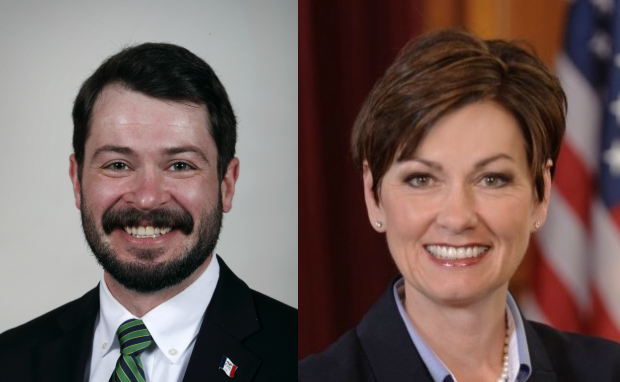
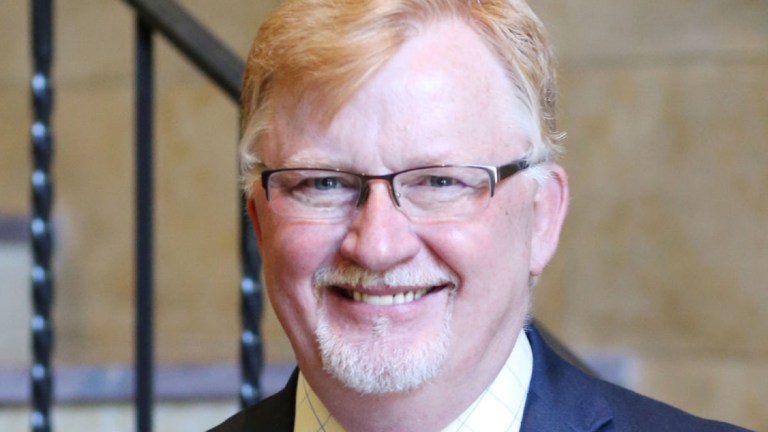
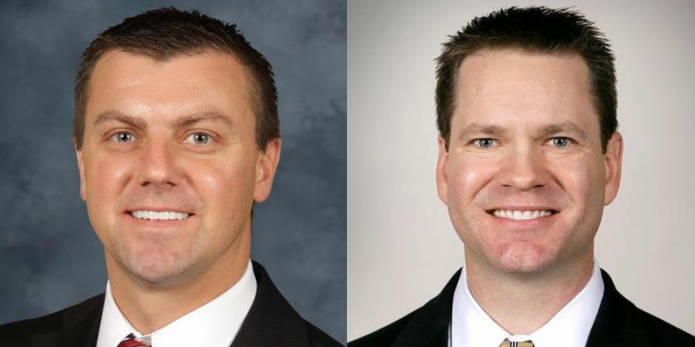
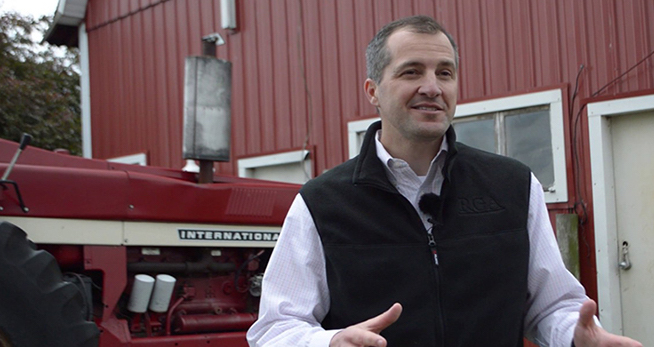
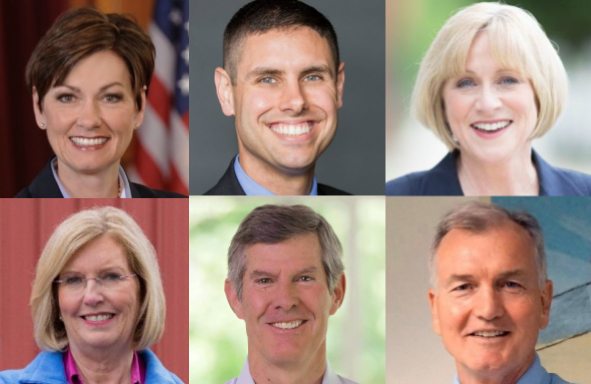
Ron Corbett ended his Republican campaign for governor this morning after a Polk County District Court rejected his effort to be added to the GOP primary ballot.
IA-Gov: Road ends for Ron Corbett
- Thursday, Apr 5 2018
- desmoinesdem
- 2 Comments
Ron Corbett ended his Republican campaign for governor this morning after a Polk County District Court rejected his effort to be added to the GOP primary ballot.
Peggy Huppert is the executive director of the National Alliance on Mental Illness in Iowa. -promoted by desmoinesdem
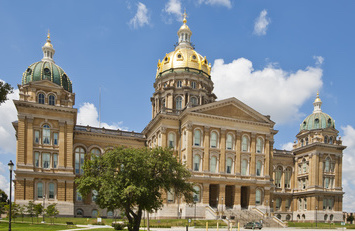
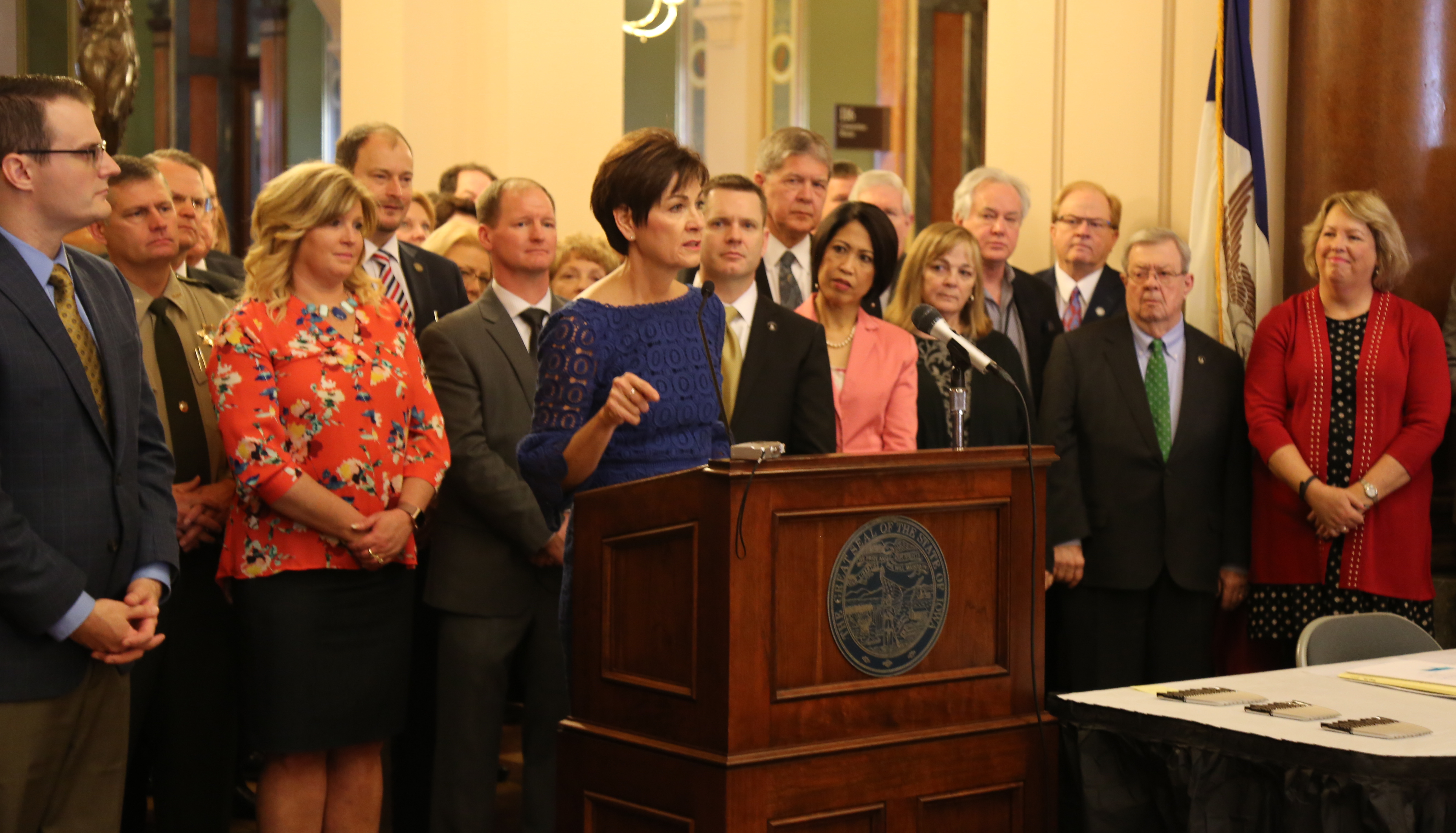
Governor Kim Reynolds signed two mental health bills on March 29 in an emotional ceremony in the capitol rotunda. I was one of the hundreds of legislators, lobbyists and advocates who witnessed the event.
The two bills are quite different. What they have in common, in addition to dealing with mental health and being signed into law on the same day, is that they passed both chambers of the Iowa legislature unanimously. That in itself is extraordinary.
Randy Evans, executive director of the Iowa Freedom of Information Council, weighs in on the secrecy surrounding the recent dismissal of Iowa Finance Authority Director Dave Jamison. -promoted by desmoinesdem
Here we go again.
The ink is barely dry on the $1.75 million check the taxpayers of Iowa had to write last fall to settle a sexual-harassment lawsuit won by an employee of the Iowa Senate Republican staff.
The leader of the Senate Republicans, Bill Dix of Shell Rock, resigned March 12, a few hours after photos and a video were made public showing him kissing a lobbyist for the Iowa League of Cities.
There’s more.
Jon Muller canceled his insurance policy after more than 20 years as a Farm Bureau member because of legislation that could leave thousands of Iowans like his sister uninsurable. -promoted by desmoinesdem
Last night, I sent the following letter to Governor Kim Reynolds urging her veto of Senate File 2349, a bill that in effect grants a monopoly to a partnership between the Iowa Farm Bureau Federation and Wellmark Blue Cross/Blue Shield. This letter does not get into all the negative implications of the bill, but it’s a start.
I’m no expert on whether vetoing this bill is politically expedient or not. But I am fairly certain the damage will be vast, and far beyond what anyone supporting this bill ever contemplated.
Governor Kim Reynolds fired Dave Jamison as Iowa Finance Authority director “effective immediately” this weekend, due to “credible allegations of sexual harassment.” Communications director Brenna Smith “declined to provide more details about the allegations” than what appeared in the official announcement, William Petroski reported for the Des Moines Register.
“I’m sorry, but to protect the privacy of IFA’s remaining employees, no further comment will be made,” Smith said in an email.
That won’t cut it.
I’ve been undecided on the governor’s race for the better part of a year. The six remaining Democrats–Nate Boulton, Cathy Glasson, Fred Hubbell, Andy McGuire, John Norris, and Ross Wilburn–agree on many core issues. All would invest more in education and other public services, reverse Medicaid privatization, restore collective bargaining rights, and stand up for reproductive rights and LGBTQ equality. All bring important life experiences to the table, as you can see from stump speeches Bleeding Heartland posted here, here, and here. Not only would I happily vote for any of them in November, I would knock doors for any of them this fall.
I didn’t expect to commit to a candidate for governor until shortly before the June 5 primary. But as a Polk County convention delegate, part of my job today will be electing district and state delegates. If no gubernatorial candidate receives at least 35 percent of the vote in the primary, a state convention will select our nominee.
Here’s why I believe John Norris should be that candidate.
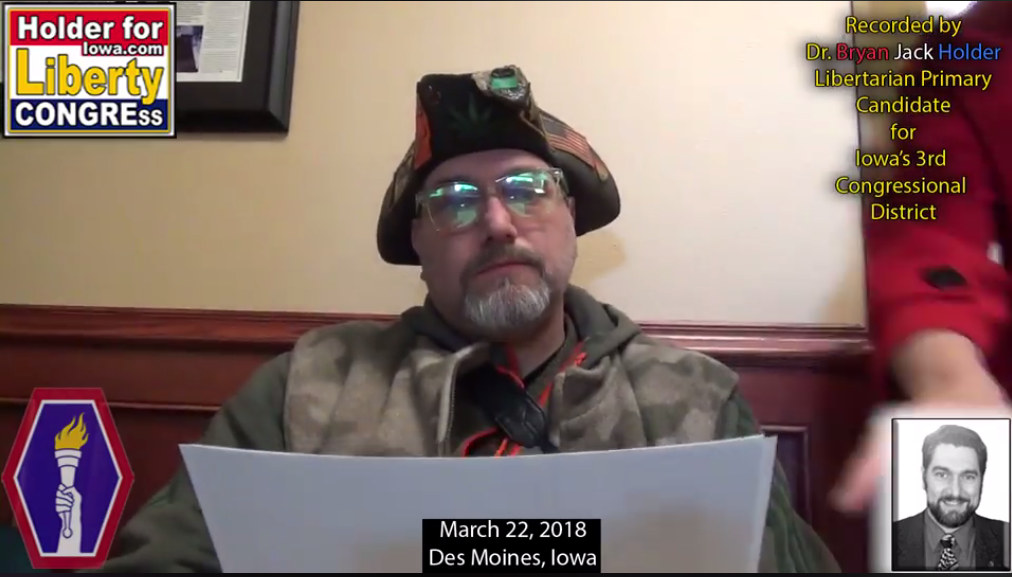
The Libertarian candidate in Iowa’s third Congressional district has challenged the nomination petitions submitted by Governor Kim Reynolds and Representative David Young for the June 5 Republican primary. Bryan Jack Holder charges that Reynolds and Young collected many signatures on petitions that were not “substantially” in “the form prescribed by the state commissioner of elections.” He further claims the governor and U.S. House incumbent violated voters’ privacy rights by collecting personal information that was not redacted from petitions turned in to the Iowa Secretary of State’s office.
Although Holder is extremely unlikely to knock either Republican off the primary ballot, his objections may produce more clarity on how much Iowa candidates for state or federal offices can modify their nominating petitions.
Matt Chapman, who closely follows legislative happenings, reports on an Iowa Senate debate you can watch beginning at 8:19:30 on this video. -promoted by desmoinesdem
The March 21 debate on Senate File 2117 started off with a bang.
The Iowa Senate confirmed Jerry Foxhoven as director of the Iowa Department of Human Services in an unusually close vote on March 21.
Most of Governor Kim Reynolds’ appointees have won unanimous confirmation, as has typically been the case in Iowa for many years. Foxhoven’s nomination was controversial because of how privatized Medicaid has been managed, along with several tragedies involving abused children. Senate Democrats asked to defer consideration on the DHS director last month “until we can fully assess his leadership.”
Former Cedar Rapids Mayor Ron Corbett may not have collected enough signatures to qualify for the GOP primary ballot for governor. Craig Robinson, publisher of The Iowa Republican blog, filed a challenge with the Secretary of State’s office today after scrutinizing copies of Corbett’s nominating papers.
Iowa Senate Republicans elected new leaders today following Bill Dix’s unexpected resignation on March 12. Jack Whitver moves up from Senate president to majority leader, and Charles Schneider moves up from majority whip to Senate president. Amy Sinclair, who has been one of four assistant majority leaders, moves up to majority whip. Jake Chapman will take her place as an assistant leader.
Senate Majority Leader Bill Dix’s eighteen-year legislative career ended today after Iowa Starting Line published a video and photographs showing Dix and a lobbyist snuggling in a Des Moines bar on March 1. The majority leader did not comment on the alleged relationship in any statement to the media or in his resignation letter.
State lawmakers having affairs with lobbyists is hardly a new phenomenon, but given the potential for abuse of power, as well as the massive media coverage of the sexual harassment problem in the Iowa Senate GOP caucus, you’d think Dix would avoid having such an intimate conversation in public.
The Iowa Senate has taken the first step toward preventing a repeat of last spring’s controversy over whether Kim Reynolds would have the authority to name a new lieutenant governor following Terry Branstad’s resignation.
With broad bipartisan support, senators approved on March 7 a constitutional amendment designed to give future generations “a clear and explicit understanding of the line of succession for Iowa’s governors.”
Connie Schmett hired Doug Gross to represent her in an ethics investigation within a day of the senior BrownWinick partner arguing a position before the state board on which Schmett serves.
Emily Silliman and Ellen Marie Lauricella maintain an impressive “information infrastructure for progressive organizations, campaigns, and activists in Iowa” (website, Facebook, Twitter). -promoted by desmoinesdem
We at Activate Iowa keep a calendar of political events statewide. Activists can use the calendar to find organizations in their area. They might also be looking to find friendly, like-minded people. Our premise is that if you connect activists with each other, and with candidates, Iowa can make a major turn for the better in the next election.
As a result of this activity, we have noticed a pattern. Some of the candidates for governor are organizing events around the state and some aren’t. Although most of the candidates attend party forums, parades and the like around the state, we are looking for events that the campaign itself arranges, as a sign that the campaign is building an organization in different parts of the state. The candidates who are the most active statewide are John Norris, Nate Boulton, and Cathy Glasson. We would argue that the choice for governor should be between those three candidates.
Iowa Department of Human Services Director Jerry Foxhoven “does not have enough votes to be confirmed,” Democratic State Senator Pam Jochum told Bleeding Heartland in a March 4 telephone interview. “He’s in trouble” largely due to concerns over the state’s handling of Medicaid privatization, she explained.
Iowa will soon have its first new secretary of agriculture since 2007. The U.S. Senate confirmed Bill Northey on February 27 as undersecretary for farm production and conservation at the U.S. Department of Agriculture. He should have been confirmed months ago; senators on the Agriculture Committee unanimously endorsed his nomination in October. But Senator Ted Cruz of Texas held the nomination over a Renewable Fuel Standard dispute that has nothing to do with Northey’s portfolio.
Once Northey resigns as Iowa secretary of agriculture, Governor Kim Reynolds will appoint his longtime deputy Mike Naig to fill that post for the rest of this year, the governor’s office announced on March 1. I enclose Naig’s official bio below. One of five Republicans who have said they will run for Northey’s job, Naig formally launched his campaign for that office on March 2. At this writing, only Craig Lang has qualified for the primary ballot. Other declared GOP candidates are Ray Gaesser, Chad Ingels, and Dan Zumbach. UPDATE: Northey posted on Twitter March 6, “I heartily endorse Mike Naig as our next Iowa Ag Secy. Mike has been a great partner as my Deputy Secy of ag for 4+ yrs. Mike is ready to lead. Let’s elect Mike in June & Nov!”
Governor Kim Reynolds will withdraw one of her latest nominees for a state regulatory body after “a mistake was made” that would have upset the partisan balance Iowa law requires.
Let’s start with the good news:
• Two important bills for K-12 schools are headed to Governor Kim Reynolds’ desk.
• Assuming the governor signs the bills, district leaders know how much state funding they will receive before the April 15 deadline for certifying K-12 budgets. (That hasn’t always been the case lately.)
• A longstanding inequity in school funding has been fixed–for now.
Unfortunately, both bills fall far short of what Iowa schools need, thanks to Republican choices.
The Iowa Senate Judiciary Committee has advanced a bill that would ban nearly all abortions after a fetal heartbeat can be detected. Senate Study Bill 3143 is the most extreme anti-abortion bill to clear an Iowa legislative committee in decades. Any physician terminating a pregnancy in the absence of a “medical emergency”–narrowly defined to include only life-threatening conditions–could be charged with a class D felony. All eight Republicans on the panel voted for the legislation, while all five Democrats opposed it. Committee approval on February 12 keeps the bill alive for at least another month, until the second “funnel” deadline on March 16.
Less than a year ago, Senate Judiciary Chair Brad Zaun was disappointed not to have the votes on his committee to advance a “personhood” bill, which declared that life would be protected from the moment of conception. The same eight Republicans who supported the heartbeat bill this week served on Judiciary during the 2017 session.
Which minds changed is not clear, nor is it apparent whether the bill will gain final approval in either chamber. Not every bill that comes out of committee receives a vote in the full Senate. Republican leaders blocked an effort to force a floor vote on personhood last year.
However, the shift among at least two Republicans on Judiciary suggests that GOP leaders may feel pressure to fire up the social conservative base.
Governor Kim Reynolds leads five Democratic challengers but gains less than 45 percent support in every head to head matchup, according to the latest statewide poll by Selzer & Co. for the Des Moines Register and Mediacom. Reynolds leads State Senator Nate Boulton by 41 percent to 37 percent, with 11 percent of respondents unsure and the rest saying they would not vote or would support some other candidate. She leads Fred Hubbell by 42 percent to 37 percent, John Norris by 41 percent to 30 percent, Andy McGuire by 42 percent to 30 percent, and Cathy Glasson by 44 percent to 31 percent.
I would have expected larger leads for Reynolds, since she has much higher name recognition than the Democratic candidates, and she receives substantial news coverage for free. The governor is in positive territory on job performance (47 percent of respondents approve of her work, 33 percent disapprove, 20 percent unsure) and favorability (48 percent vies her favorably, 32 percent unfavorably, and 20 percent unsure). In addition, the Selzer poll found 49 percent of Iowans see the state moving in the right direction, just 39 percent on the wrong track. Those are decent numbers for an incumbent.
Another plus for Reynolds: she had $4.14 million in her campaign’s bank account at the end of 2017, and she’s hasn’t spent much of it so far. While Hubbell, Boulton, and Glasson have been running television commercials in the Des Moines and Cedar Rapids markets, Reynolds and acting Lieutenant Governor Adam Gregg have been touring the state, earning local media coverage while holding campaign-style events to tout their administration’s accomplishments. That “Unleashing Opportunity” tour–all billed to the state as part of the governor’s “official” duties–has stopped in Mason City, Marion, Muscatine, Davenport, Maquoketa, Ames, Fort Dodge, Storm Lake, Pella, Oskaloosa, Ottumwa, Newton, and Cedar Falls. None of those visits cost the Reynolds/Gregg campaign a dime.
Selzer surveyed 801 Iowa adults between January 28 and 31, producing a margin of error of plus or minus 3.5 percentage points. The respondents were not necessarily registered voters, let alone likely midterm election voters. So this representative sample of Iowa adults may or may not reflect the universe of Iowans who will cast ballots in November. CORRECTION: The gubernatorial race numbers were drawn from “the subset of 555 respondents who say they’re likely to vote in 2018. Those numbers have a margin of error of plus or minus 4.2 percentage points,” Jason Noble reported. Figuring out who will vote is one of the biggest challenges for any pollster. Self-reported intentions are a common screen, but not always an accurate one.
Self-awareness has never been Governor Kim Reynolds’s strong suit. Even so, her campaign’s latest fundraising pitch, pegged to a harmful immigration bill pending in the Iowa legislature, revealed remarkable layers of hypocrisy.
The state commission that oversees environmental policies will no longer conform to Iowa standards on bipartisanship once its leader files papers as a Republican candidate for secretary of agriculture in the coming weeks.
Fayette County farmer Chad Ingels announced on January 25 that he will seek the GOP nomination for secretary of agriculture, KGLO Radio’s Jesse Stewart reported. A former Iowa State Extension watershed specialist who now measures fertilizer applications for a private non-profit, Ingels has served on the Environmental Protection Commission since 2013. He has chaired that body since last June, shortly after his reappointment to a four-year term expiring in 2021. Of the nine commissioners, Ingels is the only registered no-party voter.
Josh Mandelbaum advocates for clean energy and clean water policies in Iowa. -promoted by desmoinesdem
Last week Republican State Senator Randy Feenstra introduced Senate Study Bill 3078, one of the worst energy bills introduced at the legislature since I have been working for the Environmental Law & Policy Center. The bill would completely eliminate the requirement for utility energy efficiency programs under Iowa law.
Iowa was one of the first states to adopt energy efficiency programs in the early 1990s, and we have been a national leader in energy efficiency since then. These programs are a part of our clean energy leadership, and one reason we have kept our energy rates below the national average. Thanks to a general political consensus on these programs, there hasn’t been much public discussion about energy efficiency in Iowa. Now seems to be the right time to help people understand the value of these policies. As I’ll explain in more detail below, energy efficiency is one of our most important tools for protecting consumers, addressing climate change, and creating local jobs.
Randy Richardson is a former teacher and retired associate executive director of the Iowa State Education Association. -promoted by desmoinesdem
The first of what will likely be multiple “school choice” bills appeared last week when Republican State Senator Mark Chelgren introduced Senate File 2091. The bill creates Education Savings Grants, which would be available to certain students attending non-public schools or who are receiving competent private instruction (CPI). Parents or guardians could apply for the grants if:
Governor Kim Reynolds found time to show off her support for education during the past two days. She honored five schools that closed “achievement gaps,” touted “extremely important” community colleges, and praised dual enrollment on January 25. She attended a luncheon to honor “Outstanding Iowa Teachers” the following day.
Somehow, the unfailingly “optimistic” governor never got around to denouncing the huge higher education cuts Iowa Senate Republicans rolled out toward the end of the week.
More than 30 county courthouses could close if the Iowa legislature enacts Senate Republicans’ plan to cut more than $4.8 million from the judicial branch for the remainder of the 2018 fiscal year, State Court Administrator Todd Nuccio warned on January 25. Iowa Senate Appropriations Committee Chair Charles Schneider proposed some $52 million in mid-year budget cuts the same day; within hours, his committee approved the bill along party lines.
Earlier this month, Governor Kim Reynolds proposed about $27 million in spending cuts before the end of the fiscal year, of which about $1.6 million would come from the judicial branch. House Republicans have not yet released a plan for mid-year cuts. In January 2017, leaders from both chambers worked out a deal behind closed doors before publishing a bill. But House Speaker Linda Upmeyer “said Thursday the House was still working on its plan for spending reductions,” the Des Moines Register’s William Petroski and Brianne Pfannenstiel reported.
Staff for the Iowa Ethics and Campaign Disclosure Board (IECDB) found no evidence Kim Schmett or Connie Schmett violated state laws on lobbying or conflicts of interest through their outside work as consultants, according to a document prepared by IECDB Executive Director Megan Tooker. However, a review found several omissions on the government officials’ annual personal financial disclosure forms, for which board members approved a reprimand and $250 fine for Connie Schmett. Although staff suggested that the board direct Connie Schmett to stop making campaign contributions under the surname she used during her previous marriage, after a lengthy discussion the board voted that Connie Schmett did not violate state law by donating to candidates and political committees as Connie Russell.
Governor Kim Reynolds requested the review of the Schmetts’ activities in November, following an Associated Press report on the state officials’ work as registered foreign agents lobbying for Saudi Arabia. The board discussed the matter for more than two hours during a January 25 meeting. Following minor revisions, IECDB chair James Albert will sign a letter to Reynolds outlining the board’s findings and recommendations. Tooker distributed a draft letter to reporters during the meeting; I will post the final version as soon as it is available. UPDATE: Enclosed below the letter to the governor, with supporting documents.
Iowa House Republicans capitulated on January 23, sending the Senate’s version of a bill to fund water programs to Governor Kim Reynolds’ desk. During the floor debate on Senate File 512, several Democrats and Republican State Representative Chip Baltimore argued for the water quality language House members had approved last year with strong bipartisan support. Whereas agricultural lobby groups were the primary supporters of Senate File 512, a large number of stakeholders were involved in crafting the House amendment. Insisting on the House version would have sent the legislation to a conference committee for further negotiations. All 41 House Democrats and five Republicans (Baltimore, Mary Ann Hanusa, Jake Highfill, Guy Vander Linden, and Ralph Watts) opposed “receding” from the House version, but the other 54 Republicans approved the motion to abandon that language (roll call).
The subsequent 59 to 41 vote to approve final passage of the Senate bill mostly followed party lines, but four Democrats who represent smaller towns and rural areas voted yes: Bruce Bearinger, Helen Miller, Scott Ourth, and Todd Prichard. Miller has taken a particular interest in farm-related issues over the years; she is the Agriculture Committee Chair for the National Black Caucus of State Legislators as well as a member of State Agricultural and Rural Leaders.
Four Republicans joined the rest of the House Democrats to oppose Senate File 512: Baltimore, Hanusa, Highfill, and Vander Linden. As floor manager of this legislation in 2017, Baltimore led a group of GOP House members who opposed the Senate’s approach. More recently, he was sidelined as the Iowa Farm Bureau and allies pressured the “Baltimore 16” to accept the Senate bill without amendments. Appearing on Iowa Public Radio’s “River to River” broadcast on January 22, Baltimore sounded discouraged, saying there was a “snowball’s chance in hell” of a water quality compromise. His final words on that program called for “reasonable minds” to get something “comprehensive and collaborative done, rather than shoving one bill down another chamber’s throat and promising to work on it later.”
New floor manager John Wills promised passage of Senate File 512 would be “just the beginning, not the end” of legislative discussions on water quality. No one I know in the environmental community believes Republicans will approve any further funding increases for water programs, much less a bill that would measure progress so the public could find out what methods work best to reduce water pollution.
I enclose below some of the best takes I’ve seen on the worse-than-doing-nothing bill Reynolds will soon sign.
State Representative Pat Grassley tweeted this afternoon that he will seek re-election in Iowa House district 50. The six-term Republican lawmaker was widely seen as a likely 2018 candidate for Iowa secretary of agriculture, since the current office-holder Bill Northey will leave the state upon confirmation to a senior U.S. Department of Agriculture post. Grassley doesn’t seem to have been laying the groundwork for a statewide campaign, though. He reported just $31,900 in campaign contributions during 2017. About three-quarters of his haul came from political action committees that give to many state legisators.
The House Appropriations Committee chair represents what should be a safe GOP seat, even in a less favorable election climate. House district 50 contains just 3,773 active registered Democrats, 8,953 Republicans, and 7,244 no-party voters, according to the latest figures from the Iowa Secretary of State’s office. Donald Trump outpolled Hillary Clinton here by 64.4 percent to 30.4 percent. I enclose below a map of the district, covering Grundy County and parts of Hardin and Butler counties.
Another prospective secretary of agriculture candidate, former State Representative Annette Sweeney, accepted a federal job in November as state director for USDA Rural Development.
At least two Republicans will seek to succeed Northey. Former Iowa Farm Bureau Federation President Craig Lang announced his candidacy in October. He is keeping his cards close to the chest; his campaign financial disclosure showed only $5,600.00 in contributions, including a $5,000 check from himself.
American Soybean Association Chairman Ray Gaesser created a campaign committee last week. Scroll to the end of this post for background on the latest GOP candidate.
Governor Kim Reynolds has not said whom she will appoint to lead the Iowa Department of Agriculture and Land Stewardship through 2018. Recent rumors have centered around a placeholder with no plans to run for the office: Deputy Secretary of Agriculture Mike Naig. UPDATE: In early February, Naig told the Des Moines Register that he will seek the GOP nomination for Northey’s job.
Dr. Christopher Peters may soon have a Republican primary rival in Iowa’s second Congressional district. Multiple sources tell Bleeding Heartland that Ginny Caligiuri has been laying the groundwork to seek the GOP nomination and plans to have petitions out for activists to sign at the Republican Party of Iowa’s precinct caucuses on February 5. At this writing, the Federal Election Commission’s website has not published any statement of organization for a Caligiuri campaign. The would-be candidate has not replied to requests for comment.
Caligiuri is well-known in Iowa Christian conservative circles, having served as state director for the United States National Prayer Council, the Iowa Prayer Caucus, and National Governors’ Prayer Team. She’s on the committee planning this year’s Iowa Prayer Breakfast in March.
The Republican Party of Iowa is spending heavily to defend Iowa House district 6, where voters will choose a successor to State Representative Jim Carlin on January 16. The Iowa GOP did not intervene to support Carlin before last month’s special election for Senate district 3, considered safe Republican territory. Carlin won that race by a little less than 10 percent. Amazingly, the Democratic candidate gained more votes in the half of the district that Carlin has represented in the Iowa House.
Campaign finance reports (here and here) show the state GOP has spent more than $118,000, mostly on television and radio commercials in the Sioux City market and direct mail to residents of House district 6. I enclose below the positive television commercial about Republican candidate Jacob Bossman and several direct mail pieces attacking Democratic nominee Rita DeJong.
The tv spot relies heavily on an image of U.S. Senator Chuck Grassley with his longtime staffer. Grassley headlined a rally to support Bossman on January 13, but the party didn’t have to pay his travel expenses. The senator is passing through western Iowa on the federal government’s dime as part of his annual 99-county tour. UPDATE: A reader notes the “rally” was moved from a room that would hold 250 people to the lobby, so the few dozen attendees would appear to fill up the venue.
The Department of Human Services, state universities, and Department of Corrections would have to absorb large mid-year spending cuts under recommendations Governor Kim Reynolds released this week. The governor’s focus is strikingly similar to cuts her predecessor Terry Branstad proposed and Republican lawmakers approved in early 2017.
Governor Kim Reynolds continues to take credit for a major benefit of the Affordable Care Act, even as she calls on Congress to repeal and replace the 2010 health care reform law. During today’s Condition of the State address, the governor boasted that compared to a few years ago, “150,000 more Iowans have mental health coverage today and have access to more local and modern service.”
She didn’t mention that those Iowans gained health insurance only because the Affordable Care Act included funding to expand Medicaid.
Governor Kim Reynolds proposes eliminating federal deductibility as part of a broad tax reform plan, she revealed today during her first Condition of the State address to Iowa lawmakers. She’ll have to spend some political capital to get that idea through the legislature. In a plot twist, the fiercest opposition will come from members of her own party, including leaders of the House and Senate tax-writing committees.
The Iowa House and Senate convened Monday with the usual big promises and platitudes about working together to build a better future for Iowans.
Behind the optimistic rhetoric, all signs point to another contentious legislative session. The opening day speeches by Republican and Democratic leaders, enclosed in full below, revealed almost no common ground about the focus of lawmakers’ work and no indication that the most important bills will incorporate Democratic ideas. My takeaways:
Senator Chuck Grassley hit a new low last week in running interference for the White House on the Trump/Russia investigation. After leaders of the private research firm Fusion GPS called on Congressional Republicans “to release full transcripts of our firm’s testimony” about the so-called Steele dossier, Grassley and Senator Lindsey Graham wrote to the Department of Justice and the FBI “urging an investigation into Christopher Steele.” Ranking Senate Judiciary Committee Democrat Dianne Feinstein was not consulted about the referral, which she accurately characterized as “another effort to deflect attention from what should be the committee’s top priority: determining whether there was collusion between the Trump campaign and Russia to influence the election and whether there was subsequent obstruction of justice.”
Here in Iowa, the Department of Human Services recently acknowledged that privatizing Medicaid “will save the state 80 percent less money this fiscal year than originally predicted,” Tony Leys reported for the Des Moines Register. The Branstad/Reynolds administration has claimed since 2015 that shifting care for one-sixth of Iowans to private companies would result in big savings for the state. Officials were never able to show the math underlying those estimates. Staff for Governor Kim Reynolds and the DHS now portray the miscalculation as an honest mistake, which a more “comprehensive methodology” will correct. The governor would have been wiser to pull the plug on this disaster last year.
Forthcoming Bleeding Heartland posts will address those failures in more depth. But now it’s time to hold myself accountable for the 17 Iowa politics predictions I made at the beginning of 2017. Did I improve on my showing of seven right, two half-right, and seven wrong out of my 16 predictions for 2016?
UPDATE: Plaintiffs dropped this lawsuit in May 2018 after Republican legislators retroactively legalized the governor’s fund transfer. Original post follows.
State Representative Chris Hall filed a lawsuit today, charging Governor Kim Reynolds and Department of Management Director David Roederer “conspired together to unlawfully appropriate and misuse state funds.” The ranking Democrat on the Iowa House Appropriations Committee is seeking to void “all actions taken as a result of the unlawful Official Proclamation signed on September 28, 2017,” which transferred $13 million from the Iowa Economic Emergency Fund.
That order allowed Reynolds to cover a projected budget shortfall at the end of fiscal year 2017 without calling a special legislative session. But State Treasurer Michael Fitzgerald warned the governor that the planned transfer “would not be in compliance with Iowa law.” Hall’s petition, enclosed in full below, points to the same Iowa Code provision Fitzgerald cited in his letter to the governor.
Lesson learned in 2017: I still love writing about Iowa politics, even during the worst year I’ve ever observed. But some days are far more enjoyable than others. Follow me after the jump for some high points.
Since I started writing for this website a decade ago, I’ve never worked harder than I did in 2017. This momentous year in Iowa politics provided an overwhelming amount of source material: new laws affecting hundreds of thousands of people, our first new governor since 2011, and a record number of Democrats seeking federal or statewide offices.
In addition, my focus has shifted toward more topics that require time-consuming research or scrutiny of public records. As I looked over the roughly 420 Bleeding Heartland posts I wrote this year, I realized that dozens of pieces were as labor-intensive as some of those I worked hardest on in 2015 or 2016.