# State Budget


The trouble with sales tax (It's not just the internet)

As the Iowa legislature considers extending sales tax to internet purchases and some other goods and services that are now exempt, Randy Bauer explains what’s at stake and other factors that have eroded sales tax revenues. -promoted by desmoinesdem

For many American taxpayers, April 17 is understood as the 2018 due date for federal (and many state) income taxes. It also features prominently in state and local tax discussions, as it is the date when the U.S. Supreme Court will hear oral arguments in a case that may impact on remote sales and use tax collection practices for state and local governments.

While that would be a major development and boon to many state and local governments, it is really only part of the story.

Supreme Court Limits on Collection of Sales Tax by Remote Sellers

The case to be heard next month, South Dakota vs. Wayfair, concerns sales tax collection related to sales conducted over the Internet. Two 20th century Supreme Court cases, Bellas Hess v. Illinois (1967) and Quill v. North Dakota (1992) have established limits on government’s ability to compel collection of sales taxes on remote transactions. In the Bellas Hess case, the high court determined that physical presence in a state was necessary to require the seller to collect sales tax for catalogue sales transactions conducted via phone or mail. As the catalogue sales era declined and the Internet became a more important part of commerce, the court extended this “nexus via physical presence” standard to include e-commerce transactions via Quill.

Background on Major State and Local Tax Revenue Sources

In general, the three largest revenue sources for state and local governments are property taxes (the largest local government source) and individual income and sales and use taxes. In the last few decades, sales taxes have become the largest state tax revenue source, and several states have sought to increase the use of this consumption-based tax source while reducing the use of income-based taxes.

There are credible arguments for relying on a consumption-based tax. For one, the tax is collected in generally small increments, which allows taxpayers to base purchasing decisions around their ability to pay. These small incremental payments also reduce the “sticker shock” that often comes from large lump sum payments of property and individual income taxes. Consumption taxes will also be borne by nearly all consumers – unlike, say, income taxes that can often be avoided by a large number of citizens.

That said, there is no “perfect tax,” and sales taxes are no different. All taxes will have a negative impact on economic activity (the “deadweight loss” associated with the increased cost for goods and services subject to tax). Sales taxes are also considered to be something of a regressive tax, in that lower income individuals and households tend to pay a higher percentage of their income as tax. Some of this concern is reflected in exemptions for broad categories of goods and services – all states exempt prescription drugs from sales tax, and a majority do the same for food. It is also possible to use refundable credits via the individual income tax to reimburse lower income taxpayers, as is done in several states.

Sales Tax and e-Commerce

As Amazon boxes on our doorsteps have become a ubiquitous part of everyday commerce, the revenue loss associated with the Quill case has become a significant concern to state and local governments. As Supreme Court Justice Anthony Kennedy noted in a 2015 concurring opinion (where he signaled his willingness to reconsider the decision in Quill), “When the Court decided Quill, mail-order sales in the United States totaled $180 billion. But in 1992, the Internet was in its infancy. By 2008, e-commerce sales alone totaled $3.16 trillion per year in the United States.”

That number continues to grow – according to Internet Retailer, U.S. web sales in 2016 reached $394.86 billion, or 11.7 percent of the nation’s total retail sales ($4.846 trillion).

State Strategies to Heighten Sales Tax Collection

In the face of this significant revenue loss, states have pursued a number of strategies to deal with the revenue loss. The first strategy was to seek to address the Court’s concerns in Quill, by working to simplify and develop greater consistency in sales tax statutes, primarily around definitions and other requirements directed at those who collect the tax.

The Streamlined Sales Tax Initiative was initiated by the National Governors Association (NGA) and the National Conference of State Legislatures (NCSL) in 1999. The goal was to increase uniformity that would either lead to greater vendor voluntary collection or the reconsideration of the two Supreme Court decisions. As of 2017, 24 states participate in the program as full members. While this is a significant number of states, several major states (such as California, Texas and New York) do not, which limits the agreement’s impact. While it is true that there are vendors who are voluntarily complying with this initiative and collecting tax on behalf of the participating states, it will likely never reach the necessary “critical mass” from a compliance perspective.

The next foray came via the U.S. Congress. Via its authority to regulate interstate commerce, Congress could establish a national requirement for collection of state and local sales taxes on purchases via the Internet (or, for that matter, on catalogue and phone sales as well). Bills have been introduced for many years in Congress to do just that, and they have, in recent years, also received support from major “bricks and mortar” retailers who argue the existing taxing structure creates a double standard that harms this segment of the retail market.

From a tax policy perspective, the point is well taken: a commonly accepted principle of taxation is “horizontal equity” – that taxpayers in similar circumstances should be treated fairly. When local retail establishments are required to collect this tax but remote sellers are not, the resulting price disparity is a perfect example of horizontal inequity.

To date, no version of the “Marketplace Fairness Act” has made its way through the legislative process. It came (somewhat) close in 2013, when the bill was passed by the Senate on a bipartisan 69-27 vote. However, it did not clear the House, and current efforts to revive the bill do not look promising.

It is important to remember that sales (or use) taxes are nearly always owed on these remote purchases – the issue isn’t one of creating a new tax but getting compliance with payment of the existing tax. As previously noted, an advantage of the sales tax is it is paid in hundreds/thousands/millions of separate transactions. The downside is that it is administratively difficult to collect the tax from the hundreds/thousands/millions of consumers who, if the tax isn’t collected at the time of purchase, are to remit it to comply with state and local sales tax statutes.

As a result, state legislatures have resorted to a variety of statutory strategies to induce sales tax collection. Some of the first attempts related to creating nexus beyond mere physical presence. This was initiated by the State of New York in 2008, often referred to as the “Amazon tax.” Under the New York State statute, a rebuttable presumption is created that a nonresident Internet seller has nexus with the State for sales/use tax purposes if (i) the nonresident has agreements with in-state companies whereby potential customers are referred to the nonresident, and (ii) the nonresident’s gross receipts from customers under such an agreement exceed $10,000 during the previous four quarters. According to a report by the New York State Comptroller, since the law’s inception, online retailers remitted $360 million in sales taxes (on over $4 billion in taxable online sales) as of February 2012.

Since that first state foray – and the litigation that followed – other states have also considered and/or adopted similar legislation. It could be argued that the multiple state efforts to create “Amazon nexus” has proven successful, as Amazon is (as of April 1, 2017) collecting sales tax on sales in all 50 states. Additional attempts to create “economic nexus” (where the amount of sales into a state alone creates sufficient grounds to require collection of the tax) have become popular, with many states enacting this type of statute.

State Efforts to Create an Economic Nexus Standard to Compel Collection of Sales Tax

The economic nexus standard was first adopted by the States of Alabama and South Dakota – and South Dakota legislative and policymakers have been up-front about the fact that the economic nexus statute was crafted as a method to bring the issues of Quill back before the Supreme Court. Several other states passed economic nexus standards last year, including Indiana, Maine, North Dakota, Ohio, Rhode Island, Tennessee (done by rule) and Wyoming. The South Dakota statute is now the one before the high court.

A somewhat different state strategy has been undertaken by the State of Colorado, which enacted a law focused on enticing retailers to collect the tax or face significant paperwork requirements. The law, which survived court challenges (including the U.S. Supreme Court declining to review it, and then U.S. Court of Appeals Judge Neil Gorsuch writing a concurring opinion strongly implying that, given the opportunity, the Supreme Court should overrule Quill), requires retailers that do not collect sales taxes to file a report with the State Department of Revenue on how much their Colorado customers have purchased and to inform customers that they may owe state taxes on the purchases. The law requires large online retailers to send customers a notice every time they buy something to explain that they may owe use tax; if the customer makes more than $500 a year in purchases, the retailer must also send them an annual summary of their purchases. The seller must also file an annual report with the State detailing customer name, billing and shipping addresses and the total amount spent each year.

Other states have replicated this approach. Advocates for the policy believe that it will better inform consumers of their obligation to pay use tax on their out-of-state purchases or lead to sellers voluntarily collecting the tax to escape the reporting requirements (for both them and their customers). States who adopted Colorado-type reporting standards (all effective July 1, 2017) include Alabama, Louisiana and Rhode Island.

What’s At Stake?

The revenue at stake in this area is significant. While the estimates of lost revenue vary considerably (and some of the “lost revenue” estimates include Amazon sales that are now applying sales tax in all 50 states), there is little doubt that it is “real money” to state and local governments. The federal General Accountability Office (GAO) estimated that state and local governments could have collected up to $13 billion more in 2017 if they’d been allowed to require sales tax payments from online merchants and other remote sellers. That said, that estimate comprises a significant amount of business-to-business sales – and pretty good data suggests there already is reasonable compliance by businesses through payment of use tax on at least the majority of these transactions.

Besides the obvious issues related to revenue loss and impact on the economy, what are the issues on both sides of this controversy? Those who support the Quill standard (or at least something other than unfettered state ability to compel collection of the tax by sellers) argue that the thousands of different taxing jurisdictions and definitions make collecting the tax overly burdensome.

It is notable, however, that in the years since Quill, a number of Internet-based businesses have cropped up to handle the administrative side of determining the tax that is owed and applying it to electronic transactions. Meanwhile, the thousands of vendors who already comply with varying state and local sales taxes suggest this is not unsolvable. In fact, much of the effort on the seller side has been focused on providing some reimbursement for collection of the tax – which suggests the issue is more one of economics than legal compliance. While opponents also argue that the burden will fall disproportionately on small businesses, it is notable that the state “economic nexus” statutes to date have included an exemption for businesses with low levels of sales into a state.

On the other side of the argument, supporters of collection point to Justice Kennedy, when he noted, “There is a powerful case to be made that a retailer doing extensive business within a State has a sufficiently ‘substantial nexus’ to justify imposing some minor tax-collection duty, even if that business is done through mail or the Internet.” After all, “interstate commerce may be required to pay its fair share of state taxes.” D.H. Holmes Co. v. McNamara, 486 U.S. 24, 31 (1988).

My guess is that the Supreme Court will, in some way, overturn its ruling from Quill – perhaps via the “substantial nexus” approach Justice Kennedy suggests. The question will be how far the court goes and whether their action leads the Congress to consider finally taking action to create something of a national standard for nexus and the amount of obligation to collect the tax that might be imposed on sellers.

While any greater latitude for state and local governments in collecting these taxes will be welcome news, my personal belief is that there are bigger issues at play relating to sales tax and the U.S. economy, and some of the focus on South Dakota v. Wayfair blinds policymakers to more fundamental issues.

Sales Tax Erosion of the Base

The fact is that the sales tax base has been eroding for decades, using common measures such as sales tax collections as a share of personal income. While state and local governments have attempted to ameliorate these declines through rate increases, that creates its own set of problems.

Why is this happening? There are several reasons. For one thing, legislatures continue to provide new or expanded exemptions from the tax (after all, most every legislator loves to cut taxes). In Iowa, a good example is the broadened sales tax exemption for supplies used in the manufacturing process. When passed in 2016, that exemption was estimated to reduce revenue by approximately $29 million a year, but it now looks like a revenue loss in the neighborhood of $100 million a year.

Some of the reduction in sales tax revenue is simply a function of demographics. As a population, we continue to get older – and as we get older, we generally make fewer purchases, per capita, that are subject to the sales tax.

Sales Tax Statutory Construction

An even bigger problem, in my estimation, concerns how state sales tax statutes are structured. The state sales tax statues generally were written in the early part of the 20th century, when most consumption consisted of tangible goods. As a result, nearly all state sales tax statute will broadly tax all tangible goods – the standard generally is that tangible goods are presumed to be subject to tax unless specifically exempted. On the other hand, relatively few services were a part of everyday commerce; as a result, the statutes generally presume that services are not subject to tax unless specifically enumerated.

This “double standard” related to sales tax on consumption has become increasingly more important, as what we consume has gradually – but dramatically – shifted from goods to services. Fifty years ago, about two-thirds of consumption was tangible goods, but now about two-thirds is services. Absent legislative action to change the standard of presumption related to consumption subject to the sales tax, states have had to rely on the often heavy lift of identifying specific services to be subject to tax. This is a difficult process, and few states (generally only those with the greatest reliance on sales tax) have been able to broadly apply the tax to services.

This trend is likely to continue in the coming years. For one thing, health care has become a huge service industry in this country. An example of how health care and the consumption tax code have played out in Iowa is instructive. In 1999, the Iowa legislature passed and Governor Tom Vilsack signed into law a sales tax exemption for goods and services related to non-profit hospitals. At the time of passage, the fiscal note suggested the annual cost of exempting these services (granted, some goods as well, but mostly services) was about $15 million. However, when the Department of Revenue issued its tax expenditure report in 2000, the cost was now estimated at $53.7 million. It ballooned to $108.4 million in 2005, $125.4 million in 2010 and $160.6 million in 2015.

Several governors – Republicans and Democrats alike – have made attempts to significantly broaden the sales tax base to include more services. However, to date, those efforts have been largely unsuccessful.

If states are to rely on consumption taxes as their primary revenue source, they will have to come to grips with a system that has mostly ignored well over half of what is actually consumed. While changes to collection of taxes from Internet sales are nice, it is still only improving collection rates on a minority of consumption – and that is, in the long run, a losing proposition for state and local governments.

Randall Bauer is a director in the Management and Budget Consulting practice for the PFM Group. Since 2005, he has led its state and local government tax policy practice. He has numbered nearly half the state and many large local governments among his clients. Prior to joining PFM, he spent 18 years in state government, including serving for seven years as Governor Tom Vilsack’s State Budget Director.


Senate confirms Iowa DHS director with four votes to spare

The Iowa Senate confirmed Jerry Foxhoven as director of the Iowa Department of Human Services in an unusually close vote on March 21.

Most of Governor Kim Reynolds’ appointees have won unanimous confirmation, as has typically been the case in Iowa for many years. Foxhoven’s nomination was controversial because of how privatized Medicaid has been managed, along with several tragedies involving abused children. Senate Democrats asked to defer consideration on the DHS director last month “until we can fully assess his leadership.”

Continue Reading...

A perfect Iowa storm

Retired educator Bruce Lear warns about factors driving Iowa toward a significant teacher shortage. -promoted by desmoinesdem

Iowa is in the midst of a perfect storm. It’s not a blizzard, a tornado, or a flood. This one is man-made, and unfortunately it won’t move through the state until the current batch of majority party politicians are blown away by its gale force wind.

There are really three man-made causes fueling this storm, which has the potential to cause at least two major kinds of damage.

Continue Reading...

No magical economic boom will make Iowa GOP's tax cuts affordable

Iowa Senate Republicans are barreling ahead to debate a regressive tax plan that would reduce state revenues by 10 to 15 percent within five years. Senate Ways and Means Committee Chair Randy Feenstra, lead author of Senate File 2383, continued to describe his proposal as “bold, pro-growth tax relief” after a non-partisan analysis projected massive revenue losses.

Meanwhile, newly-released records show that in communications with other GOP senators, Feenstra greatly understated the cost of an earlier draft of his tax proposal. The documents don’t indicate whether the head of Senate’s tax-writing committee misunderstood numbers provided by the Iowa Department of Revenue or misrepresented them to downplay the price tag. (Feenstra has not responded to my inquiry.)

What is clear: the Department of Revenue never predicted that deeply cutting taxes would produce “excess” economic growth. Which isn’t surprising, since no economic boom materialized in states like Kansas and Louisiana after Republicans destroyed those states’ ability to pay for essential services.

Continue Reading...

What passes for a good day in the GOP-controlled Iowa legislature

Let’s start with the good news:

• Two important bills for K-12 schools are headed to Governor Kim Reynolds’ desk.

• Assuming the governor signs the bills, district leaders know how much state funding they will receive before the April 15 deadline for certifying K-12 budgets. (That hasn’t always been the case lately.)

• A longstanding inequity in school funding has been fixed–for now.

Unfortunately, both bills fall far short of what Iowa schools need, thanks to Republican choices.

Continue Reading...

Republicans blow a billion-dollar hole in the budget (updated)

Matt Chapman reports from today’s Iowa Senate committee hearings on a massive tax bill published the previous day. -promoted by desmoinesdem

Senate Republicans dropped Senate Study Bill 3197 on February 21, scheduling a subcommittee on the tax plan first thing the following morning and a full Ways and Means Committee to consider the bill shortly after lunch. They had employed a similar shock-and-awe tactic last week to get Senate Study Bill 3193 through the legislature’s “funnel” on the last possible day. That bill, modeled after a Florida law deemed unconstitutional, called for drug testing Medicaid and food assistance (SNAP) recipients, along with quarterly instead of yearly recertification and work requirements.

In opening comments on his tax proposal, Senate Ways and Means Chair Randy Feenstra said SSB 3197 was “bold” and would save Iowans an average of $1,000 in taxes. You can watch the whole meeting on video here.

Senator Pam Jochum, the ranking Democrat on the committee, said she was looking forward to input from EMS and firefighters, among others, since this bill would end deductions. She was also concerned that there was no fiscal impact statement and wanted to be sure it fit the budget. Jochum asked Feenstra if he had any data he could share.

Continue Reading...

Weekend thread: Big Iowa problems

A majority of Iowans think mental health services, student loan debt, child welfare services, state university tuition, and the state budget are either a “crisis” or a “big problem” for Iowa, according to the latest Selzer poll for the Des Moines Register and Mediacom. Among nine issues tested in the survey of 801 Iowa adults in late January, mental health services registered as the top concern: 35 percent of respondents described the situation as a crisis, 38 percent as a big problem. No other topic registered above 20 percent for “crisis.”

Continue Reading...

GOP lawmakers approve third-smallest K-12 funding increase in four decades

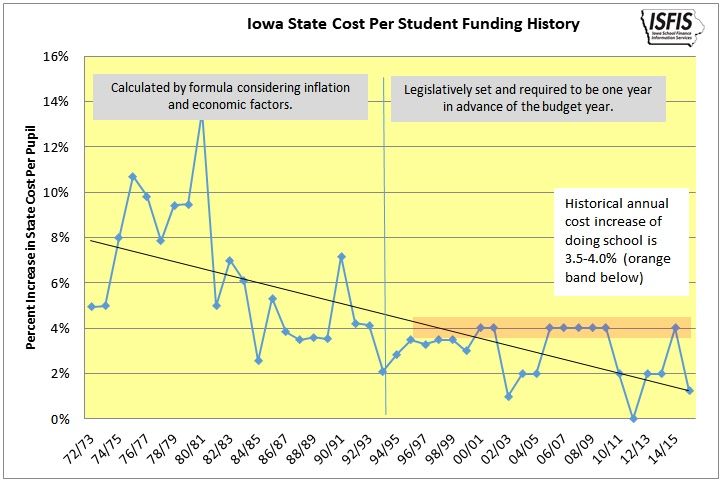
Iowa House and Senate Republicans approved about $32 million in additional spending for public K-12 school districts today, which works out to $67 per pupil, according to the non-partisan Legislative Services Agency. The 1 percent increase in allowable growth, sometimes called supplemental state aid, is the third-smallest by percentage since Iowa adopted the current school funding system in the early 1970s.

Continue Reading...

Why I'm supporting Nate Boulton for Iowa governor

Shawn Harmsen is a progressive activist in Iowa City. Bleeding Heartland welcomes guest posts advocating for candidates in competitive Democratic primaries. Please read these guidelines before writing. -promoted by desmoinesdem

Dear Editor and fellow Iowans,

I am supporting Nate Boulton for Iowa governor because a year ago I saw him out front with Iowa Democrats who, against near-impossible odds, fought back on behalf of Iowa families like mine.

Continue Reading...

School vouchers make first Iowa legislative appearance of 2018

Randy Richardson is a former teacher and retired associate executive director of the Iowa State Education Association. -promoted by desmoinesdem

The first of what will likely be multiple “school choice” bills appeared last week when Republican State Senator Mark Chelgren introduced Senate File 2091. The bill creates Education Savings Grants, which would be available to certain students attending non-public schools or who are receiving competent private instruction (CPI). Parents or guardians could apply for the grants if:

Continue Reading...

Deafening silence from Kim Reynolds as GOP prepares to gut higher education

Governor Kim Reynolds found time to show off her support for education during the past two days. She honored five schools that closed “achievement gaps,” touted “extremely important” community colleges, and praised dual enrollment on January 25. She attended a luncheon to honor “Outstanding Iowa Teachers” the following day.

Somehow, the unfailingly “optimistic” governor never got around to denouncing the huge higher education cuts Iowa Senate Republicans rolled out toward the end of the week.

Continue Reading...

Senate GOP's budget cuts could close more than 30 county courthouses

More than 30 county courthouses could close if the Iowa legislature enacts Senate Republicans’ plan to cut more than $4.8 million from the judicial branch for the remainder of the 2018 fiscal year, State Court Administrator Todd Nuccio warned on January 25. Iowa Senate Appropriations Committee Chair Charles Schneider proposed some $52 million in mid-year budget cuts the same day; within hours, his committee approved the bill along party lines.

Earlier this month, Governor Kim Reynolds proposed about $27 million in spending cuts before the end of the fiscal year, of which about $1.6 million would come from the judicial branch. House Republicans have not yet released a plan for mid-year cuts. In January 2017, leaders from both chambers worked out a deal behind closed doors before publishing a bill. But House Speaker Linda Upmeyer “said Thursday the House was still working on its plan for spending reductions,” the Des Moines Register’s William Petroski and Brianne Pfannenstiel reported.

Continue Reading...

Waukee's small-time controversy could be talking point for school vouchers

Matt Chapman is a concerned citizen living in Waukee. -promoted by desmoinesdem

The Waukee school board approved a settlement for almost $1 million to former human resource director Terry Welker on Monday. Two other lawsuits for wrongful termination are pending and one was dismissed in 2014.

The plaintiffs in these lawsuits are former district employees, who allegedly faced retaliation after reporting that Chief Operating Officer Eric Rose had used school property at home, allowed unauthorized individuals to use school facilities, and altered time cards.

While the crimes themselves are petty, the settlement is not and will give ammunition to lawmakers with an appetite to re-write Iowa’s education system.

Continue Reading...

Five cases against Iowa's phony "water quality" bill

Iowa House Republicans capitulated on January 23, sending the Senate’s version of a bill to fund water programs to Governor Kim Reynolds’ desk. During the floor debate on Senate File 512, several Democrats and Republican State Representative Chip Baltimore argued for the water quality language House members had approved last year with strong bipartisan support. Whereas agricultural lobby groups were the primary supporters of Senate File 512, a large number of stakeholders were involved in crafting the House amendment. Insisting on the House version would have sent the legislation to a conference committee for further negotiations. All 41 House Democrats and five Republicans (Baltimore, Mary Ann Hanusa, Jake Highfill, Guy Vander Linden, and Ralph Watts) opposed “receding” from the House version, but the other 54 Republicans approved the motion to abandon that language (roll call).

The subsequent 59 to 41 vote to approve final passage of the Senate bill mostly followed party lines, but four Democrats who represent smaller towns and rural areas voted yes: Bruce Bearinger, Helen Miller, Scott Ourth, and Todd Prichard. Miller has taken a particular interest in farm-related issues over the years; she is the Agriculture Committee Chair for the National Black Caucus of State Legislators as well as a member of State Agricultural and Rural Leaders.

Four Republicans joined the rest of the House Democrats to oppose Senate File 512: Baltimore, Hanusa, Highfill, and Vander Linden. As floor manager of this legislation in 2017, Baltimore led a group of GOP House members who opposed the Senate’s approach. More recently, he was sidelined as the Iowa Farm Bureau and allies pressured the “Baltimore 16” to accept the Senate bill without amendments. Appearing on Iowa Public Radio’s “River to River” broadcast on January 22, Baltimore sounded discouraged, saying there was a “snowball’s chance in hell” of a water quality compromise. His final words on that program called for “reasonable minds” to get something “comprehensive and collaborative done, rather than shoving one bill down another chamber’s throat and promising to work on it later.”

New floor manager John Wills promised passage of Senate File 512 would be “just the beginning, not the end” of legislative discussions on water quality. No one I know in the environmental community believes Republicans will approve any further funding increases for water programs, much less a bill that would measure progress so the public could find out what methods work best to reduce water pollution.

I enclose below some of the best takes I’ve seen on the worse-than-doing-nothing bill Reynolds will soon sign.

Continue Reading...

An extreme coupon plan

Retired educator Bruce Lear sounds the alarm about a policy some Republican state lawmakers and conservative advocacy organizations want to pursue this year. -promoted by desmoinesdem

There is little doubt, coupons have helped build America consumerism. For some, if there isn’t a coupon, there isn’t a bargain. There is nothing wrong with that approach to shopping. In fact, it has become a hobby for some and even spawned reality TV shows. It’s a choice, and the shopper’s choice alone. It’s really a contract between the shopper and the store.

Now comes the Republican Party with their own coupon offering, but this one has big catch. The coupon is not free in the newspaper or on the internet. It’s paid for by tax dollars. It’s a voucher plan the Republican Party has labeled as an Education Savings Accounts. But don’t be fooled, they can call it anything they like, it’s still a coupon for private tuition paid for by Iowa taxpayers.

Continue Reading...

Five takeaways from the Iowa legislature's opening day in 2018

The Iowa House and Senate convened Monday with the usual big promises and platitudes about working together to build a better future for Iowans.

Behind the optimistic rhetoric, all signs point to another contentious legislative session. The opening day speeches by Republican and Democratic leaders, enclosed in full below, revealed almost no common ground about the focus of lawmakers’ work and no indication that the most important bills will incorporate Democratic ideas. My takeaways:

Continue Reading...

Lawsuit claims Iowa governor illegally transferred state funds (updated)

UPDATE: Plaintiffs dropped this lawsuit in May 2018 after Republican legislators retroactively legalized the governor’s fund transfer. Original post follows.

State Representative Chris Hall filed a lawsuit today, charging Governor Kim Reynolds and Department of Management Director David Roederer “conspired together to unlawfully appropriate and misuse state funds.” The ranking Democrat on the Iowa House Appropriations Committee is seeking to void “all actions taken as a result of the unlawful Official Proclamation signed on September 28, 2017,” which transferred $13 million from the Iowa Economic Emergency Fund.

That order allowed Reynolds to cover a projected budget shortfall at the end of fiscal year 2017 without calling a special legislative session. But State Treasurer Michael Fitzgerald warned the governor that the planned transfer “would not be in compliance with Iowa law.” Hall’s petition, enclosed in full below, points to the same Iowa Code provision Fitzgerald cited in his letter to the governor.

Continue Reading...

Recognizing Bleeding Heartland's talented 2017 guest authors

Bleeding Heartland published 140 guest posts by 81 authors in 2016, a record since the blog’s creation in 2007.

I’m happy to report that the bar has been raised: 83 authors contributed 164 guest posts to this website during 2017. Their work covered an incredible range of local, statewide, and national topics.

Some contributors drew on their professional expertise and research, writing in a detached and analytical style. Others produced passionate and intensely personal commentaries, sometimes drawing on painful memories or family history.

Continue Reading...

Iowa Senate Ways & Means chair concealed role in drafting tax plan

“Not sure who the author is on this one,” State Senator Randy Feenstra wrote to me on December 15, about an hour after Bleeding Heartland had published a detailed memo from the Iowa Department of Revenue about numerous proposed tax cuts and sales tax expansions. The chair of the upper chamber’s Ways and Means Committee added, “small reductions, not sure who put this one together. However, thanks for sharing! Very grateful as I need to find out if this member is running rogue over the Senate plan.”

A week earlier, Feenstra had distributed the same document to all of his fellow Republican senators, describing it as “my idea of a tax plan” and “one of my final runs that I have had the DOR work on.”

Continue Reading...

Iowans not happy with mental health, Medicaid, school funding, taxes

Clear majorities of Iowans disapprove of how the state legislature and executive branch are handling mental health care, Medicaid, education funding, and taxes, according to the latest statewide survey by Selzer & Co for the Des Moines Register and Mediacom.

Even worse for Republicans: more than 70 percent of respondents said each of those issues would be a “major consideration when you choose how you will vote in the 2018 election.”

Continue Reading...

Exclusive: First look at a costly, regressive Iowa Republican tax plan

Iowa Republican senators are considering a proposal to reduce individual and corporate tax rates and eventually phase out the state’s already-limited inheritance tax. The plan would increase revenue by making more goods and services subject to the sales tax, but those provisions would be difficult to move through the legislature, and even if enacted, would replace a small fraction of the money our cash-strapped state stands to lose from the tax cuts.

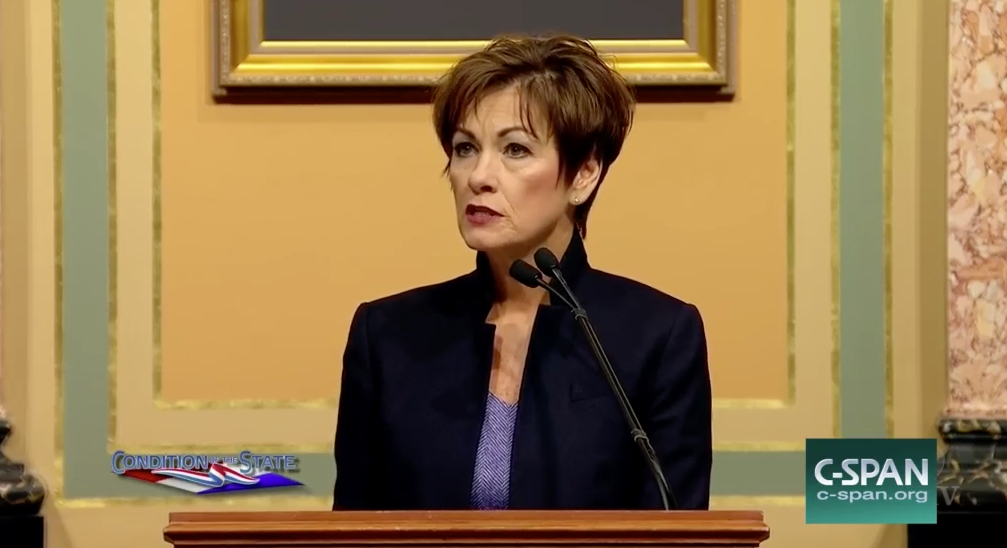
Governor Kim Reynolds told journalists this week she won’t reveal specifics about her tax plan–a top priority for 2018–until she delivers her Condition of the State address on January 9. She indicated she is waiting to see how Congress amends the federal tax code.

However, Senate GOP lawmakers and staff have received a detailed set of proposals for review. Bleeding Heartland obtained a lengthy memo describing “the tax reform plan prepared for the Governor’s Office” and estimating the fiscal impact of those changes. As with pending GOP legislation at the federal level, the largest benefits would flow to the wealthiest Iowans.

Continue Reading...

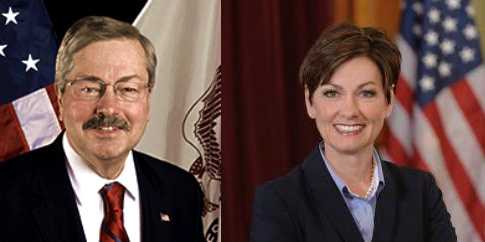
Kim Reynolds should have made one clean break from Terry Branstad

Governor Kim Reynolds made a strategic error by not distinguishing herself from her predecessor in any meaningful way, judging by the new Iowa poll by Selzer & Co for the Des Moines Register and Mediacom.

Changing course on even one high-profile policy could have demonstrated strong critical thinking and leadership skills. Instead, Reynolds is in effect running for a seventh Terry Branstad term. Unfortunately for her, Iowans are inclined to think it’s “time for someone new” in the governor’s office.

Continue Reading...

"Make America America again": photos, highlights from Iowa Democrats' fall gala

Everyone could have guessed Alec Baldwin would get Iowa Democrats laughing with jokes at President Donald Trump’s expense.

But who would have predicted the serious part of the actor’s speech would evoke an even stronger response from the crowd?

Follow me after the jump for audio and highlights from Baldwin’s remarks and those of the seven Democratic candidates for governor, along with Stefanie Running‘s photographs from a memorable evening in Des Moines.

Continue Reading...

Jim Carlin to face Todd Wendt in Iowa Senate district 3

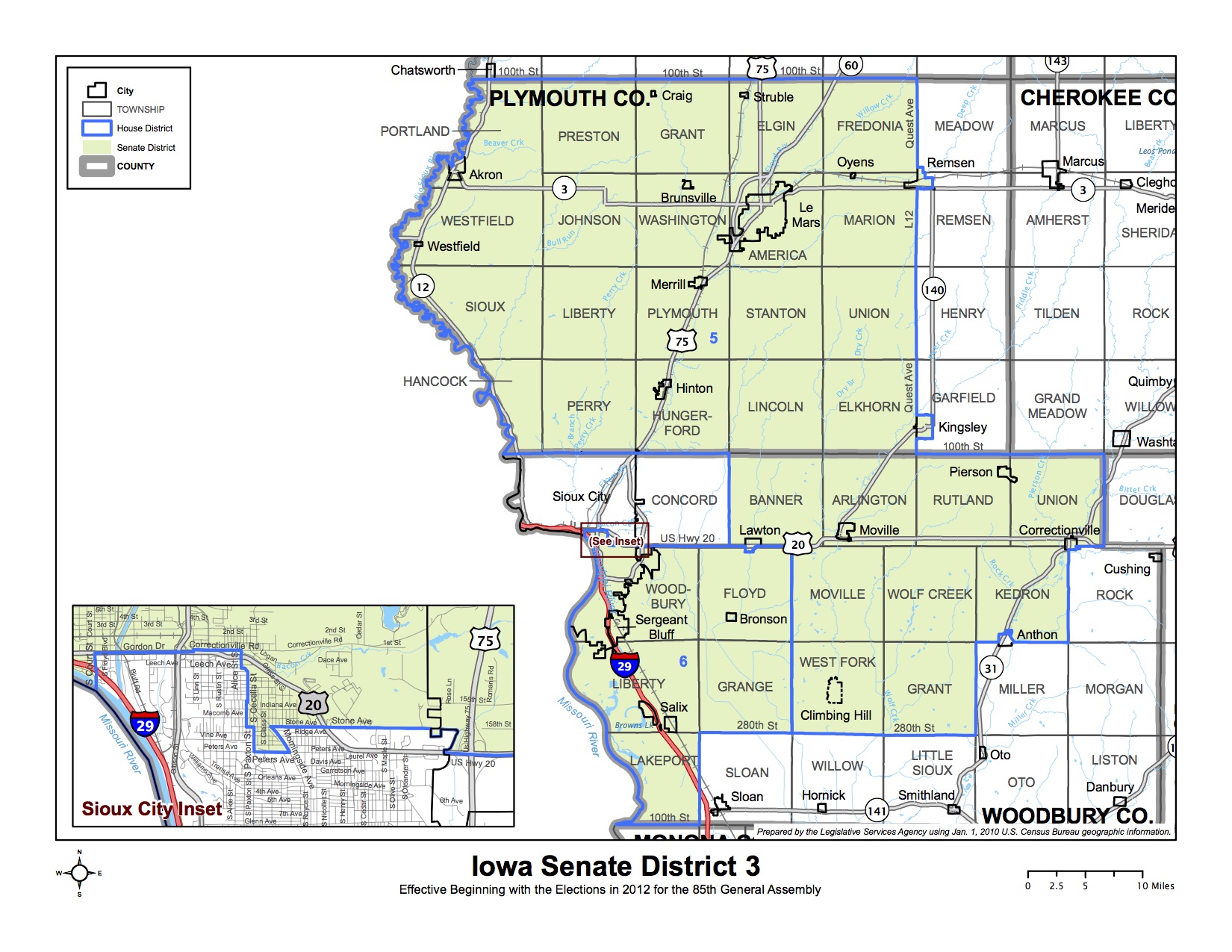
Either Republican State Representative Jim Carlin or Democrat Todd Wendt will succeed Bill Anderson in Iowa Senate district 3 following a special election on December 12. I enclose below background on both candidates and the political layout of this district, covering most of Plymouth County and a large area in Woodbury County, including neighborhoods on the south side of Sioux City.

Continue Reading...

"We have to wake the watchdog up": Why Rob Sand's running for state auditor

The state auditor of Iowa is not a “sexy office,” former Assistant Attorney General Rob Sand told me earlier this fall. “But it’s a huge opportunity for public service, because I think that the way that it’s run right now, there’s a lot of low-hanging fruit for improvement.”

Sand kicked off his candidacy this morning with a website and Facebook page. He’s been tweeting for some time at @RobSandIA. His opening video is here. At the end of this post I’ve enclosed Sand’s campaign committee, including activists and elected officials from many parts of the state as well as Iowa Attorney General Tom Miller and former Attorney General Bonnie Campbell.

Sand discussed with Bleeding Heartland how he would approach the job and why he is running against Republican incumbent Mary Mosiman, a certified public accountant who has served as state auditor since 2013. Although this office is not the obvious choice for an attorney, Sand considers his experience prosecuting white-collar crime “my biggest qualification” and a key reason he could improve on Mosiman’s work. Moreover, he’s not afraid to call out a “historically irresponsible” state budget.

Continue Reading...

State treasurer questions legality of planned budget fix

Governor Kim Reynolds’ plan to transfer $13 million from the Iowa Economic Emergency Fund to balance the fiscal year 2017 budget “would not be in compliance with Iowa law,” according to a letter State Treasurer Michael Fitzgerald sent to the governor today.

If his interpretation is correct, then a special legislative session will be required to cover the year-end shortfall. Reynolds’ staff dismissed and mocked Fitzgerald’s concerns.

Continue Reading...

How did Kim Reynolds crunch the numbers to avoid a special session?

Governor Kim Reynolds won’t call a special legislative session to balance the budget for the year that ended on June 30, her office announced this morning.

They haven’t explained how a fiscal year 2017 shortfall that non-partisan analysts estimated at $104 million in July and around $75 million a few weeks ago became a $14.6 million shortfall, according to the governor’s staff.

Reynolds didn’t take questions from the press today. She didn’t even attend the briefing where Department of Management Director Dave Roederer handed out a puzzling table.

Whatever the Reynolds administration did to avert a short-term political problem will likely worsen the strain on the state budget in the coming months.

Continue Reading...

Seven more pitches for seven Iowa Democratic candidates for governor

To all the Democrats who want to hear directly from each contender in the Iowa governor’s race before deciding how to vote next June: this post’s for you.

Since Bleeding Heartland published seven pitches for gubernatorial candidates from a major party event this summer, Todd Prichard has left the race and Ross Wilburn has joined the field.

All seven Democrats running for governor appeared at the Progress Iowa Corn Feed in Des Moines on September 10, speaking in the following order: Cathy Glasson, Fred Hubbell, John Norris, Ross Wilburn, Jon Neiderbach, Andy McGuire, and Nate Boulton. I enclose below the audio clips, for those who like to hear a candidate’s speaking style. I’ve also transcribed every speech in full, for those who would rather read than listen.

As a bonus, you can find a sound file of Brent Roske’s speech to the Progress Iowa event at the end of this post. With his focus on single-payer health care and water quality, Roske should be running in the Democratic primary. Instead, he plans to qualify for the general election ballot as an independent candidate, a path that can only help Republicans by splitting the progressive vote.

Continue Reading...

Privatized Medicaid makes no sense for people with disabilities

Who could have guessed that privatizing Medicaid would lead to for-profit companies cutting essential services to Iowans with disabilities? Aside from anyone who spent five minutes reading how the same approach had played out in Kansas?

When Iowa Democratic lawmakers sounded the alarm two and a half years ago, Governor Terry Branstad and his aides dismissed the warnings as “Washington D.C.-style partisan attacks.” They insisted privatization would allow Iowa patients to “enjoy the increased quality of service and care that comes with modern plans administering Medicaid.”

Instead, thousands received less in-home care or had trouble accessing medications and services after private insurance companies began managing their cases. The state now faces a class action lawsuit on behalf of 15,000 Iowans with disabilities.

Iowa Department of Human Services Director Jerry Foxhoven admitted yesterday what should have been obvious from the start: letting for-profit companies control access to health care for people with disabilities makes no sense.

Continue Reading...

Louisa Dykstra for Des Moines School Board

Republican policies on education funding and working conditions for teachers have inspired many newly-engaged Iowa activists to run in tomorrow’s school board elections.

School board members don’t control the budget, but they decide what programs to cut or spare when resources are scarce. They influence contract negotiations, so can mitigate the harm Iowa’s new collective bargaining law will do to educators. Winning non-partisan, local races can also help build the Democratic bench, as many successful candidates for the Iowa House and Senate previously served on a school board.

Turnout for school board elections is typically low in the absence of some hot-button local issue, like this year’s Iowa City school bond proposal. A handful of voters may determine the outcome. Rob Barron won his at-large seat on the Des Moines School Board by just 28 votes in 2013.

Three progressives are seeking the two at-large seats on the Des Moines board this year: the incumbent Barron and first-time candidates Louisa Dykstra and Kyrstin Delagardelle Shelley.

I’m encouraging my friends in the Des Moines district to cast one of their votes for Dykstra.

Continue Reading...

Treasurer submits backup plan to ensure Iowa can pay its bills

Warning that “Iowa must use all available tools to prepare for strained general fund cash flows” in the current fiscal year, State Treasurer Michael Fitzgerald formally asked Governor Kim Reynolds yesterday to authorize short-term borrowing this fall. Reynolds has previously said she is confident the state will be able to pay its bills without such action.

The country’s longest-serving state treasurer counters that “prudent” management of state finances justifies cash-flow borrowing to ensure that Iowa can meet its obligations, including school aid payments, in early 2018.

Continue Reading...

Iowa political opinion is shifting against corporate tax giveaways

The Apple corporation’s plan to build a “state-of-the-art data center” in Waukee is attracting national attention and ridicule for a state and local incentives package worth more than $4 million to the country’s most profitable company for every long-term job created.

While Governor Kim Reynolds celebrated yet another deal to fleece taxpayers, one encouraging sign emerged last week: more Iowa politicians are willing to say out loud that this approach to economic development doesn’t pay for itself.

Continue Reading...

Silicon Suckers

The juxtaposition of last week’s “Waukee Scores Apple Server Farm” story with the “Iowa Nursing Home Budget Crisis” story revealed to me, the advanced rot of political obeiesance to corporations at the expense of badly frayed public resources and services.

The Los Angeles Times column on the subject put it as well as could be stated. Of course Bleeding Heartland covered the nursing home crisis here.

After reading the LA times story, it was darkly funny to read this story in the New York Times about Mr. Cook, CEO of Apple, “Barnstorming for Moral Responsibility”.

Not only are these corporate out-of-state care facilities taking advantage of our citizens on the low end of the scale, you have the richest, most profitable company on the planet, literally skimming future dollars off the top!

Those of you with Apple stock are probably grateful for your good fortune. Maybe those dividends will offset the taxes we may have to pony up to recover what Apple is taking away.

(When you look at the size of the tax breaks Iowa coughed up at a time when the DHS budget shortfall puts hundreds of people at risk,it makes me wonder if Mr. Cook might consider adding some of his latte allowance to fund Iowa’s ailing social programs? Frankly, I think we’ll have a better shot at convincing him than we will waiting for the Reynolds administration to Think Different.)

Why did Branstad and Reynolds request transition funds they didn't need?

Some surprising news arrived in the mail recently. In response to one of my records requests, Governor Kim Reynolds’ legal counsel Colin Smith informed me that “zero dollars” of a $150,000 appropriation for gubernatorial transition expenses “have been spent and there are no plans to spend any of that appropriated money.” I soon learned that the Department of Management had ordered a transfer of up to $40,000 in unspent Department of Revenue funds from the last fiscal year “to the Governor’s/Lt. Governor’s General Office to cover additional expenses associated with the gubernatorial transition.”

A Des Moines Register headline put a favorable spin on the story: “Reynolds pares back spending on office transition from lieutenant governor.” However, neither the governor’s office nor Republican lawmakers ever released documents showing how costs associated with the step up for Reynolds could have reached $150,000.

Currently available information raises questions about whether Branstad/Reynolds officials ever expected to spend that money, or whether they belatedly requested the fiscal year 2018 appropriation with a different political purpose in mind.

Continue Reading...

Republican budget cuts reduce oversight of Iowa nursing homes

Iowa’s Long-Term Care Ombudsman has “eliminated virtually all staff visits” to our state’s 850 nursing homes and assisted-living facilities, Clark Kauffman reported for the Des Moines Register on August 23. A large reduction in state funding led to the policy change, announced last month. Republican legislators passed the health and human services budget on party-line Iowa House and Senate votes. Governor Terry Branstad approved the cuts in his final batch of bill signings.

Reducing oversight of nursing homes has long been a goal for Branstad, whose Department of Inspections and Appeals didn’t even fill all the nursing home inspector positions funded by state lawmakers. Iowa already ranked last among the 50 states in terms of ombudsman visits to nursing homes at least once per quarter, according to 2015 statistics cited by Kauffman.

Ending on-site visits by ombudsmen will put approximately 53,000 Iowans at greater risk of receiving substandard care.

Continue Reading...

IA-Gov: Read the messages Fred Hubbell is testing with Iowa Democrats

Are Iowa Democrats more likely to support a successful businessman who is not a politician? Are they sympathetic to the argument that a self-funding candidate for governor is less susceptible to influence by special interests? Are they more impressed by private- or public-sector jobs Fred Hubbell has held, or by his charitable giving to causes like Planned Parenthood?

A recent survey of Democratic voters appears to be the Hubbell campaign’s first attempt to answer those and other questions.

Continue Reading...

Kim Reynolds may one day regret not taking state treasurer's advice

Michael Fitzgerald has seen tight budgets come and go in his 35 years as state treasurer. He is increasingly concerned that Iowa may have trouble making ends meet next spring.

Only a few months into her new job, Governor Kim Reynolds plans to reject Fitzgerald’s considered opinion. The political gamble allows her to downplay the severity of Iowa’s fiscal situation for now. However, her strategy could backfire if a cash-flow problem blows up just before the final stretch of next year’s primary campaign.

Continue Reading...
Page 1 Page 3 Page 4 Page 5 Page 6 Page 7 Page 62