Iowa’s two largest public sector unions have defeated Republican efforts to diminish their power for a second straight year.
Iowa Republican union-busting fails for second straight year
- Thursday, Nov 1 2018
- desmoinesdem
- 1 Comment
Iowa’s two largest public sector unions have defeated Republican efforts to diminish their power for a second straight year.
Bruce Lear on the stakes in this midterm: “Public education as we know it hangs in the balance,” which has never been the case before in Iowa. -promoted by desmoinesdem
In January 1976, I trudged through the Pella, Iowa snow to go to my very first presidential caucus because it was the “most important election of our lifetime.” I caucused with about eleven over-eager college students in the basement of the student union. We were a small but determined group. After all, it was a Democratic caucus in Pella, in January.
By the way, I caucused for Fred Harris, a little-known and soon-forgotten senator from Oklahoma. His only claim to fame was he drove around in a recreational vehicle and never used hotels. Instead, he stayed at supporters’ houses and in exchange, gave them a card good for one night in the White House. None were redeemed.
That’s how my involvement with the “most important election of our lifetime” began. For the next 30-plus years, every two years that phrase roared to life on radio, TV, and in countless mailings soon deposited in the circular file to be forgotten until the next most important election of our lifetime.
It got old. It got cliché–until now.
A commentary by correctional officer Mark Masterson. -promoted by desmoinesdem
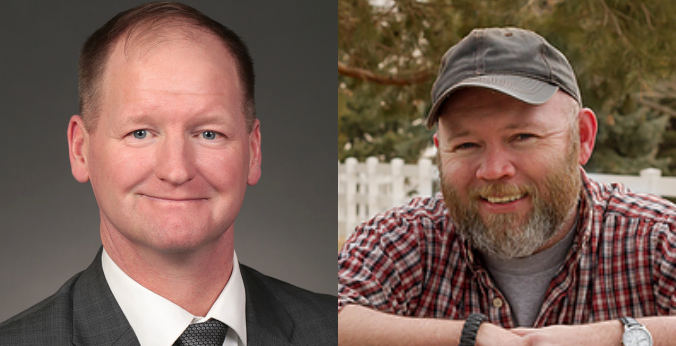
Can I introduce you to my friend and co-worker? His name is Jason Moats. Jason is running for Iowa House district 84, left open by retiring Republican State Representative Dave Heaton. This district includes Mount Pleasant, where I live and work.
Governor Kim Reynolds and Democratic challenger Fred Hubbell debated for the third and last time today in Davenport. Too bad not many viewers are likely to tune in at 8:00 am on a Sunday morning, because the discussion was yet another study in contrasts. For those who prefer a written recap, I enclose below my detailed notes. Click here and here for Bleeding Heartland’s analysis of the first two Hubbell-Reynolds debates.
As during the second debate, journalists kept the candidates on topic and within the time limit, so kudos to moderator David Nelson of KWQC-TV6 and panelists Erin Murphy of Lee Enterprises, Forrest Saunders of KCRG-TV9, and Jenna Jackson of KWQC-TV6.
Both candidates recycled many talking points from their first two meetings. My impression was that Reynolds performed about equally well in all three debates, while Hubbell improved each time. For instance, after Reynolds noted that Iowa had moved up in mental health rankings three years in a row and was now rated sixth in the country for mental health, Hubbell pointed out that the study the governor cited covered the years 2013 through 2015. That was before the Branstad/Reynolds administration closed some mental health institutions and privatized Medicaid, which has led to worse care for thousands of Iowans.
For those who prefer to watch the replay, KCRG-TV posted the video in a single file, which is the most user-friendly option. You can also find the debate on KWQC-TV (with closed captioning) and WOWT-TV’s websites, but you will have to watch a series of clips, with advertisements before each segment.
Televised debates mostly attract viewers who already support one of the candidates. But Iowans who are on the fence between Governor Kim Reynolds and Democratic challenger Fred Hubbell could learn a lot from watching their October 17 debate.
You can find the full video on the website or Facebook page of KTIV in Sioux City. My takeaways and notes on the discussion:
A group of Iowa college students wrote this post, including Paige Oamek and Naomi Runder (Grinnell College), Javier Miranda and Katie Sinn (Iowa State University), and Jack Reardon (Des Moines Area Community College). -promoted by desmoinesdem
Students across Iowa will gather at Iowa State University in Ames on Monday, October 15 to call attention to soaring tuition hikes and wasteful development spending, such as the $84 million dollar project that will soon become the new Student Innovation Center.
This action comes as part of a National Day of Action hosted by Student Action and Young Democratic Socialists of America at over 20 campuses across the country as part of a broader campaign for Free College for All.
Governor Kim Reynolds and Democratic challenger Fred Hubbell held the first of three debates tonight in Ankeny. You can watch a nearly-complete video on the Des Moines Register’s website. I’ve enclosed the notes I took in real time (live blog style) at the end of this post. But first, my takeaways:
Five weeks before the general election, the Republican Party of Iowa has begun airing television commercials to promote Senate Majority Leader Jack Whitver and State Senator Julian Garrett.
The advertising suggests that Republican internal polling shows Democrats Amber Gustafson and Vicky Brenner within striking distance in Senate districts 19 and 13, respectively. Democratic internal polling presumably shows competitive races too, since former President Barack Obama included Gustafson and Brenner on his list of Iowa endorsements this week. Only five state legislative candidates made the cut.
John Grieder is a Democratic activist in Waterloo. -promoted by desmoinesdem
The president is right. There, I said it. He is. President Donald Trump said something truthful. On October 2, 2018, President Donald Trump said it’s a “scary time” to be a young man in America. I agree with him. It’s absolutely terrifying. I’m 28 years old and I have never been more concerned about my government or my nation.
If Iowans were voting for governor today, 43 percent would support Democrat Fred Hubbell and 41 percent Governor Kim Reynolds, according to a new poll by Selzer & Co for the Des Moines Register and Mediacom. Another 9 percent of the 555 likely voters surveyed were undecided, and 7 percent backed Libertarian Jake Porter. The poll validates the view of leading election forecasters that the governor’s race is a toss-up. Selzer’s poll has a margin of error of plus or minus 4.2 points.
If this snapshot of the race accurately reflects the views of Iowans likely to vote in November, I’d rather be Hubbell than Reynolds. An incumbent barely above 40 percent despite much higher name recognition than her opponent is not in a strong position. Nevertheless, the Register’s survey points to ways either Reynolds or Hubbell could improve their prospects during the final six weeks of the campaign.
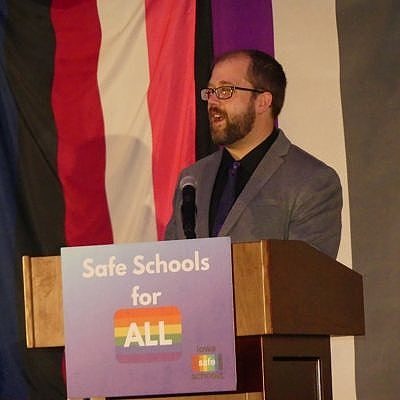
“LGBTQ youth are forgotten even by members of the LGBTQ community,” writes advocate Nate Monson in this thought-provoking commentary. -promoted by desmoinesdem
Since 2007, I have served as the executive director for Iowa Safe Schools, a non-profit founded in 2002 to support LGBTQ youth through education, outreach, victim services, and advocacy. The organization works on the overall improvement of the queer youth experience for thousands of students across the state. The queer experience is the culmination of events and relationships a person has based on their LGBTQ identity. LGBTQ students are more likely than their heterosexual peers to experience a range of issues such as bullying, homelessness, and suicide.
In early April, I gave a Tedx Talk at Wartburg College about the Post-Modern Queer Youth Experience.
Working in the LGBTQ equality movement for over a decade has given me a front row seat to its inner workings. What I’ve found is that LGBTQ youth take a back seat in this broader conversation on equality, even though LGBTQ youth represent one of the most marginalized and at-risk populations.
Randy Richardson, retired associate executive director of the Iowa State Education Association, has closely followed contract negotiations in Iowa public schools for many years. -promoted by desmoinesdem
Since the 2017 passage of a Republican bill to strip collective bargaining rights from public employees, a little more than 8,000 teachers (out of a total of just over 36,000 statewide) in 107 school districts have lost the benefits and rights they enjoyed in their master contracts.
The new law allowed districts to remove items that were deemed “permissive” from collective bargaining agreements. That included such topics as leaves, grievance procedure, and in-service days. Many of those items had been bargained years ago and had been in master contracts for well over 30 years.
I thought it might be worthwhile to see if these districts had any commonalities.
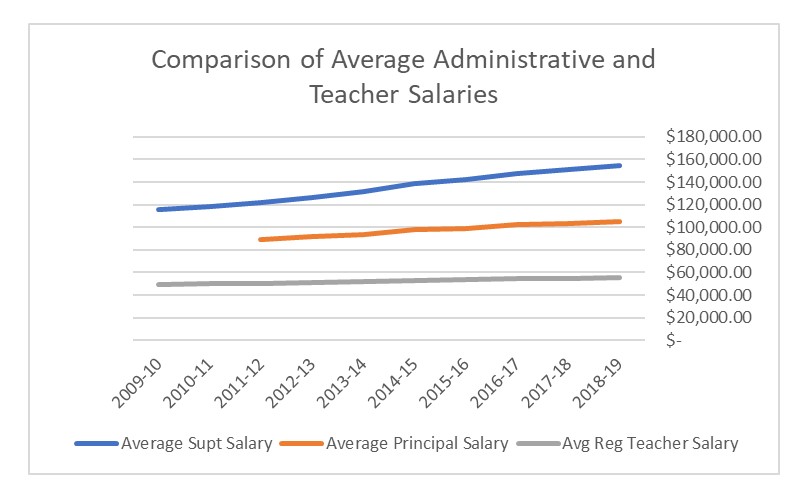
Bruce Lear examines some common mistakes by school districts “that help the critics take aim, fire, and reload on public education.” -promoted by desmoinesdem
In sports, we call them unforced errors. In real life, we call them dumb stuff that someone thinks is a good idea. I’m talking about decisions that, when implemented, leave most people scratching their heads wondering why we ever made that stupid choice in the first place. Yes, it’s “Monday morning quarterbacking,” but sometimes those Lazy Boy quarterbacks are right.
Like private business, public education sometimes suffers from unforced errors that make the critics howl and redouble their efforts to privatize. But remember “New Coke?” Few Americans believed the only way to solve that corporate problem was to dissolve the company and start guzzling large quantities of another brand. Instead, the problem was quickly fixed by going back to the tried and true recipe, and “New Coke” became a footnote on bad decision making. The company learned from the mistake.
Because public education is now under heavy fire from the likes of Secretary of Education Betsy DeVos and her disciples, it’s hard for school leaders to look inward, examine some of their own mistakes, and find ways to avoid repeating them.
First in a series by Tyler Higgs, an activist and former candidate for Waukee school board. -promoted by desmoinesdem
Let’s say you are a corrupt school administrator, and you want to accept kickbacks from vendors, manipulate time cards, and/or take school property. If you work in Waukee, just go ahead and do it. In this instance, crime really pays. Based on what happened with the the district’s current chief operating officer Eric Rose, here’s what you can expect:
Democrats have opportunities to make big gains in the Iowa House this year. Thirteen of the 59 Republican-held seats in the lower chamber are open. A number of Democratic challengers have done well on fundraising, in some cases even out-raising the GOP incumbents in their districts. The past year’s special elections for Iowa House seats suggest that Democratic turnout may be much higher than the level seen in Iowa’s last two midterms, thanks to extreme laws enacted by statehouse Republicans and an unpopular president in Washington.
But winning a state legislative race often requires more than a favorable political environment. Bleeding Heartland observed in February that “the latest set of campaign financial disclosures reveal little sense of urgency among Democratic incumbents who could do much more to help others win competitive districts this November.”
Unfortunately, the latest fundraising numbers tell the same old story.
Bruce Lear calls on members of the “public education family” to “unite to defend what we love.” -promoted by desmoinesdems
The back to school ads have started. Even with heat indexes of 100, those ads send chills down the spine of educators. Those chills are a cocktail of optimism, excitement, worry, and dread, with a garnish of hope and a twist of anger.
As the new school year begins, it’s important to have the public education family around the kitchen table for a meeting. That family includes teachers, professional support staff, administrators, school board members, and parents. Like all families, there is always the weird uncle or cousin you want to hide in the attic, but with November looming, the public education family needs all its members to be speaking in one voice.
Jeff Cox sees Democrats “campaigning only on issues that reliable Democratic voters care about.” He thinks a winning message will require addressing broader concerns among Iowans. -promoted by desmoinesdem
In the past decade, the Democratic Party has lost control of both houses of the Iowa legislature as well as the governor’s office. It is difficult to overstate the damage that has been done to the people of Iowa by the Republicans. If they keep control of the governor’s office and legislature next November, they can add the judiciary to their list of conquests. When that happens, things will get even worse–much worse.
Randy Richardson, retired associate executive director of the Iowa State Education Association, connects some dots. -promoted by desmoinesdem
The very first sentence on the “About” page of the Iowa Association of School Boards (IASB) website reads, “Since 1946, the Iowa Association of School Boards has been committed to serving Iowa school boards and public schools.” However, public school employees may begin to wonder given some of the organization’s recent actions.
The University of Iowa will soon announce plans to shutter our state’s only institution dedicated to labor-related education and research, Labor Center Director Jennifer Sherer warned in a July 8 e-mail.
Iowans of all political persuasions are grieving former Governor Bob Ray, who passed away on July 8 at age 89. I can’t think of any Republican more admired by Iowa Democrats. My parents canceled out each other’s votes in most elections for decades, but my mother supported Ray whenever he was on the ballot. Bill Crews, who managed the governor’s 1978 re-election campaign, remembered Ray as his “best boss and a great mentor.” Crews took the above photo on the night Iowans elected Ray to his fifth and final term.
Seven Orlando parks in eight days equals gallons of sweat, aching legs, and gigantic lines. It means grandchildren smiles and fast food overdose. Days divided into ride time waits, Fast Pass deadlines, and heat-induced observations before being dropped and twirled. These are those observations.
If a party is going to defend ripping babies from their families at the border, it can’t call itself pro-family or even pro-life.
When Fred Hubbell selected State Senator Rita Hart as his running mate, Democrats had to scramble to find a new candidate in Iowa Senate district 49. Patti Robinson announced her candidacy on July 3. She will face Republican Chris Cournoyer, who has been campaigning here since last November.
Hart was favored for re-election, having won by nearly 900 votes in 2014 despite the statewide GOP landslide. However, an open seat should be highly competitive. Both parties may devote hundreds of thousands of dollars to this race, based on spending totals from the battleground Iowa Senate districts during the 2016 cycle.
Democrats are looking at a difficult state Senate map this year and can’t afford to lose any ground to maintain a realistic chance of regaining the majority in 2020. Republicans currently hold 29 of the 50 Senate seats and will pick up Senate district 1, where Iowa’s only independent lawmaker David Johnson is retiring.
“Whether it’s her own story or distorting facts about my story, one thing is clear: Governor Reynolds is running a campaign about yesterday,” Fred Hubbell told Iowa Democratic Party state convention delegates on June 16. “We’re running a campaign about tomorrow. We are running to get Iowa growing the right way.”
Hubbell’s first speech to a large crowd since his decisive victory in the high-turnout June 5 primary served several purposes:
• Preview the main themes of his general election campaign;
• Reassure Democratic activists (many of whom had been strongly committed to other candidates) that he shares their values and goals;
• Address and reframe early attacks from Governor Kim Reynolds; and
• Introduce his running mate State Senator Rita Hart, who’s not well-known outside Clinton and Scott counties.
For those who weren’t able to attend the convention, I enclose below audio and full transcripts of the speeches by Hubbell and Hart.
John Grieder is a Democratic activist in Waterloo. -promoted by desmoinesdem
Like so many Iowa Democrats, I have watched this gubernatorial primary with a keen eye. With Terry Branstad leaving Terrace Hill for China and Governor Kim Reynolds continuing the same failed policies, 2018 seemed like the year of hope for turning the governor’s mansion back to blue. I’ve watched and heard and hoped with most of the candidates, flitting from one to another. I fully admit that I have been fickle and changed my mind more than once.
Even now, my absentee ballot sits upon our counter unfilled. So many thoughts, hopes, and fears play out when I look upon that ballot that I have to leave it blank for now, because I do not as yet know the path forward.
Bruce Lear, a longtime regional director for the Iowa State Education Association, ponders what a new governor could do to help pass a fairer law on bargaining rights for public-sector workers. -promoted by desmoinesdem
I wish the new Democratic governor could simply wave a magic wand and restore public sector collective bargaining rights.
I also wish every day in Iowa were 70 degrees, the Cubs won the World Series, and I lived in Mayberry. But wishing is not a strategy.
With less than three weeks remaining before the June 5 primary, many Democrats (including myself) are still undecided in the primary to represent Iowa’s third Congressional district. All three candidates left standing in the once-crowded field have raised enough money to run strong, district-wide campaigns.
This post focuses on how Cindy Axne, Pete D’Alessandro, and Eddie Mauro have presented themselves in stump speeches, direct mail, and television commercials aimed at Democratic voters.
Randy Richardson has the rundown on how the Iowa legislature’s final actions of 2018 will affect public school districts and higher education. -promoted by desmoinesdem
While controversial issues like abortion and tax reform grabbed the headlines last week, a number of bills impacting education saw last-minute approval before the Iowa House and Senate adjourned for the year on May 5.
Republican lawmakers made big promises last year that Iowans would have “more access” to family planning services under a new state program that excluded Planned Parenthood.
As anyone could have foreseen, the opposite was true. In the first nine months of the State Family Planning Program’s existence, the number of Iowans enrolled dropped by a third. The number who obtained at least one reproductive health care service fell by more than 40 percent from the first quarter to the second quarter the program was operating. The number of health care providers billing the program also declined by 40 percent during the same time frame.
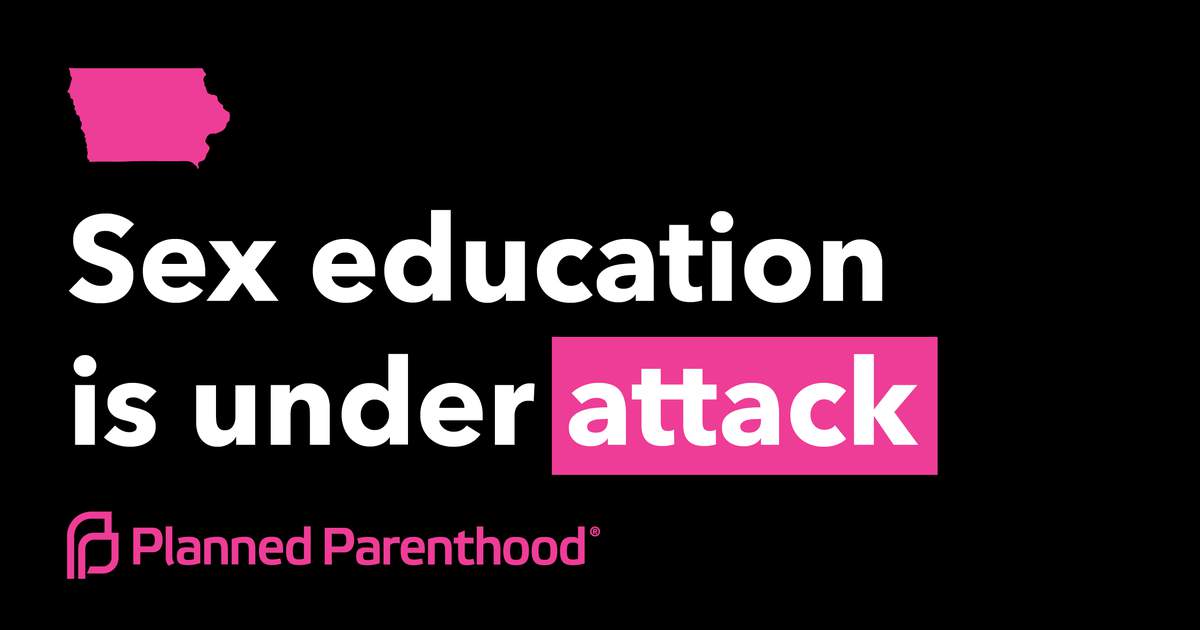
Republican lawmakers don’t want to hear how poorly the new system is serving their constituents. Even worse, GOP state senators voted unanimously last week to compound the mistake by blocking Planned Parenthood from participating in sex education programs.
“Republicans led on tax reform in 2018,” Governor Kim Reynolds asserted in a news release after lawmakers adjourned for the year on May 5. “As a result, hardworking, middle class Iowa families, farmers, small business owners and workers get meaningful relief, all while Iowa’s budget priorities in future years are protected.”
None of those claims withstand scrutiny.
Former educator Bruce Lear explores how school district administrators or attorneys can often control decisions made by school boards. -promoted by desmoinesdem
It’s a mystery. It’s a phenomenon. It’s the political black hole. Where do those fired up well-meaning school board candidates go after they are elected? The black hole sucks them in and dampens their resolve and fortitude.
What causes this bad thing to happen to good people? It’s caused by lack of independent information, group speak, with a little magical thinking added. Combine all three, and you have the ingredients for a black hole, so deep the escape is difficult.
Jeff Cox offers some reasons for Iowans who care about racism to “think local.” -promoted by desmoinesdem
Low levels of voter turnout in America are disheartening. Bernie Sanders showed that large numbers of young, new voters can be brought into the electoral system. But what about local elections for school board and city council elections, not to mention bond issues, and the sadly neglected party primaries for local officials?
Here are some reasons to “think local” about elections if you care about racism, with evidence taken from five recent Johnson County elections.
Randy Richardson has previously written about the consequences of Iowa collective bargaining changes here, here, and here. -promoted by desmoinesdem
Teachers in West Virginia, Oklahoma, and Kentucky have walked out of classrooms and shut schools across their states in protest of poor funding and attacks on pensions. Arizona teachers have joined the protests after years of underfunding schools in that state. In Iowa the new collective bargaining law has been in effect for a little over a year and many teachers are just now realizing the impact of the dramatic changes brought about by the legislation.
Bruce Lear explains the problems with a teacher development program that has consumed a substantial share of new state funding for public education in recent years. -promoted by desmoinesdem
Since when does TLC not stand for Tender Loving Care? Since 2013, TLC has come to mean something totally different to Iowa educators.
During the second coming of the Terry Branstad administration, a new teacher funding program called Teacher Leader Compensation (TLC) began. While all of the major education groups in 2013 welcomed the new money, everyone forgot what it could do to overall school funding for the future. Like the un-forecasted snow storm, TLC has caused major unpredicted and unintended damage to Iowa schools.
Peggy Huppert is the executive director of the National Alliance on Mental Illness in Iowa. -promoted by desmoinesdem
Governor Kim Reynolds signed two mental health bills on March 29 in an emotional ceremony in the capitol rotunda. I was one of the hundreds of legislators, lobbyists and advocates who witnessed the event.
The two bills are quite different. What they have in common, in addition to dealing with mental health and being signed into law on the same day, is that they passed both chambers of the Iowa legislature unanimously. That in itself is extraordinary.
Matt Chapman, who closely follows legislative happenings, reports on an Iowa Senate debate you can watch beginning at 8:19:30 on this video. -promoted by desmoinesdem
The March 21 debate on Senate File 2117 started off with a bang.
Retired educator Bruce Lear warns about factors driving Iowa toward a significant teacher shortage. -promoted by desmoinesdem
Iowa is in the midst of a perfect storm. It’s not a blizzard, a tornado, or a flood. This one is man-made, and unfortunately it won’t move through the state until the current batch of majority party politicians are blown away by its gale force wind.
There are really three man-made causes fueling this storm, which has the potential to cause at least two major kinds of damage.
Randy Richardson reports on a proposed Republican solution in search of a problem for Iowa schools. -promoted by desmoinesdem
According to a study by the Council of Great City Schools, a typical student takes 112 mandated standardized tests between pre-kindergarten classes and 12th grade. At least a few of those tests are of dubious value.
Now it appears as though one more test may be required in Iowa schools. GOP State Senator Jerry Behn from Boone introduced Senate File 2341, which would require Iowa students to take and pass a 100 question multiple choice civics test as a requirement for graduation.
Randy Richardson reviews six factors pushing educators to leave the profession. -promoted by desmoinesdem
I left the classroom in 1996. I still tell people that teaching was the best job I ever had. But after 20 years in the classroom I had simply had enough of coaching, chaperoning every high school dance, teaching six different preps every day, and dealing with unreasonable parents.
Things have changed a lot in the intervening years, and the job of being a teacher has become even more difficult. Recently more than 180 teachers applied for the early retirement incentive offered by the Des Moines Public Schools. So what does cause perfectly capable teachers to suddenly decide to step away from the classroom?
Governor Kim Reynolds will withdraw one of her latest nominees for a state regulatory body after “a mistake was made” that would have upset the partisan balance Iowa law requires.
All three public universities in Iowa have confirmed that disciplinary action stemming from non-violent political protests will not affect a student’s admissions status. Several private colleges have similar policies, their staff told Bleeding Heartland.